A MANSION SECOND TO NONE
6 rue Royale in Paris, from the fermier général Le Roy de Senneville,
Madame de Staël and the Maison Jansen to the Maison Steinitz, a place laden with history.
On 21 June 1757, on the authority of letters patent countersigned by Louis III Phélypeaux (1705-1777), count of Saint-Florentin, chancellor and Keeper of the Seals, Minister of State and Secretary of State to the Maison du Roi, registered by the Paris Parliament on 6 July of the same year, Louis XV gave birth to the rue Royale as well as to the square bearing its name, the future place de la Concorde: “Let the square that was destined to host the Monument we decided to agree upon go on being formed and built to its full perfection in the site designated by us, in the esplanade located between the ditch ending the Garden of our Palace of the Tuileries, the former gate and faubourg Saint-Honoré, the avenues of the Champs-Elysées and Cours de la Reine and the quay running along the River, and all the construction works and decorations needed for the building and perfection of the aforementioned square shall be made by the orders and to the care of the said Prévôt des Marchands and Echevins and executed by the General Master of the City Buildings, under the supervision and inspection of the sieur Gabriel, our first architect and with the sole exception of the walls enclosing the Garden of our Palace of the Tuileries for the rebuilding of which we reserve the right to give our particular orders, the whole according to the plans and designs that were approved by us and to be attached under the counter-seal of our Chancellery.
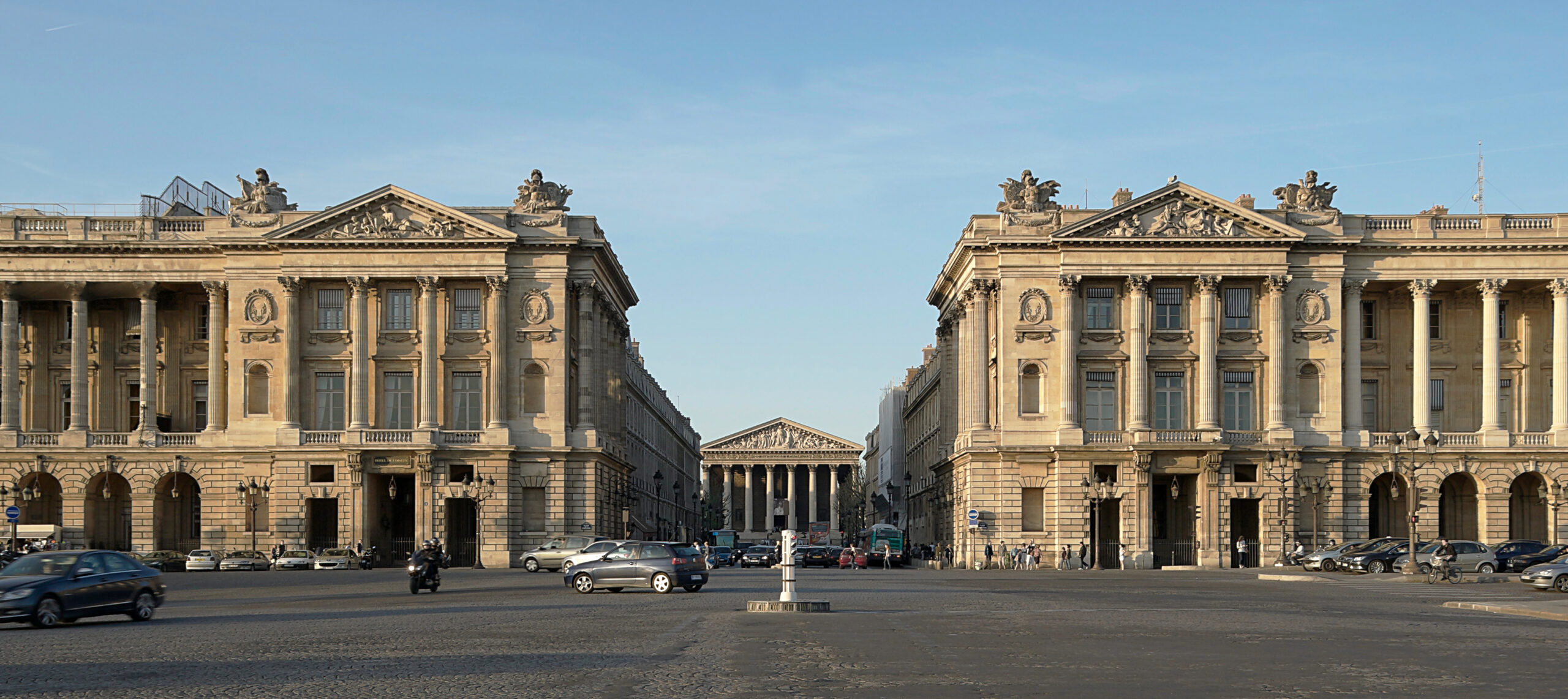
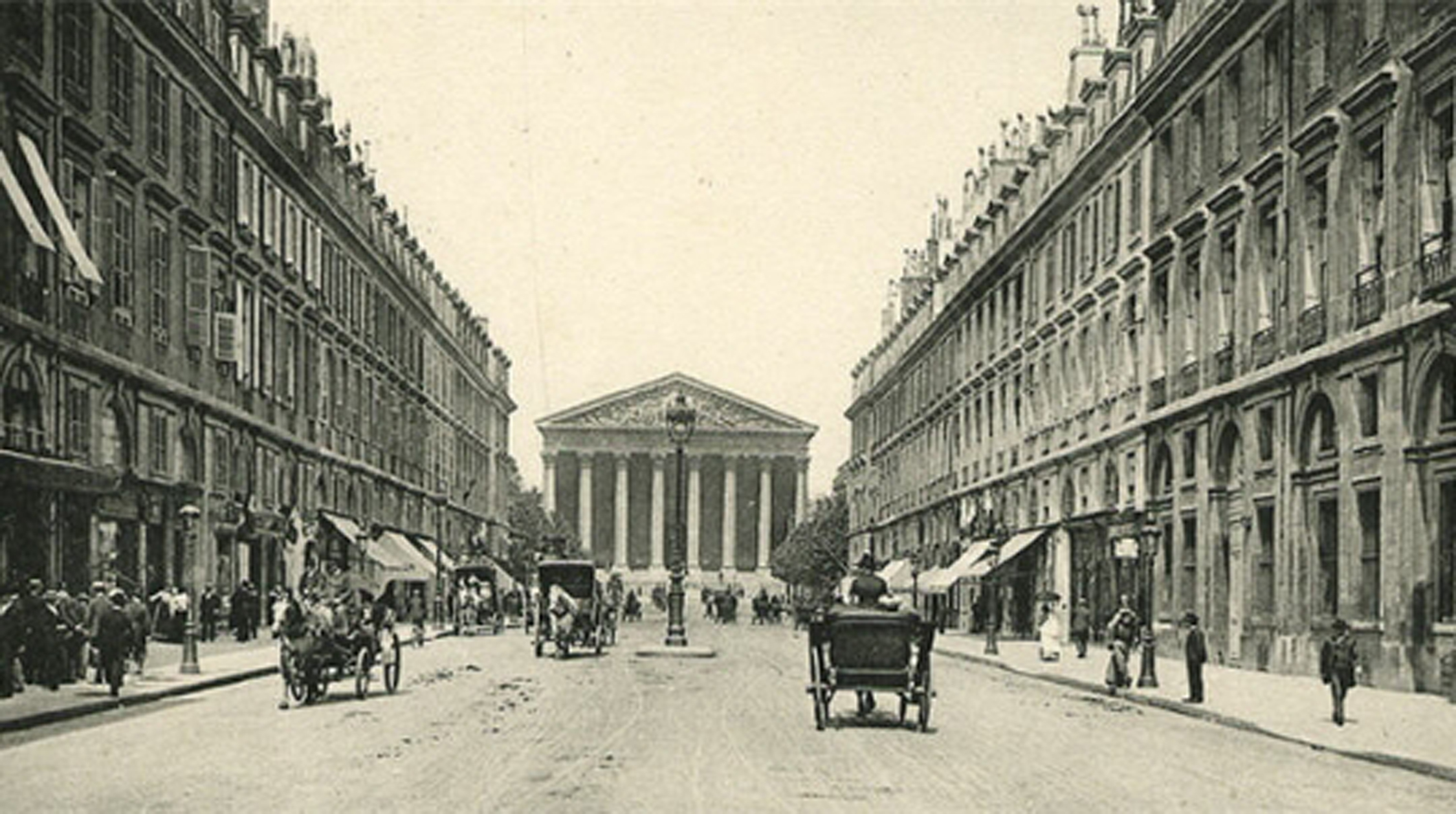
By 31 August 1757, the architects sent the “Elevation of the façade of the Buildings of the rue Royale with the extraction of the Pavillion de l’Encoignure on the said street on the square” to M. Lombard, model maker, so as to make the model that would allow to have a clear view of the layout. Built circa 1758-1759, this thoroughfare, among the most prestigious ones of the capital and connecting the Madeleine to the Place de la Concorde, was originally an old pathway which was the extension of the rue Basse-du-Rempart and of the boulevard de la Madeleine, and ran along the Louis XIII walls from the third porte Saint-Honoré – pulled down in 1733 – to the Seine. That street was successively called chemin des Remparts in the 17th century, chemin des Fossés-des-Tuileries in 1714, rue Royale-des-Tuileries in 1768, rue de la Révolution in 1792, rue de la Concorde in 1795 and then again rue Royale-Saint-Honoré on 25 April 1814. In order to harmonize the whole and match the architecture of the future private buildings of the street – nos 1 to 15 and 2 to 14 – to the sumptuous colonnade buildings of the square, which today host the Ministry of the Navy and the Crillon Hotel respectively, Garbiel imposed a uniform façade to the five-level elevations of the rue Royale. With their sober yet majestic architecture, the street façades were thus provided with a first level adorned with a mezzanine and punctuated by arcades with plain keystones and flanked by slightly protruding flat pilasters of the Doric order alternating with narrower, rectangular openings adorned by frames with crossettes, imparting a kind of Serlian appearance to the whole. High windows with frames with crossettes, abacuses and small balcons form the piano nobile, which is surmounted by an attic with square windows and a garret floor with windows adorned by triangular pediments.
Present view of the Rue Royale, along the axis Place de la Concorde and L’église de la Madeleine
The apartments behind the façades were entrusted to architects and contractors, such as André Aubert († 1785) who, often in association with businessmen, many of whom were fermiers généraux, made profitable property operations in the Paris of the century of the Enlightenment. The L-shaped building behind the façade at n° 6, which will interest us here, was built circa 1769-1770 by the architect Louis de Tellier, Controller of the King’s Buildings, who had won a contract for a part of the buildings of the place Louis XV as early as 1757. On a plot of land extending to the rue Saint-Florentin, Le Tellier built four hotels at the same time, two opening on to rue Royale, nos 6 and 8, built against two other hotels opening on to the rue Saint-Florentin. Le Tellier was a flourishing architect who had taken part in the construction of the new église Saint-Louis, that of the Grand Séminaire and of the Royal Opera in Versailles, and was the author in of many townhouses and other official or religious buildings, such as the hôtel de la Monnaie, which he helped to build after the plans of the architect Antoine.
Assisted by his son Louis-Pierre, he built rue Royale, apart from the hôtel at n° 6 already mentioned, that of La Tour du Pin-Gouvernet, located at n° 8, also built in 1769 and a few years later, from 1781 onwards, those of nos 9, 11 and 13 and known today as the hotels Le Tellier. A final survey took place on 26 August 1785. For their decoration, the architect called on the team which had already taken part for him in 1767-1768 for building the hôtel Tessé, at n° 1 quai Voltaire, on behalf of Charmotte of Béthune-Charost and her son, the count of Tessé, grand écuyer of the Queen. That team was composed of the sculptor Pierre Fixon, known as Fixon Pierre, who went into a partnership with his son, Louis-Pierre Fixon, the marble cutter Le Franc, and the joiner Huyot. In 1781, another joiner called Maréchal worked on the building sites of nos 9, 11, and 13 of the rue Royale along with the roofer Benoist, the locksmith Taillant, the glazier Préau, the tiler Godard, the master painter Presle and the paver Penel. Salons from the n° 11 rue Royale and thus built under the supervision of the Le Telliers, have been reassembled in the musée Nissim de Camondo; and in the Museo Nacional de Arte Decorativo inside the Errazuriz mansion in Buenos Aires, a salon coming from n° 13 and known as the salon de compagnie of the apartment of the marquis of Vichy, adorns today a room of the Philadelphia Museum of Art, in Philadelphia (USA), a donation of Eleanore Elkins Rice in 1928. When he died in 1785, Louis le Tellier was the owner of twenty-two buildings in Versailles, Paris, Chaville, and Châtillon-sous-Bagneux.
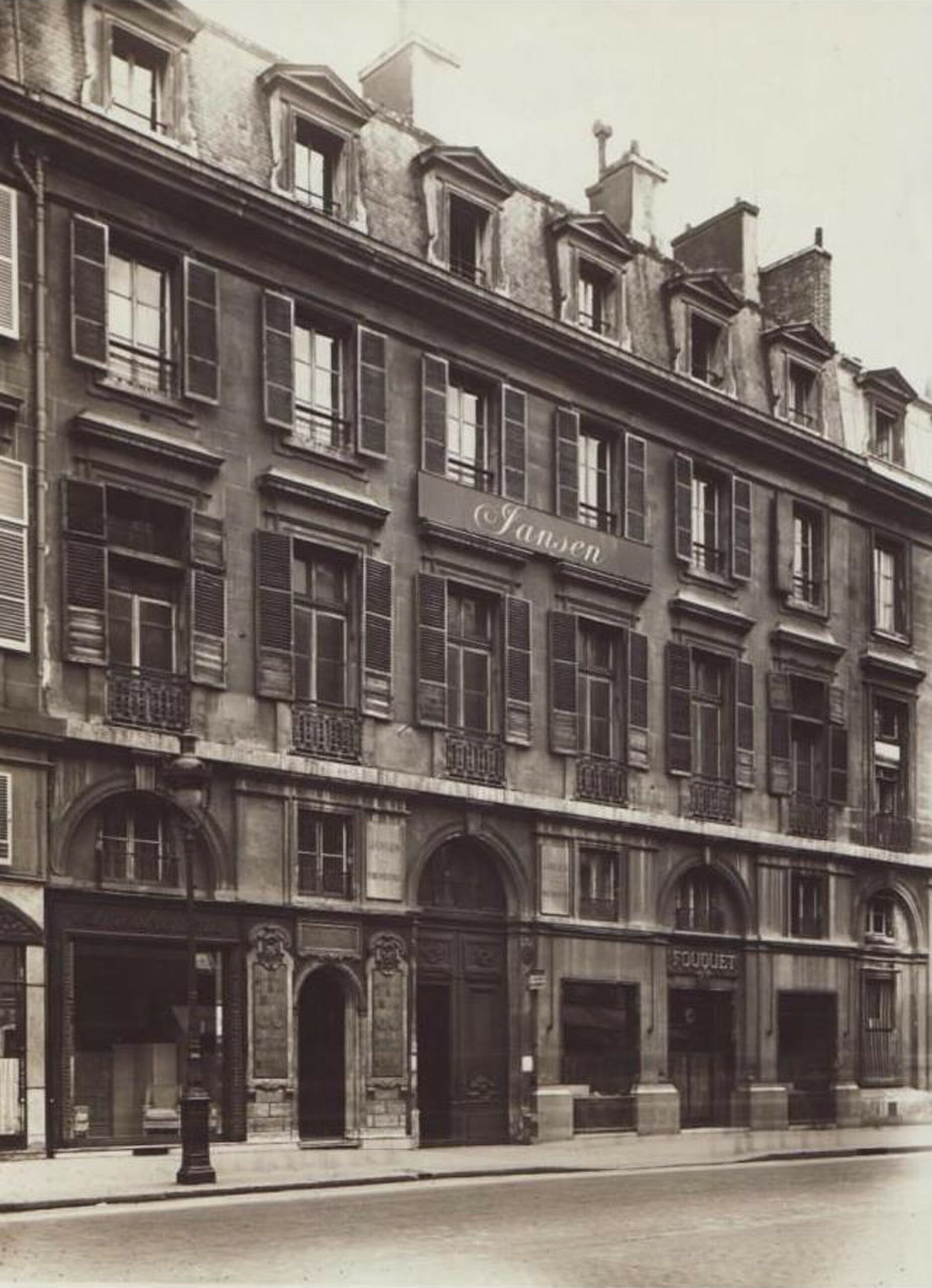
View of the rue Royale in the 1900’s
FAMOUS GUESTS
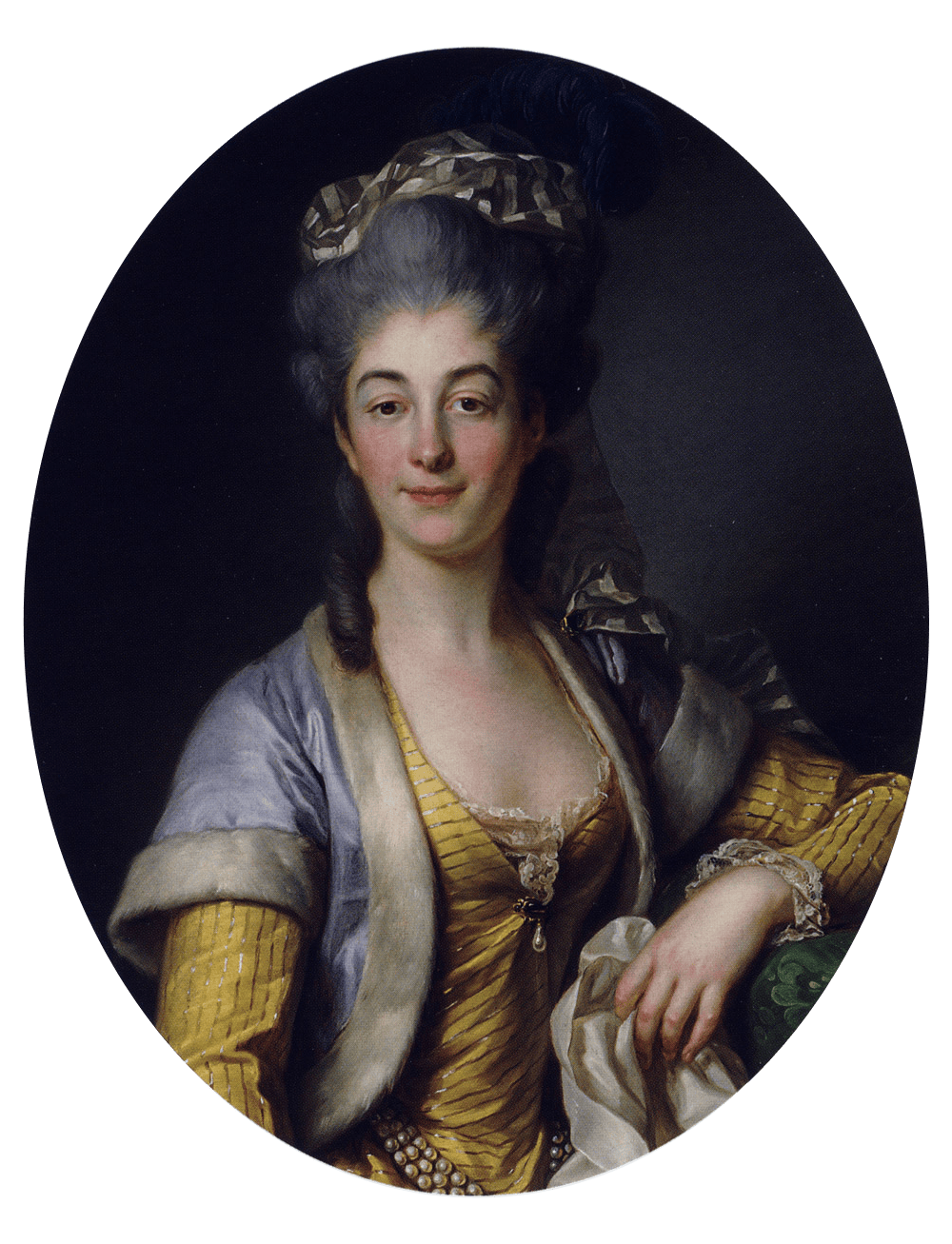
The first to live at n° 6 rue Royale was Jean-François Le Roy de Senneville (1715-1784), secrétaire du Roi from 1752 à 1780 and férmier général from 1772 to 1780, who resided there until his death in 1783. Le Roy de Senneville married a Jarente, daughter of Balthazar-Alexandre, marquis of Orgeval, and sister of the wife of Laurent Grimod de la Reynière, fermier général from 1756 to 1780. He was a great amateur who owned in his hôtel rue Royale an exceptional collection of paintings and pastels of different schools, of sculptures, bronzes and art objects that were described on the occasion of the two auctions, one of which took place in his lifetime from 5 to 11 April 1780, and the second one after his death in 1784. Also mentioned in the 1780 auction were several groups by Clodion – Satyr arranging flowers in a Nymph’s hair as well as a group of two children representing La Poésie & La Musique, a piece executed in marble for M. l’Abbé Terray – a group by Clodion Frère and another by Challe; as well as an important collection of bronzes, including an Andromeda tied to the rock by Robert Le Lorrain from the collection of Blondel de Gagny – n° 485 of his auction catalogue – two Horses by Girardon, a group showing Latona accompanied by her children by Le Gros, on a gilt ormolu base, or A lying child by Germain Pilon, resting on a chest executed by Boulle, fitted with four key-locked drawers with a tortoiseshell ground and adorned with pilasters & low-reliefs and framed, representing children’s plays. The whole supported by four gilt ormolu balls. A bust of Vitellius with a porphyry head and base in black marble enhanced with a drape in white marble and ornaments in gilt bronze, 27 inches high, two vases in grey granite on bases in Spanish brocatelle, a fine porphyry vase covered & fitted with candles in the shape of snakes caught in the mass, pieces of furniture by Boulle, including a Chest, en tombeau, called toilette and its feet by Boulle, counterpart, with feminine and lion’s masks, 54 inches high, 2 foot 8 inches long and 20 inches deep, an elephant clock signed by Julien Le Roy, several nécessaires, vases, mantelpiece garnitures and objects in porcelain from Sèvres, Meissen and other manufactures completed this lavish collection. In that collection, paintings had pride of place. In the post-mortem auction of 1784, no fewer than forty-nine paintings of the French school were put up for sale, including on Sébastien Bourdon (Country Scene), two Parrocels, one Pater (Young Woman Wearing a Nightgown on her Bed), three Bouchers (Landscapes), two marine paintings by Joseph Vernet (The Calm & The Storm), two Greuzes (Young Girl Knitting and a Young Girl, with a Bird), sic Fragonards, forty-seven paintings of the Northern Schools, including a Jan Brueghel (The Froen Canal), two Teniers (Sea View and Peasants, Interior), two Philips Wouwermans (Riders), one Paul Potter (The Rape of Europe), three Ruysdaels (Landscape et View on the Meuse), and thirty-seven paintings from various schools, including fifteen with religious themes. There were also in Le Roy de Seneville’s collection twenty-eight pastels under glass, including one Boucher (The Flower Seller of the Opéra) also from the collection of Blondel de Gagny, and two Fragonards (Landscapes). In 1784 was also mentioned a lavish series of Sèvres and Meissen porcelains, vases, cups, caisses à oignons (lidded bulb vases), mantelpiece garnitures, Chinese vases adorned with pagodas and mounted with necks, garlands and bases in gilt bronze, or a potpourri of old Japanese pieces.
After him came the Controller of the House of the countess of Provence, Marc Randon de La Tour, who was also the General Treasurer Payer of the House. In 1787, he became the owner of the château of Mortefontaine in Villers-Saint Paul in the Oise region, the former property of Antoine de Sartine (1729-1801), Police Lieutenant General and then Secretary of State of the Navy, which he had completely rebuilt. As he became Coronel of the National Gard of Creil in 1791, he was arrested under the Terror and his belongings were sequestrated in accordance with a decree of the National Convention promulgated in January 1794. Randon de La Tour was sentenced to death by the Revolutionary Tribunal on the 27 June 1794 and guillotined on the selfsame day place du Trône-Renversé, now the place de la Nation.
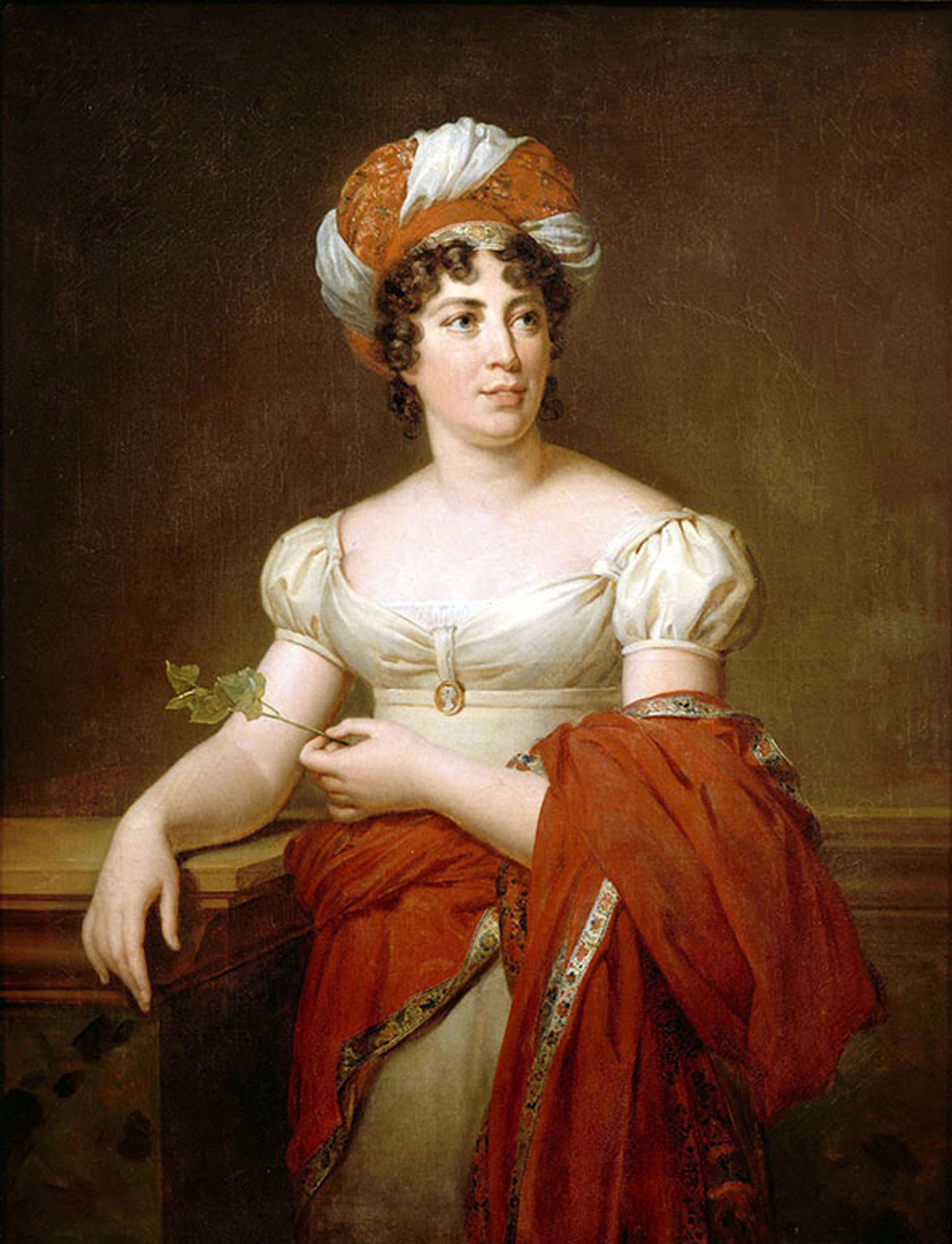
In the beginning of the Restoration, circa October 1816, the 6 rue Royale welcomed for a very short span one of its most illustrious guests, namely Anne-Louise Germaine de Staël (1766-1817), the daughter of the famous Jacques Necker (1732-1804), a wealthy banker of Genevan descent who was appointed Director of the Royal Treasure by Louis XVI in 1766, after the disgrace of Turgot, and then Minister of Finances and member of the King’s Council in 1788. Born in Paris in 1766, Germaine de Staël was brought up in an intellectual milieu where Buffon, Marmontel, Grimm, Edward Gibbon, the abbé Raynal or Jean-François de la Harpe were assiduous visitors of her mother’s salon. An astoundingly precocious child, she was able to sum up The Spirit of the Laws at fifteen, would talk with philosophers, read Rousseau passionately. When she was twenty, she married baron Eric Magnus de Staël-Holstein (1749-1802), the Ambassador of the King Gustaf III of Sweden to the Court of France in Versailles. They separated in 1800. The Baroness de Staël first hailed the Revolution with enthusiasm but abhorred the crimes committed during the Terror even if she remained faithful to the ideas of the Constituante. She had a tumultuous sentimental life, felt a great tenderness for François de Pange and had an ongoing stormy affair with Benjamin Constant, a Franco-Vaudois writer and politician she met in 1794. Her first political writings were Reflections on Peace, Adressed to Mr. Pitt, and the French Nation and Reflections on Peace published in 1793. In 1796, she published a moral and political work On the Influence of Passions on the Happiness of Individuals and Nations and wrote in 1799 as a complement to it a book entitled On the Current Circumstances Which Can End the Revolution which remained long unpublished. She was persecuted under the Consulate and the Empire, having turned her salon in 1802 into a centre of opposition against Napoléon Bonaparte and was eventually forced into exile. Her published works during that turbulent period are famous: On Literature Considered in Its Relations to Social Institutions in 1800; the novel Delphine in 1802; Corinne and Italy in 1807 and in 1810 her famous work: On Germany. She travelled to Austria, Russia, Sweden, England, Switzerland, where she stayed long in her castle in Coppet, to Italy and Germany. She married again in 1811 with a young Genevan officer, Albert de Rocca. Madame de Staël rallied to the Bourbons and returned to France in Autumn 1814 after publishing in England Sapho as well as her Reflections on Suicide. She left Paris again after a short period of the Hundred Days in the beginning of the Second Restoration. It was on that occasion that she rented the apartment overlooking a courtyard at 6 rue Royale where she brilliantly received ministers and generals. But in February 1817 she was felled by a stroke on her way to a ball given by the duke Decazes. Although she was bedridden and unwell, Madame de Boigne and Châteaubriand came to visit her at 6 rue Royale. She was carried by her family to a house nearby which belonged to Sophie Gay, located rue Neuve-des-Mathurins where she went on receiving guests and even managed to bring together Juliette Récamier and Châteaubriand to form a famous couple. Madame de Staël died soon afterwards on 14 July 1817.
A LEADING CENTRE FOR
THE PARISIAN LUXURY TRADE
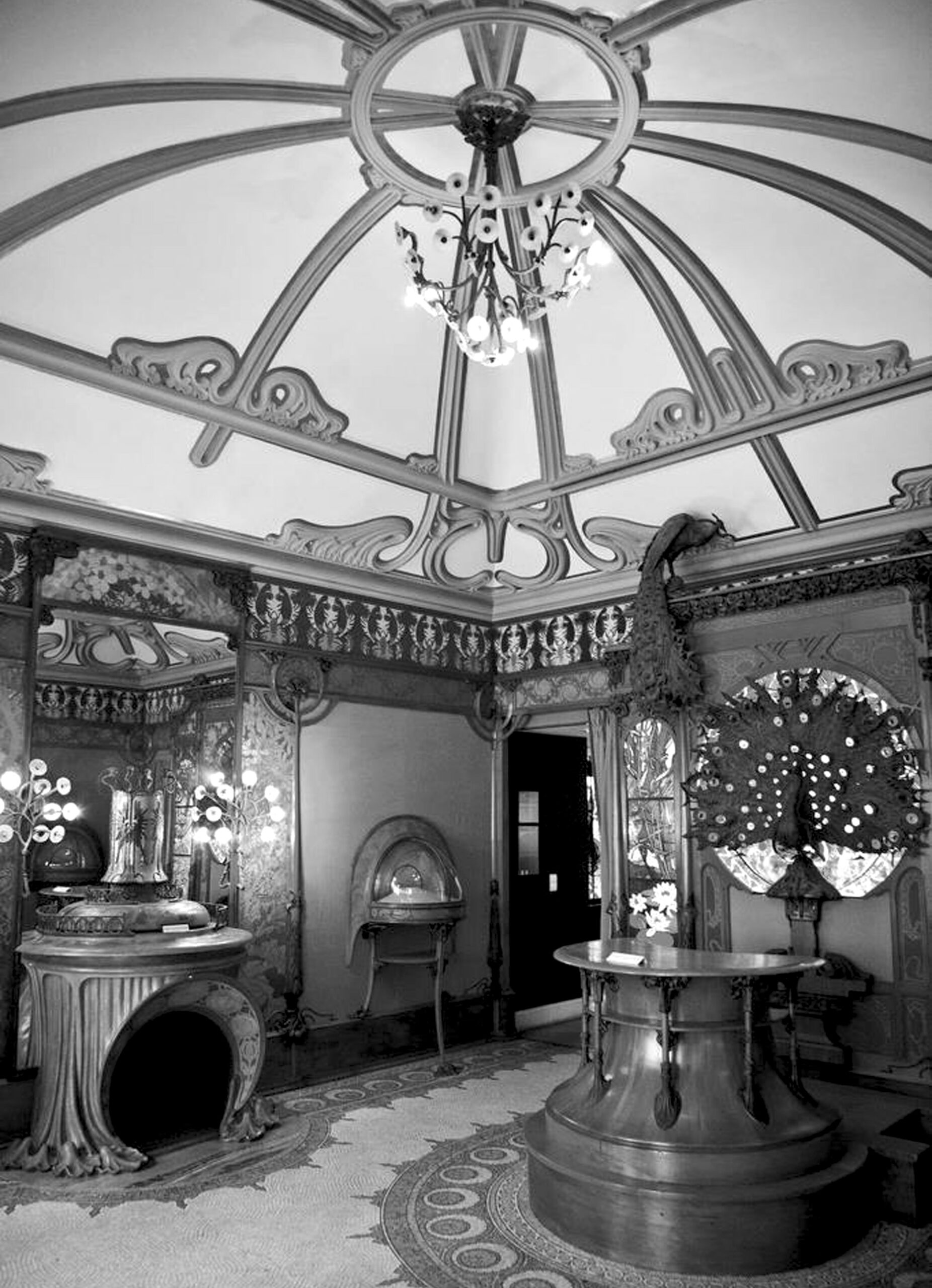
After the Restoration, the rue Royale gradually became less residential and grew into one of the leading centres of the Parisian luxury trade, especially at the end of the 19th century. The great joailliers-bijoutiers left the Palais-Royal neighborhood to settle rue Royale, like the famous maison Fouquet, at n°6 and the maison Heurgon which had been at n° 15 since 1865. That trend still holds true today – Rue Royale hosts the boutiques of the great luxury names such as Chanel, Dior, Gucci or Cerutti. The precursor of the Maison Steinitz and its workshops was the Maison Jansen which settled for a time in 1881 at n°6 before moving to n°9. The famous design firm settled on the left-hand side of the porte cochère at n°6 which includes the former apartment of Madame de Staël thanks to a monumental staircase taken from former stables and later connected to a section built in the 20th century overlooking the courtyard. On the right-hand side of the porte cochère, the jeweler Fouquet commissioned in 1901 for its boutique a remarkable decoration in Art Nouveau style designed by Alphonse Mucha and executed with the help of the Maison Jansen. That amazing decoration was removed in 1923 and can now be seen at the musée Carnavalet.
THE 6 RUE ROYALE TODAY
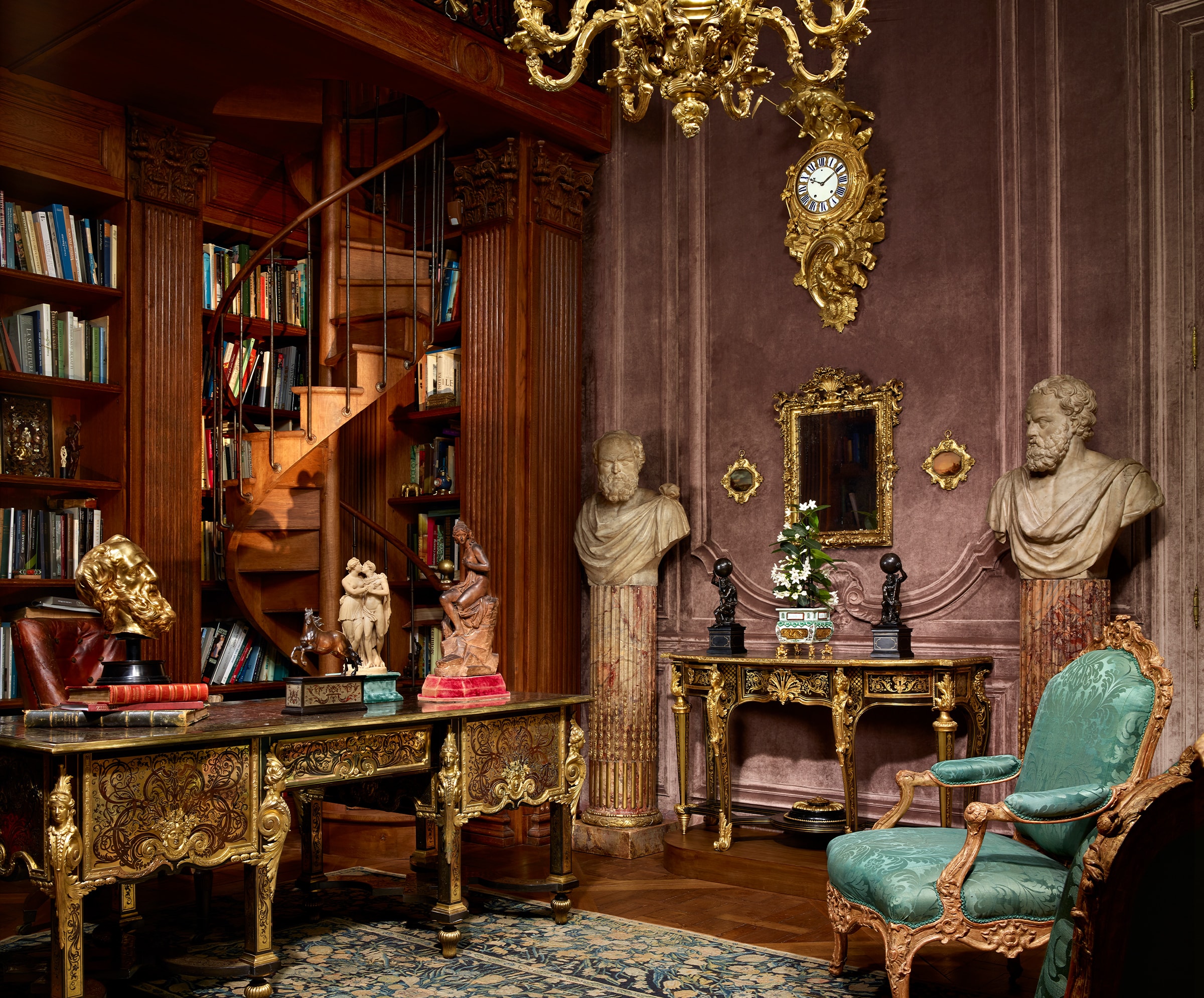
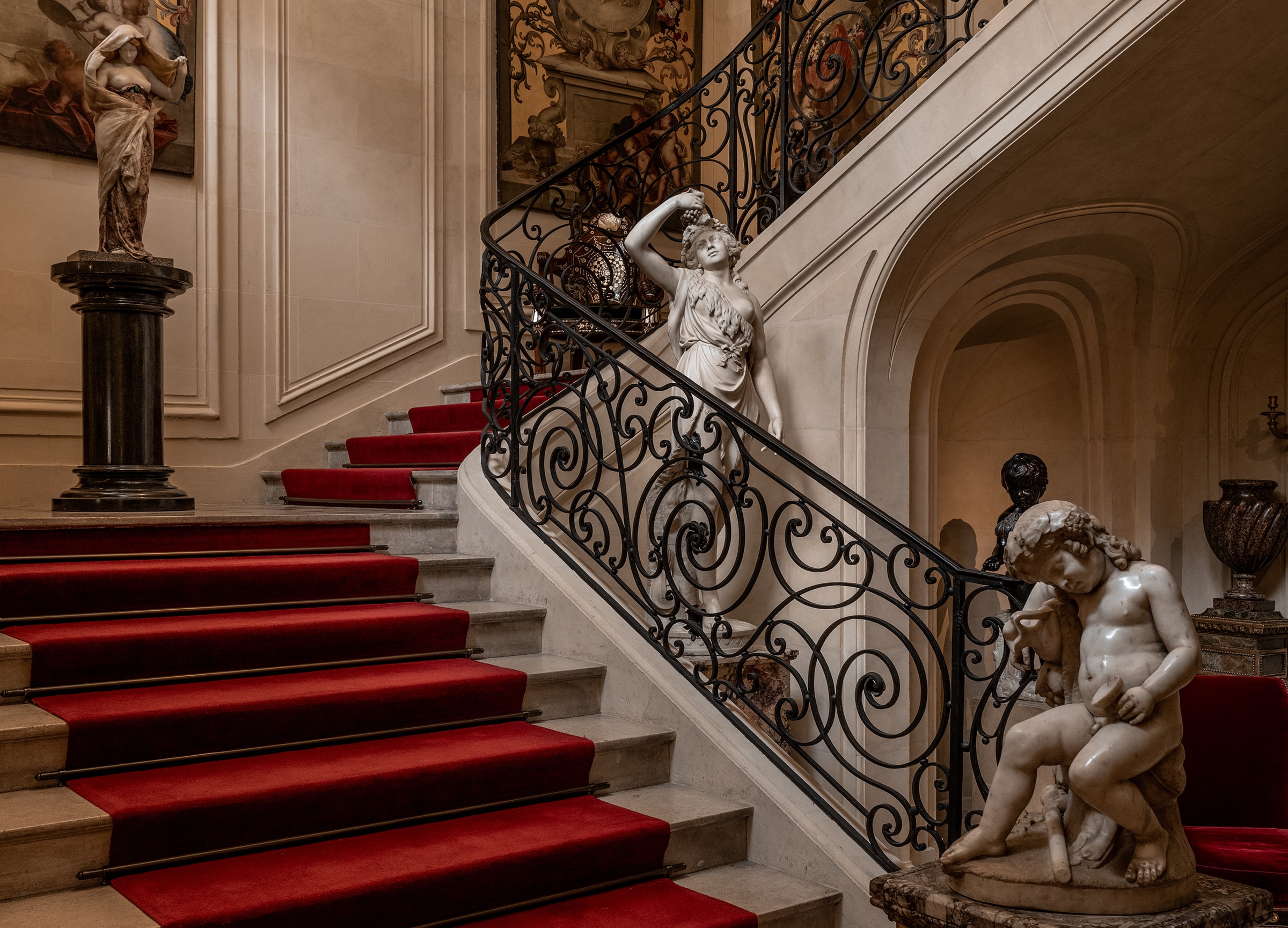
This history-laden place where a salon in the piano nobile has kept its original decoration of the 1770’s and where the Honour Staircase remains, with its wrought-iron banisters of the Louis XV period, today hosts new exclusive exhibition rooms of the Steinitz gallery but also, on the ground floor and the second floor of the main body of the building and its wings, its design office and part of its workshops and team uniting in the heart of Paris a unique sum of savoir-faire and skills in all the domains of art professions relating to interior design, furniture and decorative arts. A remarkable nod in the direction of the “Gobelins” dreamed and created by Bernard Steinitz in Saint-Ouen in the 1980’s, this “installation” right in the centre of Paris is also – all things being equal – reminiscent of the Furniture Depository of the Crown, which had moved, in 1774, to the Place Louis XV, a stone throw’s away from n°6 rue Royale, in the large colonnade building by Gabriel and allocated to the Ministry of the Navy since the Revolution. This prestigious place had been especially built for the Furniture Depository with its exhibition rooms, its lodgings, including the sumptuous apartment, still existing today, of Thierry de Ville d’Avray (1732-1792), Intendant and Controller General of the Furniture Depository of the Crown from 1784 to his death, of its offices, its warehouses, its workshops…