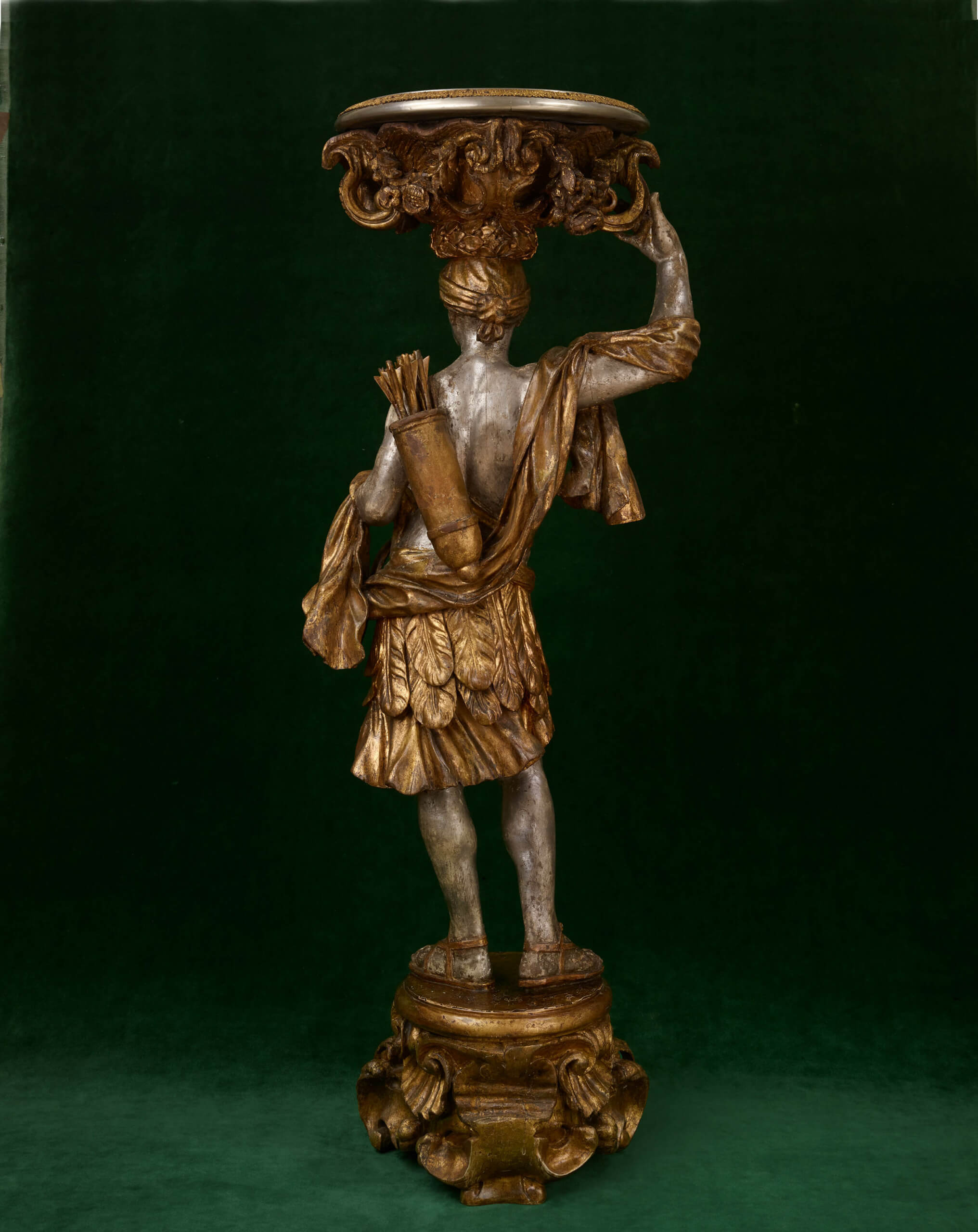
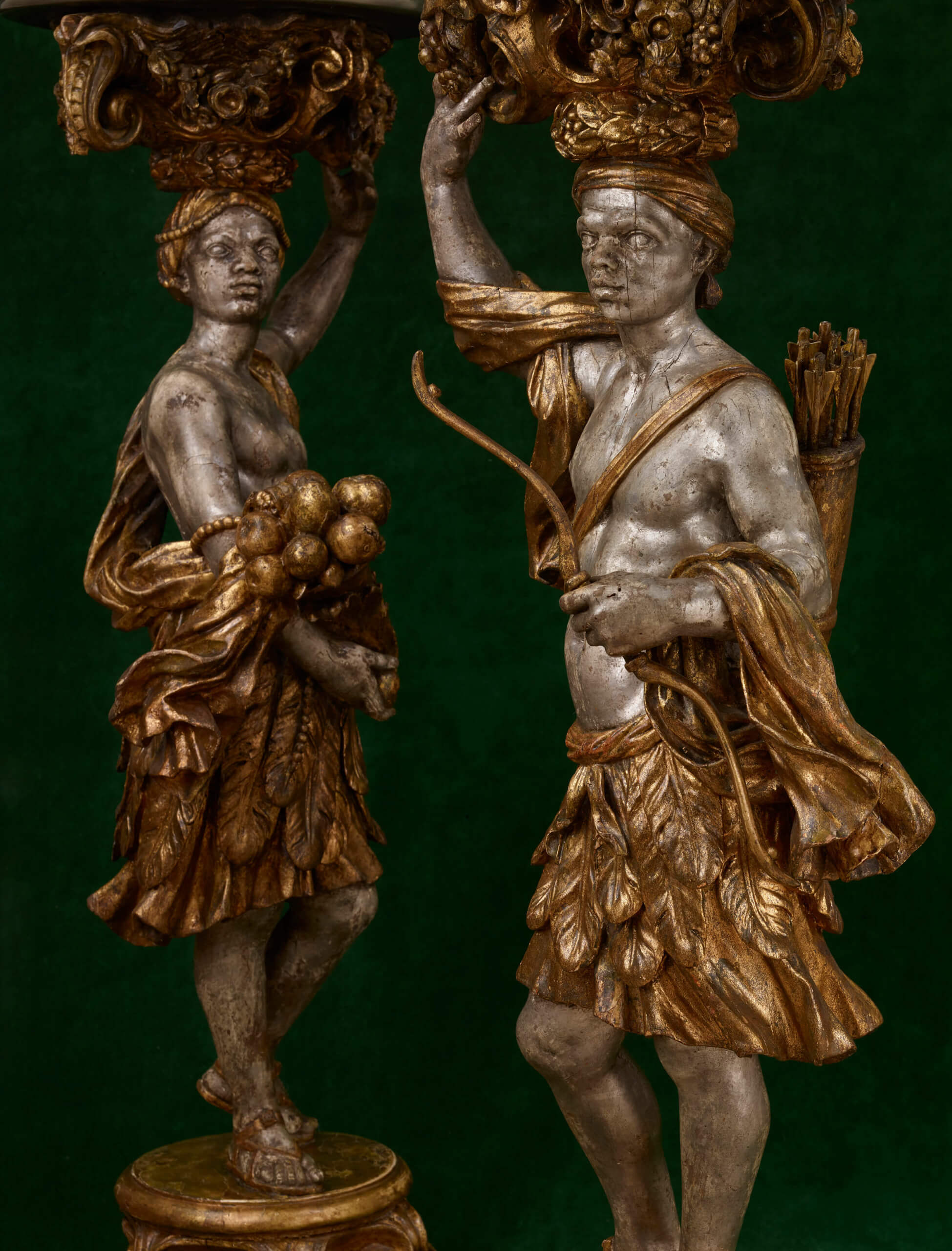
Carved, gilded and silvered wood ; top inlaid with tin, brass, ebony and amaranth.
H. 114 cm. (45 in.); W. 43 cm. (17 in.); D. 34 cm. (13 ½ in.).
COMPARATIVE LITERATURE: Theodoor Herman Lunsingh Scheurleer, « Pierre Gole, Ébéniste du roi Louis XIV », The Burlington Magazine, vol. CXXII (June 1980), p. 380-394 ; Theodoor Herman Lunsingh Scheurleer, Pierre Gole: Ébéniste de Louis XIV, Dijon 2005 ; Michael Snodin and Nigel Llewellyn (eds), Baroque: Magnificence & Style (cat. de l’exposition), London 2009.
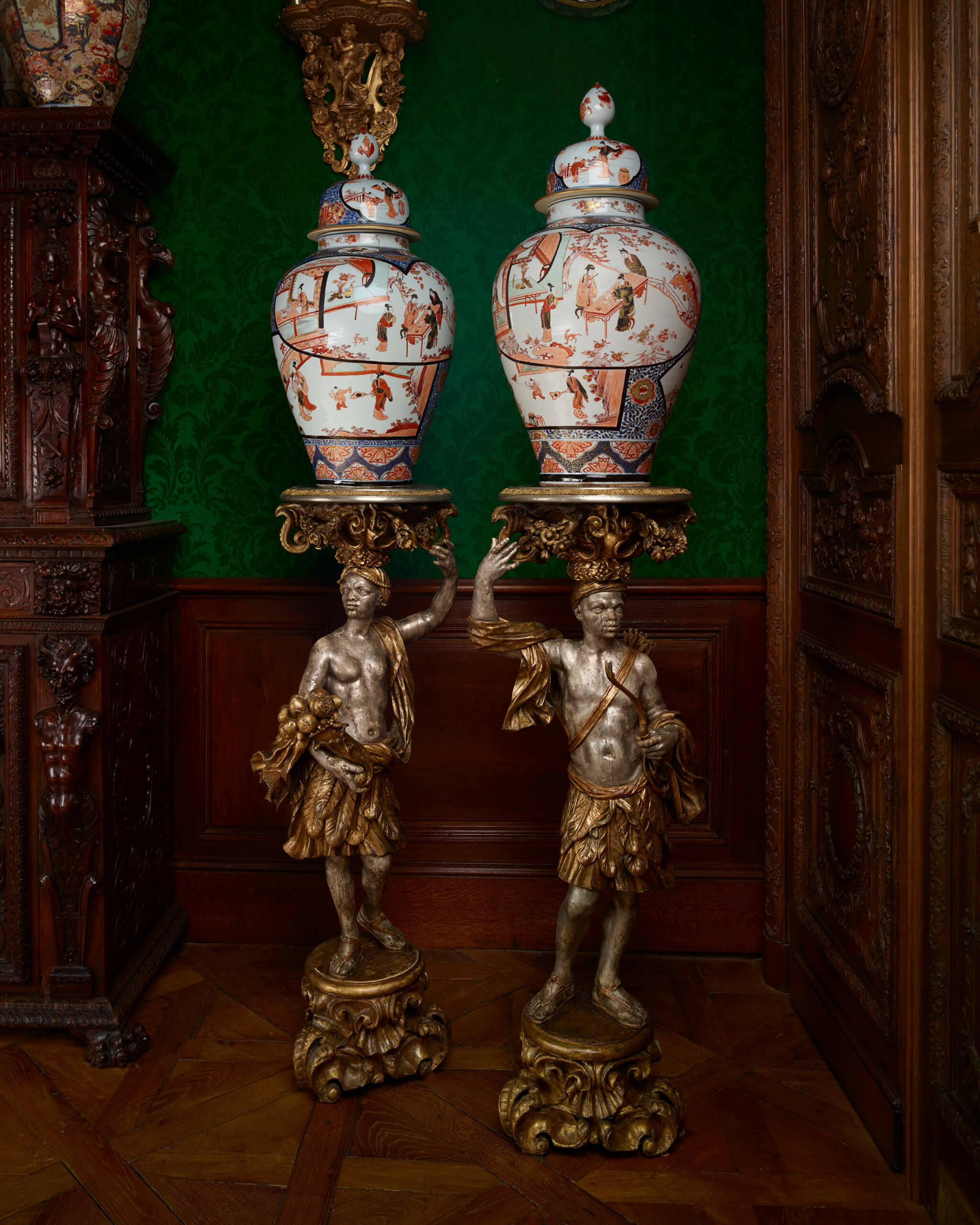
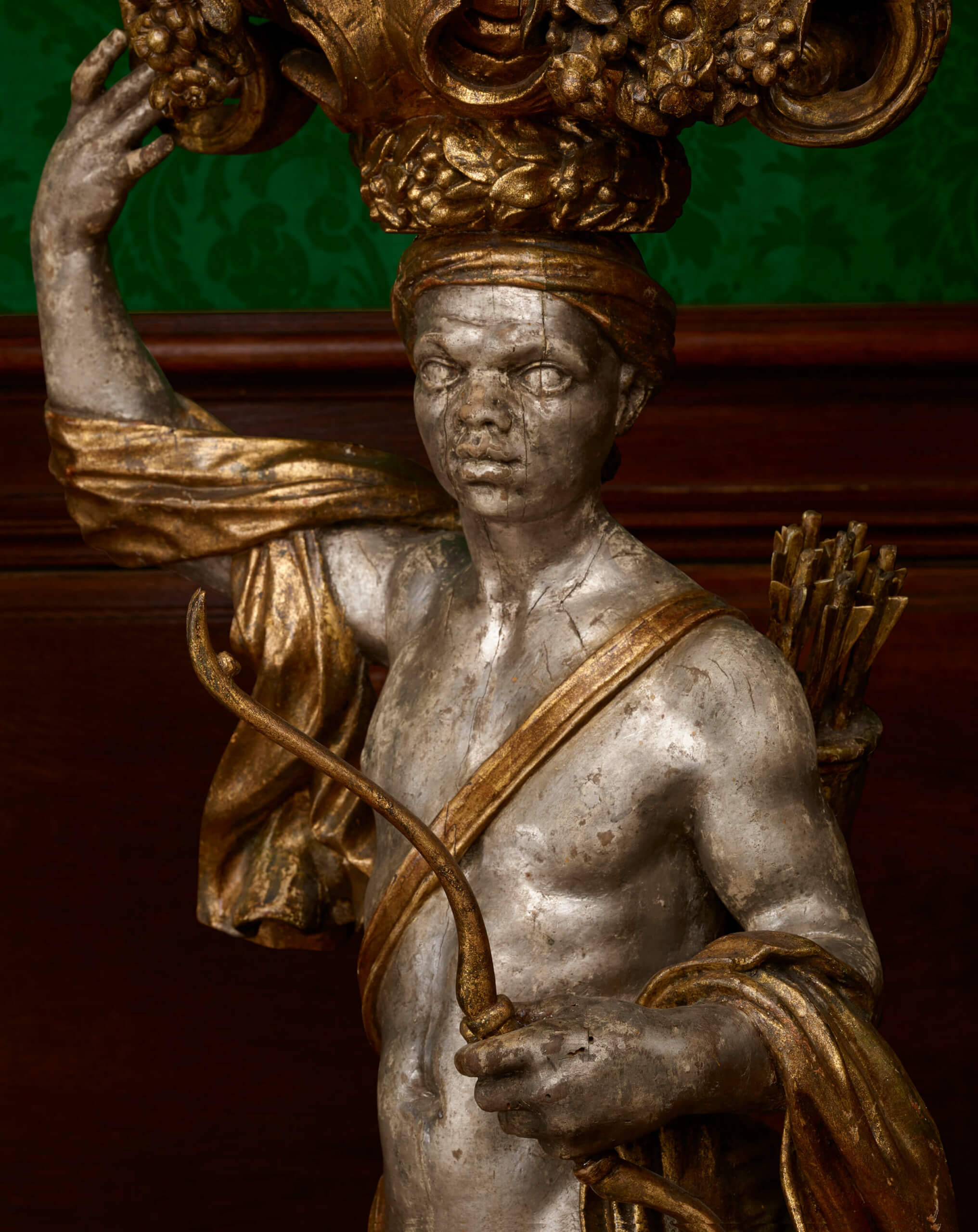
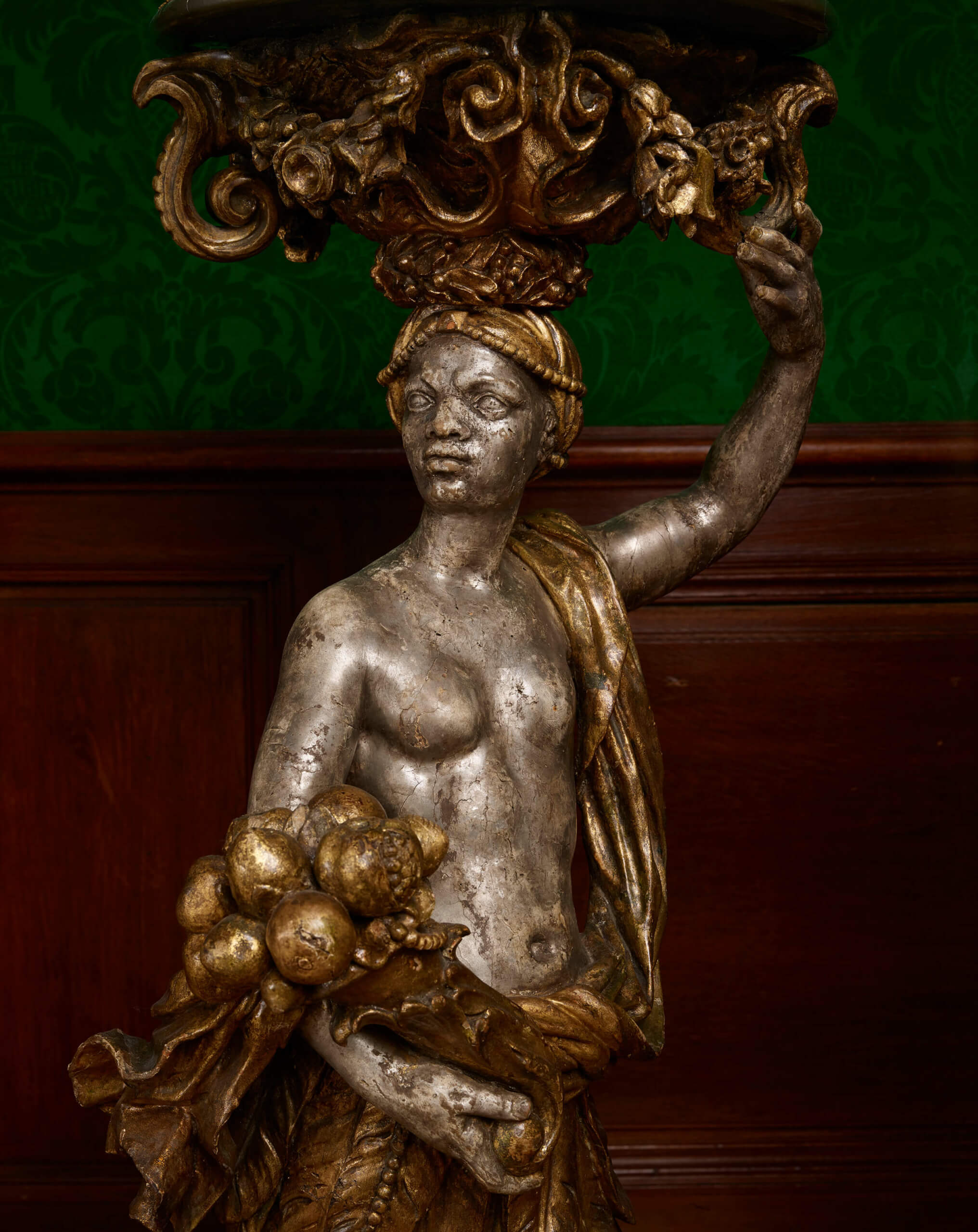
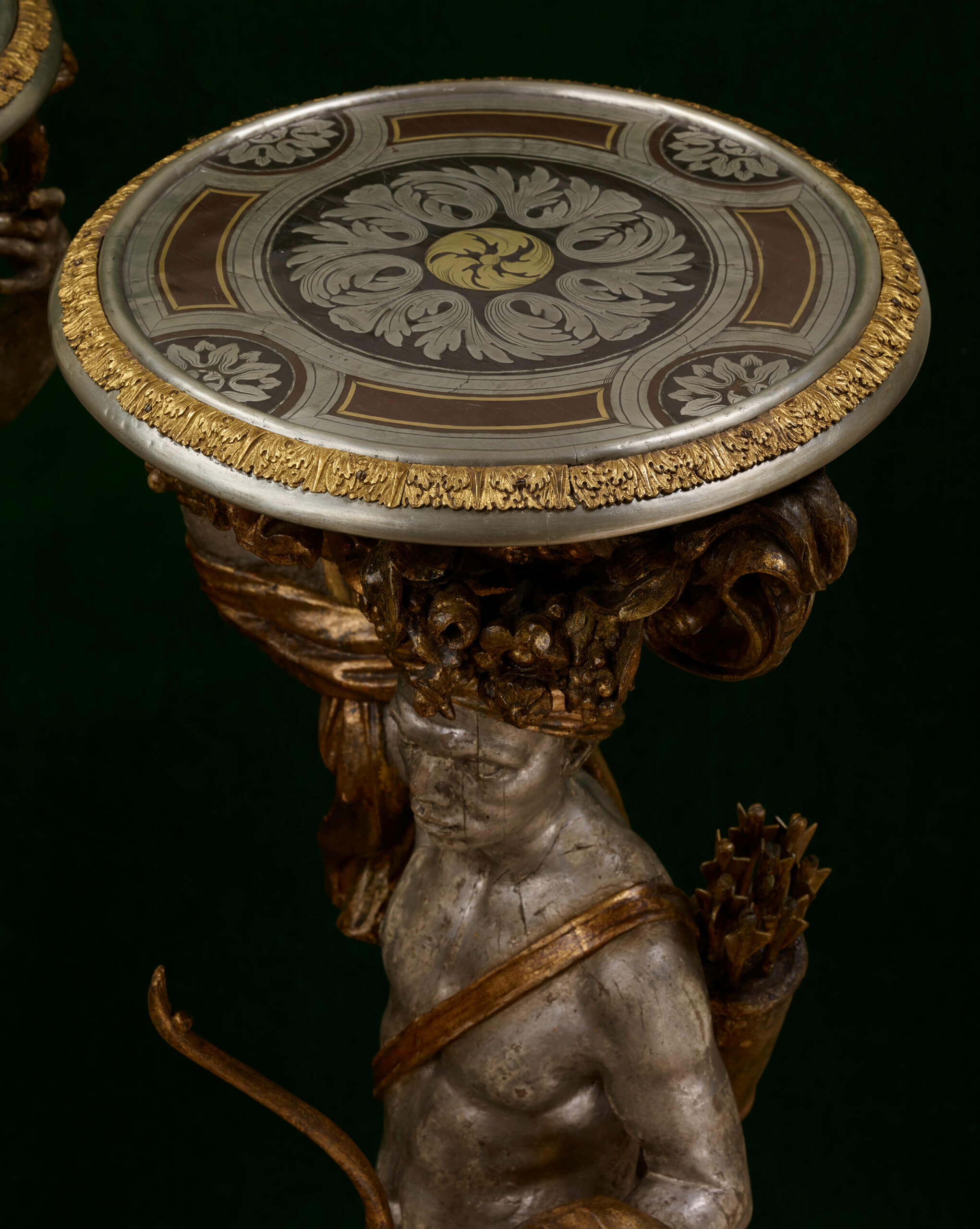
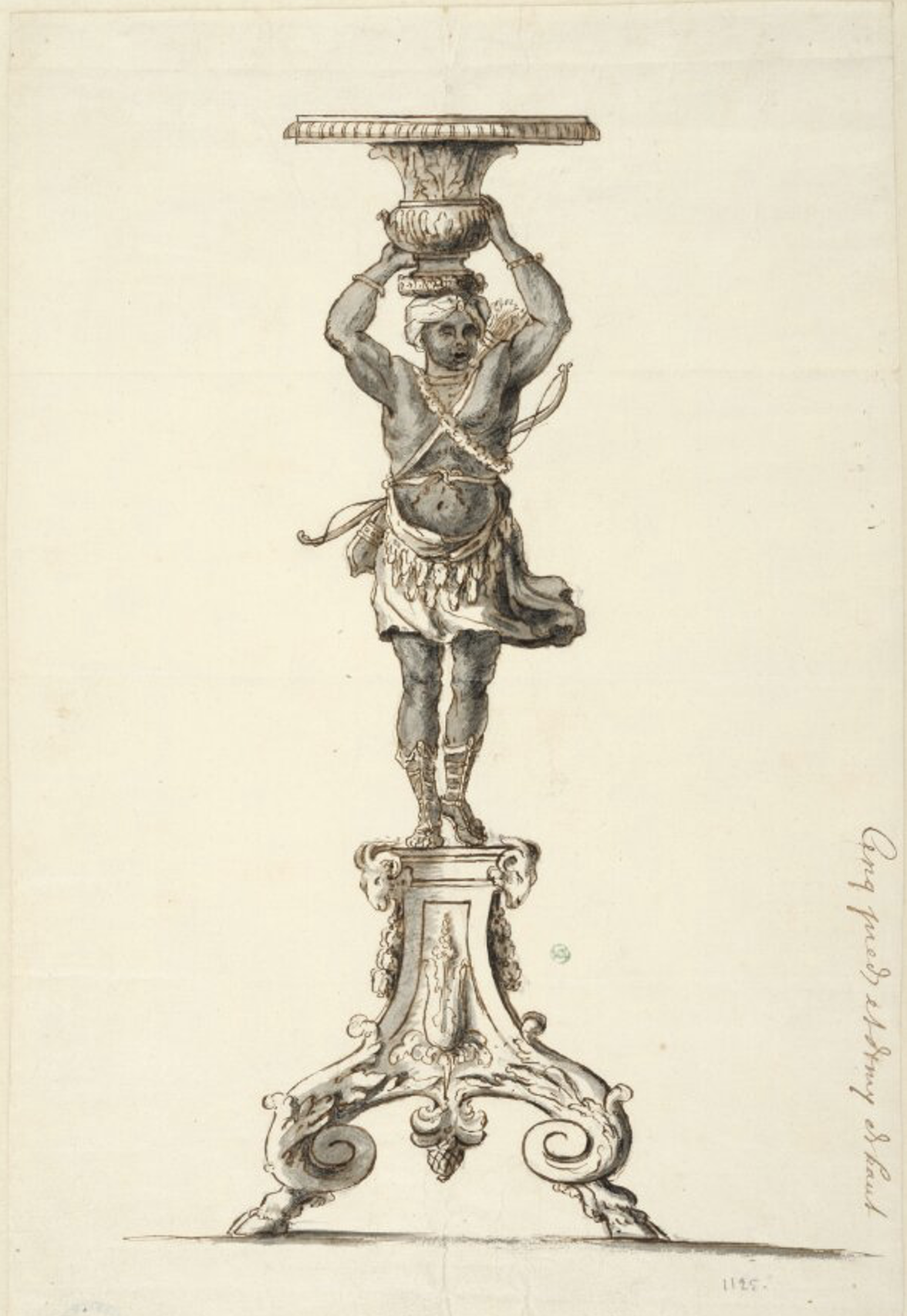
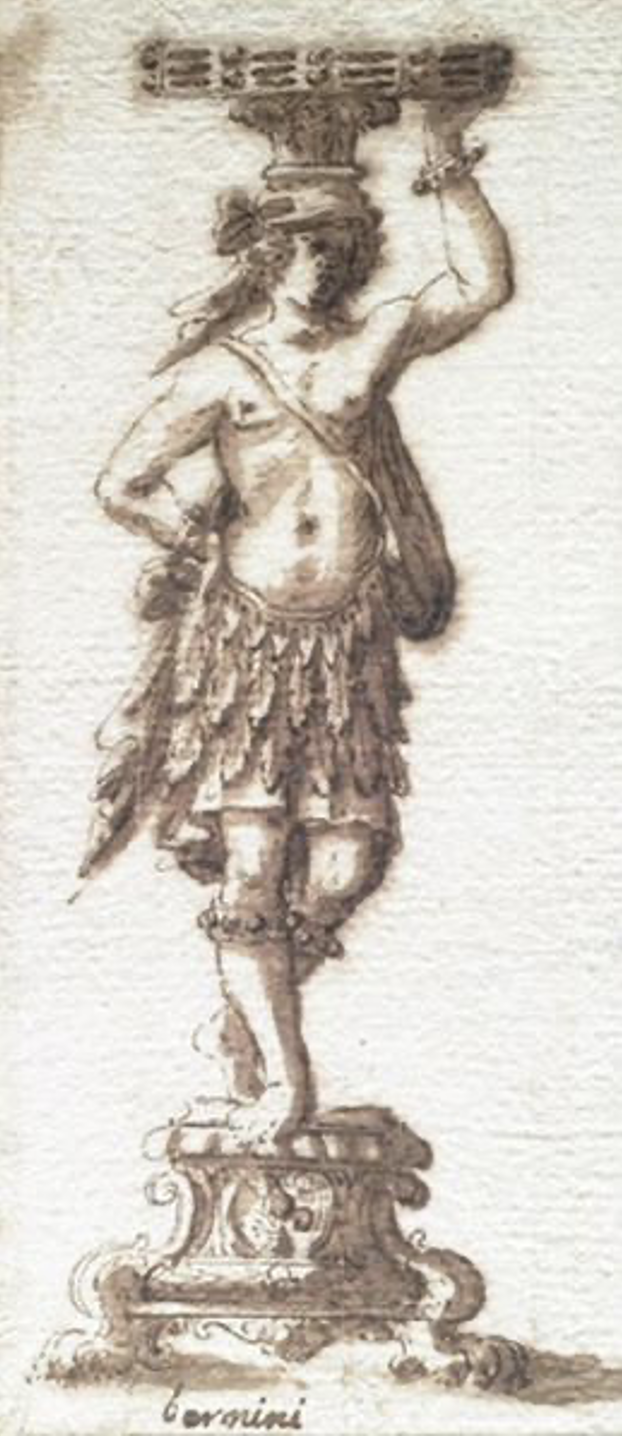
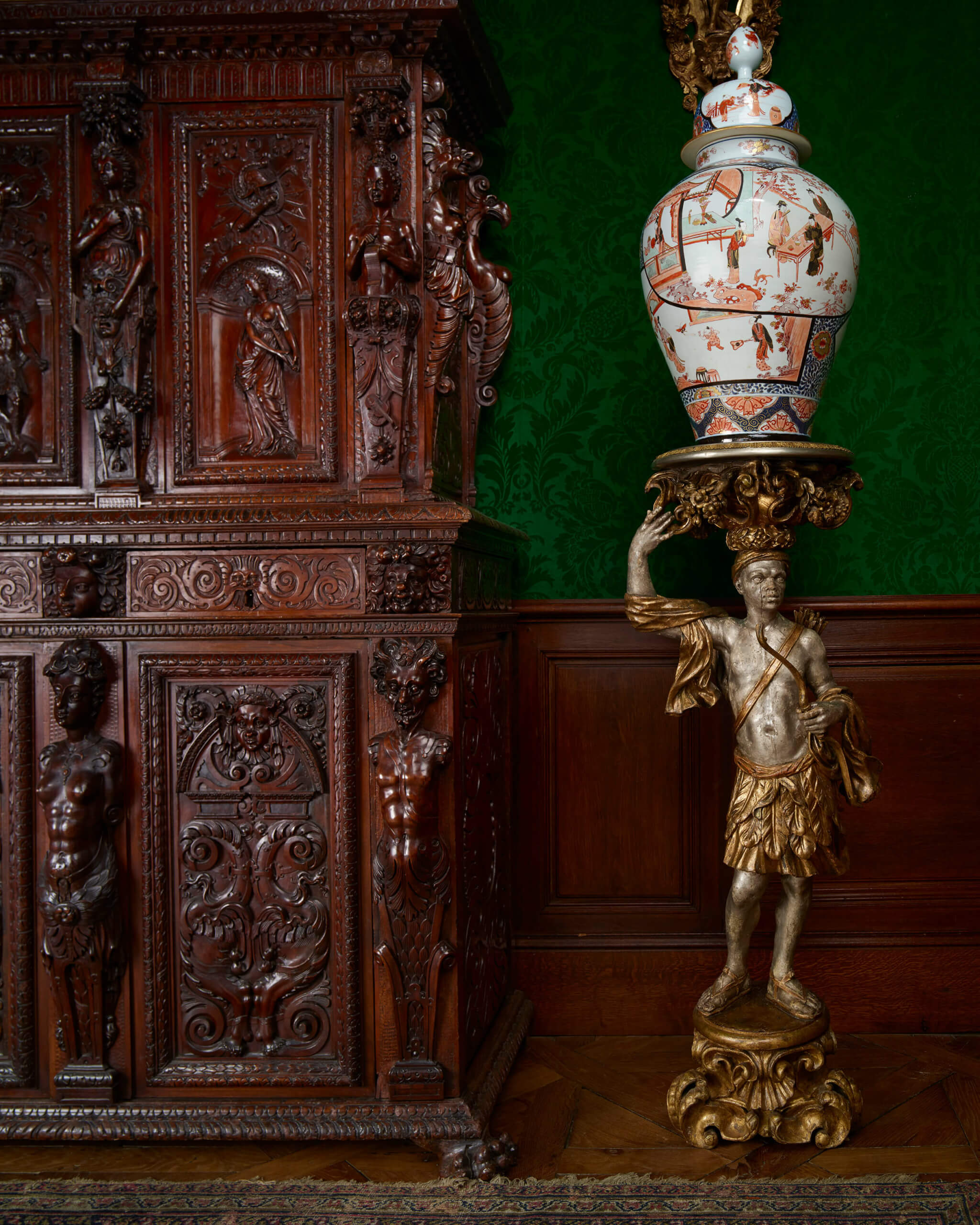
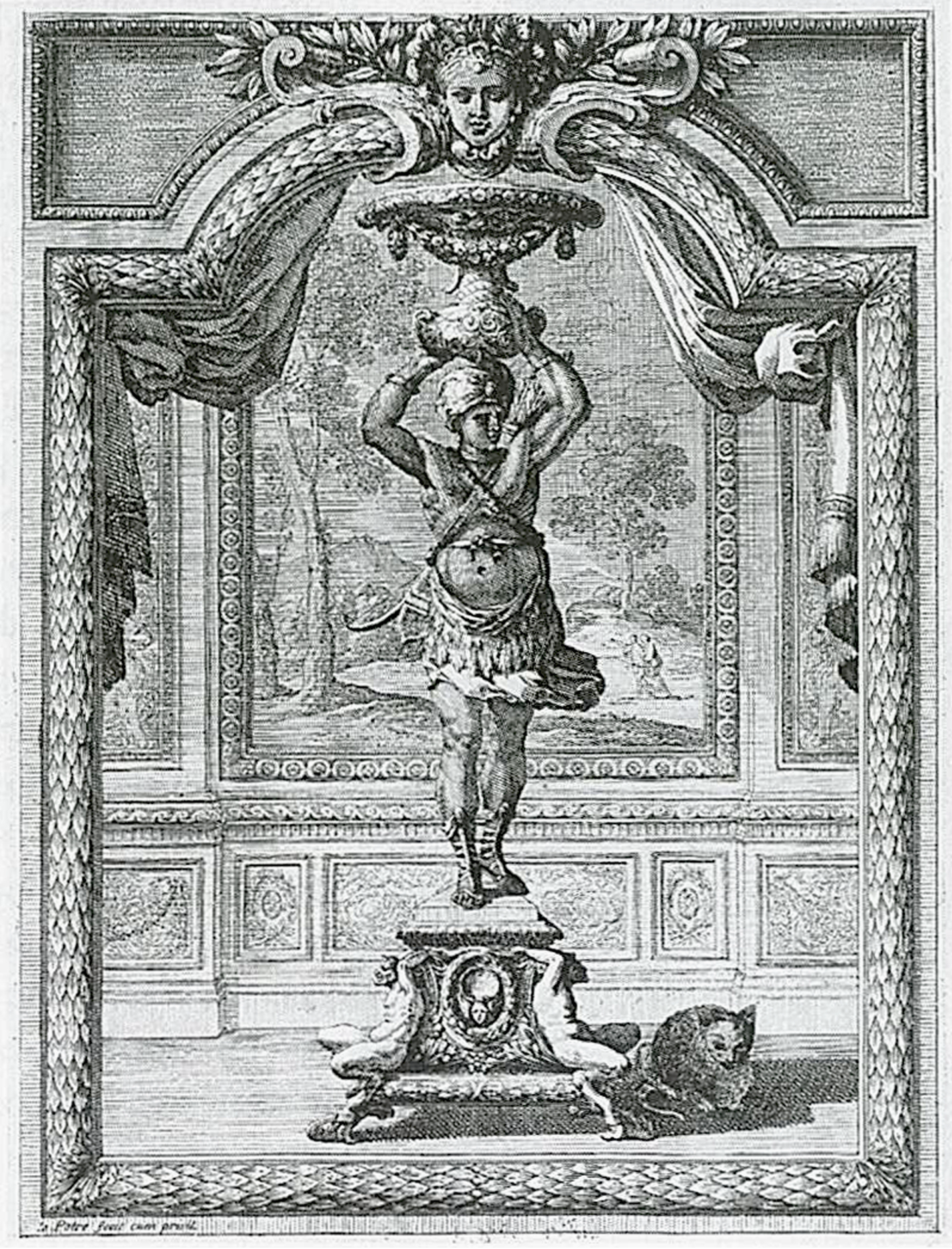
This exceptional and very rare pair of carved, gilded and silvered wood torchères, in the form of Blackamoors on scrolled bases, is attributed to the workshop of the famous Flemish cabinet maker Pierre Gole (1620-84) in Paris around 1670. The carving itself is probably the work of the French sculptor Mathieu Lespagnandelle (c.1616-89), while the gilding is attributed to David Dupré. All these craftsmen worked at that time exclusively for the crown.
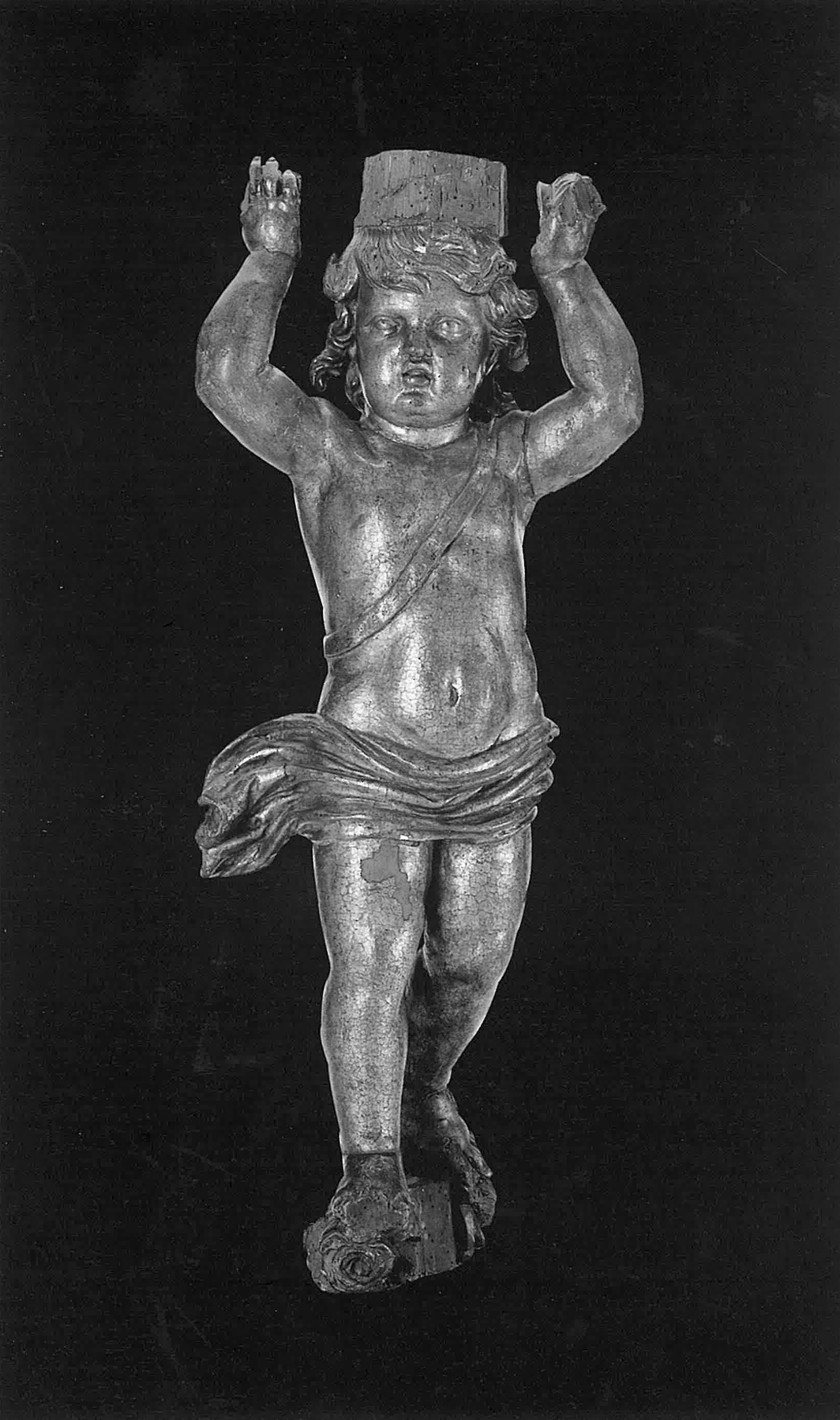
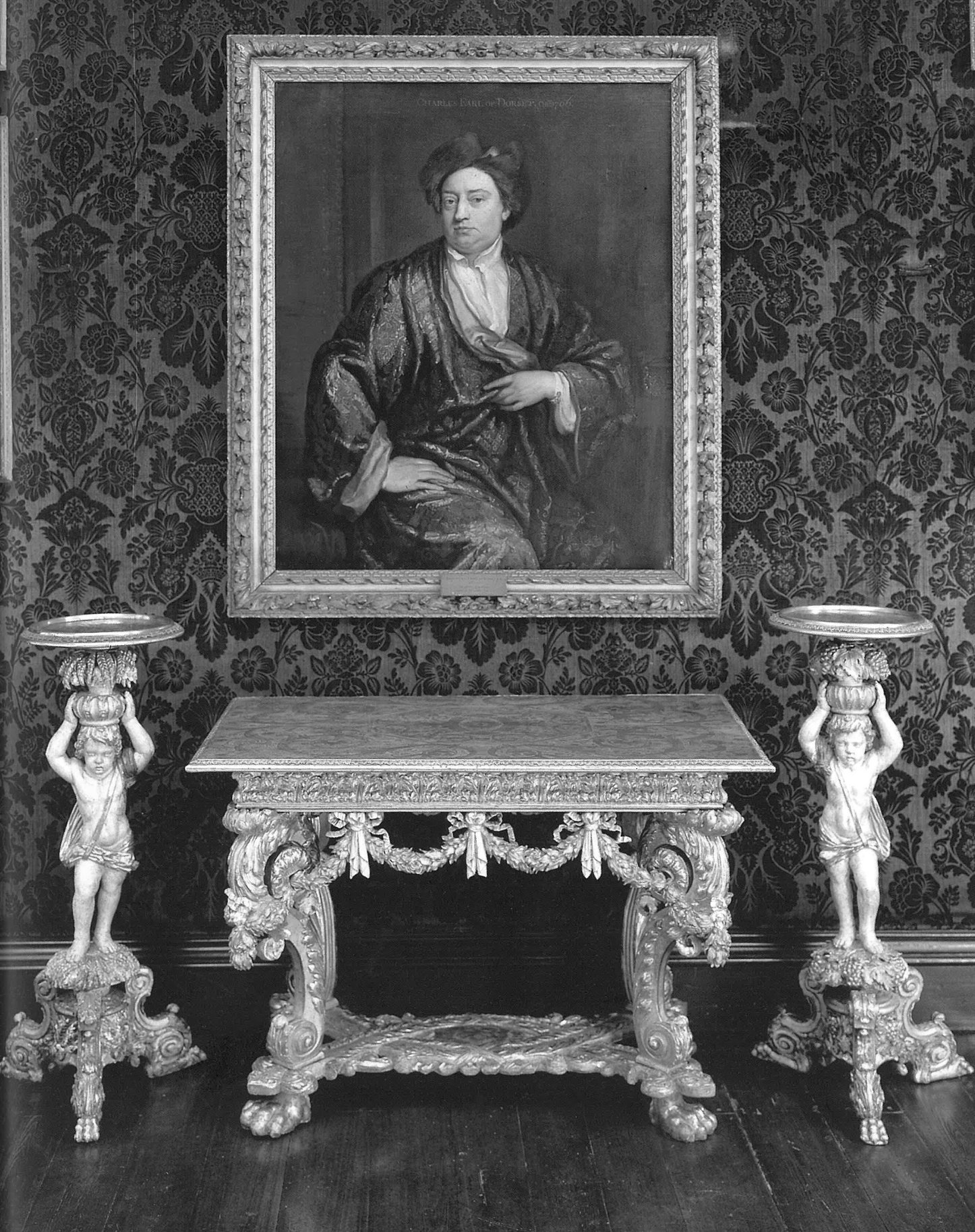
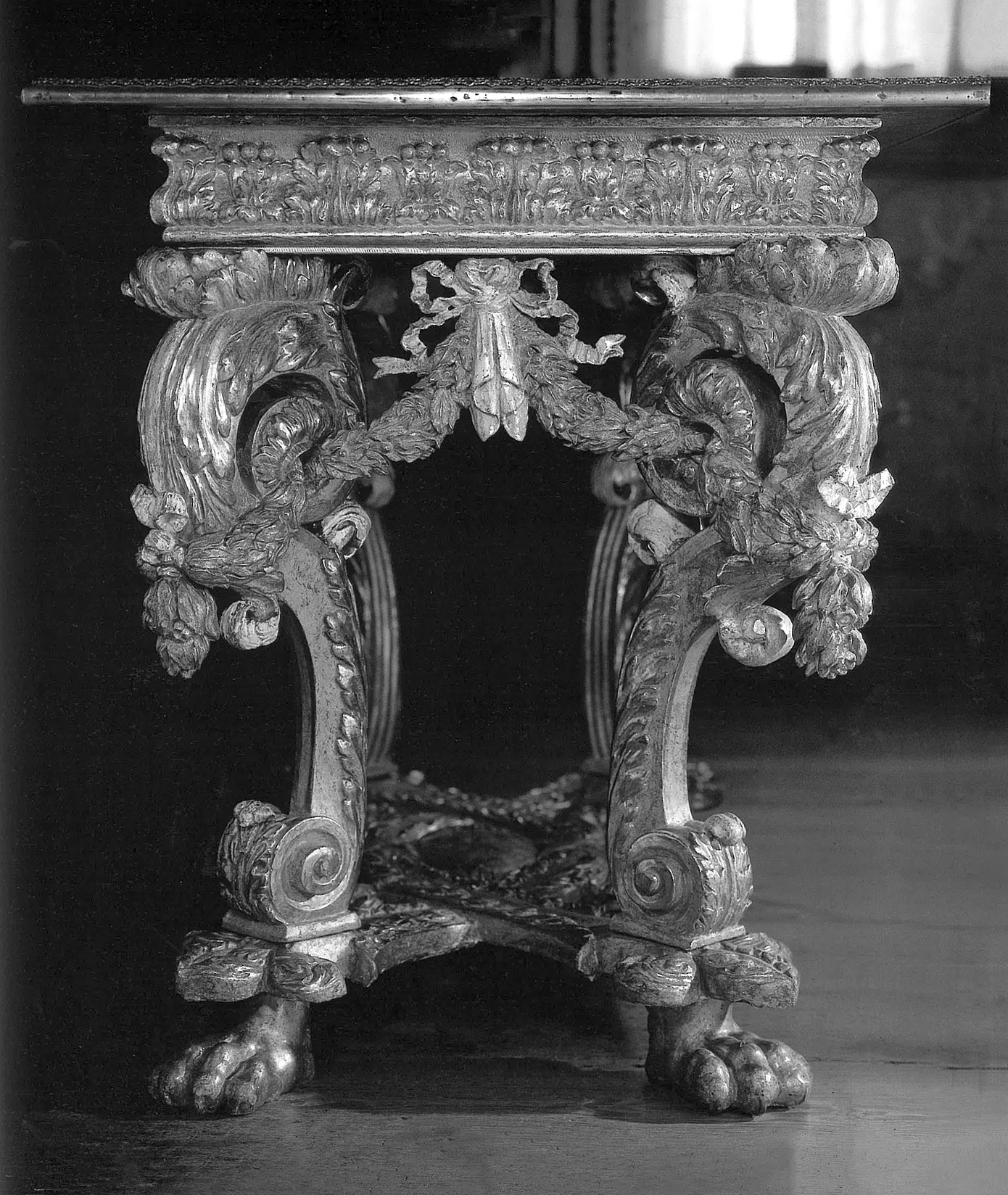
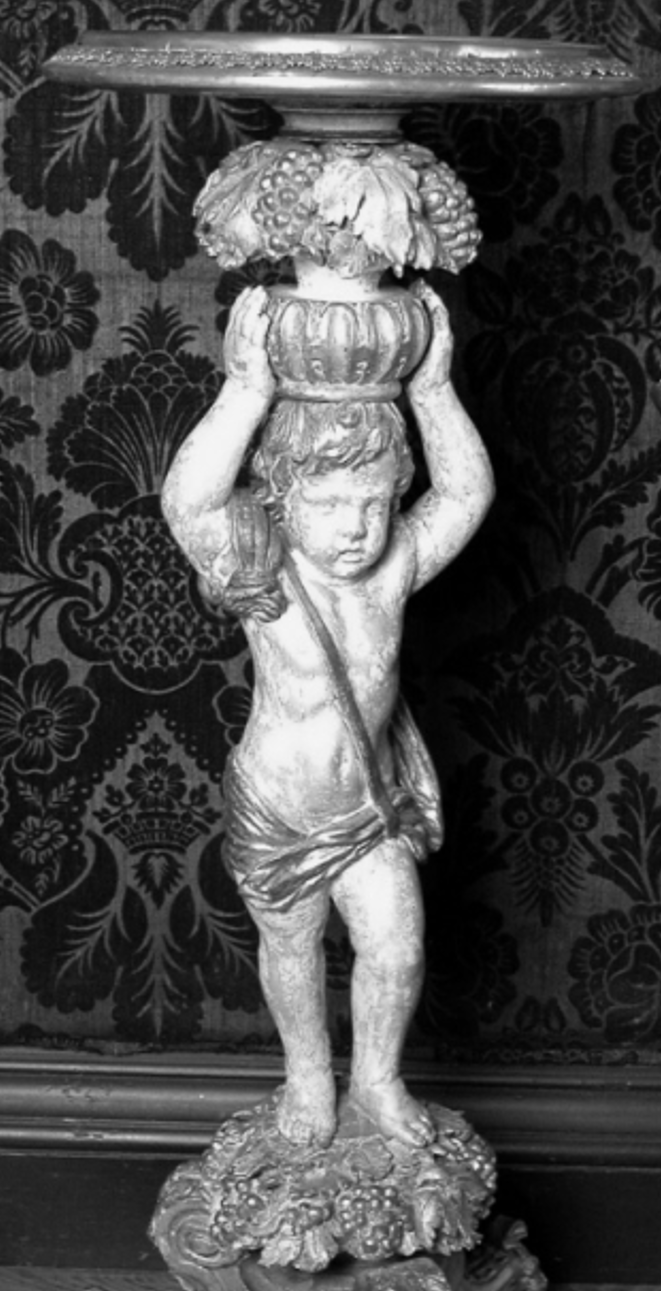
A similar pair of carved gilt-wood torchères, in the form of putti on tripod bases, possibly representing Summer and Autumn from a set of four seasons, executed by Pierre Gole, Mathieu Lespagnandelle and David Dupré, is kept at Knole House, Sevenoaks, Kent, England (National Trust inv. NT 129518 – 520). The Knole tradition is that this rare pair was given by Louis XIV to Charles Sackville, the future 6th Earl of Dorset, when ambassador to the French Court in 1669 and 1670, together with a gilt-wood table, also by Pierre Gole (129518).
The Knole set is associated with a 1671 royal commission for two tables, four torchères and eight low stools in silvered and gilded wood. All three, Gole, Lespagnandelle and Dupré were mentioned in this document. There is, however, the complication that Sackville left Paris in 1670, the year before, so the part set may have been sent on by the king to Sackville or it may have come to Knole in some other way. It was first probably listed at Knole by 1799 and definitely in 1864.
PROVENANCE : The work was very likely presented by Louis XIV to Charles Sackville, Lord Buckhurst (later 6th Earl of Dorset). Knole and the majority of its contents were accepted by HM Treasury in partial settlement of estate duties and transferred to the National Trust in 1946.