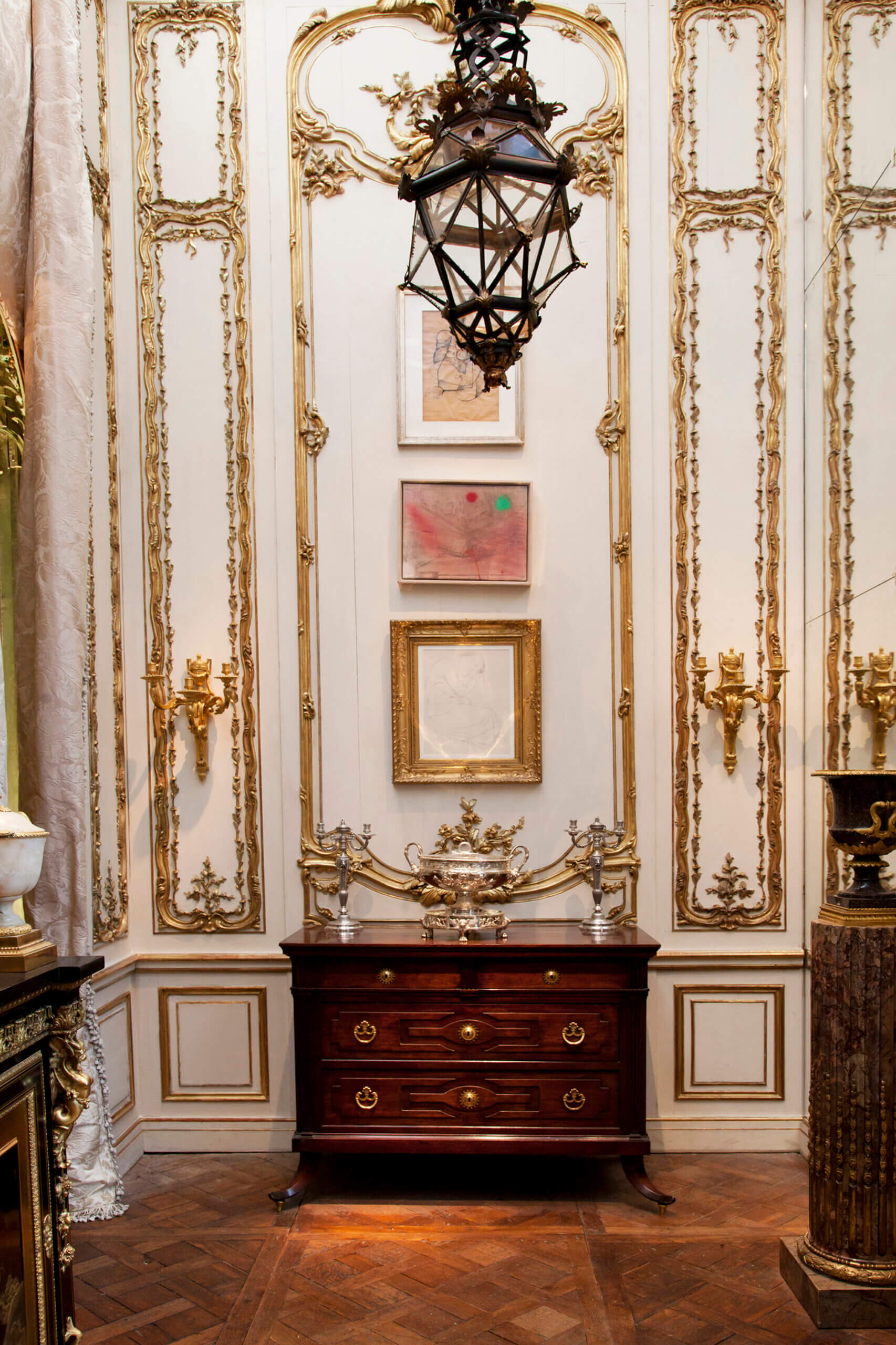
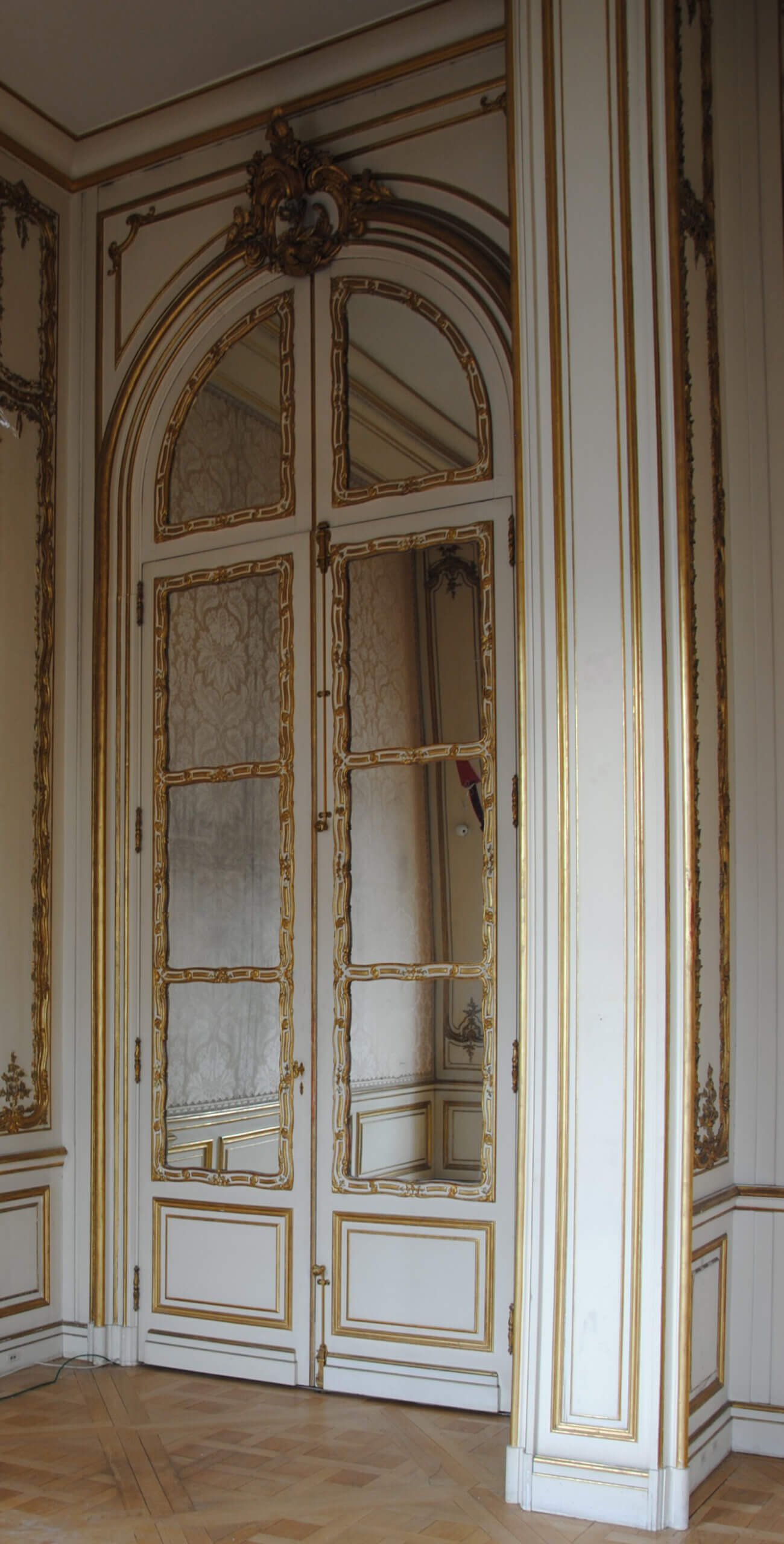
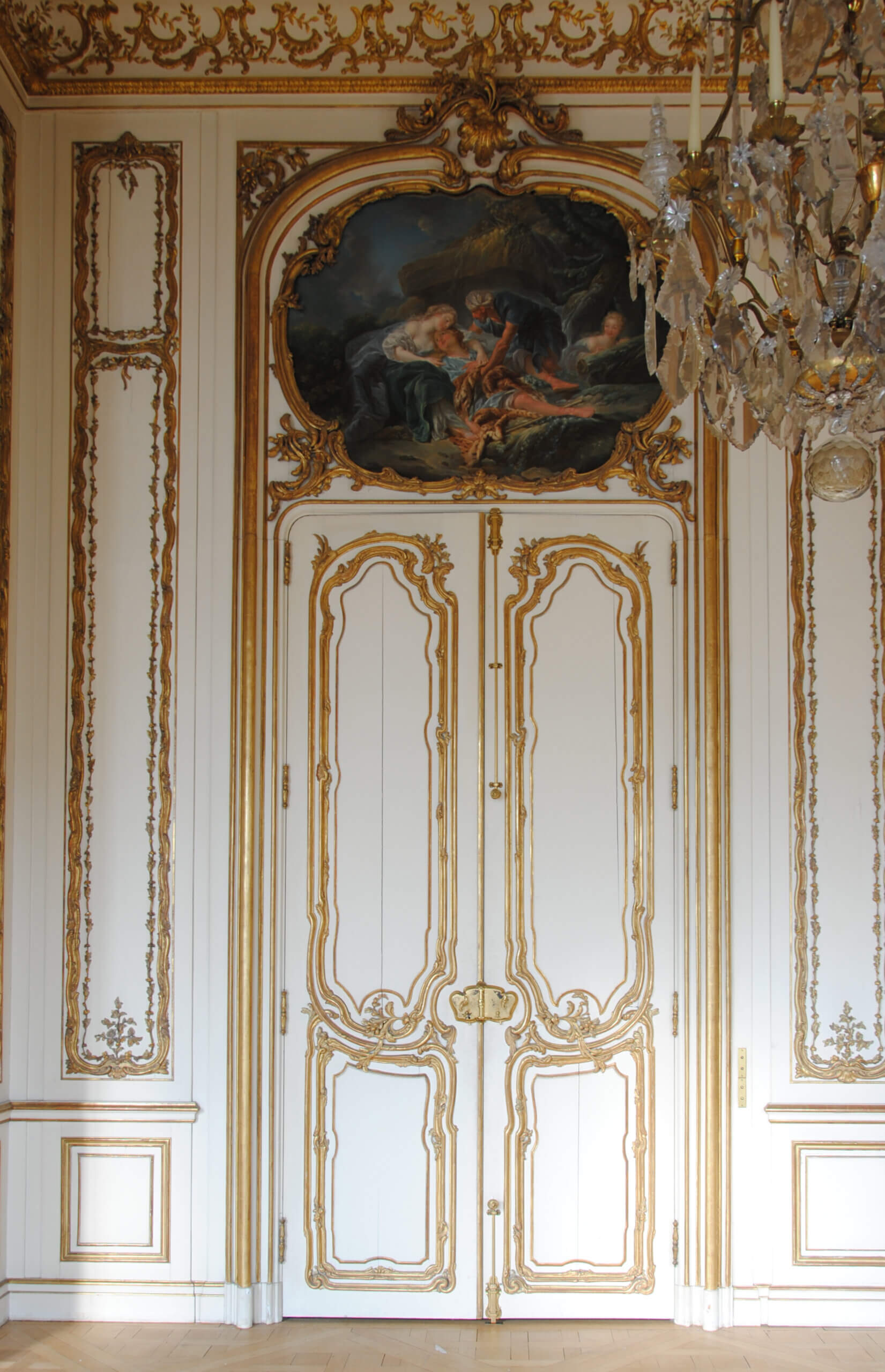
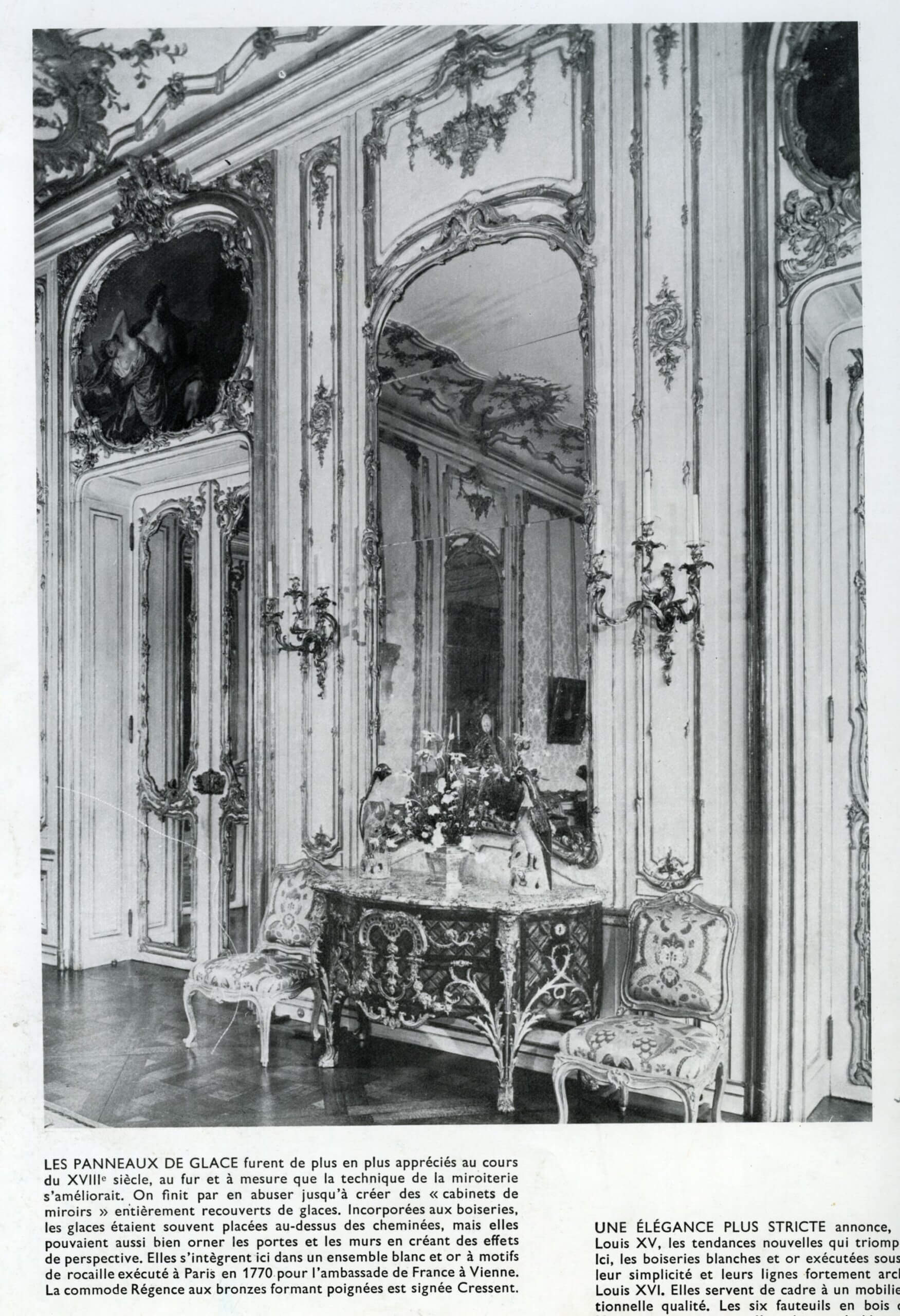
Sculpted, painted and gilded wood.
H. 5.50 m. (18 ft.).
HISTORY: executed between 1765 and 1771 for the Paar Palace in Vienna by the sculptor Johann Georg Leithner (1725-1785) under the supervision of the architect Isidor Canevale (1730-1786); sold when the Paar Palace was destroyed in 1938.
PROVENANCE: private collection.
LITERATURE: Collection entitled: Boiseries, superportes du palais Prince Paar Vienne [Vienna, before 1937].

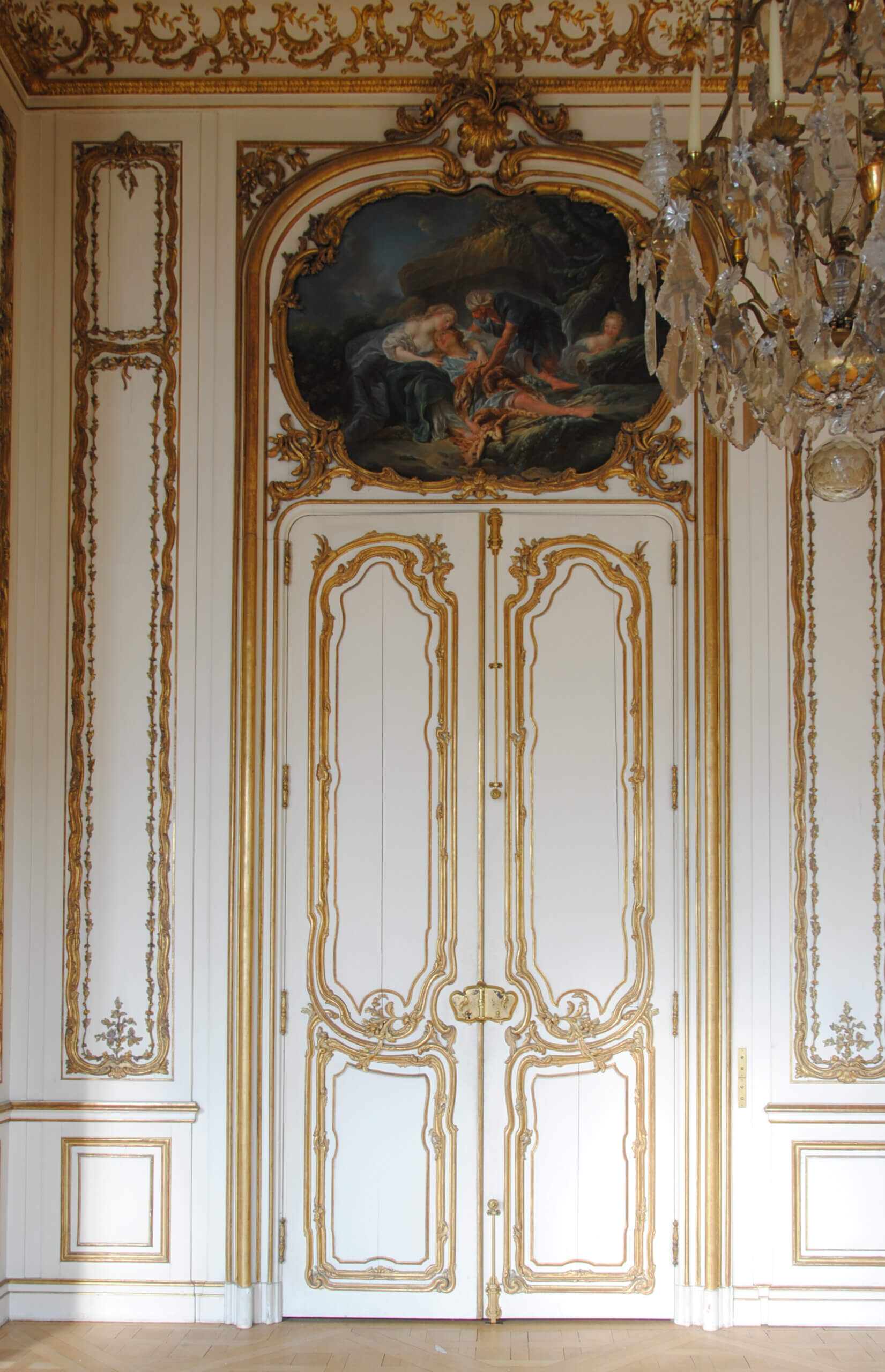
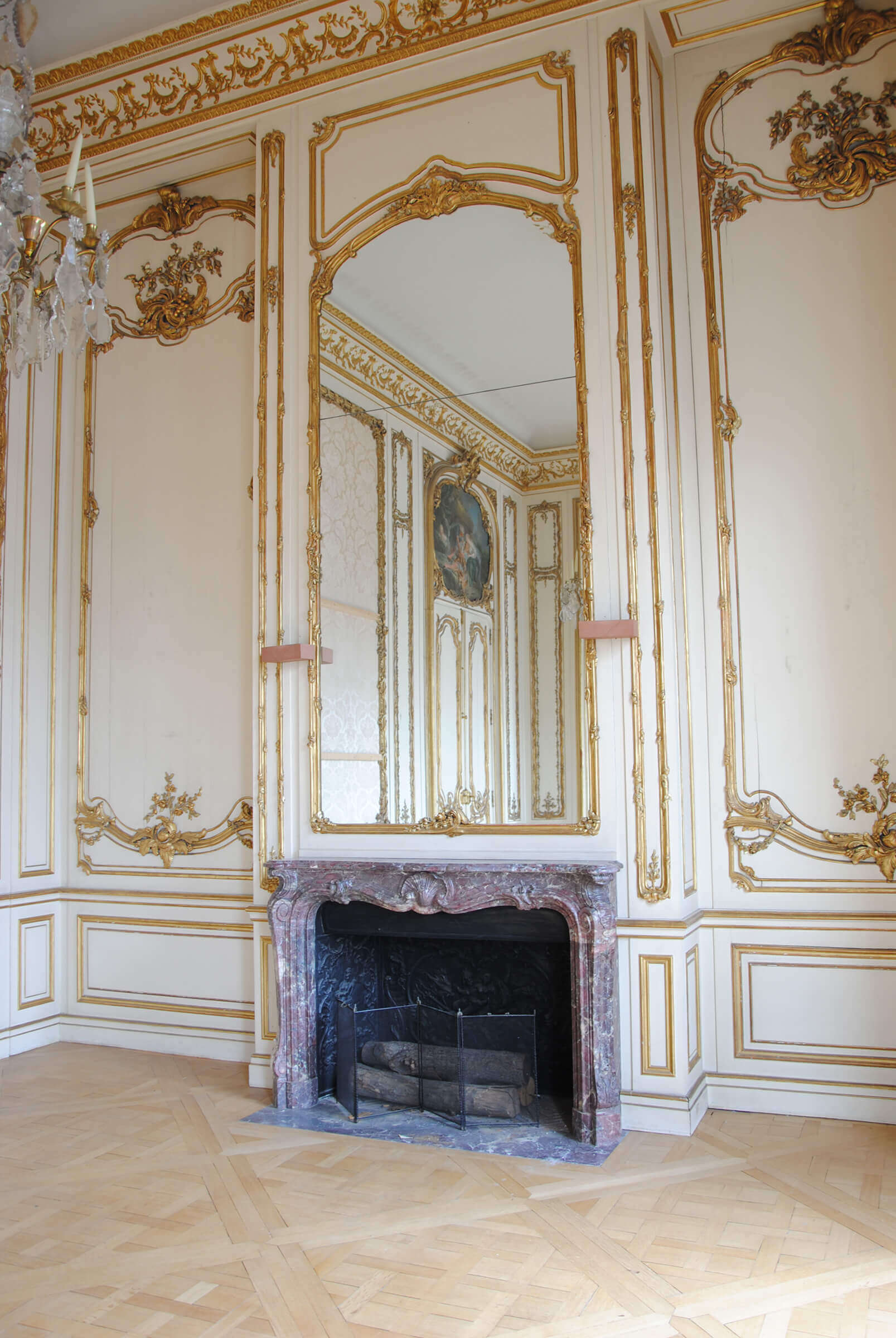
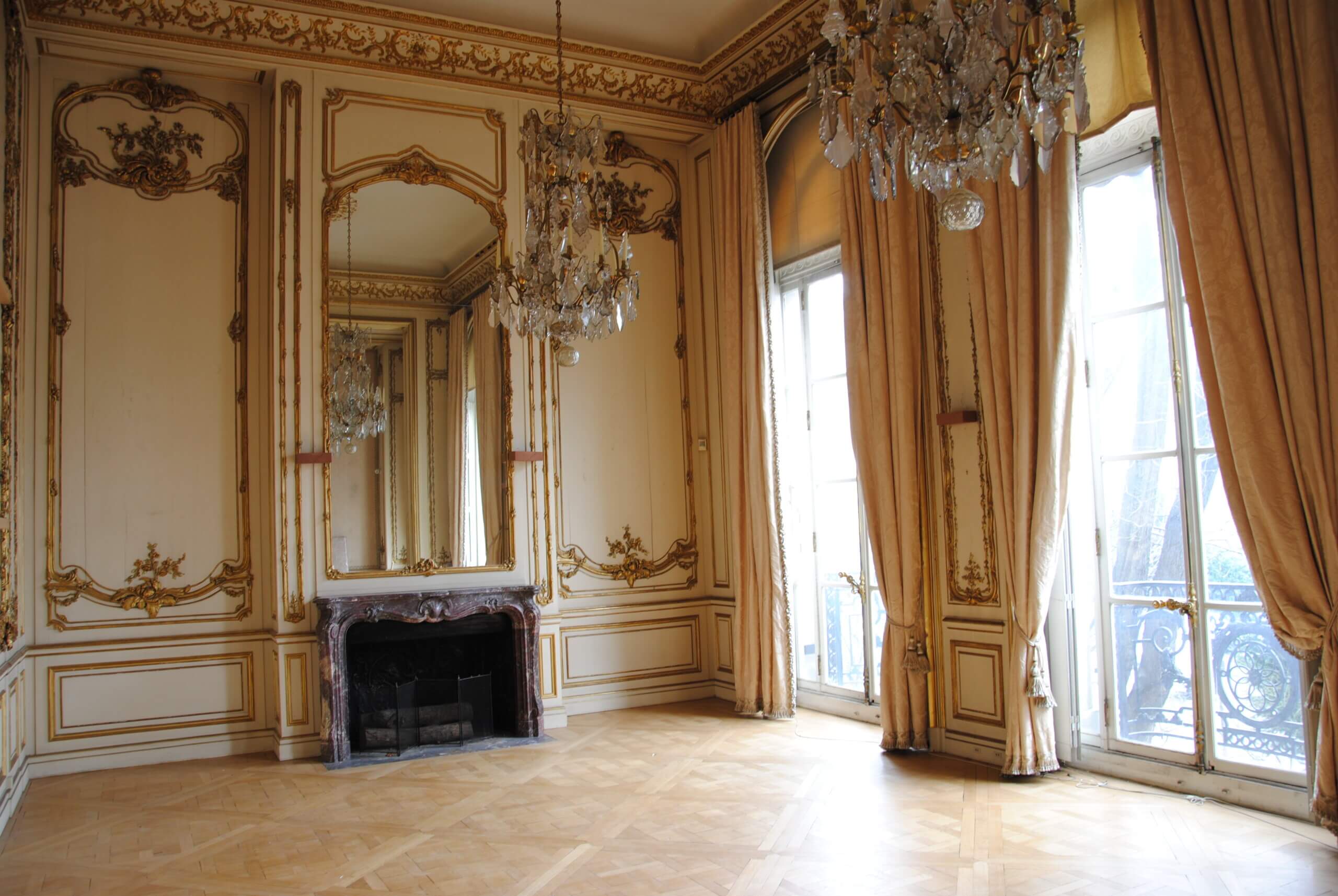
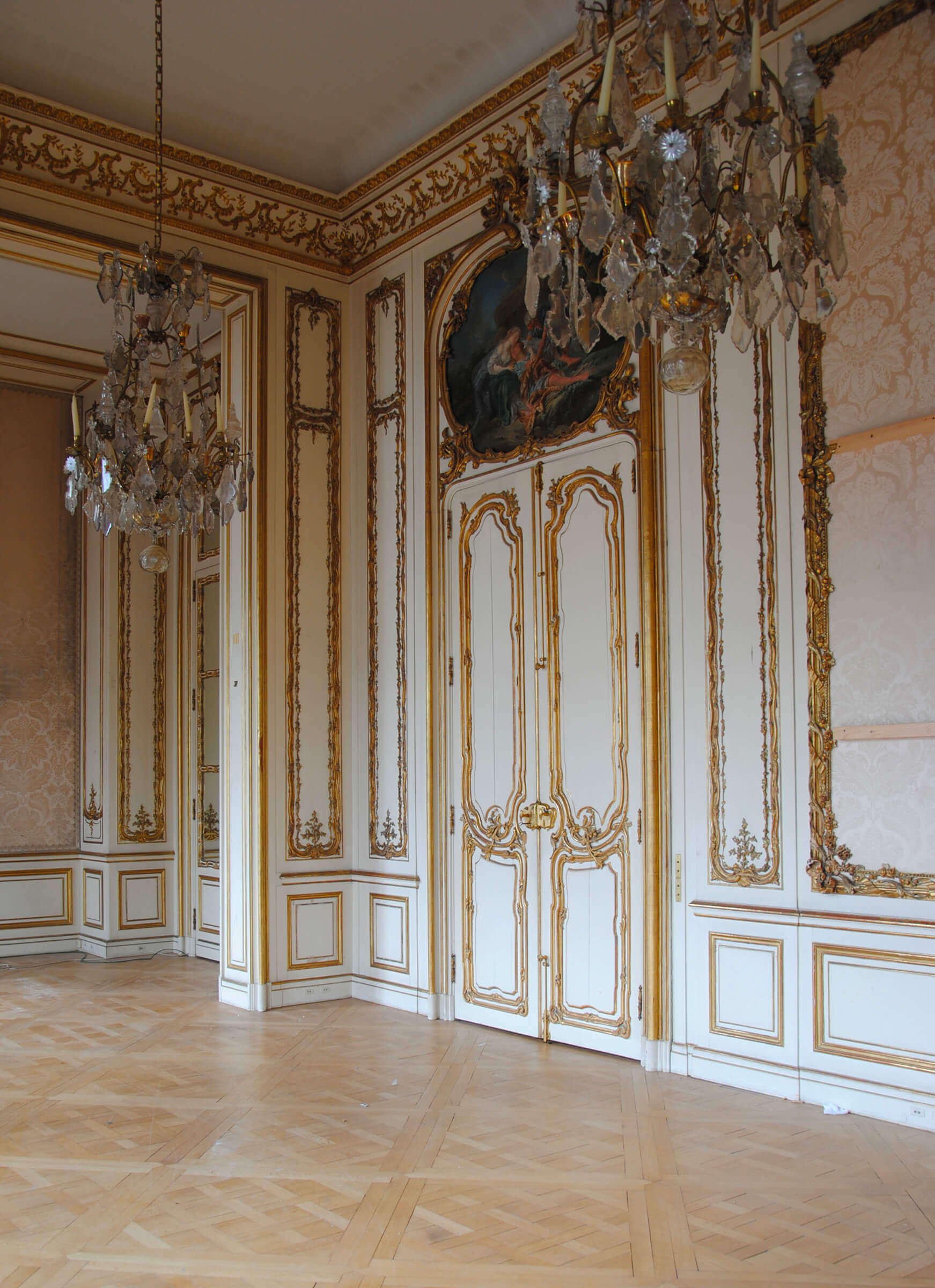
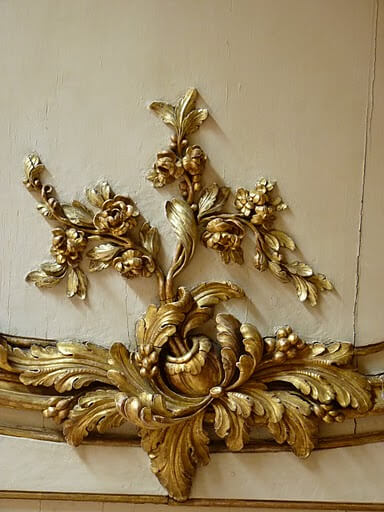
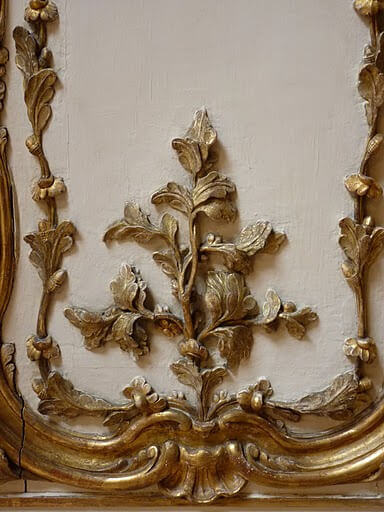
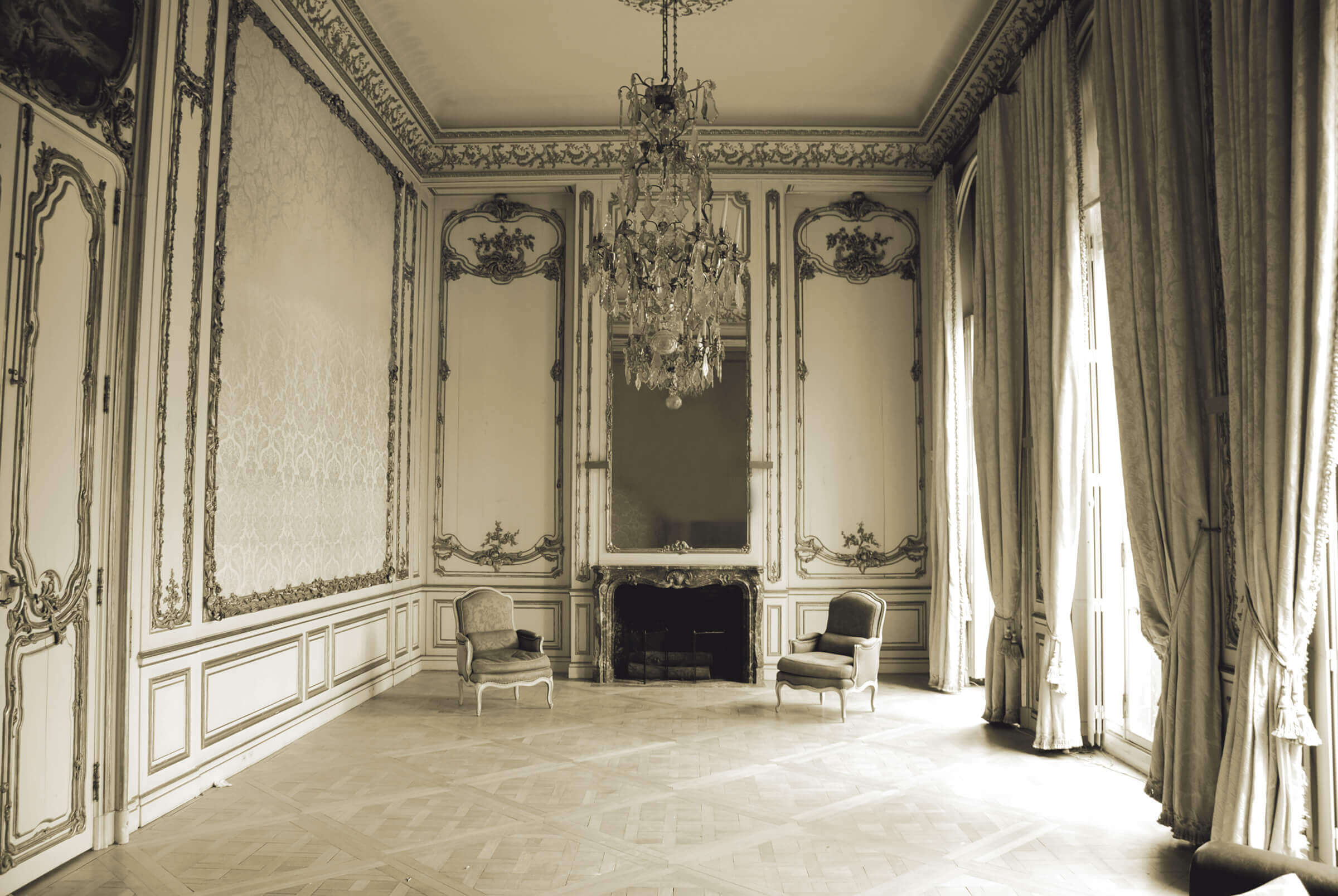
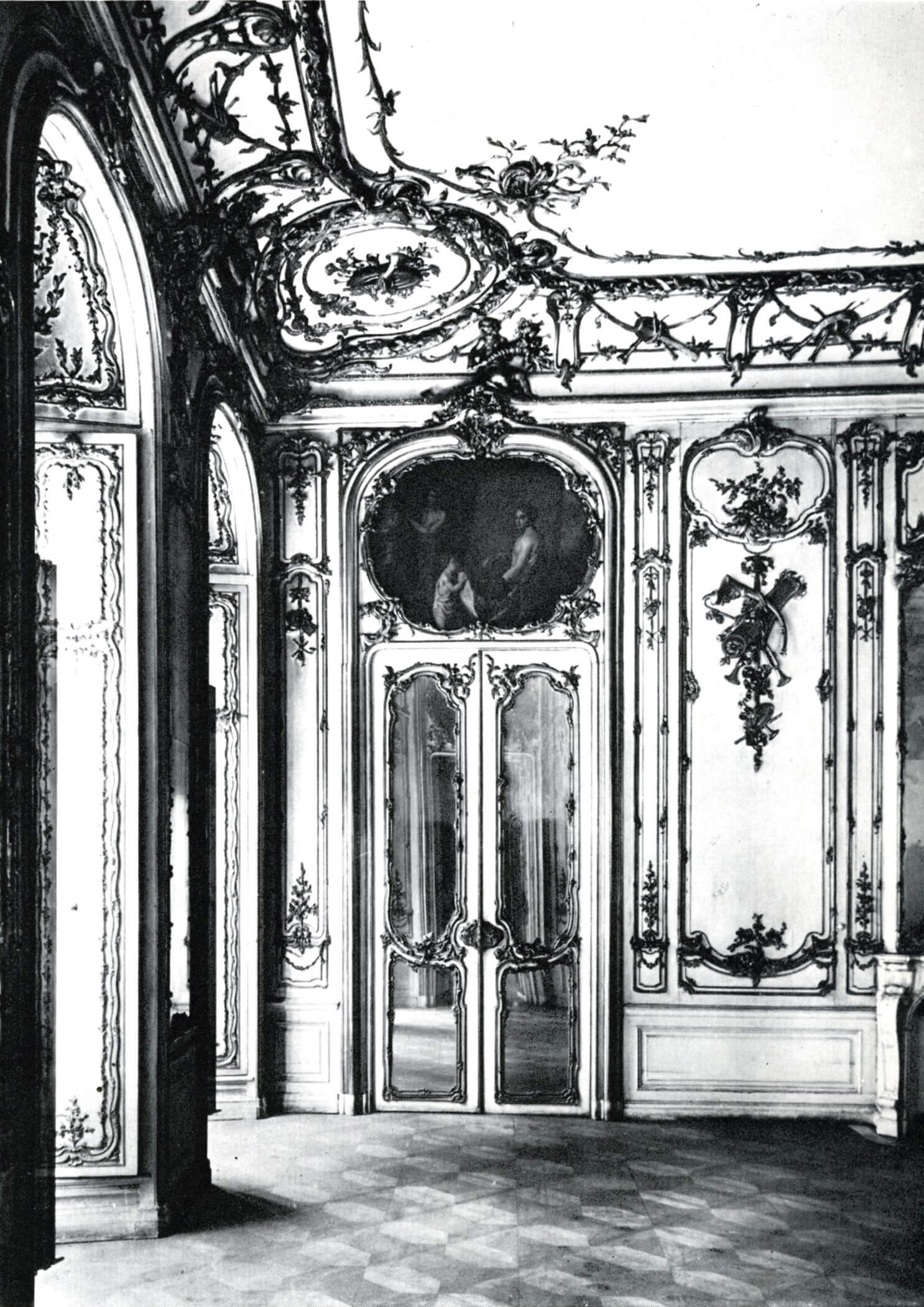
This remarkable set of boiseries comes from the Paar Palace in Vienna, a lavish Baroque dwelling built in around 1630 for Baron Johann-Christoph Von Paar, appointed “Minister of the Post” of the Austrian Empire by Emperor Ferdinand II. Composed of gilt panelling with a white background, the decoration takes the form of a series of panels and adjoining panels displaying an astonishing quality of sculpture, mounted on cimas with a single compartment, and ornamented with double mouldings with jigsawed edges, punctuated with volutes overlapping with acanthus leaves and flowerets. The large panels stand out for the presence of a jigsawed cartouche in the upper part, flanked with a winding bouquet of acanthus leaves from which emerge leafy branches: a motif repeated on a smaller scale appears on the lower part. The adjoining panels each have an astonishing “wave” border.

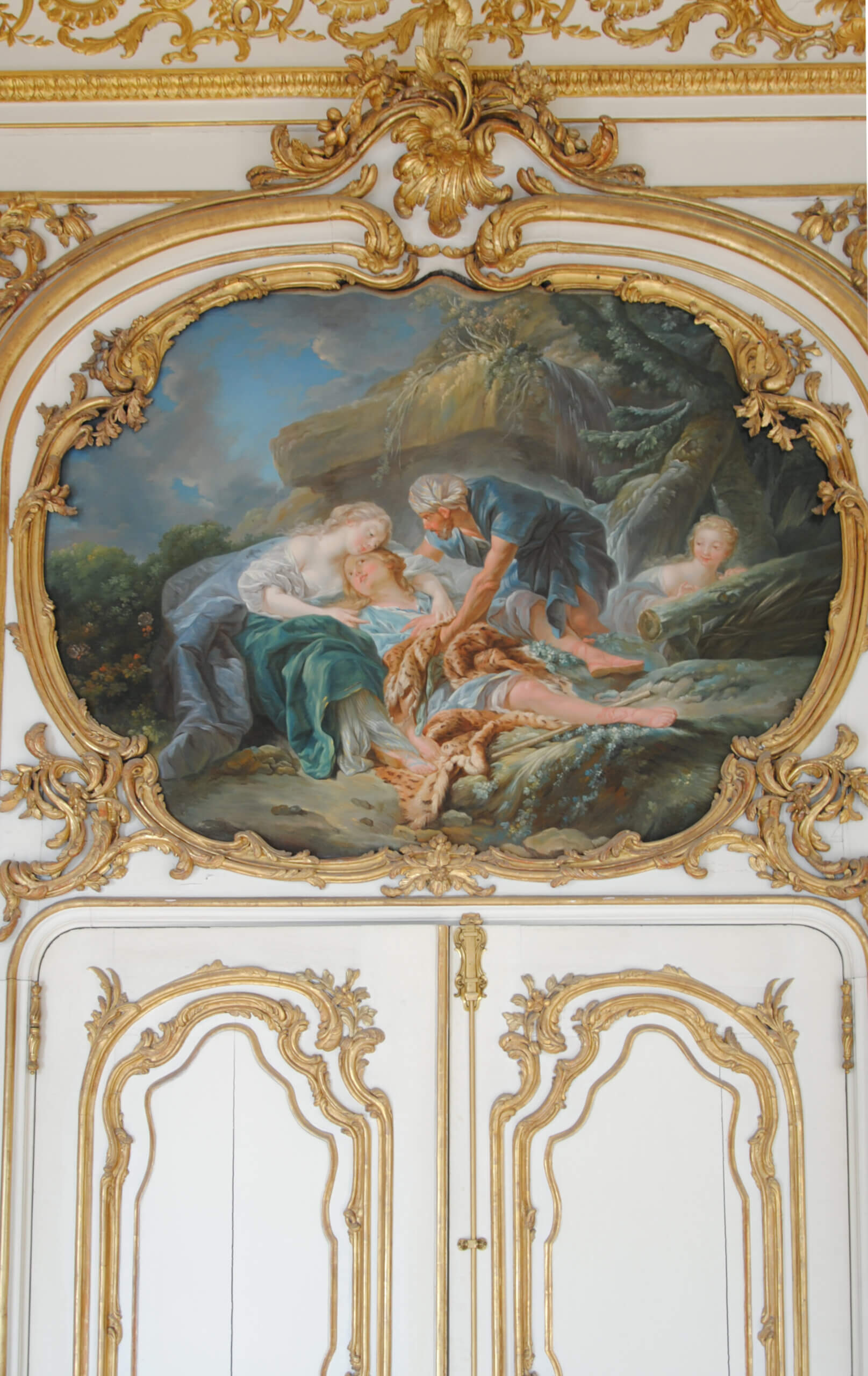
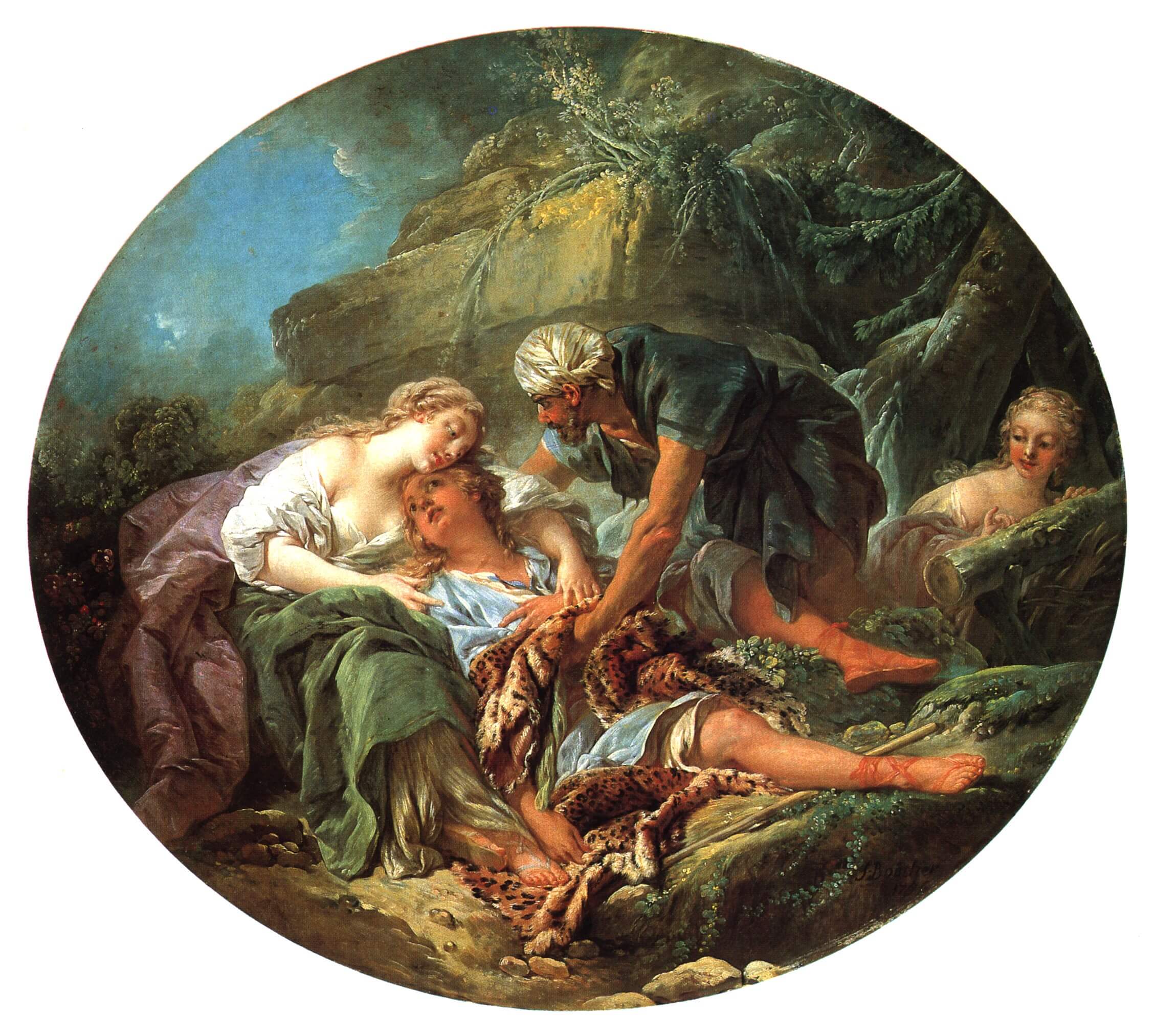
The adjoining panels each have an astonishing “wave” border. An overdoor, also with jigsawed borders, illustrates a mythological scene representing Amyntas regaining consciousness in the arms of Sylvia, a subject taken from Tasso’s L’Aminte (1581), a canvas painted after the original by François Boucher (1703-1770), now in the Musée des Beaux-Arts in Tours.All the decoration exhibits a remarkable quality of execution, right through to the engraving of the keyholes and other metalwork with fluted toruses.
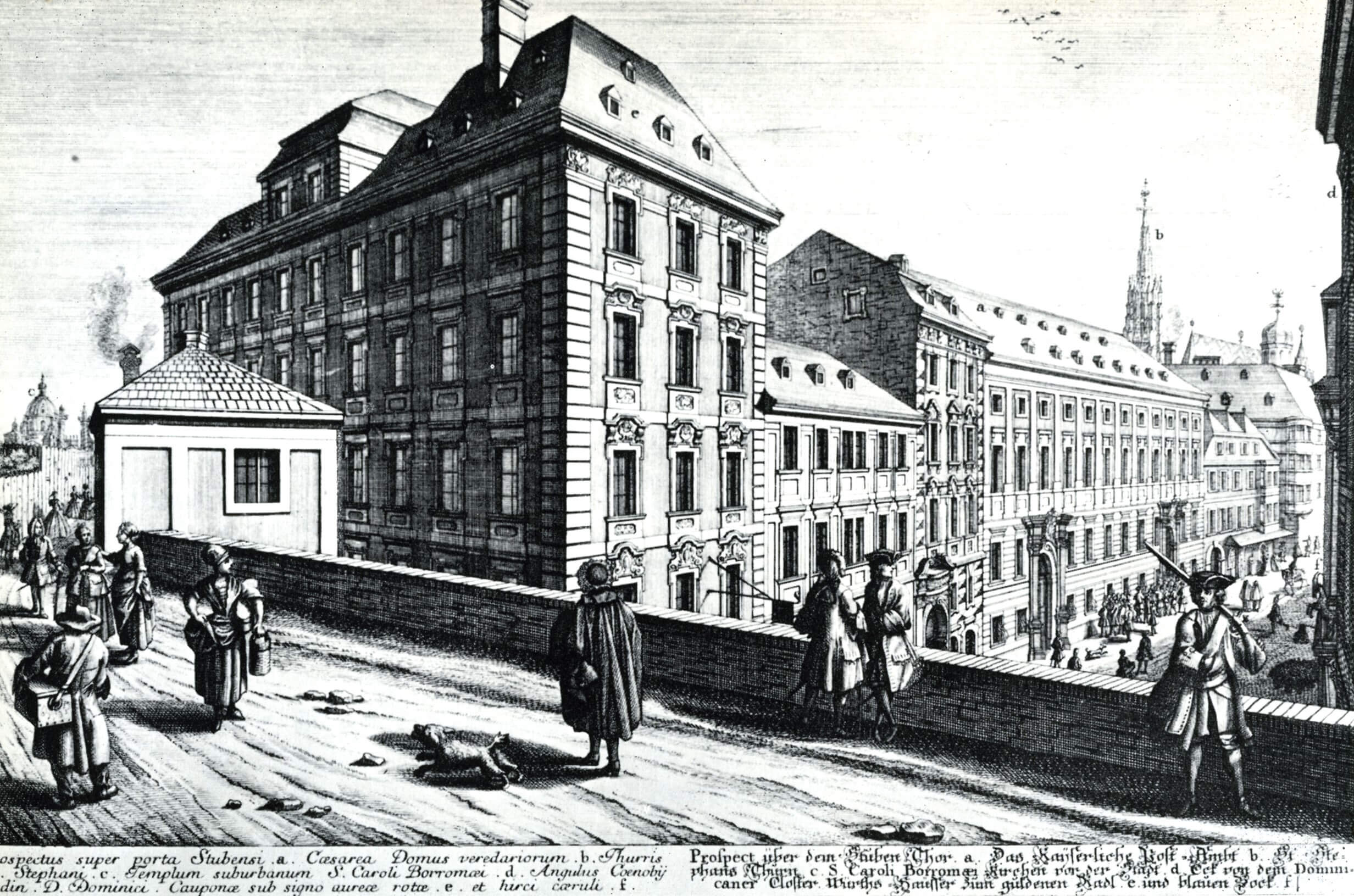
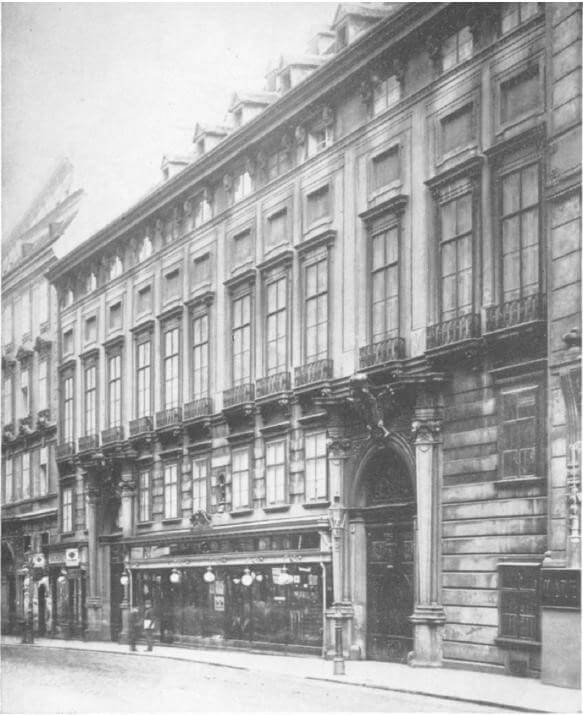
A huge quadrangle built around an inner courtyard at 30, Wollzeile, close to St Stephen’s Cathedral, the Paar Palace and its interior décor were renovated in the taste of the day from 1765 to 1771 by the French-born architect Isidor Canevale (Vincennes, 1730 – Vienna, 1786), at the request of Count Wenzel-Joseph Von Paar.
The Count, elevated to the rank of Prince on 1 August 1769 by the Empress Maria Theresa, was ordered by her the following year to escort her daughter, the Archduchess Marie-Antoinette, to France for her marriage with the Dauphin and future Louis XVI. The imposing façade, with its twelve large windows on the main floor above two impressive carriage entrances, the whole topped by an attic, remained unchanged until the 20th century. The very rich interior decor, created under the supervision of Canevale, was the subject of much praise by contemporaries. Valuable archive documents of the Paar family, including estimates and invoices relating to this work, which were confiscated after the Second World War and preserved in Trebon Castle in Bohemia, reveal not only the name of the abovementioned architect, but also that of the wood sculptor who carved our boiseries. In one of these documents, which mentions the “white and gold room with mirrors”, entitled “For Her Excellency the Countess Von Paar in the ceremonial Chamber, the following sculpture work after the drawings and instructions of Mr. Ganneval”, can be seen beside the architect’s signature, visible at the bottom left of the document, that of the Viennese wood sculptor Johann Georg Leithner (1725-1785), accompanied by his title of “Kaÿserliche Königliche Akademie Bildhauer” [Sculptor of the Imperial Academy].
The initials of Leithner, visible on the back of the document, even indicate the dates and conditions for executing this decoration: “It has been agreed with the sculptor that if the above-mentioned work is not installed and mounted under proper conditions by 20 March 1769, instead of 2500 gulden, only 2000 gulden shall be paid. 5 January 1769. Leithner sculptor”


All these decors were photographed room by room before 1937 and collected together in a precious compendium entitled Boiseries, superportes du palais Prince Paar Vienne, accompanied by a facsimile of the precious invoice signed by Leithner and a map of the first floor of the palace with the rooms identified by letters. Our boiseries consist of elements of the decor from the rooms numbered B and C of the Paar Palace, i.e. the two central rooms of the ceremonial apartment with a suite of four rooms, lying on the first floor and overlooking the Wollzeile. The double door surmounted with an overdoor after Boucher occupied the centre of the wall opposite the windows of Room B. The large pier glasses, each ornemented in their upper parts with a jigsawed cartouche and flanked with leafy branches emerging from a winding bouquet of acanthus, flanked the side walls of Room C.
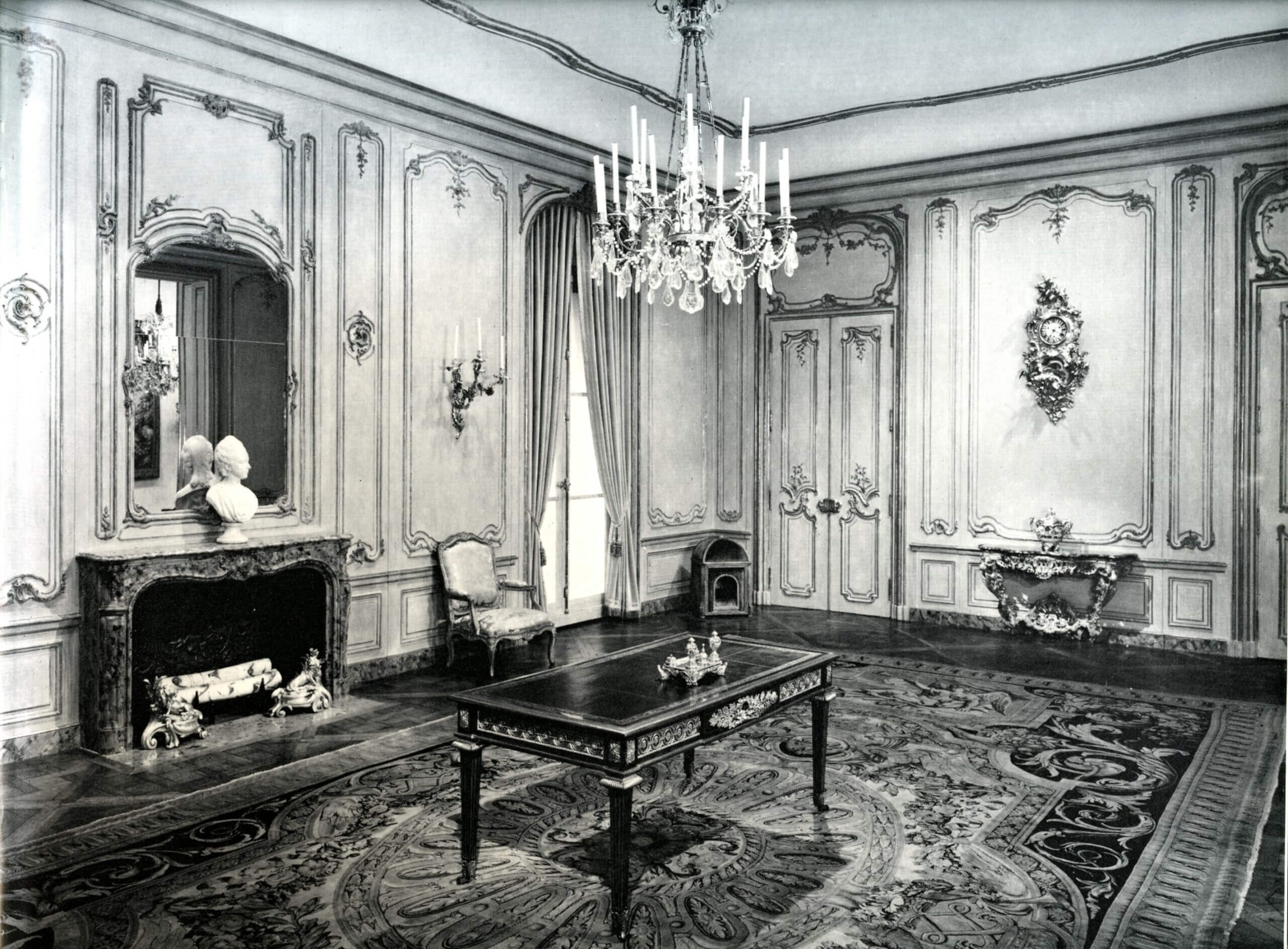
After being in the hands of the same family for over three hundred years, the Paar Palace was finally sold in 1937 by Count Alois Paar, and destroyed the following year, a casualty of property speculation. Its lavish 18th century boiseries, including ours, were put up for sale a little before its destruction. Part of the decoration was bought by Sir Philipp Sassoon and reassembled in his London home at 45, Park Lane.
In 1963, these wood panels were bought by Mr. and Mrs Wrightsman, who donated them to the Metropolitan Museum of Art, New York. Another collection of boiseries originally forming the decor in Room D of the Paar Palace, i.e. the fourth room in the ceremonial apartment interconnecting with ours, was reassembled in Paris at the end of the Fifties for M. and Mme Stavros Niarchos, in the Hôtel de Chanaleilles, probably the most luxurious residence in the Faubourg Saint-Germain at that time.
The furnishings of the palace had been previously sold between 1920 and 1930. A set of two sofas and four armchairs ‘à la reine’ and ‘à châssis’, probably executed in Paris in around 1765, are now in the collections of the Banque de France, in Paris. The Banque de France also has a set of six other armchairs, slight variants on the former chairs and dating from the same period, which were acquired in 1922. We can also mention another sofa coming from the Paar Palace, dated around 1765 like the aforementioned chairs, and which formed part of Madame Heildelbach’s collection, sold in Paris on 16 December 1933. The sofa was lot no. 34 in the sale
Isidore Canevale
Born in Vincennes in 1730, Isidore Canevale mainly worked in Vienna from the beginning of the 1760s. The creation of the decor of the Paar Palace between 1765 and 1771 sealed his reputation. In 1770, he was asked to execute the two fountains in the gardens of Schönbrunn Palace, and ten years later he designed the pedestals designed to support the statues of Emperor Joseph II and the Count of Salm respectively in the gardens of Augarten Place, Vienna.


Between 1783 and 1785, still in Vienna, he built two major municipal buildings: the Allgemeines Krankenhaus (general hospital) on the Alterstrasse, and the Josephinum, a school of medicine reserved for army officers, on the Wahringerstrasse. During that time, Canevale also redesigned the gardens of Laxenburg Palace. At the end of his life, he worked in Budapest and Breslau as well. He died in Vienna in 1786.