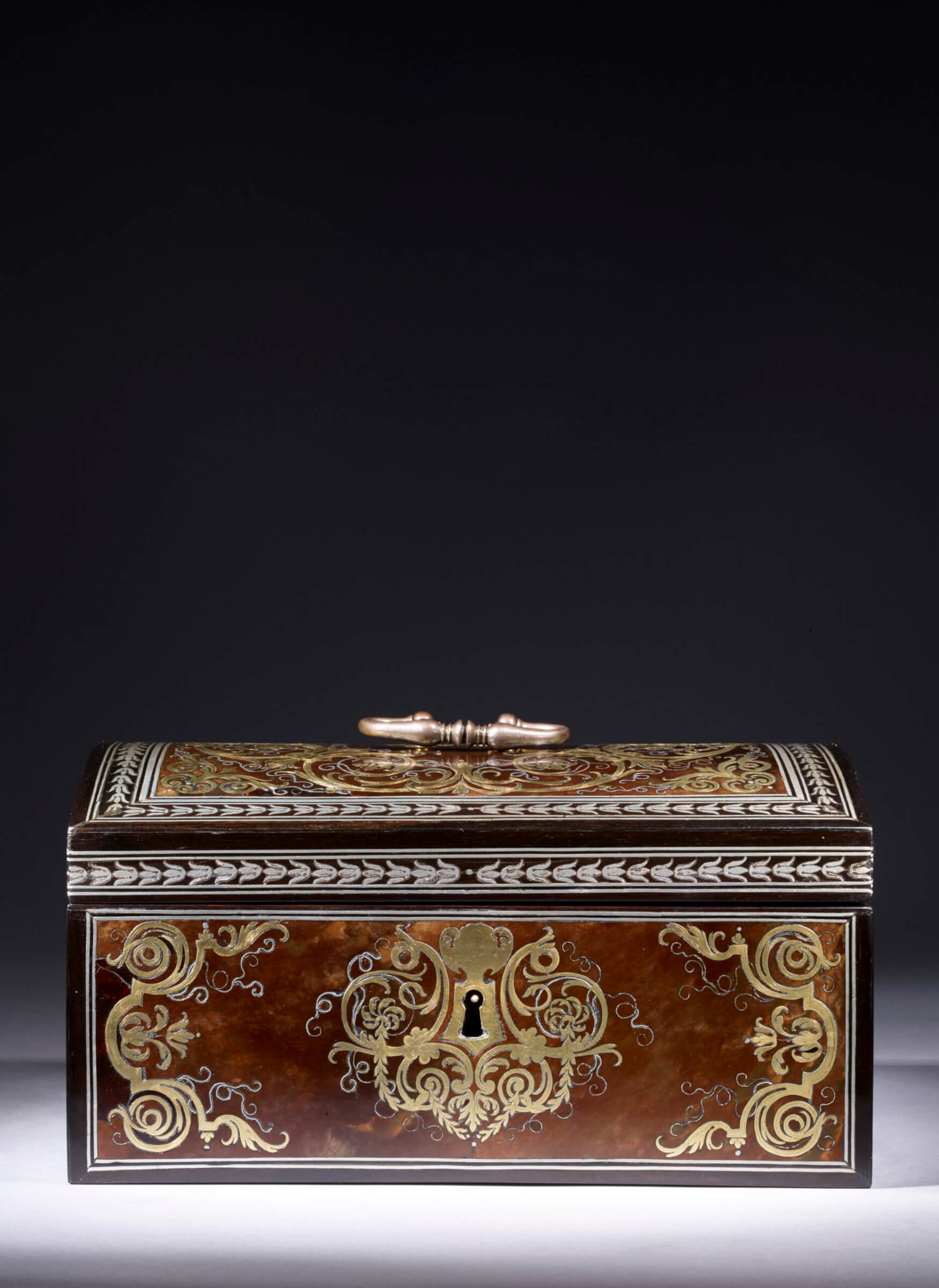
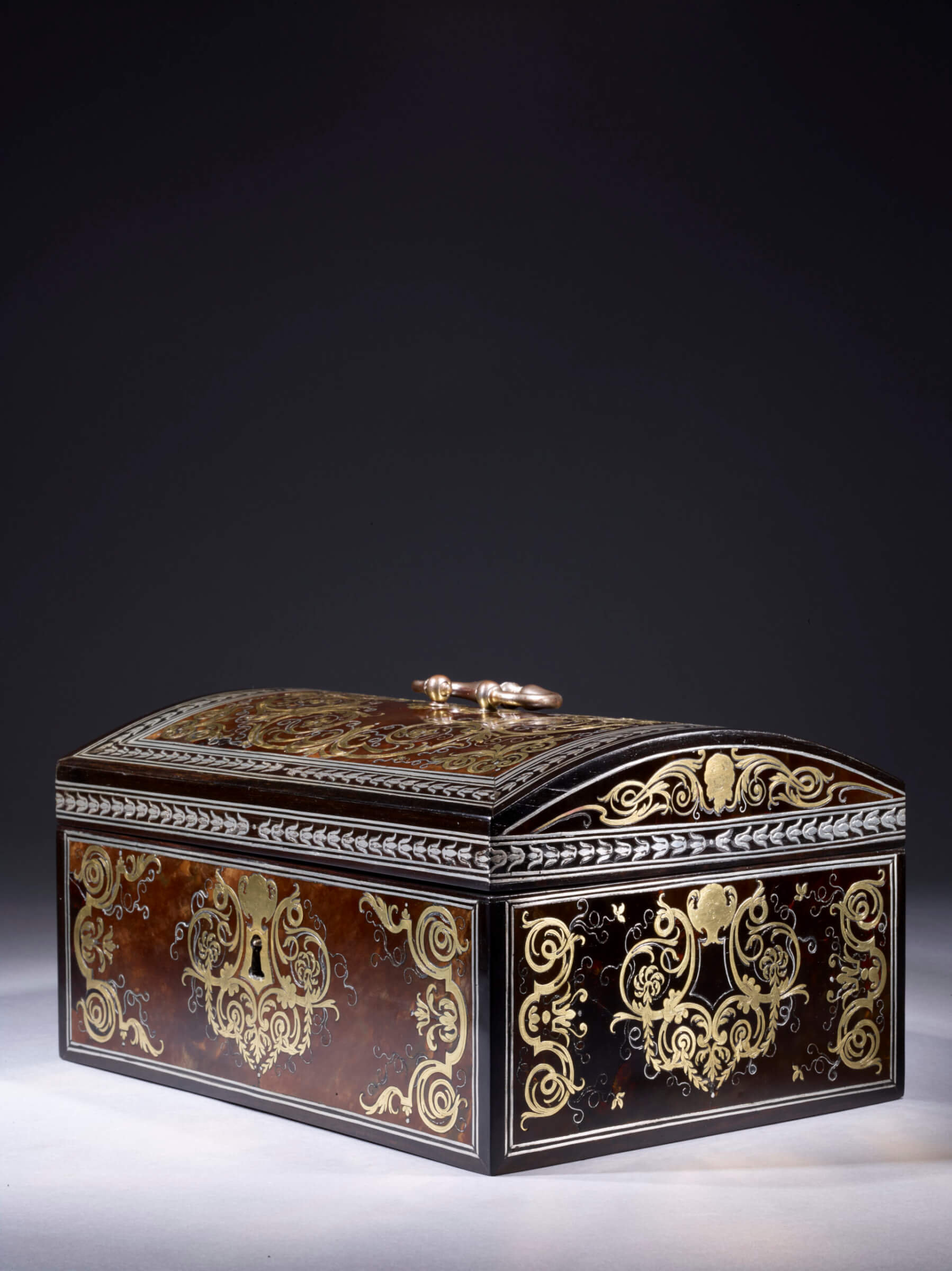
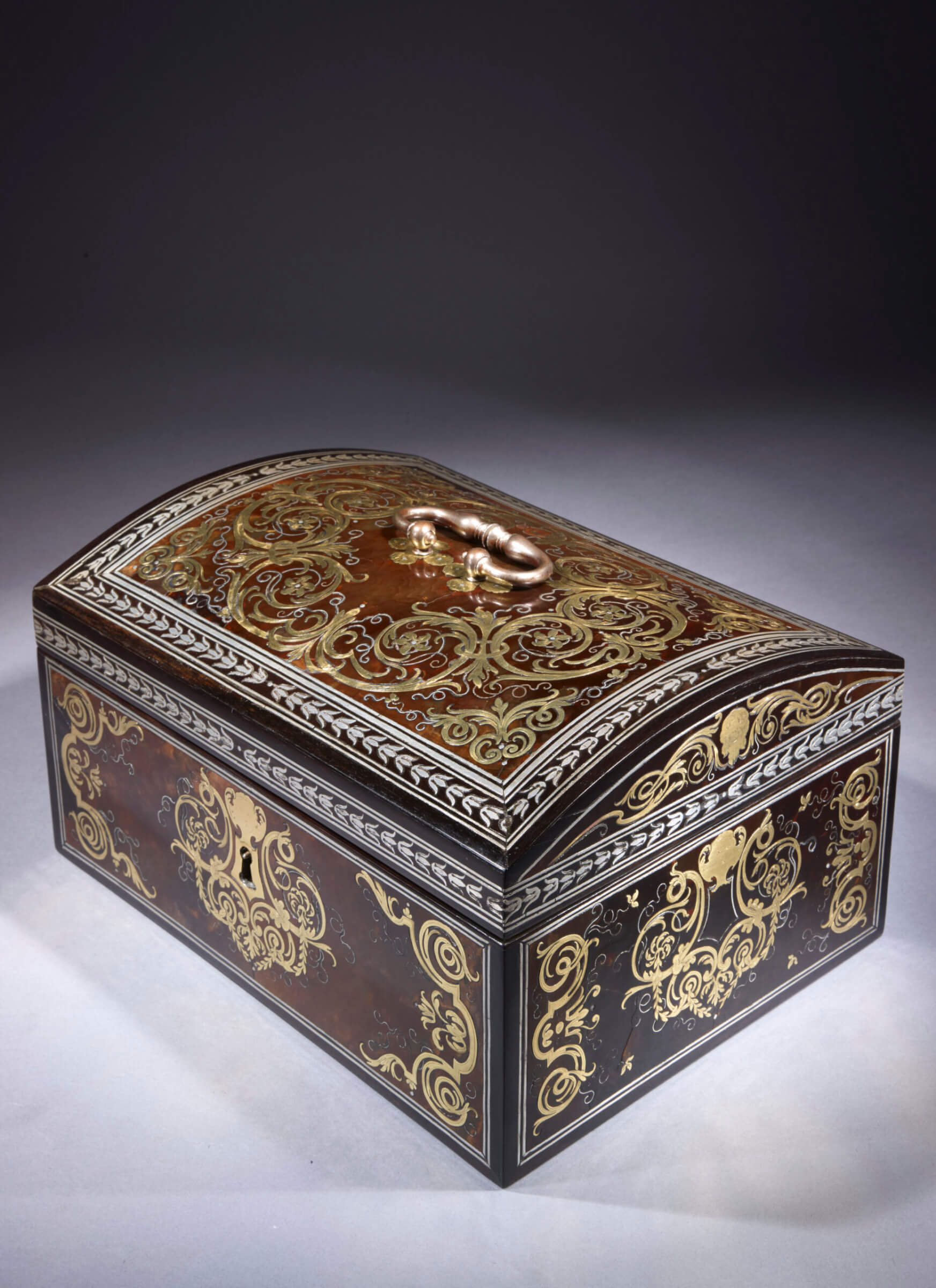
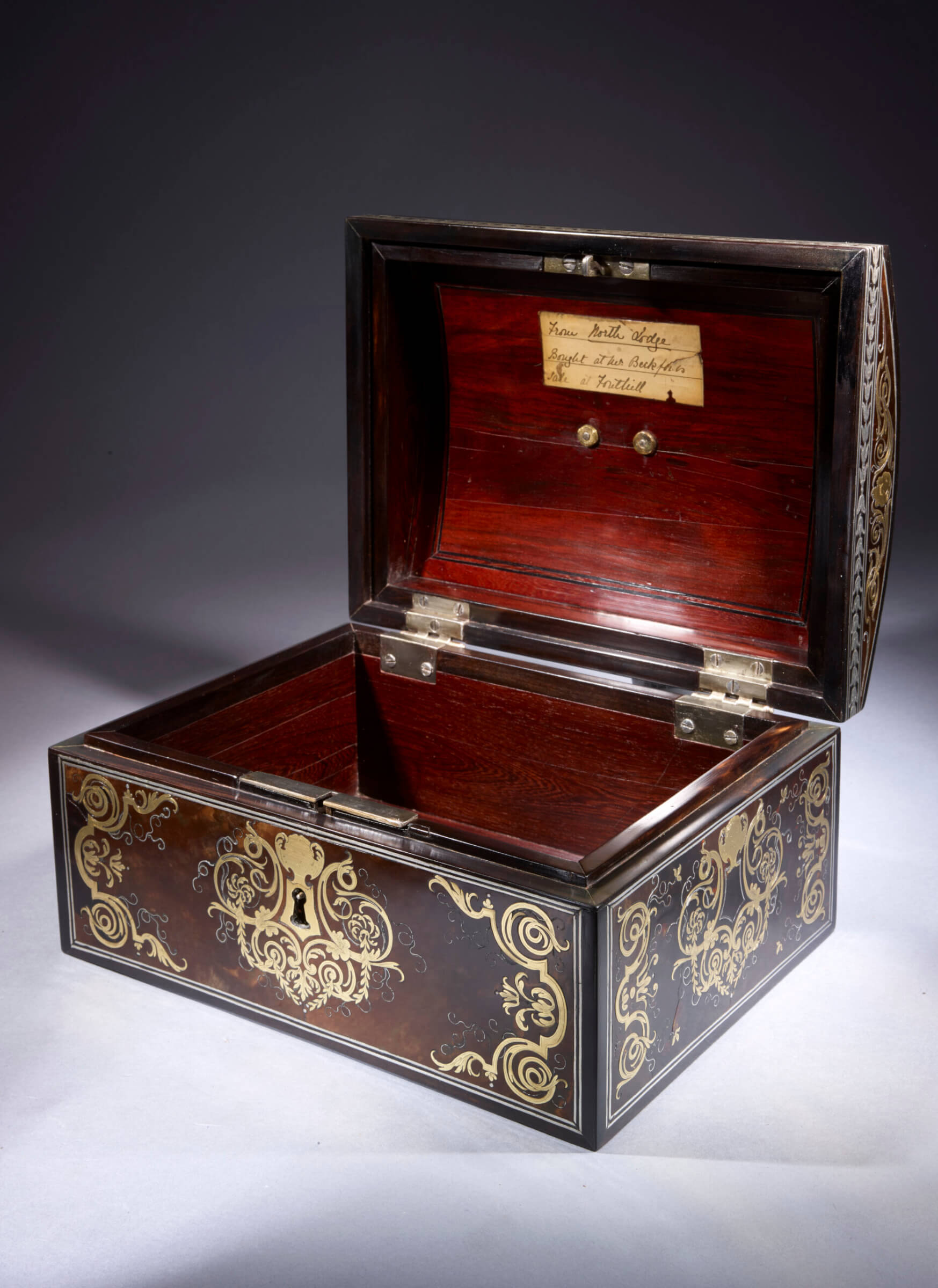
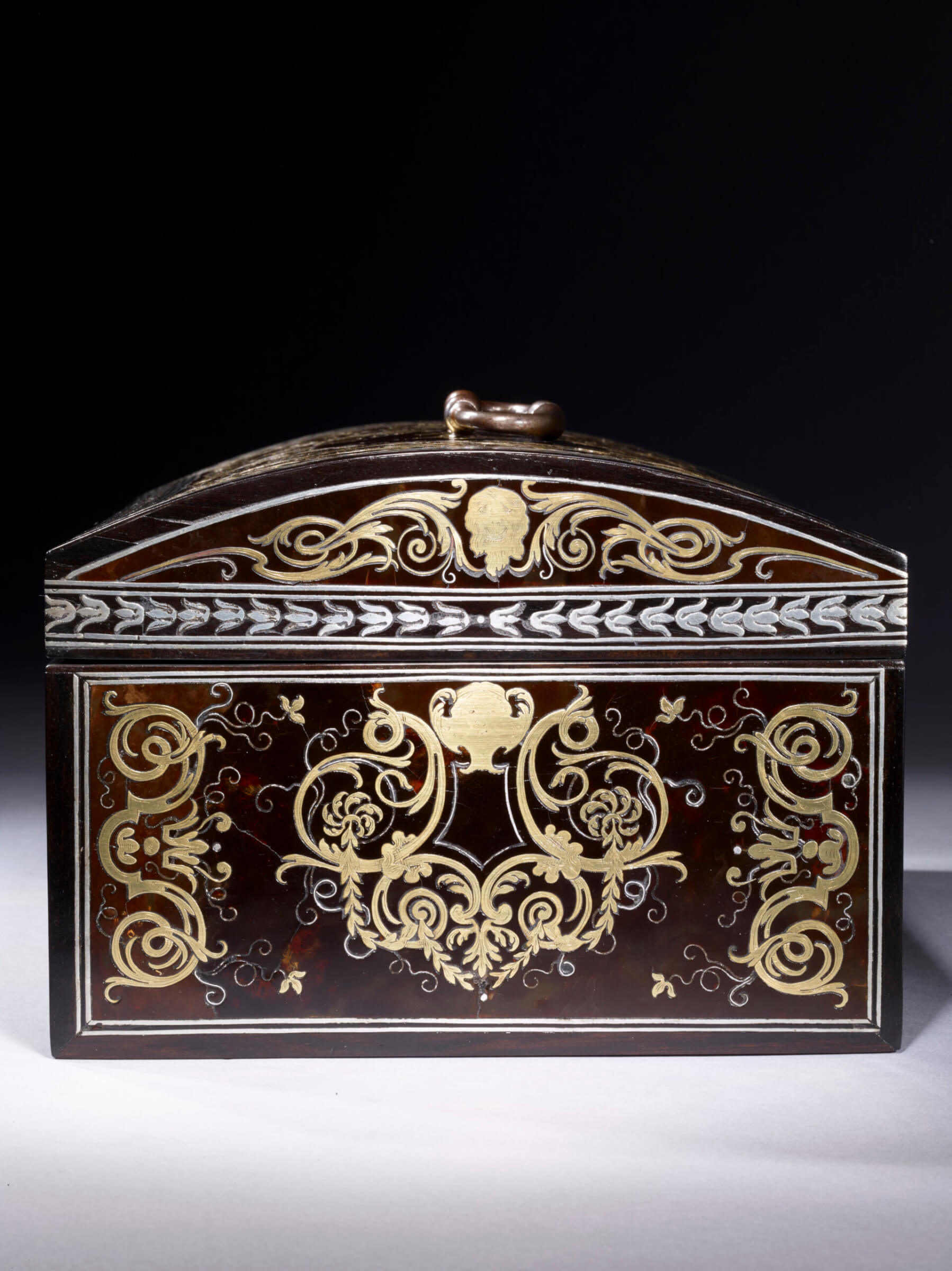
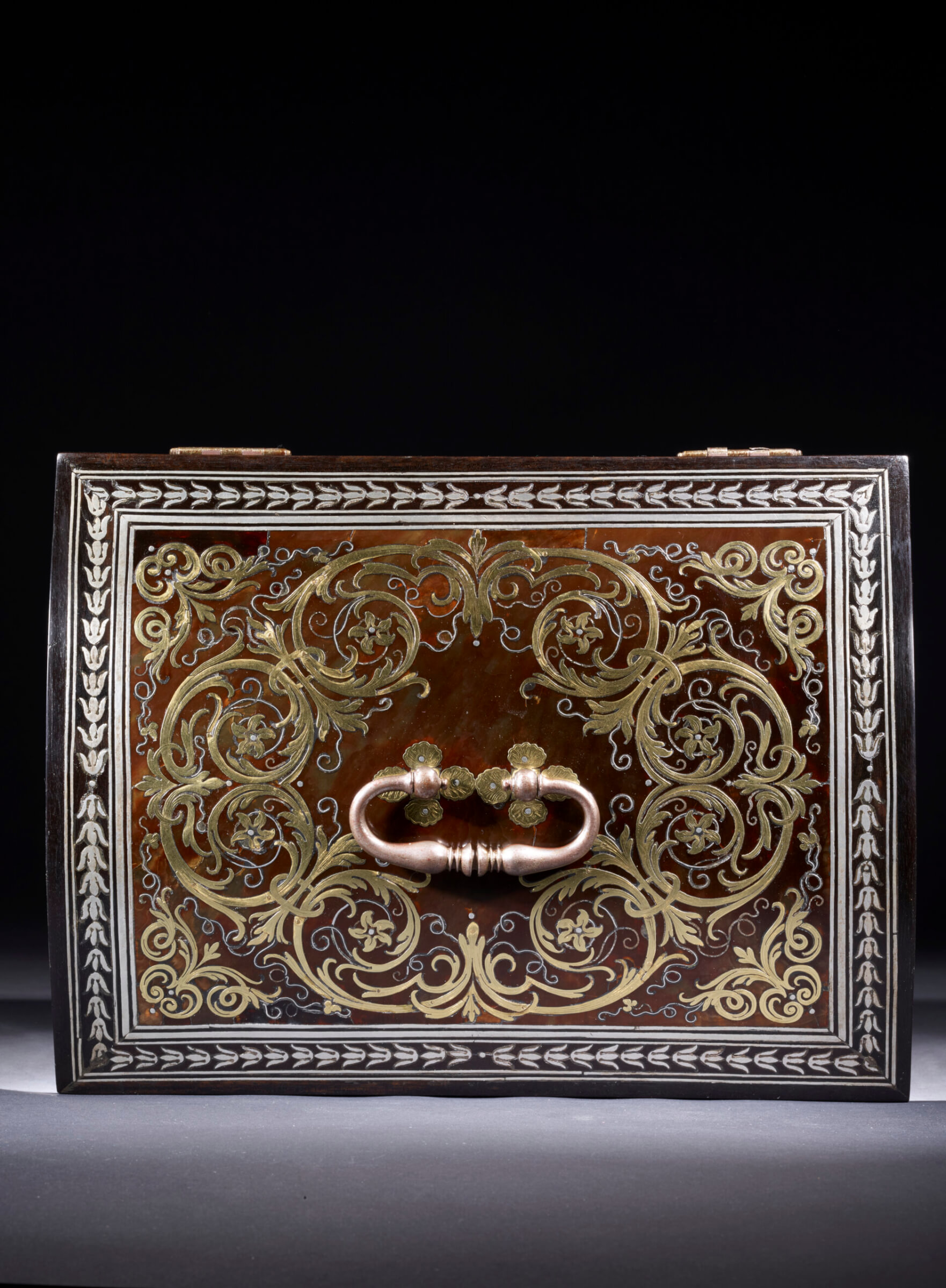
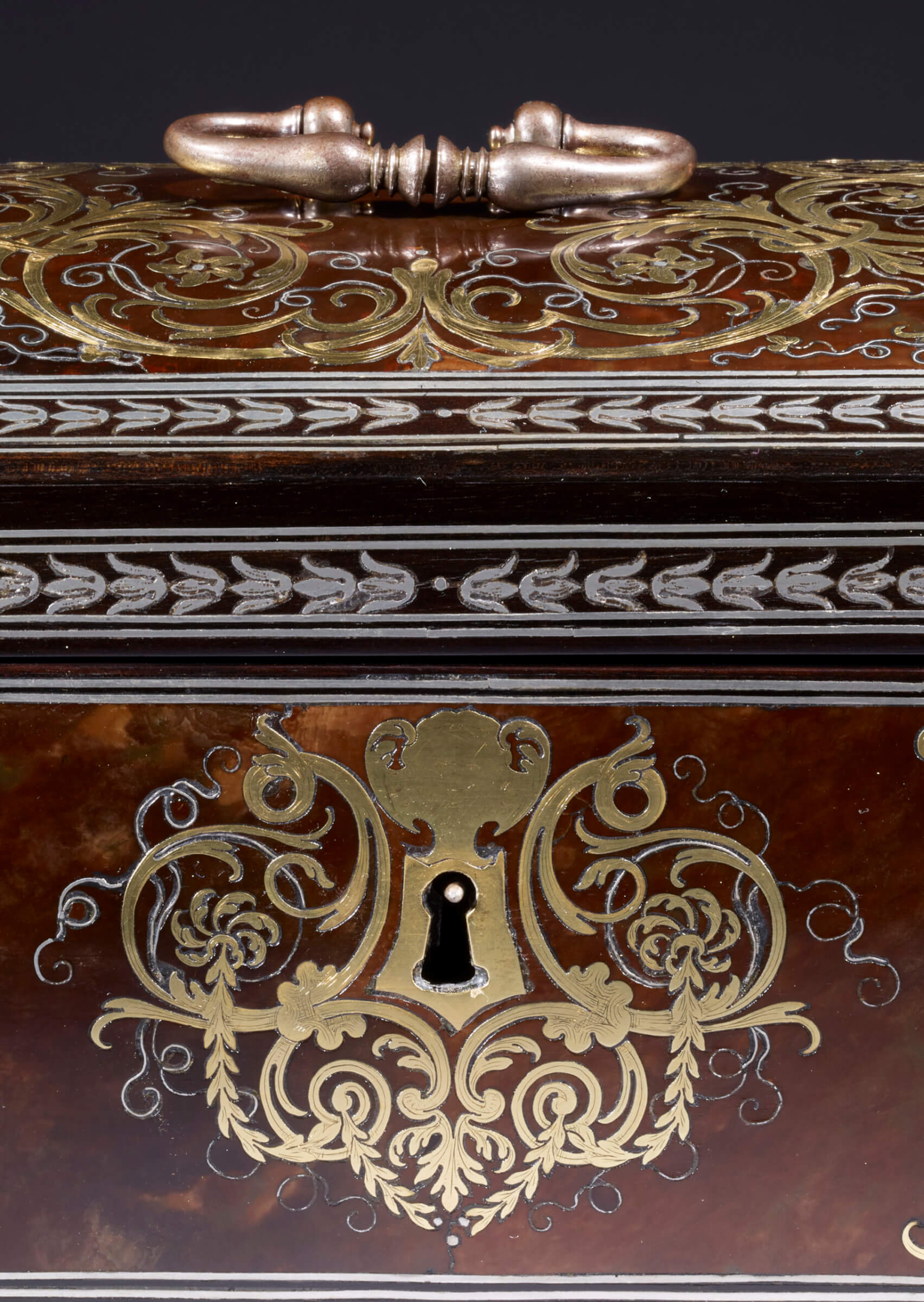
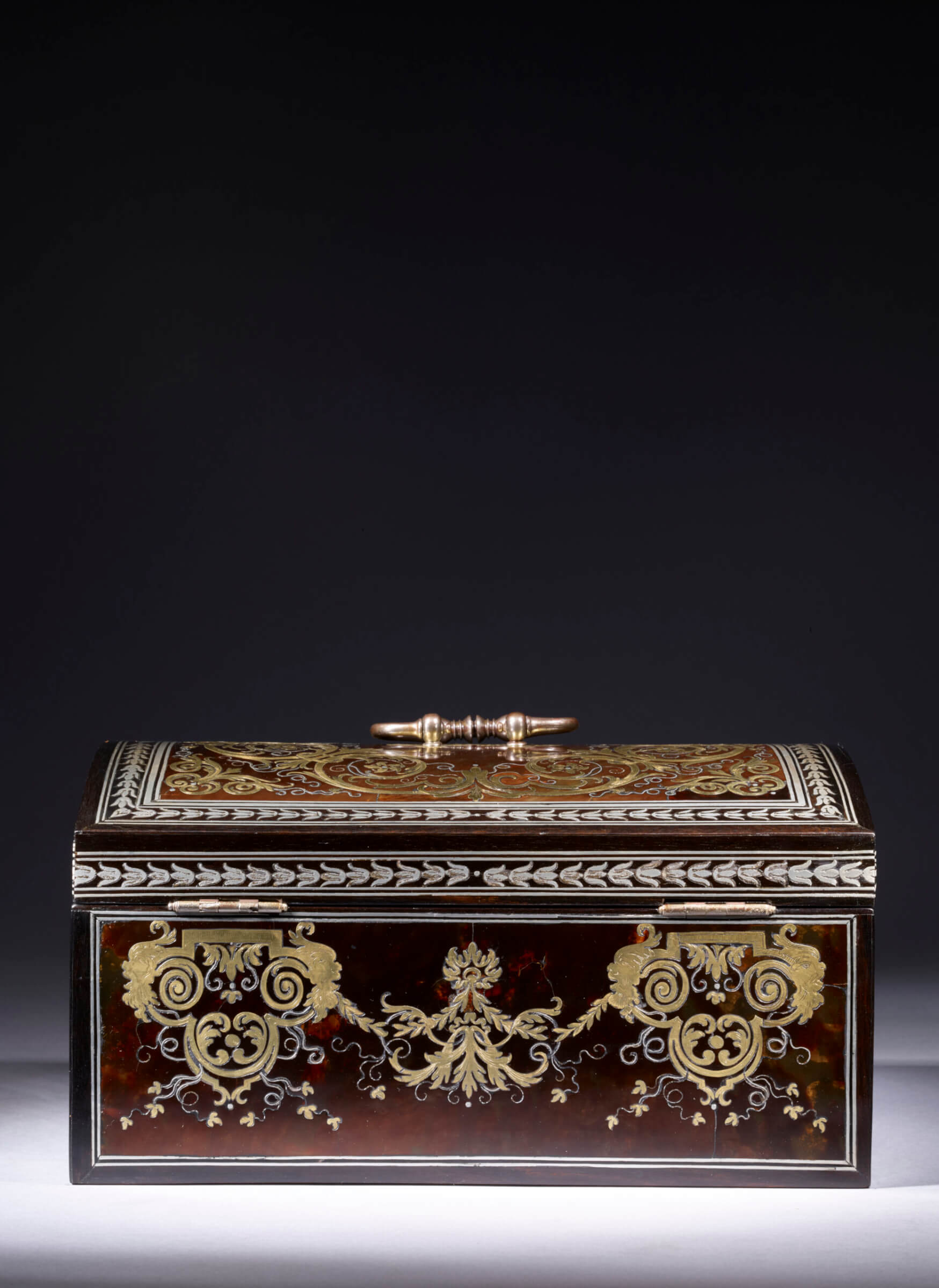
H. 14.5 cm. (5 ¾ in.); W. 27.5 cm. (18 7/8 in.); D. 20.5 cm. (8 in.).
‘Première partie’ marquetry in brown tortoiseshell, brass and tin; ebony; interior veneered in rosewood.
MARKS AND INSCRIPTIONS: From North Lodge bought at Mr. Beckford sale at Fonthill, manuscript inscription in black ink visible on a rectangular beige paper label affixed to the reverse of the lid.
PROVENANCE: collection of William Thomas Beckford (1760-1844) at Fonthill Abbey; its sale in situ The unique and splendid effects of Fonthill Abbey, under the direction of Mr. Phillips, on 23 September 1823 and the seven following days, and 16 October 1823 and four following days, lot n° 919: “A square Boule coffer or jewel caskets”.
Born on 1 October 1760 at 22 Soho Square in London, William Thomas Beckford inherited from his father -Mayor of London- at the age of ten, a colossal fortune, estimated at a million pounds, land and sugar plantations in Jamaica.
He often travelled to the continent, notably to Italy in 1782, and quickly published a year later a book titled Dreams, Waking Thoughts and Incidents. 1786 was the year of his most renowned work, the Gothic novel Vathek, written in French and published in Lausanne, as he stayed several times in the Lake Geneva region. He then wrote the three Episodes of Vathek, which were not discovered until 1909. His other notable works include a satirical book, Memoirs of Extraordinary Painters (1780), and a travel book, Letters from Italy with Sketches of Spain and Portugal (1835), probably inspired by a trip he made to Portugal in 1793.
Beckford also occupied a seat in Parliament from 1784 to 1793, and then from 1806 to1820. He died at his home on Lansdown Crescent in Bath, leaving his two daughters a diminished fortune – he had been ruined by the fall in sugar prices – which nevertheless amounted to 80 000 pounds.
Fonthill Abbey, also known as Beckford Folly, was a large neo-Gothic country house built between 1796 and 1813 at Fonthill Gifford in Wiltshire, England, by the architect James Wyatt (1746-1813) for the renowned art critic, politician, and writer William Thomas Beckford (1760-1844).
Beckford moved into Fonthill Abbey in 1807, while it was still unfinished. Ruined by the collapse of sugar prices, Beckford was forced to sell Fonthill Abbey in 1823 to John Farquhar, a wealthy Scottish businessman.