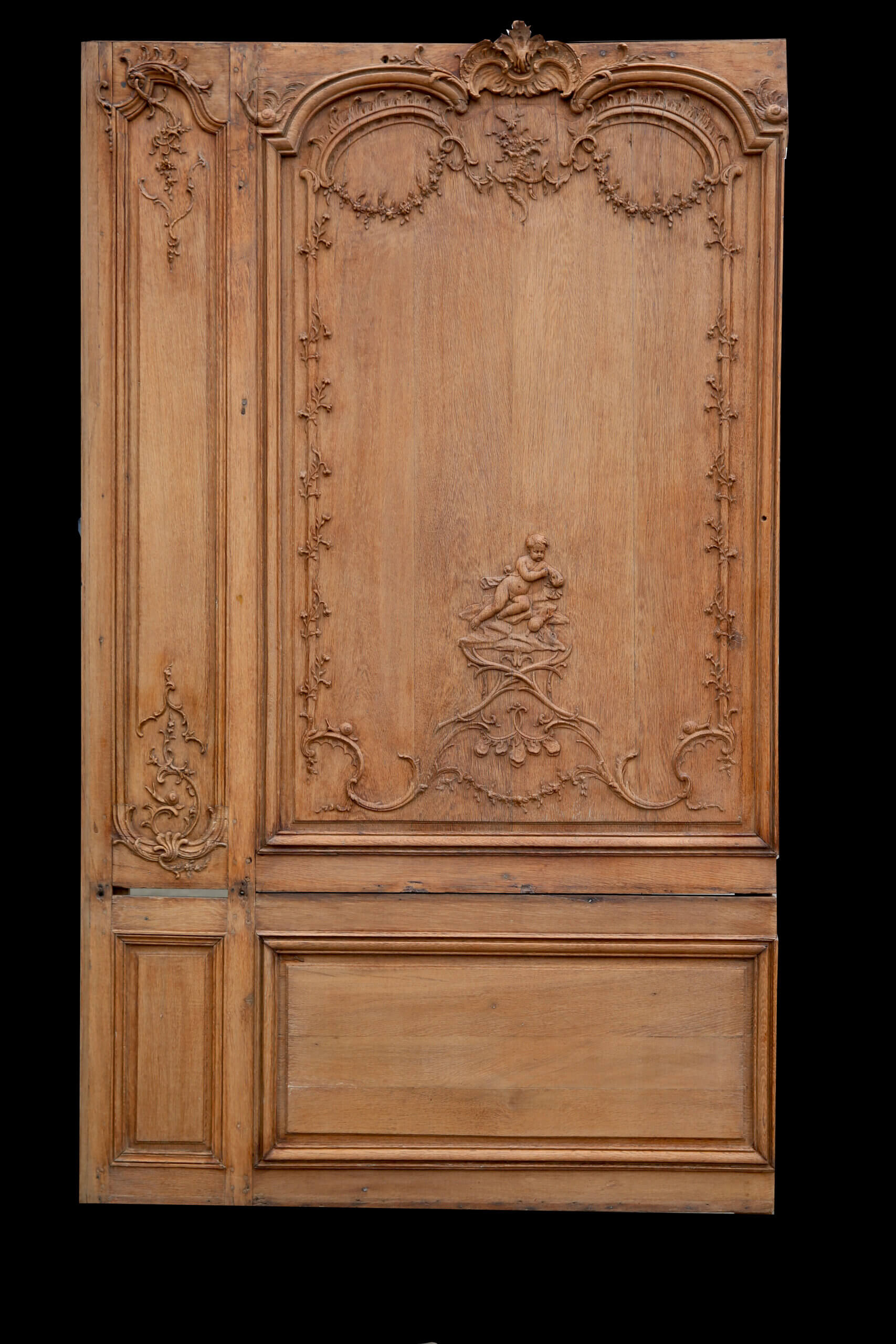
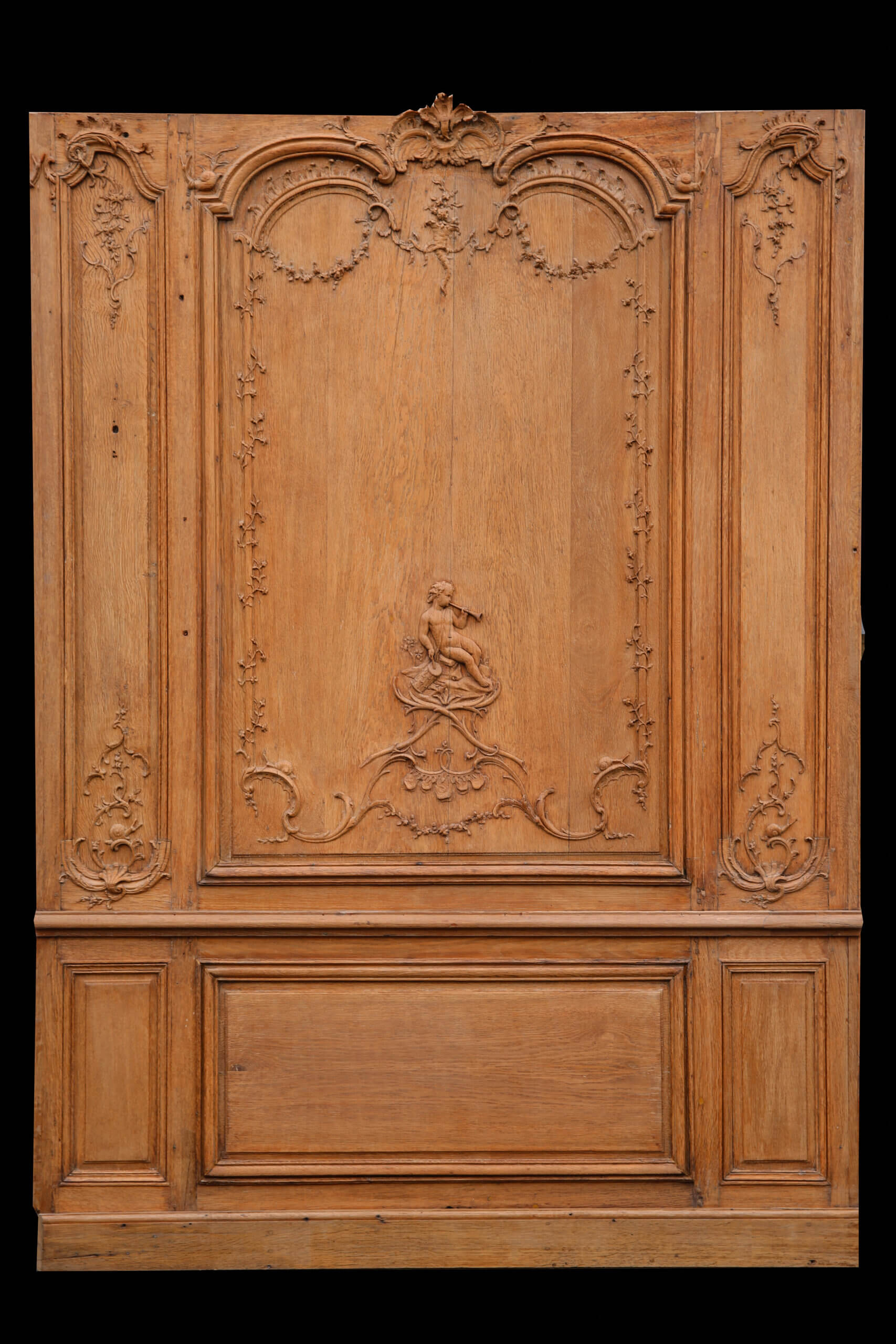
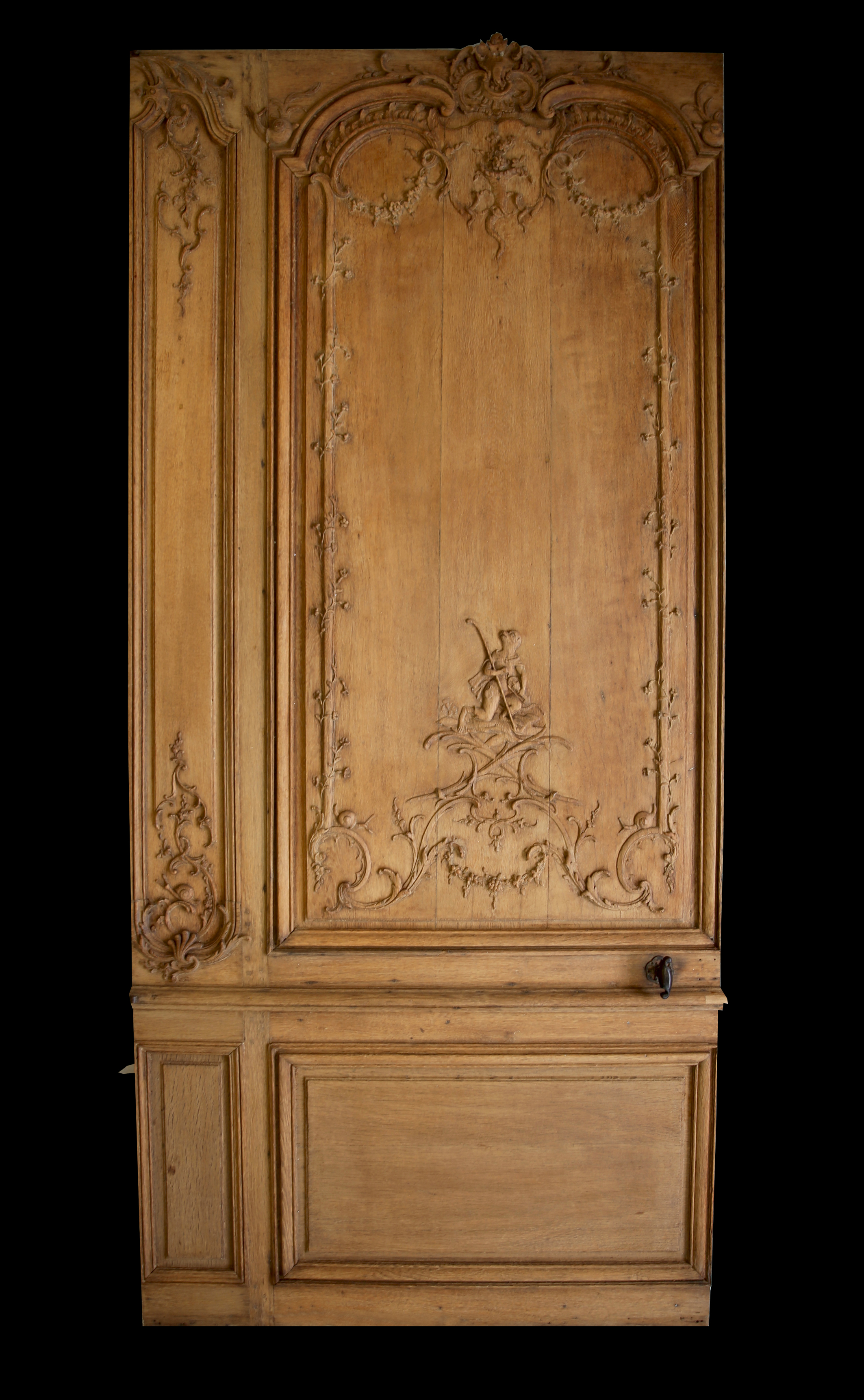
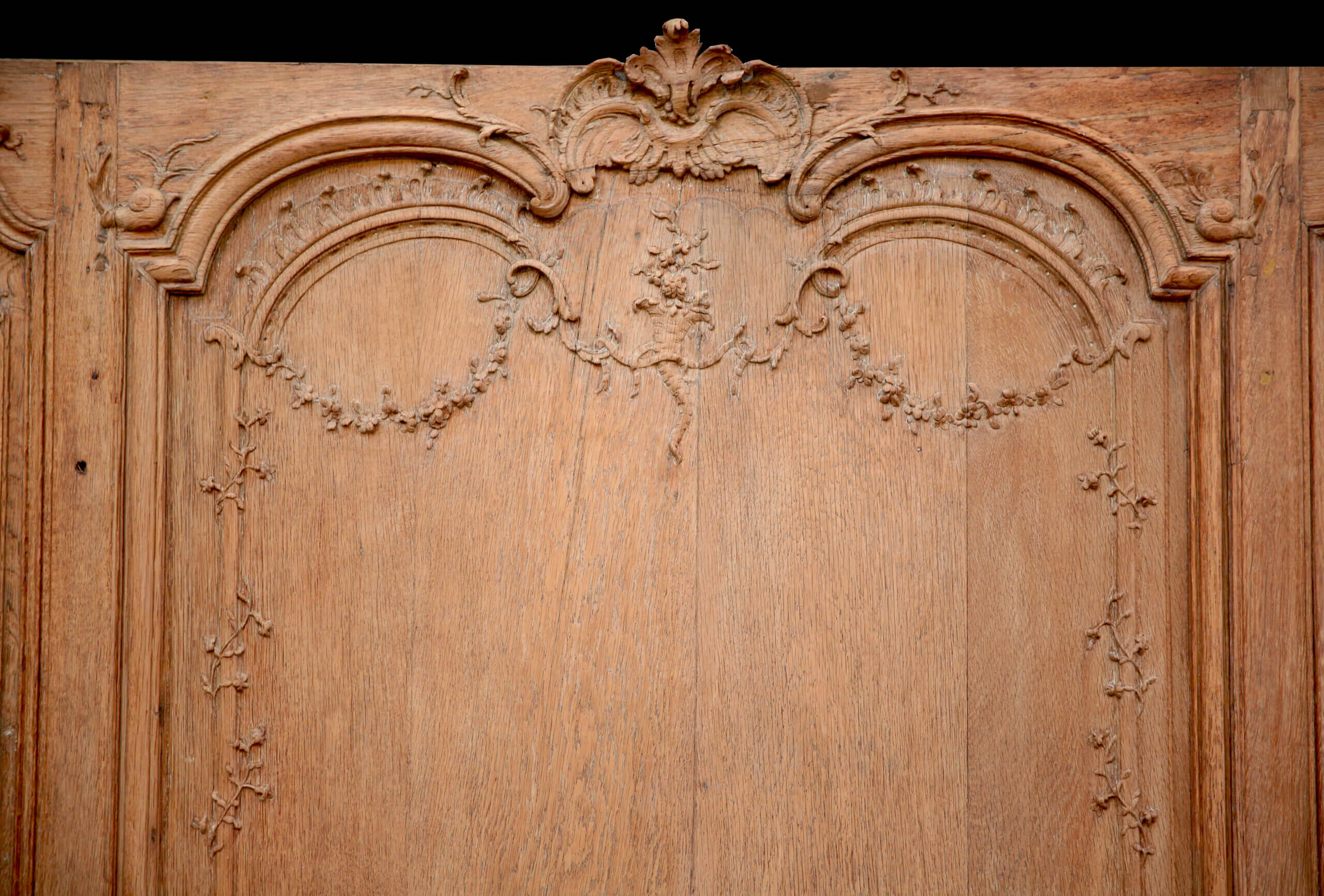
Carved natural oak.
H. 230.5 cm (90 ¾ in.).
PROVENANCE: private collection.
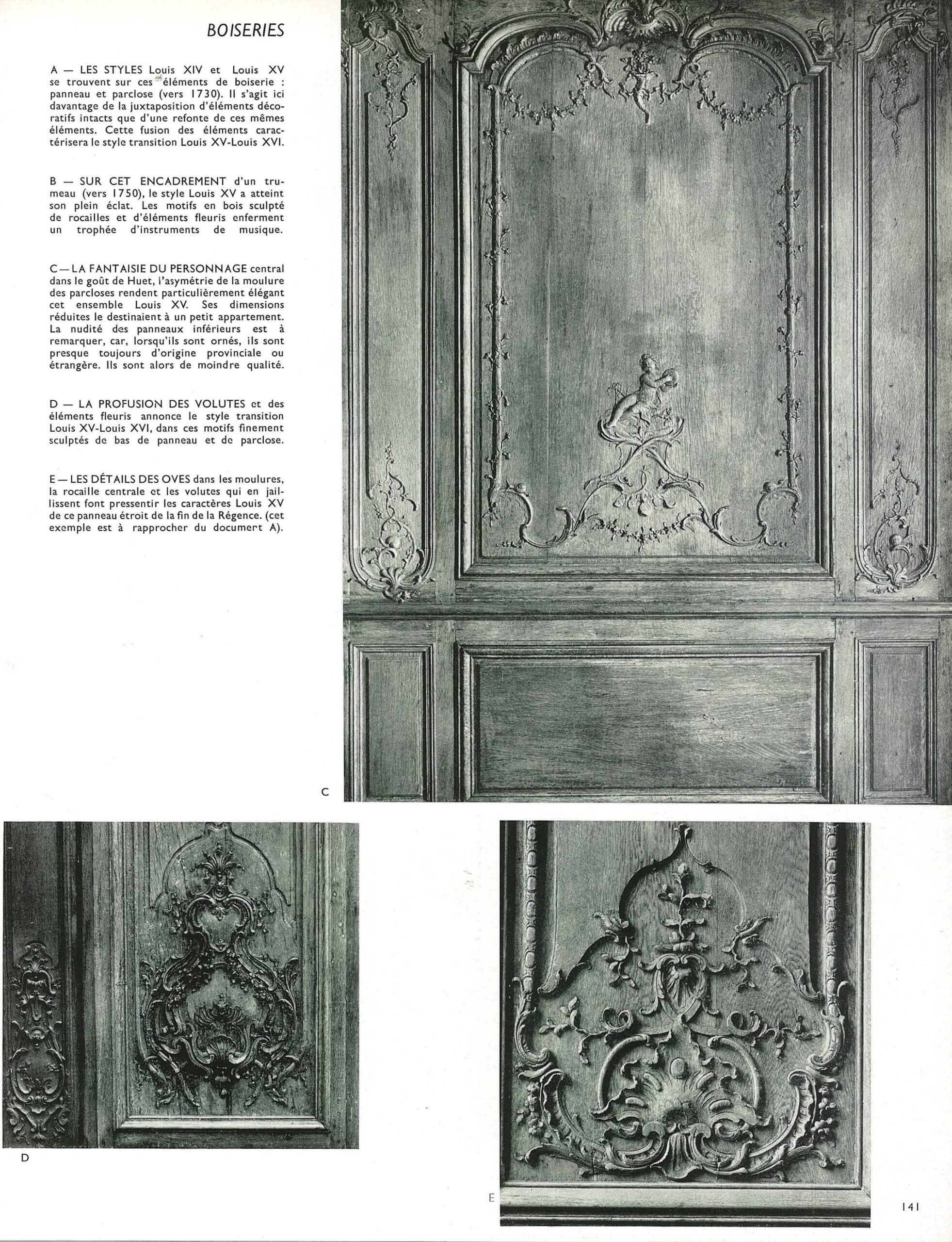
LITERATURE: Stéphane Faniel (ed.), Le 18e siècle français, Collection Connaissance des Arts, Paris, Réalités Hachette, p. 141, fig. C.
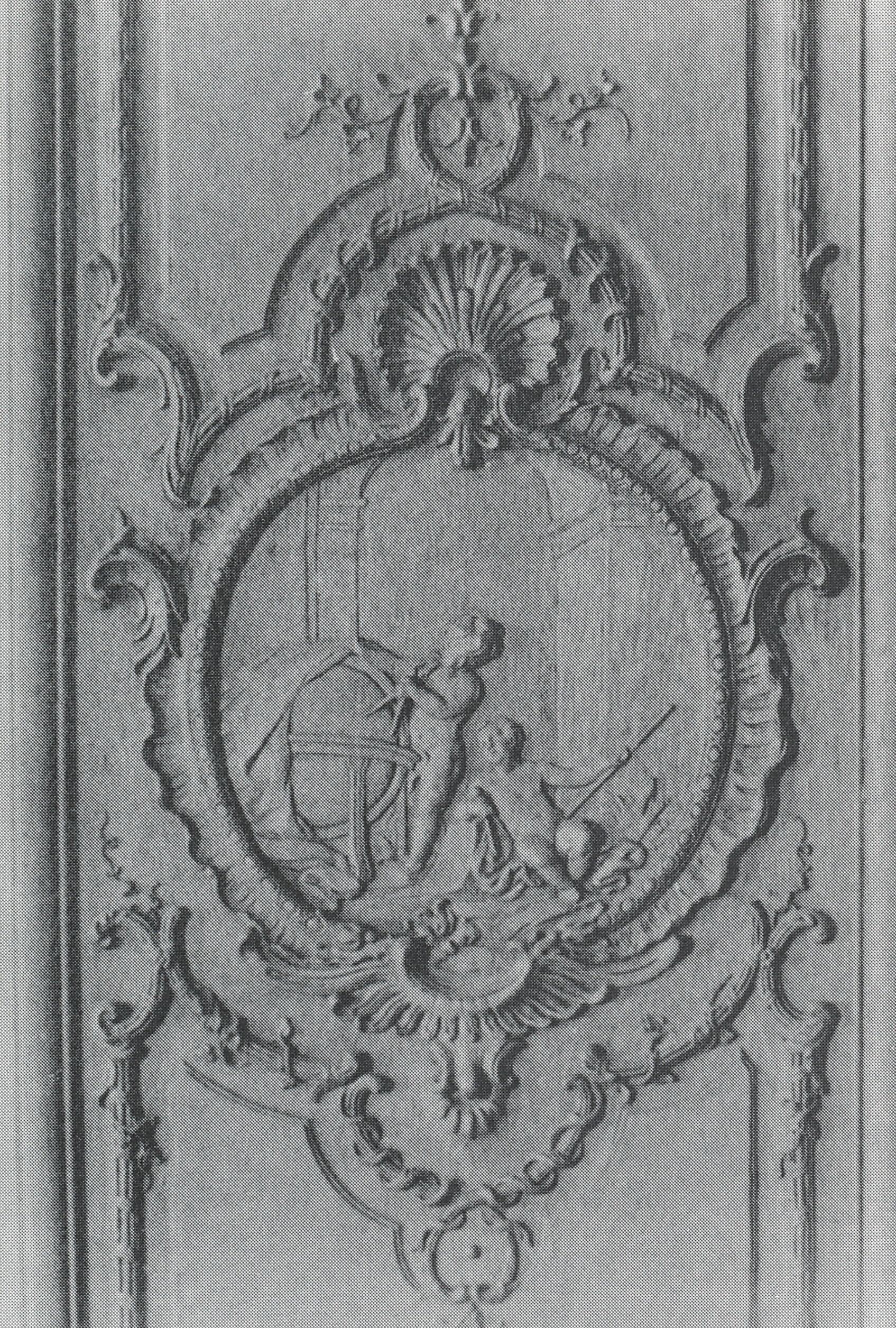
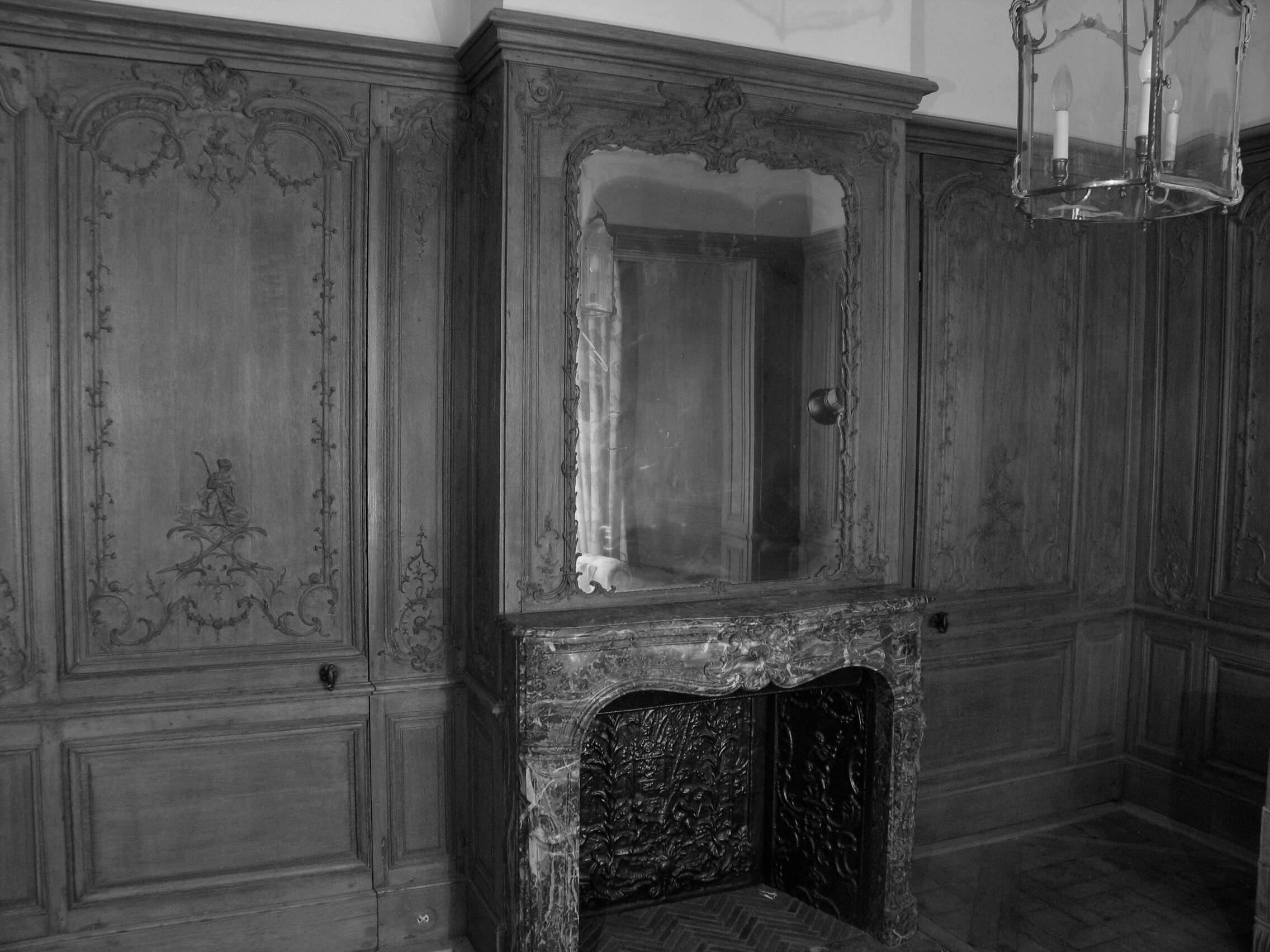
This remarkable set of wood panels, carved in natural oak and likely intended for a mezzanine cabinet, given the relatively low height of the panels, was executed in Paris circa 1725–1730 and can be attributed to the sculptor of the King’s Buildings, Jean-Martin Pelletier. He is also the author of a closely related ensemble, dated circa 1724, adorning the grand dining room, formerly the parade chamber, of the Hôtel de Noirmoutier, also known as the Hôtel de Sens, at 138 Rue de Grenelle, Paris. Built in 1721–1724 by Jean Courtonne for Antoine-François de La Trémoille, 2nd Duke of Noirmoutier and 1st Duke of Royan, the hôtel was sold after his death in 1734 to Élisabeth Thérèse Alexandrine de Bourbon-Condé, known as Mademoiselle de Sens, who significantly enlarged the property by acquiring numerous adjacent plots and also partially remodeled the interior decoration.

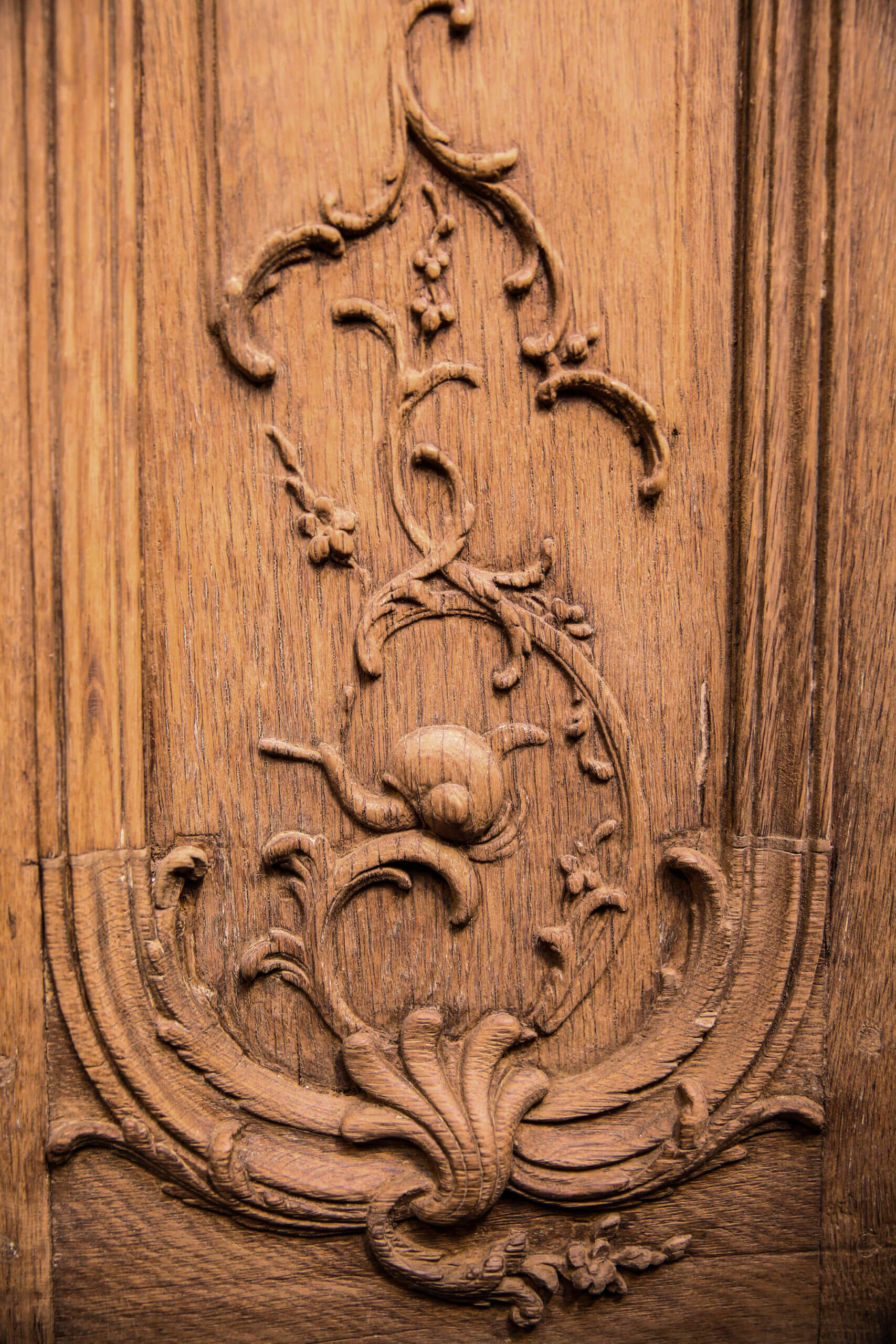
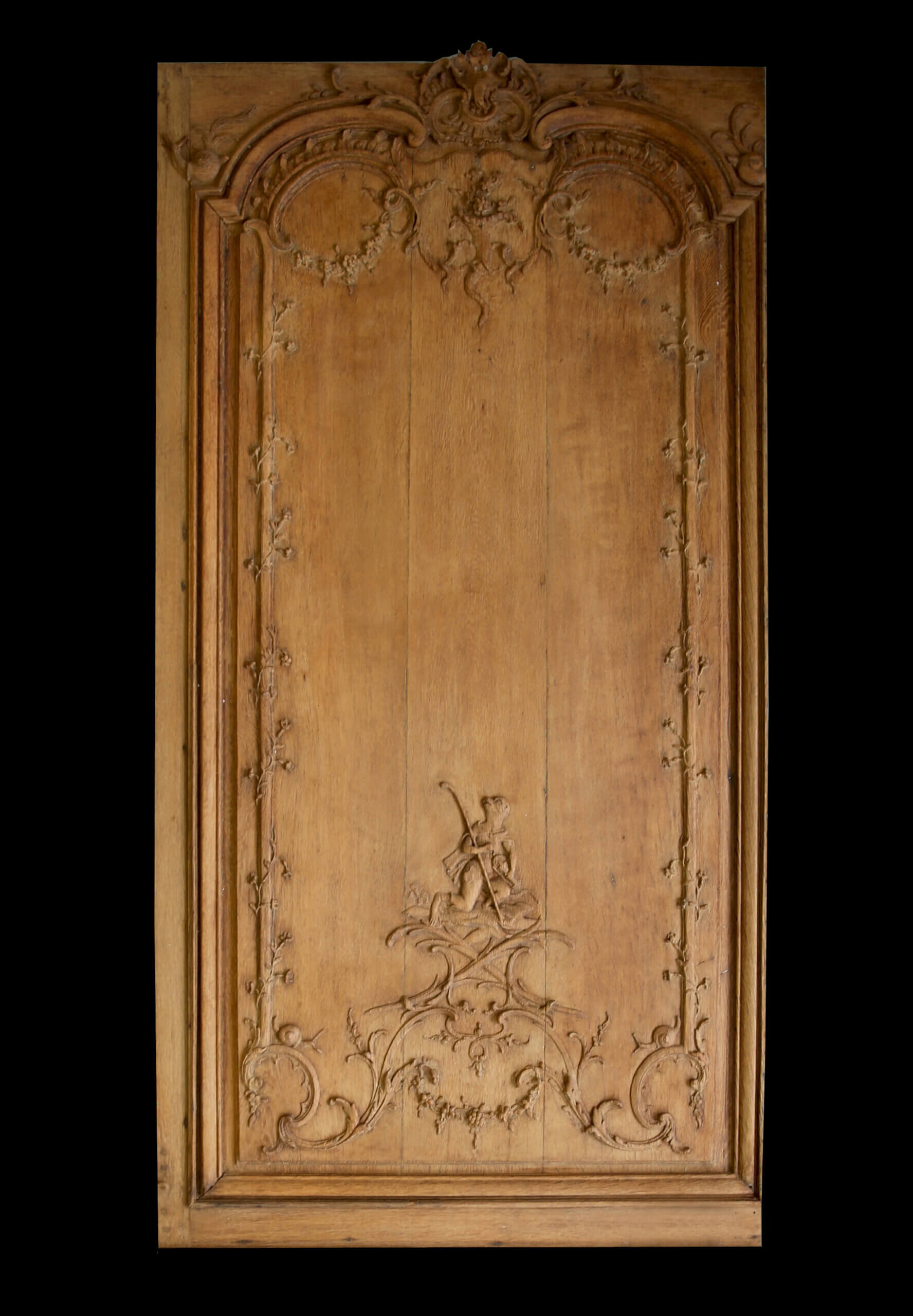
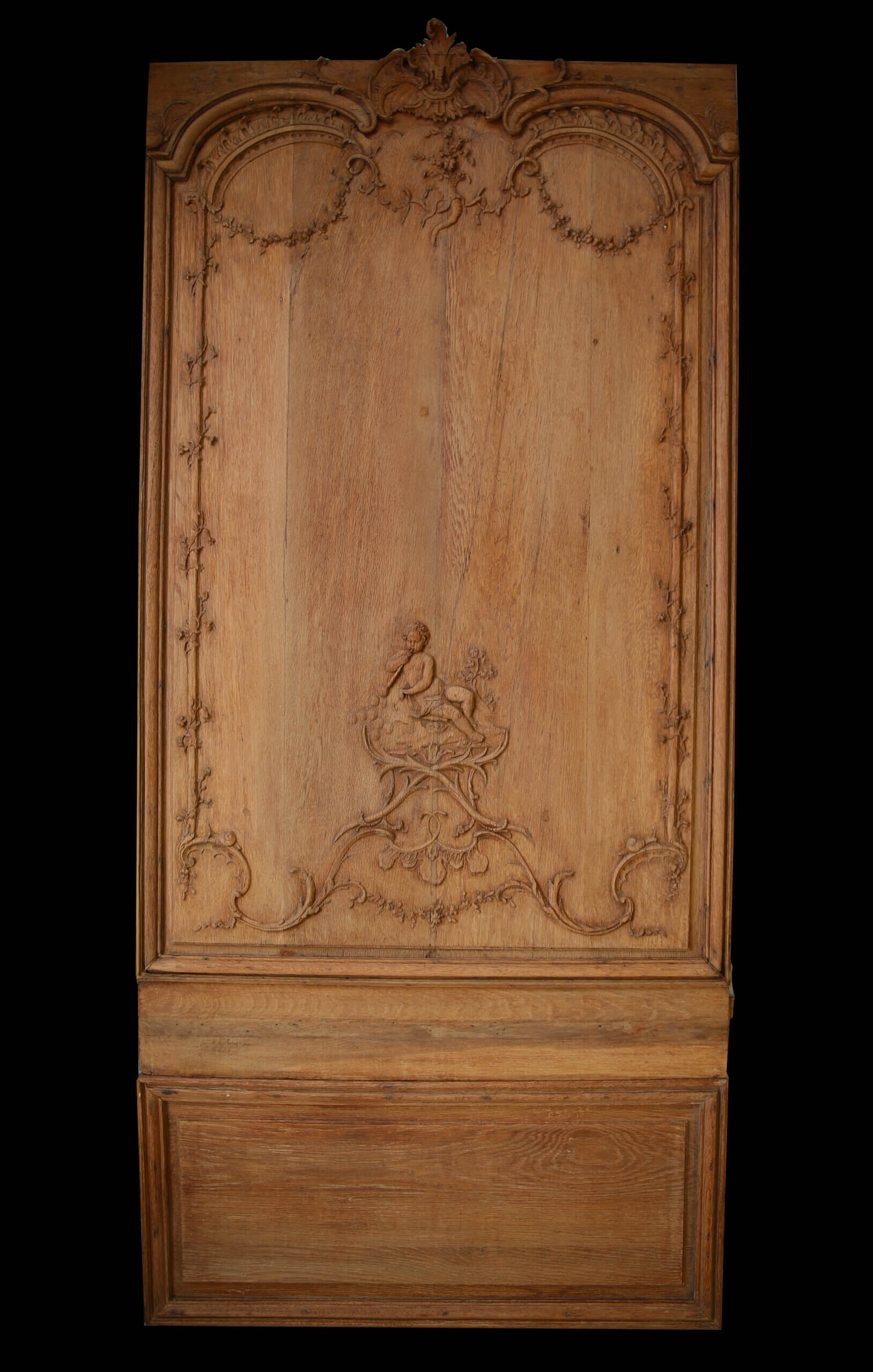
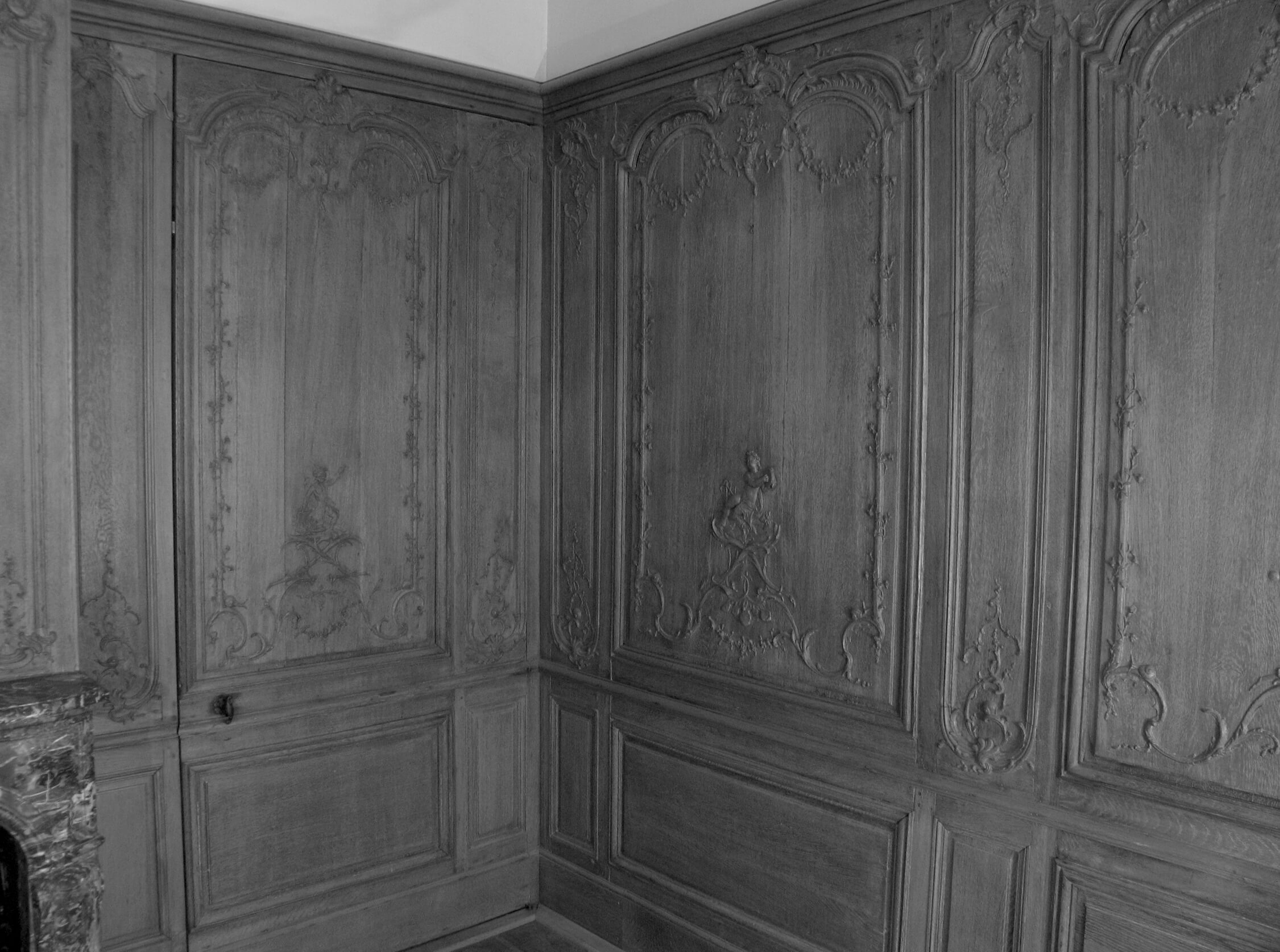
Our ensemble of wood paneling rests on a sober wainscoting with compartmented panels, simply molded borders, and plain grounds, supporting an alternating sequence of large panels and very delicately and finely carved moldings. Each large panel features a straight molded frame with an upper “crossbow-shaped” outline, punctuated by a cartouche with palmette and scalloped scroll motifs, flanked by acanthus leaves, all enclosing a second border composed of an arrangement of fine molded strips around which wind delicate naturalistic floral garlands.
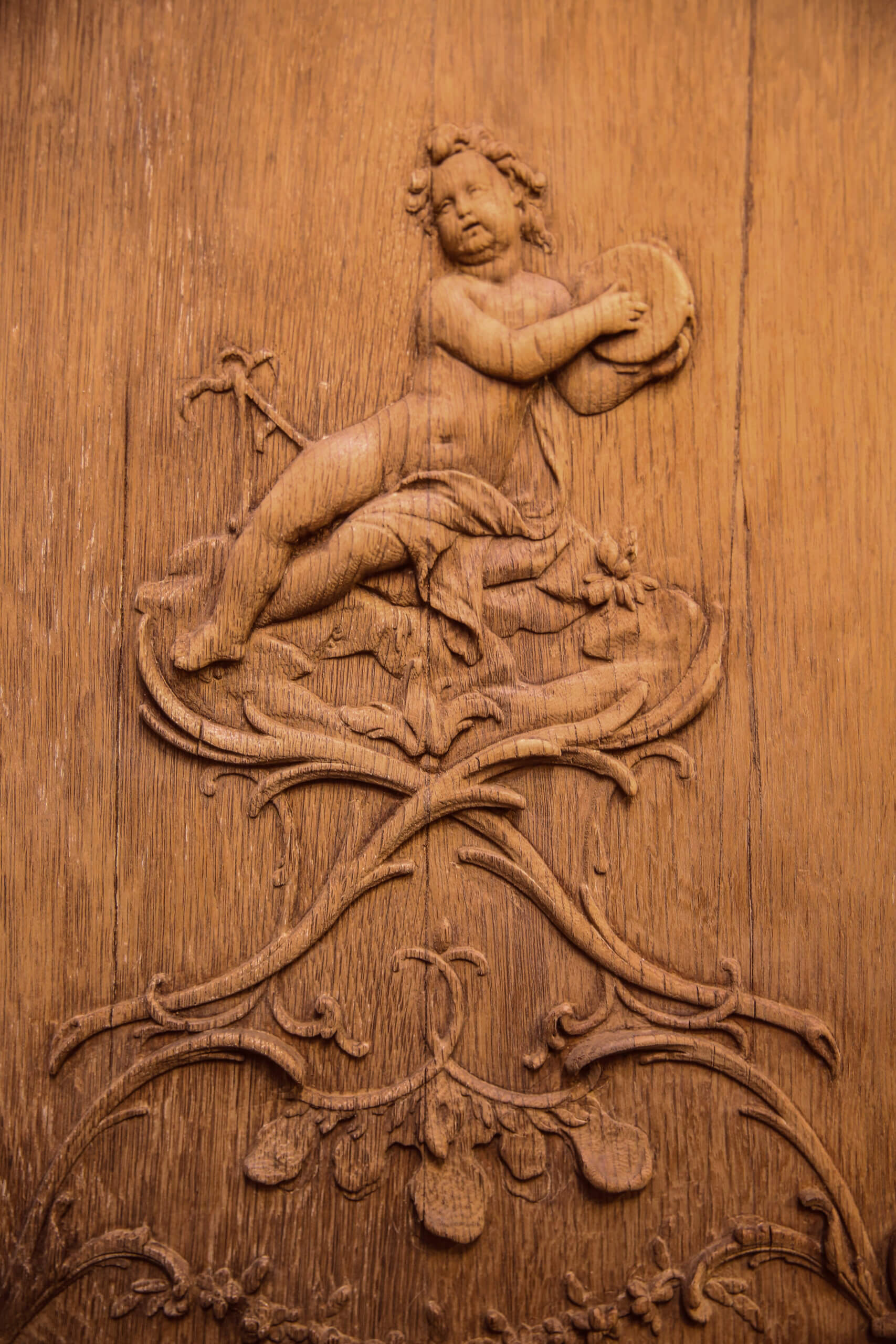
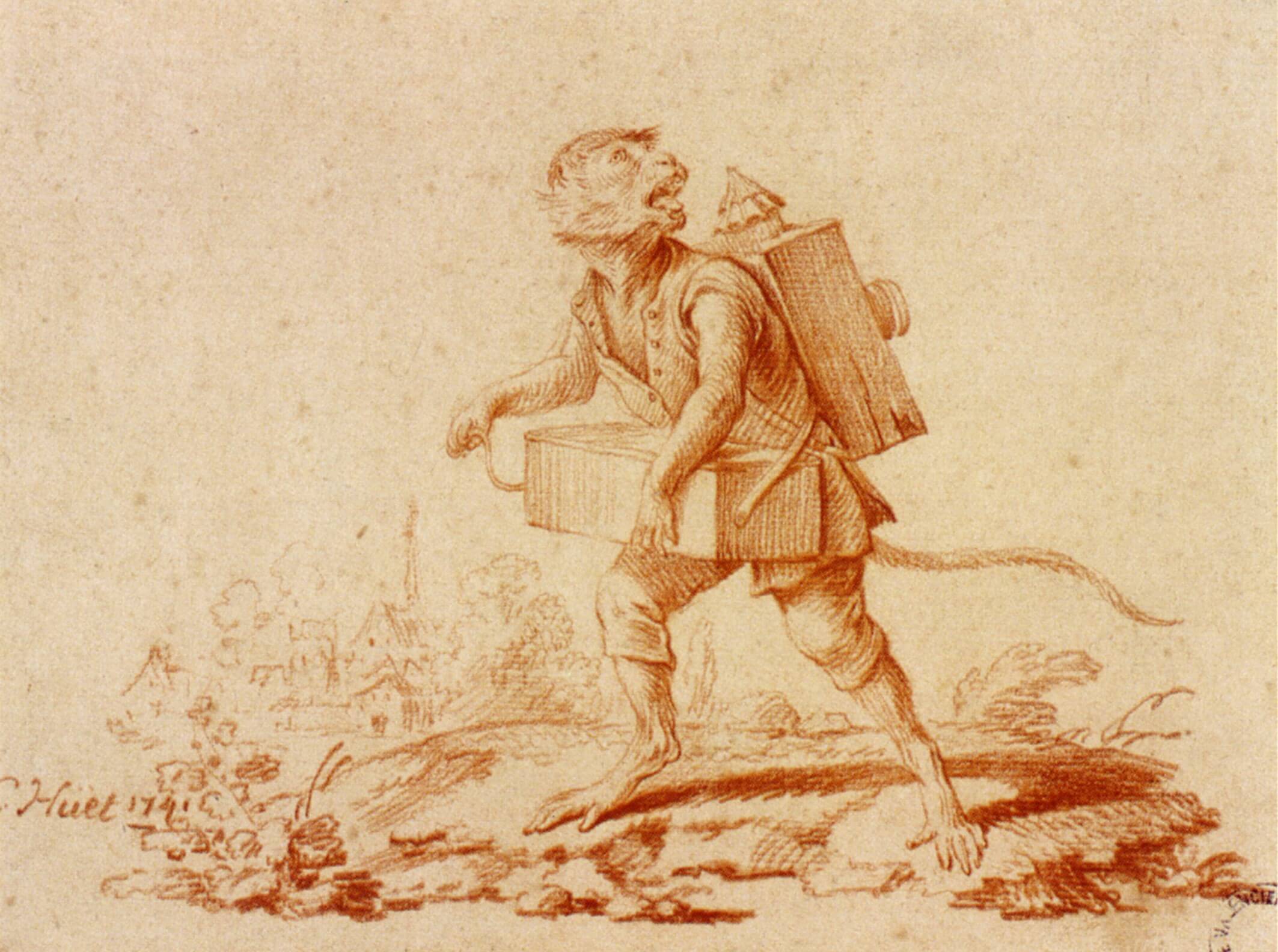
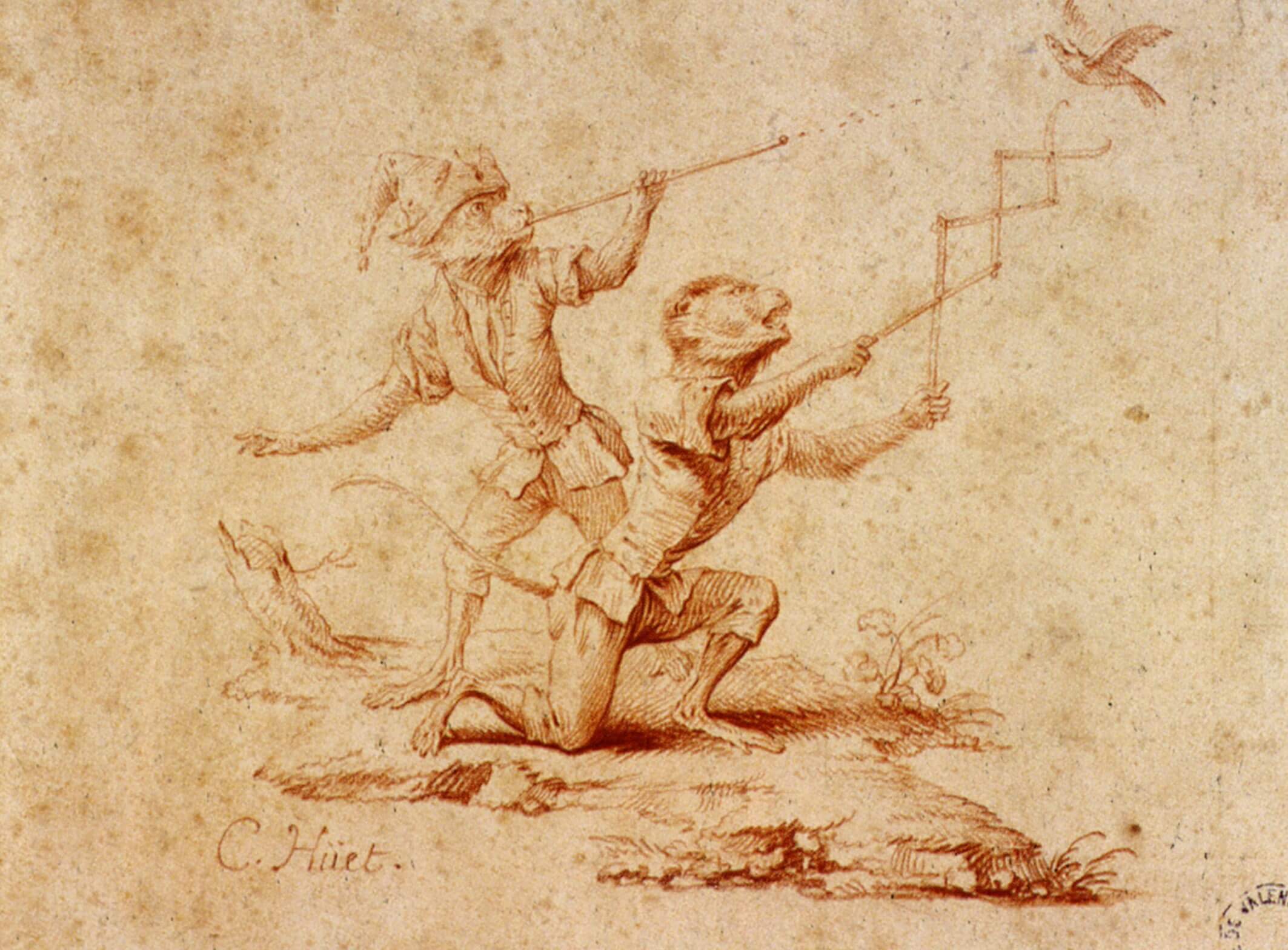
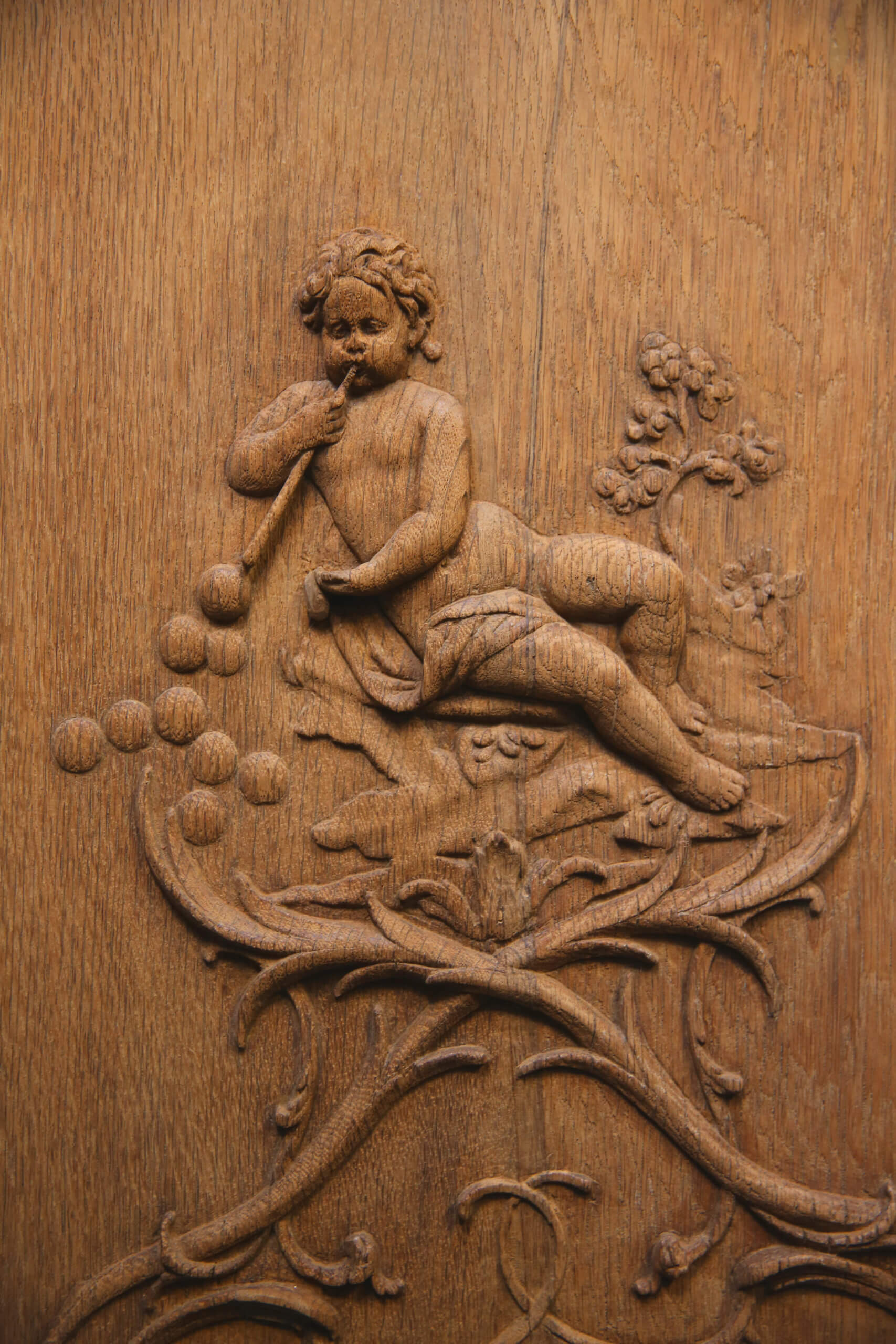
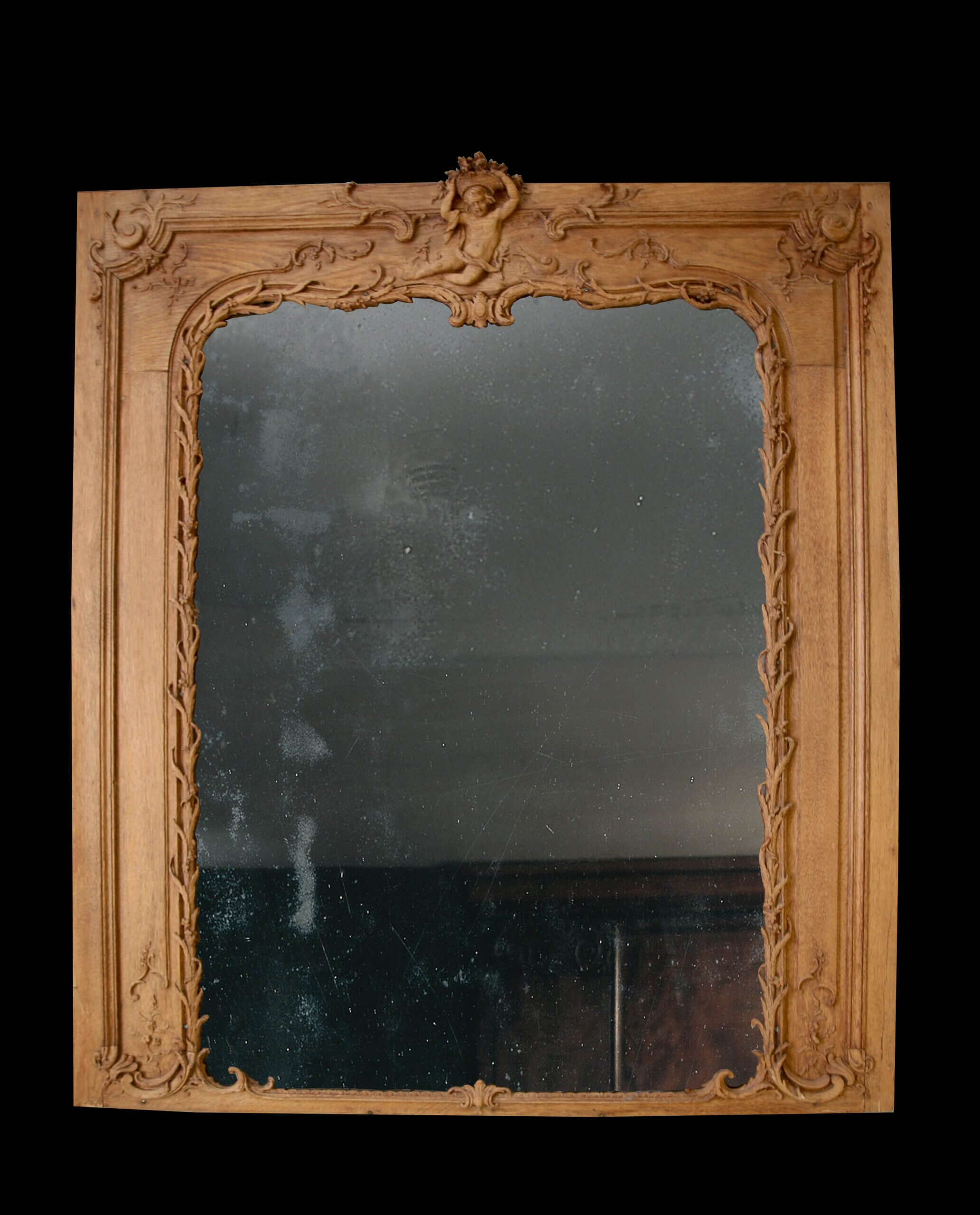
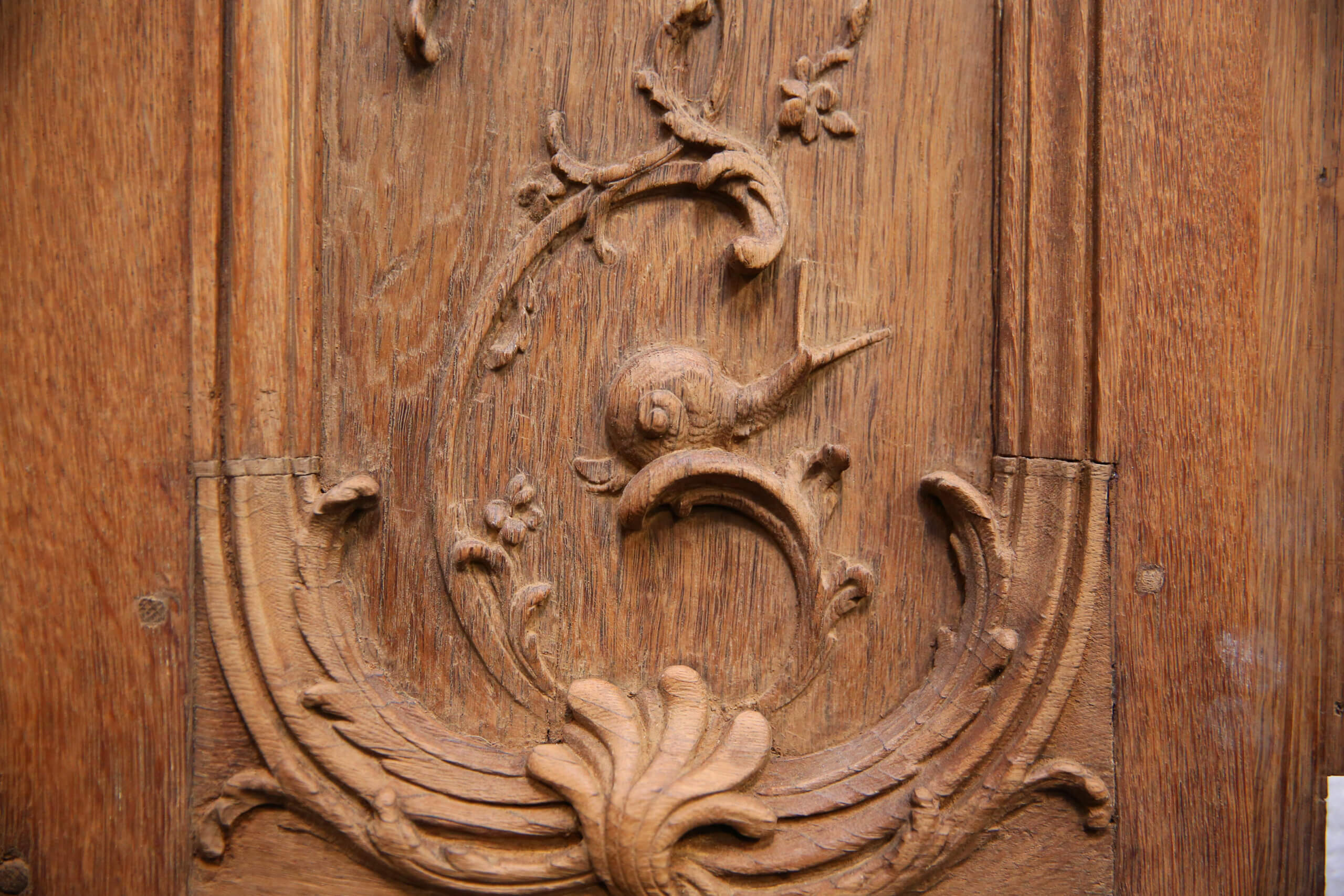
Spandrel scrolls distinguish the lower corners of the large panels, on either side of a play of interlaced scrolls and palms supporting at the center children depicted as musicians or at play, one of them blowing soap bubbles, symbols of fragility and ephemerality. Similarly structured, the narrower panels show, in place of the children described above, monkeys “disguised as men”, musician monkeys, peddler monkeys, forming a richly exotic decoration further enlivened by anecdotal details, such as snails “climbing” the scalloped acanthus scrolls of the paneling. The mirror trumeau above the fireplace, bordered with palm motifs, is punctuated by a child balancing a basket of flowers on his head.
These wood panels partly draw their inspiration from the work of Christophe Huet (1700–1759), who in the 1730s, in the tradition of Antoine Watteau, Claude Gillot, and above all Claude III Audran, produced numerous arabesque designs featuring singerie motifs parodying human activities, drawings that profoundly influenced his contemporaries.
This revival of the taste for the burlesque, whose first manifestations dated from the end of the seventeenth century, was largely indebted to the influence of comedy, and in particular to the famous Commedia dell’Arte, which mocked events and sentiments alike. In Paris, when a performance was given at the Opéra, it was not uncommon for the Italians to produce, almost simultaneously, a comic satire on the same theme. Numerous characters from the Italian comedy were thus transcribed, at the beginning of the eighteenth century, into the arabesques of Watteau, Gillot, Lancret, or Audran.

The singeries, much appreciated at the time, were likewise associated with grotesques, as in those painted by Christophe Huet between 1735 and 1740 within two major decorative ensembles of the eighteenth century: the Grande and the Petite Singerie at the Château de Chantilly, respectively located on the first floor and the ground floor of the apartments of the princes de Condé, cousins of King Louis XV and princes of the blood.


Very often associated with these scenes of singeries, those depicting children at play appeared in France in interior decoration as early as the end of the seventeenth century, adorning, for example, the large metopes of the cornice of the cabinet in the Hôtel Colbert in Paris in 1690, populated with groups of children dancing or playing music and castanets, a decorative scheme foreshadowing that executed in 1701 for Louis XIV in the Salon de l’Œil-de-Bœuf at Versailles.
This new decorative style truly emerged with the resumption of works in the royal châteaux around 1699, both at the Ménagerie of Versailles and at the château itself, as well as at Trianon. However, the death of the King in 1715 brought a sudden decline in these activities, and it was not until the arrival of Jacques Verberckt in 1727 within the Société pour les Bâtiments du Roi that the depiction of children at play in wood paneling decorations was fully revived. Particularly favoured by Jacques V Gabriel, who became Premier Architecte du Roi in 1735, these motifs flourished once more in royal and princely residences, both at Versailles, especially in the gallery of the small apartments of Louis XV, in the Salon de la Pendule, and in the Queen’s Chamber, and at Fontainebleau. Verberckt, for example, sculpted groups of children very close in style to ours for the decoration of the former Infirmerie of the Hôtel des Invalides in Paris.


Detail of the wood paneling from the dining room of the Hôtel de Noirmoutier, 138 Rue de Grenelle, Paris,
executed circa 1724 by Jean-Martin Pelletier.