

Chiselled and gilded bronze and Mont-Cenis crystals.
H. 205 cm. (80 ¾ in.); D. 132 cm. (52 in.).
PROVENANCE: collection of the Dukes of Massa, 111 rue de la Boétie, 52 avenue des Champs-Elysée, Paris; acquired by Baron Elie de Rothschild (1917-2007) et placed after 1956 in his hôtel (town house), located at n°. 11, rue Masseran, Paris; collection of Maurice Segoura (1932-2013), Paris; collection of Hubert de Givenchy (1927-2018), in the hôtel d’Orrouer, also known as hôtel de Bauffremont, at n°. 87, rue de Grenelle, Paris.
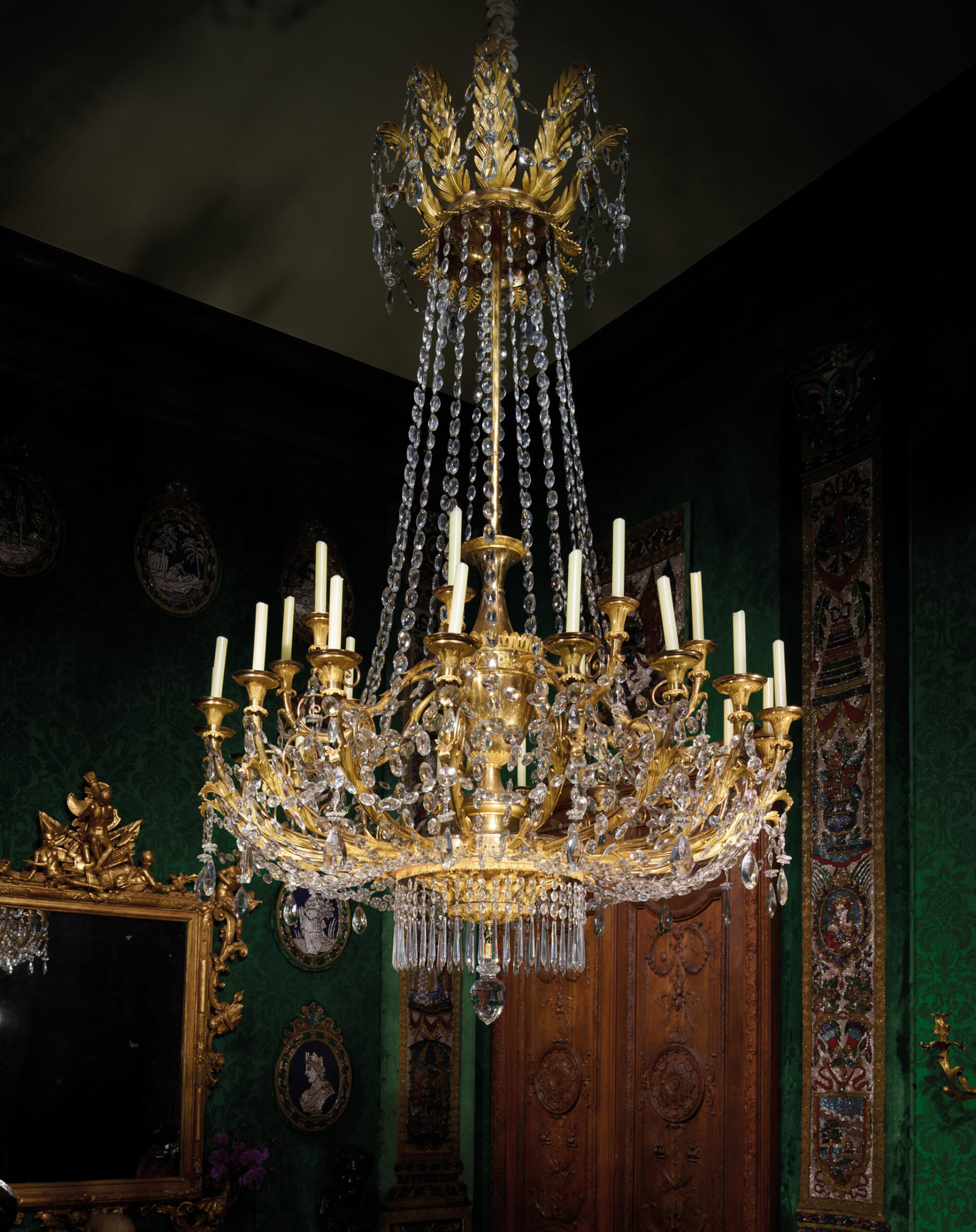
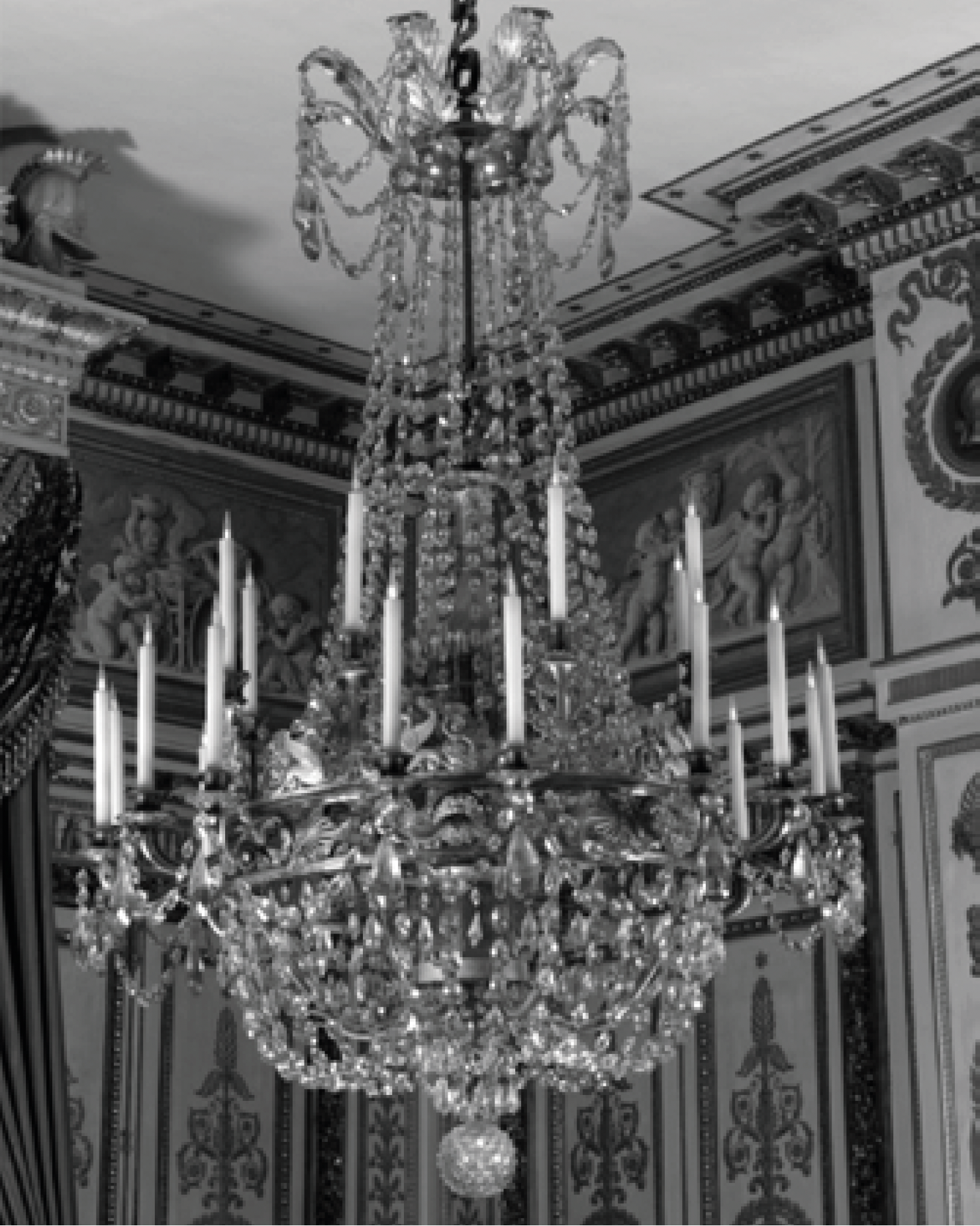
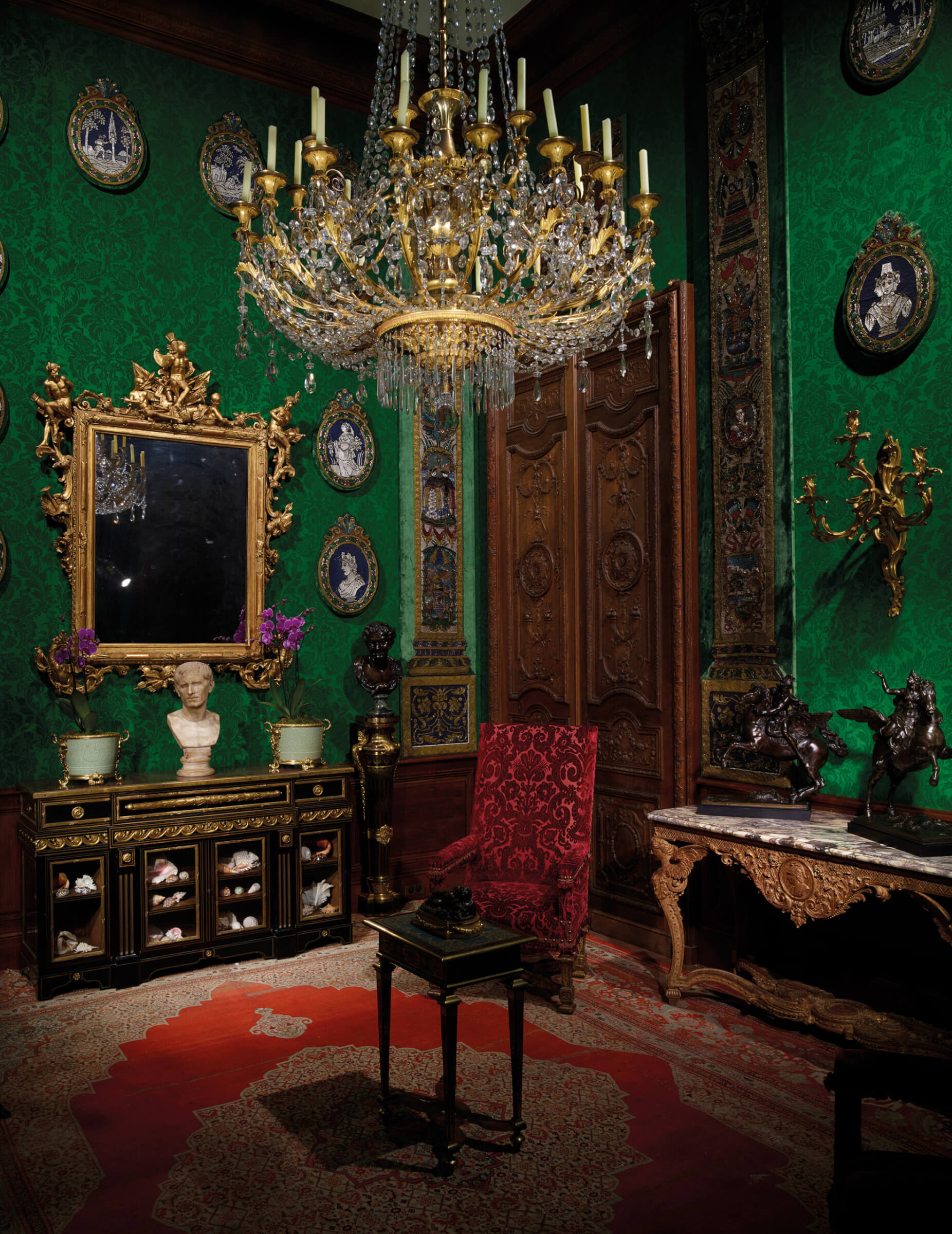
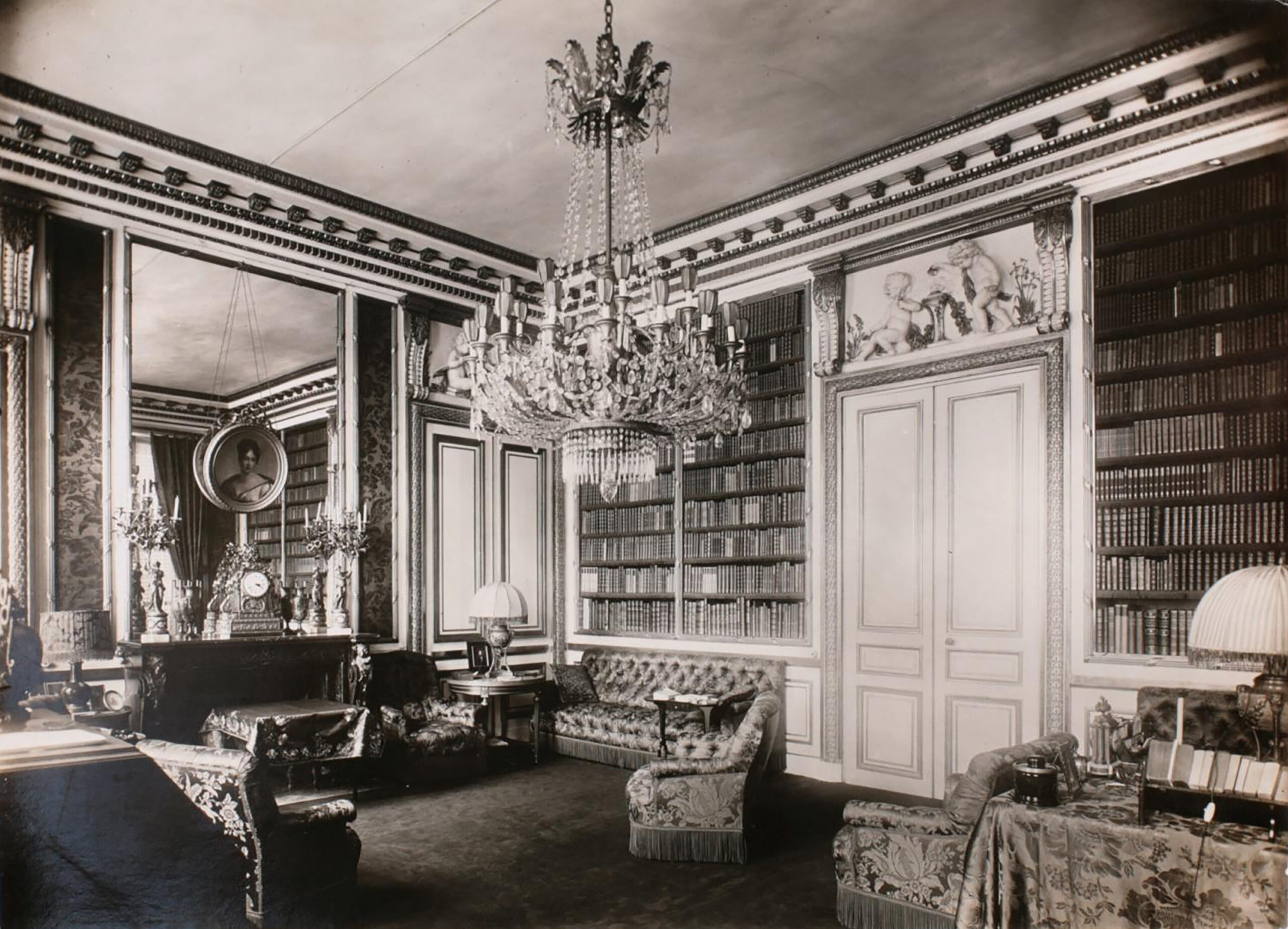
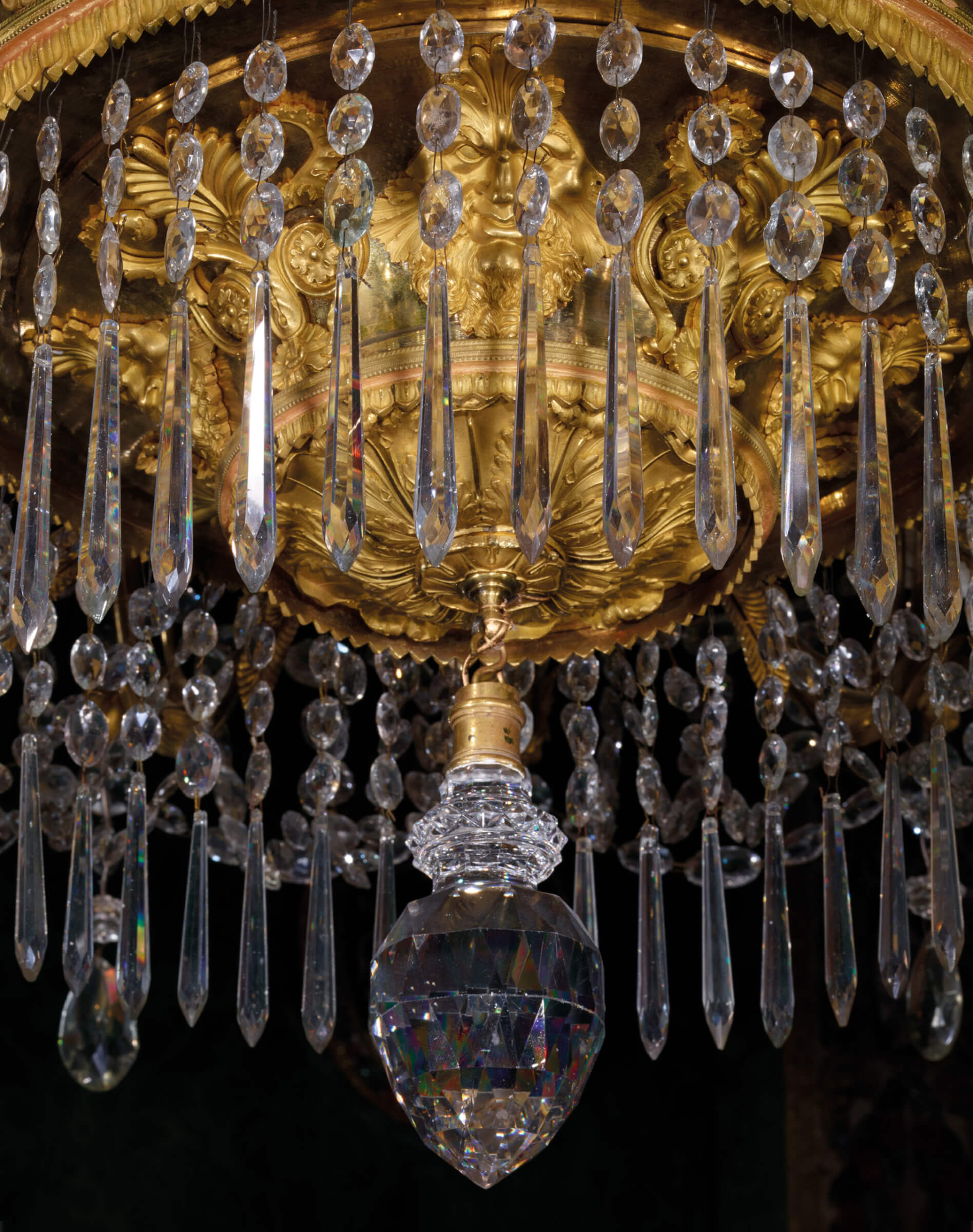
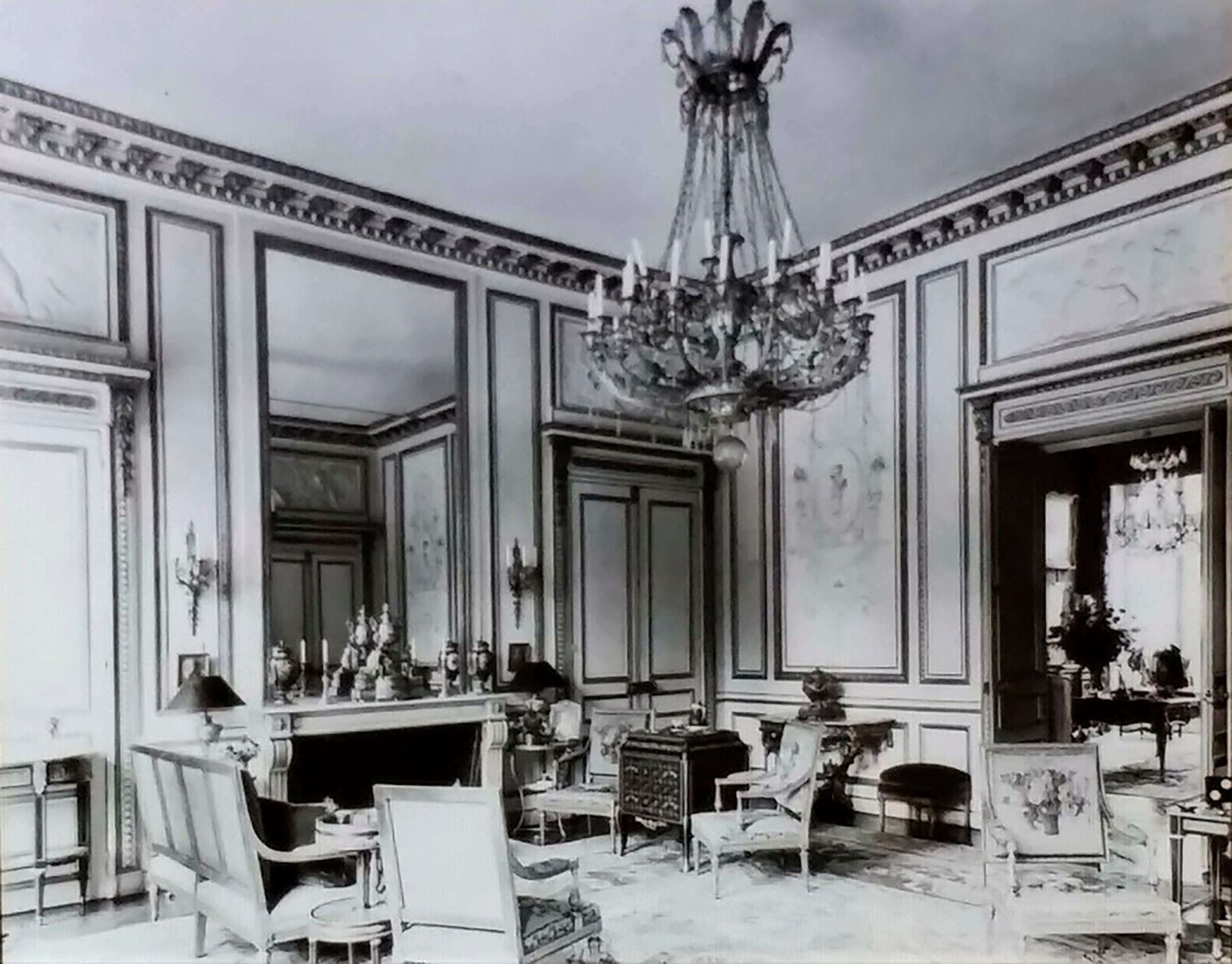
This very remarkable Empire-period chandelier, in gilt bronze and Mont-Cenis crystals, formed part of the collection of the Dukes of Massa and adorned the salon of the hôtel bearing their name, located at 111 rue de la Boétie, 52 avenue des Champs-Elysées, Paris, where it was photographed in the 1920s by Charles Joseph Antoine Lansiaux (1855-1939) (see below). Acquired by Baron Elie de Rothschild (1917-2007), after 1956 it adorned one of the salons in his town house at 11, rue Masseran in the 7th arrondissement of Paris.
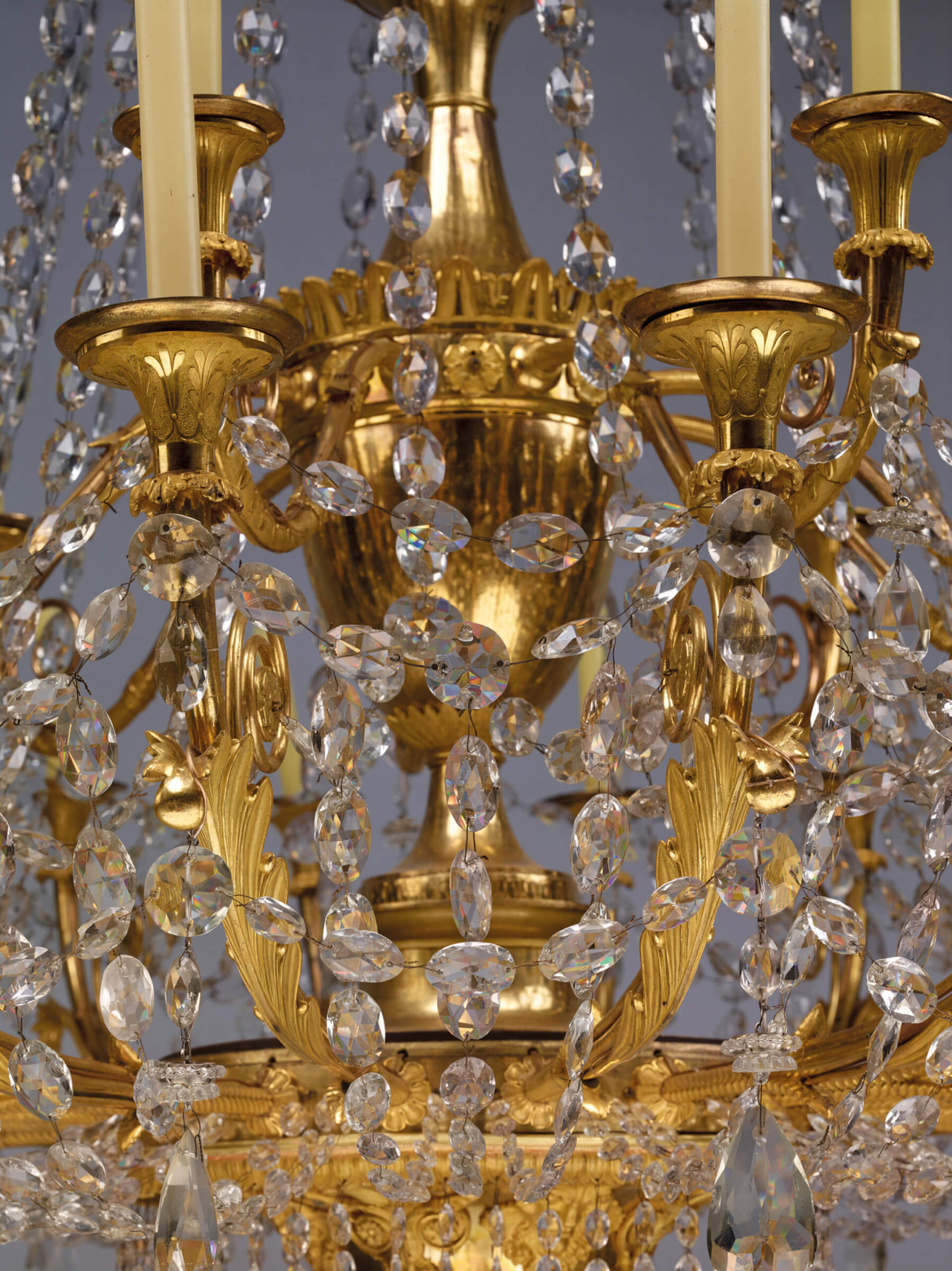
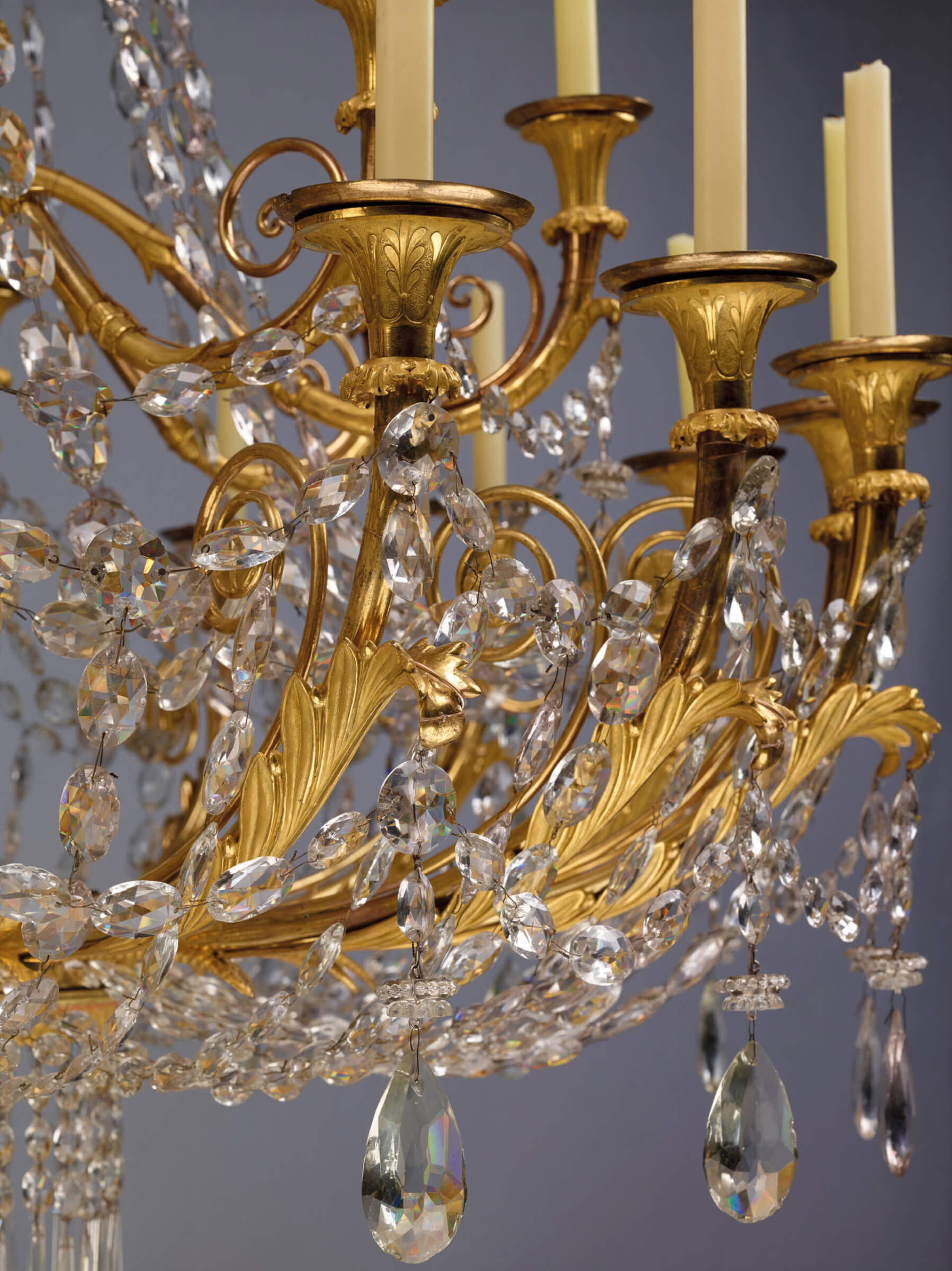
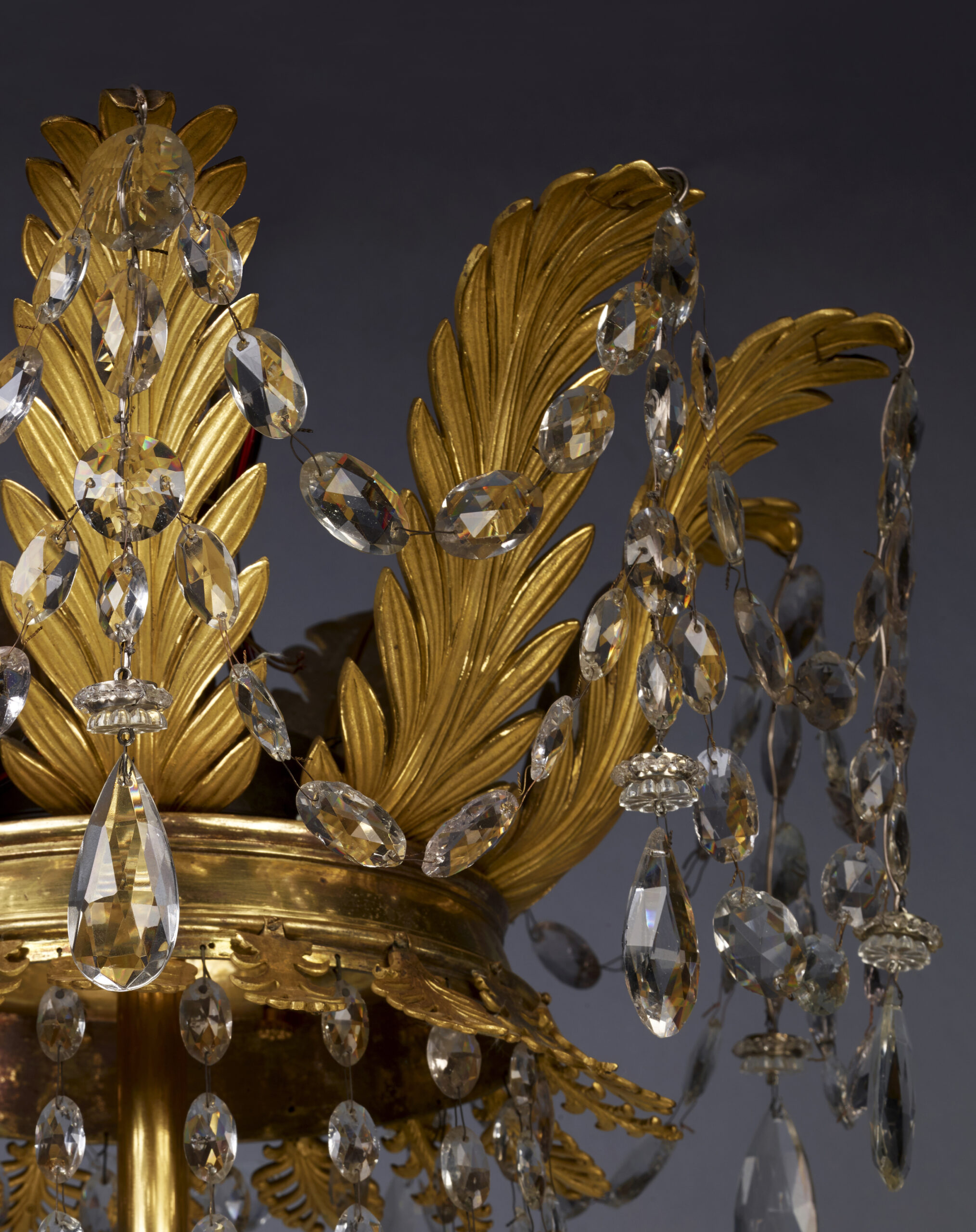
Remarkably chiselled and still displaying its original gilding, this chandelier is structured around a large central vase in the shape of a ‘loutrophorus’ with a plain body, enhanced at the neck with a flared frieze with alternating fleurons and lanceolate leaves. The vase rests on a pedestal and a circular plinth with plain doucines, all attached to a lavish ‘corbeille’ (basket) adorned with foliage masks, stylised palmettes, enhanced by scrolled fleurons and rosettes, friezes of raies de coeur, and a luxuriant corolla combining acanthus and lanceolate foliage. A first row of eighteen arms of light ‘en console’ with scrolled rosettes, each underlined by a large palm leaf with stylised seeds and terminating in a flared bobeche chiselled with foliage motifs, emerges from rosettes that punctuate the waist of the ‘corbeille’, enhanced by a second row, of a smaller diameter, made up of nine additional lights attached to the waist of the ‘loutrophorus’ vase described above. A gilded bronze stem links the latter to a circular ‘pavilion’ crowned with tall palmettes in stylised ‘consoles’, lined with a frieze of similar short palmettes but facing downwards. A rich ornamentation of garlands of crystals, pendants, pampilles and faceted pears rounds off the dazzling décor of this chandelier, a testament to the most luxurious pieces that were executed in Paris during the Empire period.
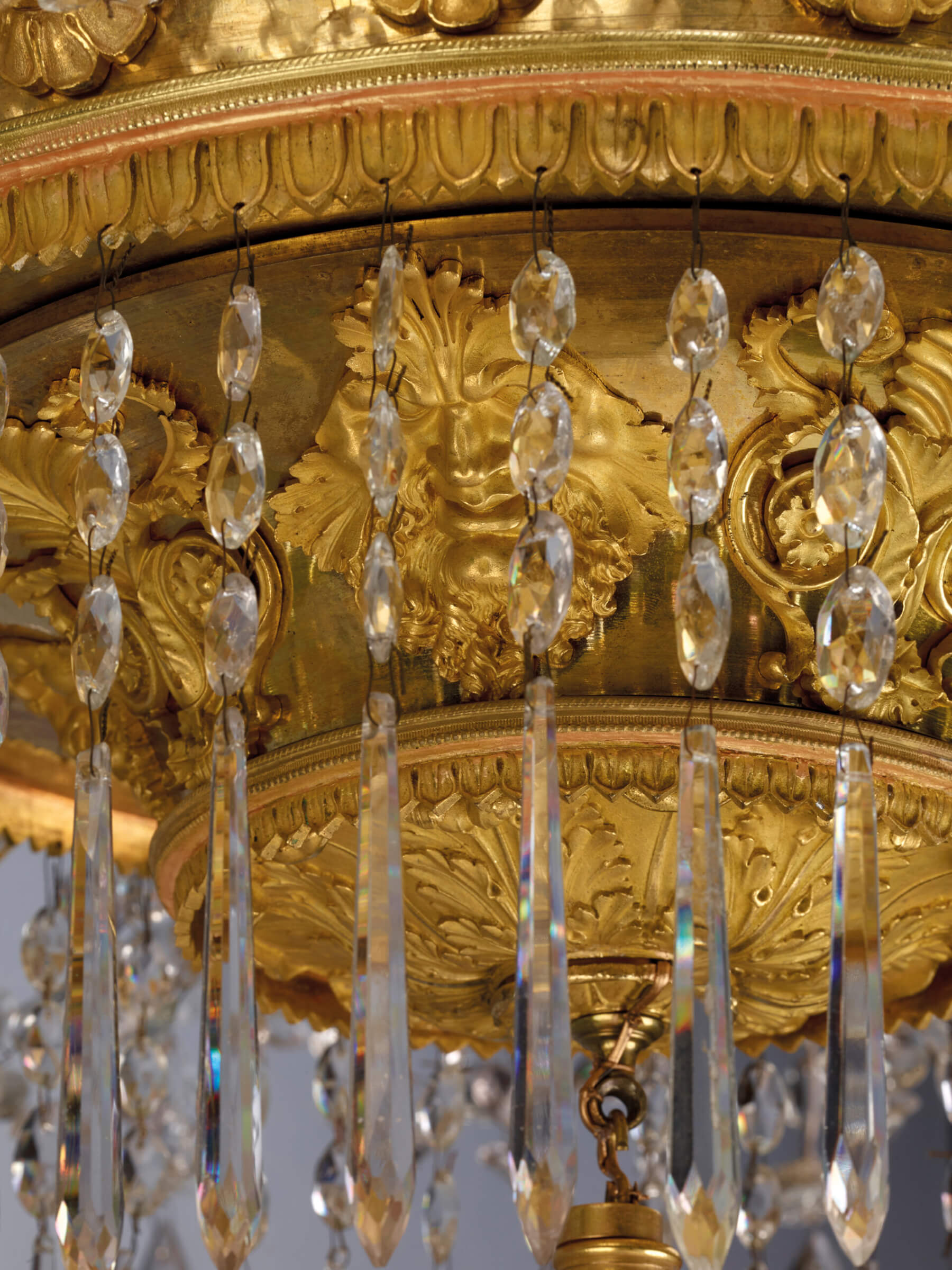
Chandeliers very similar to this one were delivered to the Garde-Meuble impérial between 1805 and 1810, notably by Antoine-André Ravrio, a bronzemaker and gilder based at n°. 93 rue de Richelieu, Paris. They were used in various official residences, including the Tuileries palace, the Saint-Cloud palace as well as the Elysée palace, which was Prince Murat’s residence at the time.
The exceptionally pure crystals used in most of these chandeliers came mainly from the Mont-Cenis manufactory, the main supplier during the Empire and Restoration periods. Initially founded on the heights of Saint-Cloud in 1784 and named “Manufacture des Cristaux de la Reine” (Manufactory of the Queen’s Crystals) because of the patronage it enjoyed from Queen Marie-Antoinette, the manufactory was relocated to Burgundy three years later and set up in Mont-Cenis, near Le Creusot. This decision was taken by a ruling of the King’s Conseil d’Etat in Versailles on 18th February 1787: ‘[…] His Majesty has ascertained that it would be of greater benefit for this establishment to be transferred to Le Creuzot near Mont-Cenis in Burgundy, on the grounds that the raw materials necessary to supply the said Manufacture with are to be found there, which would be a means of bringing this manufactory […] to the highest degree of perfection of which it is liable’.
The importance and quality of the coal and iron mines in the Charbonnière valley also justified the strategic choice of that location. At the beginning of the 19th century, the manufactory expanded rapidly under the leadership of two entrepreneurs: Benjamin-François Ladouëpe du Fougerais (1766-1821) and his brother-in-law Xavier Veytard, who was succeeded by Charles-Clément Boucacourt in the early 1810s. The crystal works quickly acquired a prestigious reputation, both in France and abroad. During the Empire, the manufactory was renamed “Manufacture des cristaux de S.M. l’Impératrice” (Manufactory of Her Imperial Highness).
It was awarded a gold medal at the 1806 Exposition des produits de l’industrie (Exhibition of Products of French Industry), proving itself to be “superior in the brilliance of its crystal, in the taste of its shapes and in the use of diamond cutting. The jury was shown beautiful chandeliers manufactured in Mont-Cenis; crystals were also exported from the manufactory, which were given pride of place over English-made crystals abroad”.
The manufactory had its own warehouse located on rue de Bondy in Paris. It produced form pieces and goblet ware, as well as cut crystals for chandelier manufacturers such as Chaumont and Ravrio, from whom the Imperial Garde-Meuble obtained its supplies. In December 1810, Mathurin Sulleau, an auditor at the Imperial Garde Meuble, wrote: ‘Mont-Cenis crystals are acknowledged to be superior in quality to anything made in that kind of manufactures in France or Bohemia […]”. In the 1810s, the Chagot family took over the crystal works and kept control until 1832, when it was finally sold to the rival manufactories of Saint-Louis and Baccarat. In the meantime, it had won another gold medal at the 1819 Exposition des Produits de l’Industrie.
Nicolas-François-Sylvestre Régnier and Anne-Charlotte, known as « Nancy » Macdonald, duke and Duchess of Massa
Anne-Charlotte, known as “Nancy” Macdonald (1792-1870), the eldest daughter of Marshal Macdonald, Duke of Taranto, married Nicolas-François-Sylvestre Régnier (1783-1851), 2nd Duke of Massa, Prefect under the Empire and the Restoration, Peer of France from 1816 to 1848. She was lady-in-waiting to Queen Marie-Amélie and the royal princesses under Louis-Philippe. She died on 28th May 1870 at the Château of Moncontour, in Vouvray, Indre-et-Loire.
Born in Nancy in 1783, Nicolas-François-Sylvestre Régnier was the son of Claude-Ambroise Régnier (1746-1814), 1st Duke of Massa in 1809, Minister of Justice under Napoleon I, and Charlotte Lejeune (1748-1835). He was appointed 1st Count of Gronau and of the Empire in 1811, 2nd Duke of Massa on the death of his father in 1814, and Peer of France from 1816 to 1848. Unlike his father, the Duke did not pursue a career at the Bar, preferring instead a career in high-level administration.
Appointed as one of the first auditeurs at the Conseil d’État in Thermidor Year XI (22nd July 1801), he was assigned to the Legislation Section of the Ministry of Justice from 1803 to 1808, and also to the Litigation Commission from 1807 to 1808.
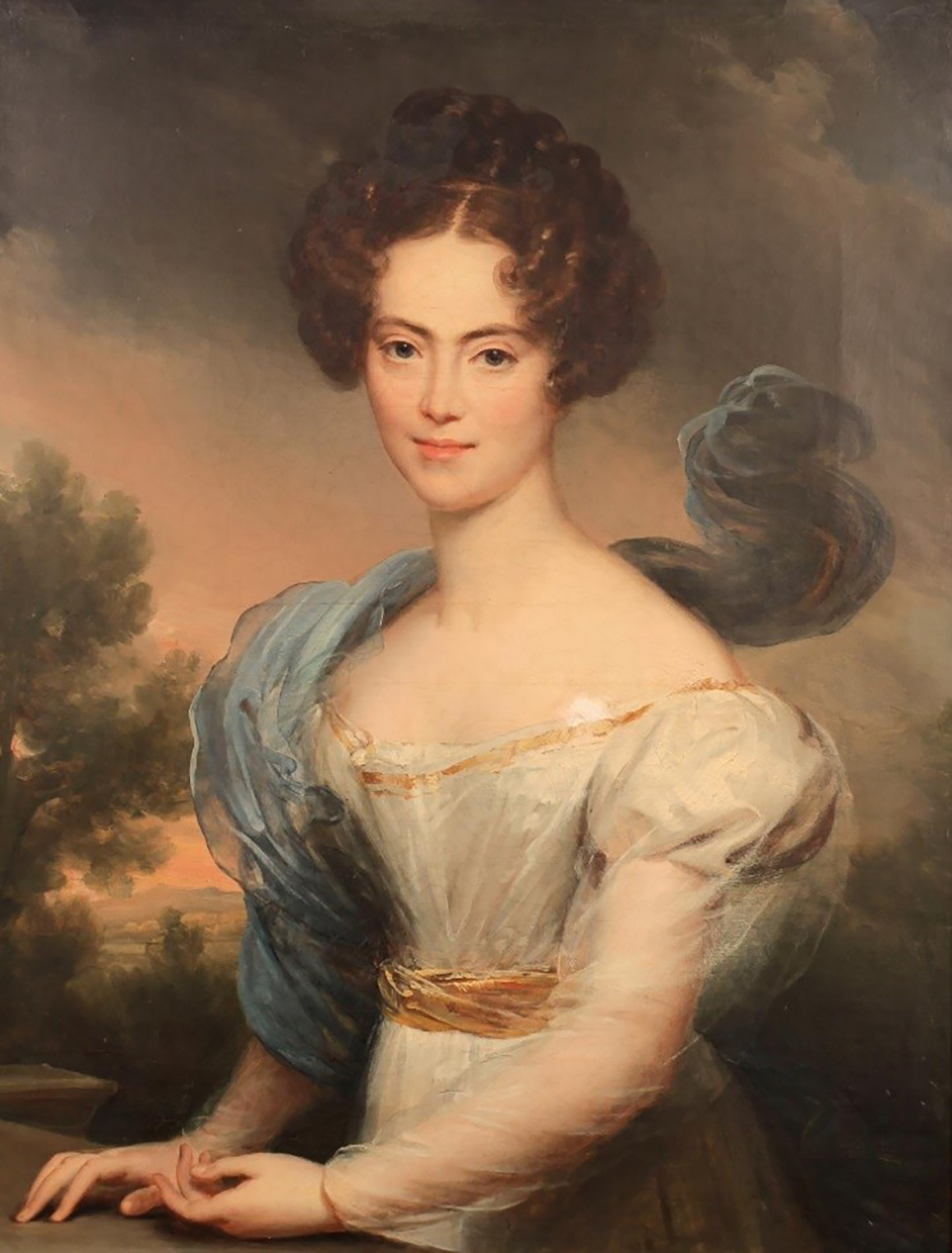
Placed on extraordinary service in 1808, he was appointed sub-Prefect of Château-Salins on 19th October of the same year, before becoming Secretary General of the Conseil du sceau des titres on 12th September 1810. In April 1812, he was appointed first class auditeur in ordinary service to the Minister of Justice and the Legislation Section, a position he held until 1813 and which enabled him to attend meetings of the Council presided over by the Emperor. In 1813, he returned to extraordinary service and became Prefect of the Oise département.
In 1814, after having issued a number of very vigorous proclamations against the Allies invading the country, he eventually supported Napoleon’s deposition, an attitude that led to him being confirmed in his position by Louis XVIII during the First Restoration. He then resolutely took up the cause of the Bourbons. During the Hundred Days, Napoleon invited him to remain in office notwithstanding, but the Duke refused and, following in the footsteps of his father-in-law, Marshal Macdonald, handed in his resignation. The prefecture was entrusted to Baron Basset of Châteaubourg.
Under the Second Restoration, Nicolas Régnier was appointed Prefect of the Cher department on 14th July 1815, but was soon forced to resign when he was called to sit in the Chamber of Peers on 10th July 1816. Louis XVIII had conferred on him the title of Peer of France under his father’s title of Duke of Massa, and his letters of institution of hereditary peerage were registered with the Upper House and the Royal Court of Paris on 15th January and 2nd May 1818. He was also made an Officer of the Legion of Honour on 19th August 1823. Generally voting along with the moderates, he swore an oath to Louis-Philippe I after the Trois Glorieuses (the “Three Glorious Days” of the July Revolution in 1830). He was made a Commander of the Legion of Honour on 30th April 1836 and sat in the Chamber of Peers until the Revolution of February 1848 and the proclamation of the Second Republic. Nicolas Régnier died on 20th August 1851 at the Château of Moncontour. The Duke and Duchess of Massa owned the Coudrais estate in Etiolles, Essonne, which they sold to Antoine Alexandre de Canouville.
The couple had five children, among them Alphonse (1814-1846), Marquis of Massa, who was married to Caroline Leroux (1816-1874). It was their son, André Philippe Alfred (1837-1913), Count of Gronau, who became the 3rd Duke of Massa on the death of his grandfather in 1851. He became a composer and died without issue. The title of 4th Duke of Massa was passed on to his first cousin, Jean-Louis-Napoléon-Eugène Régnier (1875-1946), son of Alexandre-Philippe Régnier (1831-1910), Marquis of Massa and Alphonse’s brother. The 4th Duke of Massa married Odette-Marie-Catherine-Armande de Boutray (1880-1961) in Paris on 15th October 1903. Born in 1905, their son André Régnier, 5th Duke of Massa, died without issue in 1962.
The hôtel of the Dukes of Massa, 111 rue de la Boétie, Paris
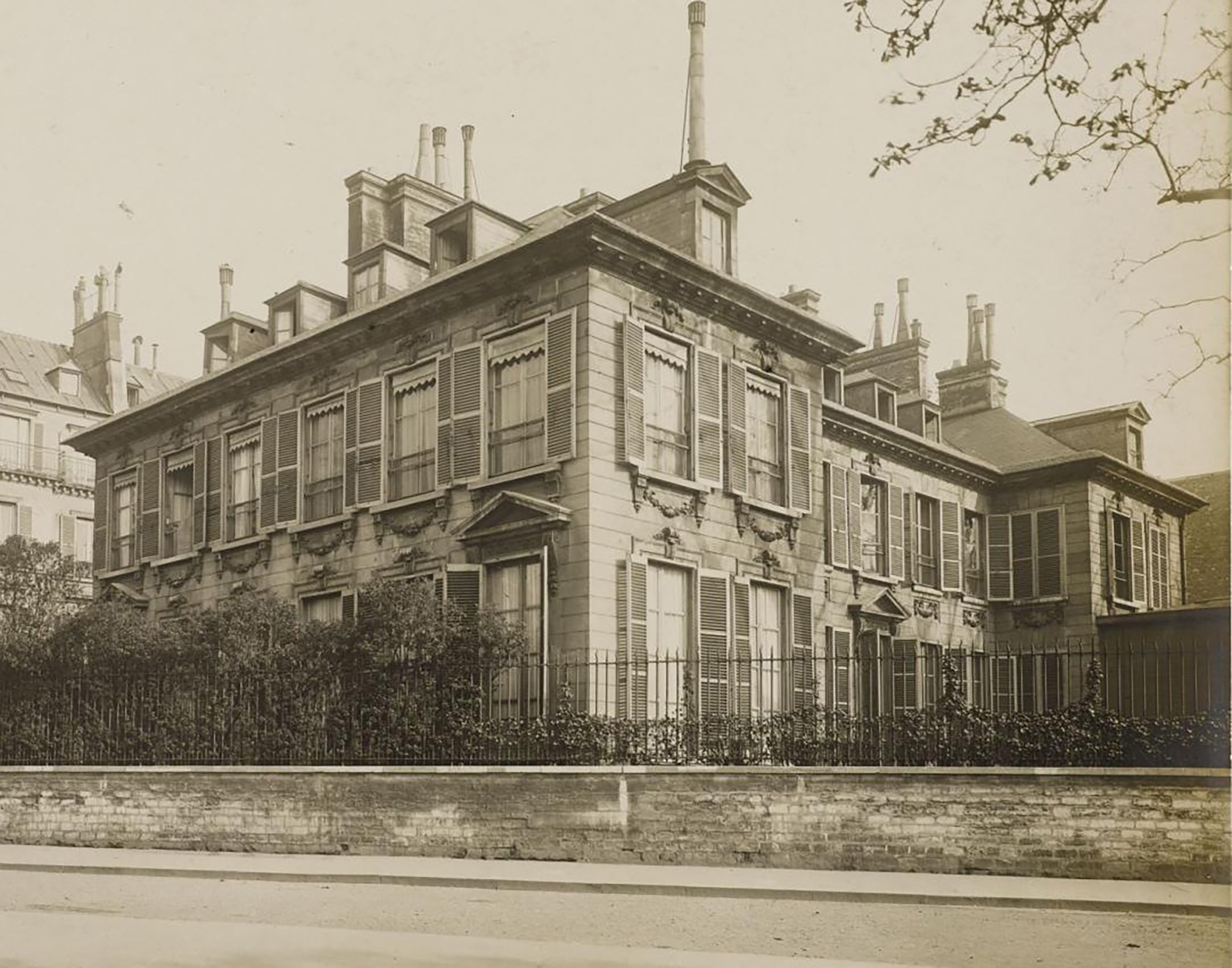
This 18th century town house was built between 1777 and 1779 by the architect Jean-Baptiste Le Boursier for Denis-Philibert Thiroux de Montsauge, Esquire, seigneur of la Bretêche Saint-Nom de Champillot, administrateur général des Postes, at least since 1756, and receveur général des Finances of Paris, who had married the daughter of the fermier général Étienne-Michel Bouret. This hôtel was successively occupied by prestigious guests: it was acquired by the Duke of Richelieu in 1788; seized as émigré property in 1793; purchased by Bonaparte, First Consul, in 1802; rented to Count Ferdinando Marescalchi, Ambassador of the Kingdom of Italy in Paris in 1805; acquired by the Countess of Durfort in 1815 and occupied by her daughter the Countess of Juigné in 1827; it was sold to Count Charles de Flahaut in 1830, who occupied it with his family for twenty-three years.
In 1853, it was acquired for 800,000 francs by Baron André Hélène Roger (1804-1880), who married Catherine Leroux around 1848, widow of Alphonse Régnier, Marquis of Massa, who had died two years earlier, and mother of André Philippe Alfred (1837-1913), Count of Gronau, who had just inherited the title of 3rd Duke of Massa. Catherine Leroux and André-Hélène Roger had a son named Eugène (1850-1906), who became widely known as “Baron Roger”. From 1857 onwards, the town house, which became known as the hôtel de Massa, was occupied simultaneously by the 3rd Duke of Massa and Baron Roger. Lavishly furnished, in part with furniture and objets d’art from the First Empire period that came from the collections inherited from Nicolas-François-Sylvestre Régnier and “Nancy” Macdonald, the hôtel remained in the hands of the Dukes of Massa until 1926. In 1927, Jean-Louis-Napoléon-Eugène Régnier (1875-1946), 4th Duke of Massa, sold it to two businessmen, Théophile Bader, chairman of Galeries Lafayette, and André Lévy, who was then involved in property transactions.
The latter did not want to live in the town house, preferring instead to build a vast shopping-banking-building complex on the Champs-Élysées, which had become a fashionable avenue at the time; the complex was built by André Arfvidson for the National City Bank of America, and became the Galeries Lafayette Champs-Élysées, located at n°s 52-60 on the famous avenue.
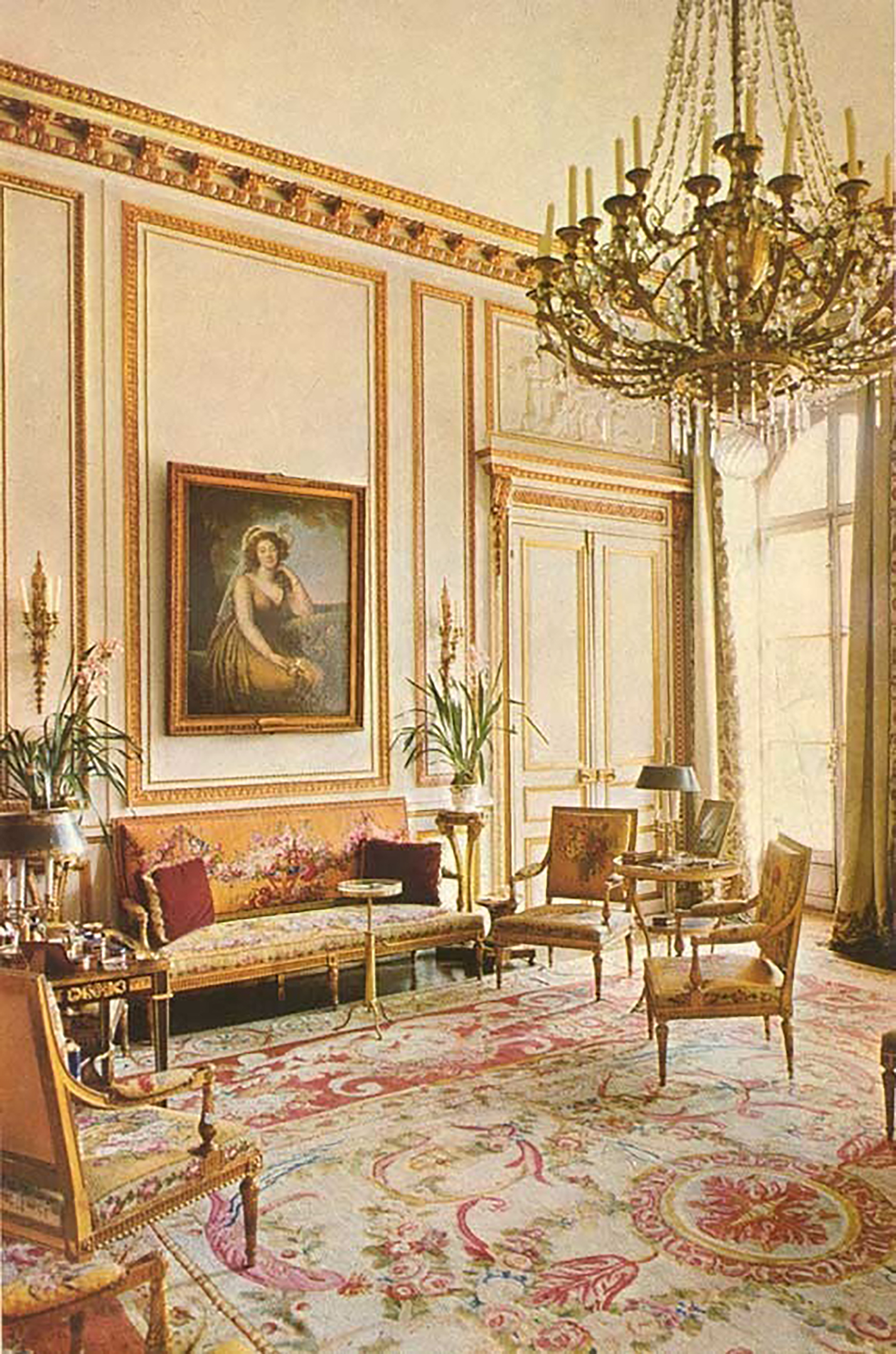
This property venture did not, however, lead to the demolition of the hôtel de Massa, which had been listed as a historic monument. André Lévy, a friend of Édouard Herriot’s, Minister of Public Instruction and Fine Arts, agreed with the latter to organise and finance the “relocation” of the hôtel.
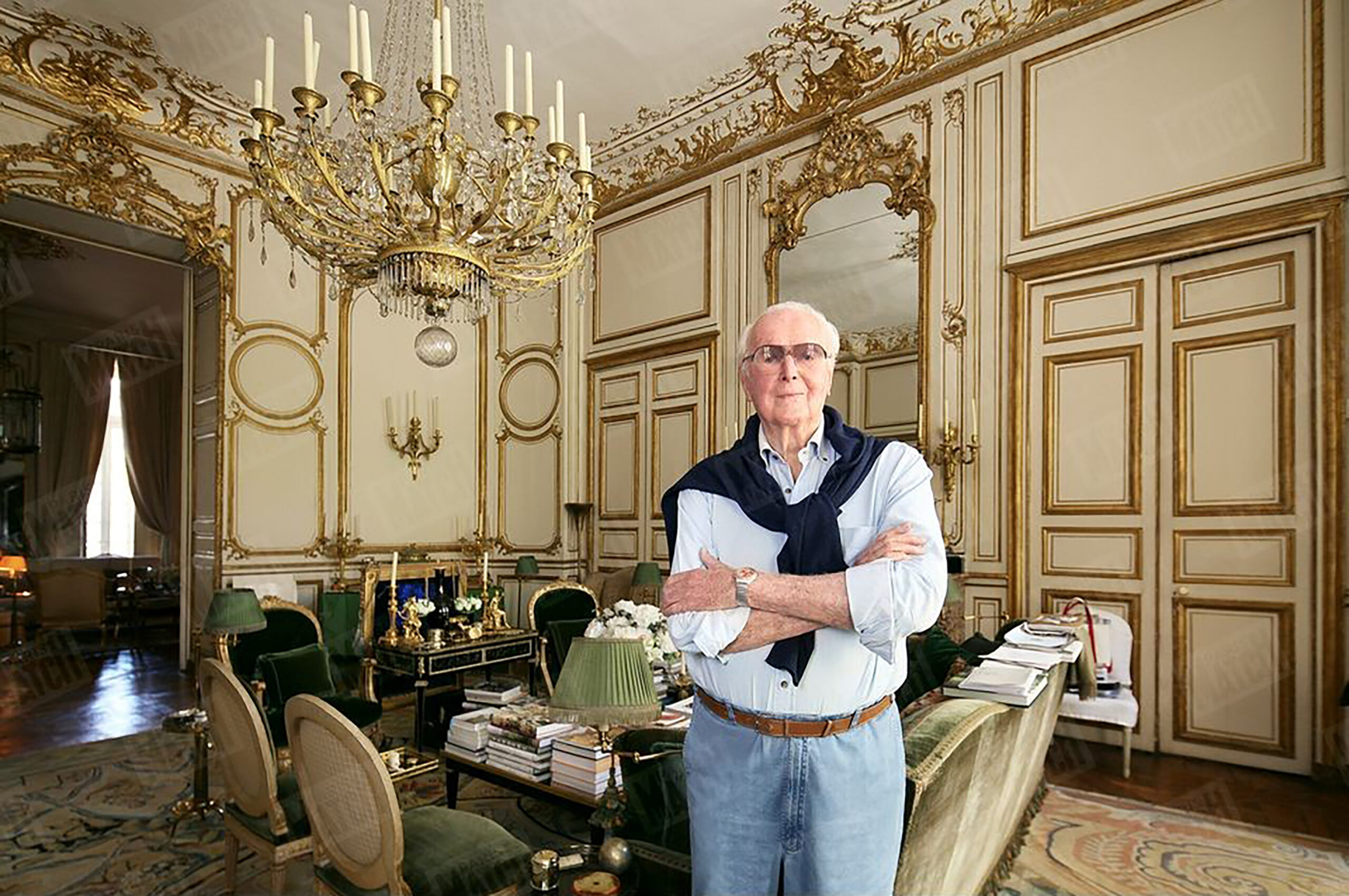
The town house was donated to the State in 1928 on the express condition that it should be made available to the Société des gens de lettres (SGDL), then chaired by Édouard Estaunié, who occupied it for a symbolic franc. Until 1869, the SGDL had been housed in precarious premises at 14 Cité de Trévise, before moving to the beautiful hôtel at 10, Cité Rougemont. The State decided to offer it a plot of land in the garden of the Paris Observatory, on which the Hôtel de Massa was ‘ relocated’, very faithfully, on the decision of Édouard Herriot. The building was transported stone by stone. And it was made possible to witness, as it were, the transhumance of the walls, carpentry, panelling, parquet flooring and every last material of this famous hôtel, a task carried out under the supervision of the architect André Ventre.
Baron Elie de Rotschild and the Hôtel at 11 rue Masseran, Paris
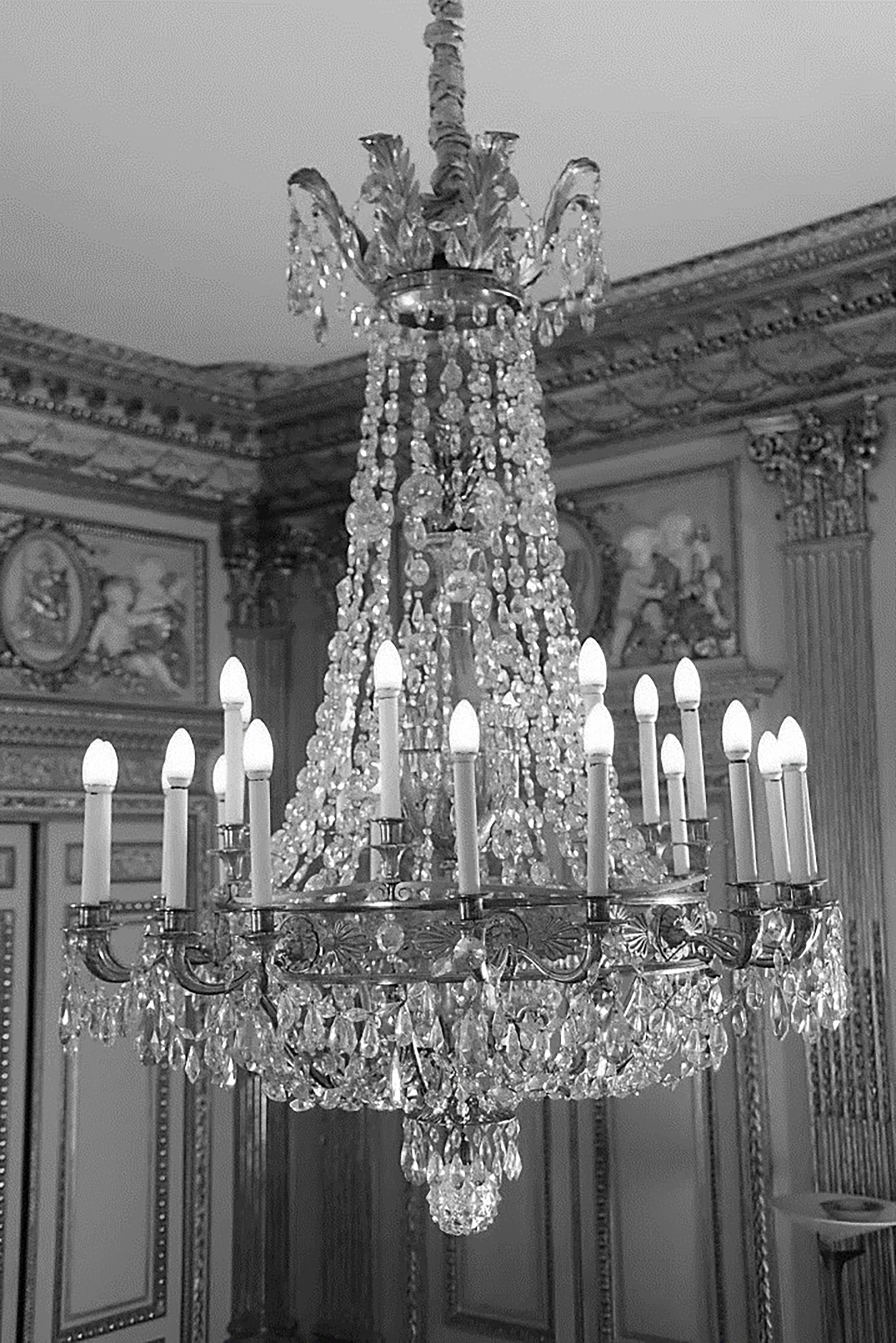
In the second half of the 20th century, our chandelier was acquired by Baron Élie de Rothschild (1917-2007), who placed it in one of the salons of the hôtel Masseran in Paris, located at no. 11 rue Masseran in the 7th arrondissement of Paris. Located close to the Invalides, the hôtel Masseran was built in 1787 for Carlo Sebastiano Ferrero Fieschi (1760-1826), Prince Masserano, by the architect Alexandre-Théodore Brongniart (1739-1813), who designed the Palais de la Bourse (the Paris Stock Exchange), and who lived a stone’s throw away on the Boulevard des Invalides and was also the owner of the land on which the hôtel was built. A Grandee of Spain and member of the illustrious Genoese House of Fieschi, Carlo Sebastiano was the son of Vittorio Filippo Ferrero Fieschi (1713-1777), Prince Masserano, and Princess Charlotte Louise de Rohan (1722-1786), daughter of the Duke of Montbazon.
In 1776, he married Adélaïde Augustine Joachime de Béthune (1756-1790), granddaughter of the fabulously wealthy financier Louis Antoine Crozat. On his mother’s side, the Prince was descended from Charles-Emmanuel II of Savoy and was also a cousin of King Louis XVI.
In 1836, the house was acquired by a Parisian banker of Belgian origin, Louis François-Xavier de Clercq, who died in 1838. His wife, née Henriette Crombez-Lefebvre, rarely lived on rue Masseran, preferring her residence in Oignies. However, a large Louis XVI-style salon was installed in the second half of the 19th century, in a style so pure that it was long deemed to be an original creation by Brongniart.
After Madame de Clercq’s death in 1878, the hôtel was passed down to her daughter, Berthe Céline Françoise Marie, Countess de Boisgelin by her marriage to Alexandre Marie de Boisgelin, and then to their son-in-law, Count Karl Jacques Marie Théodore Bonnin de La Bonninière de Beaumont (1852-1913), husband of Henriette Marie Berthe de Boisgelin (1856-1925).
Their eldest son, Count Étienne de Beaumont (1883-1956), a friend of Cocteau’s and patron of the Ballets Russes of Serge de Diaghilev, Braque and Picasso, was the arbiter of elegance and worldliness for almost half a century, and hosted famous parties there.
After his death, the hôtel was acquired by Baron and Baroness Élie de Rothschild, the latter née Liliane Fould-Springer (1916-2003), who brought up in the salon known as ‘Boffrand’, a sumptuous set of wood panelling executed between 1720 and 1723 by the sculptors Taupin, Le Goupil and Desgoulons for the Countess de Parabère’s town house at 22 Place Vendôme, Paris, which belonged to Baron Fould-Springer, Baroness Liliane’s father.

