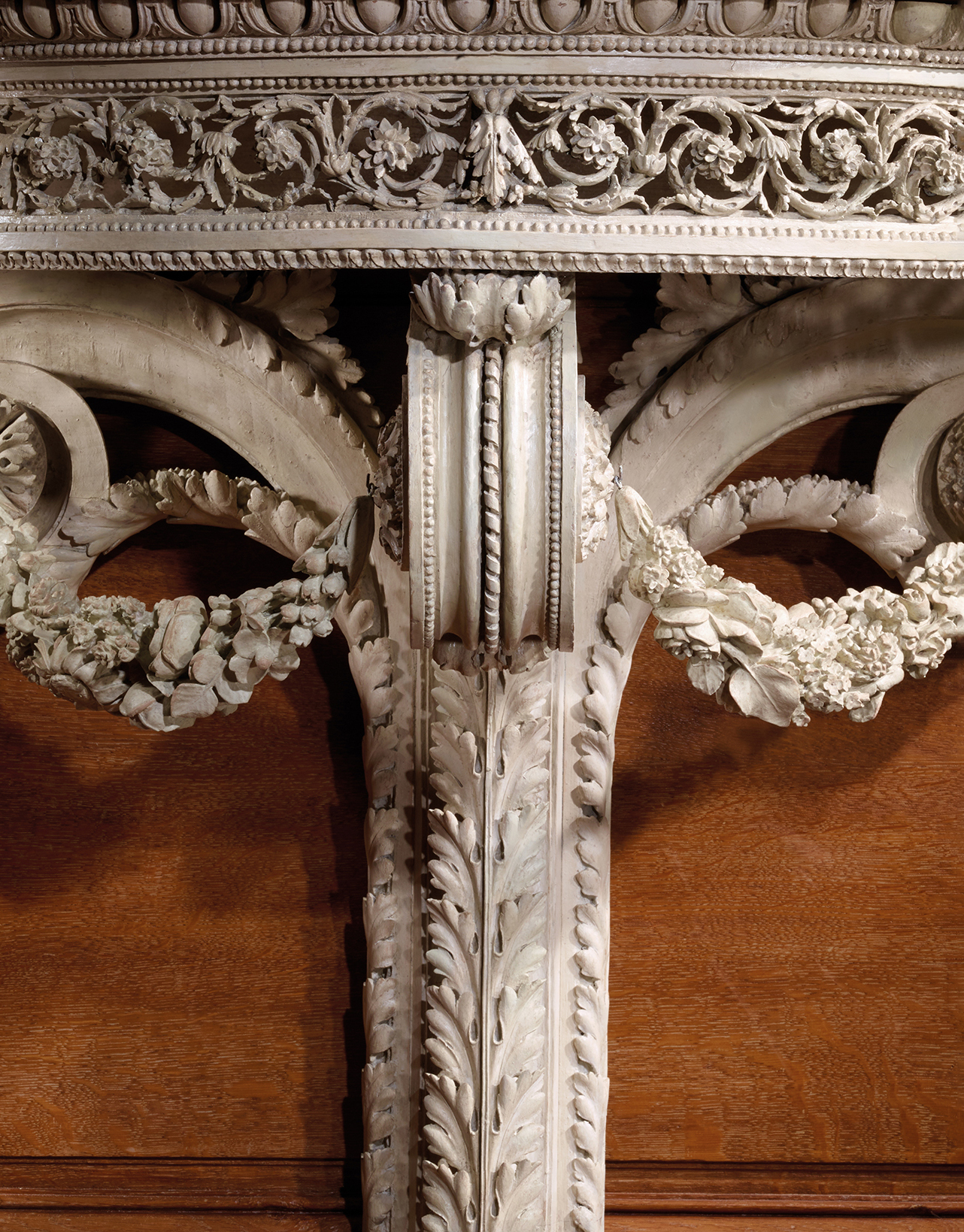
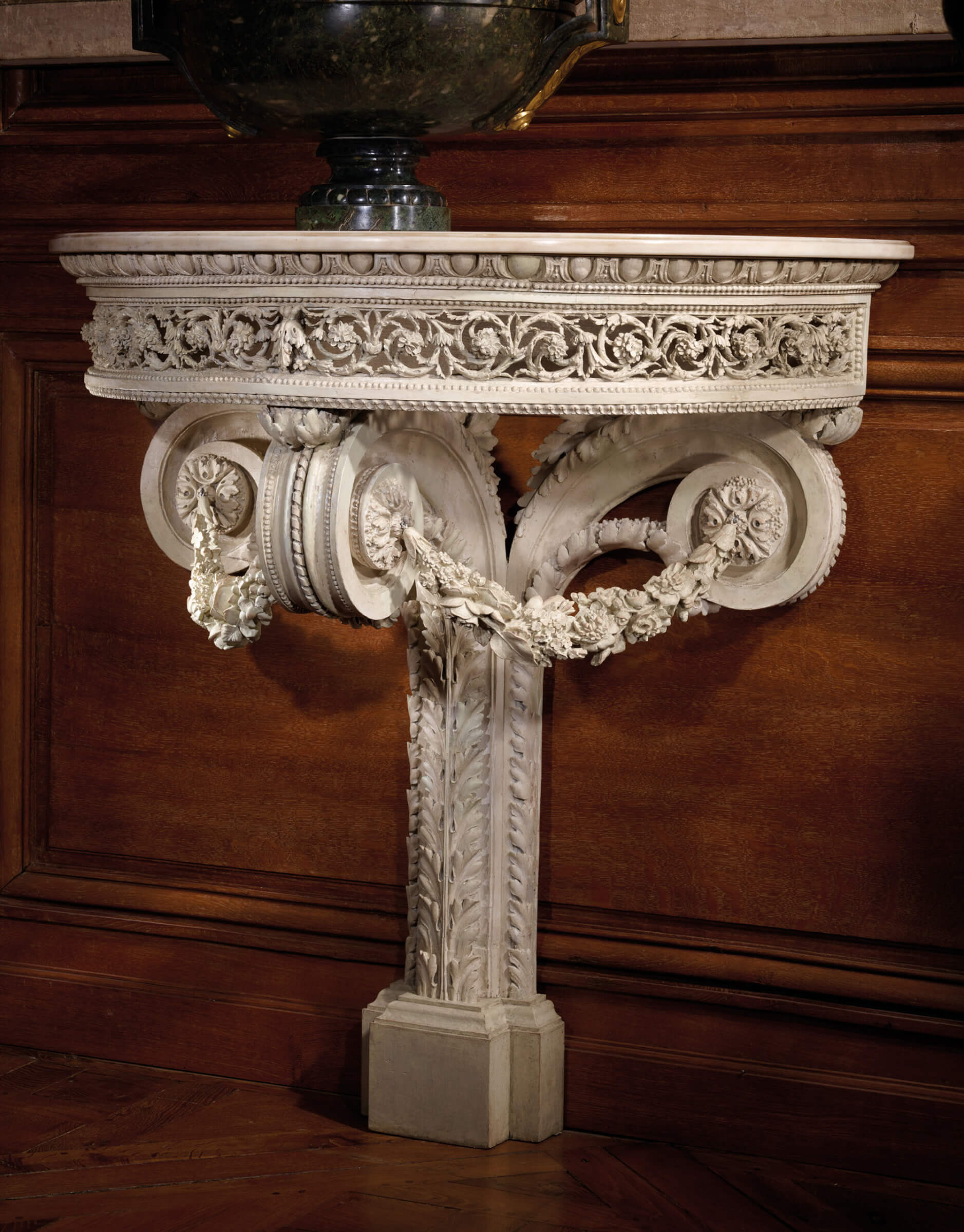
Moulded limewood, carved and painted in sea-green (vert d’eau); white marble.
H. 101 cm. (39 ¾ in.) ; W. 99.5 cm. (39 ¼ in.); D. 50 cm. (19 ¾ in.).
MARKS AND INSCRIPTIONS: 44341, number in graphite visible on the frames of the two consoles and on the reverse of their marble tops; number 23 visible twice, in stencil and blue wax crayon, on the reverse of the rear crosspiece of one of the two consoles; number 25 similarly visible on the reverse of the rear crosspiece of the second console.
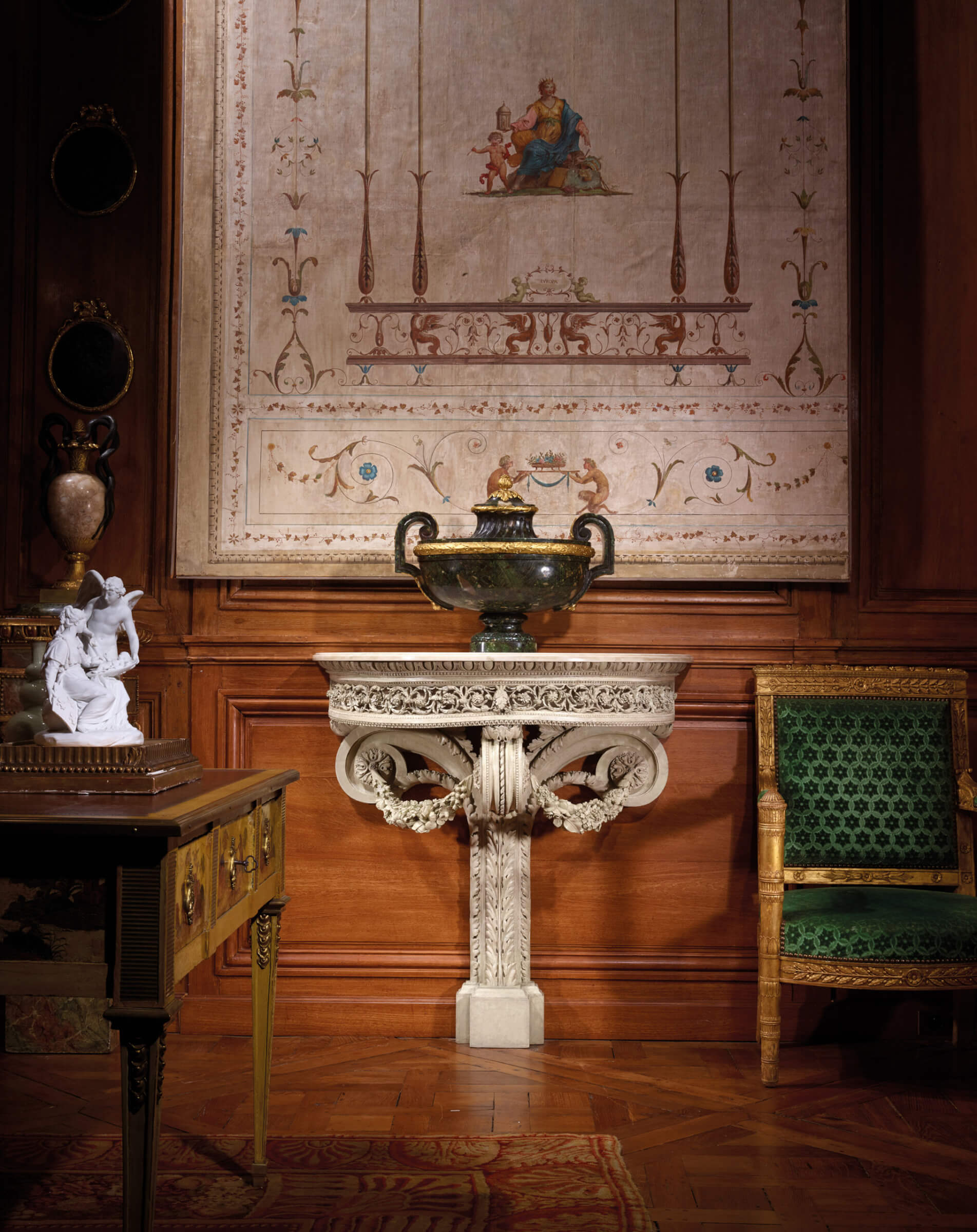
PROVENANCE: executed between 25th August and 12th November 1789 for the salon of the hôtel (townhouse) of the marquis François-Gabriel Chappuis de Rosières (1736-1814), President of the Parliament of Franche-Comté, now at n°. 6 rue Pasteur, in the La Boucle district of Besançon, France; collection of the banker Aaron Veil-Picard (1792-1868), who purchased the hôtel Chappuis de Rosières in 1850; acquired along with the panelling in the salon and a large rectangular console table en suite, between 1902 and 1910, by Prince Henri Amédée de Broglie (1849-1917) and his wife, née Marie Say (1857-1943), future Princess of Orléans and immensely wealthy daughter of the industrialist Constant Say, owner of the refinery of the same name; acquired in 1944, together with the wood paneling and the large console, by the Metropolitan Museum of Art, New York, which installed the ensemble in one of its rooms; deaccessioned by the Metropolitan Museum of Art in 1946; acquired the same year, with the wood paneling and the large console, by the famous antique decorating and furnishing house French & Co, which reassembled the ensemble in its premises at 210 East 57 St., New York; sold by French & Co in New York at an unknown date.
LITERATURE: Gaston Coindre, Mon vieux Besançon, Besançon, 1900-1910, p. 395-397; Bruno Pons, Grands décors français, 1650-1800, Dijon, 1995, p. 128-131; John Harris, Moving Rooms: The trade in Architectural Salvages, New Haven and London, 2007, p. 296, note 61; Carl Magnusson, “Claude-Antoine Colombot, Besançon, 1747-1821, Projet de consoles pour l’hôtel Chappuis de Rosières à Besançon”, in Emmanuelle Brugerolles (ed.), De l’alcôve aux barricades. De Fragonard à David. Dessins de l’Ecole des Beaux-Arts, Paris, 2016, p. 308-309.
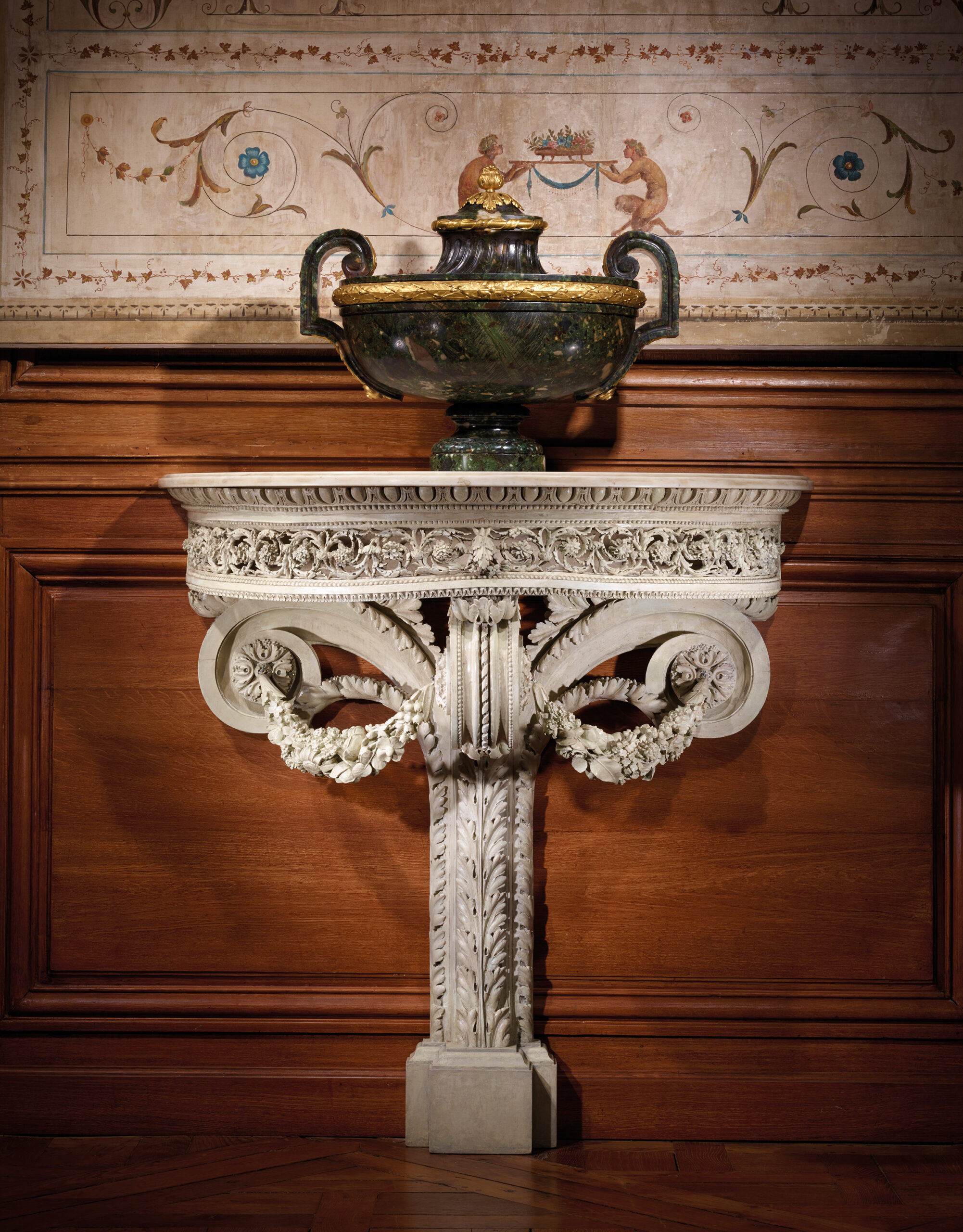
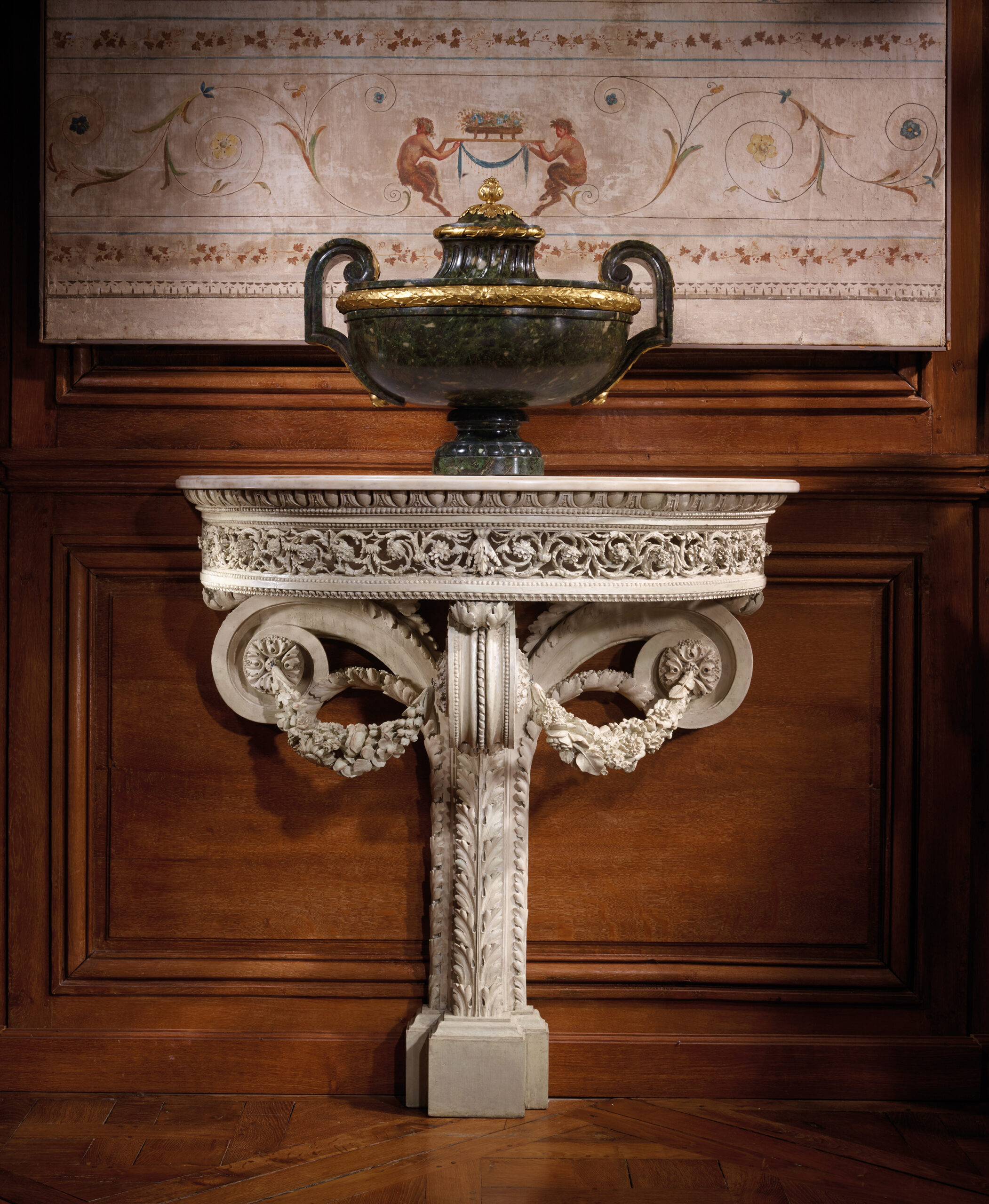
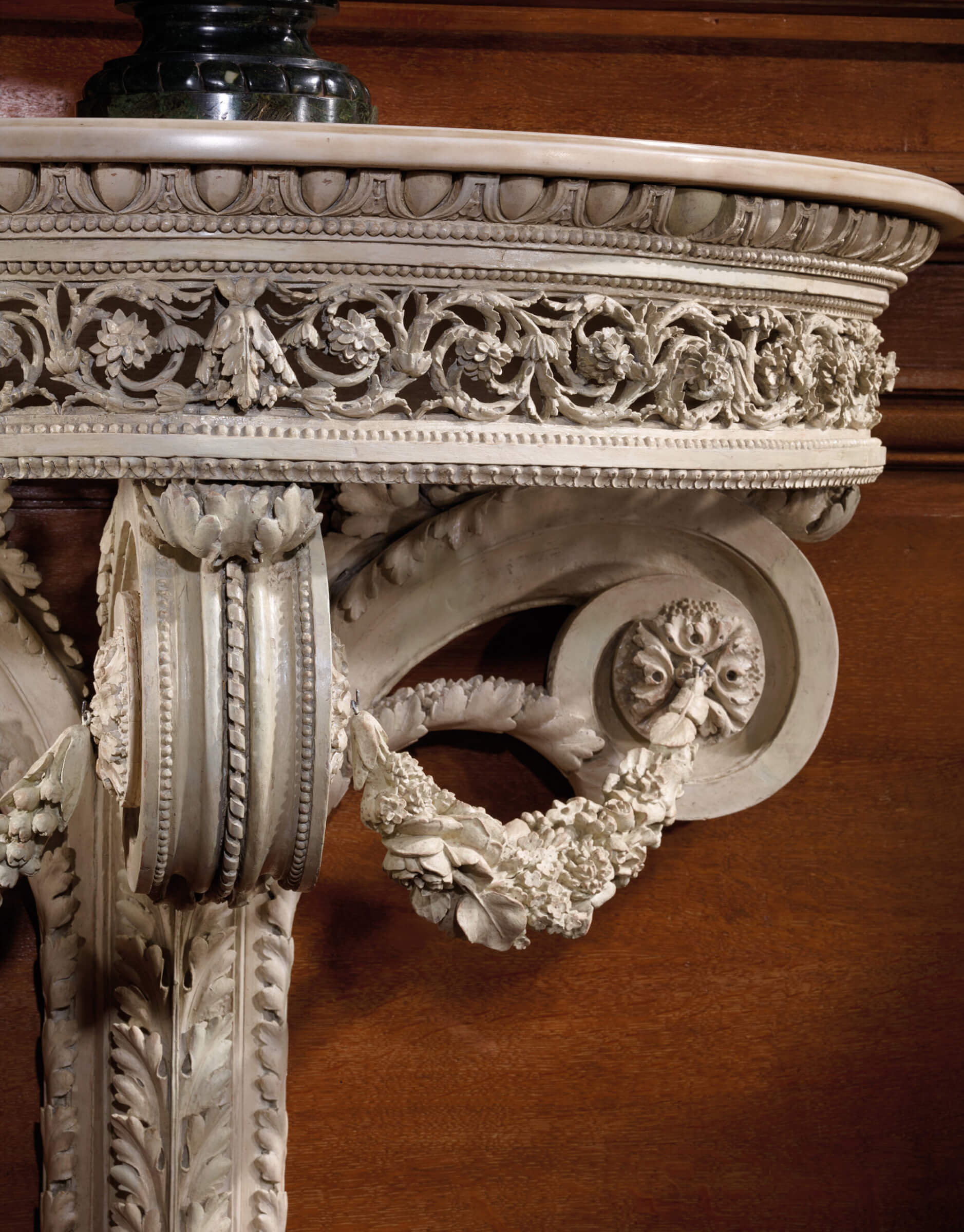
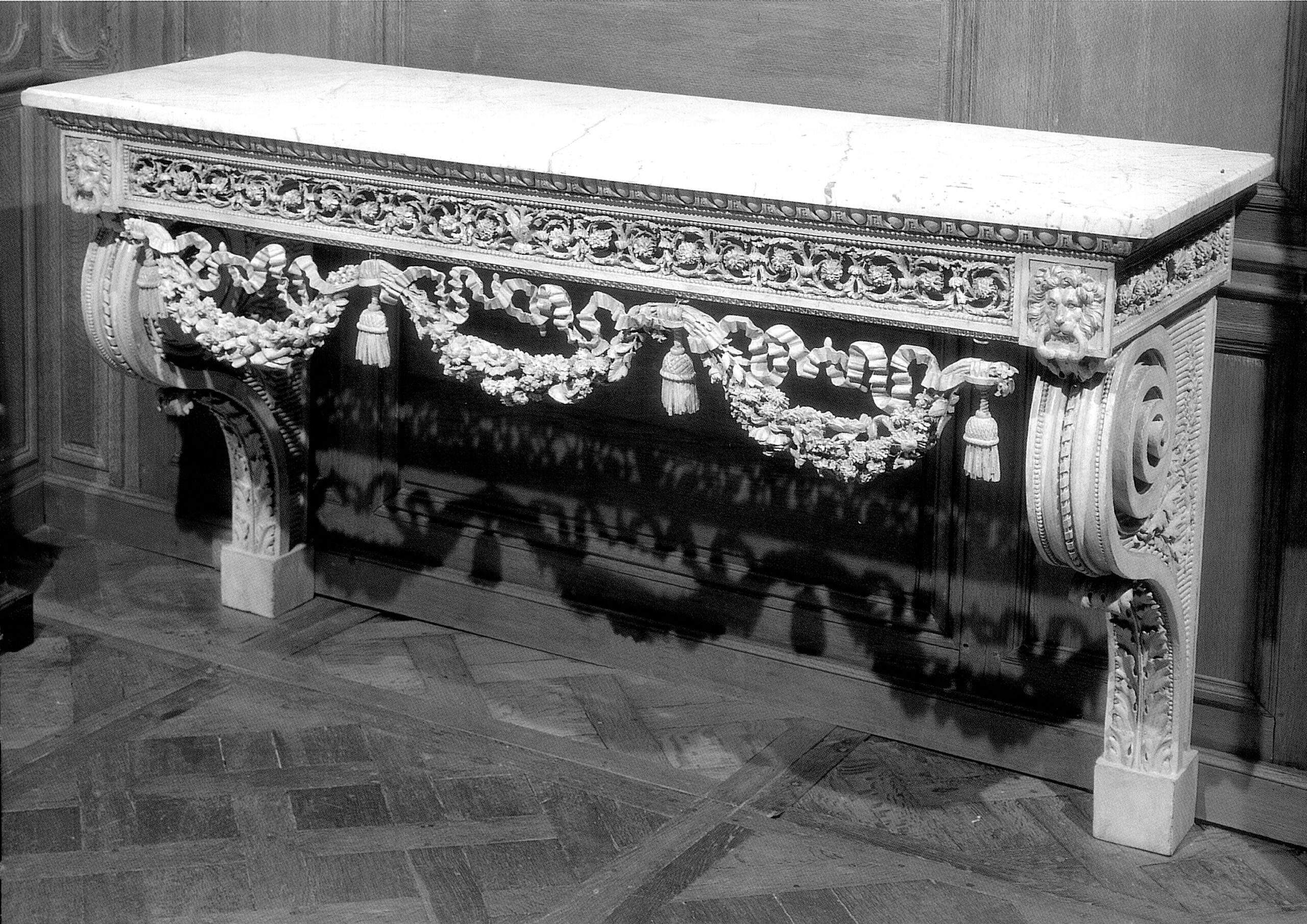
This pair of consoles was executed between 25th August and 12th November 1789 by the sculpteur Joseph-André Privé for the salon in the hôtel (townhouse) of the Marquis François-Gabriel Chappuis de Rosières (1736-1814), President of the Parliament of Franche-Comté, in Besançon. This room, with its wood panelling and three consoles en suite—a large rectangular one opposite the mantelpiece, and the two half-moon consoles shown here, which were located between the windows—is to this day considered as an absolute masterpiece of the decorative arts in Besançon during the reign of Louis XVI.
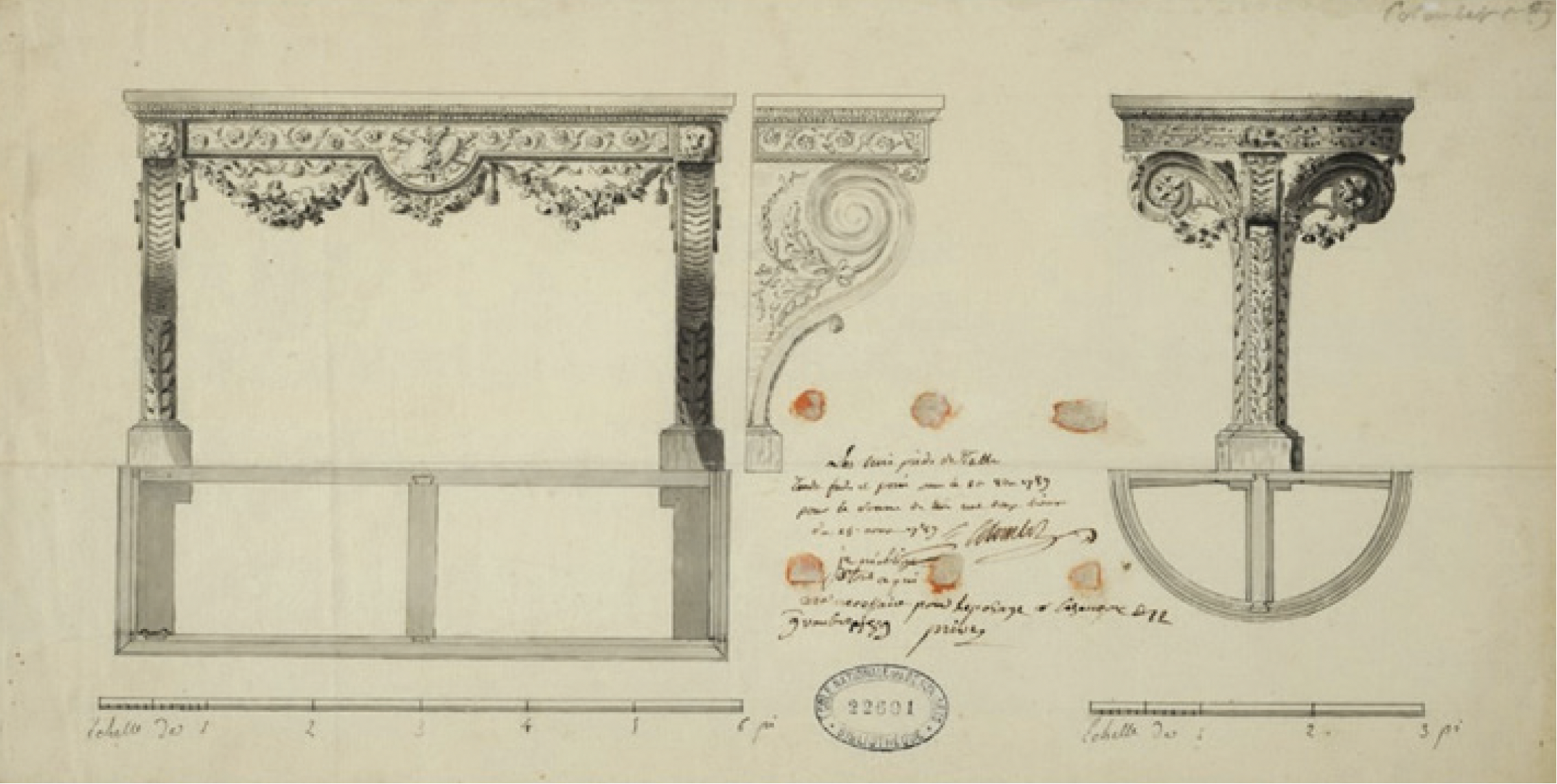
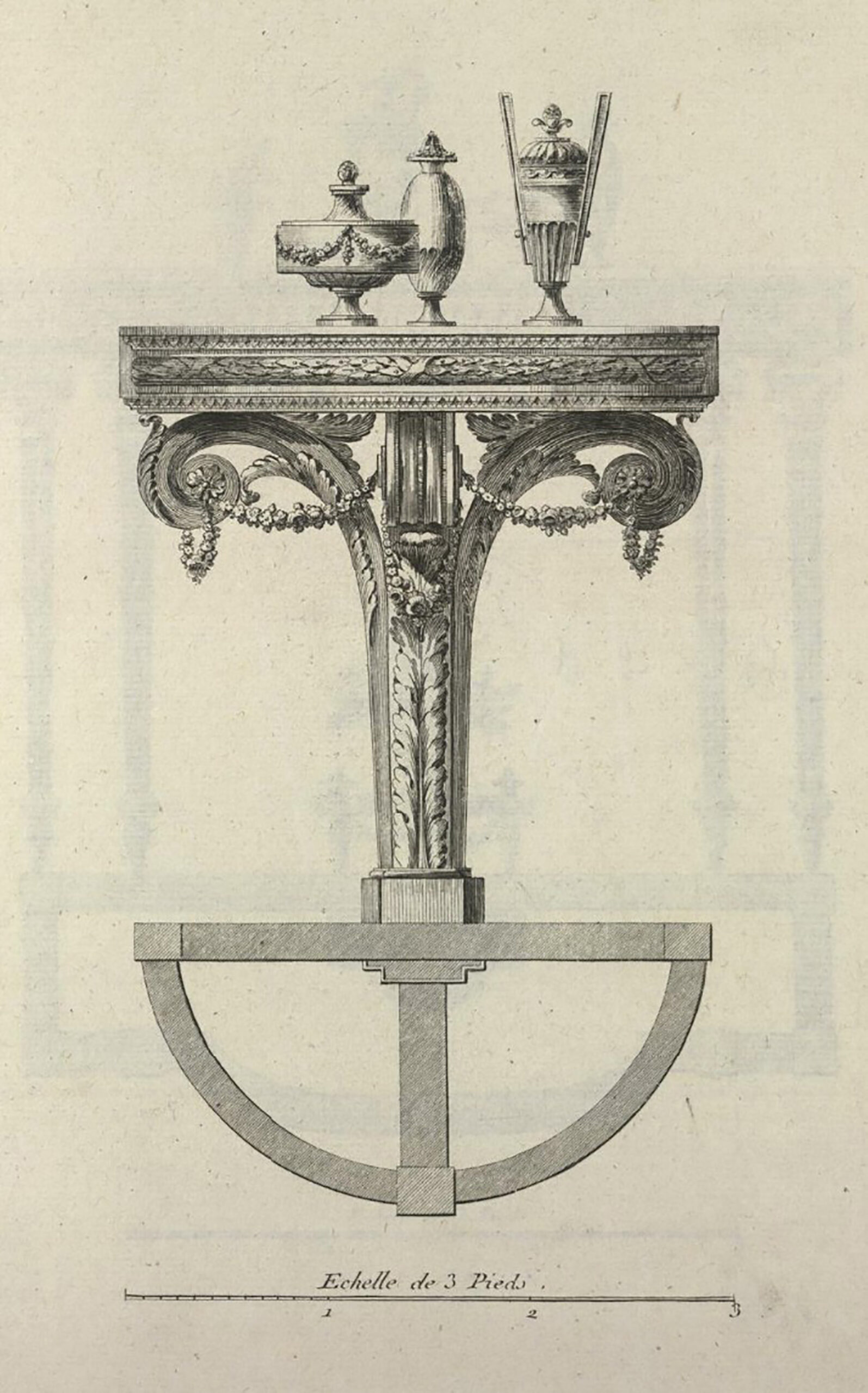
The three consoles as well as the wood panelling were designed by the architect Claude-Antoine Colombot from Besançon (1747-1821), who had received his training in Paris under the supervision of Louis-Jean Desprez (1743-1804) before the latter pursued his career in Stockholm, in the service of King Gustav III of Sweden (1746-1792). The Ecole Nationale Supérieure de Beaux-Arts in Paris still owns a precious drawing, in pen and black ink, which was intended to be both a presentation and preparatory drawing for the execution, showing precisely, on the right-hand side, one of our two consoles with a monopod base crowned with three scrolls, seen from the front, with its marble and all the details of its carved decoration, including a sectional view of its top, showing the assembly of its frame very clearly, and a scale line indicating its width, namely three feet corresponding to 97. 44 cm. The same cross-sections can be seen on the left-hand side of the drawing, with the addition of a further view in profile showing the large rectangular console with two scrolled side feet, the length of which is shown as six feet, i.e. 194.48 cm. The drawing also includes details of the contract concluded on 25th August 1789 between the architect Colombot and the sculpteur Joseph-André Privé, who was commissioned to execute the consoles, and both signed it: “The three feet of the Table/All executed and installed for 20 8bre 1789 [20th October 1789]/for the sum of three hundred and twelve livres/dated 25th August 1789/[signed] Colombot/I commit myself/ to all that/shall be necessary for the installation at Besançon this 12th/November 1789/ [signed] Privé”. The sculpteur accordingly pledged to complete the consoles and place them in the salon of the Marquis Chappuis de Rosières on 12th November 1789.
The hôtel Chappuis de Rosières, located at n°. 6, rue Pasteur in the La Boucle district, was one of the most important townhouses in Besançon at the time. It was the family mansion of the President de Rosières, dating back to the 16th century and incorporating older buildings from the 13th and 15th centuries.
In 1789, he commissioned Claude-Antoine Colombot to transform it, structurally as well as in terms of the interior decoration, in order to meet current tastes. The architect modernised the street façade and redesigned the interior of the mansion, most notably in the right wing, where he laid out the grand salon where our consoles were placed, as well as a petit salon in the left wing. He also decorated the Grand Staircase
In 1850, the mansion was bought by the banker Aaron Veil-Picard (1792-1868) who, around 1858, built a dwelling to the left of the courtyard to replace an older building. He combined its façade with that of the hôtel de l’Ancienne Intendance, of which he had also been the owner since 1836.
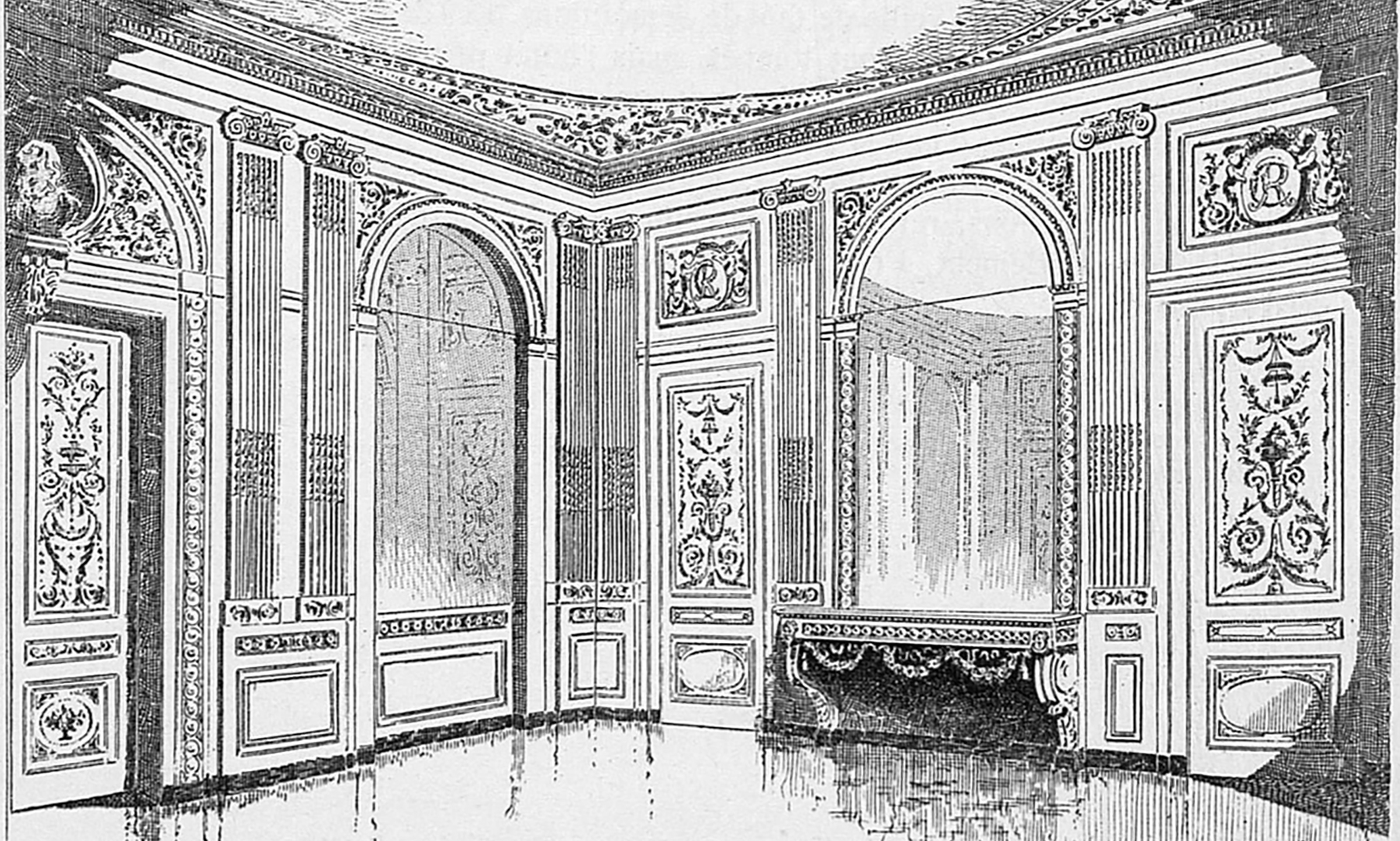
At the very beginning of the 20th century, before 1910, the wood panelling and the three consoles in the right-wing salon, which had been drawn in situ in 1902 by Gaston Coindre (1844-1914), historian, painter and engraver, disappeared without leaving a trace. In his book Mon vieux Besançon, published in three volumes between 1900 and 1910, Gaston Coindre wrote: “The Veil-Picards had long owned the Hôtel de Rosières, which was of a less recalcitrant nature. The architect Colombot built it in 1789, quite a strange date indeed on the eve of so many demolitions to come. The two enormous lime trees in the courtyard had fallen, but the mansion remained more or less intact, with its boudoir of mirrors and its magnificent grand salon.
The wood panelling, of such a noble architecture, the consoles garlanded with marvellous flowers, tempted a Rothschild who, in the medallions, found his own monogram under the initials of the President of Parliament, François-Gabriel marquis Chappuis de Rosières. The deal was never struck, but the old parliamentary salon was not spared from being horse-traded, and its beautiful panelling was silently whisked away to an unknown destination”. During the 20th century, the right wing of the mansion was modified to accommodate a cinema and later a shopping arcade. The building was eventually bought by the city in 1998, in connection of a redevelopment of a part of the Ilot Pasteur. It has now been returned to private ownership.
The drawing of the salon executed in situ by Gaston Coindre in 1902, just before the panelling and the three consoles were dismantled, provides us with a concrete idea of the décor that was installed by Colombot for the Marquis Chappuis de Rosières. The room was painted entirely in sea green and displayed a monumental layout, punctuated by fluted pilasters with Ionic capitals, alternating with large arched trumeaux adorned with mirrors, transoms and double doors, to which were added very finely carved narrow rectilinear trumeaux, just like the doors, with arabesque decorations reminiscent of the models by Gilles-Paul Cauvet (1731-1788), which the latter published in Paris in 1777 in Recueil d’Ornemens a l’usage des jeunes artistes qui se destinent à la décoration des bâtimens, Dédié à Monsieur Par G. P. Cauvet Sculpteur de S.A.R.
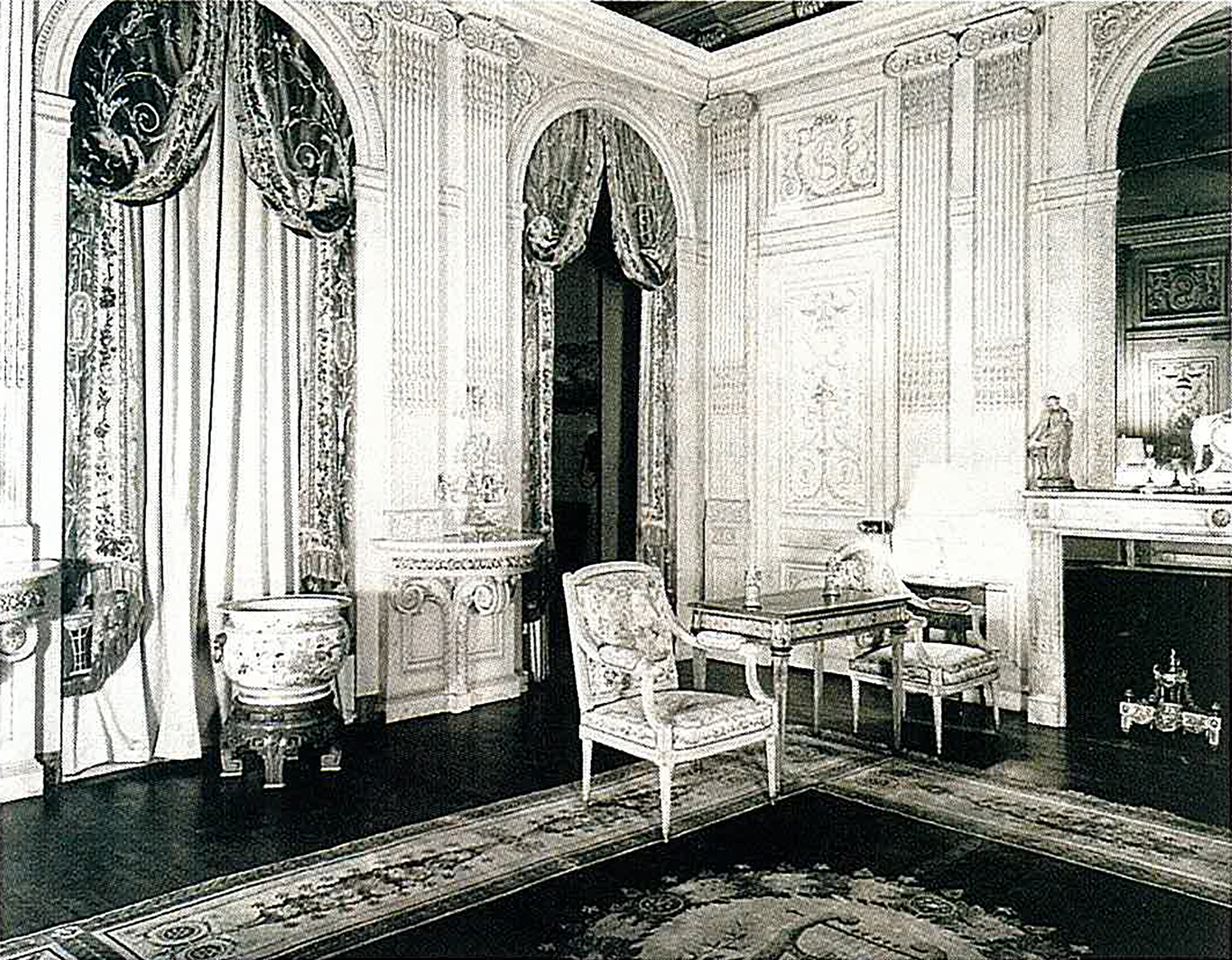
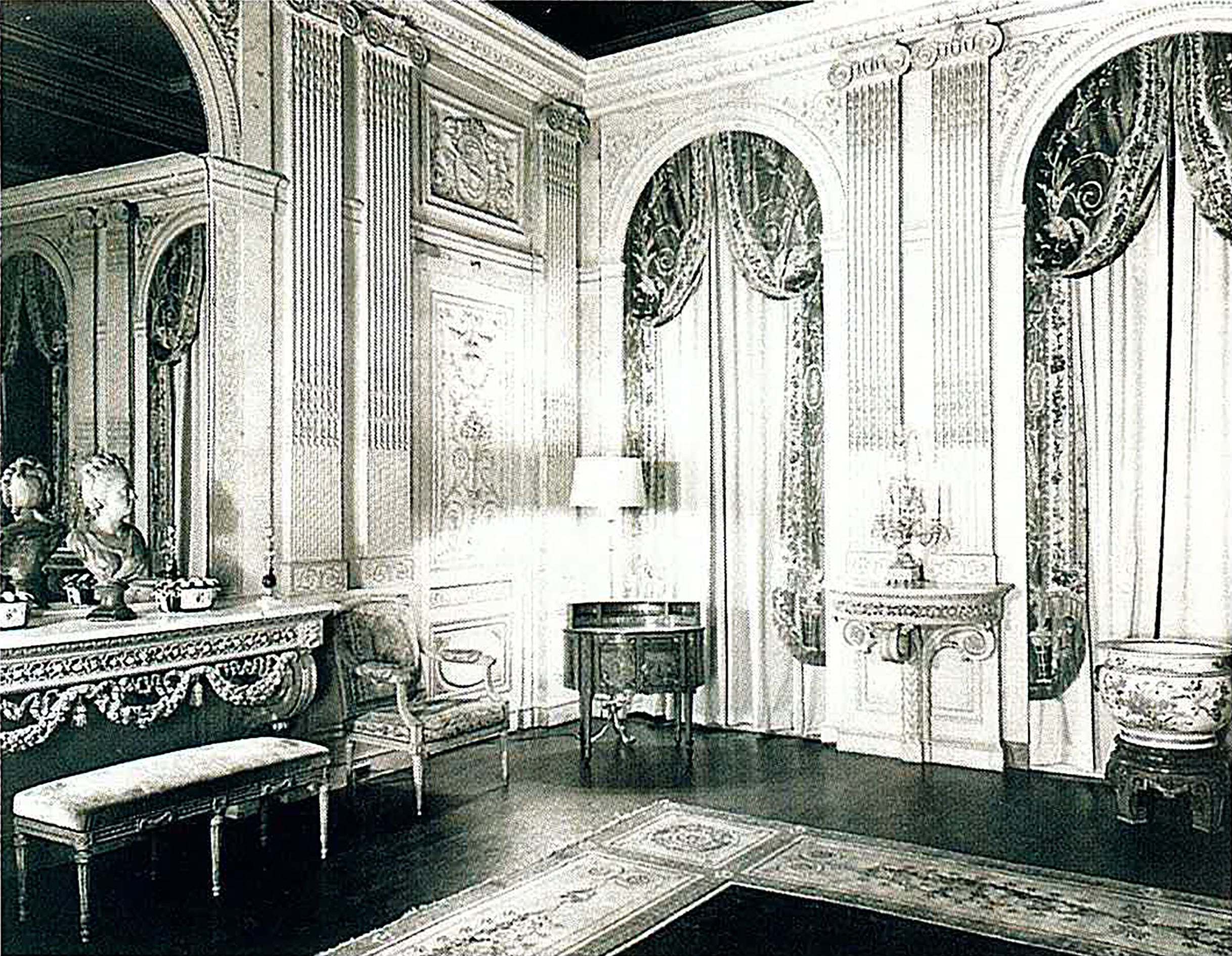
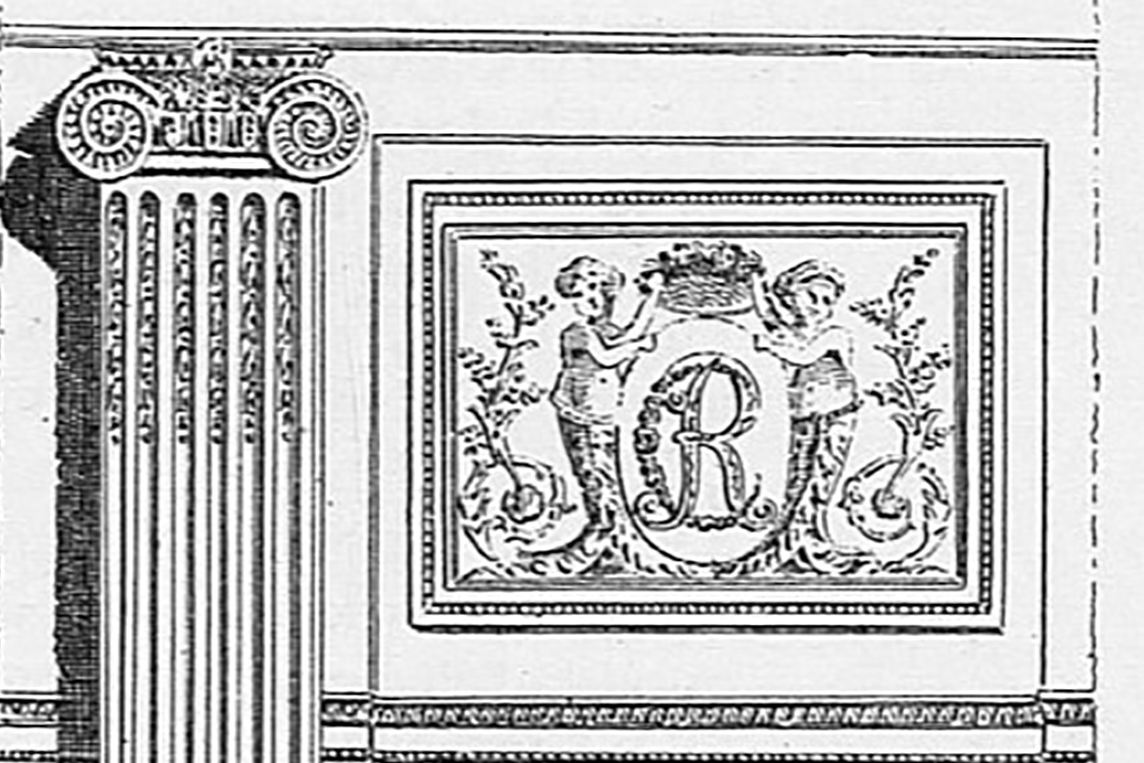
Above the rectilinear panels mentioned above, rectangular panels were each carved with a cartouche flanked by term-shaped children and adorned with acanthus scrolls, bearing the CR monogram of President Chappuis de Rosières, crowned with a wreath of flowers. The whole is clearly visible on a second drawing dated 1901 by Gaston Coindre. Projects for the doors of this salon were part of the collection of Lodewijk Arnold Houthakker (1926-2008) and were published by Peter Fuhring in 1989.
Colombot devised our consoles in perfect harmony with this panelling. He drew his inspiration directly from a drawing by the ornamentalist Richard de Lalonde (1735-1808), now in the collections of the Kunstbibliothek in Berlin. It was published by the author between 1776 and 1788, engraved by Foin, and forms plate 2 of Suite E, Tables et consoles, 5e cahier des Œuvres diverses de Lalonde.
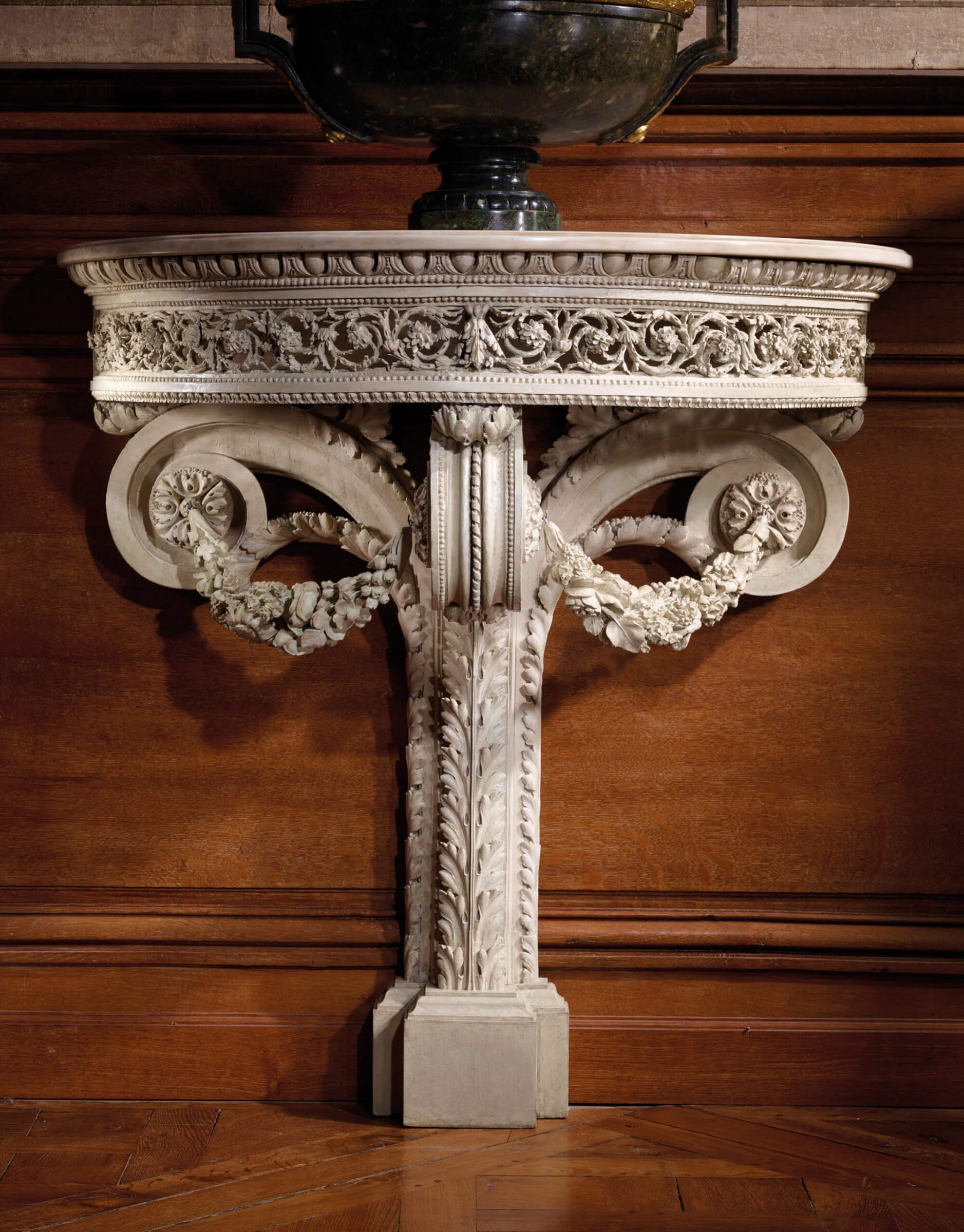
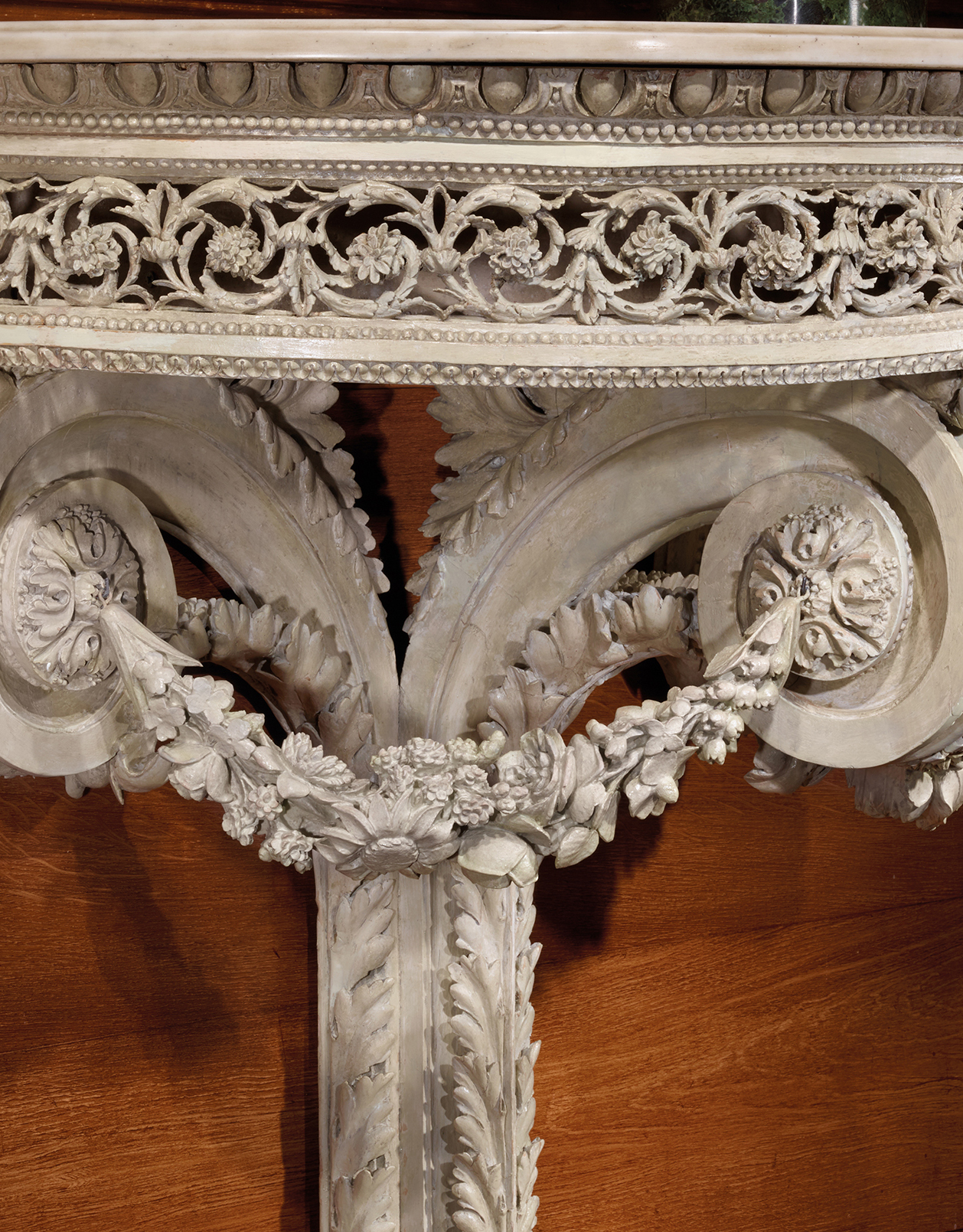
The sculpteur Joseph-André Privé took a few liberties, however, in his execution that departed from the drawing initialled by the architect. At the rail level, he opted for the same openwork frieze of foliage, acanthus scrolls, culots and flowers that adorned the drawing of the large rectangular console, instead of the frieze of feuilles de refend initially planned. He enhanced this rail’s frame with fillets of pearls, and in order to enhance the marble, crowned the whole with a stately frieze of gadroons alternating with fleurons, thus replacing the leafy frieze with a doucine designed by Colombot.
The sculpteur also modified the fronts of the three scrolls on the foot, replacing the piaster pendants, which are clearly visible in the drawing, with a powerful moulding embellished with fillets of pearls and ribbons. He executed the large console in the same manner, also removing the central accolade adorned with a music trophy. It is now in private hands. It was first sold in 1968, then by Christie’s New York on 23rd October 1988 before being acquired by the Steinitz Gallery, which published it in 2000. In addition to other inscriptions, this large console bears the same number 44341 as the one visible on our two consoles, inscribed in graphite on its frame as well as on the reverse of its marble top.
According to Gaston Coindre, these three consoles and the panelling in the grand salon were removed “silently” and ‘to an unknown destination’ from the hôtel Chappuis de Rosières before 1910, yet we now know that they were acquired by Prince Henri Amédée de Broglie (1849-1917) and his wife, née Marie Say (1857-1943), the future Princess of Orléans and the wealthy daughter of the industrialist Constant Say, owner of the refinery of the same name, who had the monogram CR replaced by their own on the panelling, with the initials SB interlaced with their names.
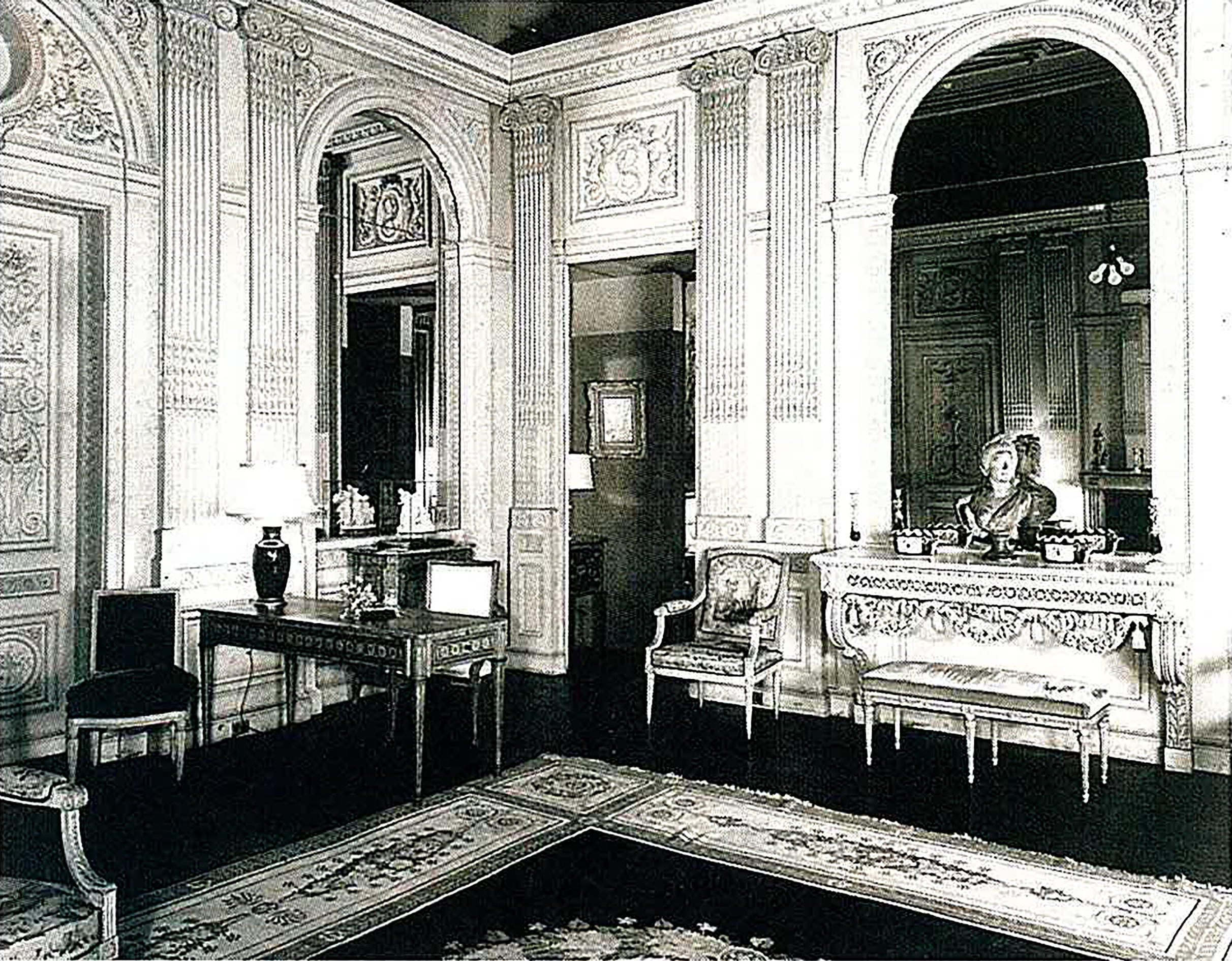
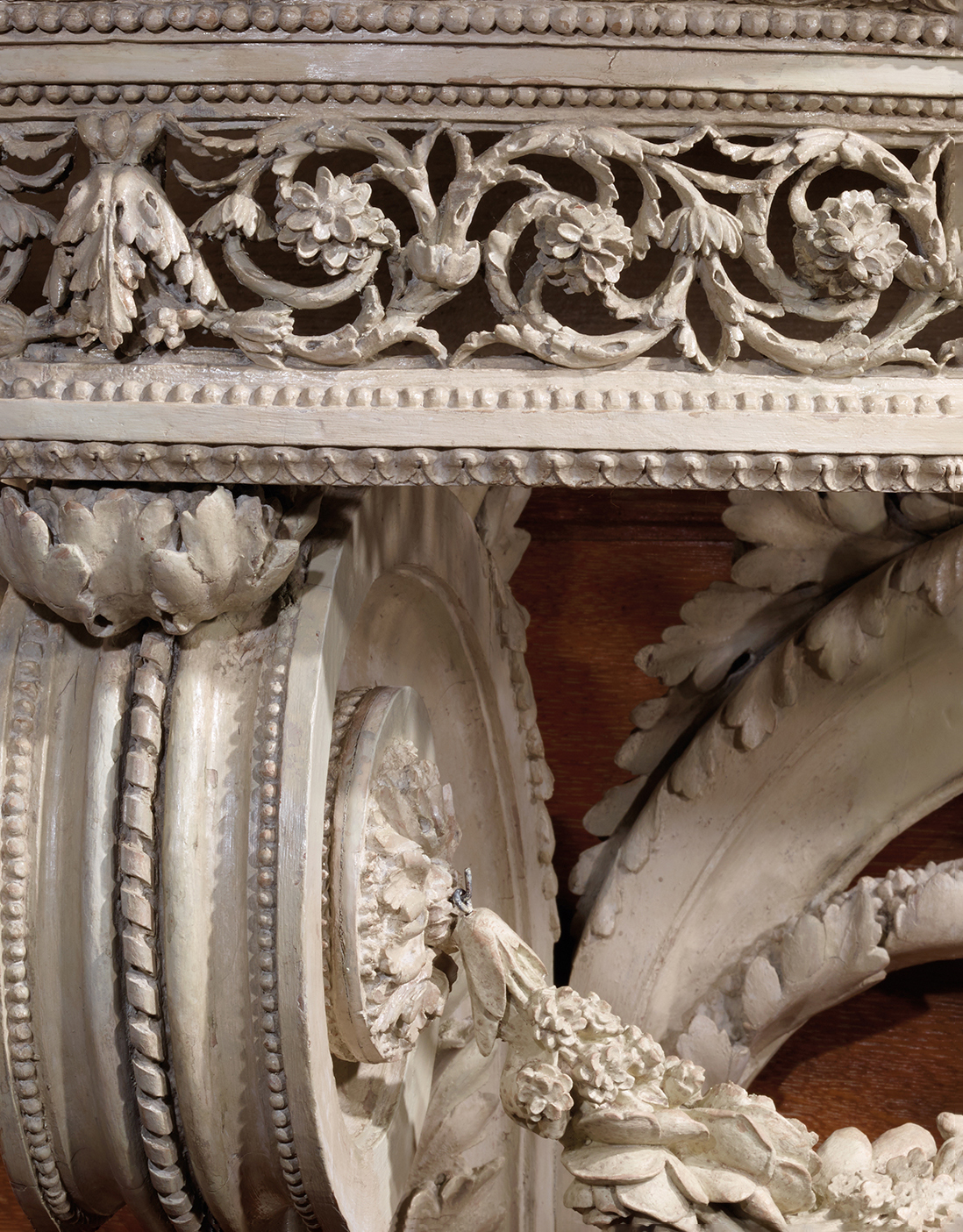
Henceforward known as the “salon de l’hôtel de Broglie”, the panelling and its three consoles en suite were acquired in 1944, i.e. just after the death of Marie Say († 1943), by the Metropolitan Museum of Art in New York, which installed the ensemble in one of its rooms and presented it as a perfect example of the Louis XVI style.
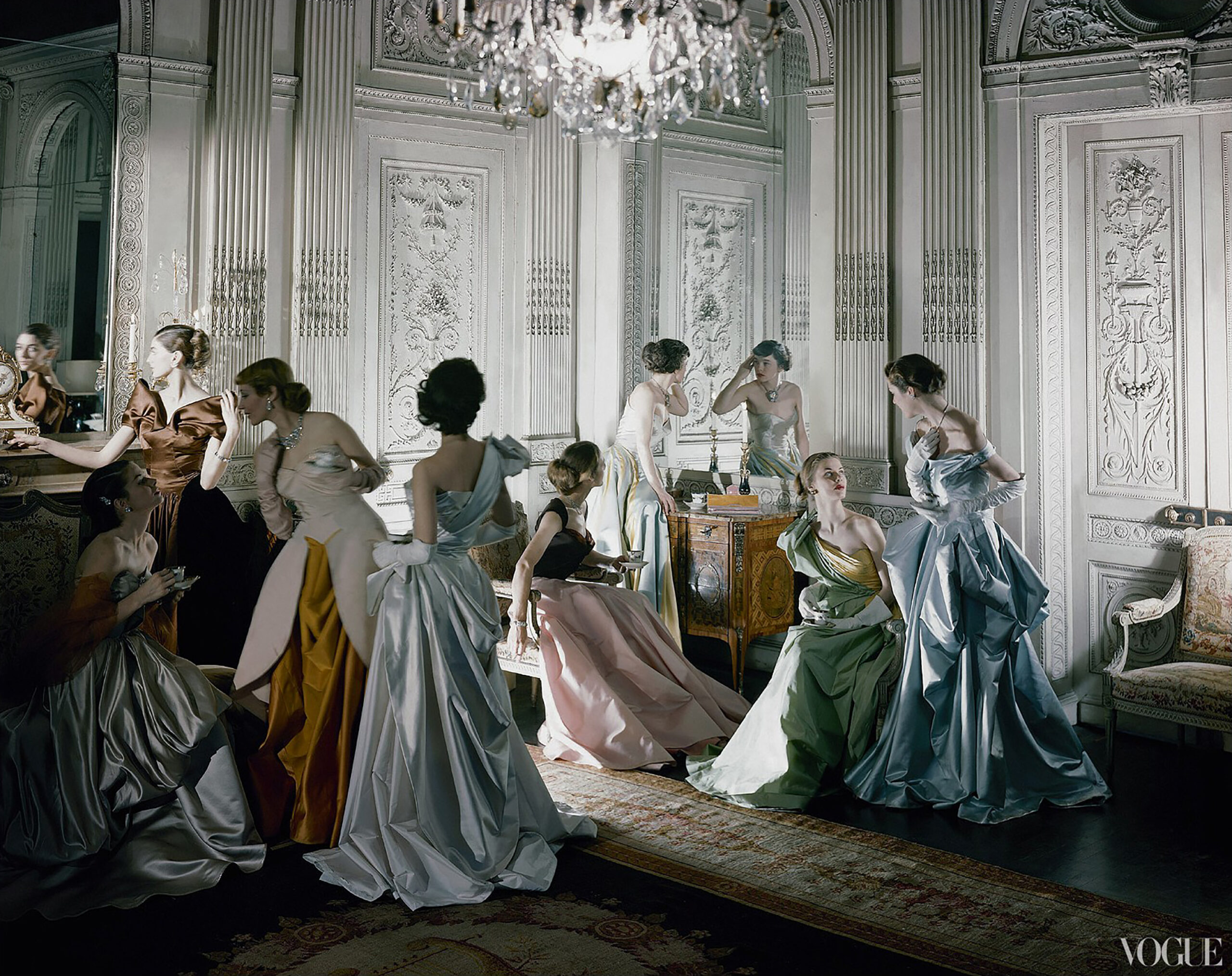
However, they only remained there until 1946, when the Museum eventually preferred the “salon du dais” of the hôtel de Tessé, which it deemed even more representative. It was acquired, along with the three consoles, by the famous antique furniture and decoration house French & Co, established in 1840.
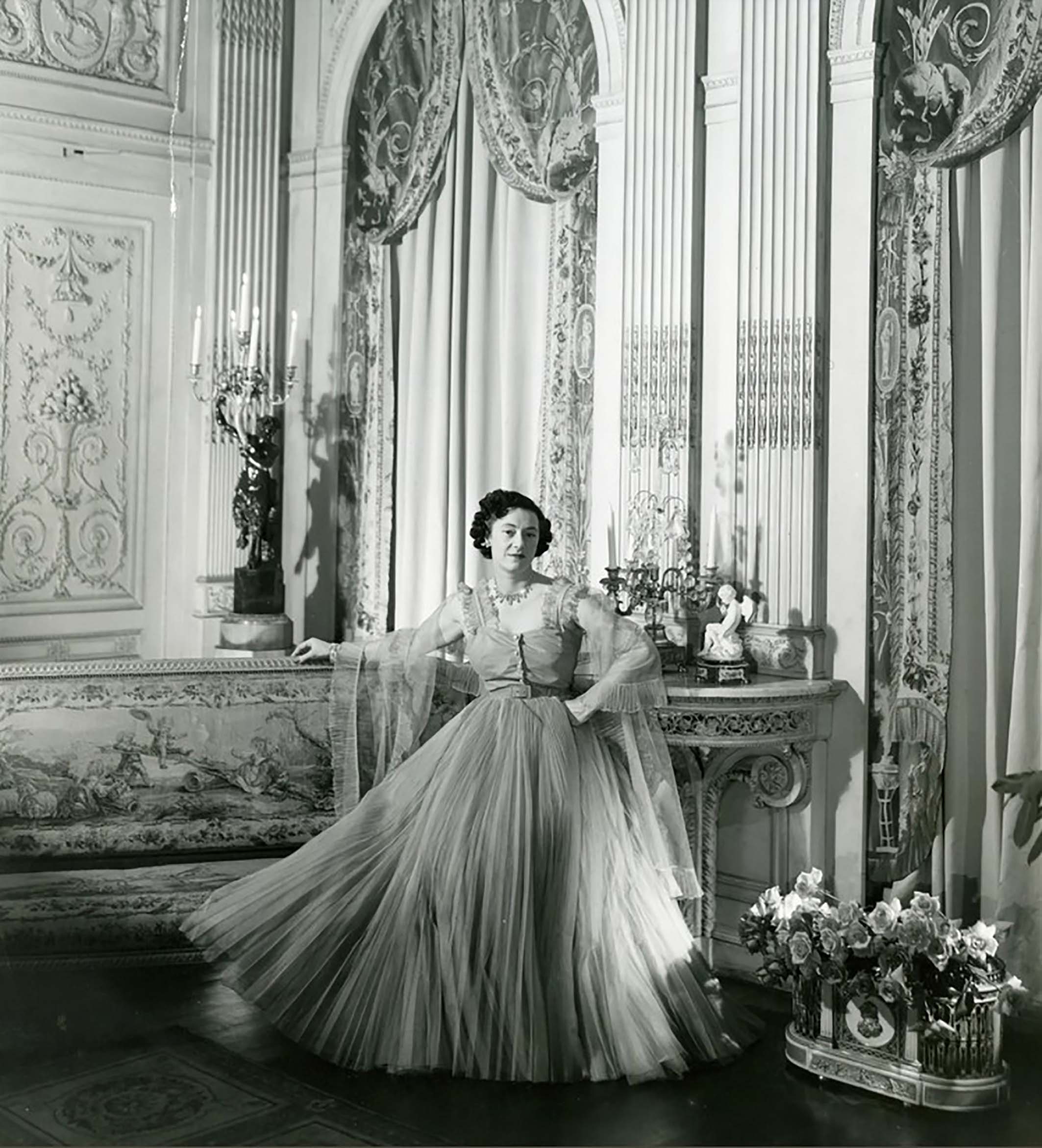
It reassembled the set at its premises at 210 East 57 St., New York, in order to be able to display its collections “as in real life” to its clients, in an authentic Louis XVI period setting considered at the time as Parisian and princely. The Getty Research Institute’s Photo Archive holds a precious series of photographs from that period, showing us the visibly complete panelling, decorated with the SB monogram of Prince Henri Amédée de Broglie and his wife Marie Say, and the three consoles. [1] This sumptuous décor remained in place at French & Co for many years, playing a not inconsiderable role in establishing the Louis XVI taste among American collectors. It even served as a setting for the famous fashion photographer Cecil Beaton (1904-1980), who immortalised Loelia Lindsay (1902-1993), Duchess of Westminster, wearing a Balmain dress and Van Cleef & Arpels jewellery, for Vogue magazine in 1948.
In the same year, and for the same magazine, he was also the author, in the same salon Chappuis de Rosières, of an iconic image showing the ball gowns of Charles James (1906-1978). Years later, this panelling, which had made such an impact on American high society in the 1940s and 1950s, was finally dismantled and sold to French & Co at an unknown date.
It has never reappeared to this day, unlike the pair of consoles presented here, and the large rectangular console sold by the Steinitz gallery in the 2000s. Remarkably well documented, these pieces of furniture constitute a very rare example which, although directly influenced by models developed in Paris, undeniably testifies here to a regional savoir-faire of the highest order.