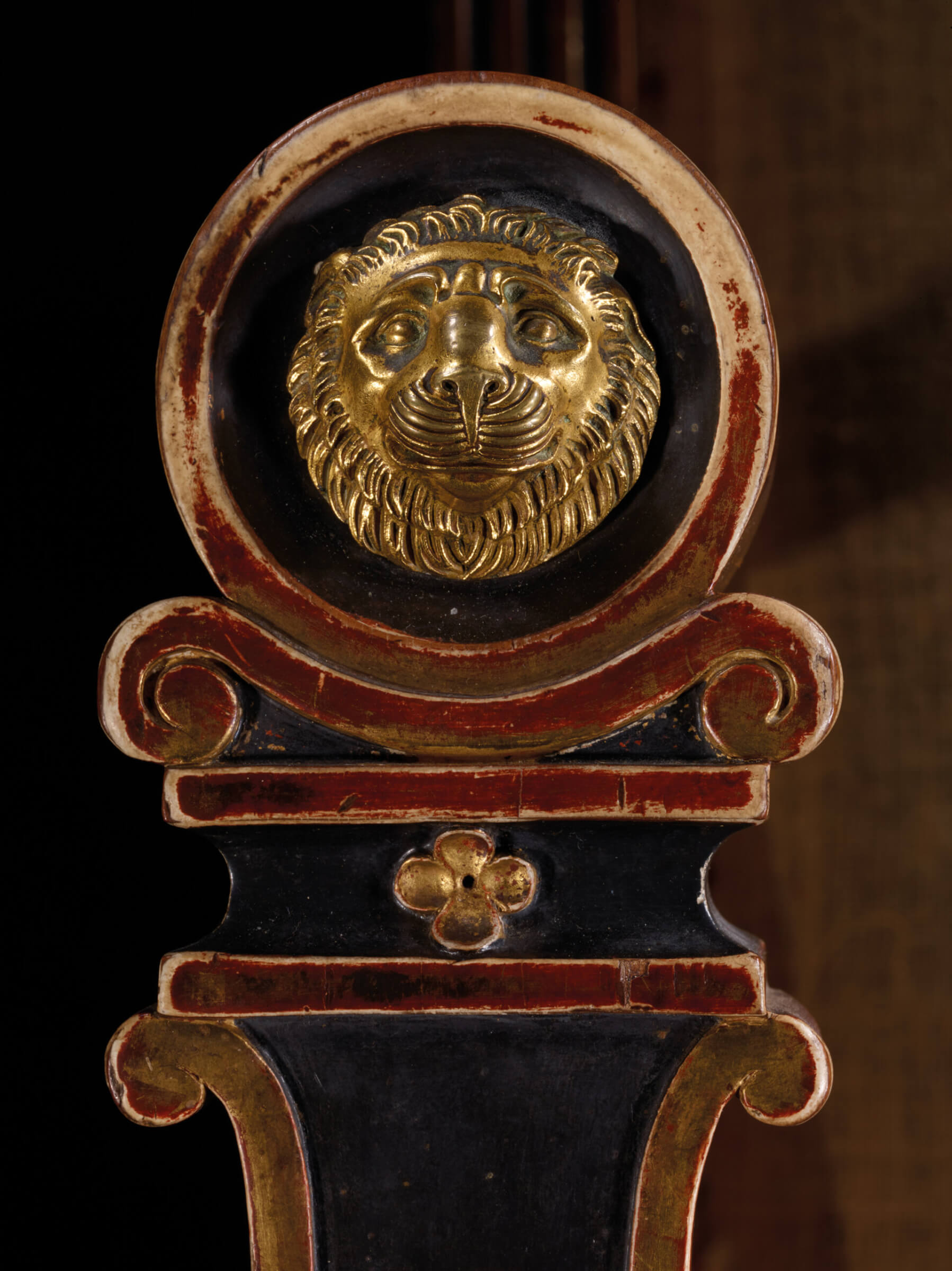
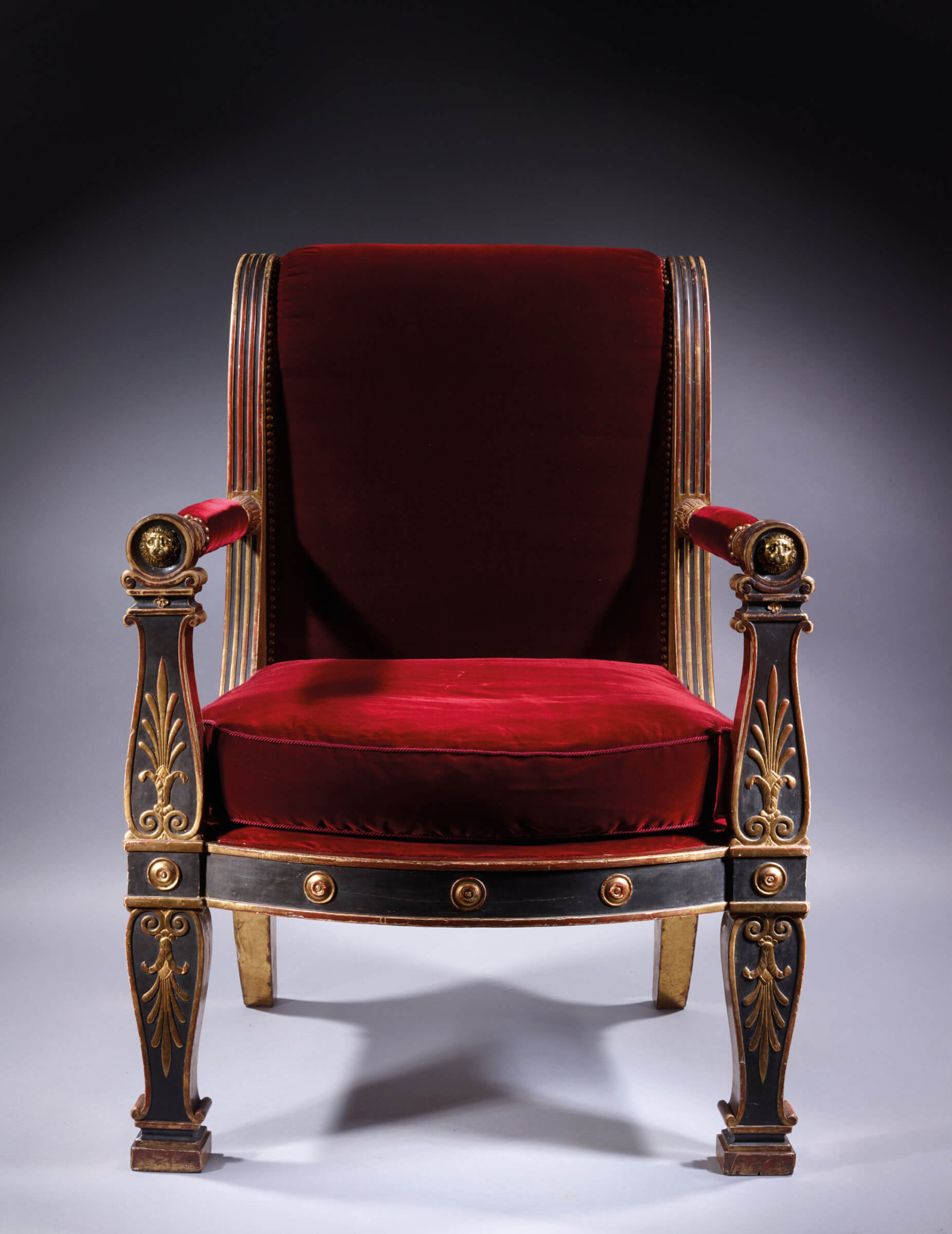
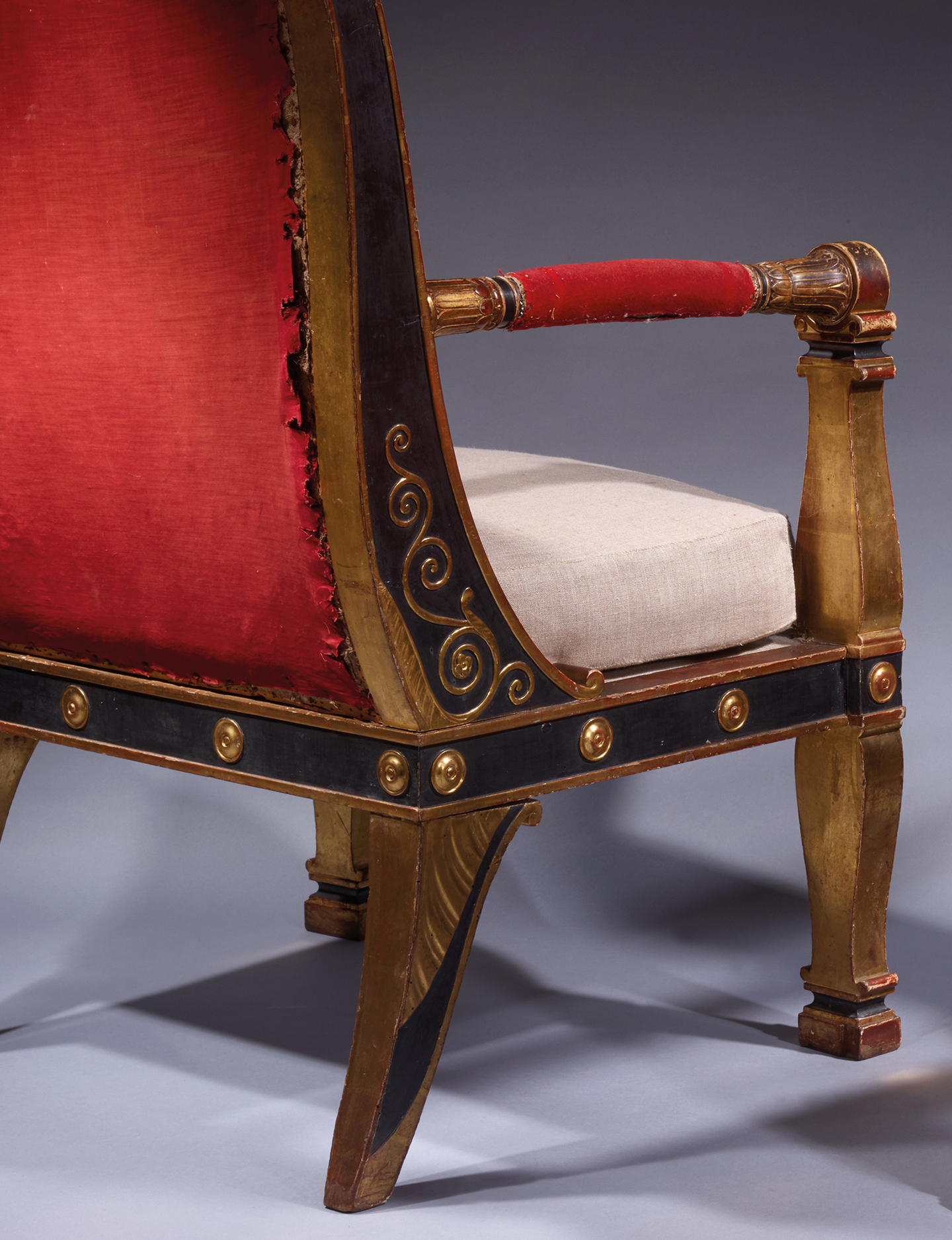
Painted and gilded wood; chiselled and gilded bronze; retaining a large and poignant part of its original red cloth upholstery.
H. 97.5 cm. (38 ½ in.); W. 68.5 cm. (27 in.); D. 58 cm. (23 in.).
Unstamped.
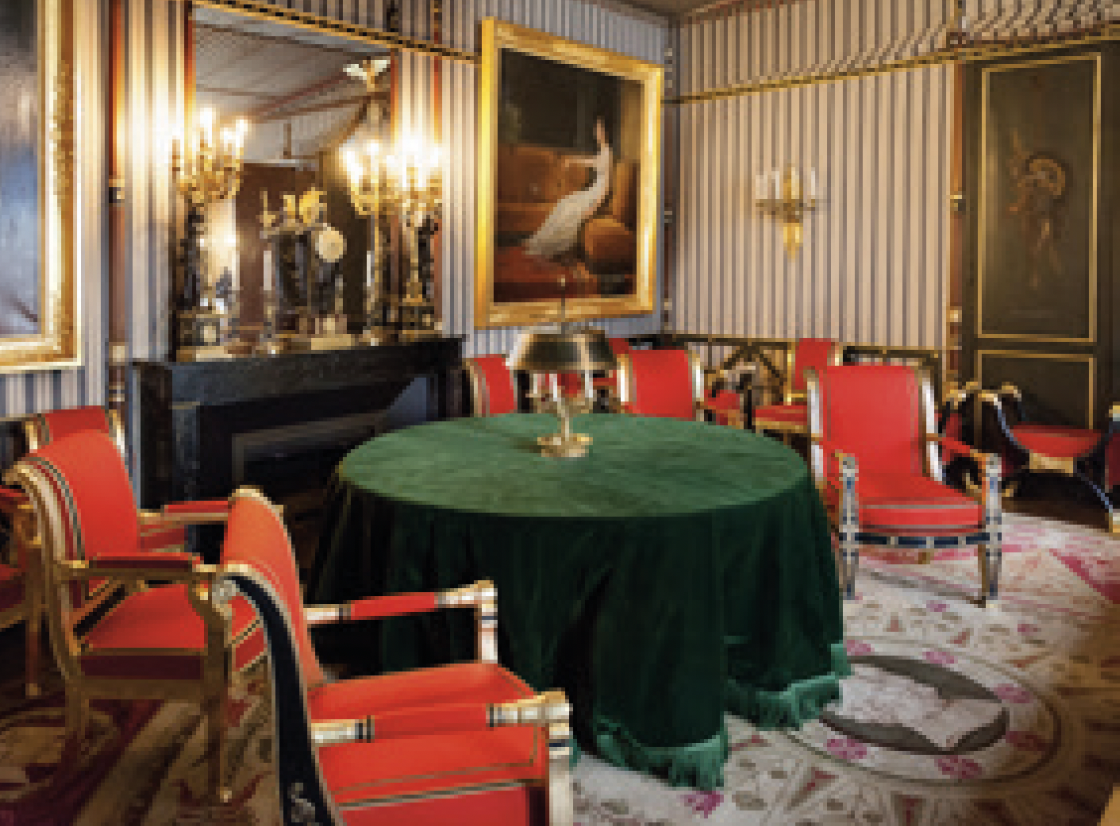
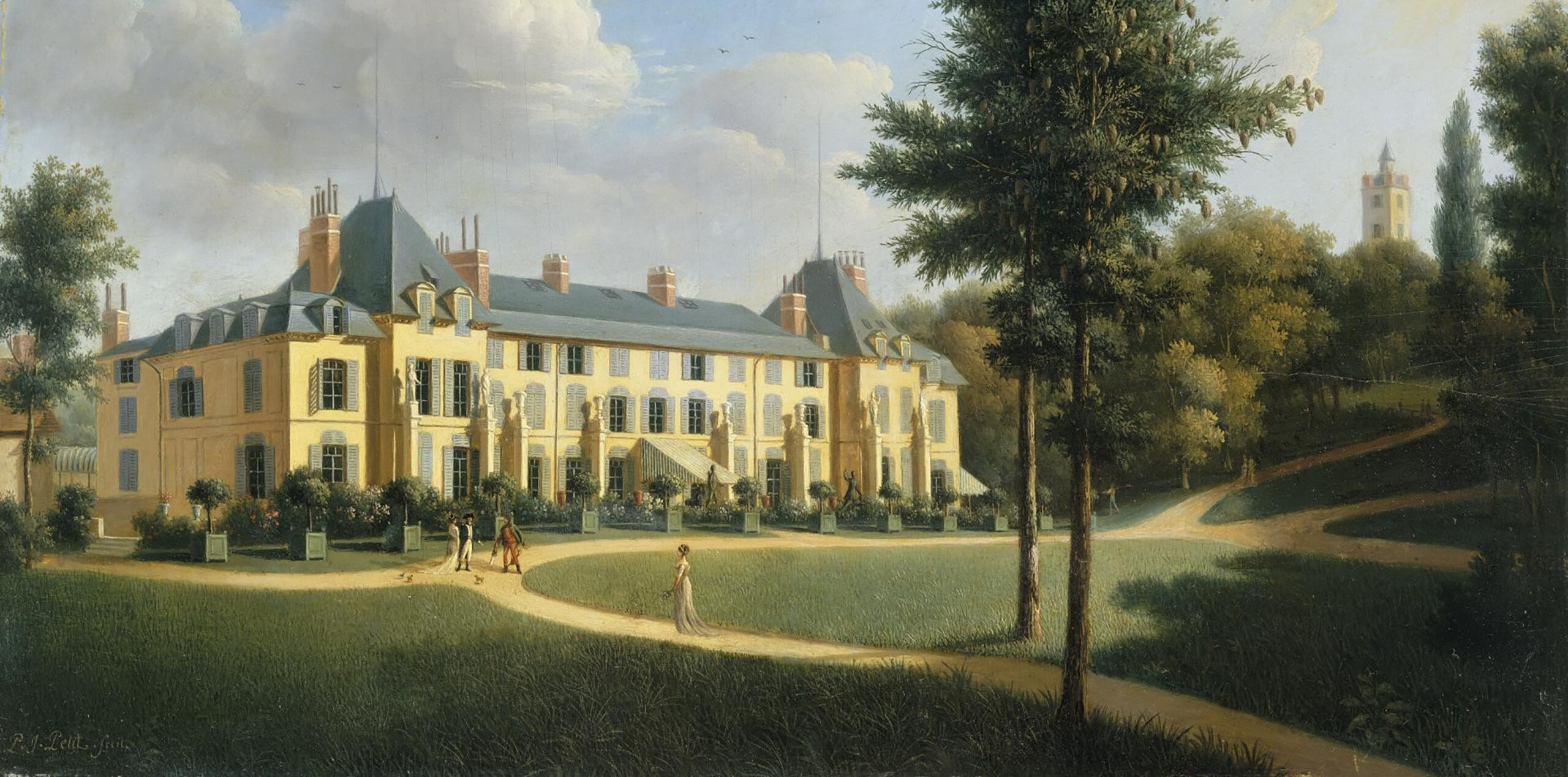
PROVENANCE : delivered in 1800 by Jacob-Frères to be placed in the Council Room of Napoleon Bonaparte, FirstConsul, at the Château of Malmaison (Hauts-de-Seine, Île-de-France region), which, together with the Tuileries Palace in Paris, was the seat of the French government from 1800 to the autumn of 1802.
LITERATURE: Percier et Fontaine, Recueil de décorations intérieures, 1801 (first complete edition in 1812), Paris, L’Aventurine (republished), commentary on pl. LV; Johann David Passavant (author) and Johann Nepomuk Muxel (engraver), The Leuchtenberg Gallery. A Collection of Pictures Forming the Celebrated Gallery of His Imperial Highness, the Duke of Leuchtenberg, at Munich, London, 1852, p. 39 and pl. 262; Bernard Chevallier, “Malmaison, château et domaine des origines à 1904”, Notes et documents, Paris, 1989, p. 91-93, 158-160, and p. 440, fig. 242 and 243; Amaury Lefébure, Société des Amis de Malmaison, Bulletin 2009, n° 44, p. 47-48.
At least 169 council meetings were held in this room between 19th January 1801 and 9th September 1802 in the Council Room of Napoleon Bonaparte, First Consul, et the Château de Malmaison, official seat of the French government.
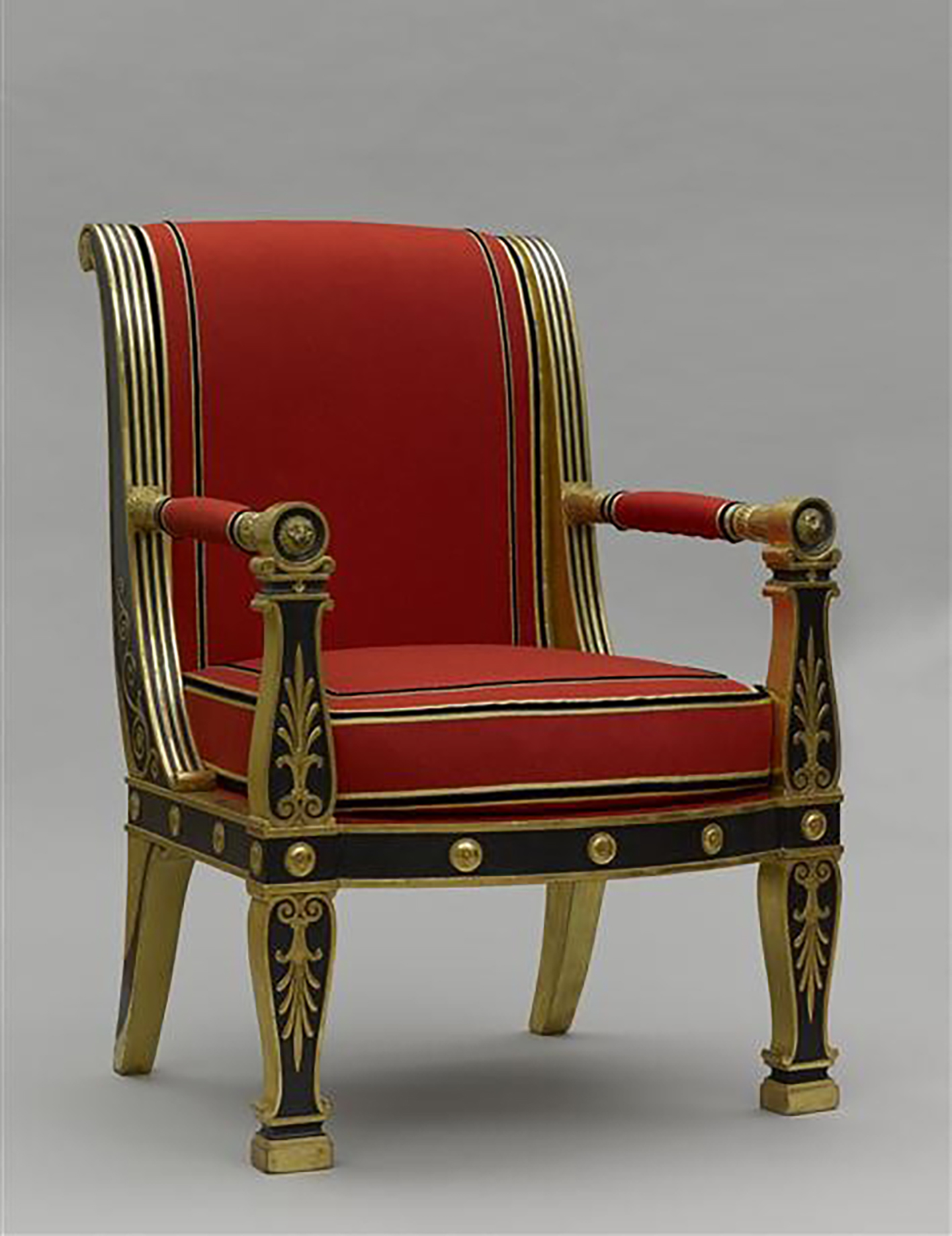
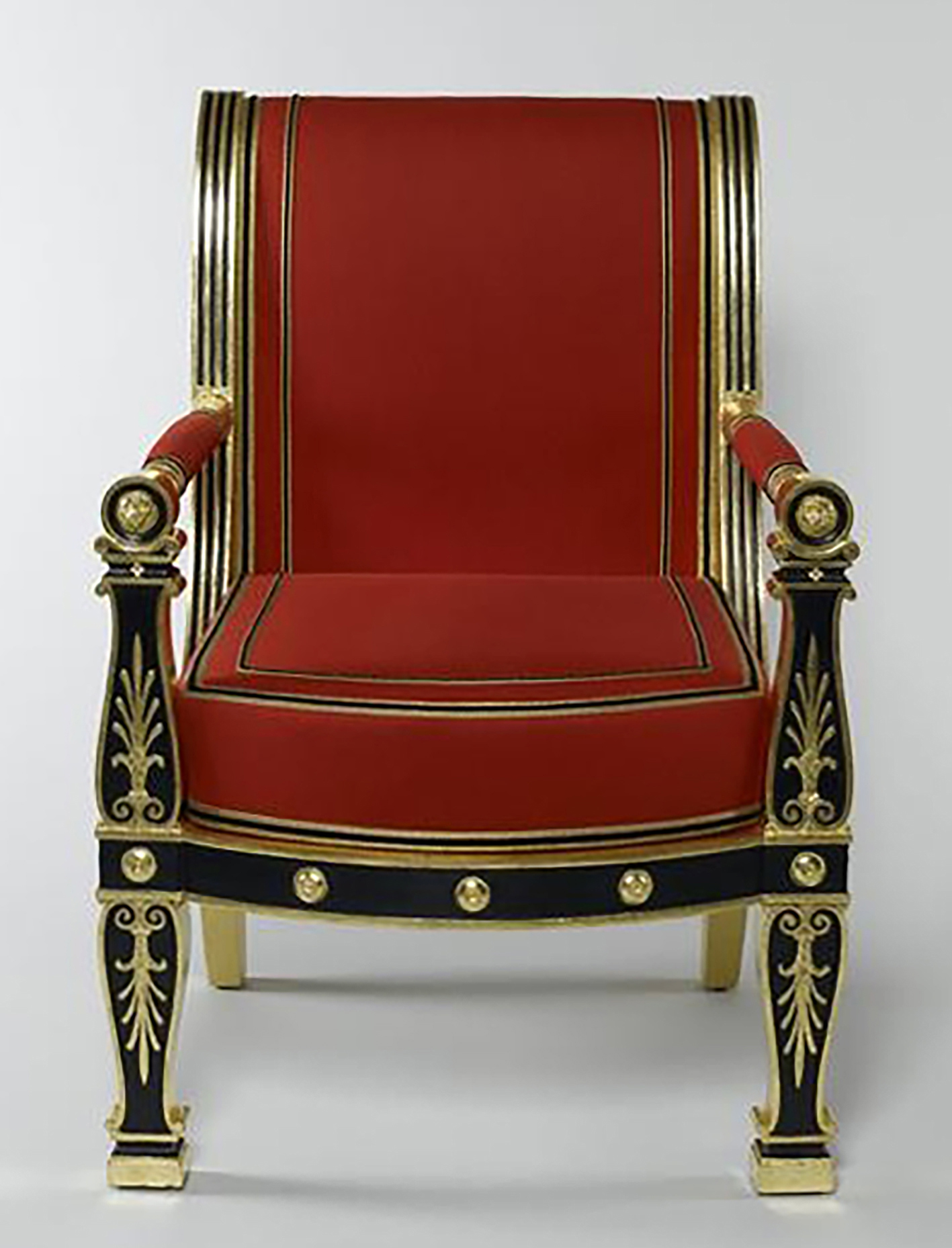
Armchair en suite of ours, delivered in 1800 by Jacob-Frères to be placed in the Council Room of Napoleon Bonaparte, First Consul, at the Château of Malmaison. This armchair, from the collection of Bernard Steinitz in Paris, was acquired in 2010 thanks to the generosity of the Société des Amis de Malmaison. It is one of the two among the ten armchairs to have recovered its original location at Malmaison. It has been restored to its original state, i.e. upholstered in red cloth with black and gold velvet braiding.
Rueil-Malmaison, musée national des châteaux de Malmaison et de Bois-Préau (inv. M.M.2010.6.1).
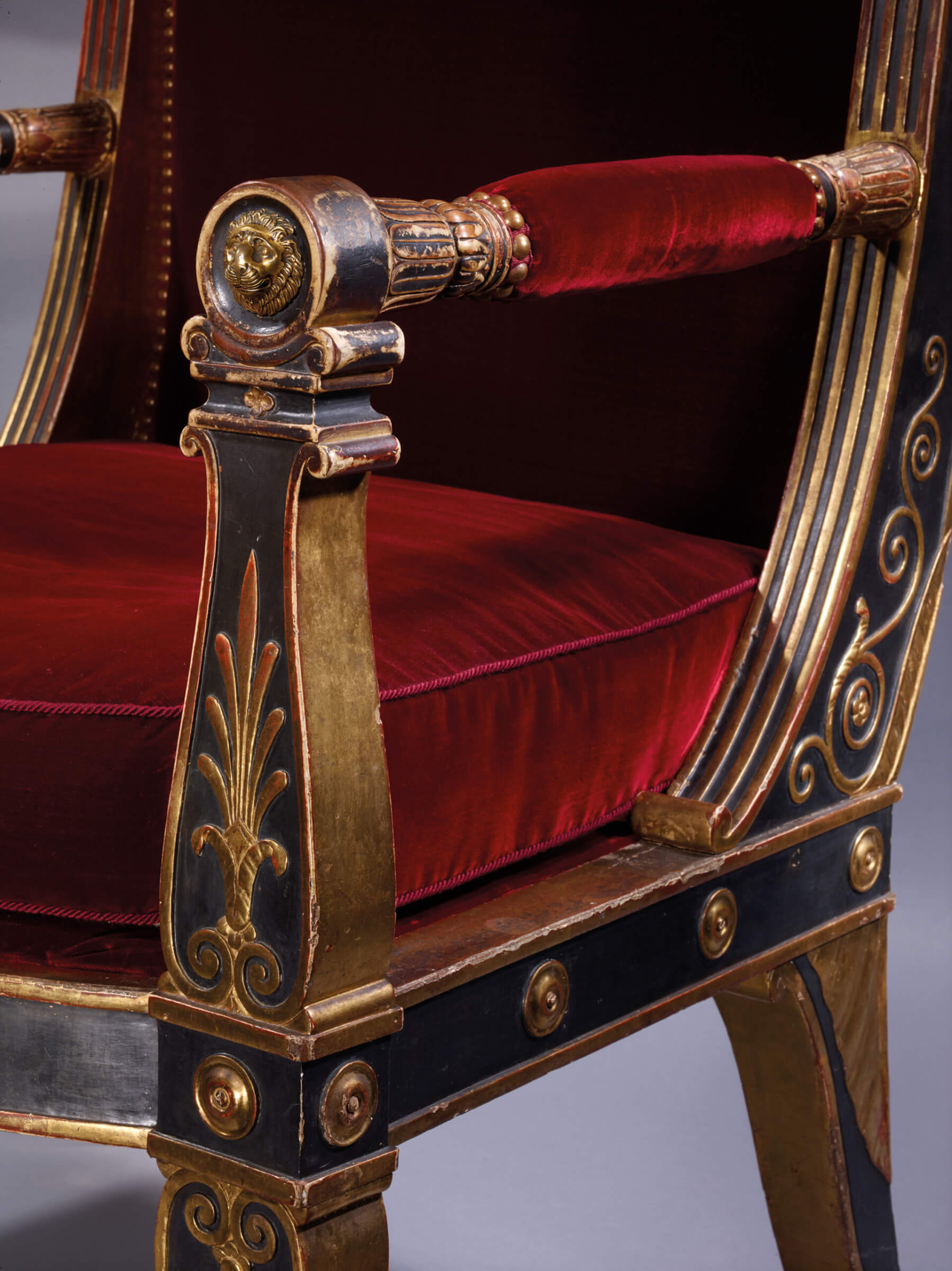
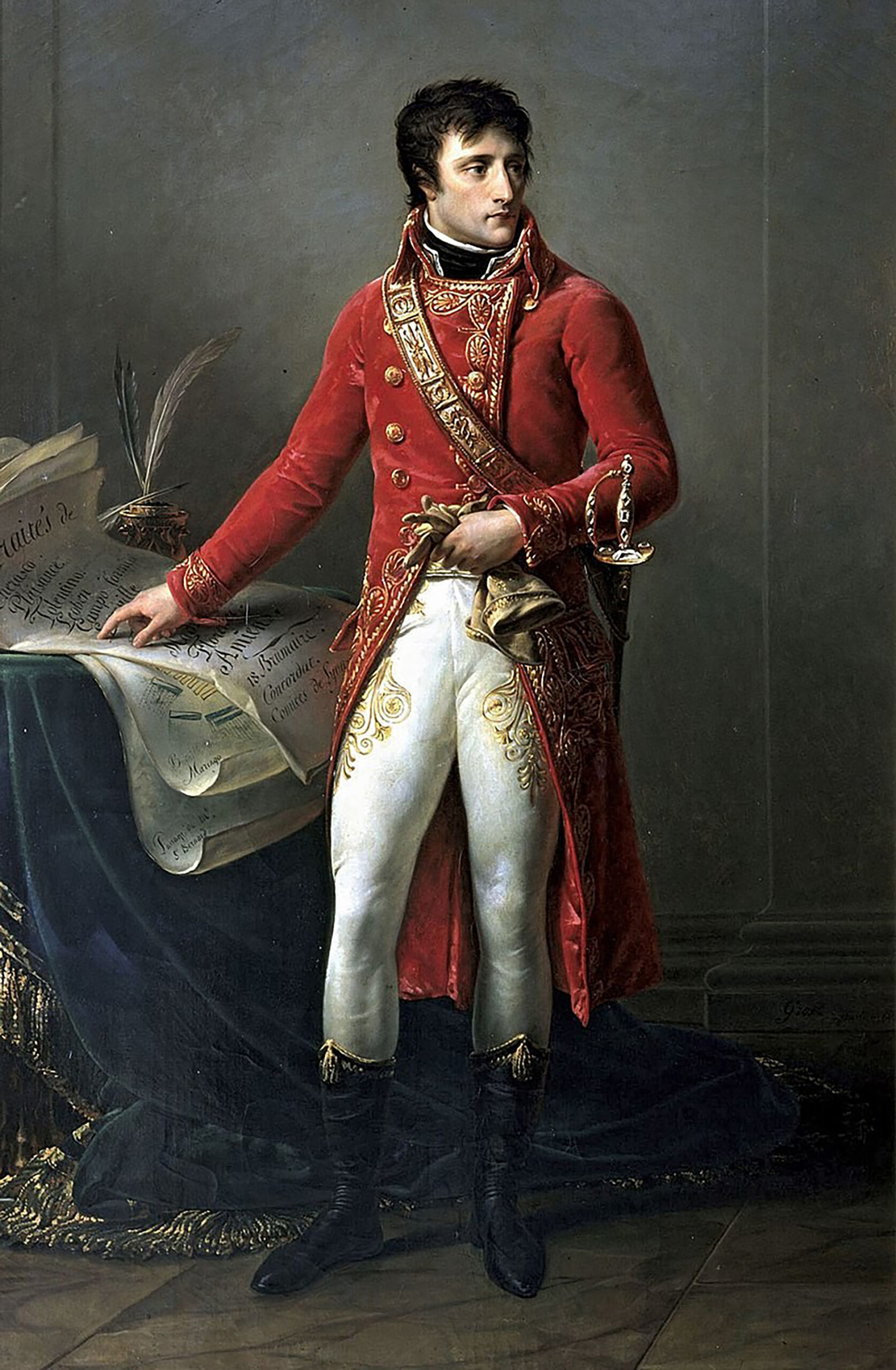
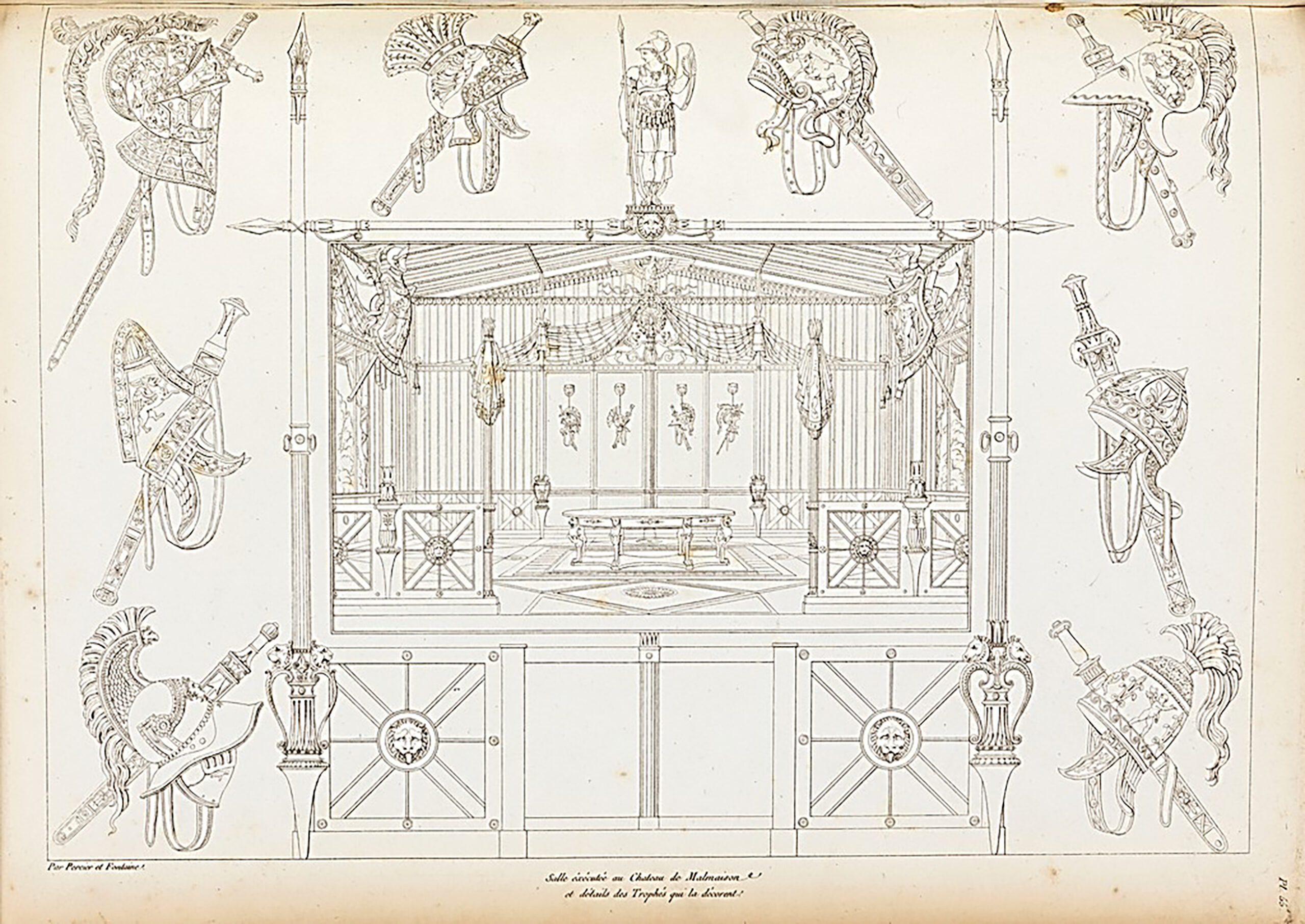
As early as July 1800, a year after Joséphine (1763-1814), née Marie Josèphe Rose Tascher de La Pagerie, wife of Napoleon Bonaparte and future Empress, bought the Château of Malmaison, the First Consul ordered that a Council Room should be fitted out so that he might convene his ministers there on a regular basis. At least 169 Council meetings were held in this room between 19th January 1801 and 9th September 1802. In just ten days, the architects Charles Percier (1764-1838) and Pierre-François-Léonard Fontaine (1762-1853) executed a décor in the semblance of a military tent, and the room was furnished with a number of seats in the antique taste, which were delivered by Jacob-Frères, all of them painted black and gold and upholstered in red cloth enhanced with a black and gold velvet braid: “The layout and decoration had to be completed in ten days’ work, so that the frequent trips he [Bonaparte] was accustomed to making there should not be interrupted; consequently, it seemed appropriate to retain for this subject the design of a tent supported by pikes, beams and ensigns, between which are suspended clusters of weapons reminiscent of those of the most famous warrior peoples of the world”, Percier et Fontaine, Recueil de décorations intérieures, 1801 (first complete edition in 1812), commentary on pl. LV.
For the room, Jacob-Frères delivered two small lits de repos (daybeds), each fitted with two pillows, which were placed on either side of the mantelpiece, ten large armchairs, including the pair presented here, and ten X-shaped stools in bronzed and gilded wood—three of which have now been returned to their original location—accompanied by six mahogany chairs. Of the ten large armchairs mentioned above, one, which was usually used by the First Consul when he presided over the Council at Malmaison, was scored with penknife marks, bearing witness to Bonaparte’s impatience. This seat became one of the relics in the gallery of Prince Eugène de Beauharnais (1781-1824), Josephine’s son adopted by Napoleon, in the Leuchtenberg Palace in Munich; unfortunately it is now lost but was engraved by Johann Nepomuk Muxel in Johann David Passavant’s collection The Leuchtenberg Gallery. A Collection of Pictures Forming the Celebrated Gallery of His Imperial Highness, the Duke of Leuchtenberg, at Munich, published in Frankfurt am Main in 1851 and in London in 1852, p. 39 and pl. 262.
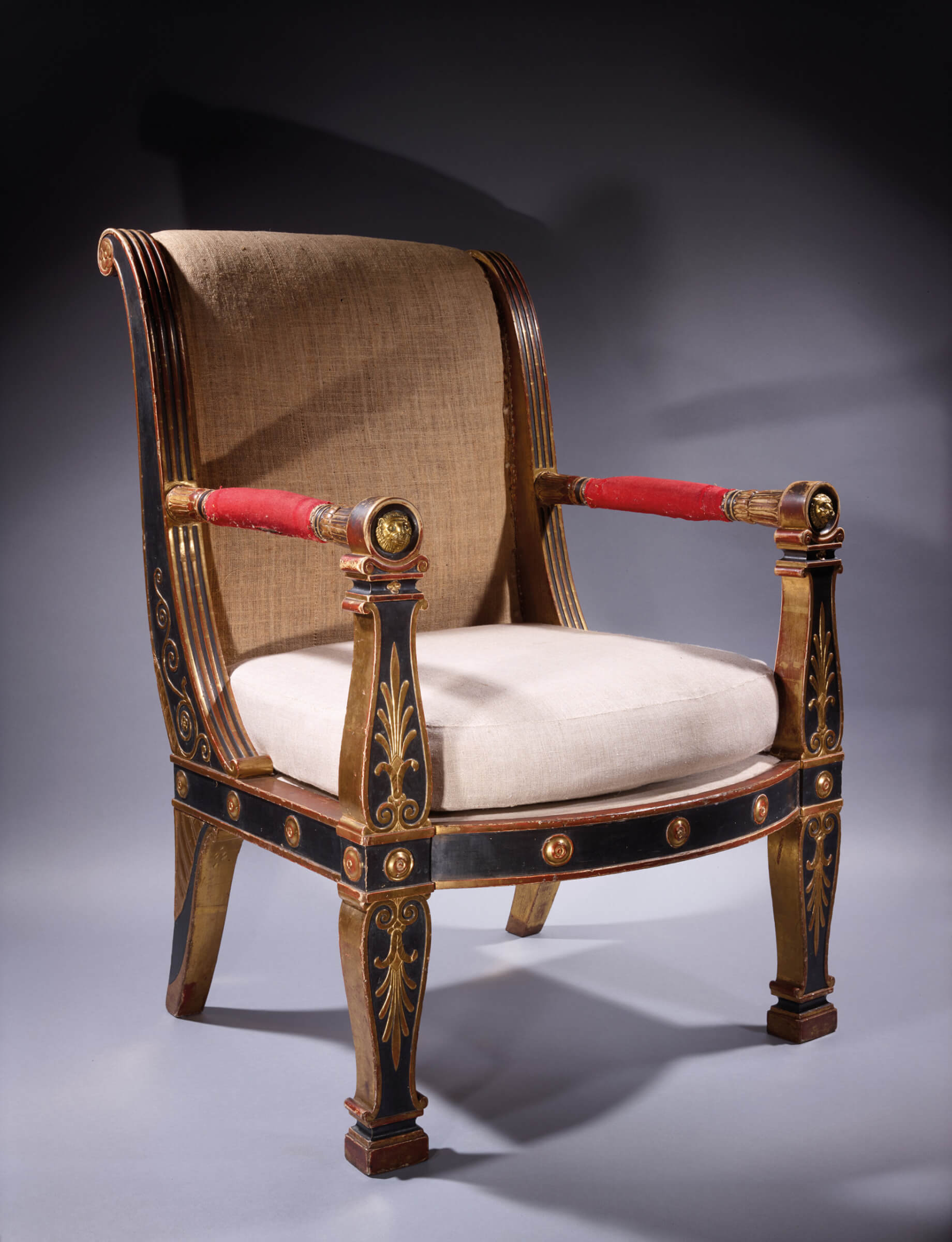
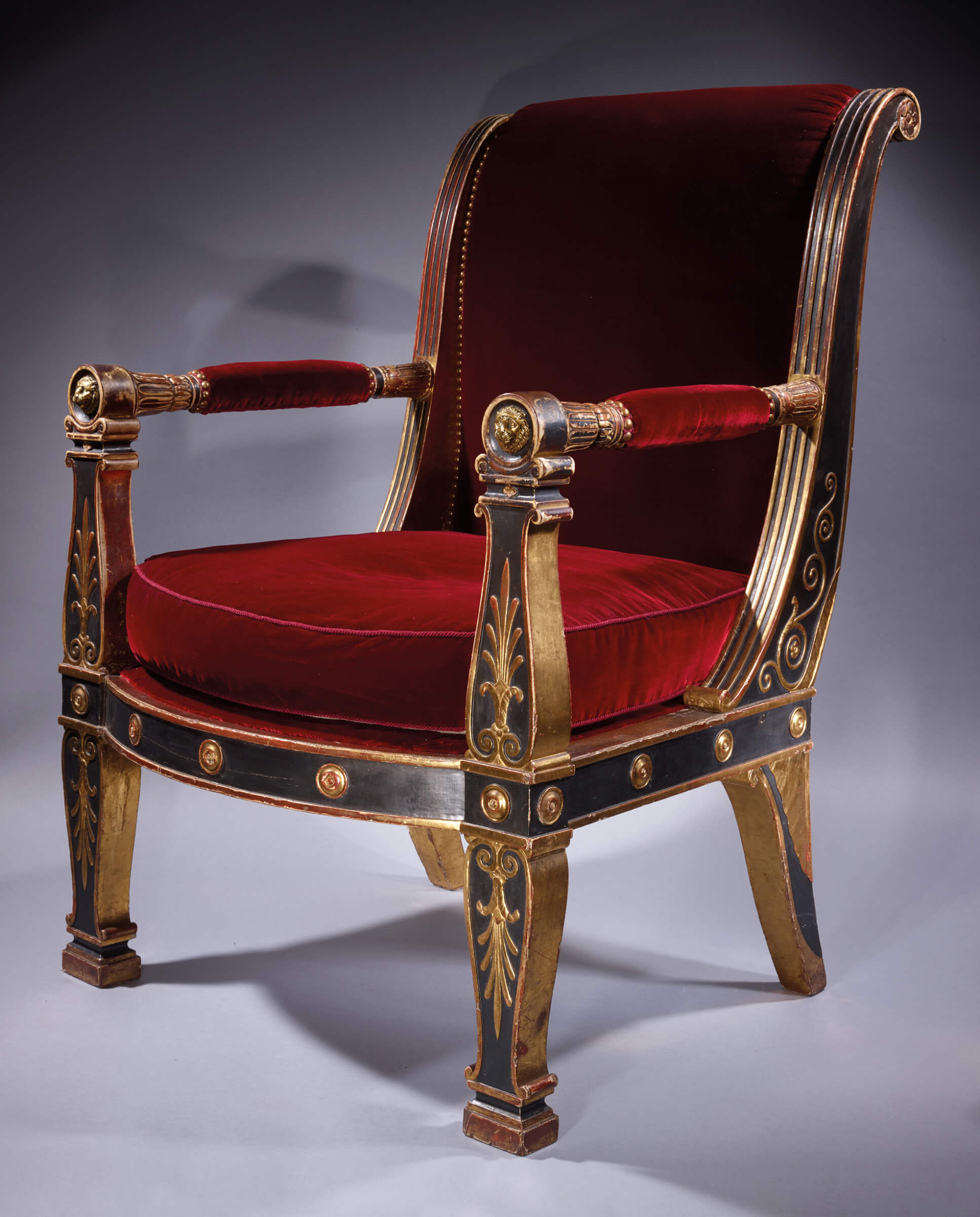
Two other armchairs have since been returned to their original location in the Château of Malmaison—the first (inv. M.M.2004.8.1) was acquired by the museum on the art market in June 2004, and the second (inv. M.M.2010.6.1), from the Bernard Steinitz collection in Paris, was purchased in 2010 by the Société des Amis de Malmaison, which donated it to the museum the same year.
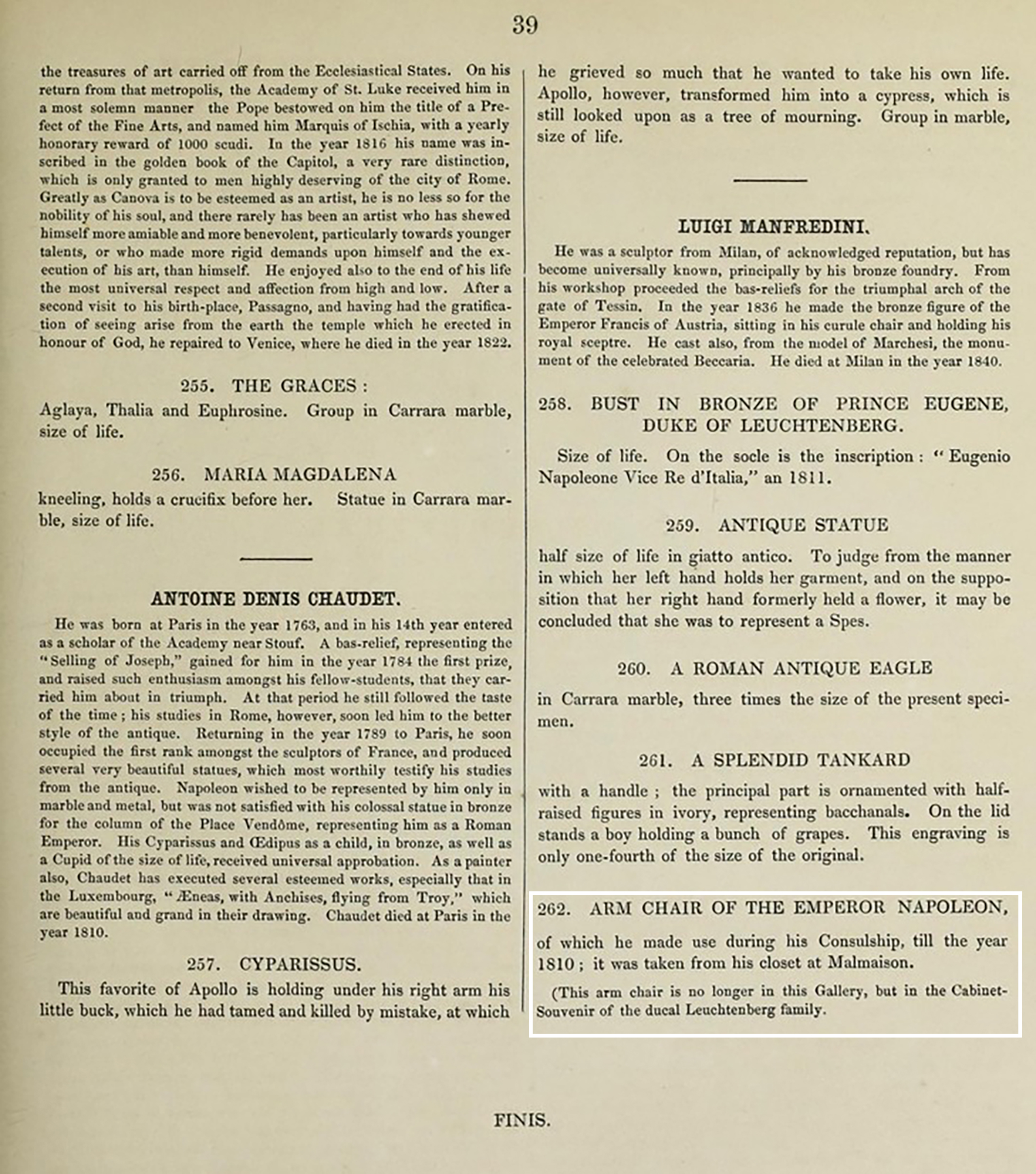
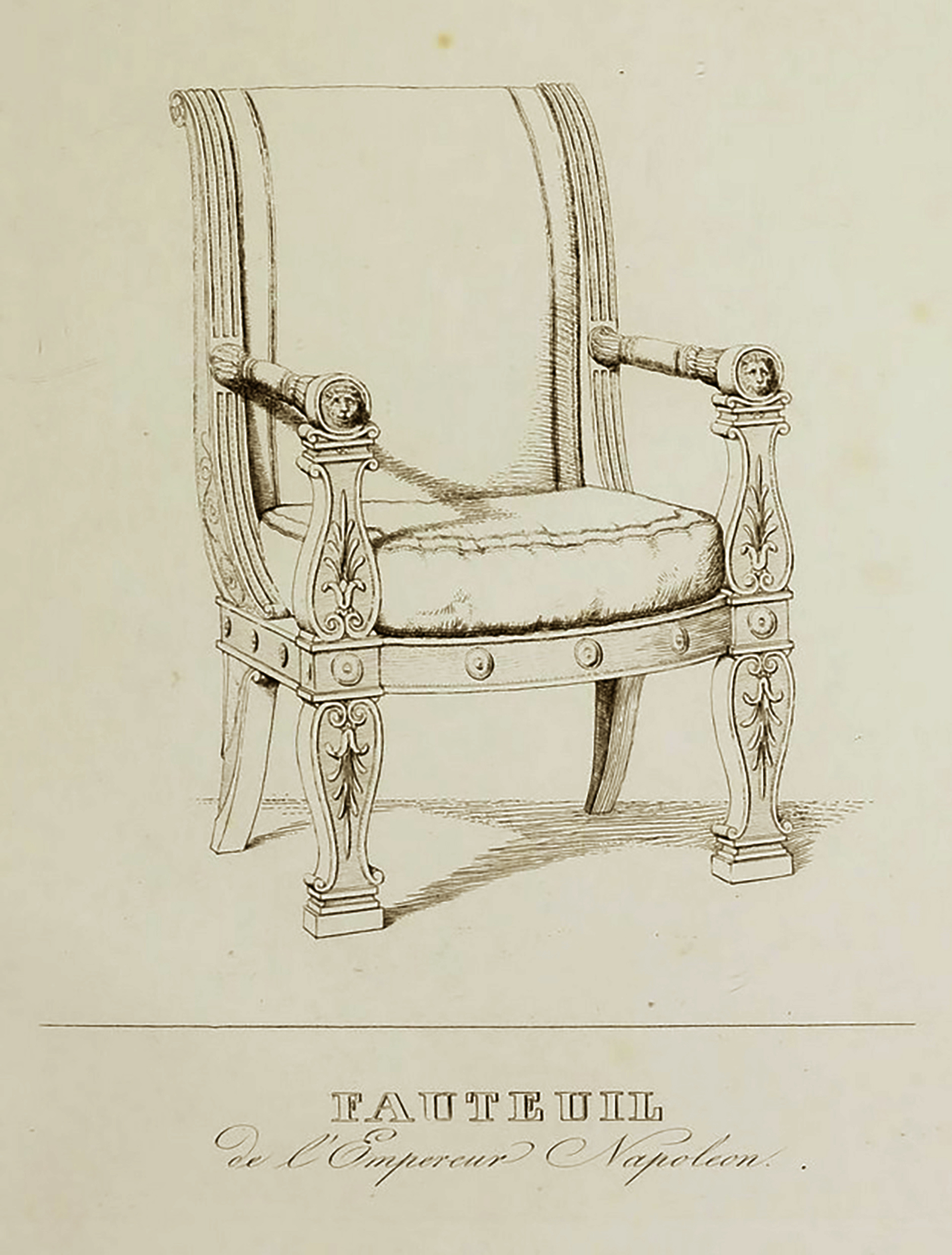
Johann David Passavant (auteur) and Johann Nepomuk Muxel (graveur), The Leuchtenberg Gallery. A Collection of Pictures Forming the Celebrated Gallery of His Imperial Highness, the Duke of Leuchtenberg, at Munich, London, 1852, p. 39 and pl. 262.
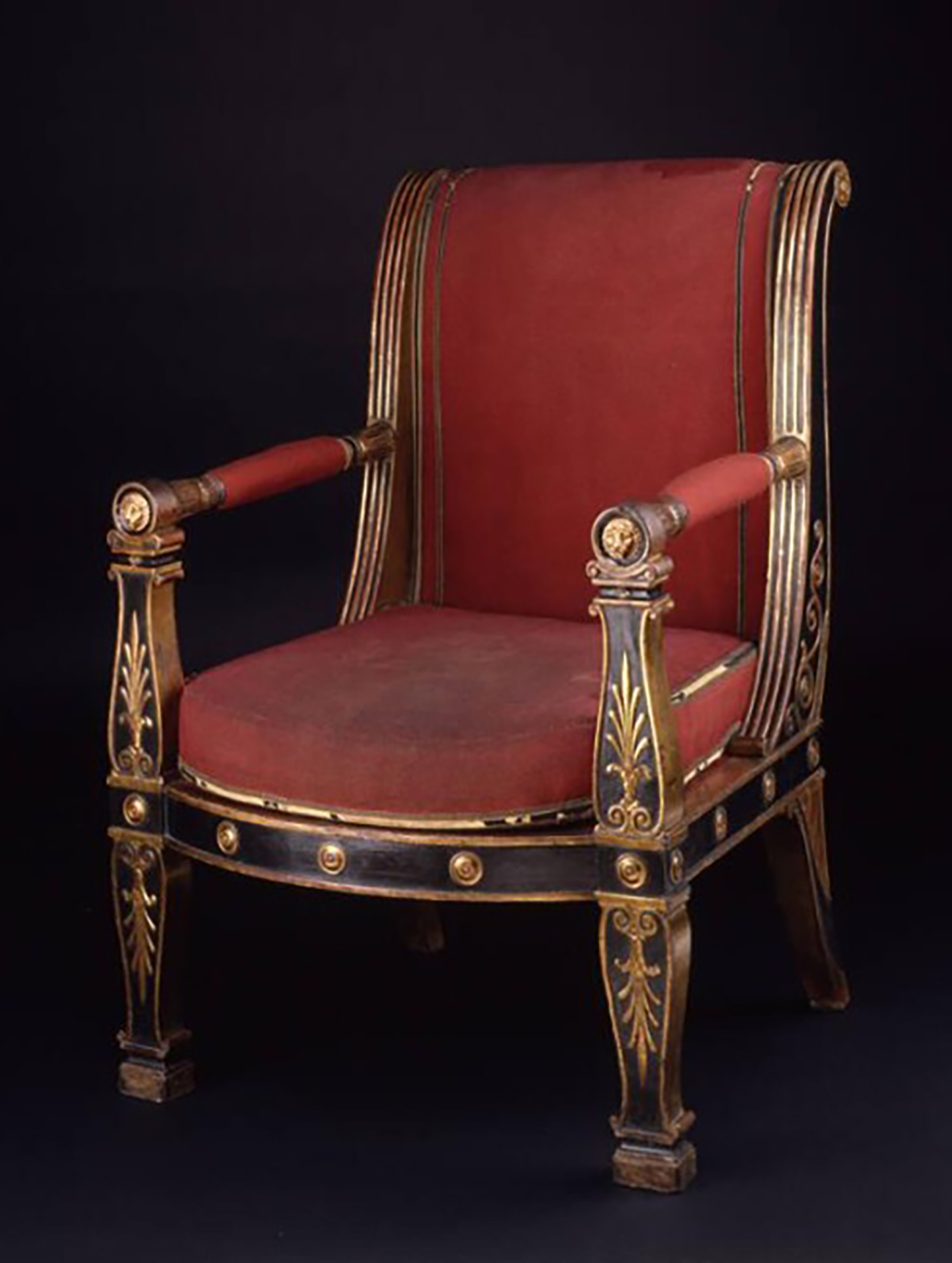
A fourth armchair, still displaying its original upholstery, belonged successively to Joseph Bonaparte (1768-1844), adorning his luxuriant estate in Bordentown, New Jersey, then to his associate Félix Lacoste (1795-1853), and finally to Consul General Louis Borg (1812–after 1867). It now belongs to the collections of the New York Historical Society, Museum & Library, donated by Louis Borg in 1867 (inv. 1867.438) and bears a copper plate that reads: ARM CHAIR USED BY/NAPOLEON BONAPARTE/WHILE FIRST CONSUL/OF THE/REPUBLIC OF FRANCE/PRESENTED BY LOUIS BORG/1867. In 2002, this armchair was featured in an exhibition and a publication which helped to reveal the historical background to all these chairs. A fifth armchair appeared on the Paris art market in April 2003. The whole ensemble was dispersed after the death of Prince Eugène († in 1824), heir to the estate, at a major auction that was held at Malmaison from 31st May to 19th July 1829, under the supervision of Mr. Casimir Noël, who dispersed the 1,699 lots listed in the official report. Among the faithful acquaintances and buyers from a wide range of social backgrounds, special mention should be made of General Gourgaud, who bought two of the ten armchairs in the Council Room.
The Maison Jacob, an exceptional Maison from the late 18th century to the Empire period
The Jacobs are one of the most famous of the Parisian cabinet-making families, who, over three generations from the last third of the 18th century until the end of the first half of the 19th century, succeeded in keeping the reputation of their firm at the highest standard.
Born in Cheny in Burgundy on 6th July 1739, Georges Jacob, the father of the dynasty, lost his parents at a very early age. At the age of sixteen, he decided to move to Paris to take up woodcarving. At first, he worked as a companion (apprentice) to the joiner Louis Delanois, by whom he was clearly influenced, and from then onwards he specialised in making chairs. Thanks to his master’s support, he was quickly awarded the title of Master, which was registered on 4th September 1765, allowing him to establish himself without having to take over from another master, a rather rare practice at the time. In 1767, he married Jeanne-Germaine Loyer, aged sixteen, who like him lived on rue Beauregard in Paris. The couple moved shortly afterwards to rue de Cléry, and in 1775 to rue Meslée where they settled permanently. They had five children: three sons and two daughters. The eldest, Georges II (1768-1803), and the middle son, François-Honoré-Georges (1770-1841), both became joiners and cabinetmakers and helped their father brilliantly in his business. The youngest son, Louis, chose a completely different path and travelled extensively.
From 1773 until the Revolution, Georges Jacob kept working for the Garde-Meuble to the Crown, supplying the main royal residences. From 1781, he held various positions in his guild of cabinetmakers. In 1788, he became head-assistant and was elected head of the guild on the following year. As the main supplier to the court and princes, he was under threat during the revolutionary period. He was repeatedly denounced to the Committee of Public Safety, but nonetheless benefited from the protection of the painter Jacques-Louis David, with whom he actively collaborated, creating furniture based on David’s designs.
On 13th August 1796, aged fifty-seven, he handed over his business to his two sons, who set up their own firm under the name JACOB FRERES. Their father rented out his workshops to them and continued to advise them. But after the untimely death of his eldest son, Georges II, on 23rd October 1803, he decided to form a new partnership with his second son, François-Honoré-Georges, which lasted nine years and was renamed Jacob-Desmalter et Cie. The name Desmalter had been added to that of Jacob during the Directoire period (1795-1799) in memory of a family plot of land, “Les Malterres”, which an ancestor of the family owned in Cheny, Burgundy.
Under the First Empire, Jacob-Desmalter became a joiner, cabinetmaker and manufacturer of furniture and bronzes for L.L.M.M.I.I. et R.R. (Their Imperial and Royal Majesties), the Emperor and Empress also being King and Queen of Italy since 1805. During the entire reign of Napoleon I, he was the main supplier of the Mobilier Impérial, far outstripping all his contemporaries. The same was true for private trade. If we are to go by Hector Lefuel’s study, the Jacob workshops, which numbered up to 332 craftsmen circa 1808, delivered nearly ten million francs worth of furniture between 1796 and 1813. Only one-fifth of that colossal sum was for public supply; one-third was for export; the rest represented purchases by private individuals. Jacob-Desmalter filed for bankruptcy on 15th January 1813. The State, Jacob-Desmalter’s main client, was largely to blame for this state of affairs, as it failed to honour the many contracts it had signed with Jacob-Desmalter in due course of time. The wife of François-Honoré-Georges, who was married under separation of property, was able to run the business for a while, until Jacob-Desmalter was reinstated at the head of his firm, his creditors having eventually acknowledged, from the outset of the Restoration, that he had only been the mere victim of political events.