

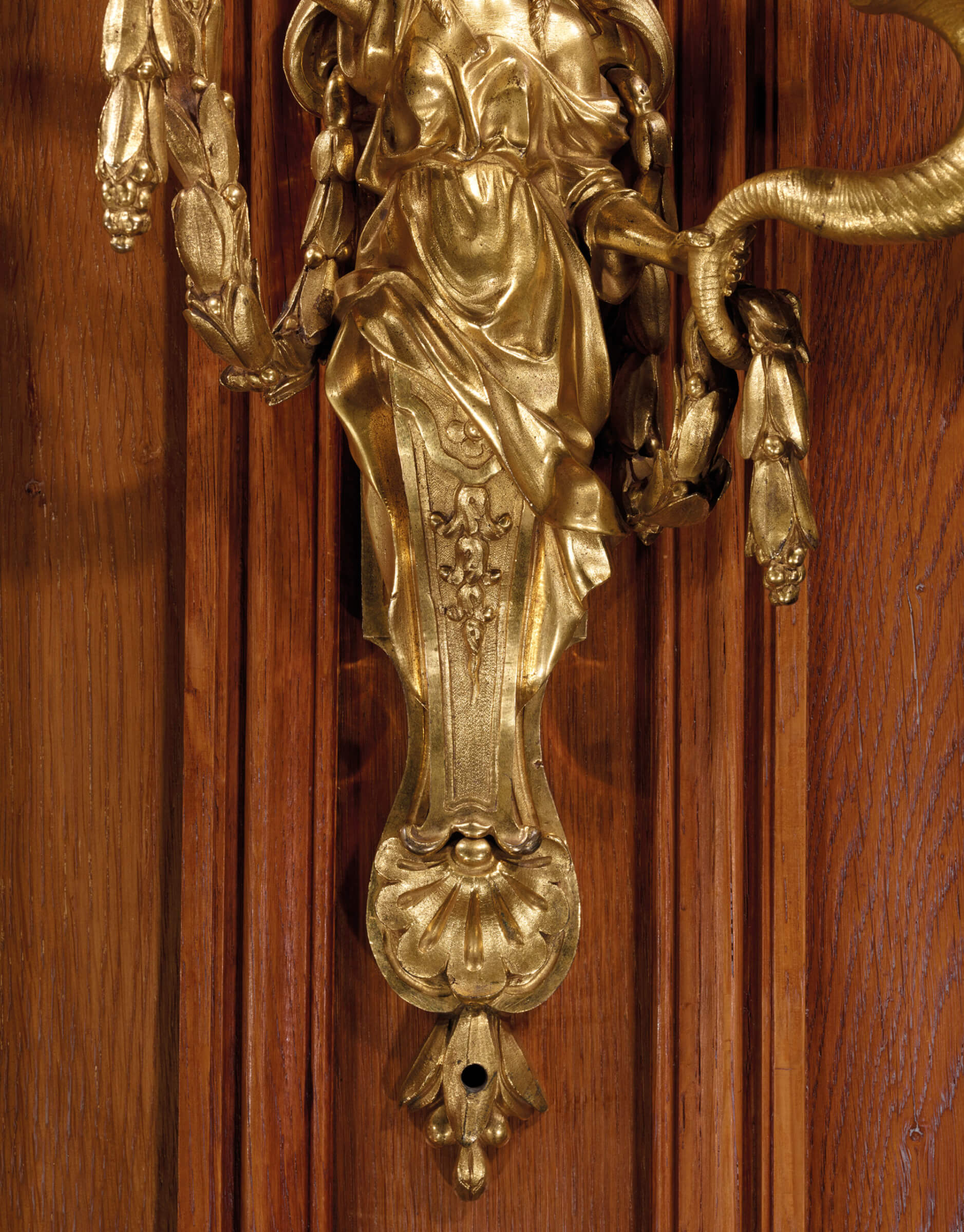
Chiselled and gilt bronze.
H. 45.5 cm. (18 in.); W. 33 cm. (13 in.); D. 18 cm. (7 in.).
PROVENANCE: collection of James de Rothschild (1792-1868) at the château of Ferrières (Seine-et-Marne, France)
LITERATURE: Georges Wildenstein, “Simon-Philippe Poirier, fournisseur de Madame du Barry,” Gazette des Beaux-arts, 6th period, 104th year, volume LX, Paris–New York, second quarter 1962, p. 365-377 (p. 375); Jean-Pierre Samoyault, “L’appartement de Madame Du Barry à Fontainebleau”, catalogue of the exhibition Madame Du Barry, de Versailles à Louveciennes, presented at the Musée-promenade de Marly-le-Roi – Louveciennes, from 21st March to 29th June 1992, Paris, 1992, p. 88 and p. 93, note 9.
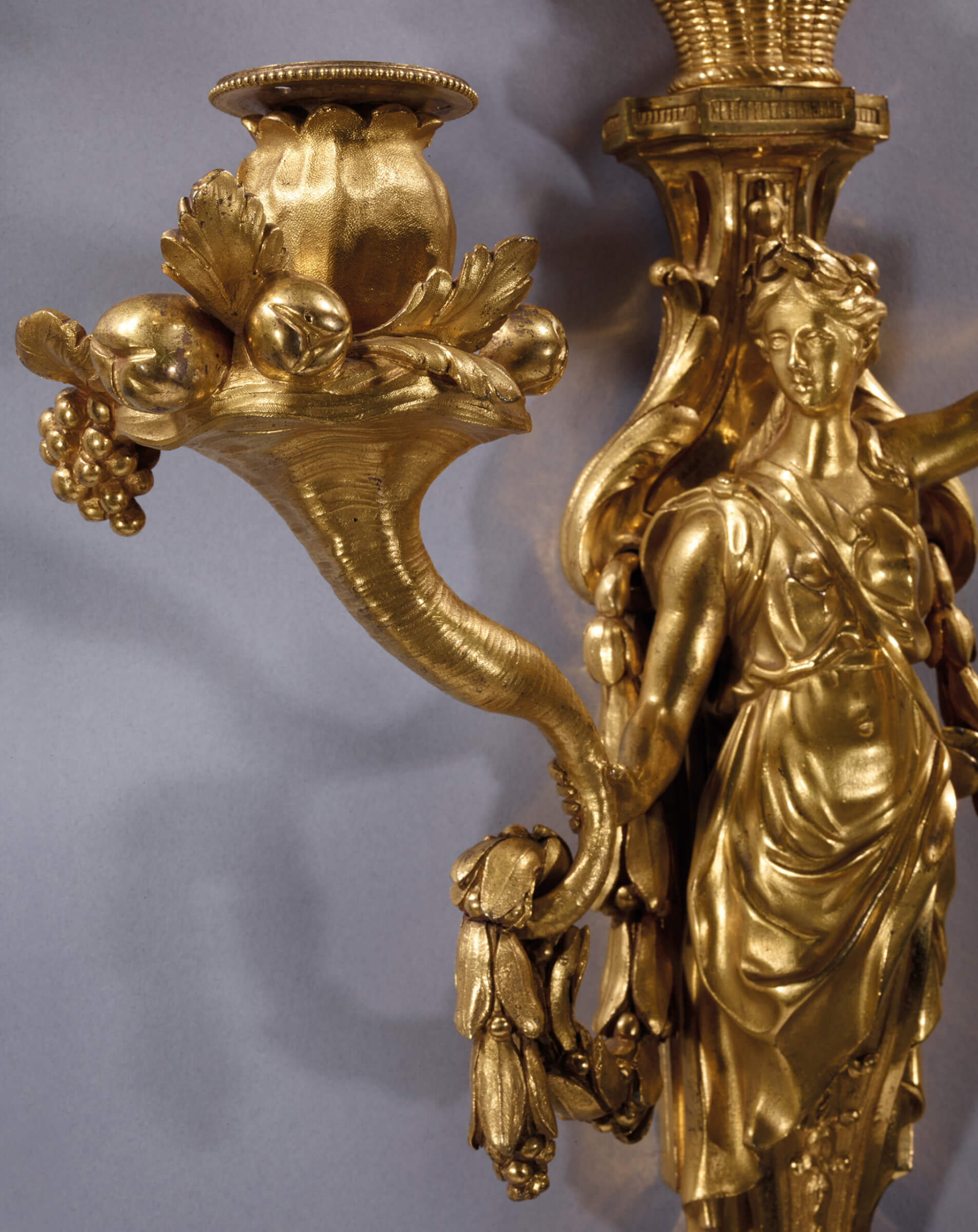
This model of wall sconce was purchased by Madame du Barry (1743-1793) to adorn her apartment at the Château de Fontainebleau
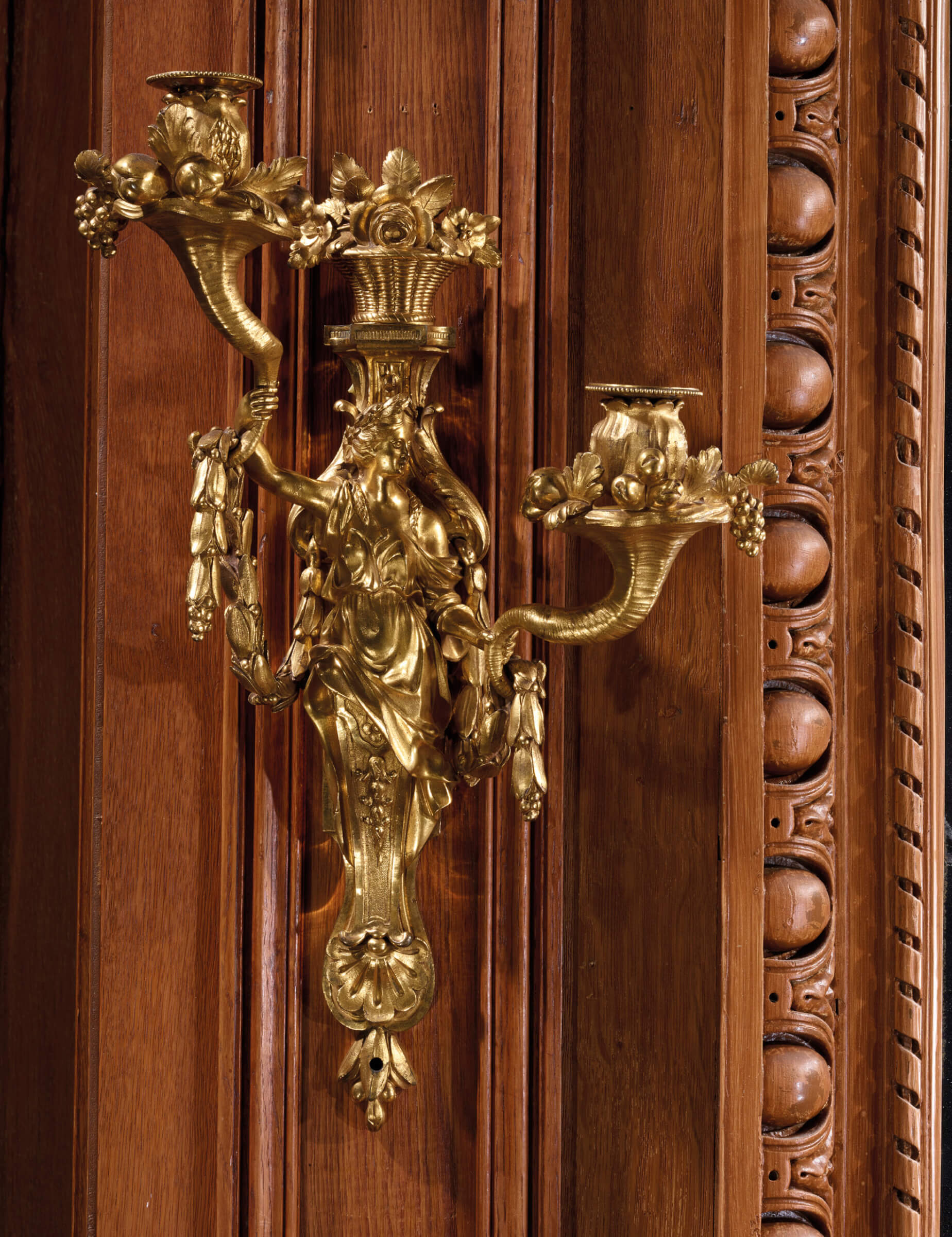
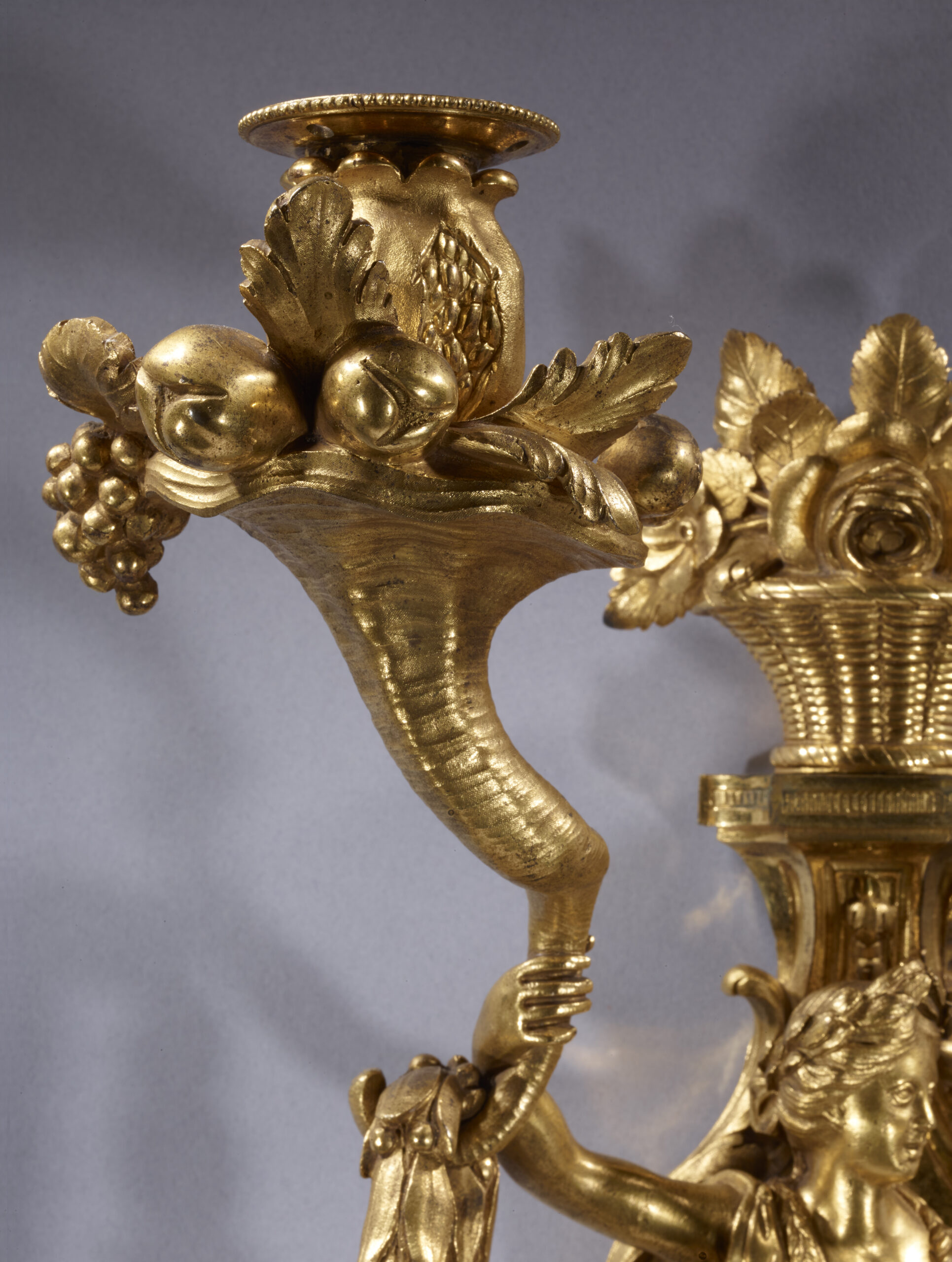
This lavish model of two-light sconce was marketed at the end of the 1760s by the famous marchand mercier Simon-Philippe Poirier (c. 1720-1785), established ‘A la Couronne d’Or’ (at the Golden Crown), at 85 rue Saint-Honoré, Paris, opposite the Hôtel d’Aligre. Each piece displays a female allegory with a laurel-crowned headdress, draped in antique style and term-shaped, forming a mirror image of each other, and holding in each hand an opulent cornucopia at two different heights. These are chiselled with a bark motif and each punctuated by a pomegranate-shaped bobeche with a pearled cup and a base girdled with fruit and foliage. Two volutes enhanced with acanthus leaves form a kind of bulb behind the backs of the allegories, from which fall two opulent garlands of seeded laurel forming accolades by resting on the bases of the horns of plenty. Rising above the female figure, the upper, flared part of the shaft forms a terrace with concave cut sides and bordered by compartments displaying hatched motifs, bearing a wicker basket filled with flowers and foliage, all very finely chiselled. The lower part of the shaft, which is partially covered by the drapery of each allegory, is characterised by a violin-shaped section with a compartment adorned with falling fleurons contrasting against a matted background, and a wide fluted palmette ending in a corolla of beaded laurel leaves.
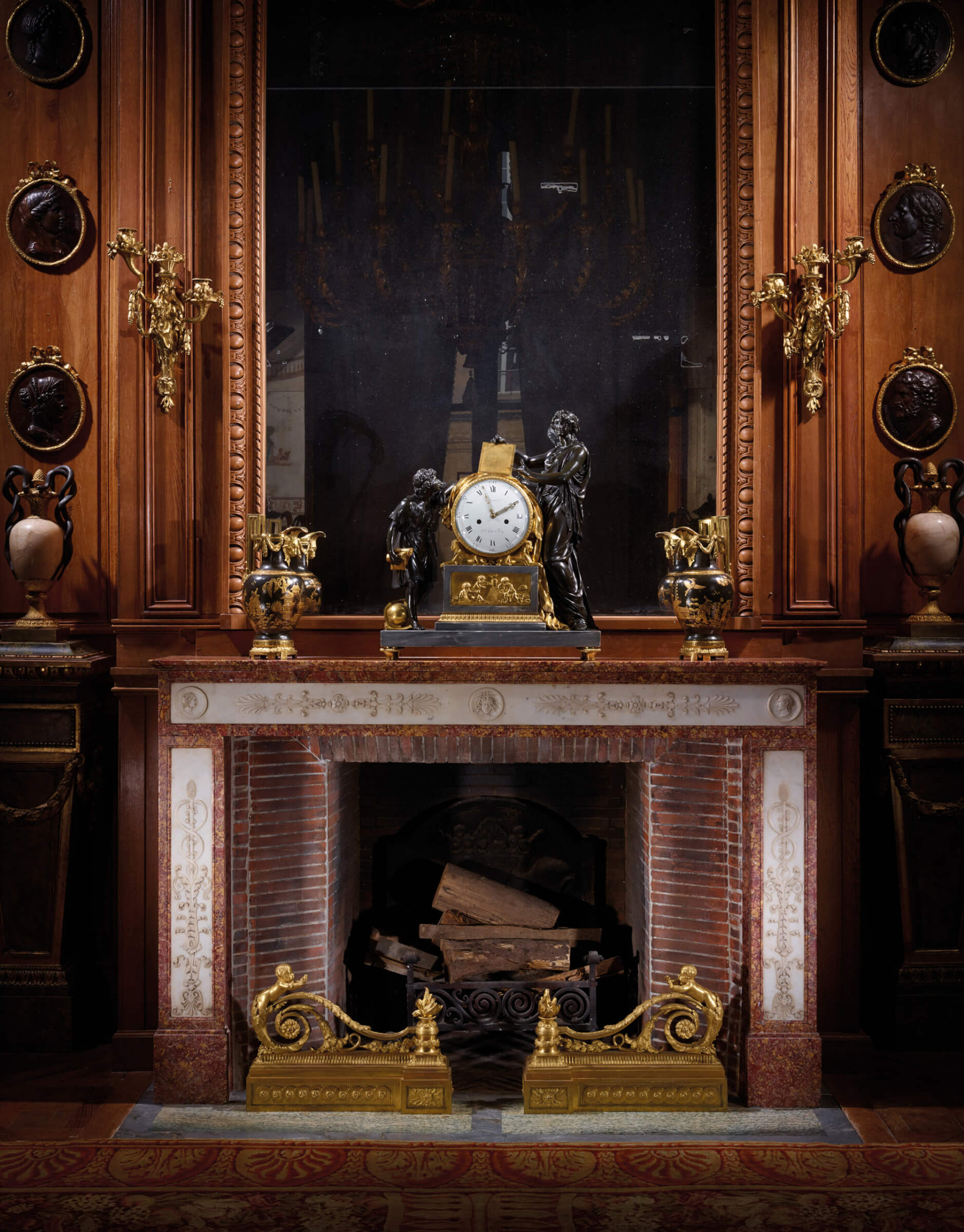
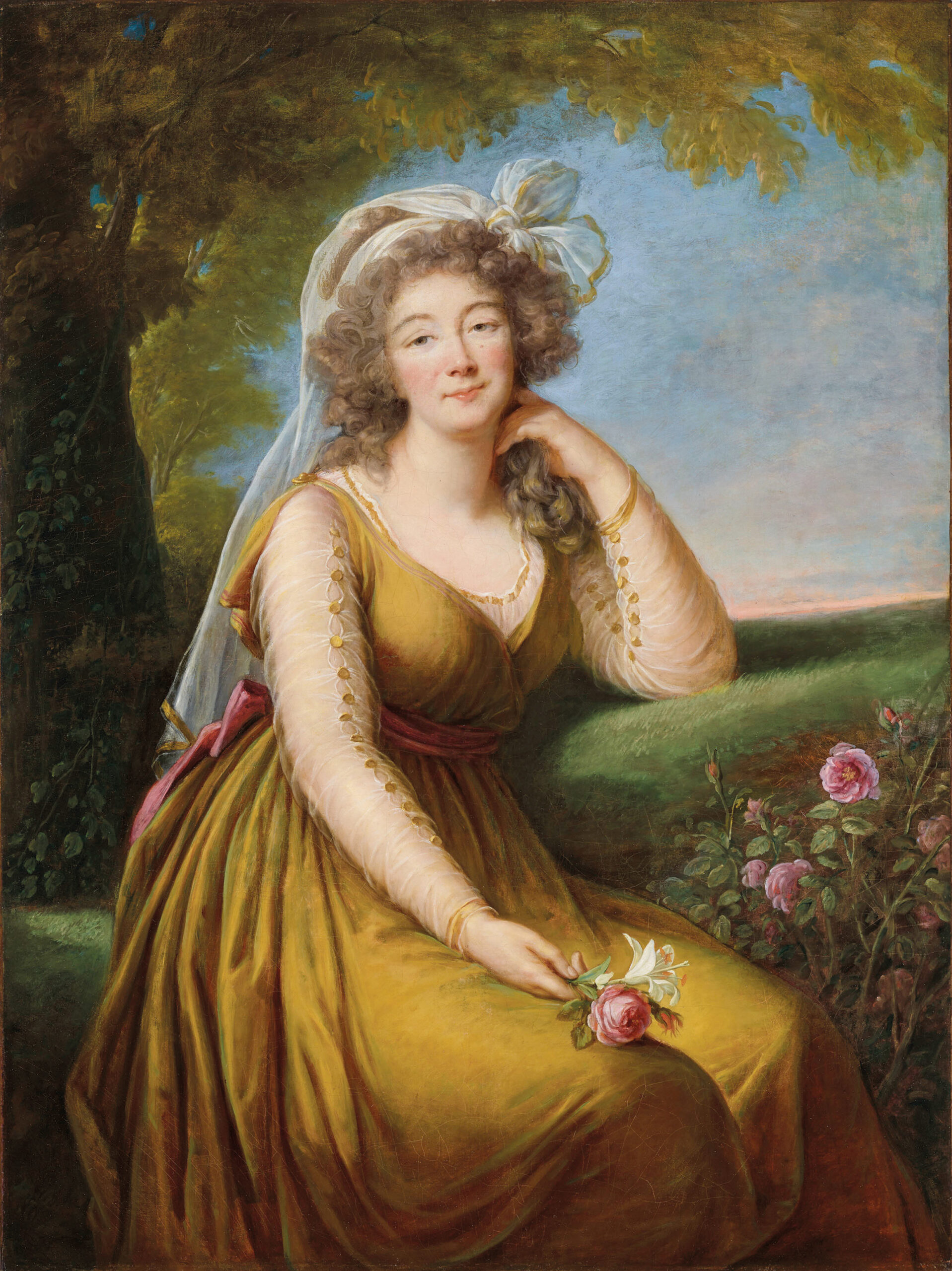
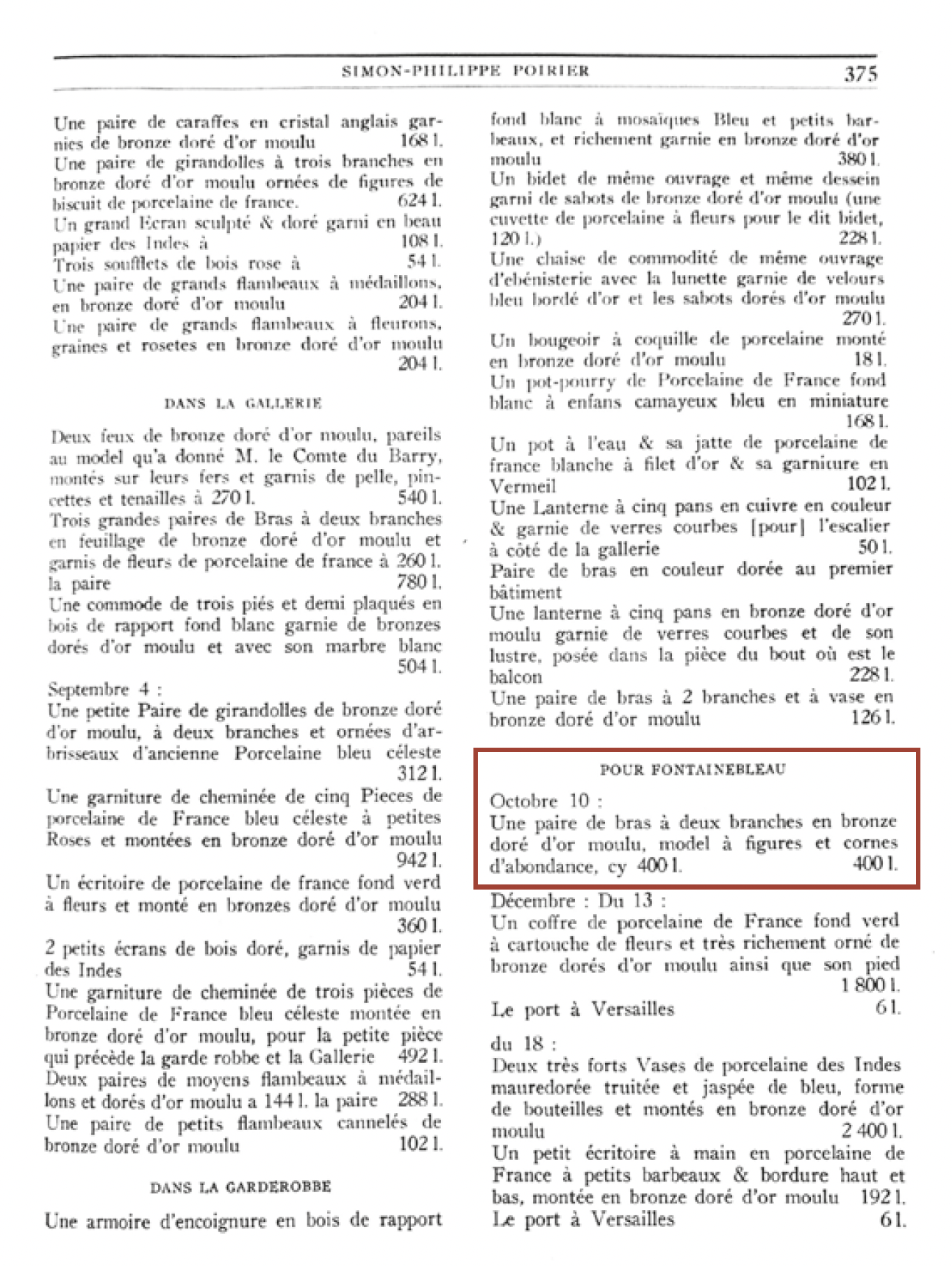
On 10th December 1770, Madame Du Barry acquired a pair of sconces of this model from Poirier out of her own funds; she handed over to Poirier the substantial sum of 400 livres for “a pair of two-branched sconces in ormolu gilded bronze, a model with figures and horns of plenty, i.e. 400 l[ivres]”, which was listed as being “for Fontainebleau” by Poirier in a recapitulative report of the amounts owed to him by the Countess for the period 1768-1774. Madame Du Barry had purchased over 100,000 livres worth of furniture, porcelain and other objects over those seven years, making this celebrated marchand mercier by far her main supplier in that regard.
At Fontainebleau, as the new favourite, she had the use of Madame de Pompadour’s former apartment, located next to the King’s petits appartements on the ground floor, beneath the Galerie François 1er and the terrace of the courtyard of the Fountain, on the chapel side. Although she had already made an incognito trip to Fontainebleau in 1768, she had to bide her time until she was officially presented to the Court, on 22nd April of the following year in Versailles, before she could fully enjoy her apartment in Fontainebleau during the traditional autumn visit that followed.
The apartment was entered via the courtyard of the Fountain. It consisted of a first, small antechamber, followed by a second antechamber, which Madame Du Barry converted into her dining room and which was accessed via a small six-step staircase, and a study opening to the north onto the garden of Diana, now the Emperor’s first salon.
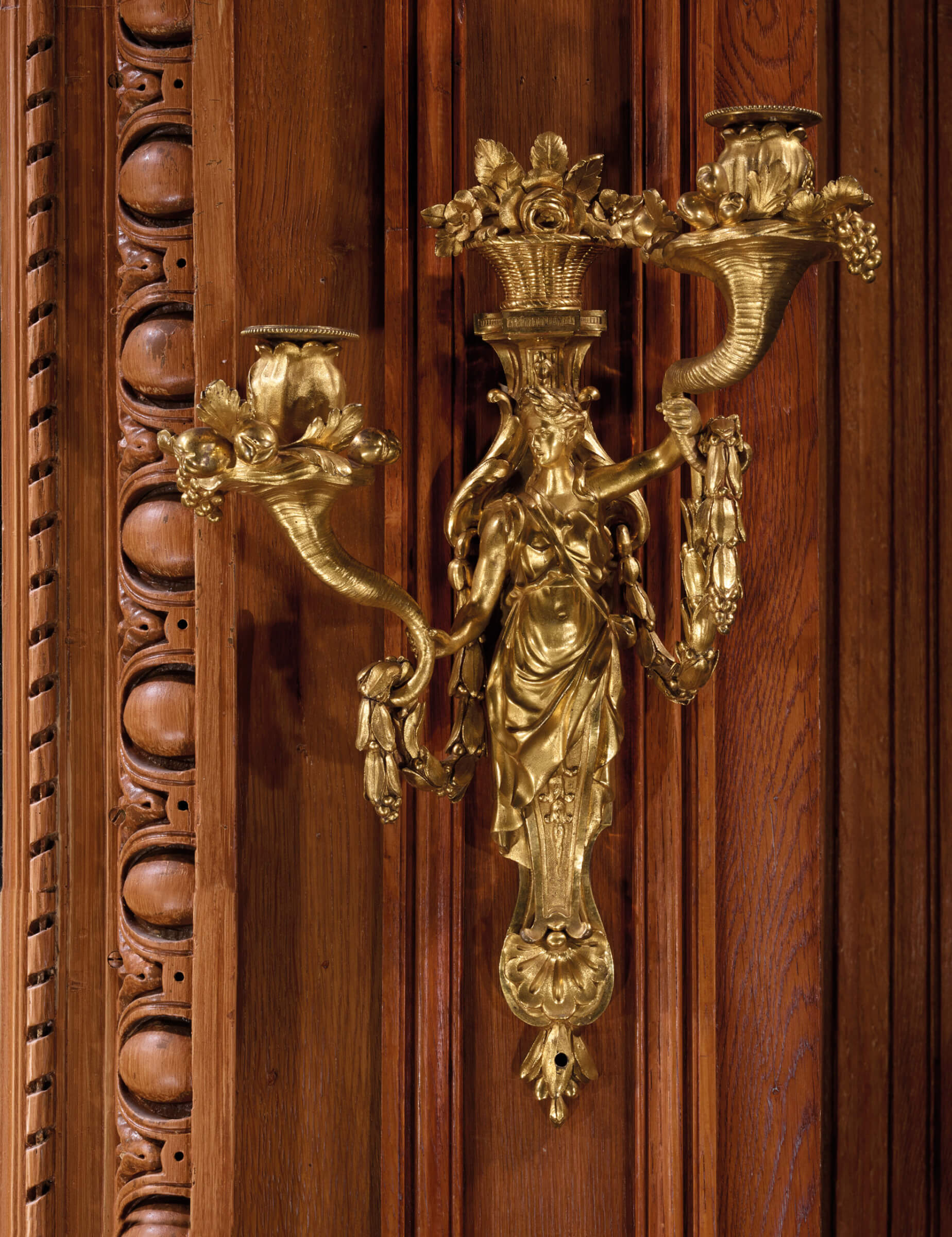
A passage then gave access to the bedroom, as well as to a cabinet de chaise (close stool room) and a wardrobe, opening onto the courtyard of the Fountain. From the bedroom one could then access an interior study, which was also accessible via the new antechamber to the King’s petits appartements en suite. The pair of sconces of our model, which was acquired from Poirier on 10th October 1770, was almost certainly placed in the Countess’s study. On 29th October of the same year, the painted wooden furniture in the room, which consisted of a sofa and four chairs that had been supplied by Antoine-François Le Queustre for Madame Sophie at Versailles, was complemented by two new armchairs delivered by Claude-François Capin, tapissier ordinaire to the King and the Garde-Meuble of the Crown. The whole was covered with a brocaded and striped gros de Tours (a kind of silk fabric), rose and white coloured with bouquets. For the same room, Madame Du Barry also acquired a feu à vases (decorative fireplace accessory) purchased in September from Michel-Alexis Delaroue, a marchand mercier specialising in mirrors and light fixtures.
Two other prominent figures also owned the model of our sconces: Louis III Phélypeaux (1705-1777), Count of Saint-Florentin, Marquis (1725) then Duke of La Vrillière (1770), Minister of State under Louis XV, and Joseph Duruey (1741-1794), Administrator of the Royal Treasury under Louis XVI.
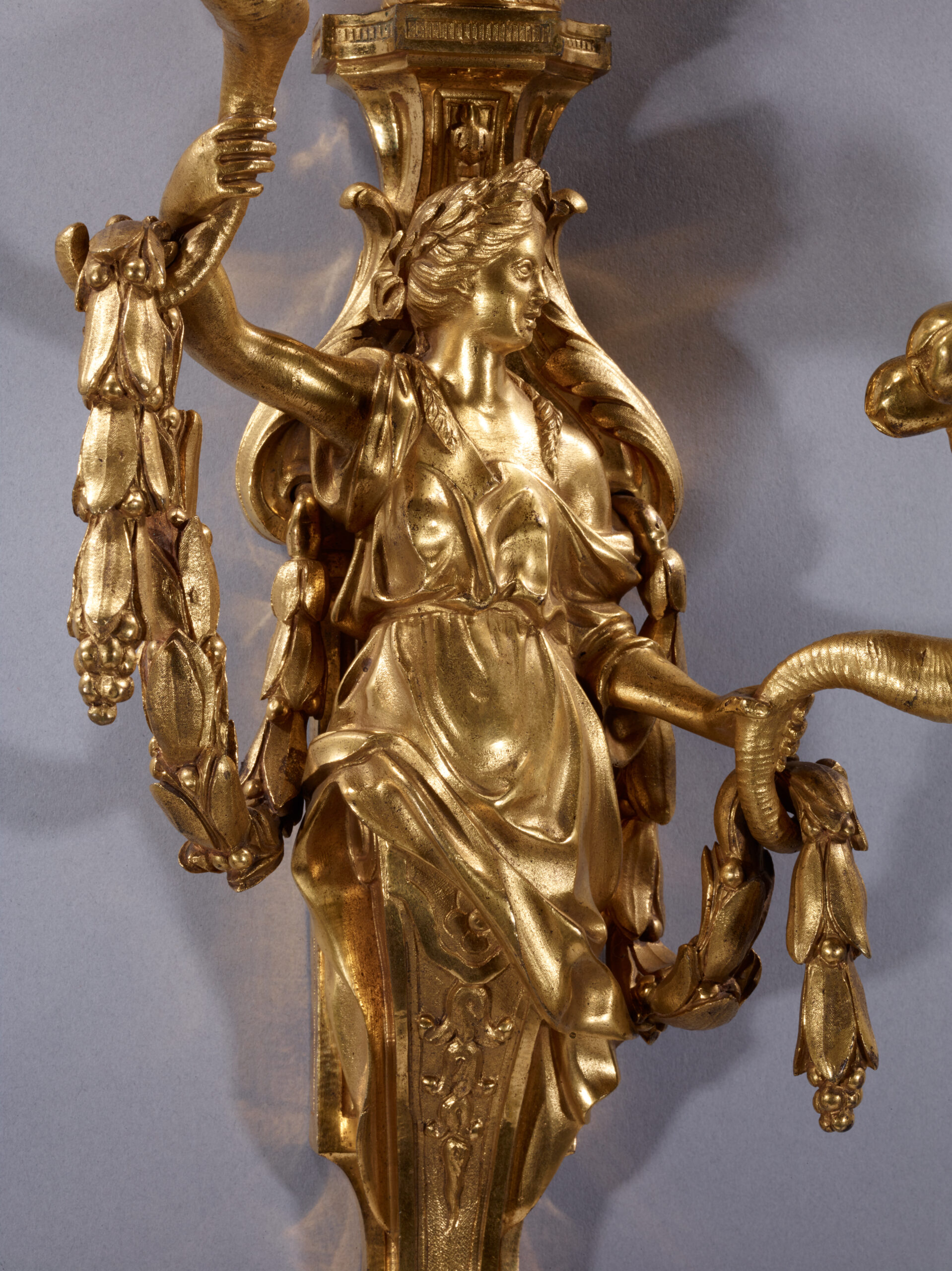
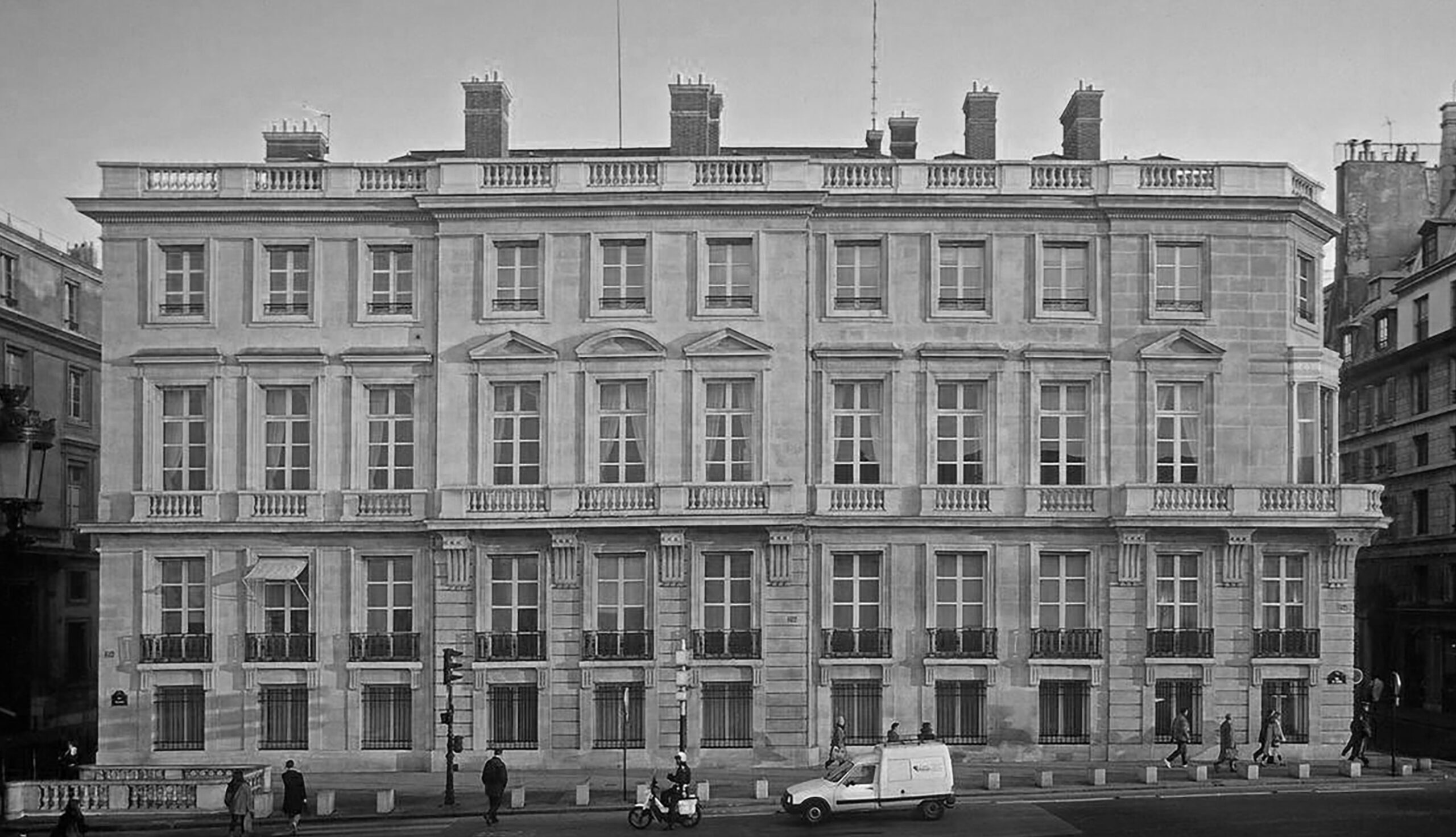
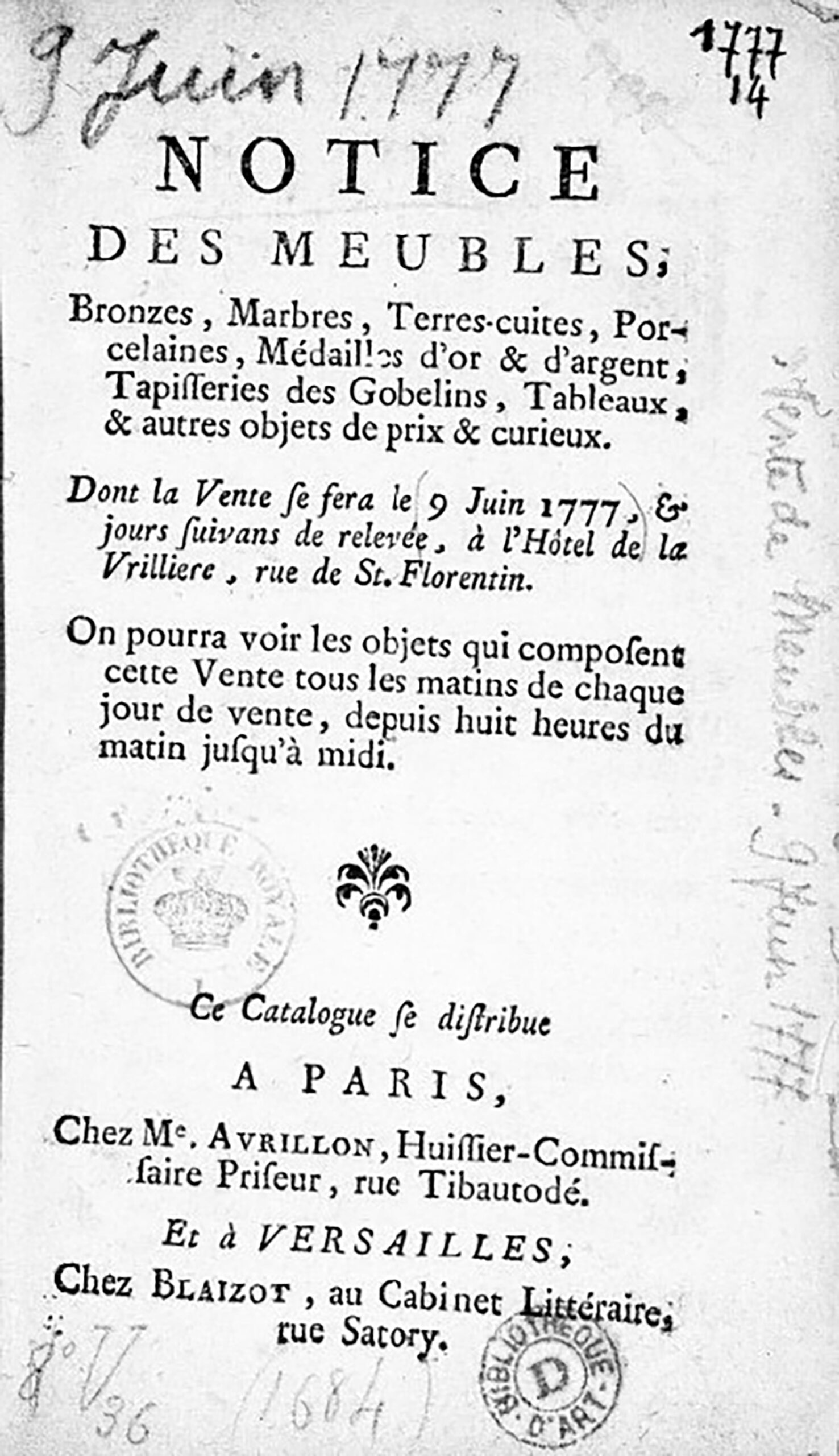
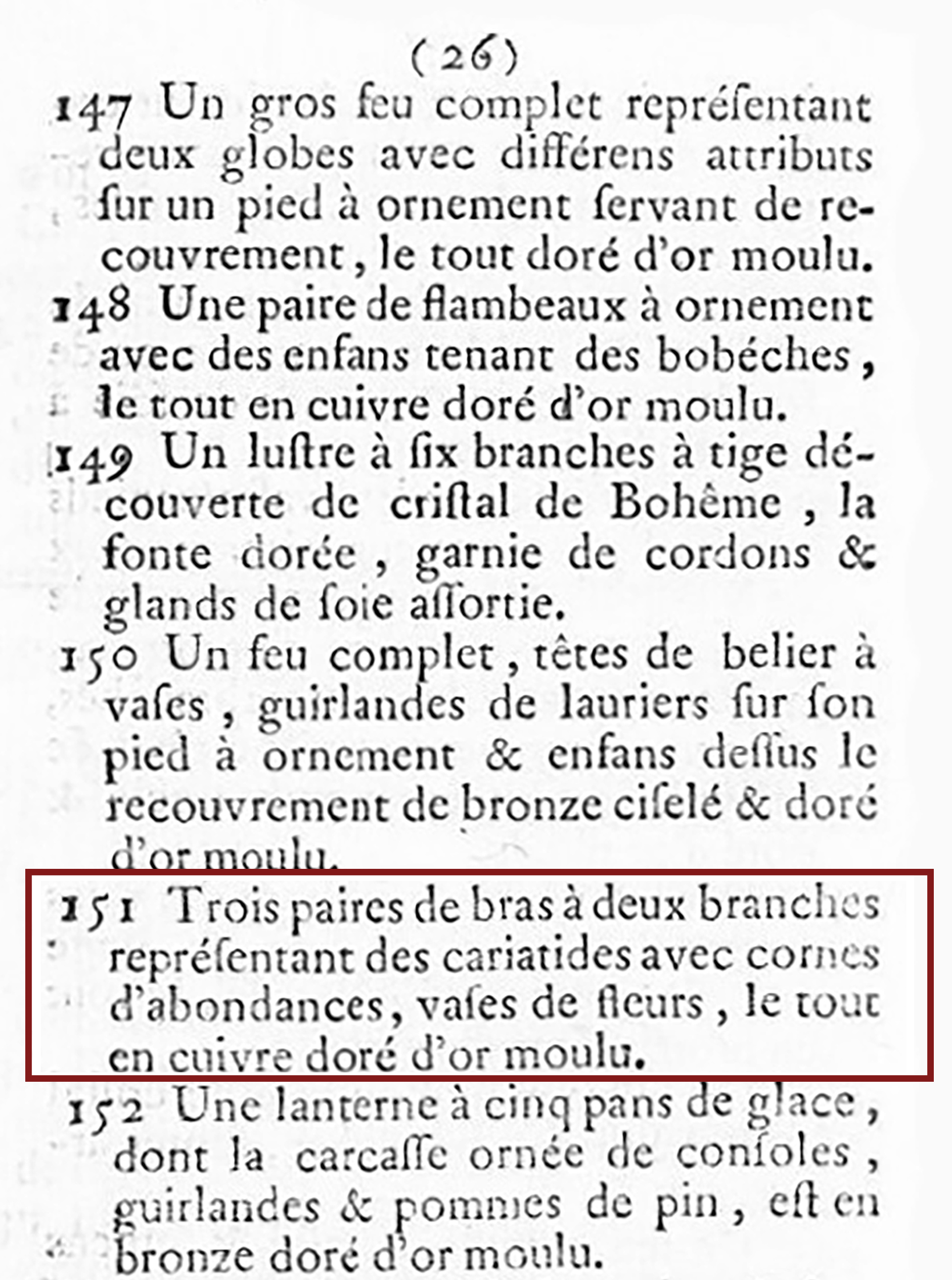
Three other pairs of these sconces adorned the hôtel (town house) of the Duke of La Vrillière, later known as the Hôtel de l’Infantado, then as the Hôtel Talleyrand-Périgord, which was to become the town house of Baron Alphonse de Rothschild (1827-1905) before it was acquired by the United States government, located at n°. 2 rue Saint-Florentin, Paris. These sconces were included in the post-mortem auction that took place in situ on 9th June 1777 & following days, under the supervision of François-Henri Avrillon (1739-?) and Pierre Blaizot (1740 (?)-1808), forming lot n°. 151 of the auction: “Three pairs of two-branched sconces representing caryatids with horns of plenty, vases of flowers, all in copper gilded with ormolu.”
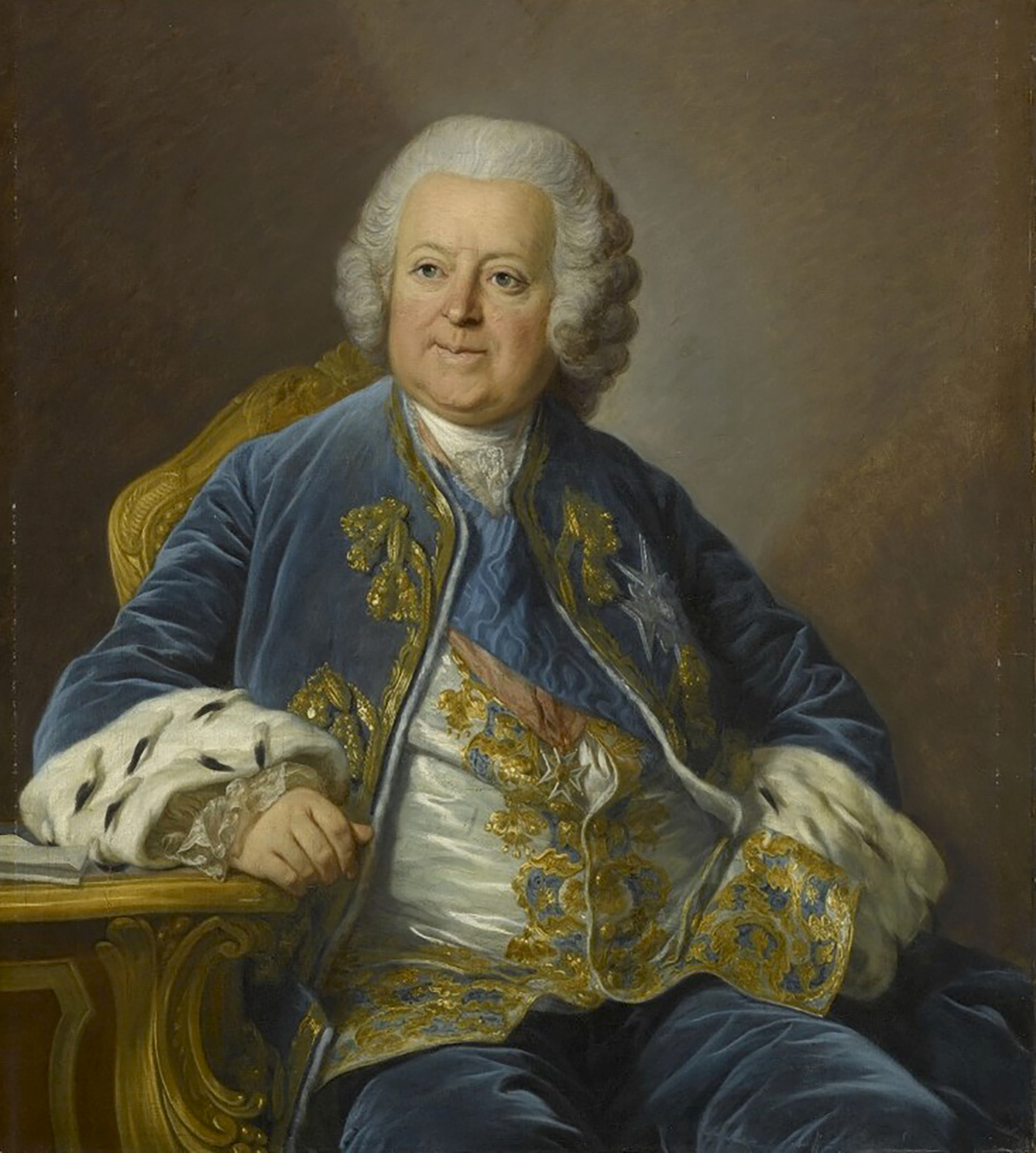
Born in Paris on 18th August 1705, Louis III Phélypeaux, was the son of Louis Phélypeaux (1672-1725), Marquis of La Vrillière, and Françoise of Mailly-Nesle (1688-1742). In 1724, he married Amalie Ernestine von Platen-Hallermund (1701-1767), daughter of Ernst-August, Count of Platen and of the Holy Roman Empire. In the following year, he became Secretary of State for the Allegedly Reformed Religion, succeeding his father, then Chancellor to the Queen in 1743 and Secretary of State to the Maison du Roi from 1749 to 1775. He was Minister of State in 1761 and briefly held the position of Secretary of State for Foreign Affairs from 24th December 1770 to 6th June 1771 in the wake of the dismissal of Choiseul in 1770. He was also Chancellor and garde des Sceaux of the Order of the Holy Spirit from 1756 to 1770. The Count of Saint-Florentin, whose left hand had been amputated as the result of a hunting accident in September 1765, held the record for ministerial longevity under Louis XV—half a century. He was replaced in 1775 at the head of the Secretariat of State to the Maison du Roi by Chrétien-Guillaume de Lamoignon de Malesherbes (1721-1794). He died without male offspring in Paris on 27th February 1777, but nonetheless left a daughter, Aglaé de Lespinasse de Langeac († in 1788), who was born of an affair with Marie Madeleine Josèphe Aglaé de Cusacque (1725-1778), Countess of Langeac, wife of Étienne Joseph de Lespinasse, a Grenadier Colonel. Between 1767 and 1769, the Count of Saint-Florentin commissioned Jean-François-Thérèse Chalgrin (1739-1811), the emblematic architect of the reign of Louis XVI, to build the magnificent hôtel located at 2, rue Saint-Florentin, Paris, which until 1777 was adorned with the three pairs of sconces mentioned above.
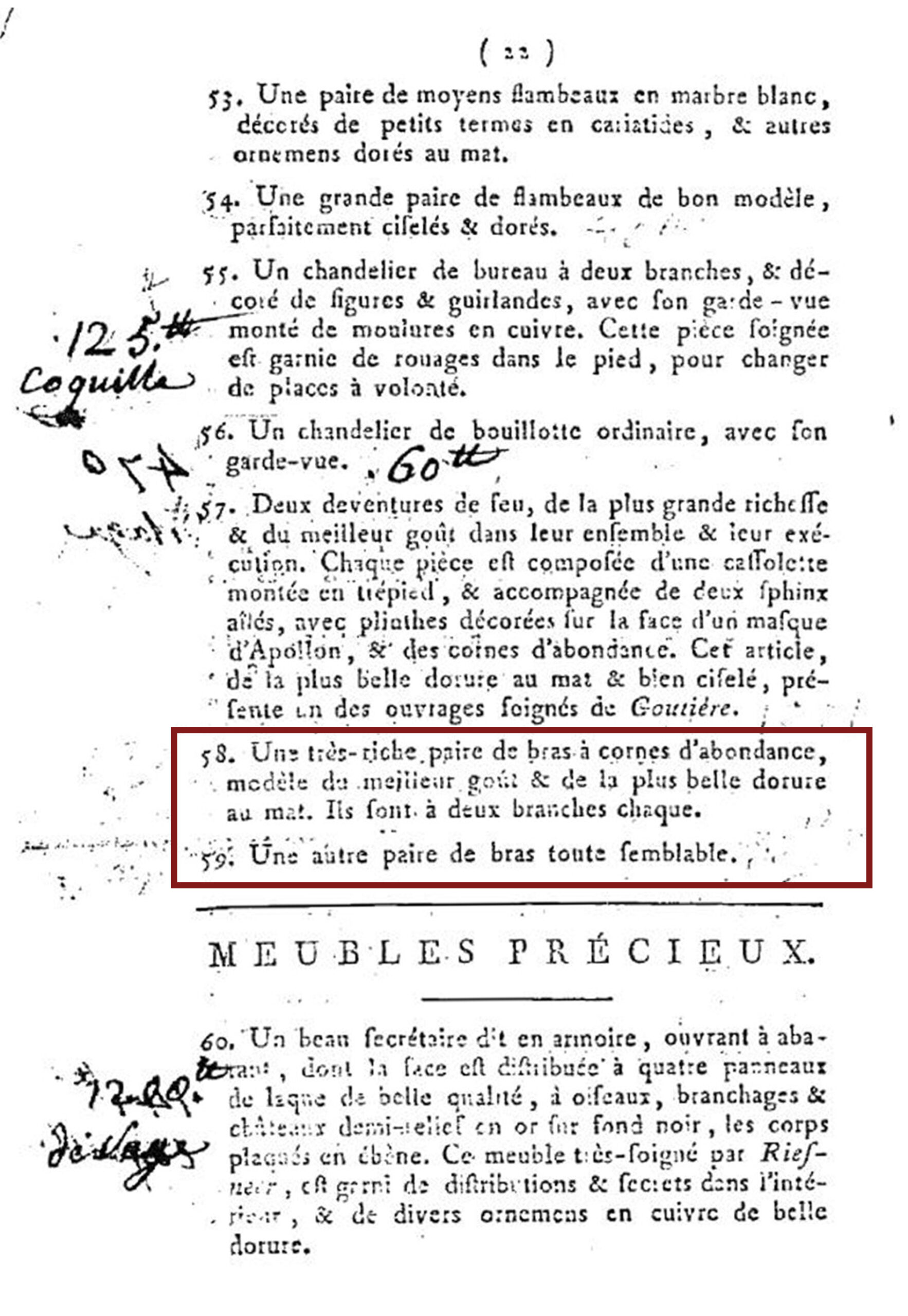
Two other pairs, perhaps corresponding to those described above, belonged to Joseph Duruey, and were mentioned in his post-mortem auction, which took place under the Directoire, at the request of his widow, née Jeanne Morin, on 3rd Messidor of Year V (21st June 1797), just over three years after his execution on 28th Ventôse of Year II (18th March 1794), on the Place de la Révolution, now Place de la Concorde, in Paris. Forming lots 58 and 59 of the auction, the sconces were concisely described by the dealer and expert Alexandre-Joseph Paillet (1743-1814), but with particular emphasis on their lavishness as follows: “58. A very rich pair of horn-of-plenty sconces, a model of the best taste & with the finest matted gilding. They have two branches each. 59. Another pair of very similar sconces”.
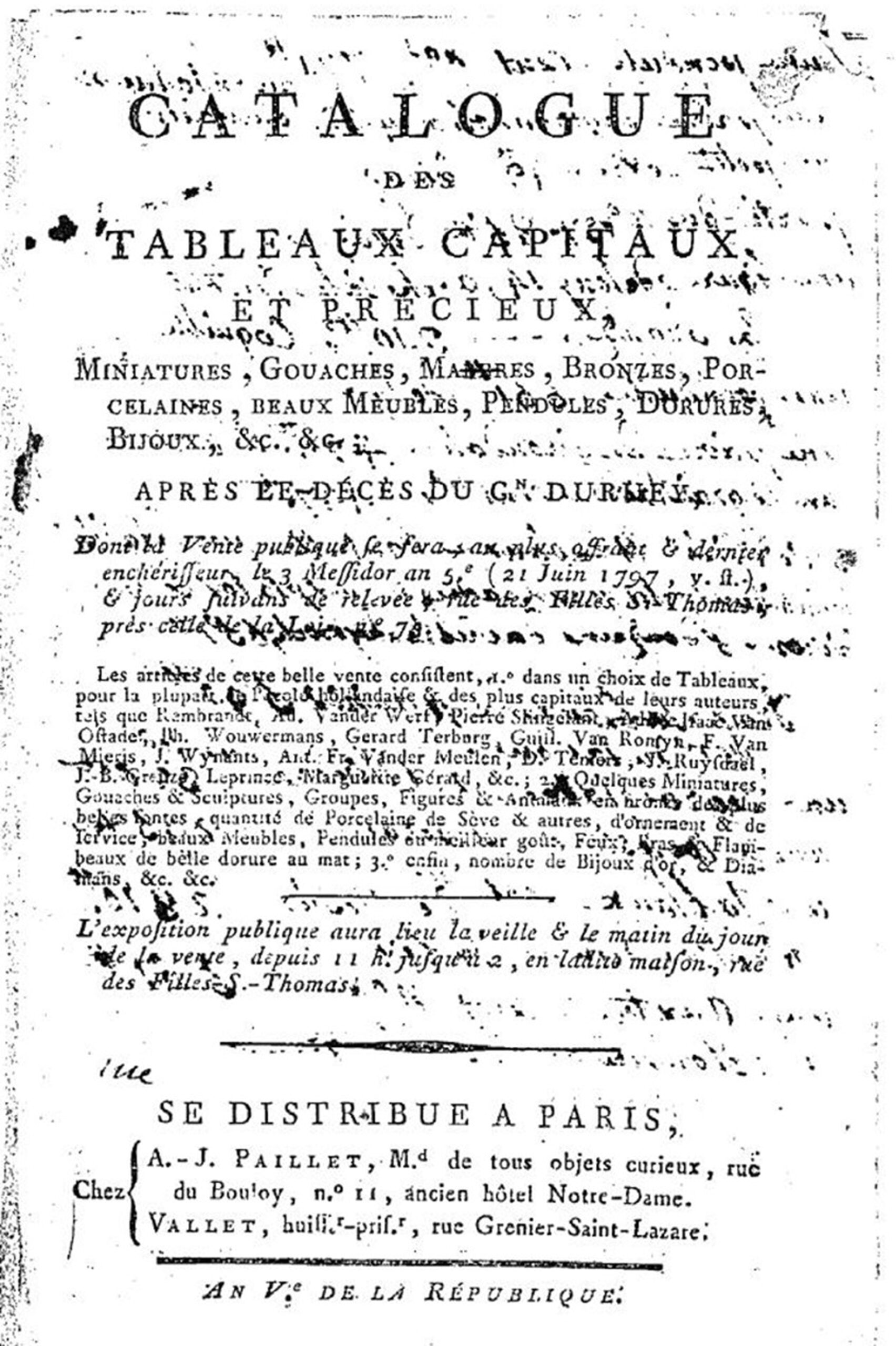
Born in Paris in 1741, Joseph Duruey was the son of Pierre Duruey (1697-1767) and Anne Nicole Loignon de Beaupré. He held the position of maître des requêtes in Poitiers in 1782, during which time he was able to acquire the office of secretary to the King, before becoming Receiver General of Finances for the Généralité de Poitiers in 1783. Appointed Treasurer of Foreign Affairs in Versailles, he became Banker to the Court in 1787. He was administrator of the Caisse d’Escompte from 1787 to 1792, and then administrator of the Royal Treasury, a position he held from 1790 to 1792, when he took over the administration of the National Treasury. During that time, he also retained his position as administrator of the Caisse Nationale d’Escompte. In February 1791, Louis XVI secretly informed Duruey of his intention to go into exile in accordance with the escape plan to Montmédy which had been devised by Joseph-Mathieu d’Agoult (1749-1824), Bishop of Pamiers. To that end, he sought a loan from his loyal treasurer, who, according to the deeds recorded in January 1793 at the King’s trial, lent him the sum of 3,200,000 livres, at an interest rate of 5%, out of his personal coffers. The abortive flight of the royal family to Varennes on 20th and 21st June 1791 did not allow the revolutionaries to discover the source of this funding and Duruey was not prosecuted as an accomplice. However, in the wake of the storming of the Tuileries Palace on 10th August 1792, the Minister of the Interior, Jean-Marie Roland de La Platière, discovered an iron cupboard hidden in the wall of the royal apartments and disclosed Duruey’s account statements to the National Assembly. Imprisoned at the Conciergerie, Duruey was sentenced to death as a conspirator and guillotined the same day. On 14th July 1767, he had married Jeanne Morin in the parish of Saint-Eustache in Paris, who gave him two daughters: Antoinette (1768-1816), who married Vincent Philippe de Laage de Bellefaye (1764-1824), the son of a fermier général, and Angélique (1770-1851), who married Antoine Pierre de Chaumont de La Galaisière (1759-1846). On 24th December 1790, Duruey and his wife bought the château bearing his name in the Oise region from Louis Le Peletier de Mortefontaine. Requisitioned by the State as national property, the estate was acquired by Joseph Bonaparte on 20th October 1798.

