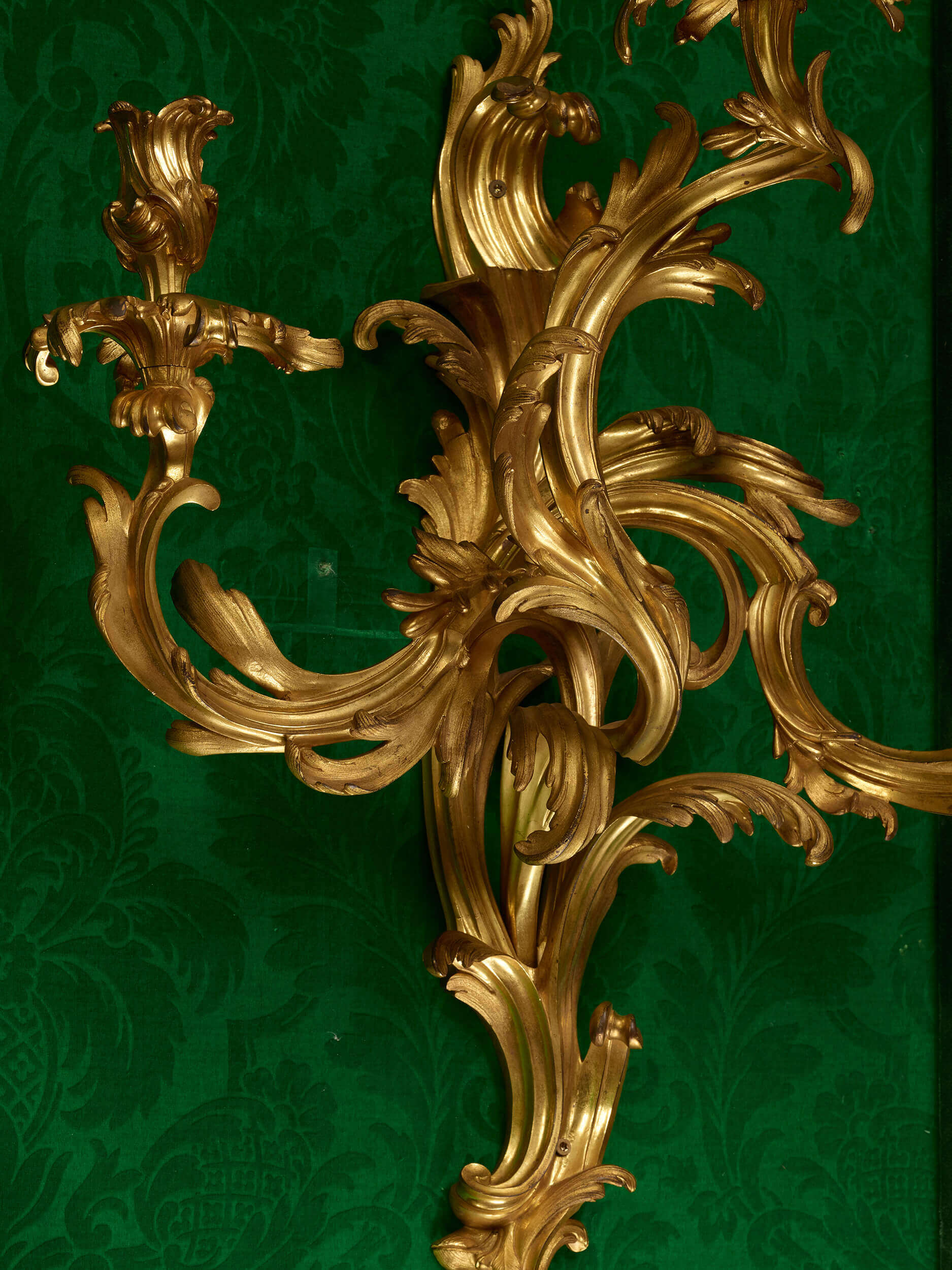
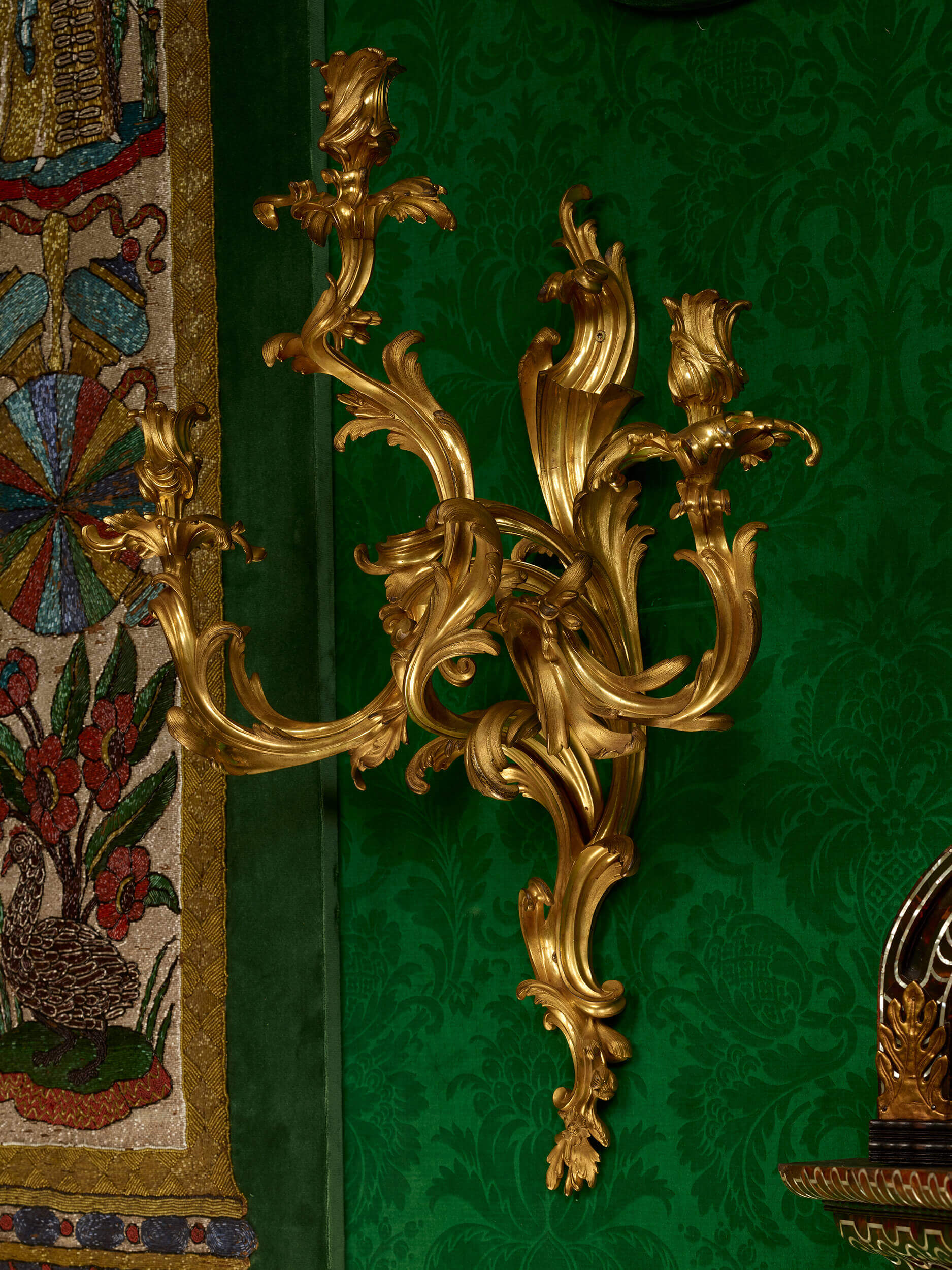
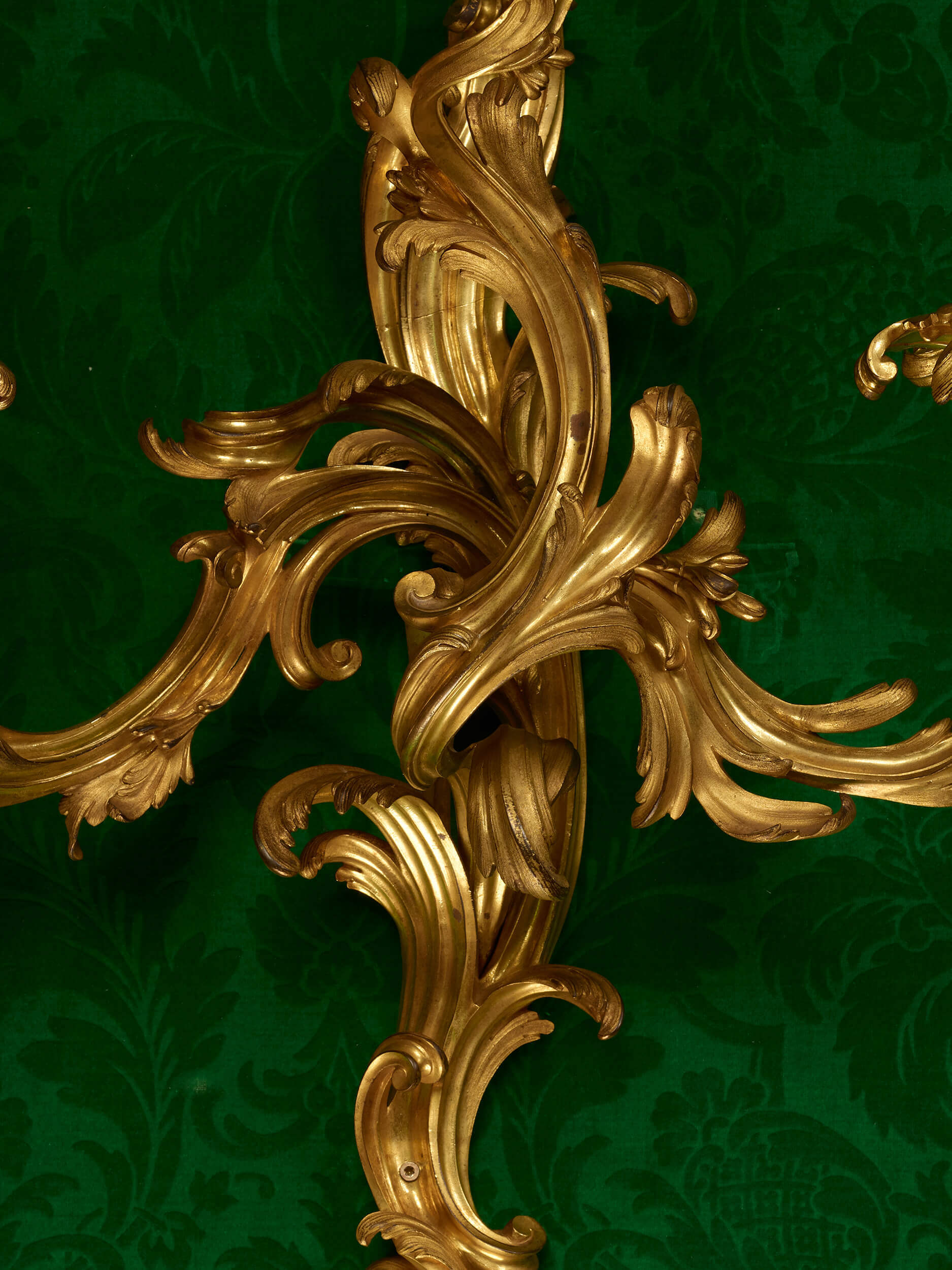
Chiseled and gilded bronze.
H. 80 cm. (31 ½ in.); W. 60 cm. (23 ¾ in.); D. 40 cm. (15 ¾ in.).
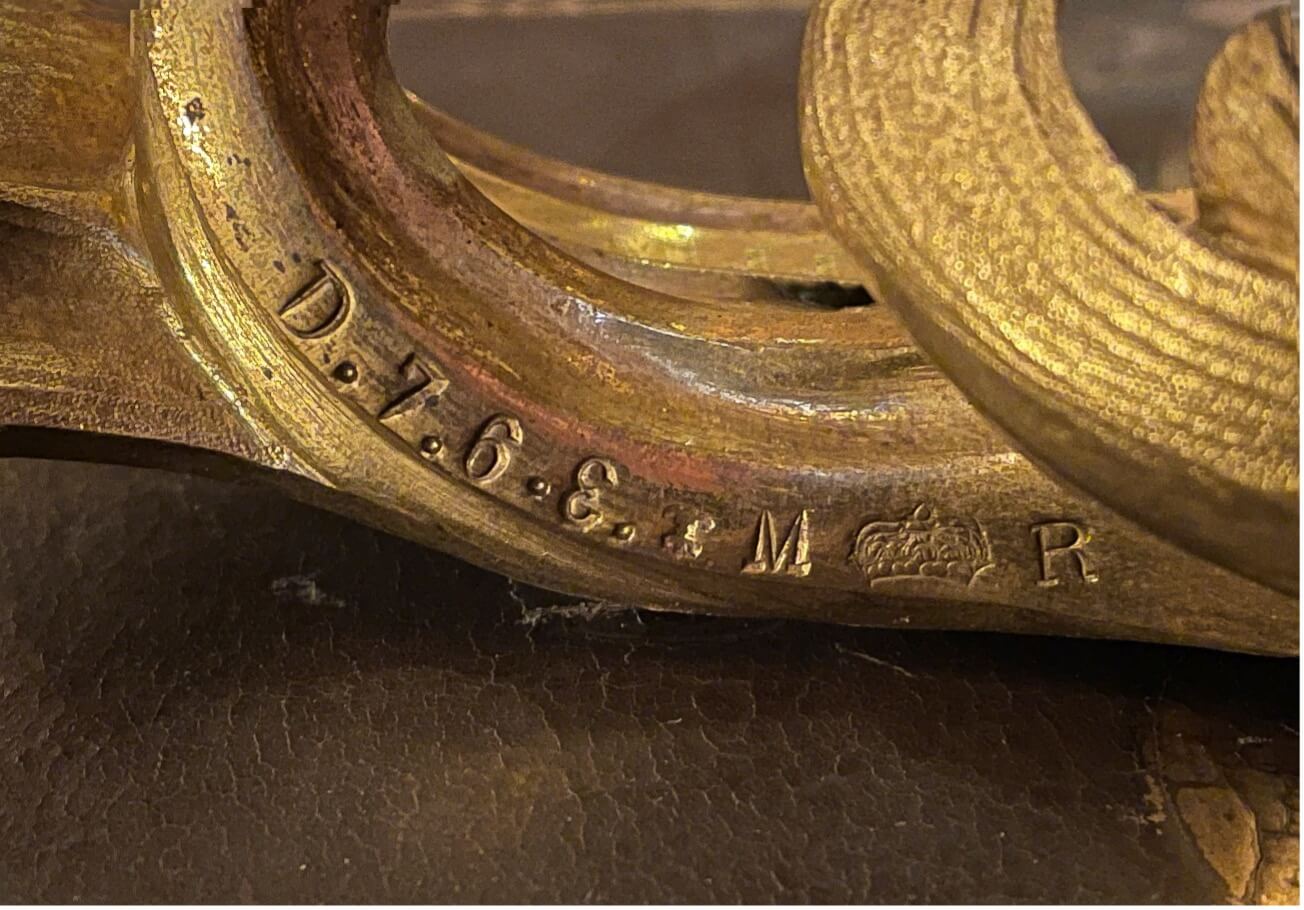
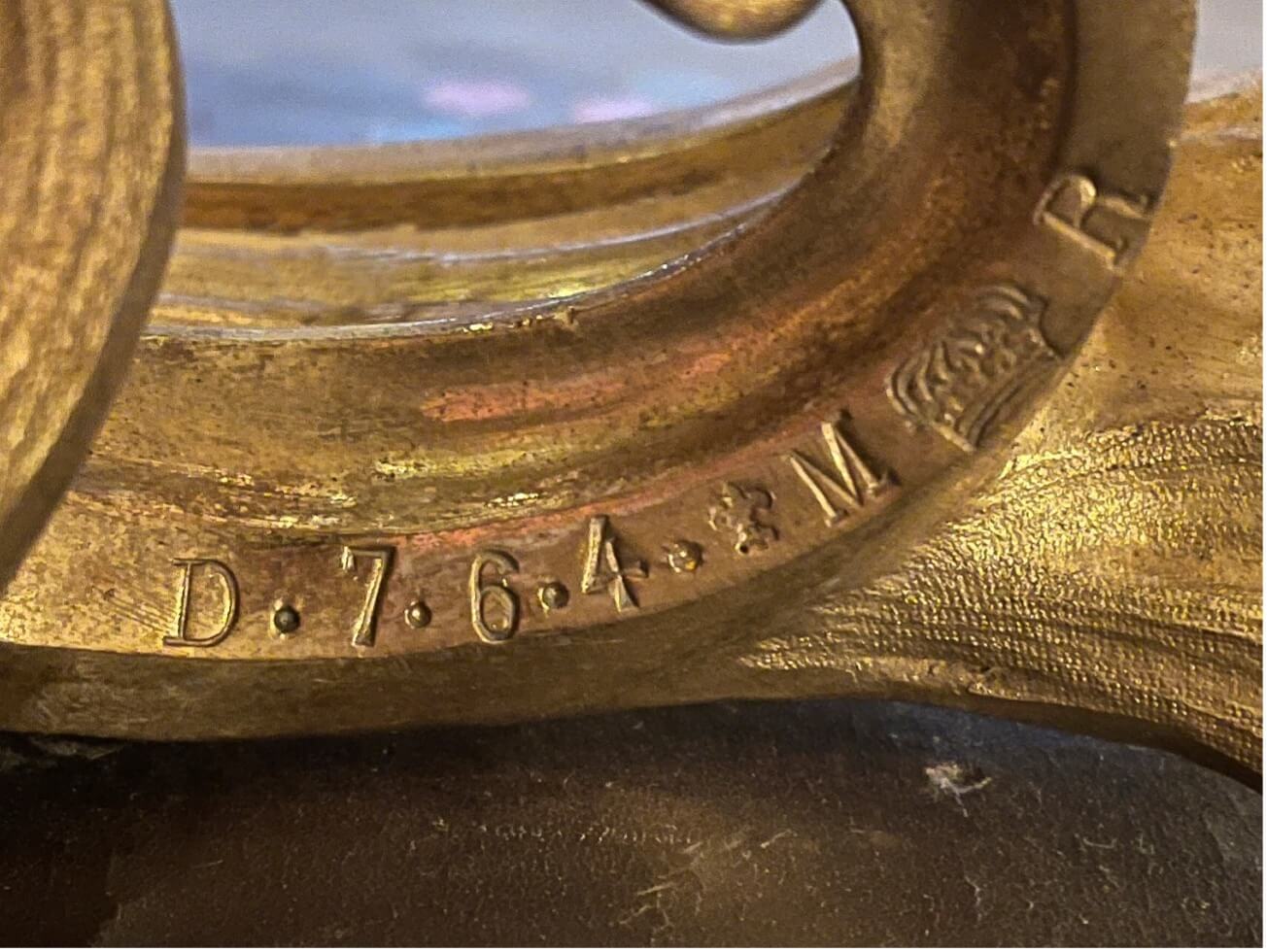
Inventory marks : D 763 et D 764 and letter M R flank a sovereign crown.
INVENTORY NUMBERS AND MARK OF A SOVEREIGN ROYAL HOUSE: D.7.6.Ꜫ. and D.7.6.4., respectively flanked by a fleur-de-lis and the letters MR [Mobilia Reale or Regia ?] framing a closed crown, the whole incised on the exterior side of the upper scroll of the shaft of each sconce.
PROVENANCE: certainly delivered circa 1750-1755 to a sovereign House related to the Bourbons (presence of the fleur-de-lis on the inventory numbers).
COMPARATIVE LITERATURE: Alvar González-Palacios, Il patrimonio artistico del Quirinale, Gli Arredi Francesi, Milan, 1996, pp. 244-246, cat. n° 54.
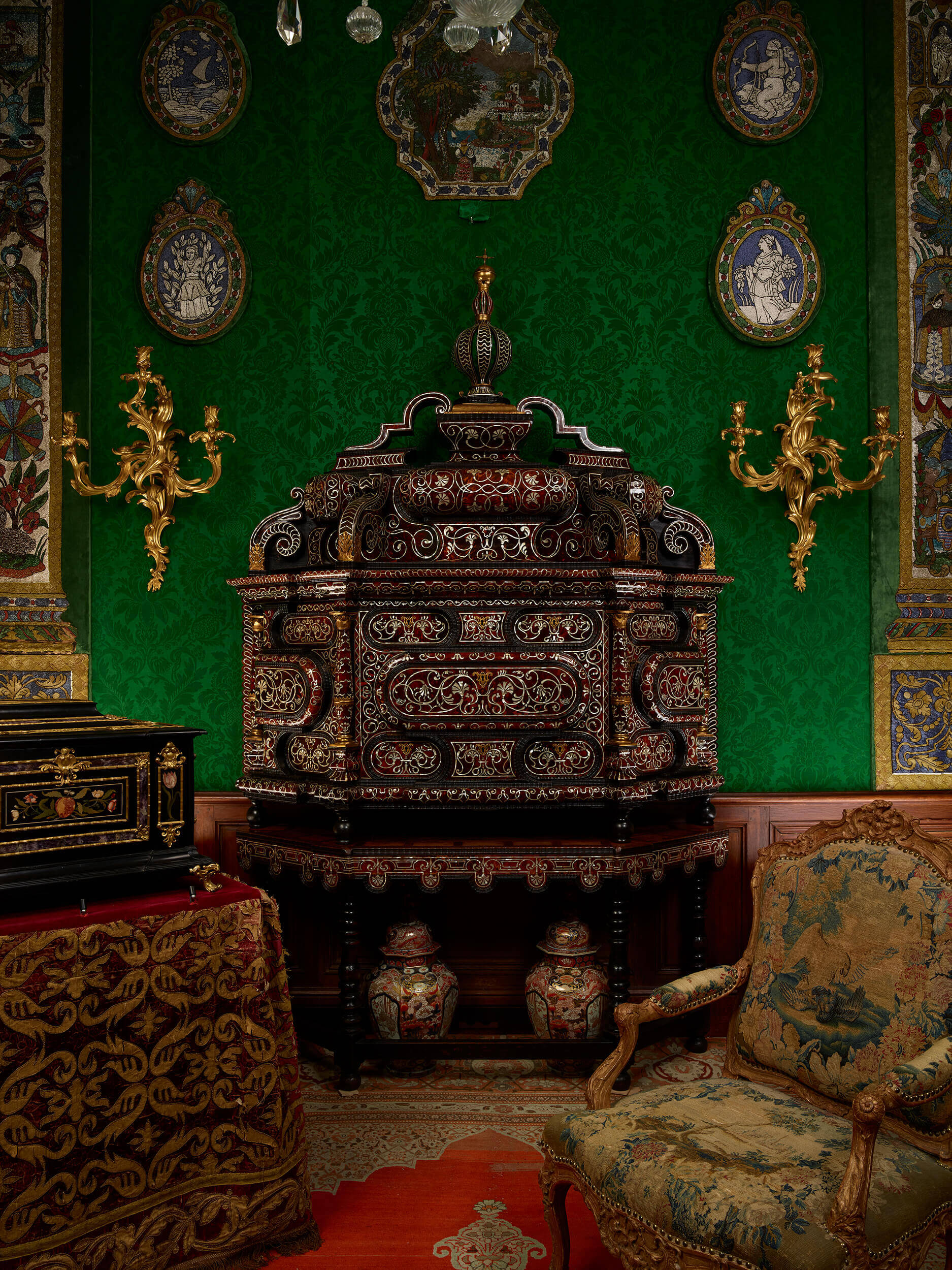
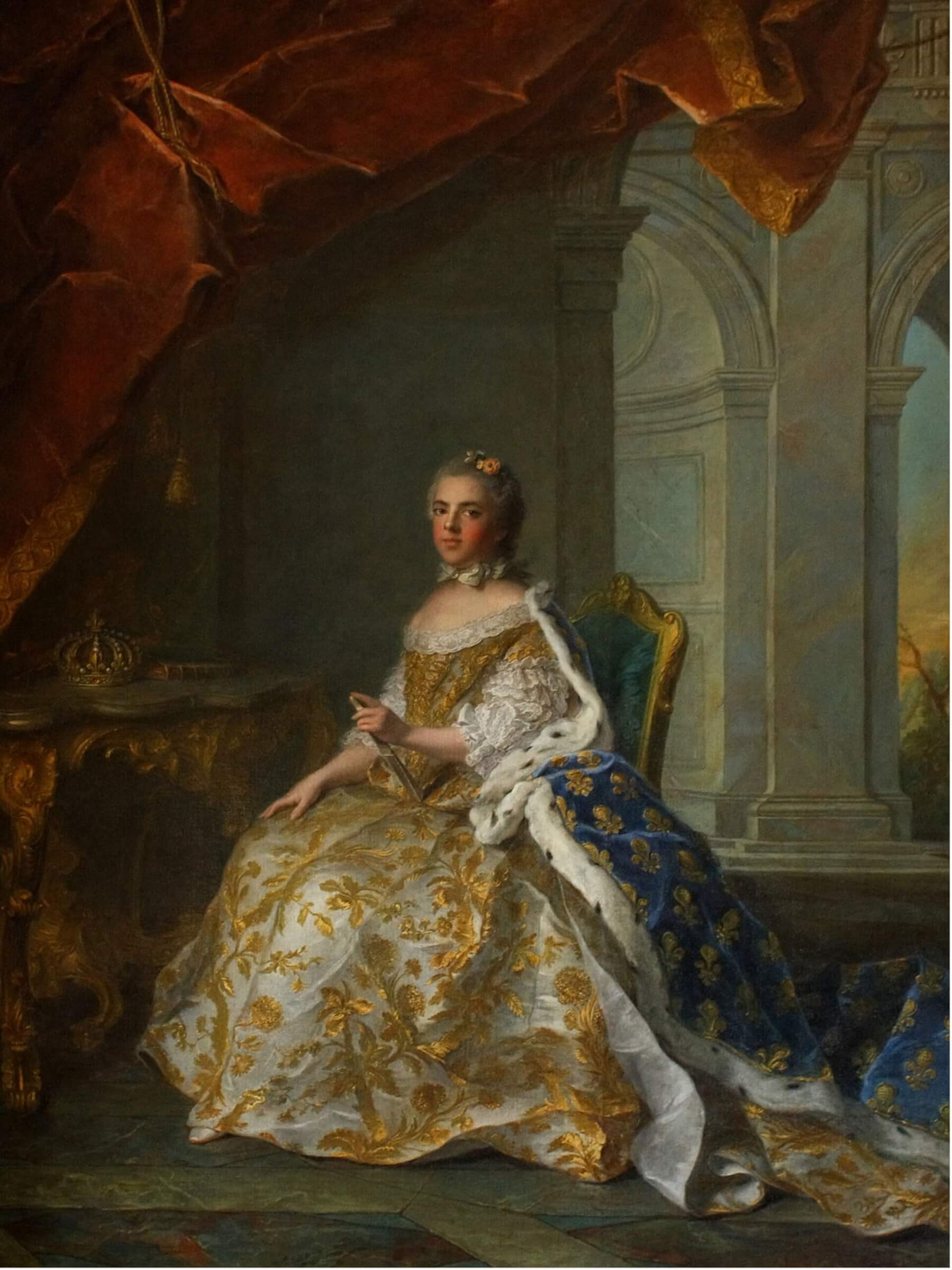
These sconces are identical to two pairs of wall sconces that are now preserved at the Quirinal Palace in Rome, certainly originating from the ducal Palace of Parma or the one of Colorno, in Emilia-Romagna. These two identical pairs were delivered around 1750, shortly after the arrival within the duchy of Louise-Elisabeth of France (1727-1759), the eldest daughter of Louis XV and Marie Leszczyńska. Indeed, she became Duchess of Parma and Piazenca after marrying by power of attorney, on August 26th, 1739, Philip I of Parma (1720-1765), Infante of Spain and second son of King Philippe V and his second wife, Elisabeth Farnese. A member of the Bourbon House of Spain, Infante Philippe received, thanks to the support of his father-in-law the King of France and his brother, King Ferdinant VI of Spain, the titles of Duke of Parma, Piacenza and Guastalla in 1748, at the time of the Treaty of Aix-la-Chapelle that put an end to the war of the Austrian Succession.
A third pair of similar arms, from the collection of Hubert de Givenchy and respectively bearing the inventory numbers incised C 926.3 and C926.4 along with the mark CR, which means Casa Reale, with the letters arranged similarly to ours on both sides of the closed crown, is now preserved in the collections of the Palace of Versailles.
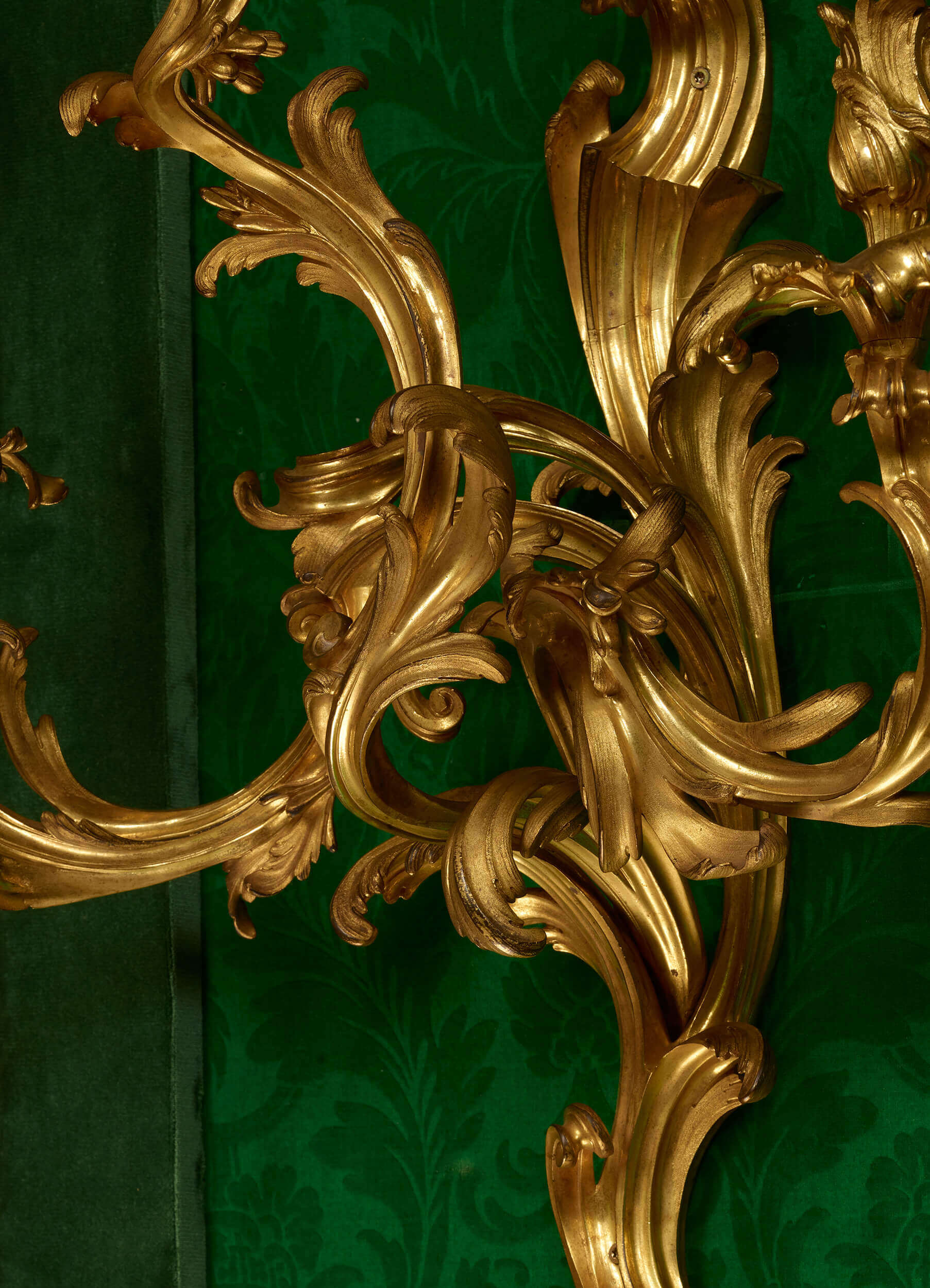
All these sconces are identical, as much in the forms as in the chiselling work and their exceptional gilding. Nevertheless, the sconces from the Quirinal are larger, measuring 90 x 67 cm, while the ones from Versailles have exactly the same dimensions as ours: 80 x 61 cm.
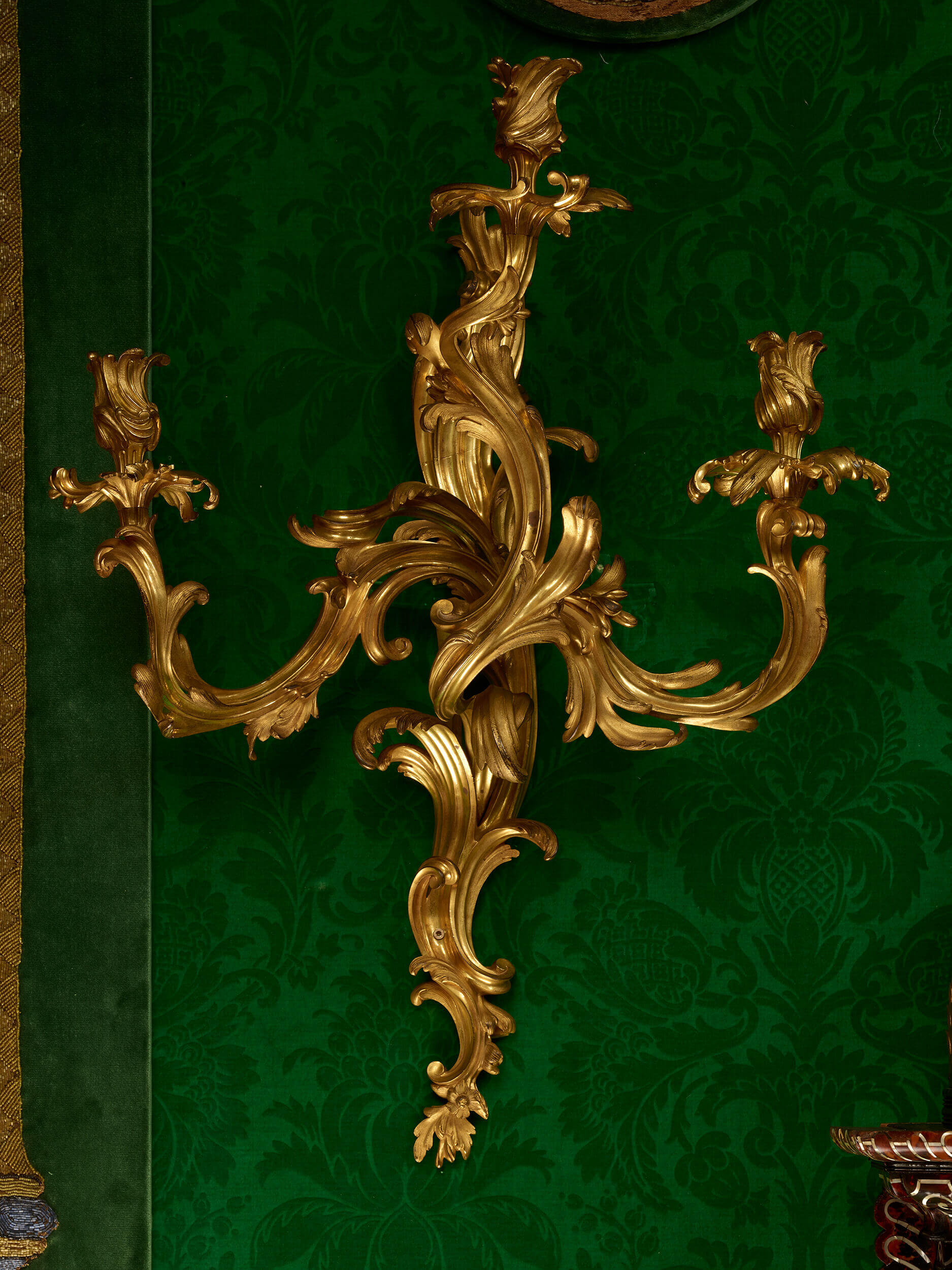
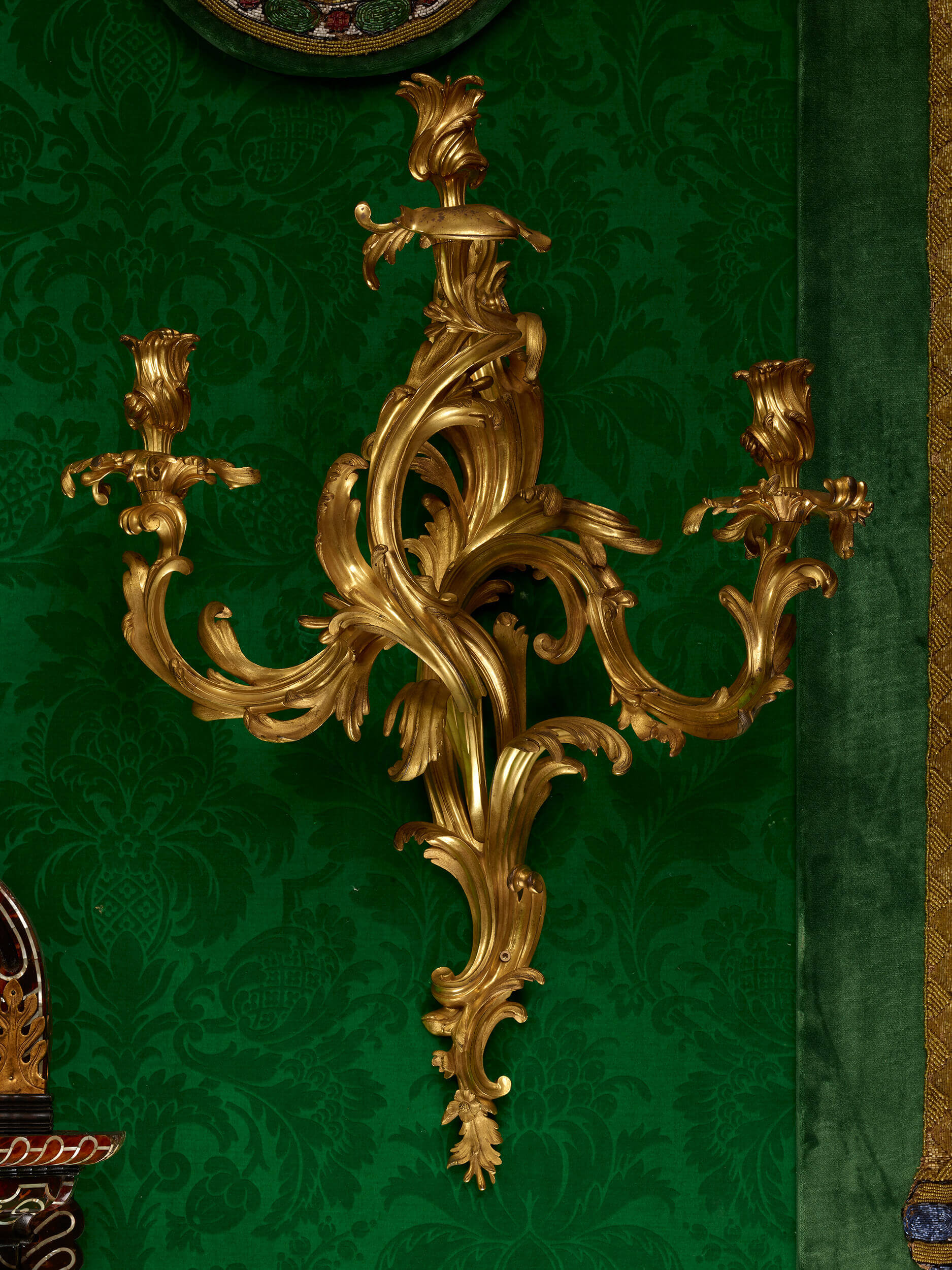
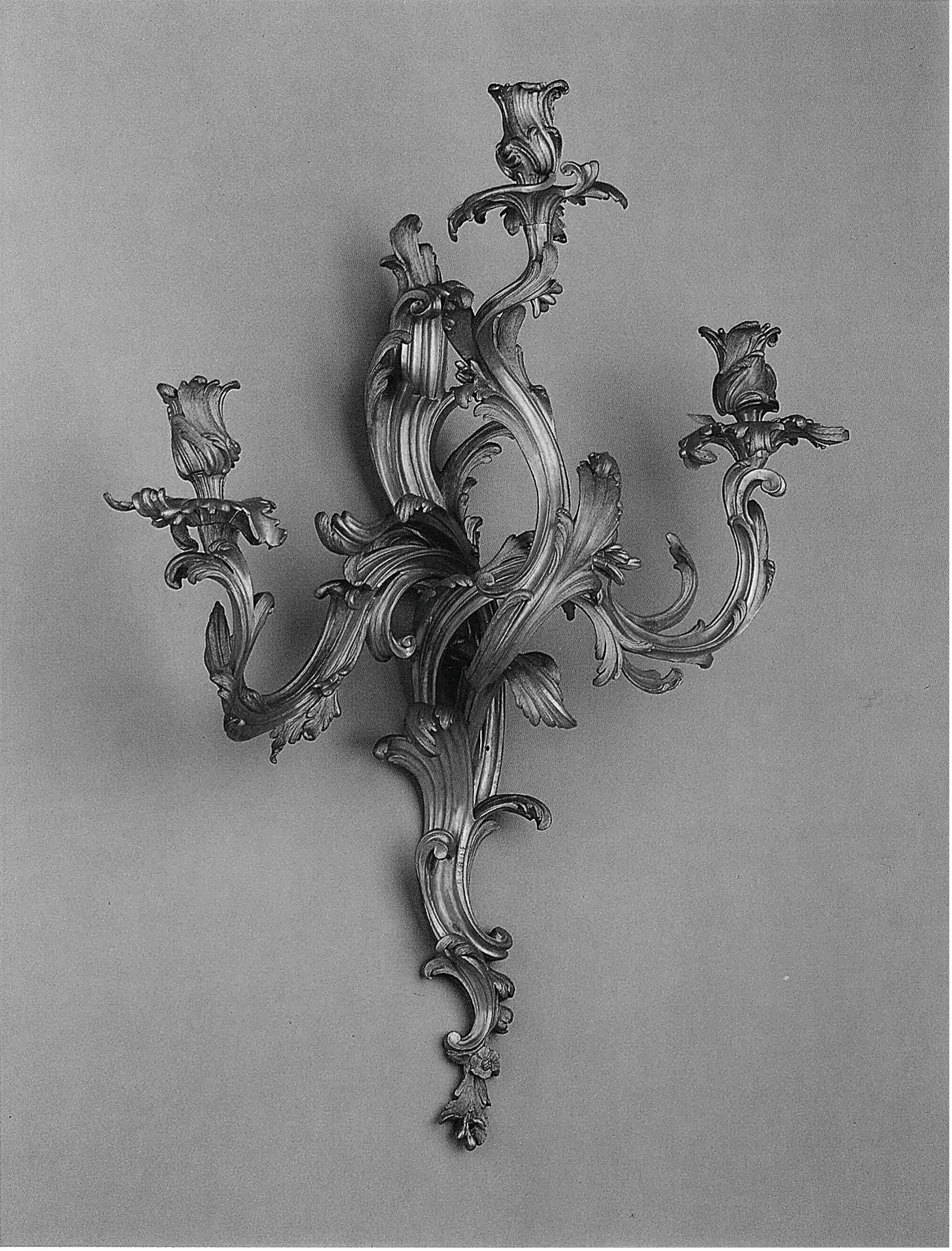
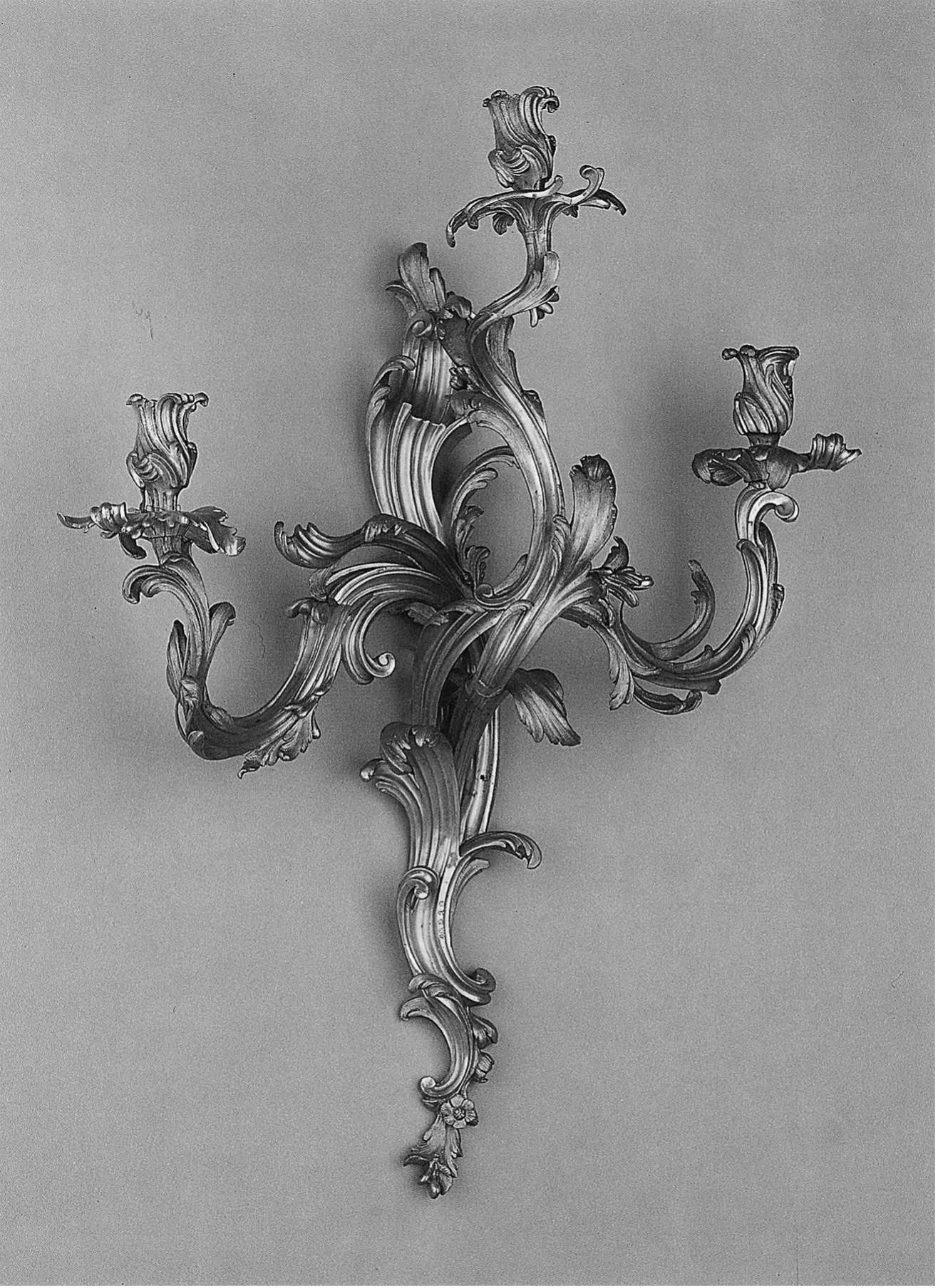
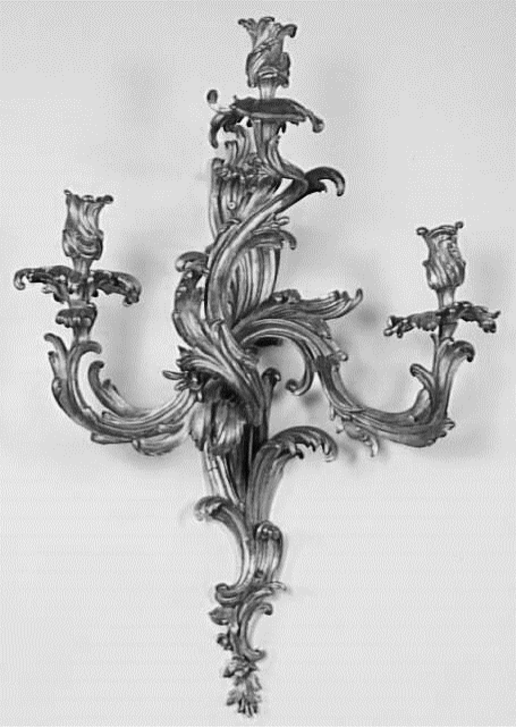
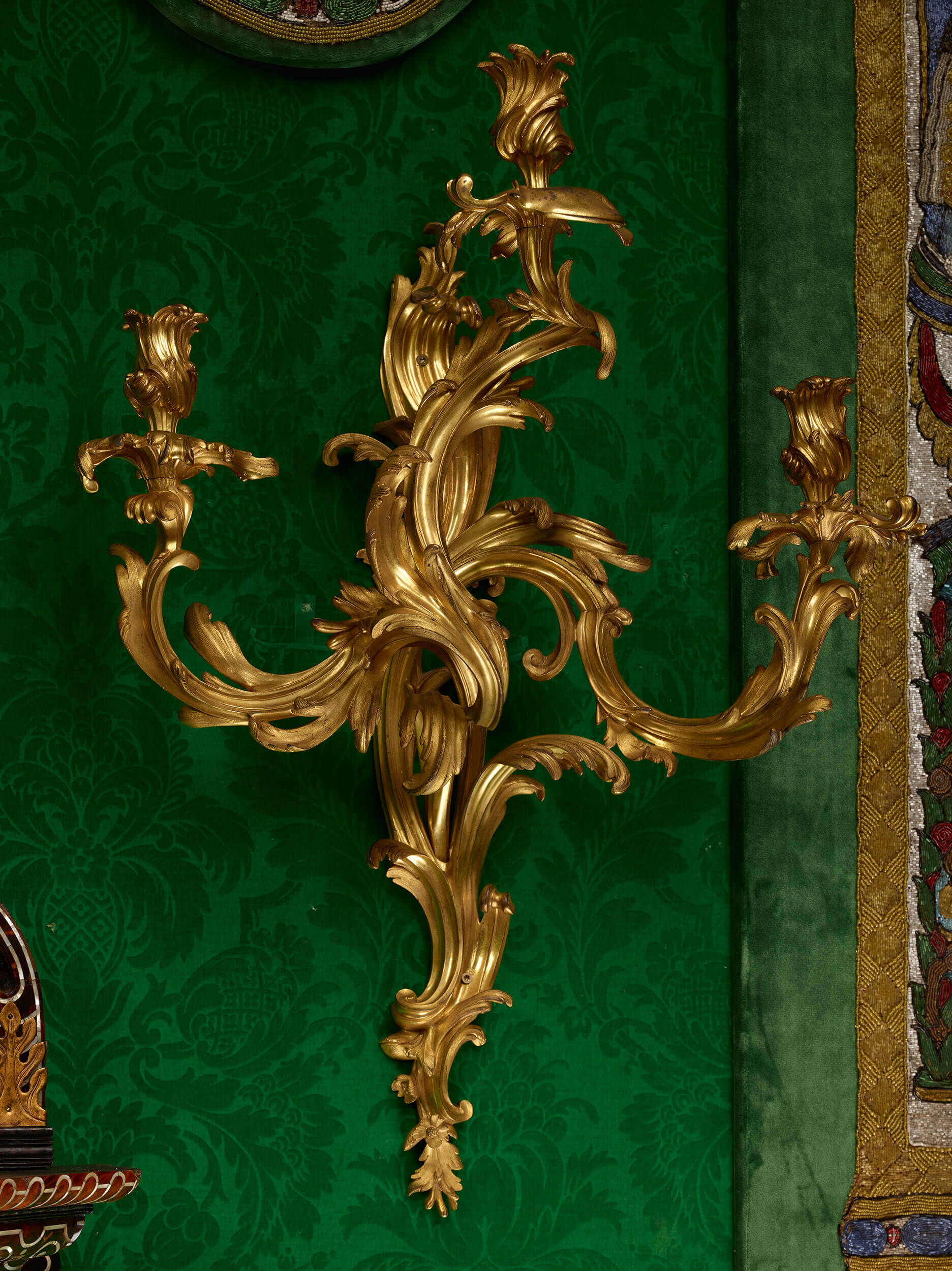
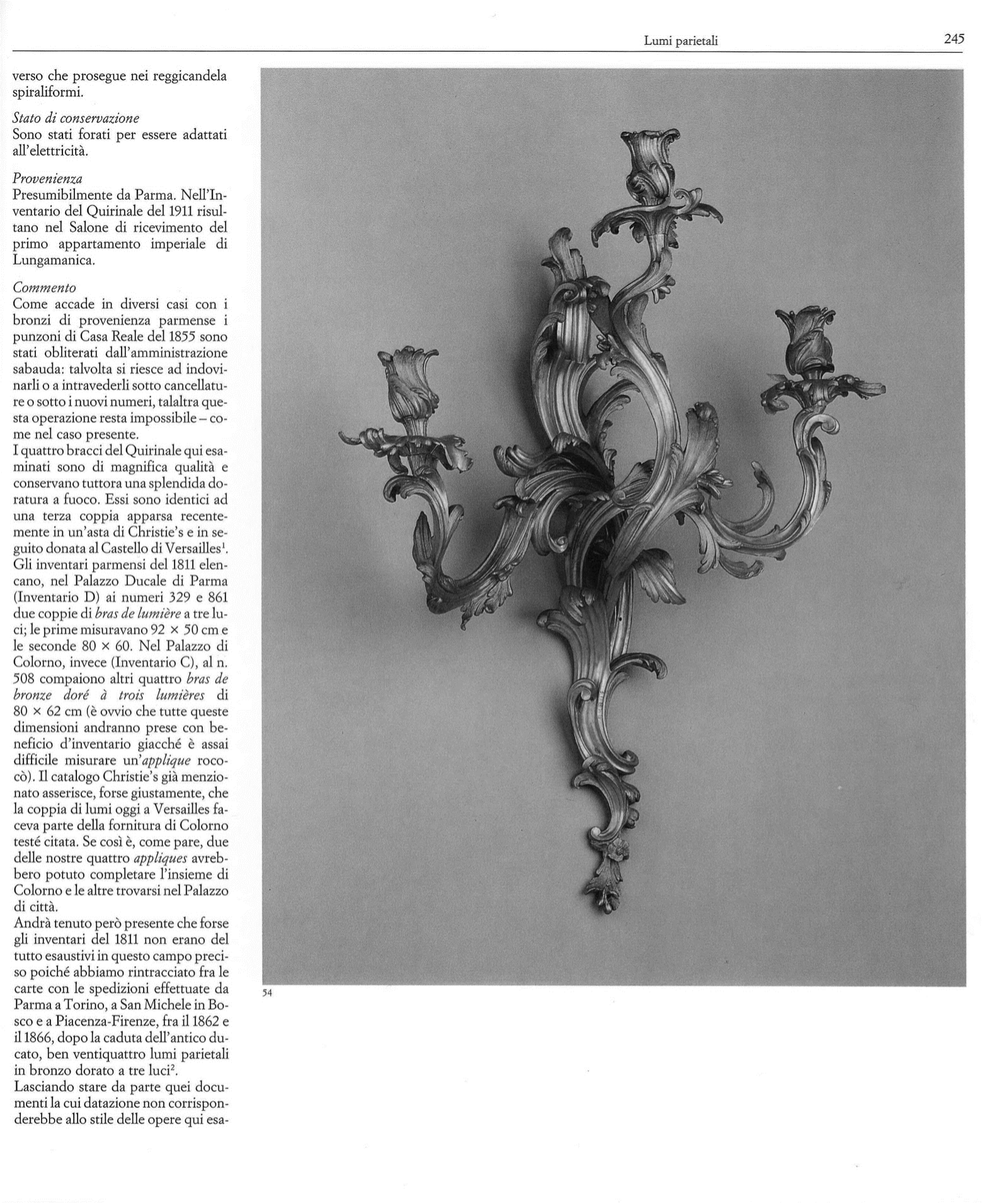
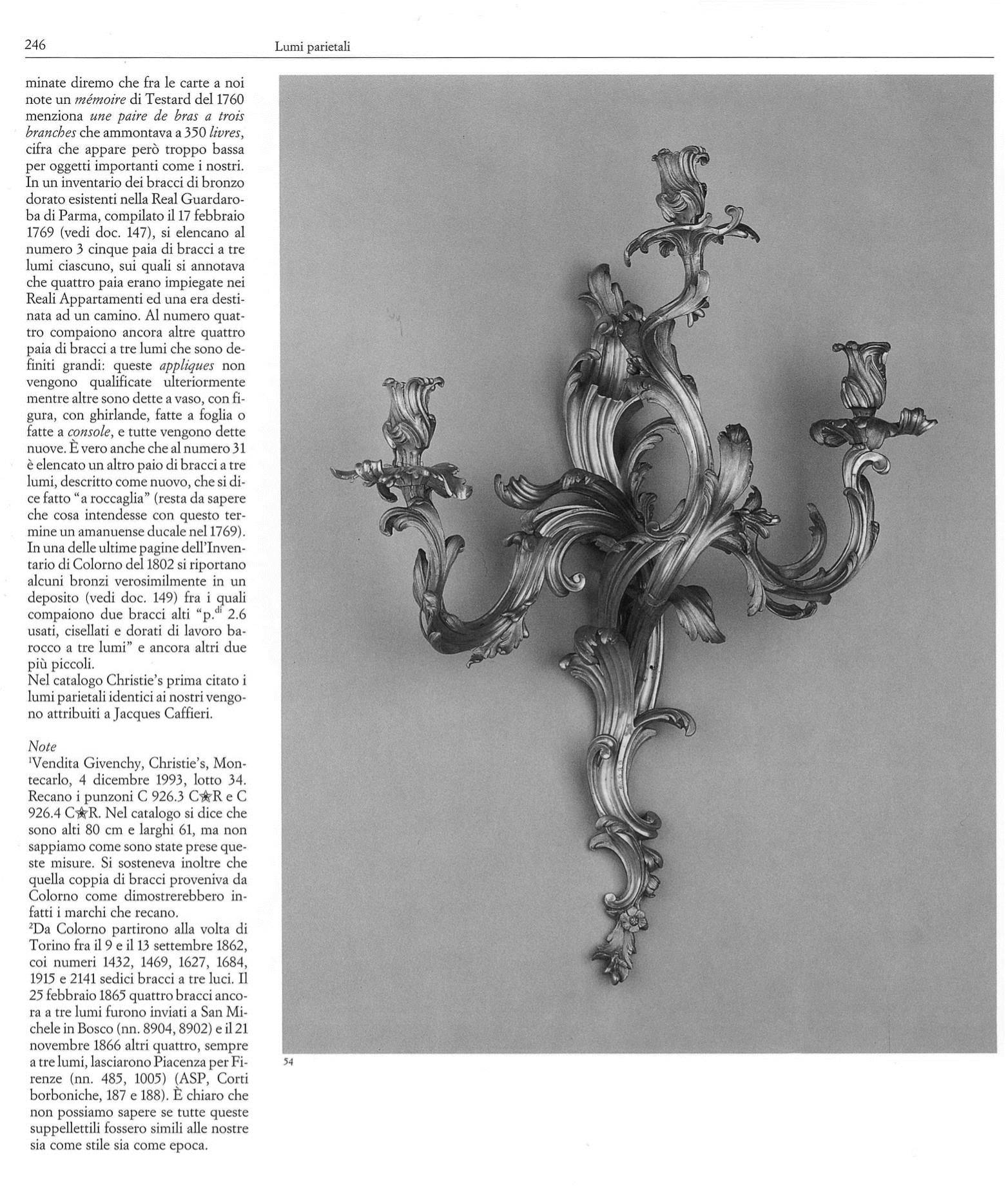
The first ones were studied in 1996 by Alvar González-Palacios as part of his work dedicated to French furniture and bronze furnishings preserved at the Palace of Quirinal. Like several bronzes from Parma, the inventory numbers and other royal marks of the House of Bourbon-Parma, dated from the inventory of 1855 and which were stamped on these lights, were erased by the Savoyard administration. It is sometimes possible to guess or catch a glimpse of them under crossing-outs or directly under the new numbers, but unfortunately not in the case we are interested in.
The branches of Bourbon-Two Sicilies and Bourbon-Parma in Italy.
In 1734, during the War of the Polish Succession, Don Carlos, Duke of Parma and Piacenza, third son of Philip V and Elisabeth Farnese (heiress of the House of Parma), took over Naples and Sicily, where he reigned as Charles VII. Called to the throne of Spain in 1759 [→ Charles III], he let his two kingdoms to his third son, Ferdinand, who became King of Naples and Sicily, and later King of the Two Sicilies as Ferdinand I (1816-1825), establishing the Bourbon-Two Sicilies branch. The immediate descendants of Ferdinand I, represented by Francis I, Ferdinand II and François II, ruled over until the unification of the Two Sicilies into the Kingdom of Italy (1860).
In 1748, the Treaty of Aix-la-Chapelle, which ended the War of the Austrian Succession, passed on the Duchies of Parma, Piacenza and Guastalla to Infante Philip, second son of Philip V and Elisabeth Farnese, founder of the branch Bourbon-Parma. This branch ruled over the Duchies of Parma and Piacenza from 1748 to 1802, then from 1847 to 1859. They also ruled over the Kingdom of Etruria from 1801 to 1807, and the Duchy of Lucca from 1815 to 1847. It is to this family that Jean, Grand Duke of Luxembourg from 1964 to 2000, belonged, and was succeeded by Henri.