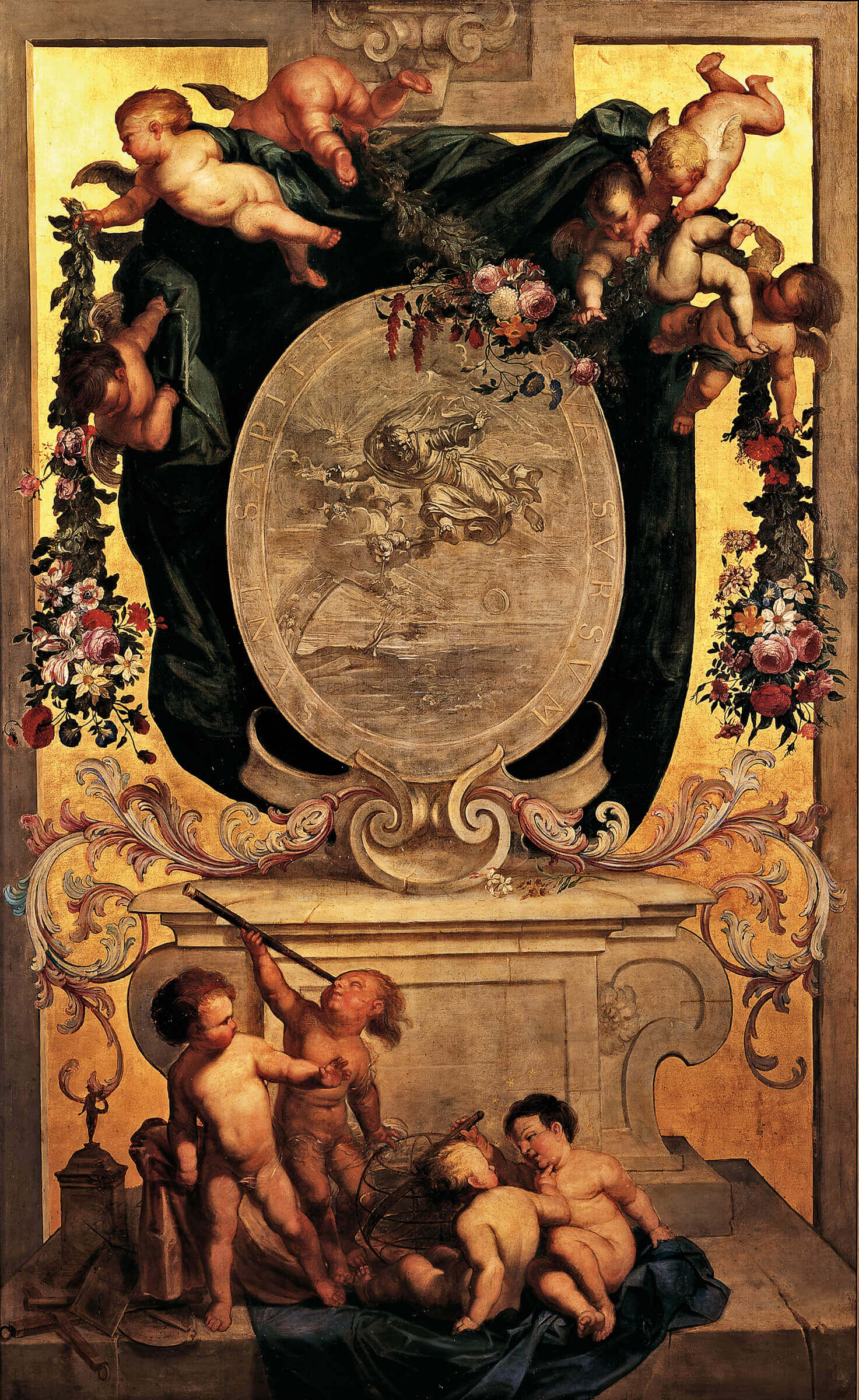
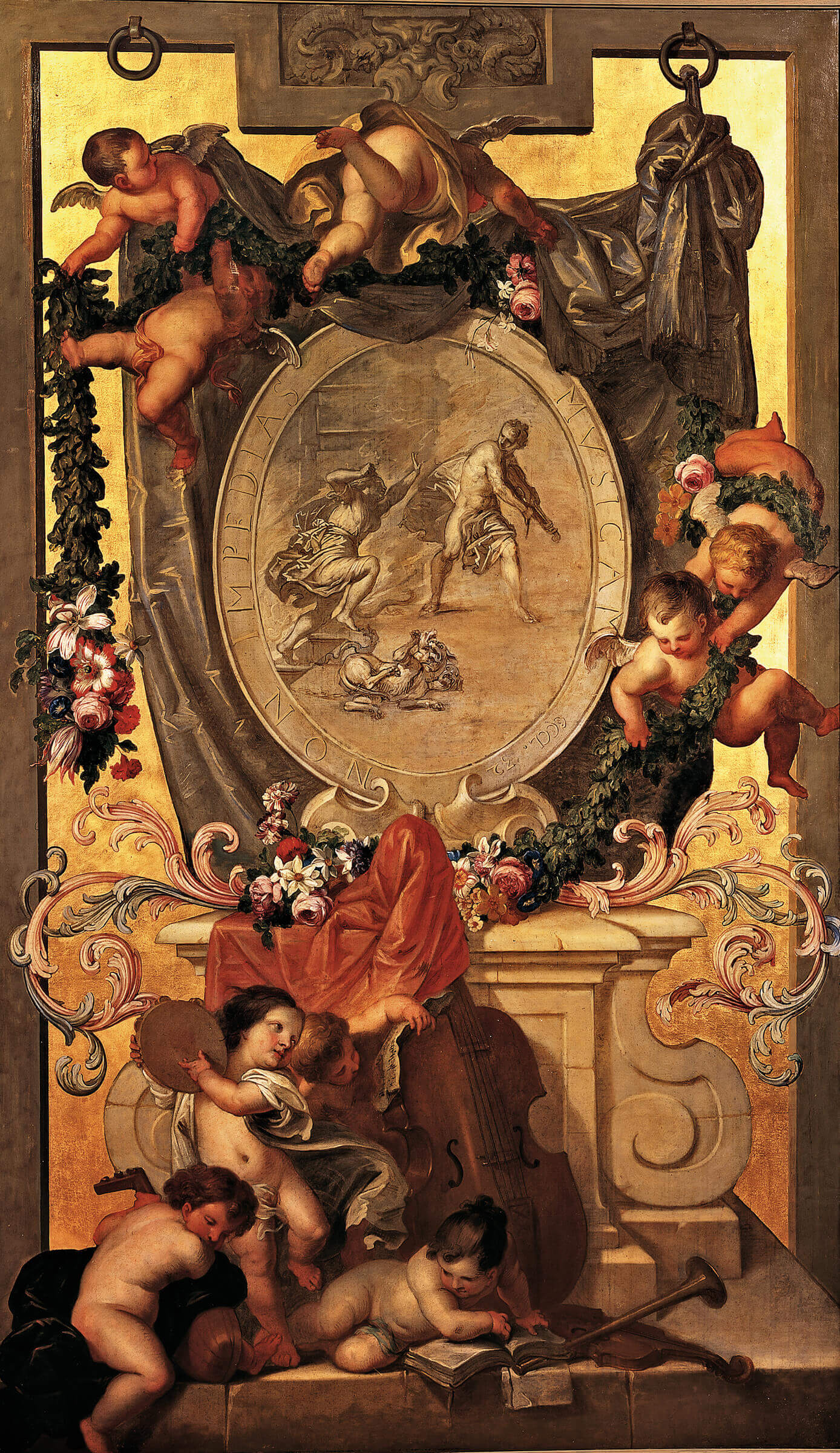
Oil on canvas.
For two of them:
H. 266,4 cm. (105 in.); W. 97,1 cm. (38 ¼ in.).
The others:
H. 268 cm. (105 ½ in.); W. 150 cm (59 in.).
H. 266,4 cm. (105 in.); W. 157,2 cm (62 in.).
H. 266,4 cm. (105 in.); W. 157,5 cm (62 in.).
H. 266,4 cm. (105in.); W. 164,2 (64 ¾ in.).
PROVENANCE: private collection.
LITERATURE: Christina J.A. Wansink, “De decoratieve schilderkunst van Mattheus Terwesten, een Haagse meester uit de achttiende eeuw,” Oud Holland, Vol. 104, no. 3-4, 1990, p. 270-92; C.J.A. Wansink, “Augustin und Matthäus Terwesten – ein Kapitel aus des Geschichte der Beziehungen zwischen Brandenburg -Preußen und den Niederlanden,” Götter und Helden für Berlin, Charlottenburg Palace, Berlin 1995, p.36.
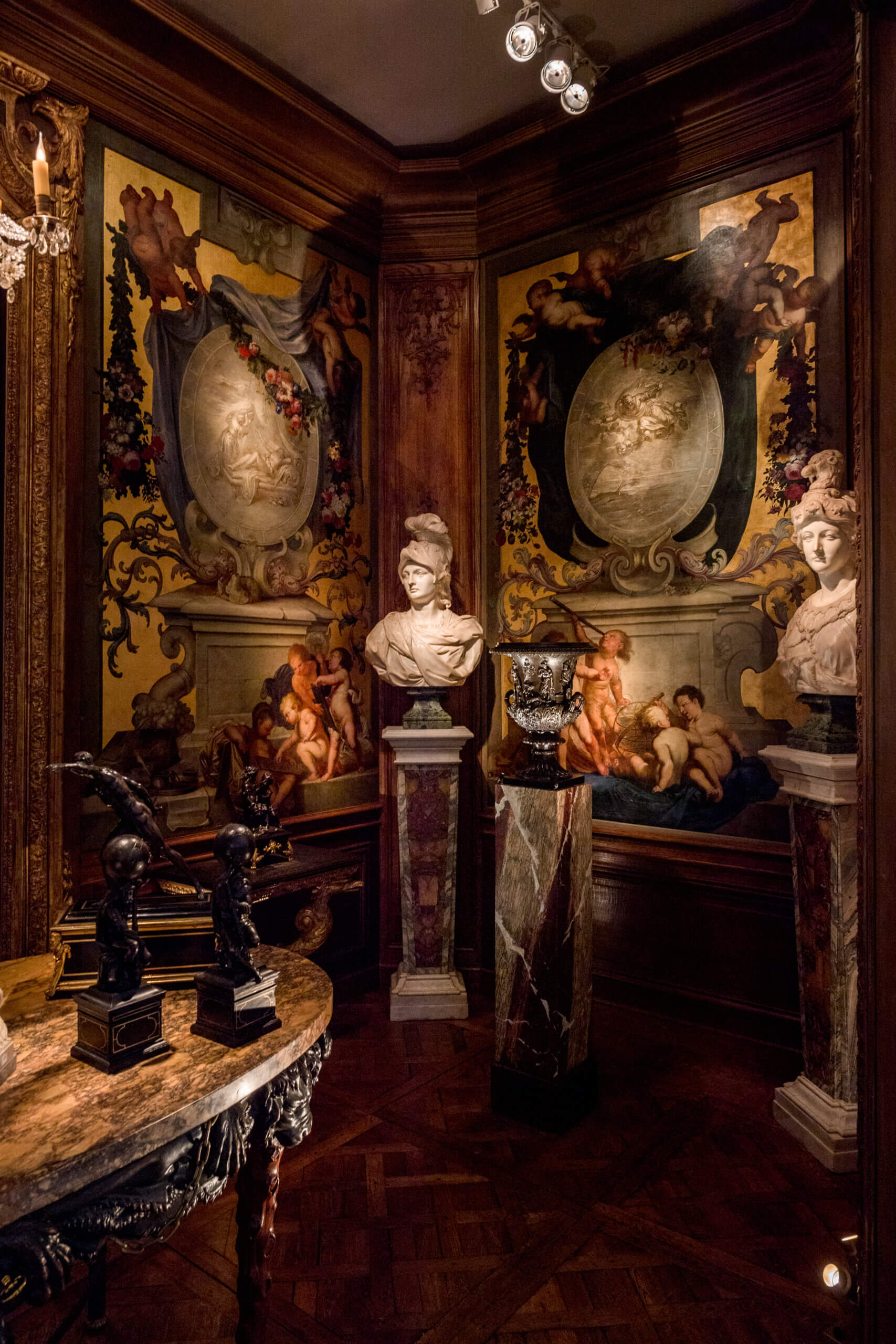
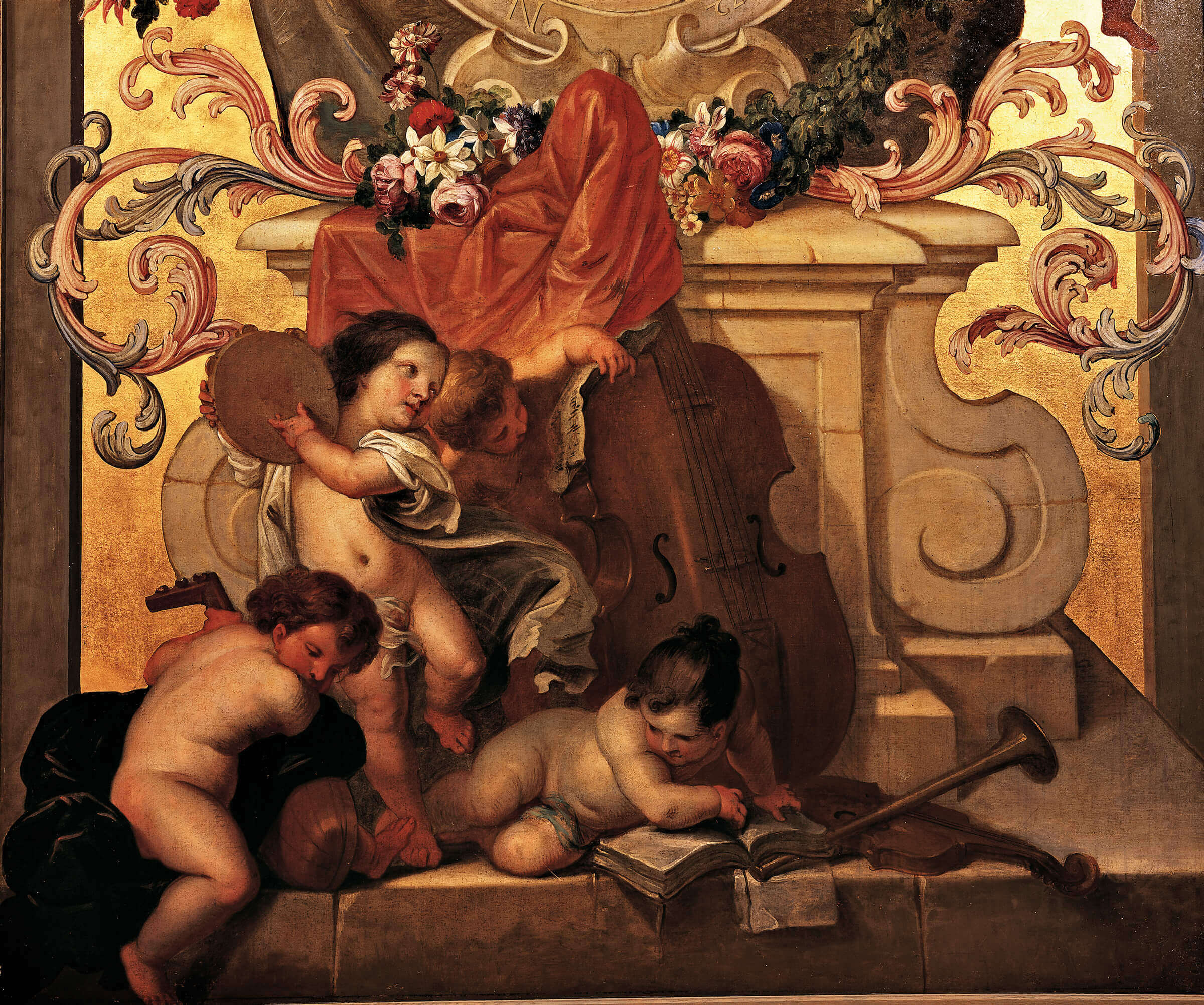
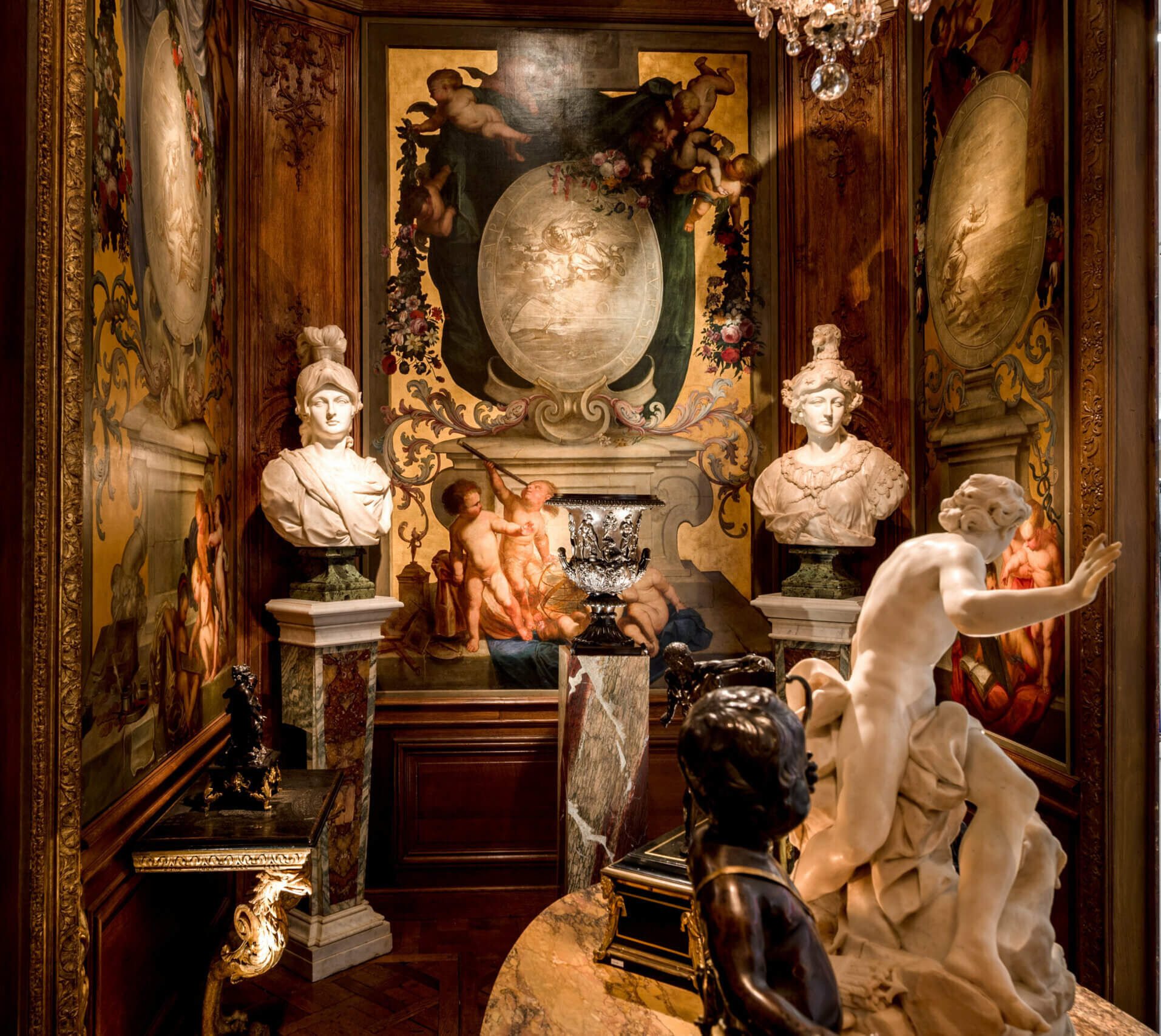
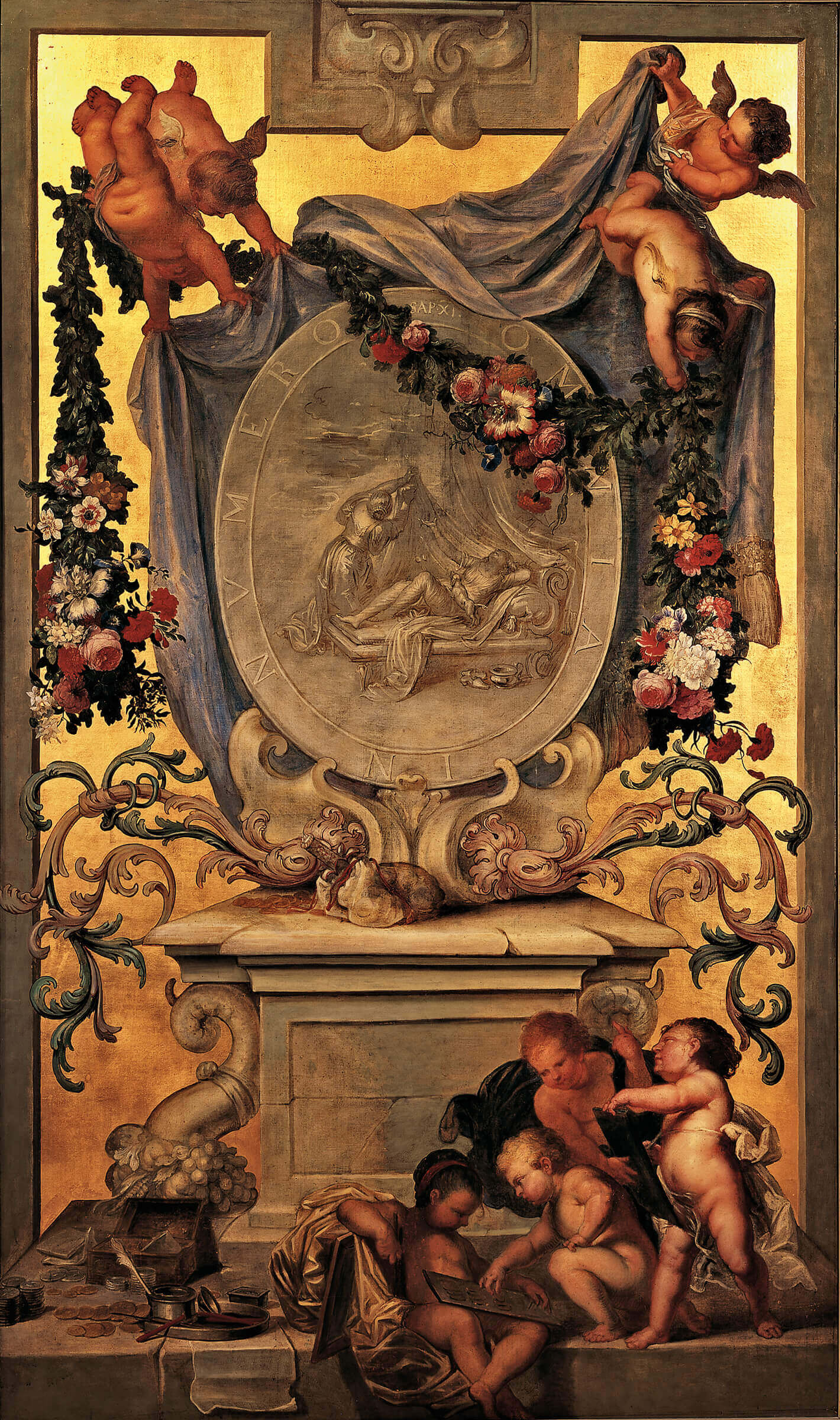
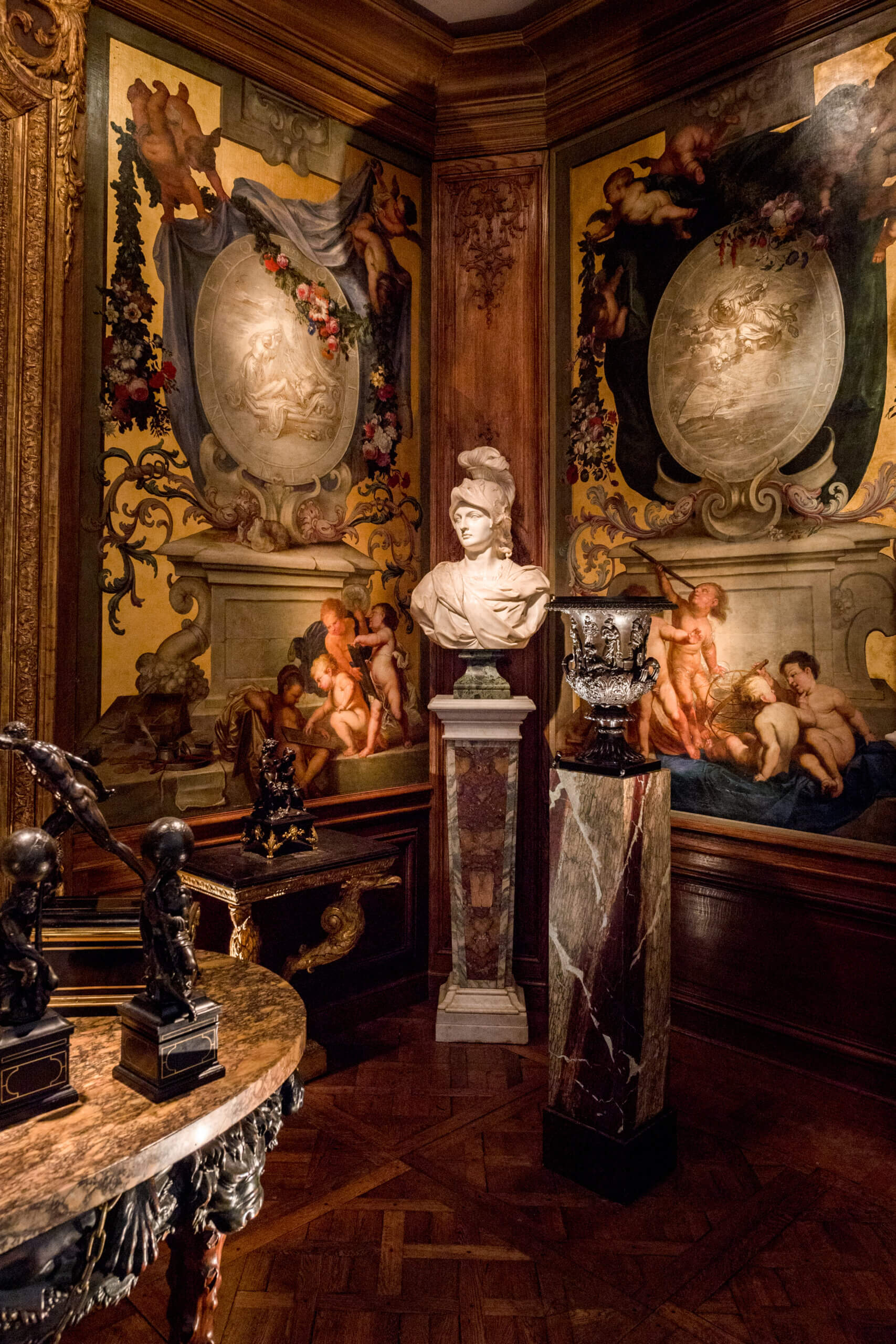
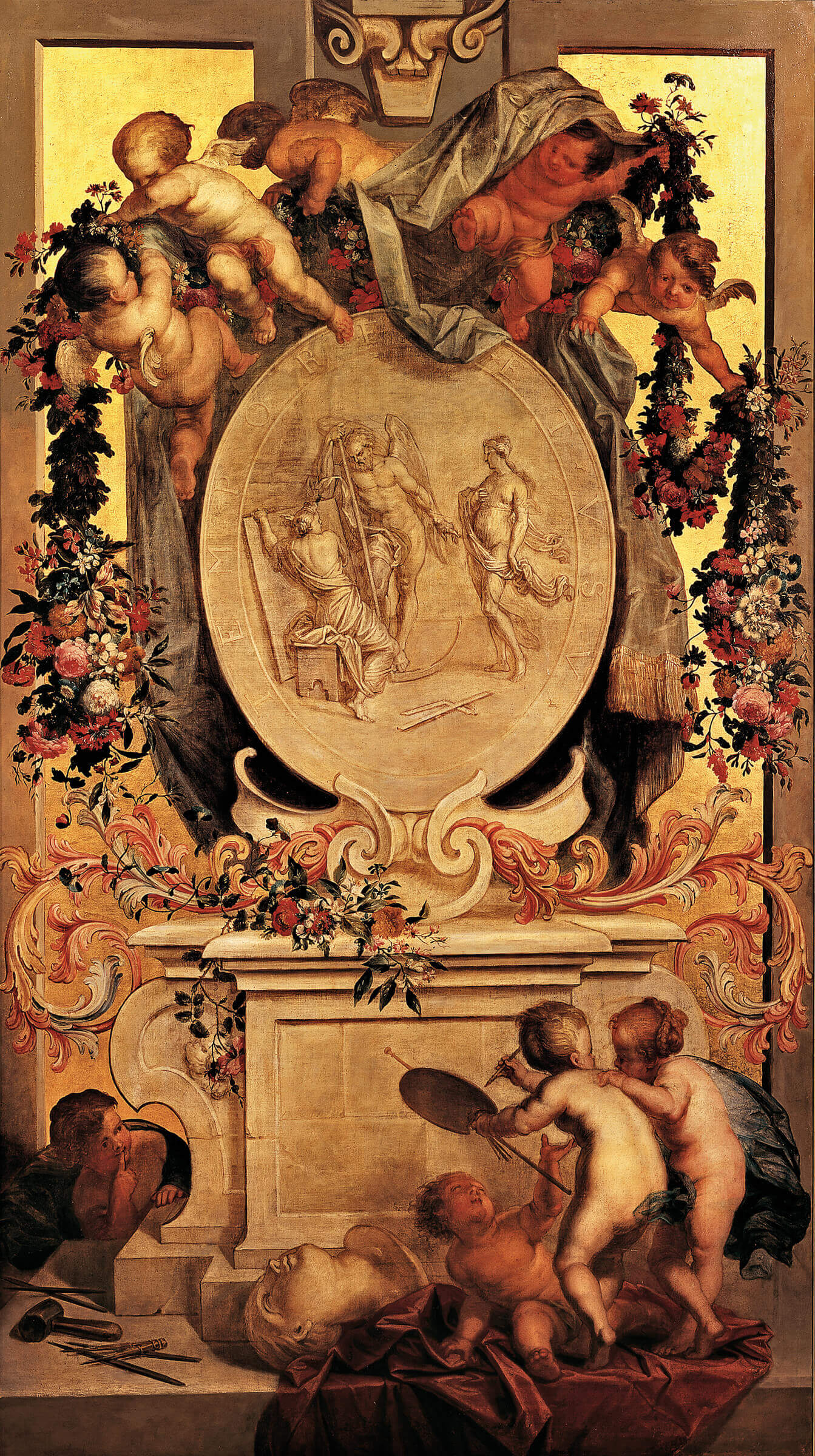
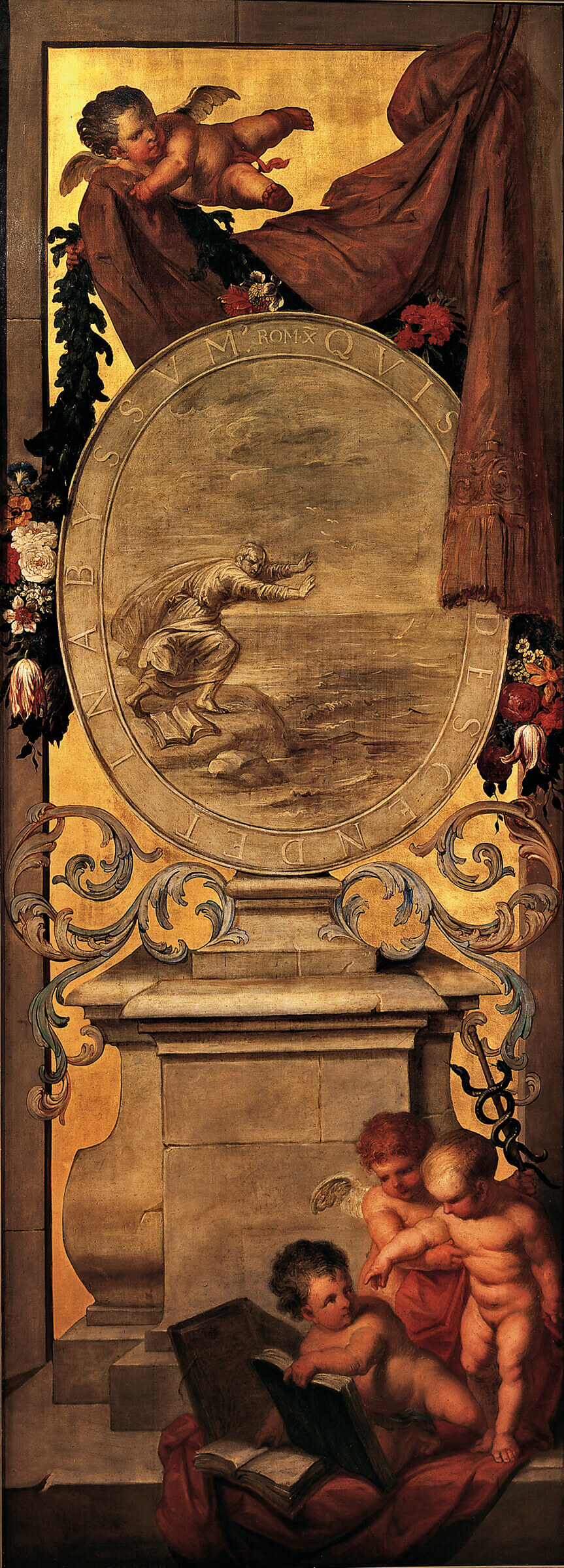
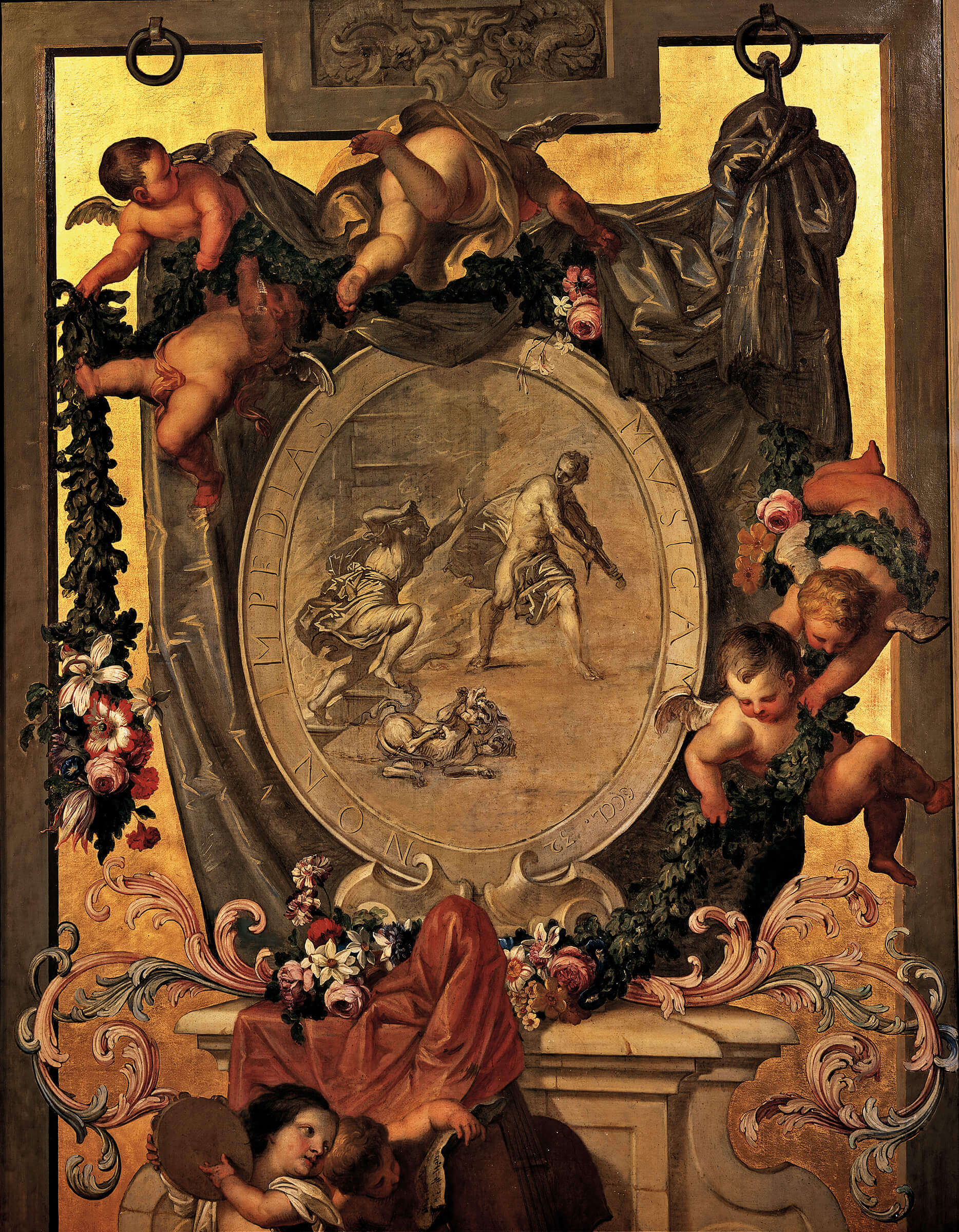
Certainly meant to be inserted into decorative wood paneling, these six large paintings on gold backgrounds present a good example of Baroque classicism in decorative painting. The works also bear witness to the diffusion of this style in Europe, notably in Germany and the Netherlands, from models elaborated in France over the 17th century.


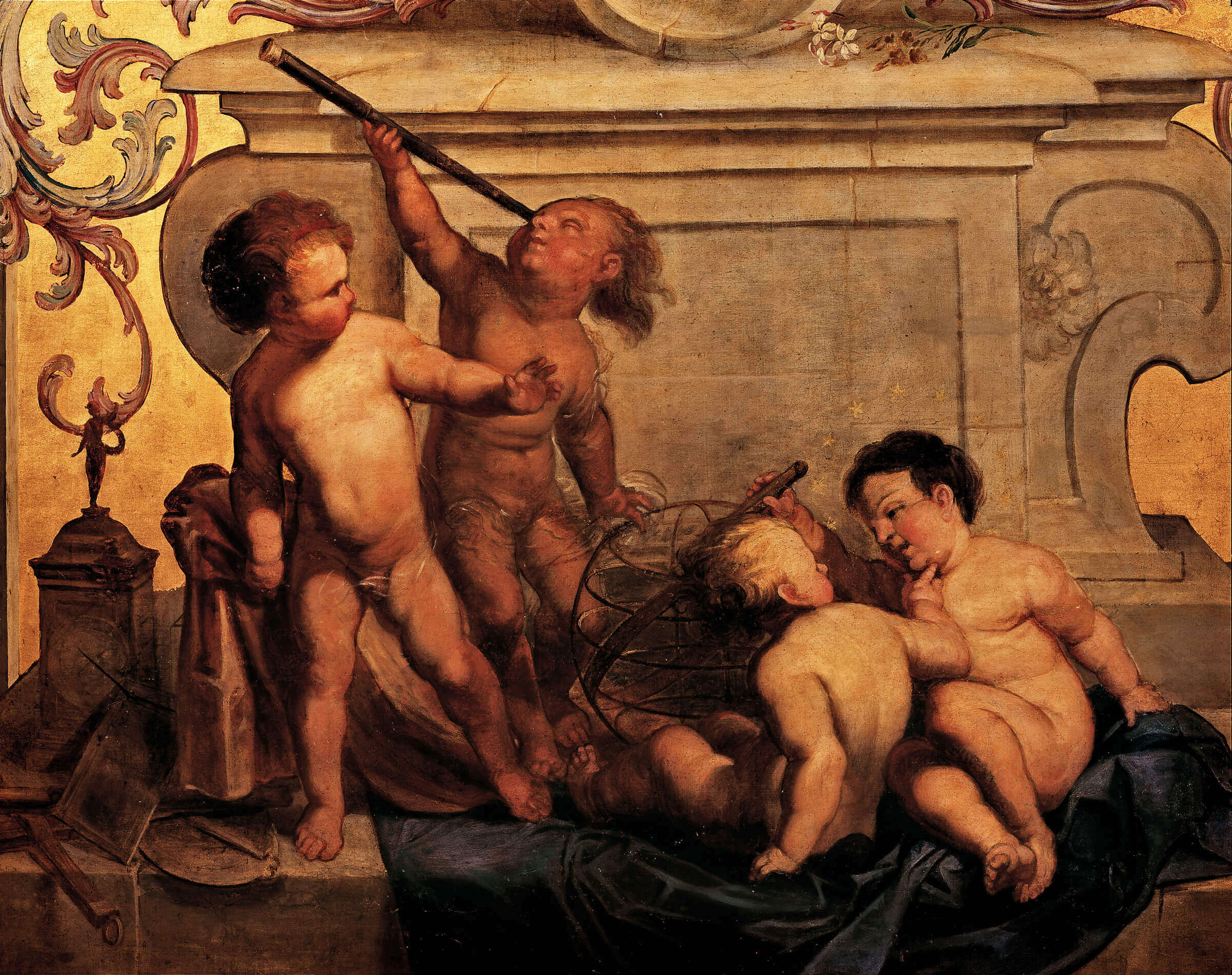
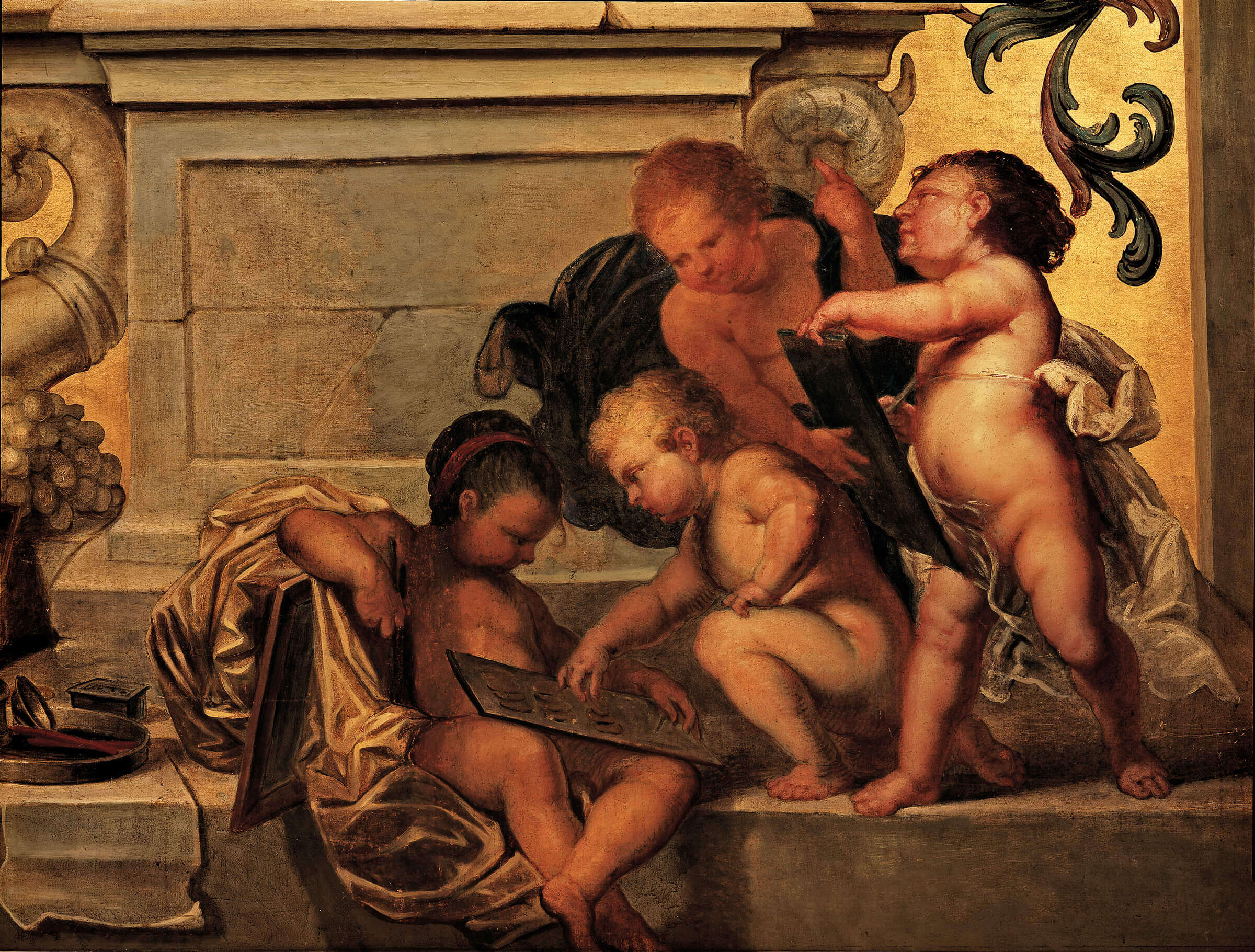
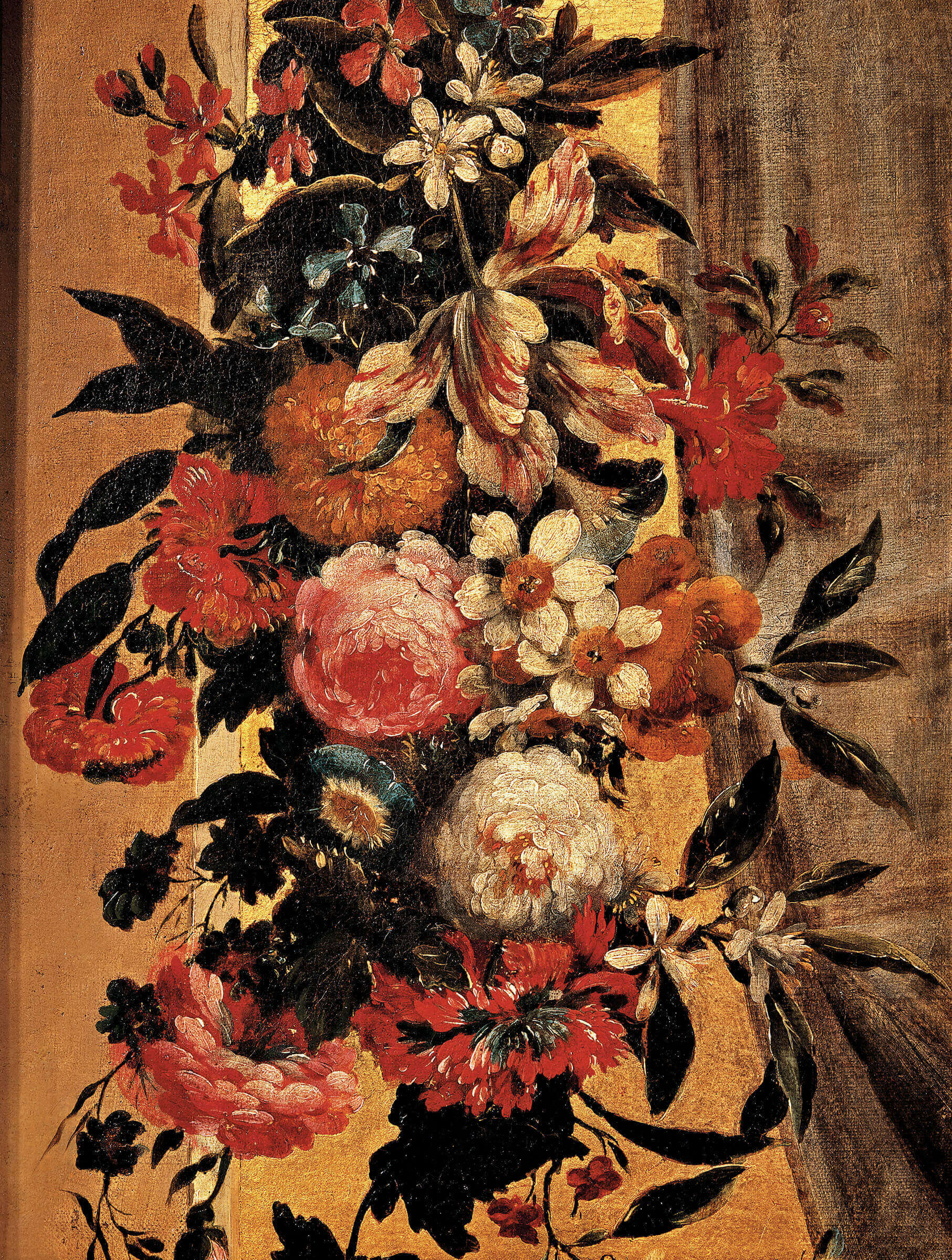
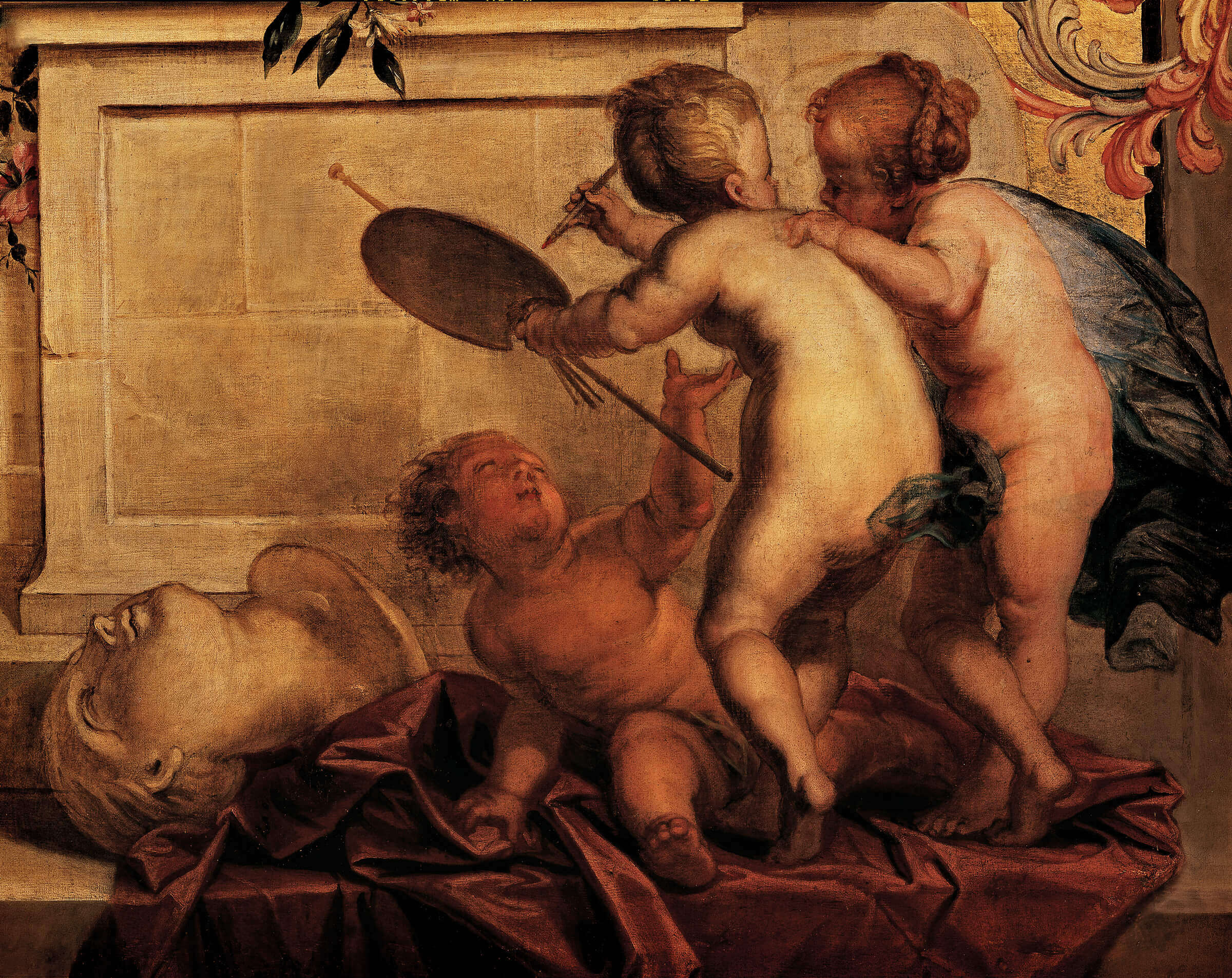
The composition of each painting, inspired by projects of 17th century French frontispieces, is organized around a central oval decorated with figures of ancient gods or prophets, painted in grisaille, completed by a Latin inscription, with whole restings on an architectural base. The group is set against a background of draperies, foliage and cherubs holding circular garlands of flowers in their hands. In the lower portion, a group of putti representing an allegory echoes the subject painted in grisaille in the center of the composition.

It must be noted in regard to our work, that several scenes come directly from prints made by Pierre Mignard (1612-1695): notably the allegories of children representing Mathematics (fig.1) and Music (fig.2), engraved after the paintings executed by Mignard for the gallery of the Petits Appartements of the king at Versailles. Likewise, the section painted in grisaille representing Beauty Presented to Painting by Time is drawn from a print of François Chauveau, itself a copy of Mignard’s work, published in La gloire du Val de Grâce (fig.3) – a long poem in Alexandrine verse written by Molière in 1669 to laud the great fresco painted by Mignard in the dome of the church of Val de Grâce.
Stylistically, the putti, as well as the foliage motifs found in all of these six paintings, present a certain number of similarities to the paintings and designs of Mattheus Terwesten (The Hague, 1670 – 1757), a painter of mythological and allegorical subjects, active in Germany and in the Netherlands from 1690.
One of the most striking examples in regards to the attribution of our paintings are the works painted by Mattheus Terwesten for the De Koepel van Fagel in The Hague (Fig. 4-5-6-7-8), of which the interior decorations were conceived in 1707 by the French architect Daniel Marot (Paris, 1661 – The Hague, 1752). The latter, like many protestant Hugenot architects, was obliged to leave France in 1685 to seek refuge abroad after the Edict of Nantes was revoked by Louis XIV. It is thus notably through the flight of these refugees that Baroque classicism found its way into all the provinces of northern Europe. The case of Daniel Marot (Paris, 1661 – The Hague, 1752) is an example of just such a scenario. Trained in France, Marot worked almost exclusively for the court of William III of Orange-Nassau (1650-1702), first in England, where he laid out the gardens of Hampton Court (1683), then in Holland, where we was notably occupied with the interior decoration of the Binnenhof and of the palace Huis ten Bosch in The Hague. To him we also owe the interior arrangement of the Het Loo Palace, near the city of Apeldoorn, in the heart of the Netherlands.
There are several points to underline concerning the life and artworks of Mattheus Terwesten. According to Christina J.A. Wansink[1], over his long career he constantly collaborated with other painters. This began with his work with Augustinus Terwesten (The Hague, 1649 – Berlin, 1711), his own brother[2], who founded the Academy of Fine Arts in The Hague in 1682 and from whom he first learned his trade and then worked with – notably thanks to Augustinus’s positions as court painter of the Prince-Elector Frederic III Brandenburg[3] and as the director of the Academy in Berlin[4]. Other points of similarity between the two Terwesten brothers were the voyage they made to Italy (Rome, Forence, Venice), to France (Paris) and to England, each twenty years apart – instrumental in their training, and seemingly explaining their respective roles within the Academy.


On the death of his brother in 1711, Mattheus Terwesten succeeded him as director of the Academy and as painter to the court in Berlin. He married in The Hague in 1718, and from this date split his time between the two cities. He also regularly collaborated with painters of fruits and flowers such as Gaspard Peter Verbruggen (active in The Hague from 1706) and Pieter Hardimé (1677-1758). Mattheus Terwesten continued to work to an advanced age, and died at his work in 1757, while planning the decoration for a tribunal hall for the city of The Hague.