Rome, 1785.
Materials: White Carrara marble; Rosso antico marble; gilt bronze; red Egyptian porphyry.
LITERATURE: Alvar González-Palacios, catalogue entry in Luigi Valadier at the Louvre, or Antiquity Exalted, Paris, 1994, pp. 123–125, cat. no. 9.
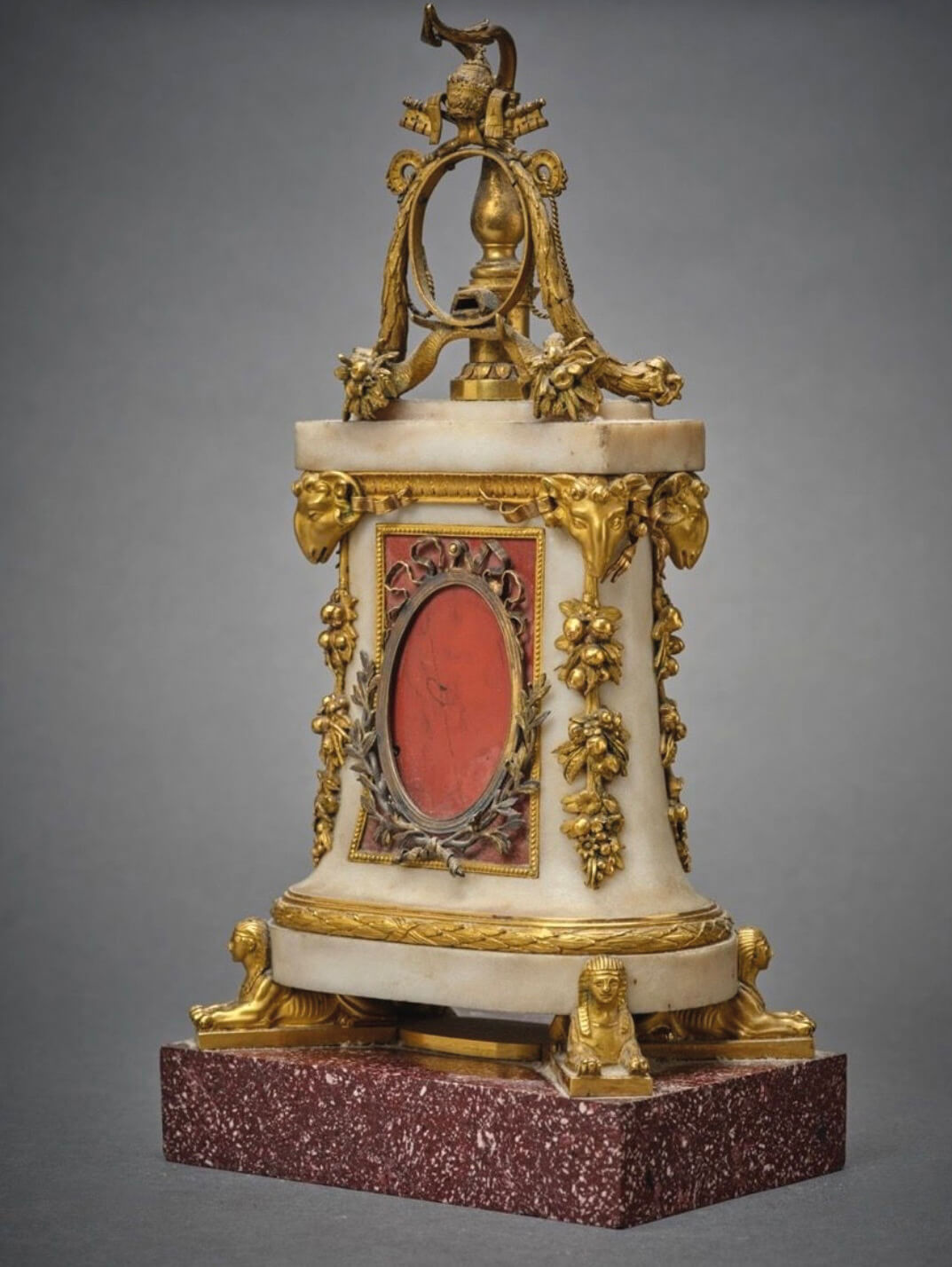
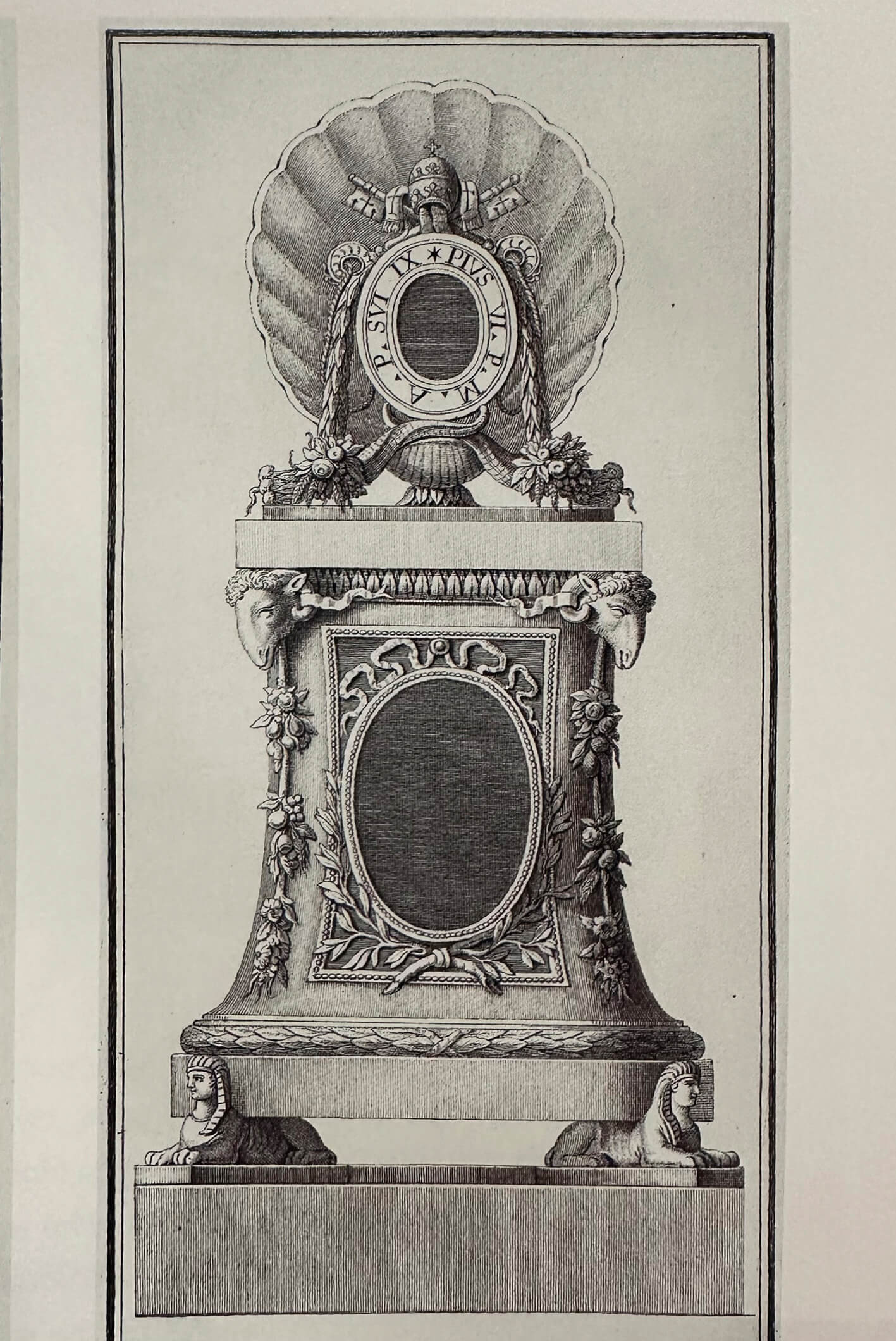
The Monument to Pope Pius VI was originally, as seen in the engraving, crowned with an agate shell placed behind a cameo depicting a portrait of the pope by Nathaniel Marchand, a German-born gem engraver. An oval cameo showing Fame standing in profile, holding a trophy of religious objects, attributed to the Genoese Antonio Pazzaglia or his father Stefano, occupied the center of the pedestal on the front. The work was seized in 1798 by the troops of General Bonaparte and sent to the Louvre, where it was meticulously described in an inventory drawn up in 1801, though without the cameo of Fame. It was thereafter considered lost. Following the Treaty of Tolentino signed on 19 February 1797, the Papal States were forced to comply with Bonaparte’s demands, which included the surrender of an extraordinary number of artworks, among them the monument presented here. These seizures occurred after the French entered Rome in February 1798. Many of these treasures were never returned to the Vatican after the fall of the Empire in 1815, remaining in France with the blessing of Pope Pius VII.