Deal painted blue and white.
H. 4.47 m. (15 ft. 5 in. ); L. 7.94 m. (26 ft.); Pr. 5,94 m. (19 ft. 5 ¾ in.).
PROVENANCE: Antwerp, Van De Werve – De Schilde hôtel particulier.
LITERATURE: Bruno Pons, Grands décors français 1650 – 1800, Dijon, éditions Faton, 1995, pp. 128-131 and 301-308. Jean Feray, Architecture intérieure et décoration en France des origines à 1875, Paris, 1988, p. 305.
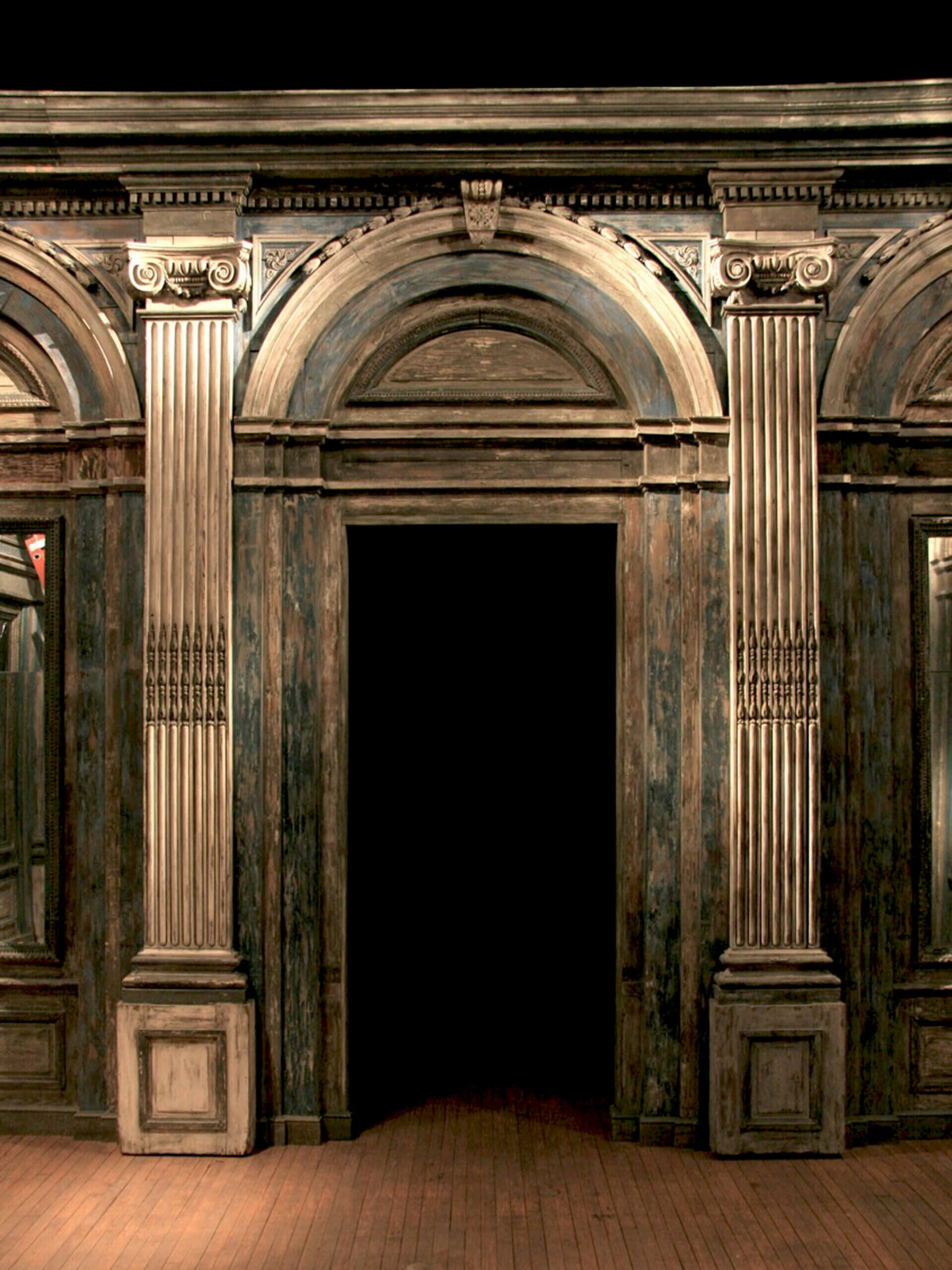
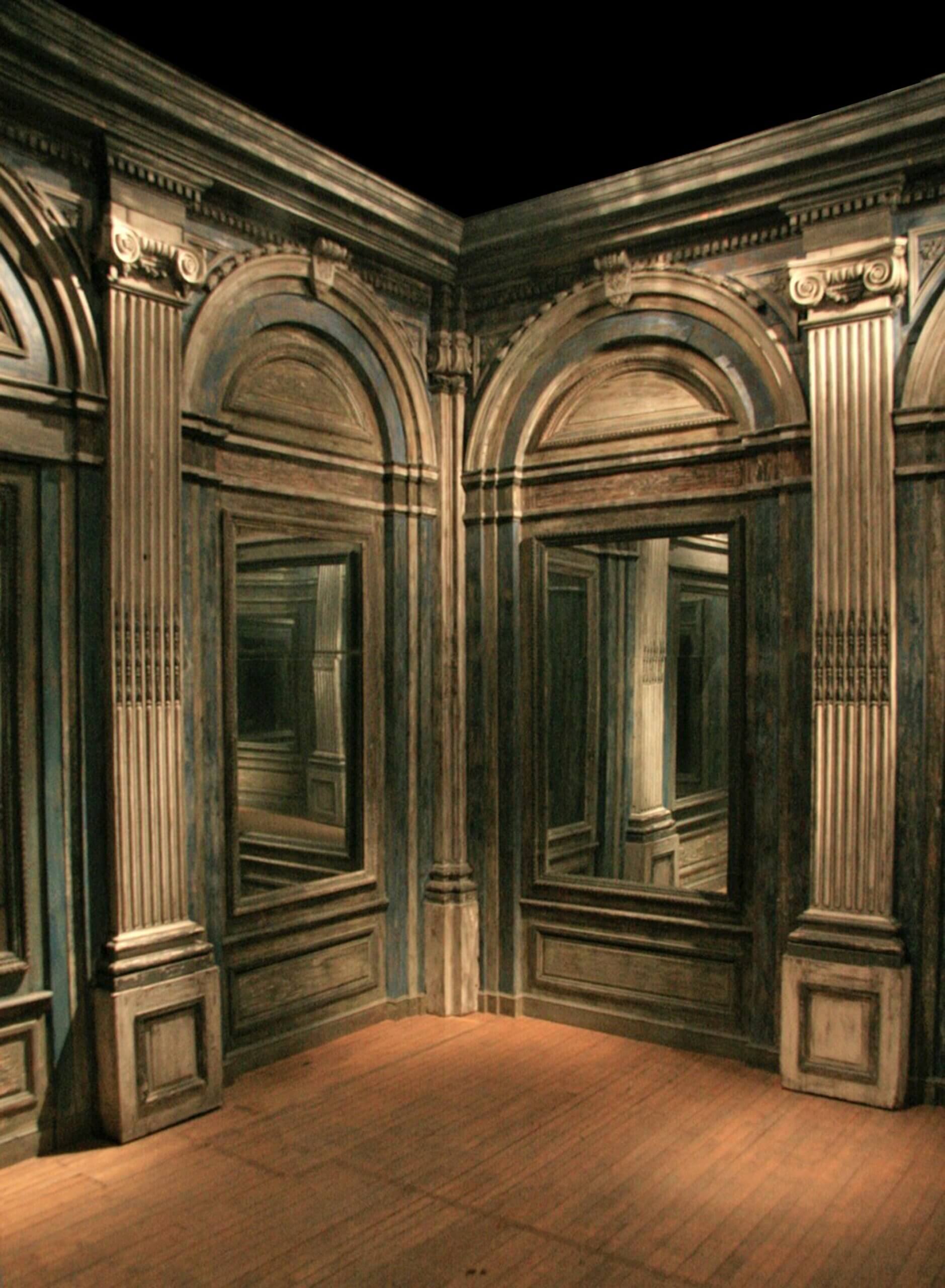
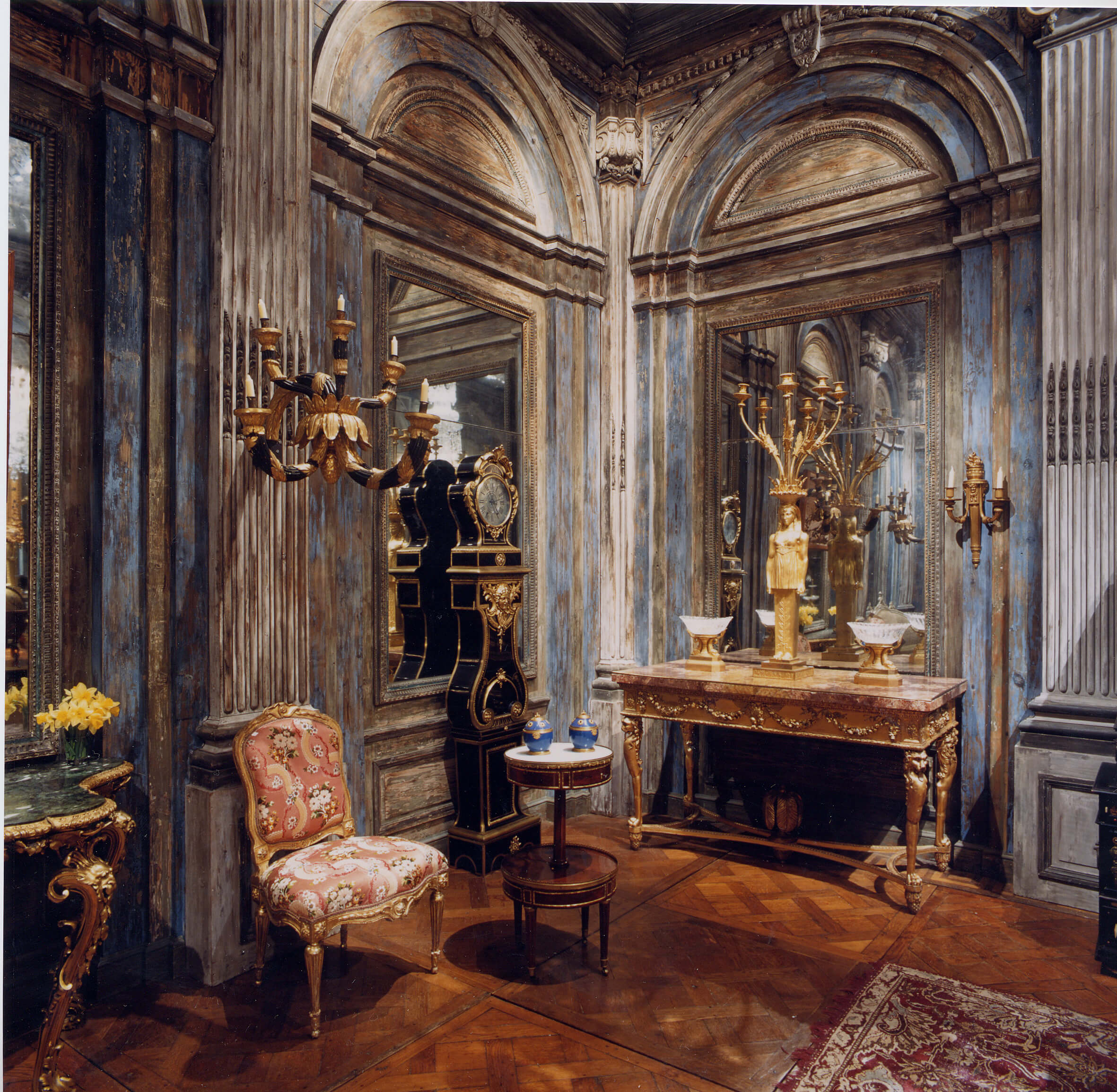
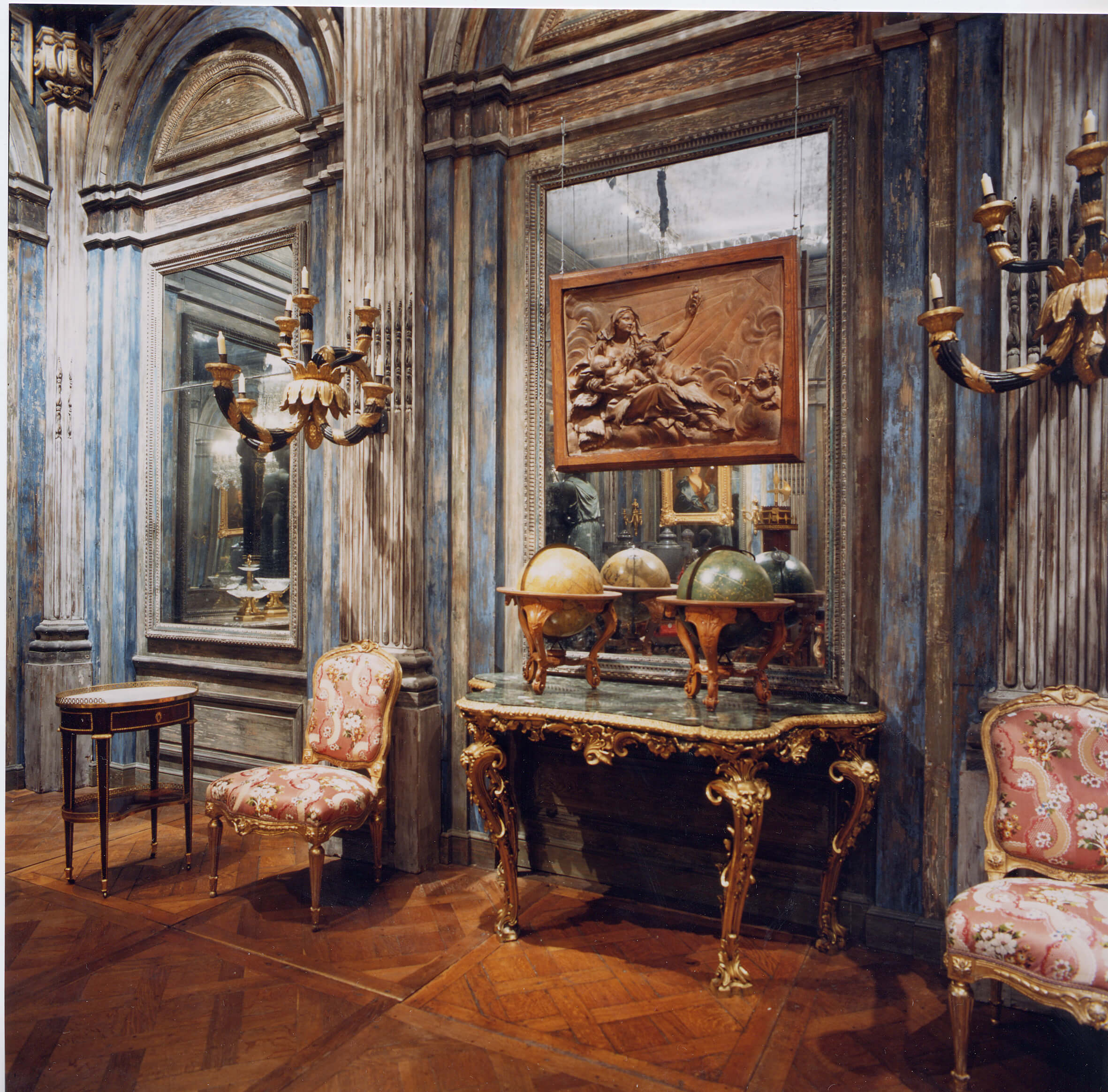
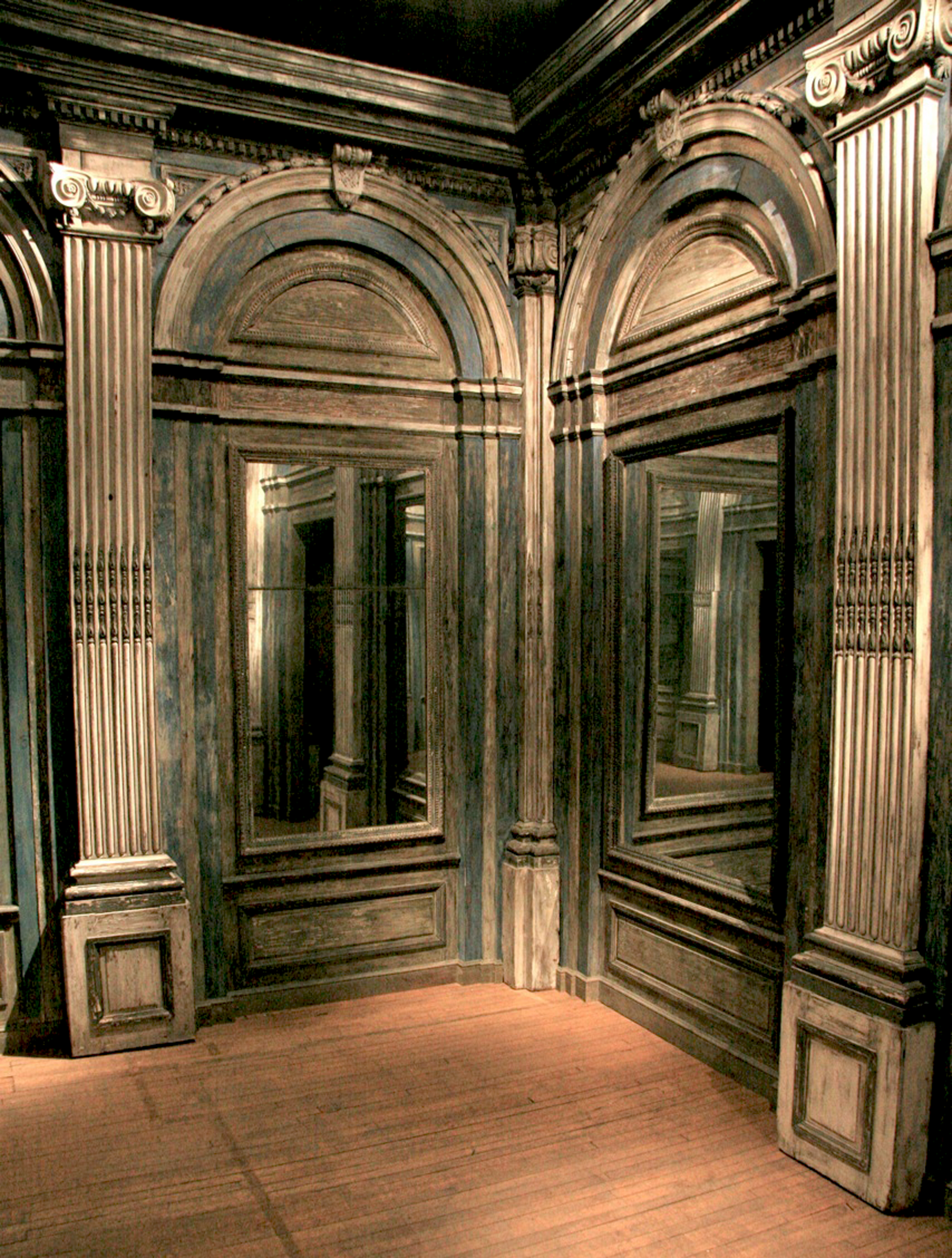
This wood paneling, executed for one of Antwerp’s most important families, the Vandewerve de Schilde, was intended to line the walls of a drawing room on the second floor of the family’s town house. The neo-classical mansion, now lost, once stood in the Kipdorp neighbourhood (see below).

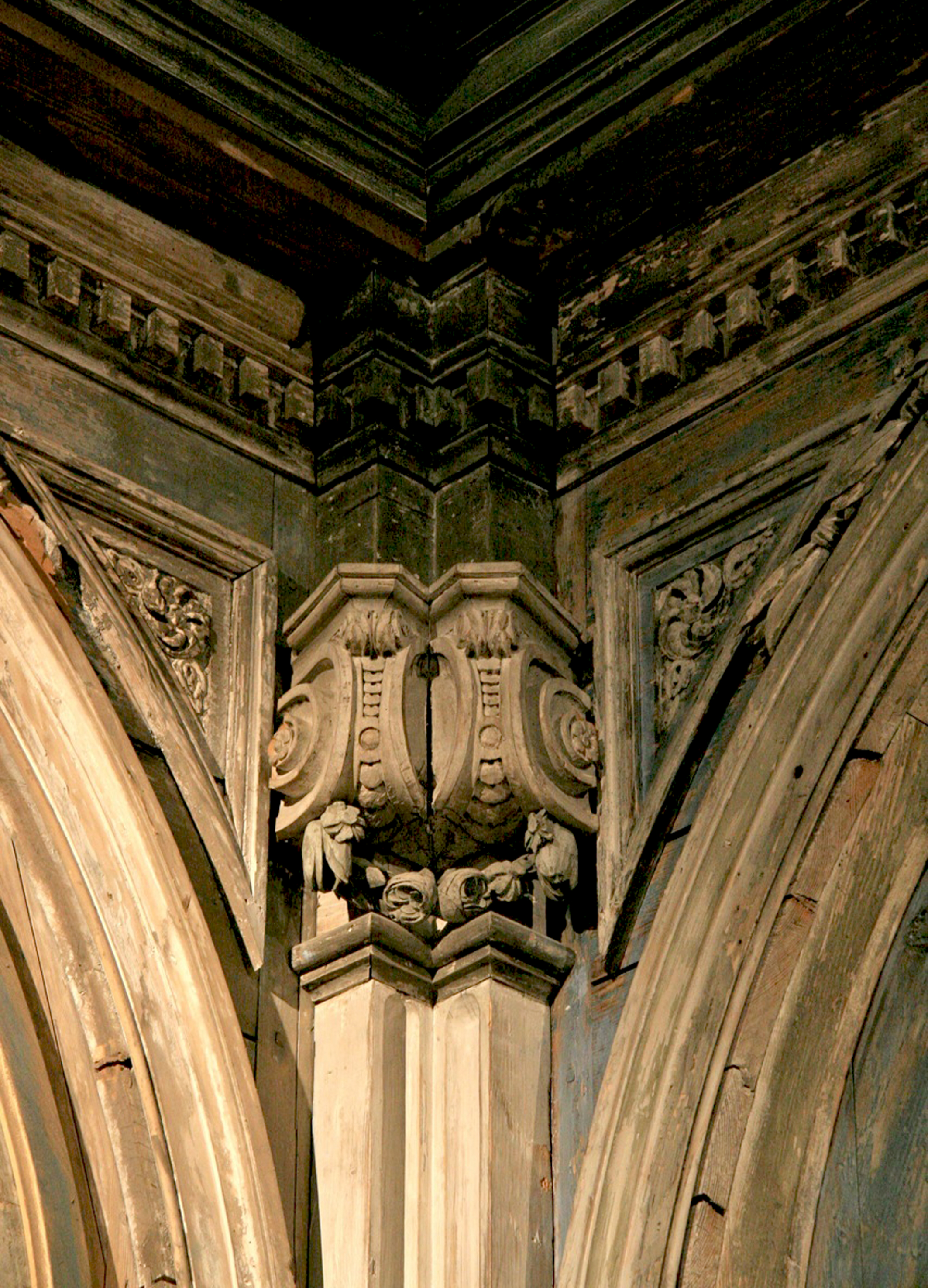
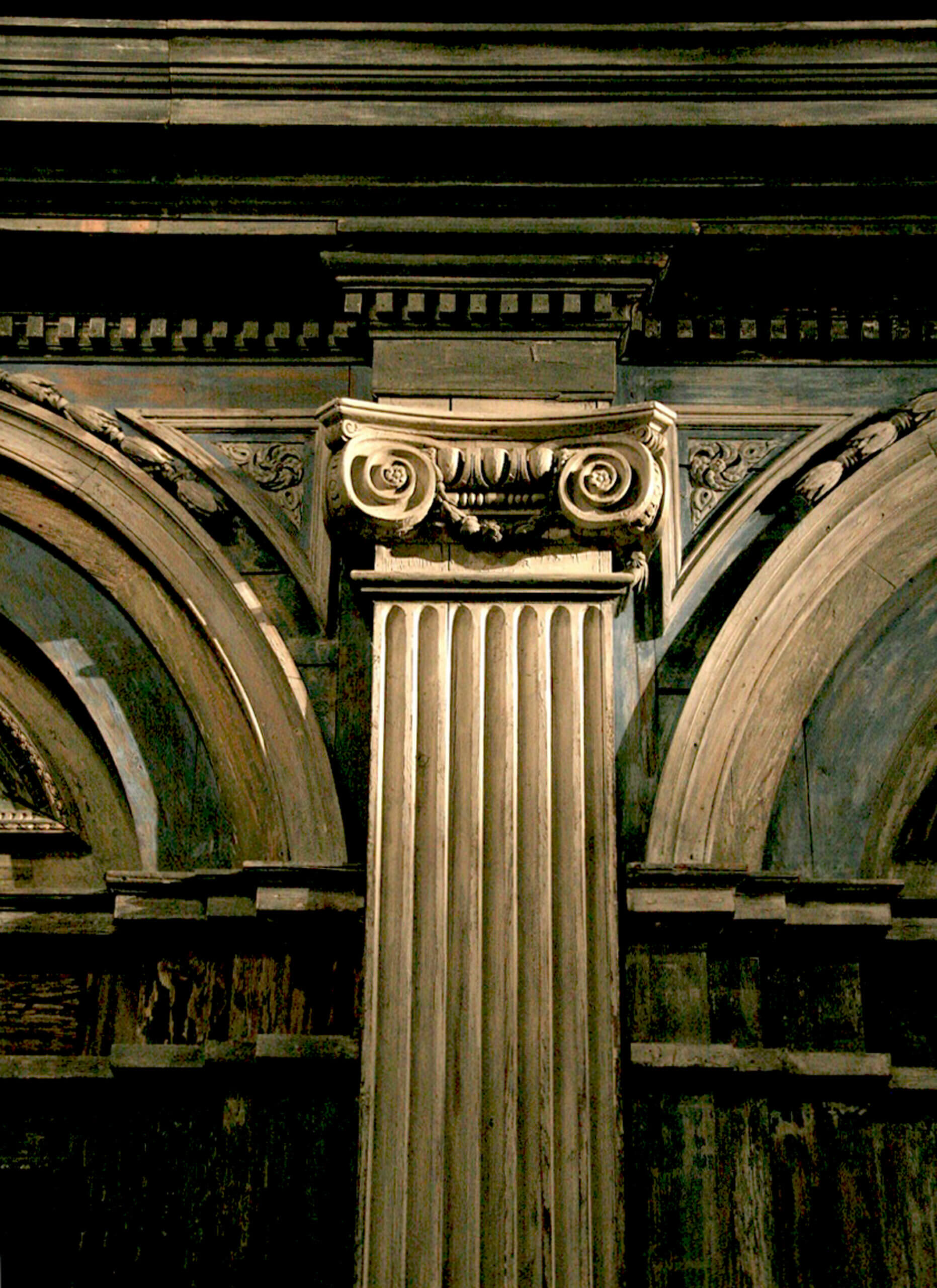
The integration of height and columnation governing the rhythmic sequence of the bays, lends a striking sense of power to the ensemble. The sides of each beaded semi-circular arch are flanked by fluted pilasters which are partially cabled and crowned with Ionic capitals. Two small floral ornaments emerge from the whirling rosettes in the sconcheons. A bracket with beaded fillet and rosette carved at the top of each panel protrudes from a ledge subtly enhanced by a dentil shaped frieze. Each pier has a curved plain spandrel with a simple moulded border with highlights of beaded fillets, small floral ornaments and flutings – a framing decoration also found surrounding mirrors and niches. Most extraordinary, and in keeping with an aesthetic formula favoured in the 18th century, is the chromatic leitmotiv of the alternating blue and white palette of the ungilded wainscoting.

The present decoration is a major landmark in interior design, inaugurating the return of classicism that marked the later years of the reign of Louis XV (1715-1774). Instead of yielding to decorative painting, the architect shows a determined preference for the interplay of sculpture and mouldings. The resulting effect is one of both power and restraint that may be traced back to the style of Louis XIV during the years 1700-1710. The predominate scheme of such decoration, echoed in contemporary furniture design, was inspired by the architectural elite in the years 1770-1780.

Similar examples of structured wood paneling, alternating semi-circular arches and pilaster s were soon seen not only in the apartments of the whealthiest Parisian and French provincial town-houses, but also abroad where French influence was strongly felt.
Pierre-Louis Moreau-Desproux, an architect aided by the ornamental sculptor Marchand, thus created a ceremonial bedroom in 1766-1767 in the same spirit for Marie-Charles d’Albert, duke of Chevreuse and the son of the famous duke of Luynes, the author of the Journal historique sur la cour de Louis XV (Historical Journal of the court of Louis XV). The white and gold woodwork, installed in his hôtel 33 rue Saint-Dominique, is now to be seen in one of the rooms of the Works of Art Department in the Louvre Museum (Pons, pp. 301-308).
In another example, in 1789, Monsieur de Rosières, president of the parliament of Franche-Comté decided to refurbish and update his family townhouse in Besançon. He turned to the architect Claude-Antoine Colombot (1747-1821), who trained in Paris with Jean-Louis Deprez, who created the décor for a grand drawing room that was fitted with white wood panelling that presents a similar architectural aspect to the one presented here. The major difference is that in this particular case the fluted columns with their ionic capitals were twinned.
These two striking examples show the extent to which this type of architecture had become a question of fashion, followed abroad as well as in Antwerp, and also adopted by artists for portraits of their models in fashionable interior surroundings, as can be seen for Nicolas Lafrensen, called Lavreince, in his famous gouache entitled L’Assemblée au Salon (Meeting in the Drawing Room), or for Jean Valade (1709-1787) with his portrait of the marquis and marquise of Faventine (Feray, p. 305). This picture is at present in a private collection.