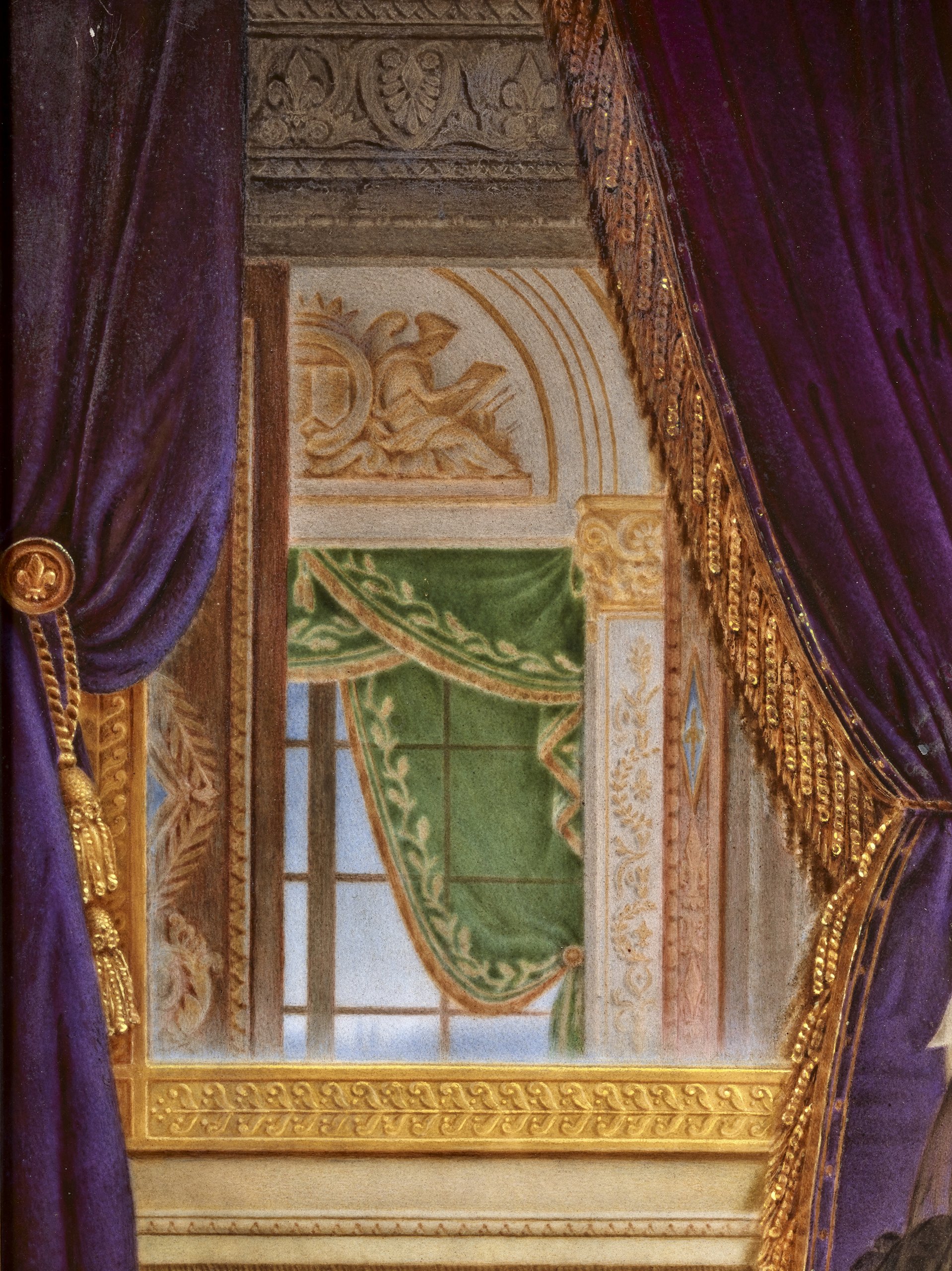
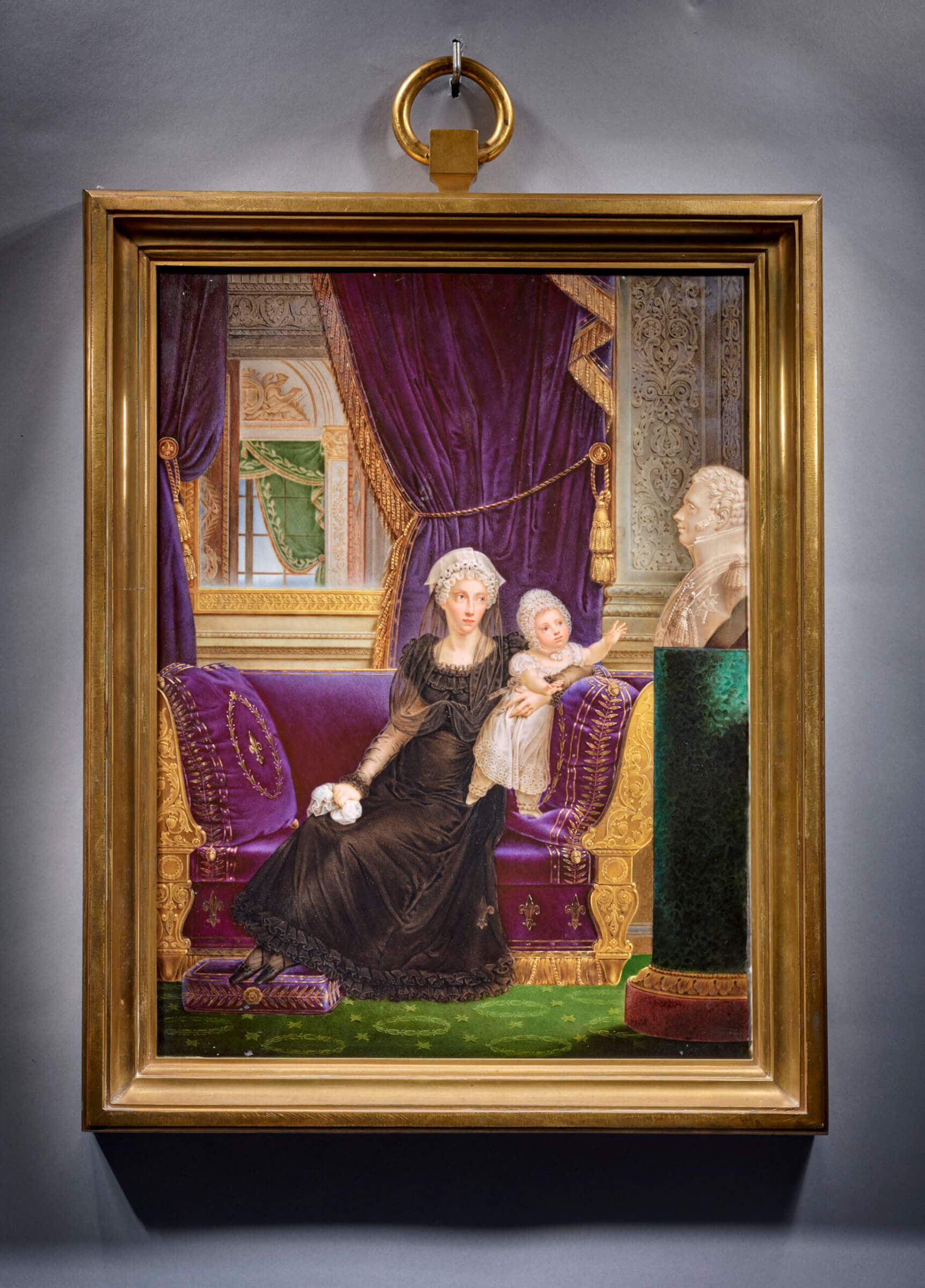
Hard-paste porcelain plaque from the Royal Porcelain Manufactory of Sèvres, 1820.
Frame in gilt bronze, chased and moulded (Rothschild period).
Plaque: H. 38 cm. (15 in.); W. 30 cm. (11 7/8 in.).
Dimensions with the gilt-bronze frame: total H. with the ring: 49.5 cm (19 ½ in.);
H. of frame without the ring: 43 cm (16 7/8 in.); W. 24 cm (9 ½ in.); D. 3.8 cm (1 ½ in.).
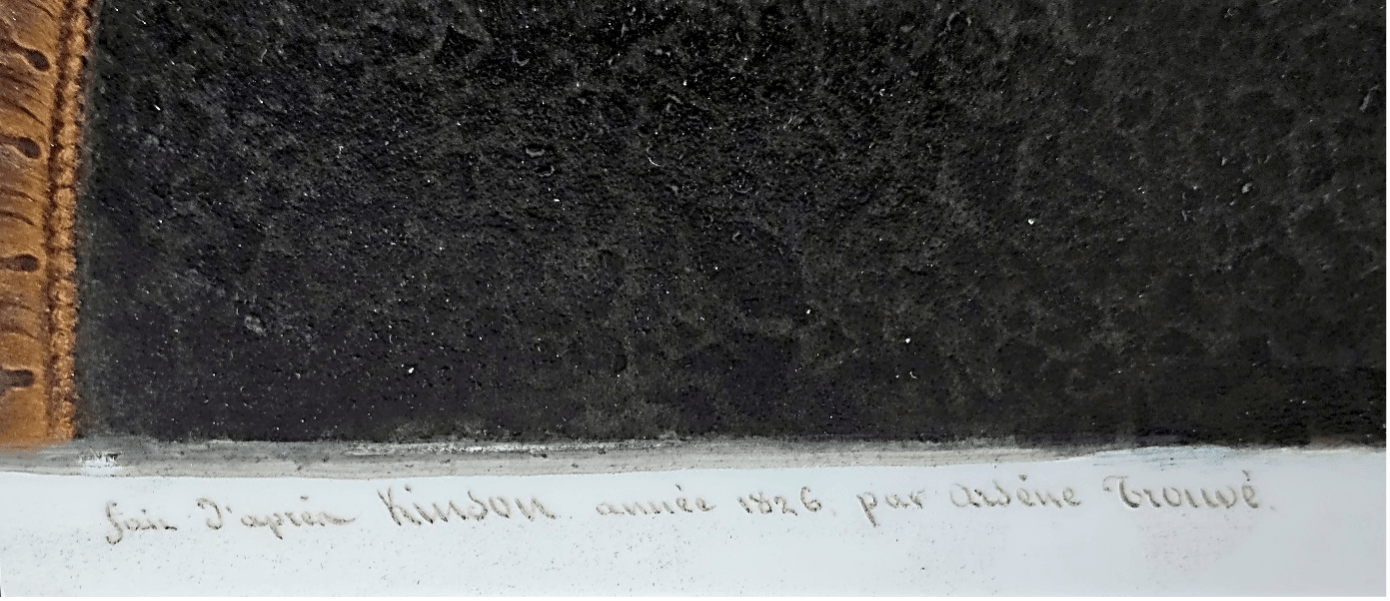
Handwritten inscription painted in black on the projecting white border on the right-hand side of the plaque: fait d’après Kinson année 1826 par Arsène Trouvé. (Made after Kinson in the year 1826 by Arsène Trouvé.)
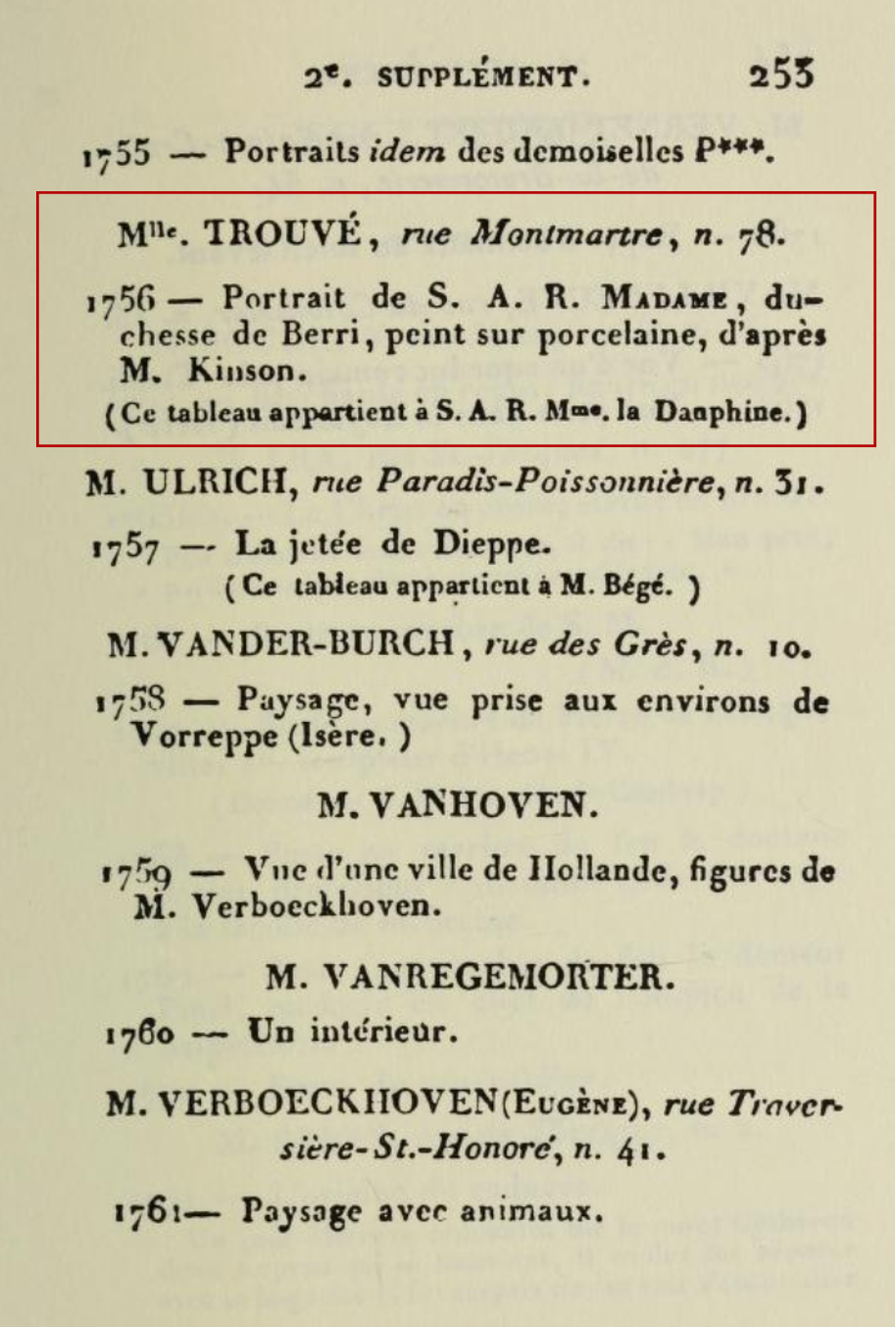
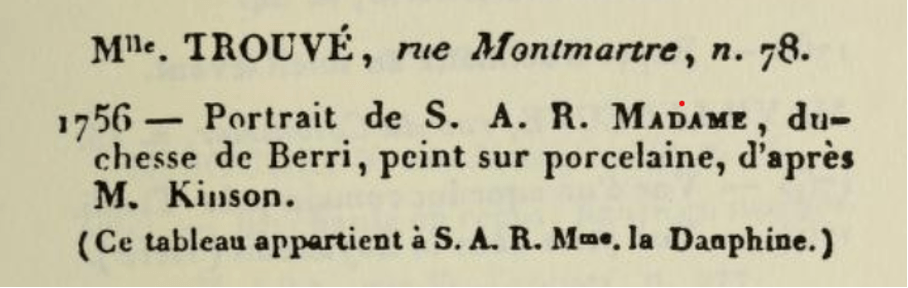
EXHIBITION: no. 1756 in the catalogue of the Salon of 1827 (2nd supplement, p. 253),
displayed at the Royal Museum of Arts [Louvre Museum] on 4th November 1827 :
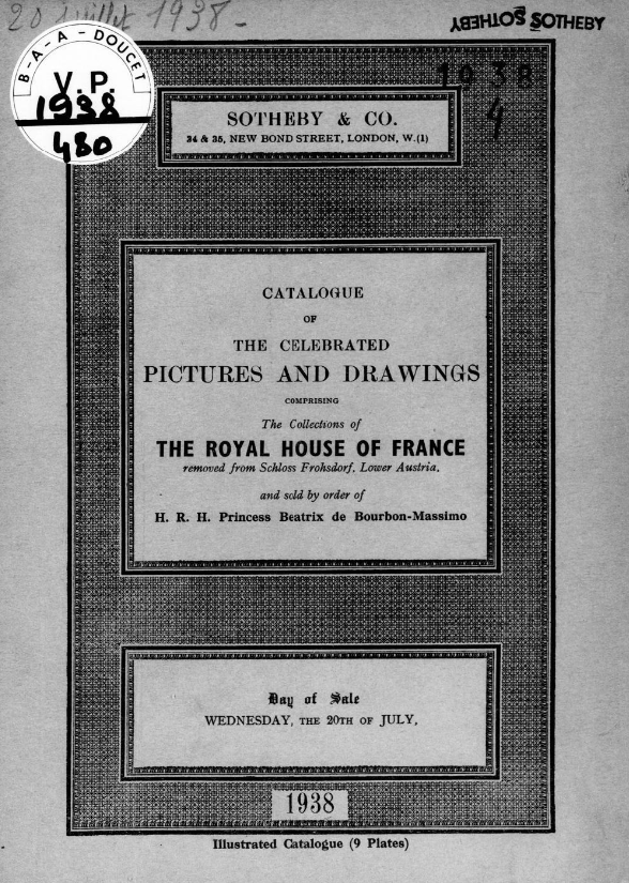
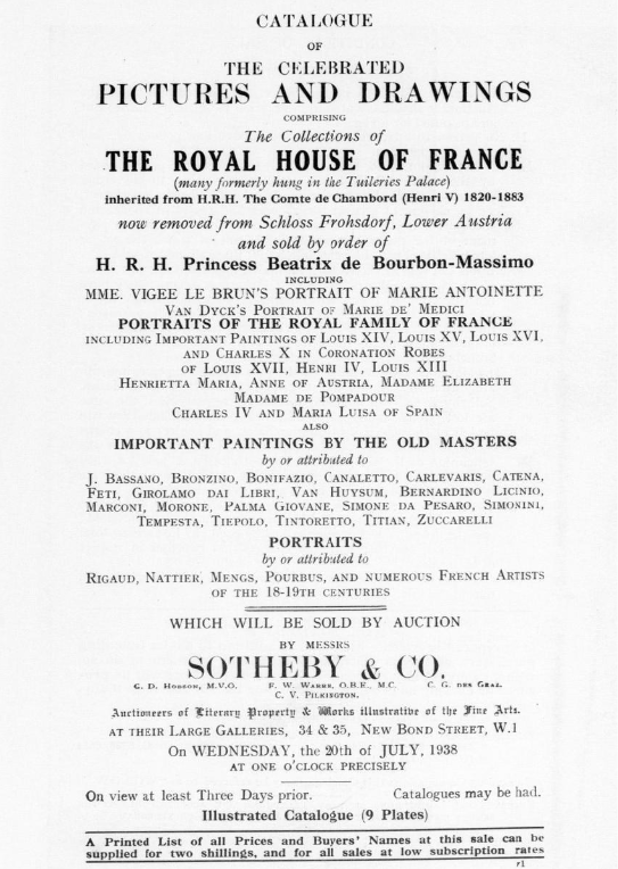
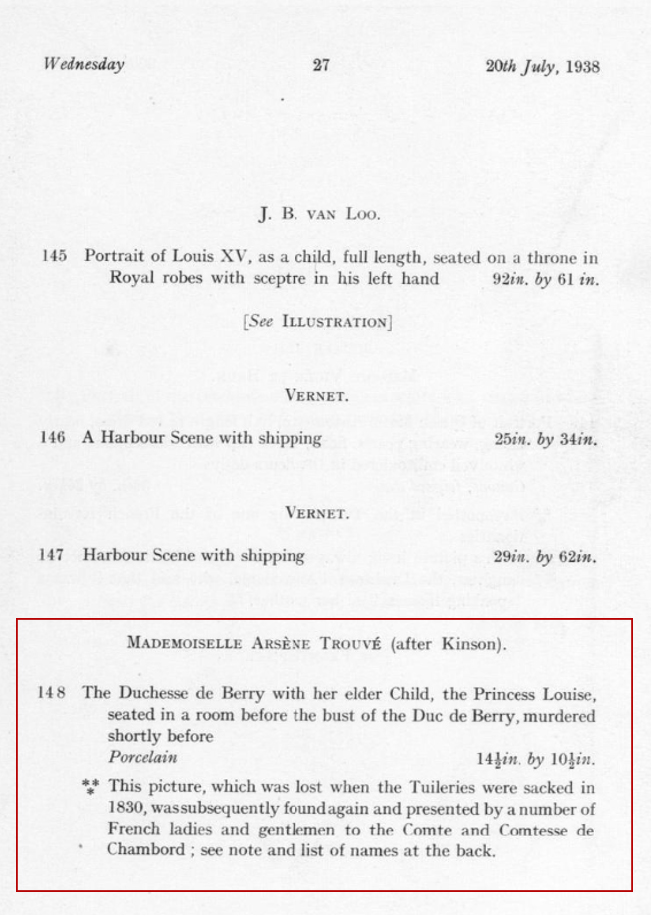
PROVENANCE: acquired between late 1826 and 4th November 1827 from Mademoiselle Arsène Trouvé by the Dauphine Marie-Thérèse Charlotte of France, Duchess of Angoulême (1778–1851), and placed by the latter in her oratory at the Tuileries Palace; lost in the sacking of the Tuileries during the Revolution of 1830, also known as the Trois Glorieuses (the Three Glorious Days), which took place on 27th, 28th and 29th July; found in an ‘antiques shop’ in Paris, identified and acquired through a subscription headed by the Marquise d’Epinay, with close to two hundred names; presented between 1851 and 1858 to Henri Charles Ferdinand Marie Dieudonné d’Artois (1820–1883), Duke of Bordeaux, better known under his courtesy title of Count of Chambord, son of the Duchess of Berry and Legitimist pretender to the throne of France as ‘Henri V’, in pious remembrance of his aunt; collection of the Count of Chambord at Frohsdorf Castle, located in Lanzenkirchen, near Vienna, Austria; then collection of his widow, the Countess of Chambord, Marie-Thérèse (1817–1886), Princess of Modena, Princess Royal of Hungary and Bohemia, and Archduchess of Austria-Este; collection of her great-nephew, Don Jaime de Bourbon (1870–1931), Duke of Anjou, son of Carlos de Bourbon (1848–1909), Duke of Madrid, and Margherita of Bourbon-Parma (1847–1893), and Legitimist pretender to the thrones of France and Navarre as Jacques I; upon his death without a direct heir in 1931, collection of his sister, Princess Beatrice of Bourbon (1874–1961), who married, on 27th February 1897 in Venice, Prince Fabrizio Massimo (1868–1944), Prince of Roviano and Duke of Anticoli-Corrado, a descendant of the Duchess of Berry through his mother; auction by the latter, to settle the liabilities of her brother’s estate, of 151 paintings and drawings from Frohsdorf Castle, at Sotheby & Co., London, on 20th July 1938: Catalogue of the Celebrated Pictures and Drawings comprising the Collection of the Royal House of France removed from Schloss Frohsdorf. Lower Austria. And sold by order of H. R. H. Princess Beatrix de Bourbon-Massimo; our painting on porcelain by Arsène Trouvé formed lot no.148 in the auction; acquired before 1956 from a Parisian antiques dealer by Baron Guy de Rothschild (1909–2007); collection of the latter at the Château de Ferrières, in Seine-et-Marne, until 1975, then at the Hôtel Lambert, Paris; by descent in the Rothschild family until 2023; acquired that year by Galerie Steinitz.
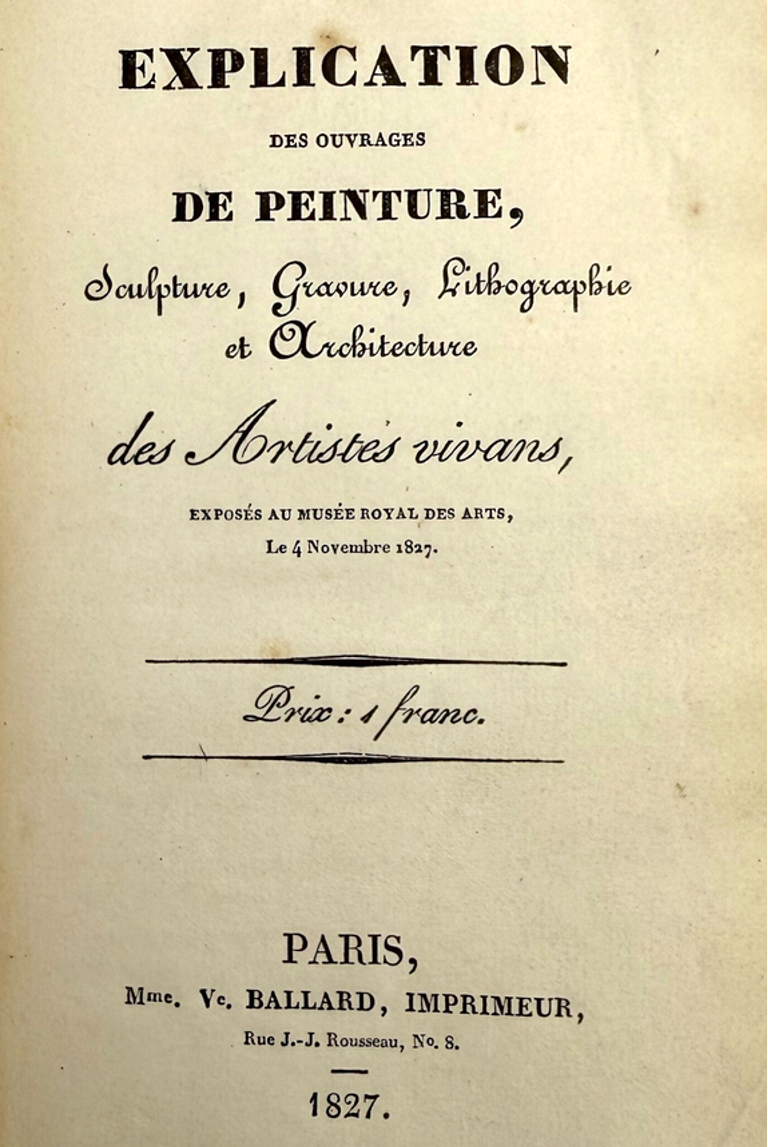
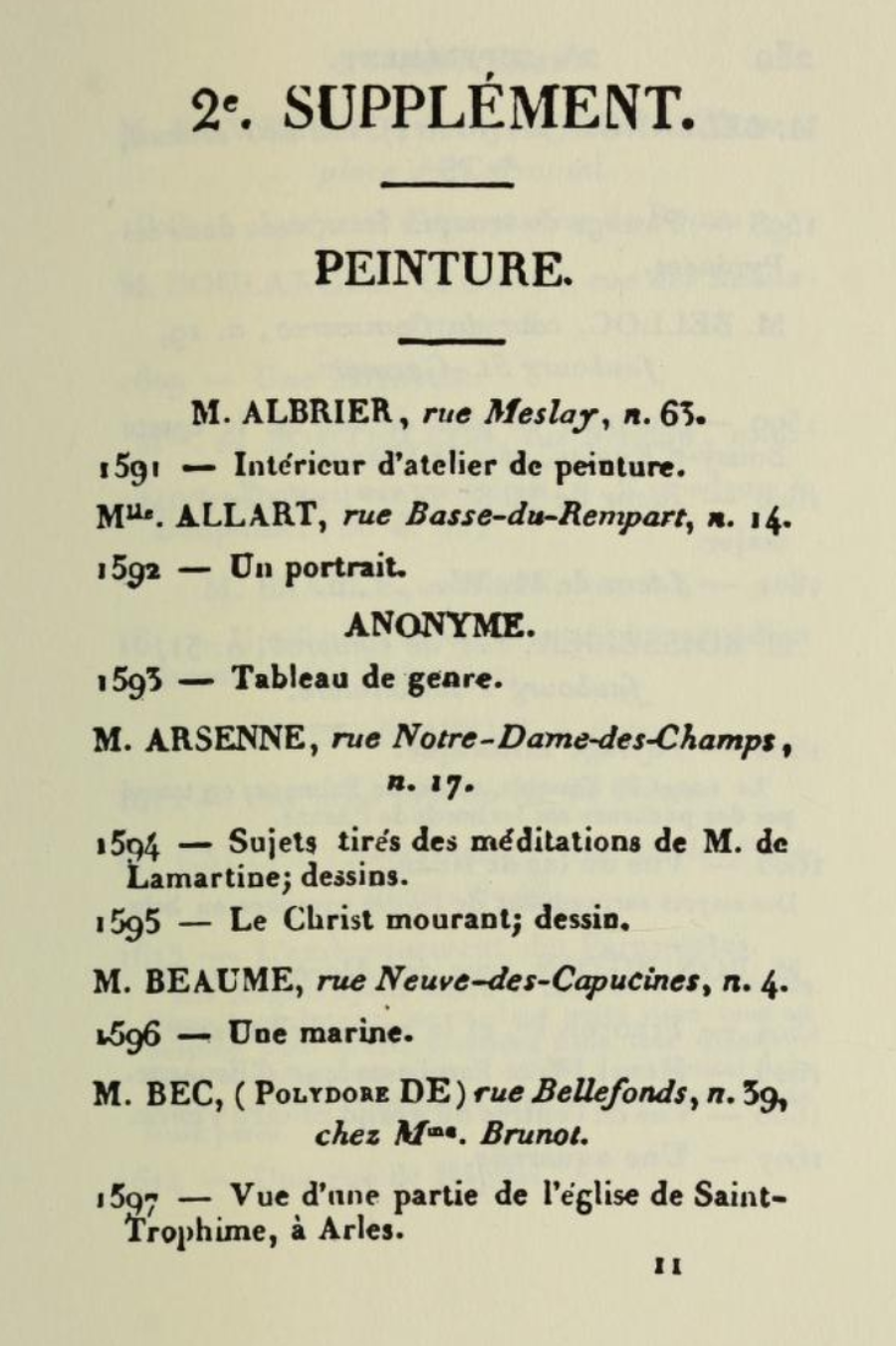
LITERATURE: Exposition des ouvrages de Peinture, Sculpture, Gravure, Lithographie et Architecture des Artistes vivans, exposés au Musée royal des Arts, le 4 novembre 1827, Paris, Mme Ve Ballard, printer, 1827, p. 253, cat. no. 1756; Marcelle Brunet, “Étrange destinée d’un portrait de la duchesse de Berry peint sur porcelaine par Mlle Arsène Trouvé (1821–1826)”, Cahiers de la céramique et des arts du feu, no. 2, March 1956, pp. 33–38, repr. p. 34.
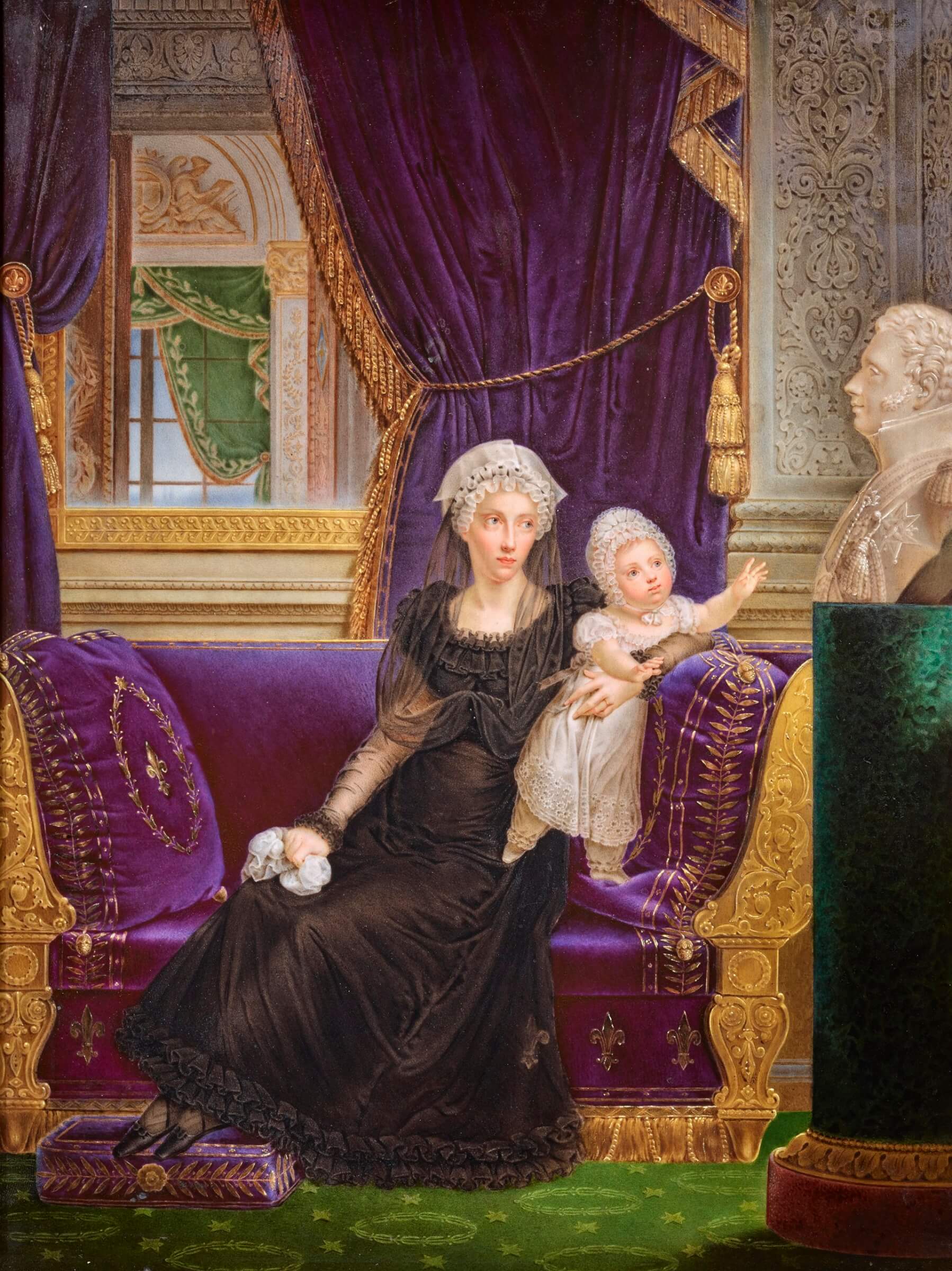
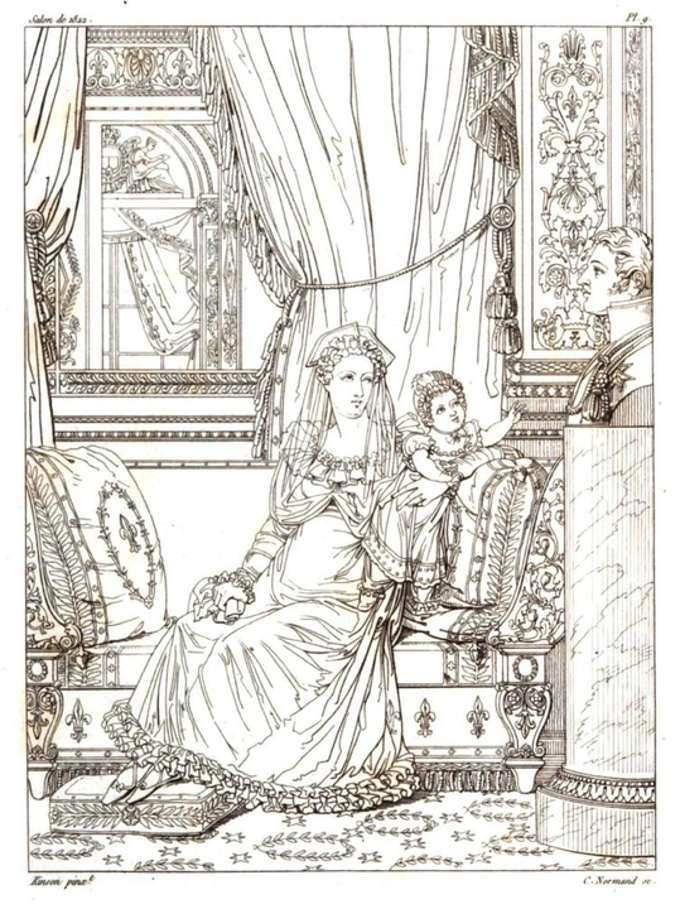
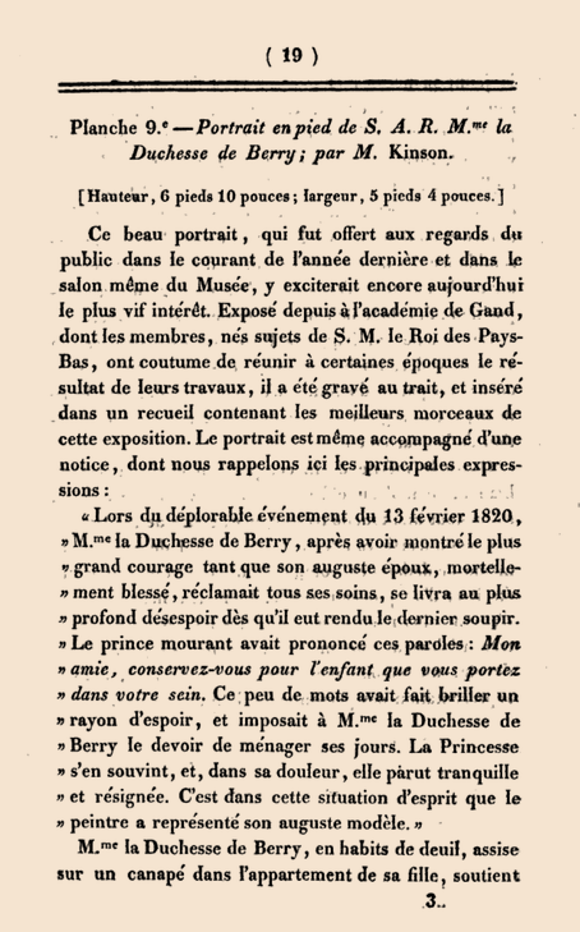
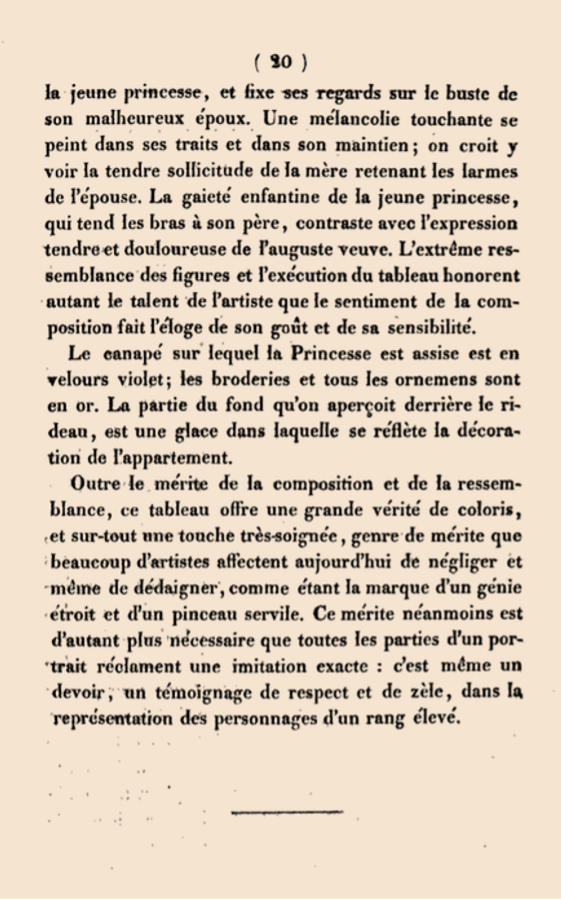
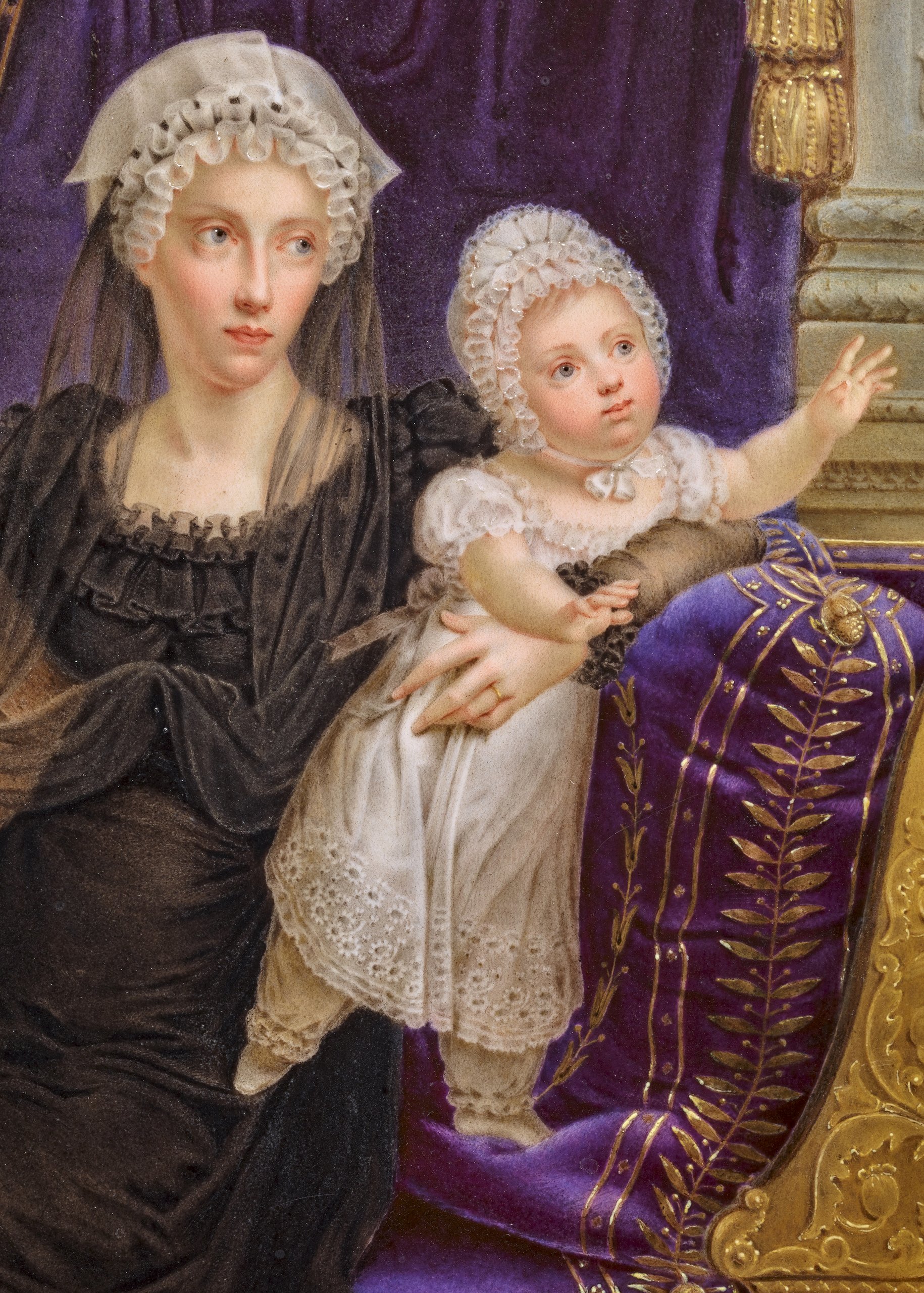
A work of remarkable refinement and precise execution, this painting was produced in 1826 on a hard-paste porcelain plaque measuring thirty-eight by thirty centimetres, supplied by the Royal Porcelain Manufactory of Sèvres to its author, Mademoiselle Arsène Trouvé (1795–1871), a painter attached to the manufactory. The latter based her work on the famous painting by the Bruges-born painter François-Joseph Kinson (1771–1839), which had been completed on 11th September 1820 and was presented that very day, amid considerable emotion, to its main subject and commissioner, to King Louis XVIII, and to the other members of the royal family. This painting depicts, at the centre of the composition, Marie Caroline Ferdinande Louise de Bourbon (1798–1870), Princess of the Two Sicilies and Duchess of Berry, then aged twenty-two at the time and at full term with Henri Charles Ferdinand Marie Dieudonné d’Artois (1820–1883), the future Duke of Bordeaux, who would be more widely known under his courtesy title of Count of Chambord. The Duchess, dressed in widow’s mourning, is seated beside her daughter, Louise Marie Thérèse d’Artois (1819–1864), the future Duchess of Parma and Piacenza, who was to celebrate her first birthday on the following 21st September, and, together with the child, is gazing at the white marble bust of her late husband, the Duke of Berry, a work by the Belgian sculptor Henri-Joseph Rutxhiel (1775–1837), who displayed it at the Salon of 1817; here it rests upon an ornate malachite sheath column, set on a red marble plinth embellished with a double frieze of acanthus leaves and a gilt-bronze beaded border. The scene was magnificently described in an entry accompanying Kinson’s work when it was exhibited at the Salon of 1822, which opened its doors on 24th April at the Musée Royal desArts [Louvre Museum], an entry that was reported and commented upon by the painter Charles-Paul Landon (1760–1826), Painter to the late H.R.H. the Duke of Berry and Curator of Paintings at the Royal Museums, in the first volume devoted to the Salon of 1822, published that same year in Paris in the Annales du Musée et de l’Ecole Moderne des Beaux-Arts: “During the deplorable event of 13th February 1820, the Duchess of Berry, having shown the greatest of courage whilst her august husband, fatally wounded, required her every care and attention, was overcome by the deepest despair as soon as he had breathed his last. The dying prince had uttered these words: My dearest, preserve yourself for the sake of the child you carry in your womb. These few words had sparked a glimmer of hope in her heart and imposed upon the Duchess of Berry the duty to preserve her life. The Princess remembered them and, in her grief, appeared calm and resigned. It is in this state of mind that the painter has depicted his august model. The Duchess of Berry, dressed in mourning and seated on a sofa in her daughter’s apartment, supports the young princess and fixes her gaze upon the bust of her ill-fated husband. A touching melancholy is reflected in her countenance and bearing; it seems as though the tender solicitude of the mother is holding back the tears of the wife. The childlike cheerfulness of the young princess, who is reaching out her arms to her father, stands in contrast to the tender and sorrowful expression of the august widow. The extraordinary resemblance of the figures and the execution of the painting bear witness to the artist’s talent, just as the sense of composition is a tribute to his taste and sensitivity. The couch on which the Princess is seated is upholstered in purple velvet; the embroidery and all the adornments are in gold. The portion of the background that can be seen behind the curtain is a mirror in which the décor of the apartment is reflected. Apart from the merits of its composition and likeness, this painting displays great fidelity of colour and, above all, a very meticulous touch, a quality that many artists today affect to neglect and even scorn, as if it were the mark of a narrow genius and a servile brush. This merit, however, is all the more essential as every part of a portrait demands exact imitation: it is, in fact, a duty—a token of respect and diligence—when depicting figures of high rank.”
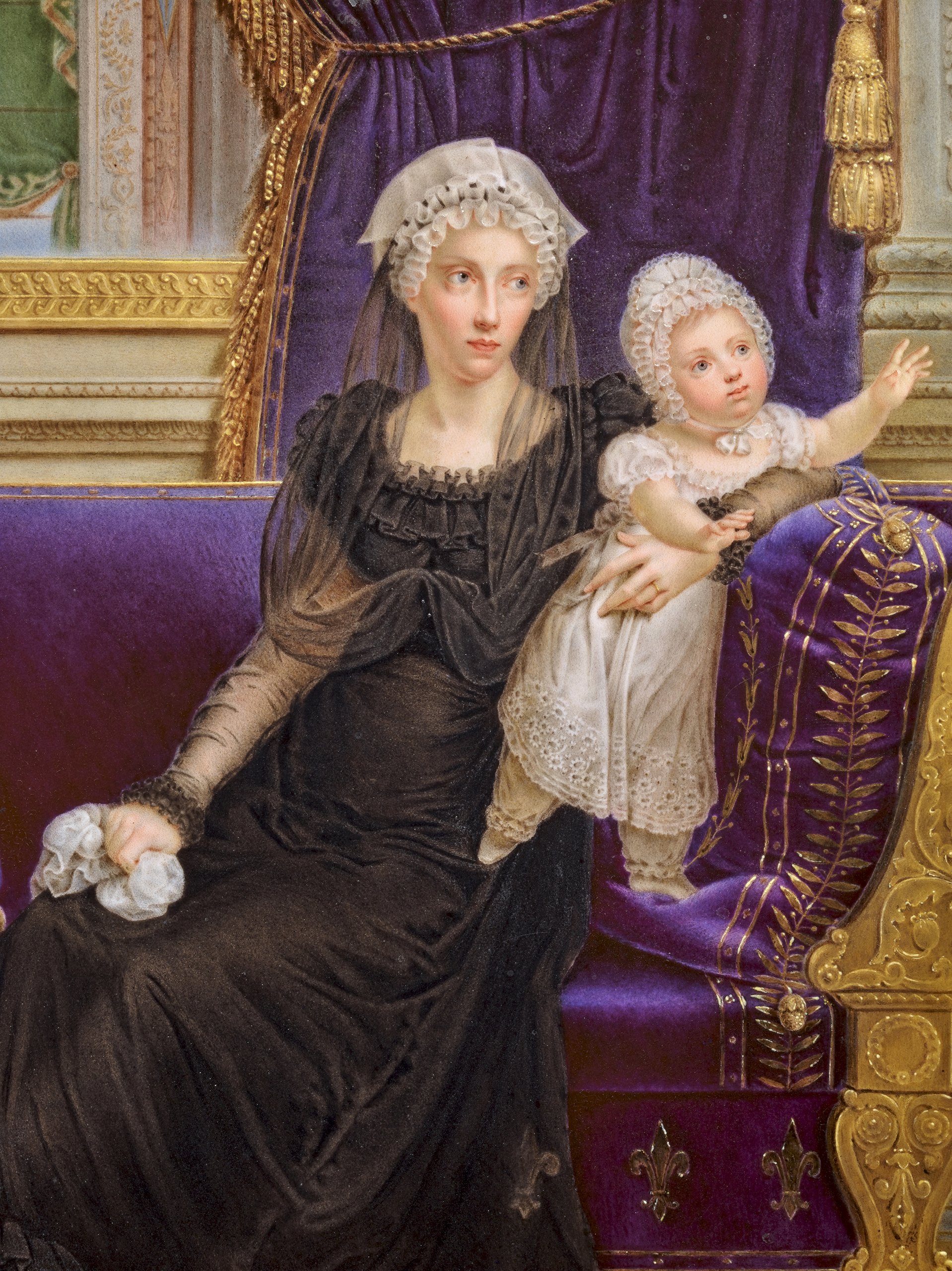
Kinson’s tribute to this tragedy caused a considerable stir, as the young Victor Hugo himself was to write: “All Paris wanted to see this painting; on that particular occasion, we took pleasure in following fashion, and it is with delight that we pay the artist a well-deserved tribute of praise. His composition is of the truest, most moving and most dramatic effect; all the French commend it just as highly as the King does.” The latter rewarded the painter by elevating him to the rank of Knight of the Royal Order of the Legion of Honour. As the birth of the future Duke of Bordeaux drew near—on Friday 29th September 1820—the Duchess of Berry decided that “when the time came, she would have her bed placed in her salon; above her head would hang the portrait of the Duke of Berry, painted by Gérard, and before her eyes the painting by Kinson […] in which she is depicted weeping with her daughter at the foot of her husband’s bust. I shall feel him close to me, she had declared, and that will give me greater courage.”
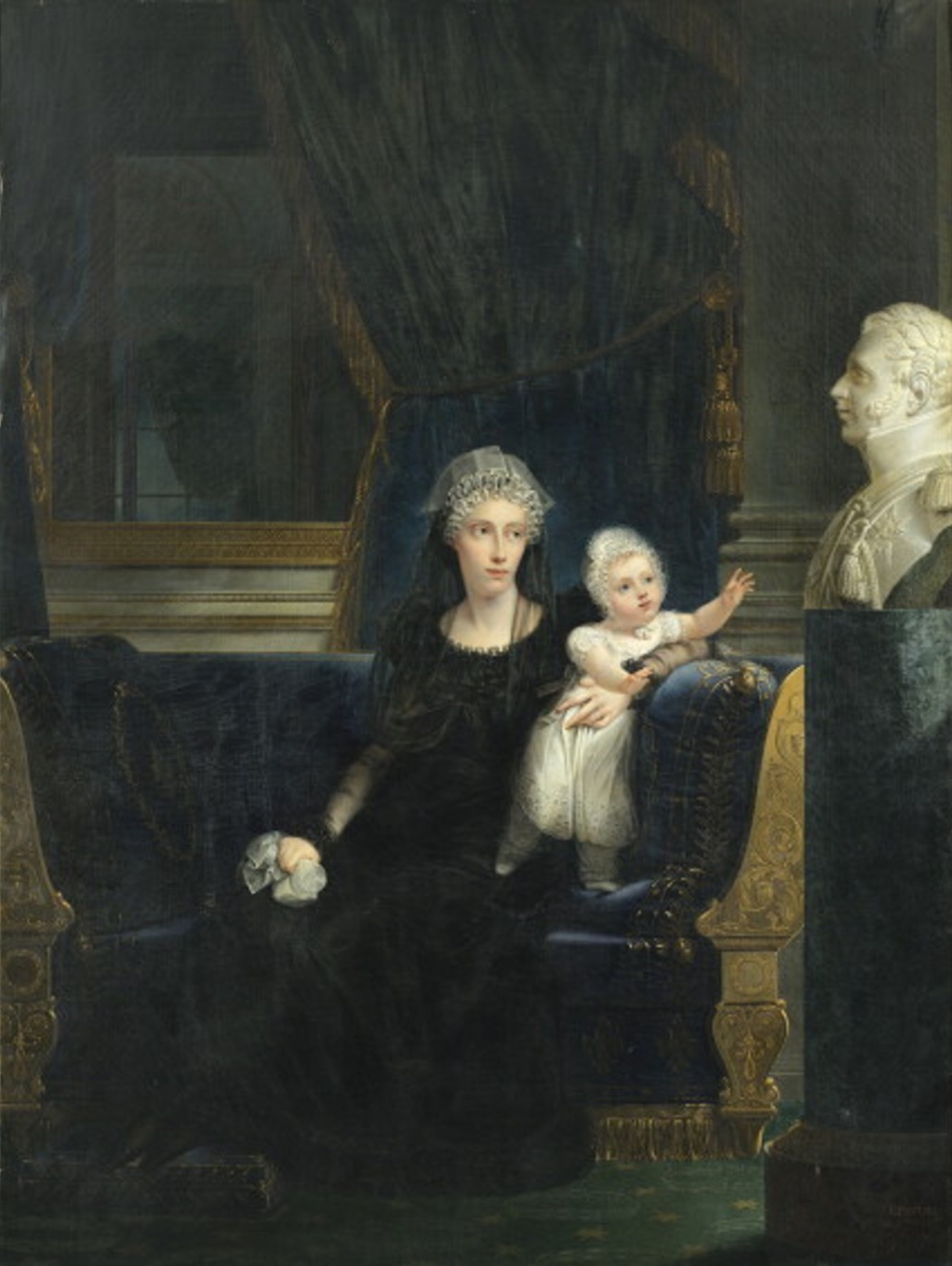
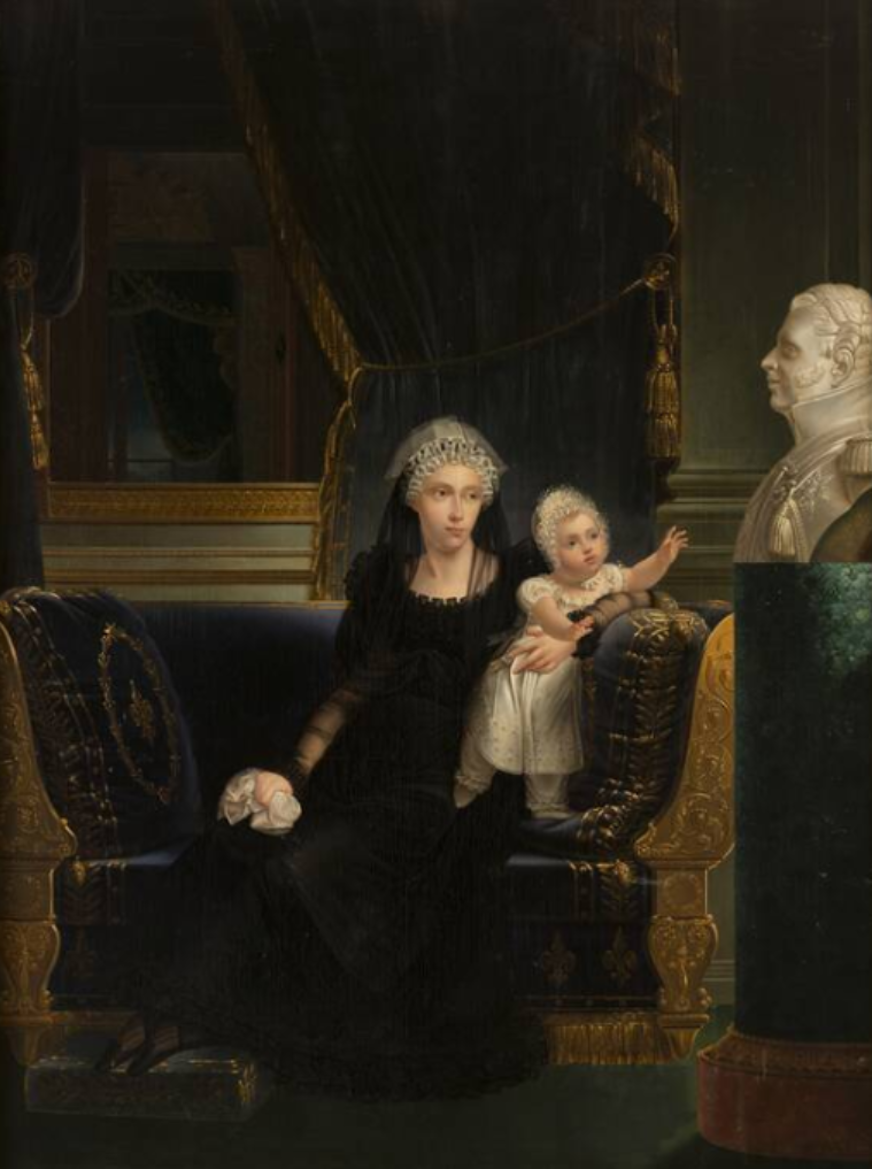
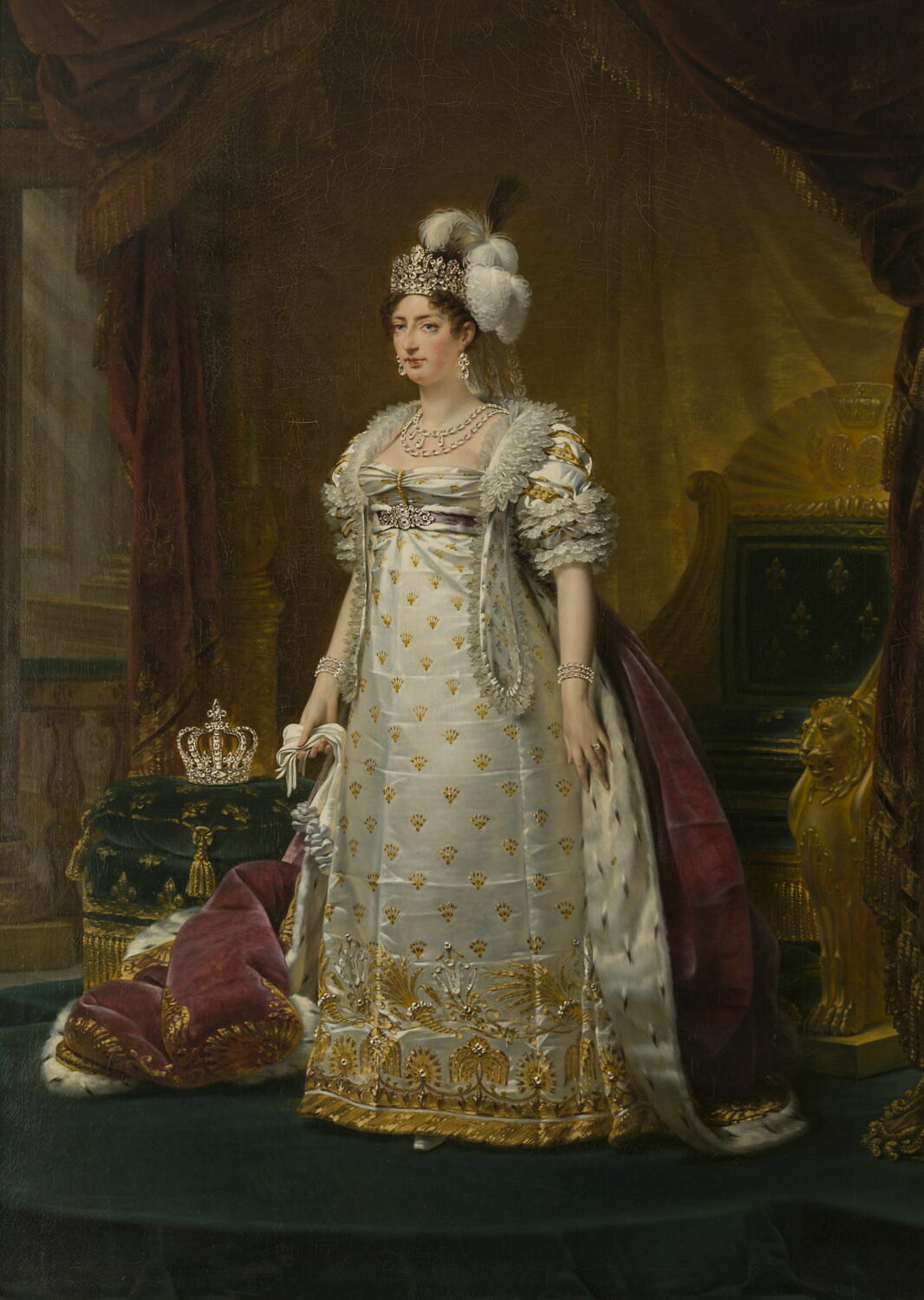
A replica of the painting by Kinson belonging to the Duchess of Berry was commissioned by the Duke of Angoulême, Louis-Antoine d’Artois (1775–1844), eldest son of Charles-Philippe of France (1757–1836), the future Charles X, and Maria Theresa of Sardinia (1756–1805), and by the Duchess of Angoulême, Marie-Thérèse Charlotte of France (1778–1851), daughter of Louis XVI and Marie-Antoinette. This painting was to share the Duchess of Angoulême’s fate in exile and, from 1843 onwards, would adorn Frohsdorf Castle, located in Lanzenkirchen, near Vienna, Austria. The Count of Chambord, proclaimed king under the name Henri V by the Legitimists upon his uncle’s death in 1844, inherited it, along with the castle, in the wake of his aunt’s death in 1851. Sold in 1942, this painting was acquired four years later by the Palace of Versailles at an auction held on 22nd November 1945 at the Hôtel Drouot, where it fetched 5,830 francs, and entered the collections of the Palace on 11th January 1946.
It was none other than the Duchess of Angoulême, who became Dauphine of France upon the death of Louis XVIII in 1824, who acquired our painting on porcelain either in 1826, the year it was completed by Arsène Trouvé, or in 1827, before 4th November, the date of the inauguration of the Salon at the Royal Museum of Arts, where the artist exhibited the work under catalogue number 1756: “Mlle Trouvé, 78 rue Montmartre./1756—Portrait of H.R.H. Madame, Duchess of Berry, painted on porcelain, after M. Kinson”, with the additional note in parentheses: “This painting belongs to H.R.H. Mme la Dauphine.”
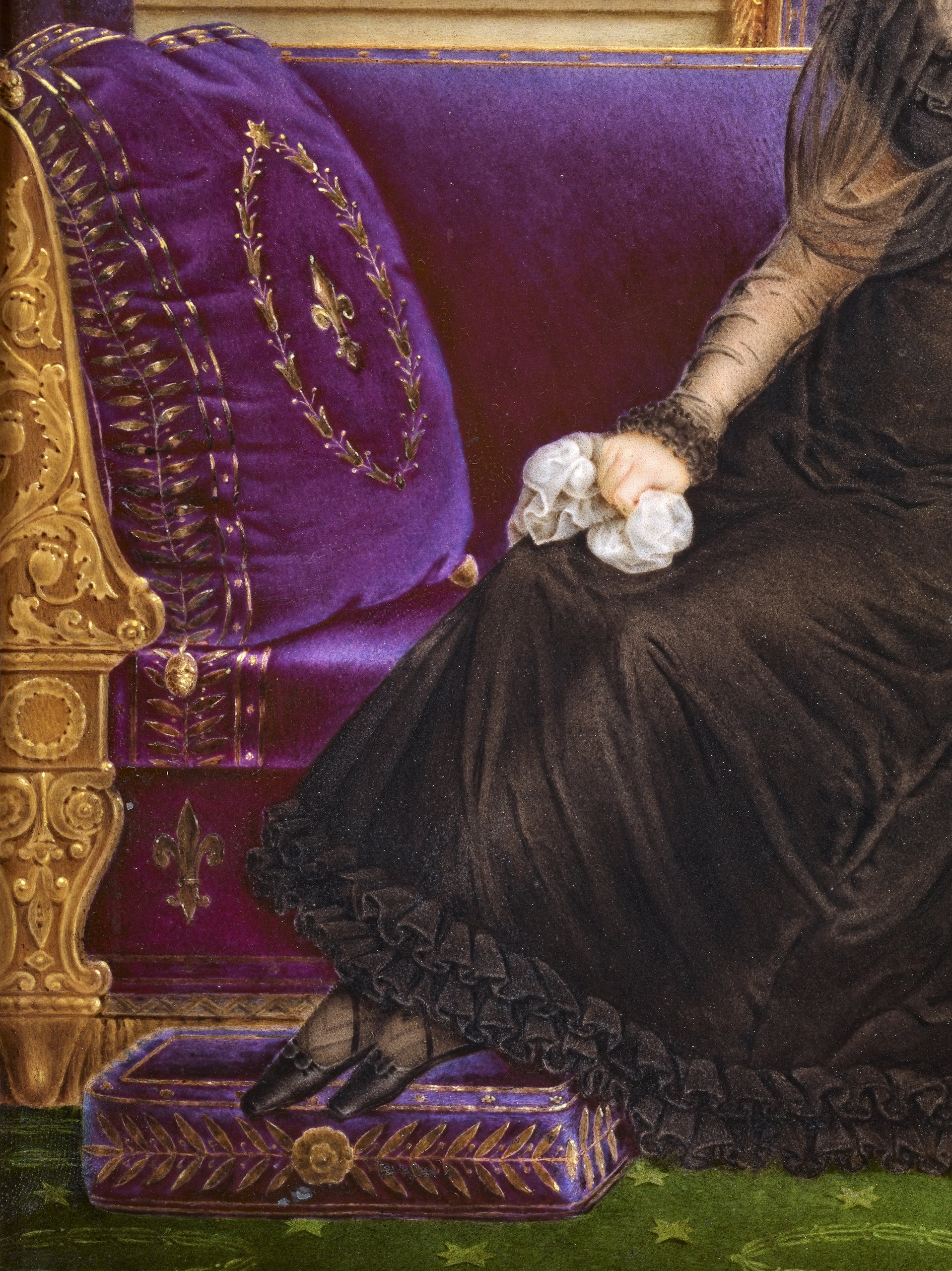
As early as 23rd October 1820, Mademoiselle Trouvé, then aged twenty-five, had obtained direct authorisation from the Duchess of Berry to copy Kinson’s painting in a personal capacity.
Having earned the approval of the Sèvres Porcelain Manufactory in 1818, after being most warmly recommended to its director, Alexandre Brongniart (1770–1847), by Jean-Baptiste-Antoine Georgette du Buisson (1781–1856), Viscount de La Boulaye and Secretary-General of the Ministry of the King’s Household, she expressed a keen hope of being able to carry out this work on behalf of the manufactory, considering the works with which she had been entrusted up to that point to be insufficient—and, the truth to tell, of little significance. In a letter dated 2nd November 1820 and quoted by Marcelle Brunet in her 1956 article, she informed Brongniart of her views, expressing her fears about the scale of such an undertaking, asking him for “sound advice” and assuring him of all the care she would devote to it: “Perhaps, on that assumption, you would consent to my undertaking it on behalf of the Manufactory, and I did not wish to begin prior to knowing your intentions in that regard.”
It may well have been Mlle Arsène Trouvé who prompted an official commission for the manufactory, which followed a little over four months later, on 8th March 1821, when the Marquis Claude-Henry-Étienne Bernard de Sassenay (1760–1840), secrétaire des Commandements (Secretary of the Household) to the Duchess of Berry, commissioned Sèvres to execute a plaque reproducing Kinson’s painting. This work was entrusted to the painter Jean-Baptiste Zwinger (1787–?), active at Sèvres since 1811, who was provided with a porcelain plaque measuring fifty-one by forty-three centimetres for this purpose and set to work in August 1821. An amusing detail is that, in a letter addressed to Brongniart on the 13th of that month, Zwinger complained to the director that “one of the ladies working in the same workshop [at the Royal Museum, to which he had had Kinson’s painting transferred] is making a copy of the same portrait, and it is not possible for us to work at the same time without getting considerably in each other’s way. Could you be so kind as to ask her to suspend her work, if possible, until I have completed my own copy?” Completed in 1822, it suffered an unfortunate mishap when its surface flaked during the final firing. Originally expected to fetch circa 5,000 francs, it was finally delivered on behalf of the Duchess of Berry on 6th January 1823, but at a price of 2,000 francs and accompanied by the description “very defective”.
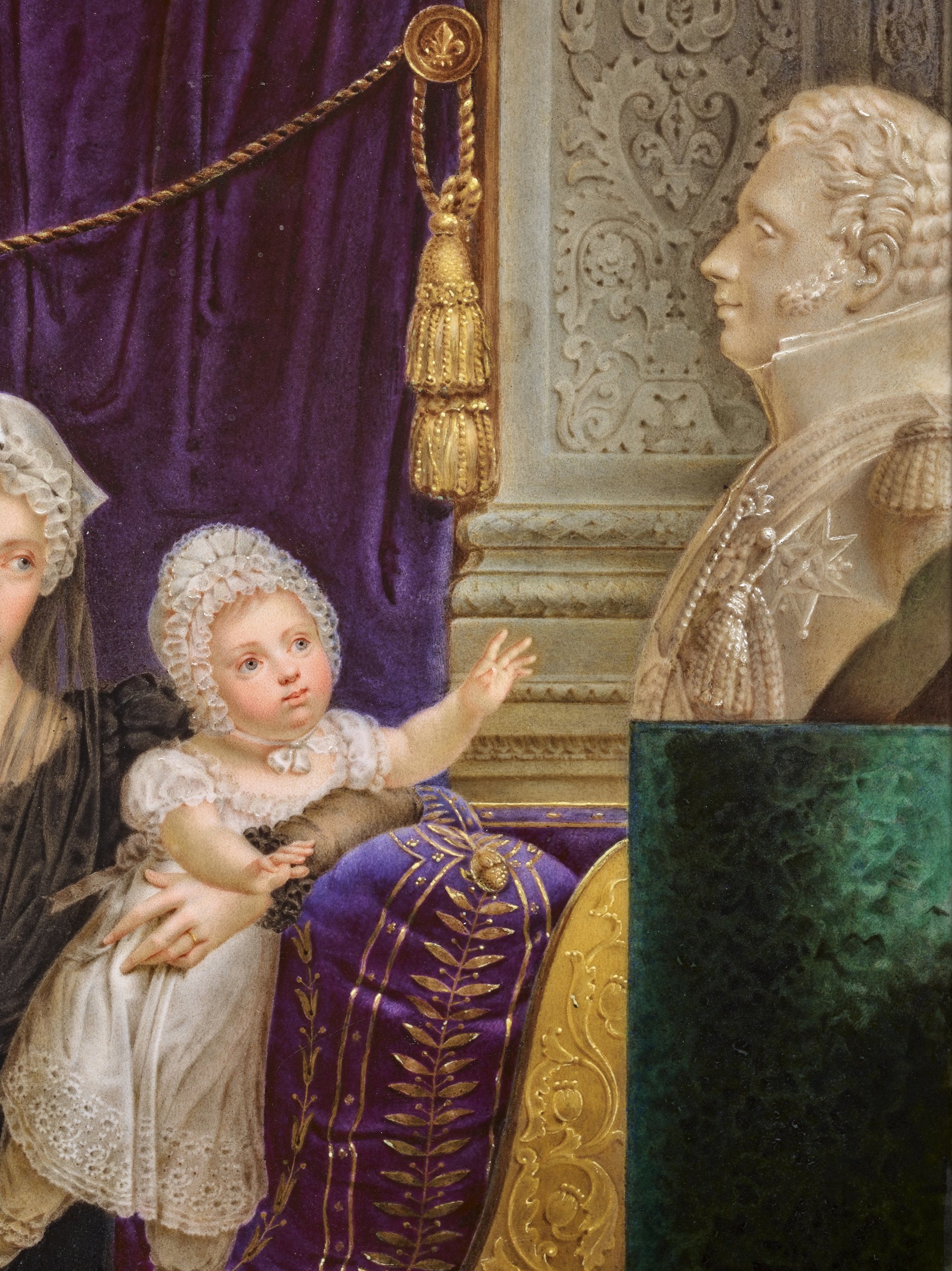
As regards Mademoiselle Trouvé, she was eventually given permission by Brongniart to make her own copy, but on her own account. He did, however, agree to provide her with a porcelain plaque measuring thirty-eight by thirty centimetres, granting her the option of paying for it with artwork; he also supplied her with Sèvres colours and promised to have the firings carried out in the manufactory’s kilns. He even proposed to purchase it should the result prove satisfactory.
The young painter received advice and encouragement from Kinson himself, as well as from Claude-Charles Gérard, chief painter at Sèvres. On 27th February 1822, as the final retouching and firing were being carried out, she wrote to Brongniart, asking him to let her know “whether you are satisfied, as I fervently hope you are”. To her great disappointment, and despite the intrinsic and acknowledged quality of her work, it was not acquired by the porcelain manufactory. The artist kept it at her home for nearly four years, and on 26th September 1826, having definitively completed it—as evidenced by the inscription she painted on the white right-hand border of the plaque: fait d’après Kinson année 1826 par Arsène Trouvé (made after Kinson in the year 1826 by Arsène Trouvé)—she decided to send it directly to Brongniart, accompanied by a letter informing him that, wishing to sell her work, she wanted first to offer it to the porcelain manufactory so that “if they purchase it, it [her painting on porcelain] will be known nowhere but in their shops”, adding—with modesty, feigned or otherwise: “[…] this copy, I know, does not possess all the merits of execution displayed by Mr Zwinger’s […] but it has not suffered the mishaps that greatly mar this kind of painting. To my knowledge, there are no other copies on porcelain apart from these two. I hope this will be another consideration that will speak in my favour […]”. To her great despair, Brongniart refused, judging that the subject of the plaque was no longer topical and that there was accordingly little hope of selling it, despite the high quality of its execution.
Now free to act as she pleased, and clearly regarding her painting as her masterpiece, Mademoiselle Trouvé then presented it, as we have seen, to the Duchess of Angoulême, who did not need to be asked twice to acquire it. The Princess, whose charity and profound piety had earned her a reputation of Sainte Royale, had it placed in her oratory at the Tuileries Palace.

The work disappeared when the palace was looted in the Revolution of 1830, known as the Trois Glorieuses, which took place on 27th, 28th and 29th July. Its subsequent history is known to us thanks to an undated inscription, calligraphed in black ink and punctuated with gold fleurs-de-lis, which had been framed on the reverse of a rosewood frame with fine copper inlays, in which the plaque was mounted when Baron Guy de Rothschild acquired it from a Parisian antiques dealer whose name is unknown to us. When Marcelle Brunet examined the plaque at the baron’s residence in preparation for her article, “Étrange destinée d’un portrait de la duchesse de Berry peint sur porcelaine par Mlle Arsène Trouvé (1821–1826)”, published in March 1956 in the Cahiers de la céramique et des arts du feu, she was able to inspect the inscription and transcribe it in its entirety. Unfortunately, the inscription has now disappeared, most likely at some point after the Rothschilds decided to replace the original frame with the current gilded bronze one. This precious inscription read as follows: “The painting executed by Mlle Arsène Trouvé after Kinson’s large painting had been commissioned by Madame la Dauphine and placed by her in her oratory. Having disappeared during the looting of the Tuileries in 1830, it was rediscovered in an antiques shop. As soon as its discovery was reported and its identity confirmed, a subscription was organised by devoted friends, including many workmen, to buy it back and present it to the Count and Countess of Chambord as a cherished memento of a dearly loved aunt. « And now those who have the honour of laying it at the feet of their gracious princes are: Abbé Lecanu, the inventor of the painting; the marquis d’Épinay Saint-Luc, head of the subscription; Alain and Vatou, engravers, treasurers of the subscription […].” These names were followed by a list of nearly two hundred others, including those of Demarsy, a royal guardsman; Foucault, a sacristan; Henri, an optician; Firbach, a canon of Saint-Germain; and so forth.
The subscription almost certainly took place in the early years of the Second Empire, after the death of the Duchess of Angoulême at Frohsdorf Castle on 19th October 1851, and before the death of the marquis Timoléon Joseph d’Espinay Saint-Luc, head of the subscription, on 1st January 1858. Now in the possession of the Count of Chambord, Mademoiselle Trouvé’s porcelain painting became part of the collections of the Royal House of France at Frohsdorf. Following the count’s death in 1883, it belonged successively to his widow, Archduchess Maria Theresa of Austria-Este (1817–1886), Countess of Chambord, Princess of Modena and Princess Royal of Hungary and Bohemia; then to his great-nephew Don Jaime de Bourbon (1870–1931), son of Charles de Bourbon (1848–1909), Duke of Madrid, and Margherita of Bourbon-Parma (1847–1893), and Legitimist claimant to the thrones of France and Navarre under the name of Jacques I (he also bore the courtesy titles of Duke of Anjou and Duke of Madrid); and then to his sister, Princess Beatrice of Bourbon, Princess Massimo (1874–1961), who married Prince Fabrizio Massimo (1868–1944), Prince of Roviano and Duke of Anticoli-Corrado, in Venice on 27th February 1897. Through his mother, he was a descendant of the Duchess of Berry. As her brother had died unmarried in Paris, leaving behind considerable debts, Princess Massimo found herself compelled to arrange several sales. In 1936, she parted with the entire library of the Count of Chambord, as well as numerous portraits and drawings dating from the prince’s lifetime, which were sold to the prominent English booksellers Maggs Bros; and in 1938, one hundred and fifty-one paintings, all from Frohsdorf, were auctioned at Sotheby’s in London on 20th July. Mademoiselle Trouvé’s painting on porcelain formed lot number 148 in the sale: “Mademoiselle Arsène Trouvé (after Kinson). 148/The Duchesse de Berry with her elder Child, the Princess Louise, seated in a room before the bust of the Duc de Berry, murdered shortly before/Porcelain/14 ½ in. by 10 ½ in./This picture, which was lost when the Tuileries were sacked in 1830, was subsequently found again and presented by a number of French ladies and gentlemen to the Comte and Comtesse de Chambord; see note and list of names at the back ”.