

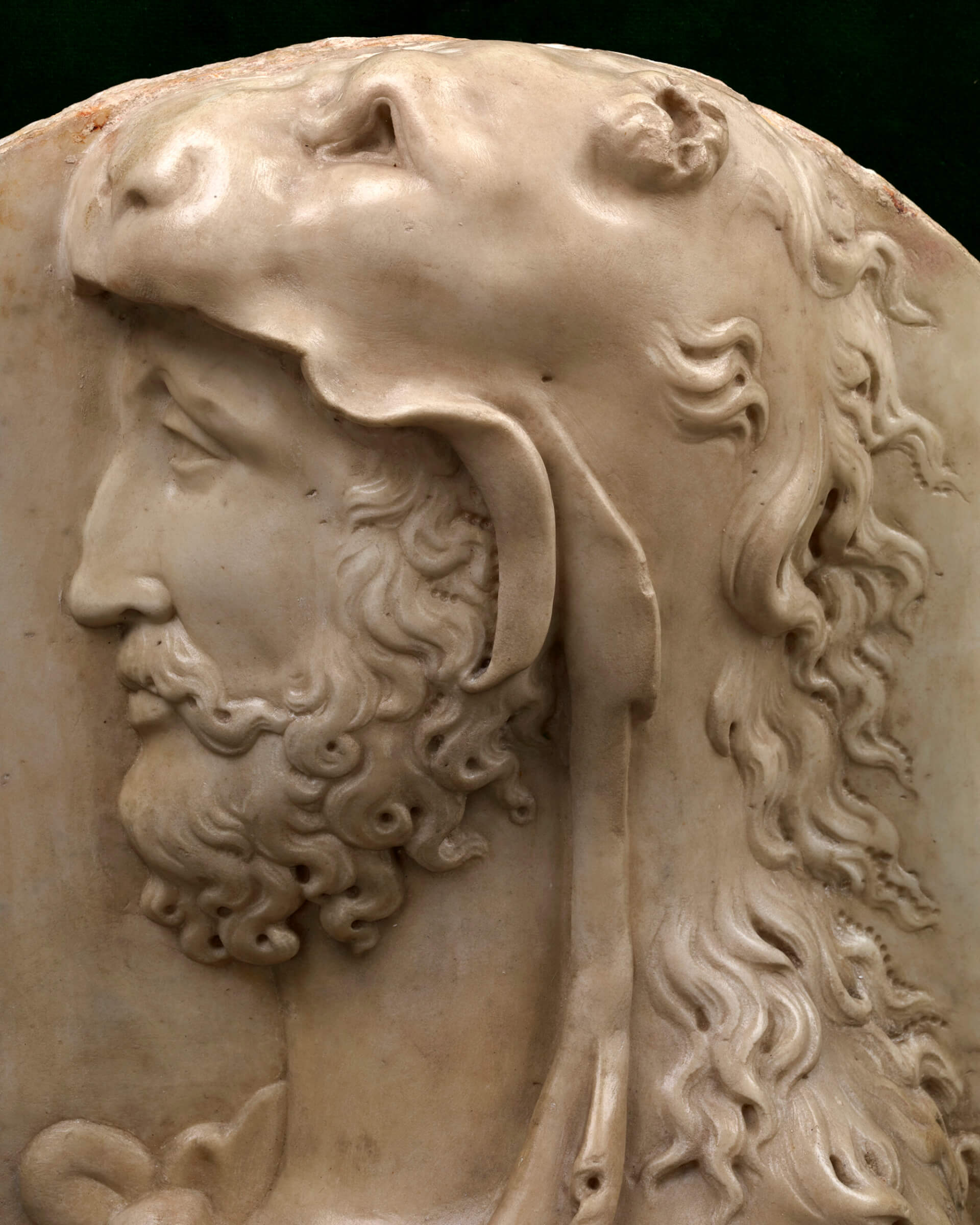
White Carrara marble.
H. 58 cm. (23 in.); W. 54 cm. (21 ¼ in.).
Provenance: private collection.
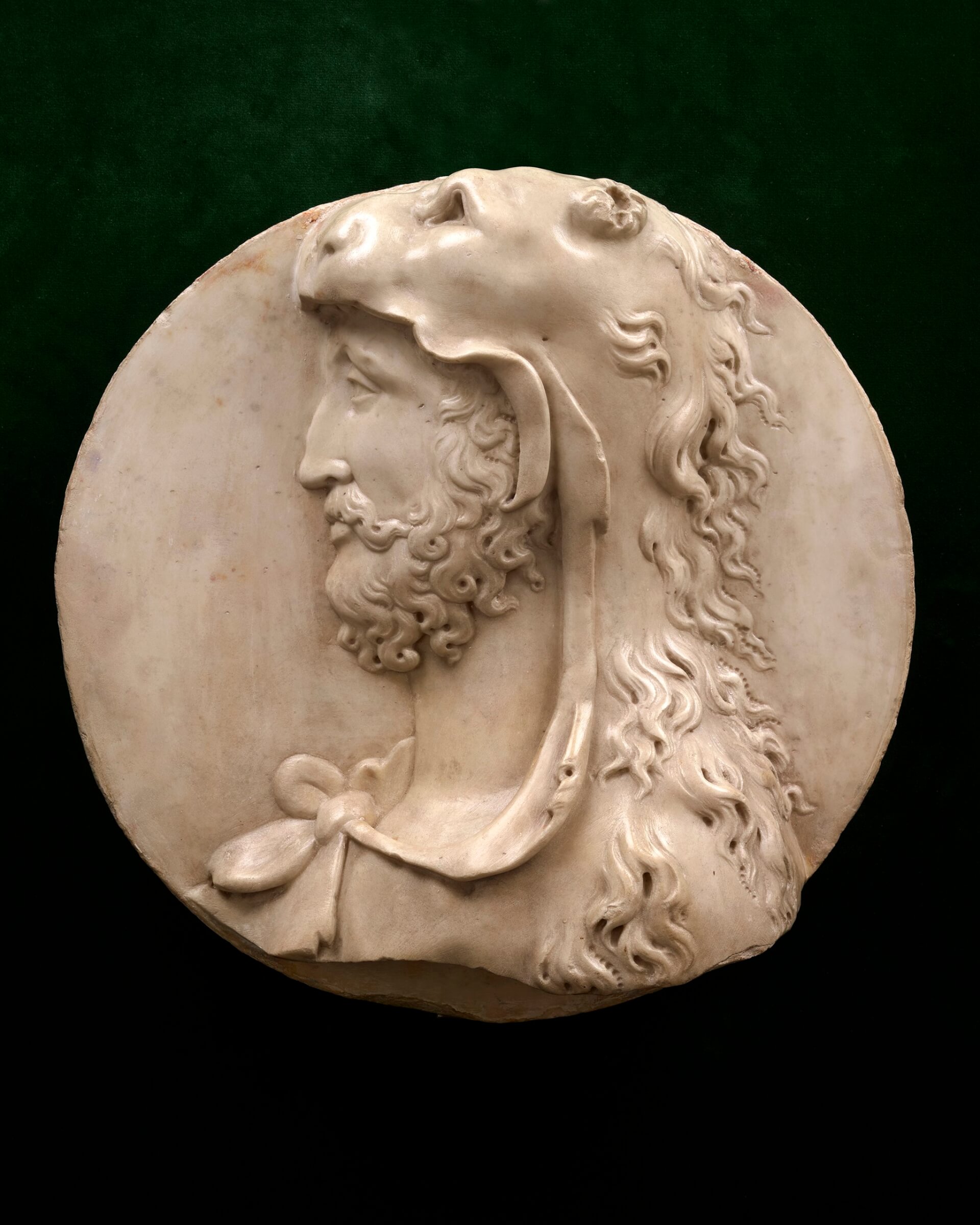
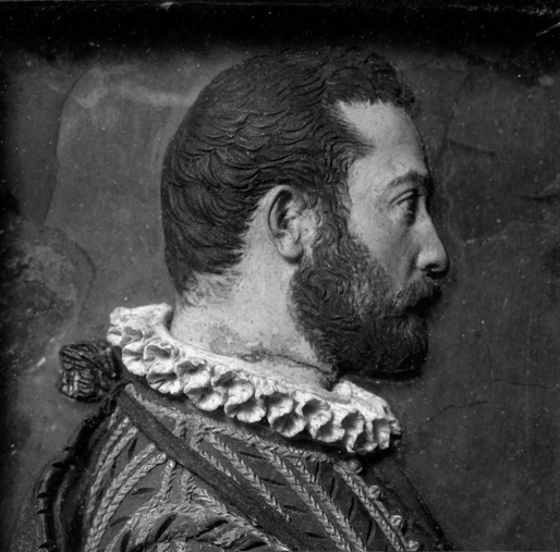
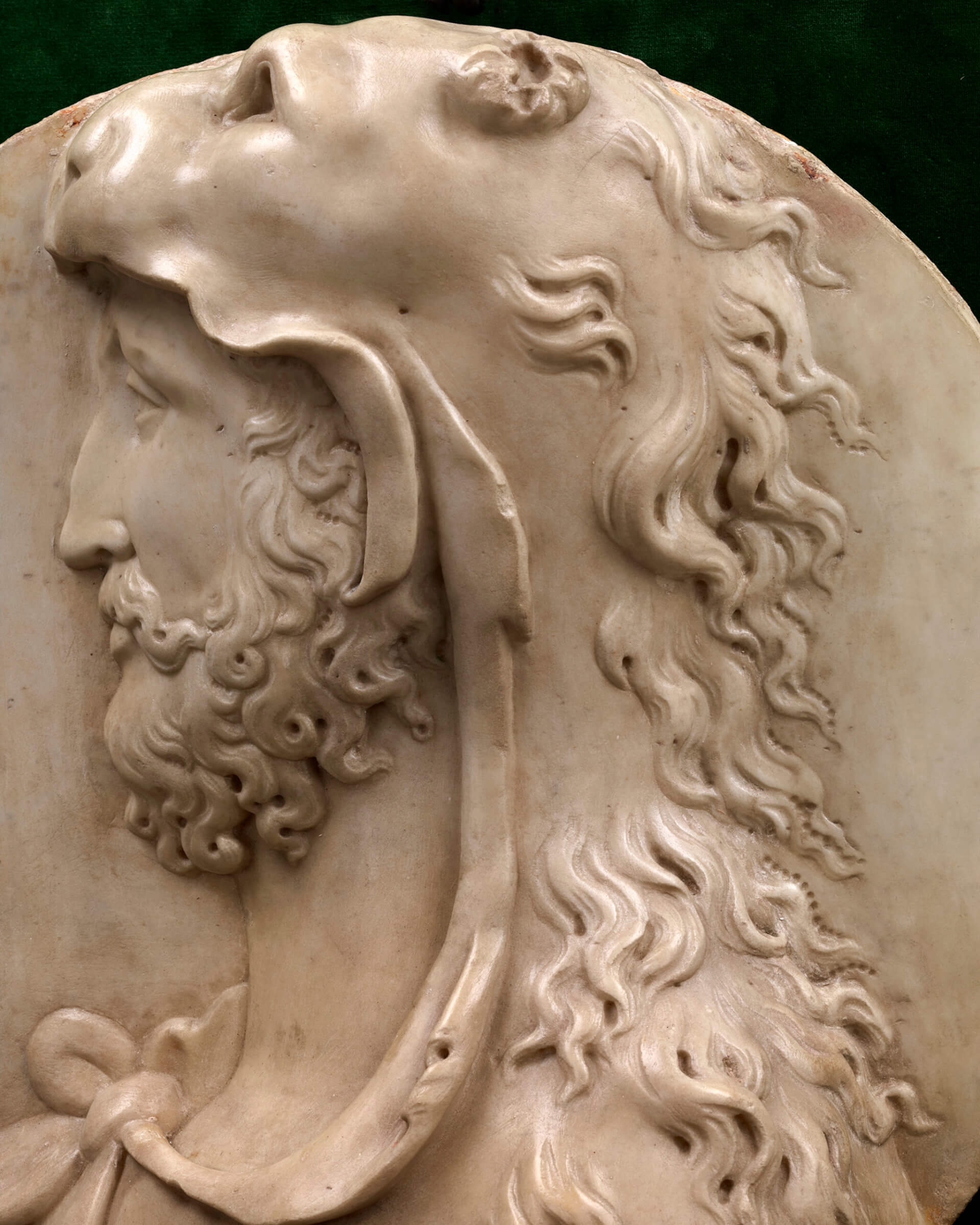
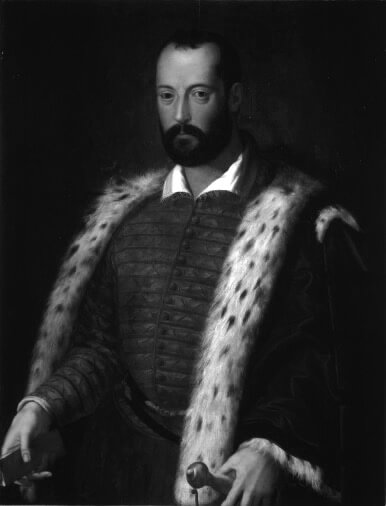
This medallion, sculpted in white Carrara marble and depicting the left profile of a bust-length Hercules crowned with the pelt of the Nemean Lion, the first of the hero’s Twelve Labours, son of Zeus and Alcmene, is attributed to the Florentine sculptor Giovanni Bandini (1540–1599), known as Giovanni dell’Opera. It may represent an allegorical portrait of Francesco I de’ Medici (1541–1587), who became Grand Duke of Tuscany upon the death of his father, Cosimo I de’ Medici (1519–1574), from which point Bandini worked principally for him and his circle. The celebrated wax bust of the Grand Duke by Pastorino Pastorini (1508–1592), preserved in the Museo Nazionale del Bargello in Florence and showing him precisely in profile, indeed reveals a striking similarity in the facial features to those of the demigod depicted on our medallion. Both convey the same affirming serenity, with similarly structured facial features, a pronounced angular brow, the same eye, and, above all, the same long, slightly aquiline nose, framed by a full but carefully groomed moustache and beard, the latter not falling down. The same features can, for example, be seen in the portrait of the Grand Duke painted around 1580 by the Florentine painter Alessandro Allori (1535–1607), who became first consul of the Accademia del Disegno in Florence in 1573, before being appointed head of the Arazzeria Medicea, the city’s state tapestry workshop, in 1581.

Associating the image of a reigning sovereign with that of Hercules, the universal symbol of superhuman physical strength and courage, was a practice already established in Antiquity, and the celebrated bust of the Emperor Commodus as Hercules, dating from between 180 and 193 and preserved in the Capitoline Museums in Rome (inv. MC1120), provides a perfect illustration. In Florence, the figure of Hercules was adopted as the official symbol of the Republic since the late 13th century, and under the Medici, the figure of the hero evolved literally from a symbol of collective freedom into an allegory of sovereign power and princely virtue. The Medici employed it to present themselves as defenders of republican liberties, to embody their own superiority, their triumph over political adversaries, and the restoration of order.
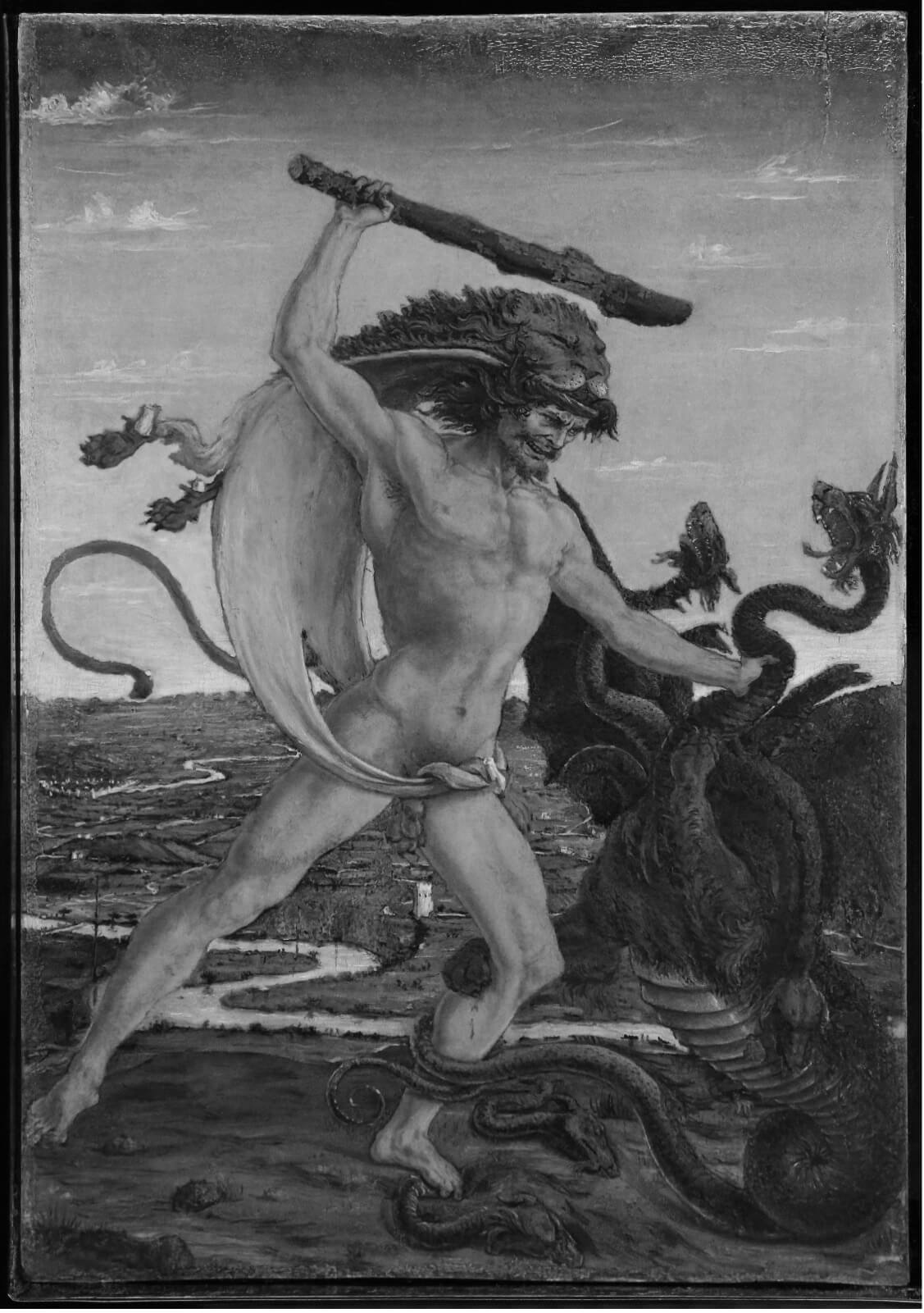
To this end, the Medici commissioned numerous works of art featuring the hero and employed his image for political purposes, as exemplified by the decoration of the main reception room of the Medici Palace, which was adorned with three scenes depicting the Labours of Hercules, namely his various combats with the Nemean Lion, Antaeus and the Lernaean Hydra, commissioned from the painter Antonio del Pollaiuolo (1429–1498). One may also cite the monumental marble group of Hercules and Cacus, adorning the Piazza della Signoria in front of the Palazzo Vecchio, dating from 1525–1534, a masterpiece of Baccio Bandinelli (1493–1560), Bandini’s master, as well as Hercules and King Diomedes, also visible in the Palazzo Vecchio, executed in 1561 by Vincenzo De’ Rossi (1525–1587).
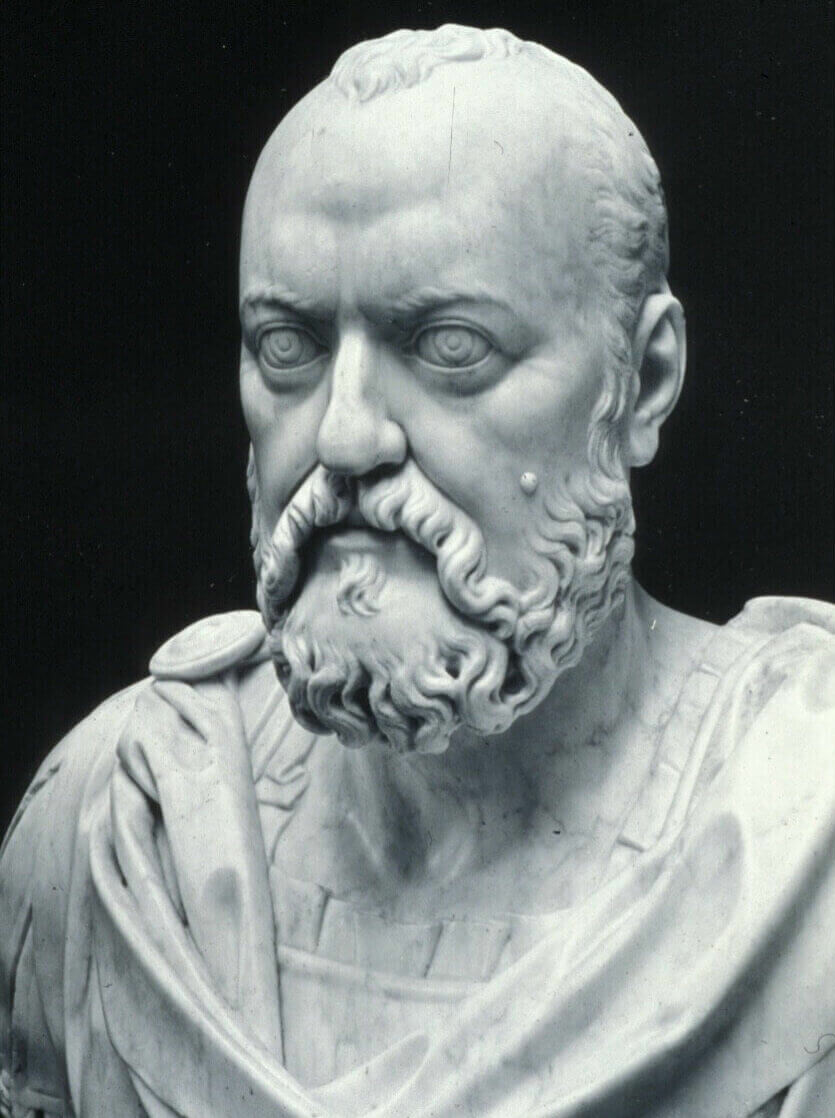
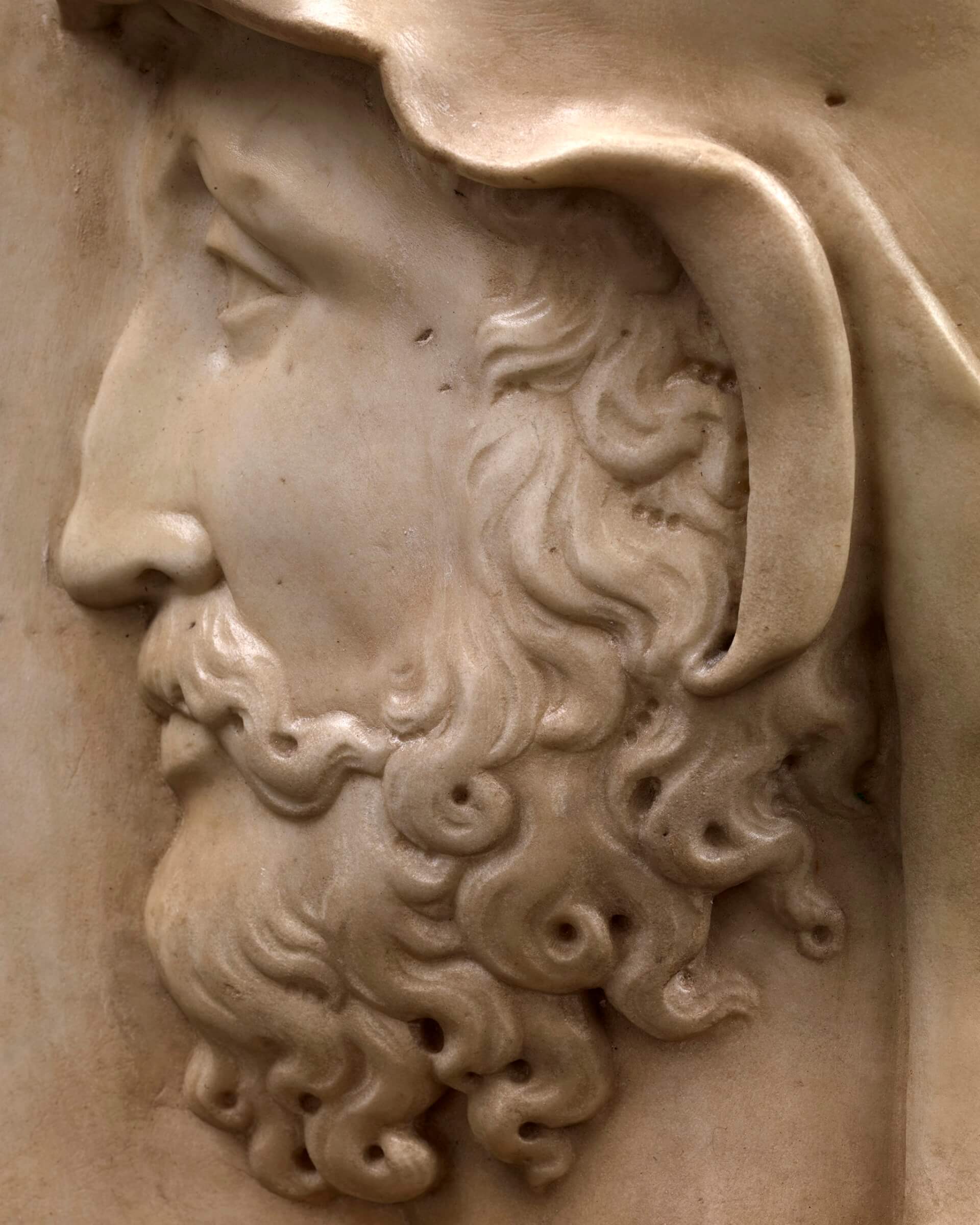
Circa 1572, Giovanni Bandini executed a marble bust of Cosimo I de’ Medici (1519–1574), father of Ferdinand, now preserved in the Detroit Institute of Arts (inv. 1994.1). This bust is particularly interesting when compared with our medallion, especially in the treatment of the Grand Duke’s moustache and beard, revealing the same particularly elaborate and energetic treatment in the rendering of the short curls and their spiralling forms, punctuated with drillwork. This treatment is even more strikingly evident in the bust of the Emperor Charles V (1500–1558), better known as Charles Quint, preserved at the Villa del Poggio Imperiale in Florence, which Bandini executed around 1575.
Bandini trained in the Florentine workshop of Baccio Bandinelli (1493–1560). He probably began his career circa 1555. Following the death of his master, he was entrusted with completing the choir enclosure of Florence Cathedral, begun by Bandinelli in 1547, for which he executed the bas-reliefs on the western side, completed in 1572 and still visible today.
That same year, he sculpted a portrait bust of Grand Duke Cosimo I de’ Medici (1519–1574), which was placed above the entrance to the Opera del Duomo, the administration responsible for the cathedral, and began two statues of apostles intended for the columns of the building: Saint James the Less (1576) and Saint Philip (1577), both of which remain in situ. It was on account of his many years of service to the Opera del Duomo that Bandini became known as Giovanni dell’Opera. He achieved recognition early in his career. In 1563, he became a member of the Accademia del Disegno, recently founded in Florence, and the following year was commissioned to create the allegories of Architecture and the Tiber for Michelangelo’s catafalque. Cosimo I was so impressed by these figures that he commissioned Bandini to execute the marble Allegory of Architecture for Michelangelo’s tomb, mentioned above. Although completed in 1568, the statue was not installed until 1574.

From the late 1560s until his departure for Pesaro in 1582, Bandini was the leading portrait sculptor in Florence, producing around twenty busts of antique subjects, all now lost, as well as ten busts of the Grand Dukes of Tuscany. During the 1570s, he worked for Grand Duke Francesco I and his circle. His most important work of this period was his first commission in bronze, the figure of Juno, also mentioned above and still preserved in the Palazzo Vecchio. While completing this figure, Bandini received a commission from Giovanni Niccolini (1544–1611), a diplomat in the service of the Grand Duke, for a marble group, Hercules and the Hydra. Completed in 1578, the statue was installed circa 1595 in the loggia of the garden of the Niccolini Palace, where it can still be seen today. In 1582, Bandini was summoned to Pesaro by Francesco Maria II della Rovere (1549–1631), Duke of Urbino, who appointed him First Sculptor to the Court.
A development in his style is evident in the marble Pietà that he executed between 1583 and 1585 for the Oratory of the Grotta within the Duomo of Urbino, generally considered his masterpiece. This Pietà was probably influenced by the one executed circa 1513 by Sebastiano del Piombo after a drawing by Michelangelo, now preserved in the Museo Civico in Viterbo, as well as by the ancient group of Niobe belonging to the Uffizi Gallery in Florence, which was discovered in the very year Bandini began work on this sculpture. He continued to work for the Duke of Urbino until 1595, when he was called to Pisa to work on the bronze door of the Duomo. At the same time, he also received a commission for a monumental statue of Grand Duke Ferdinand I, intended to adorn the Piazza Micheli in Livorno. Giovanni Bandini died in Florence in 1599.

