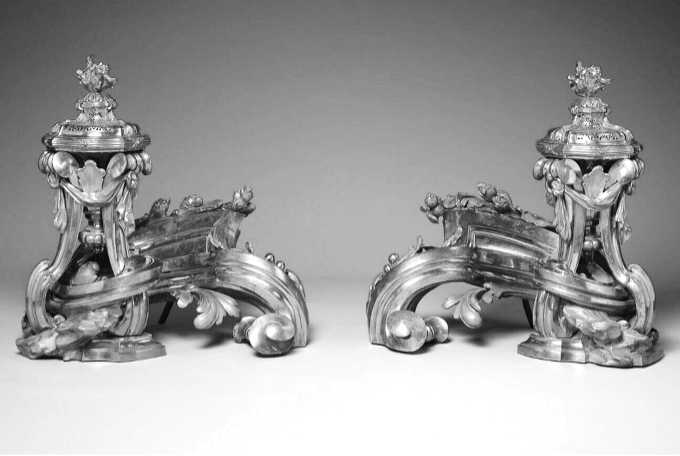
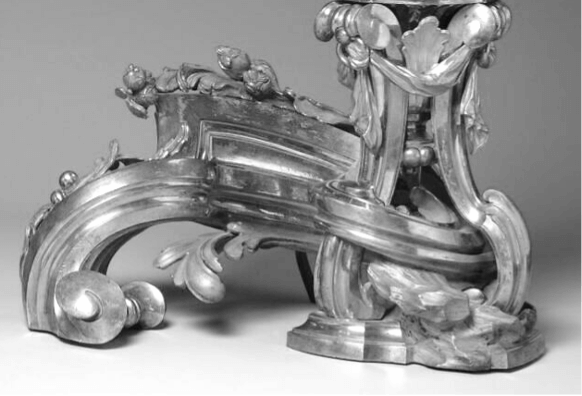
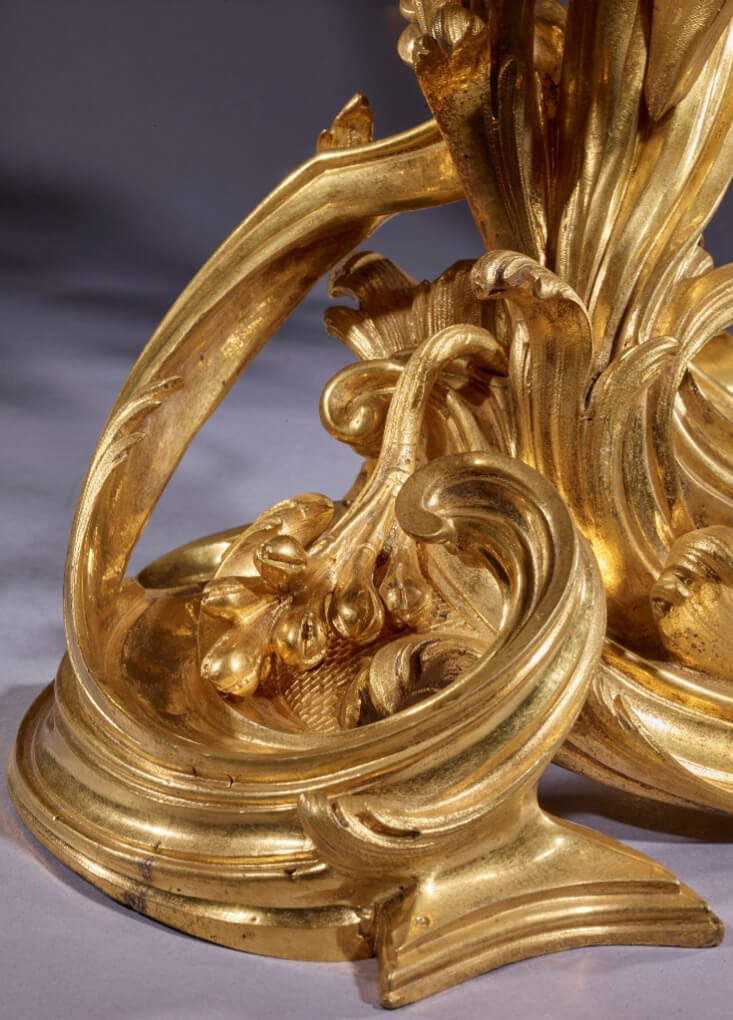
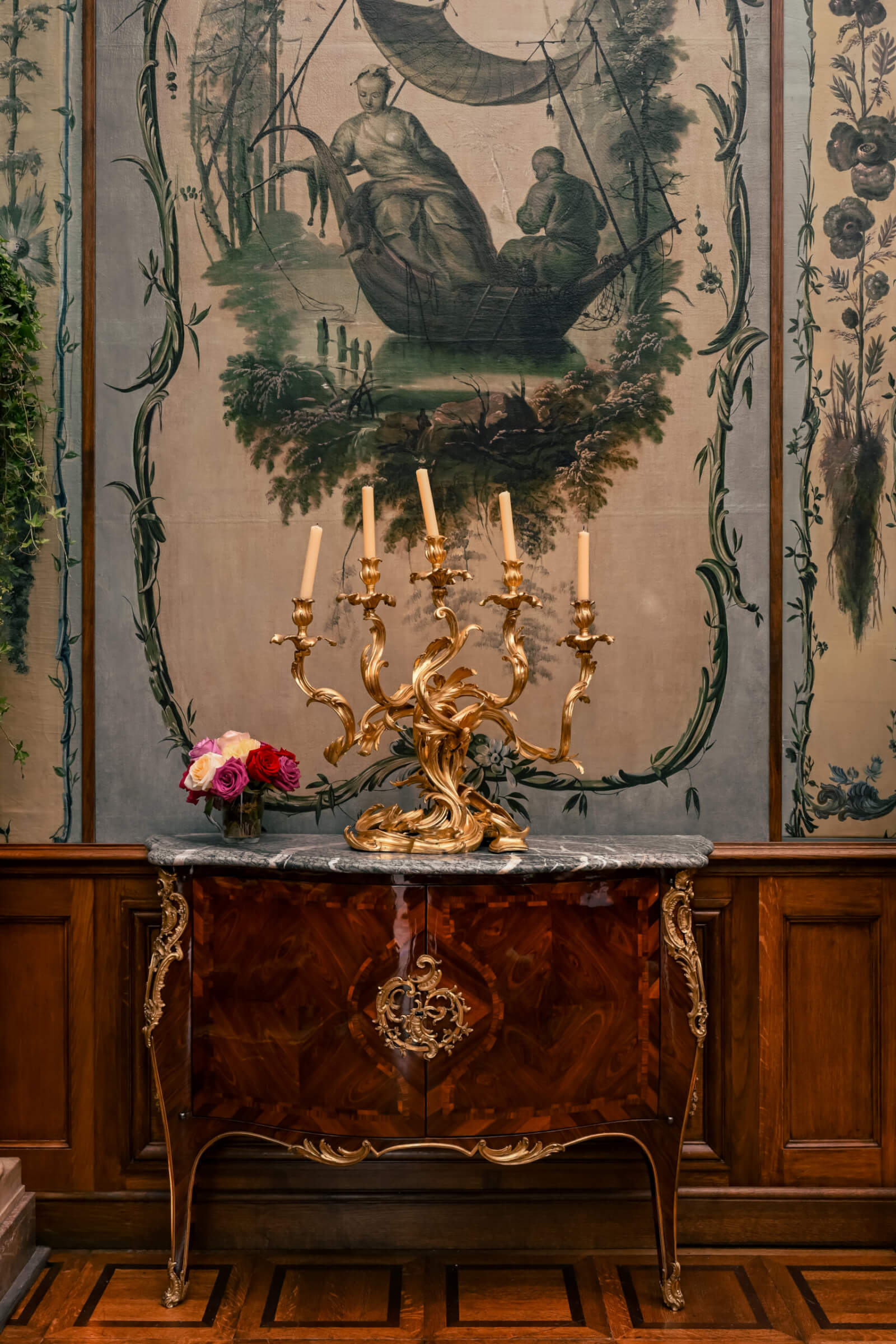
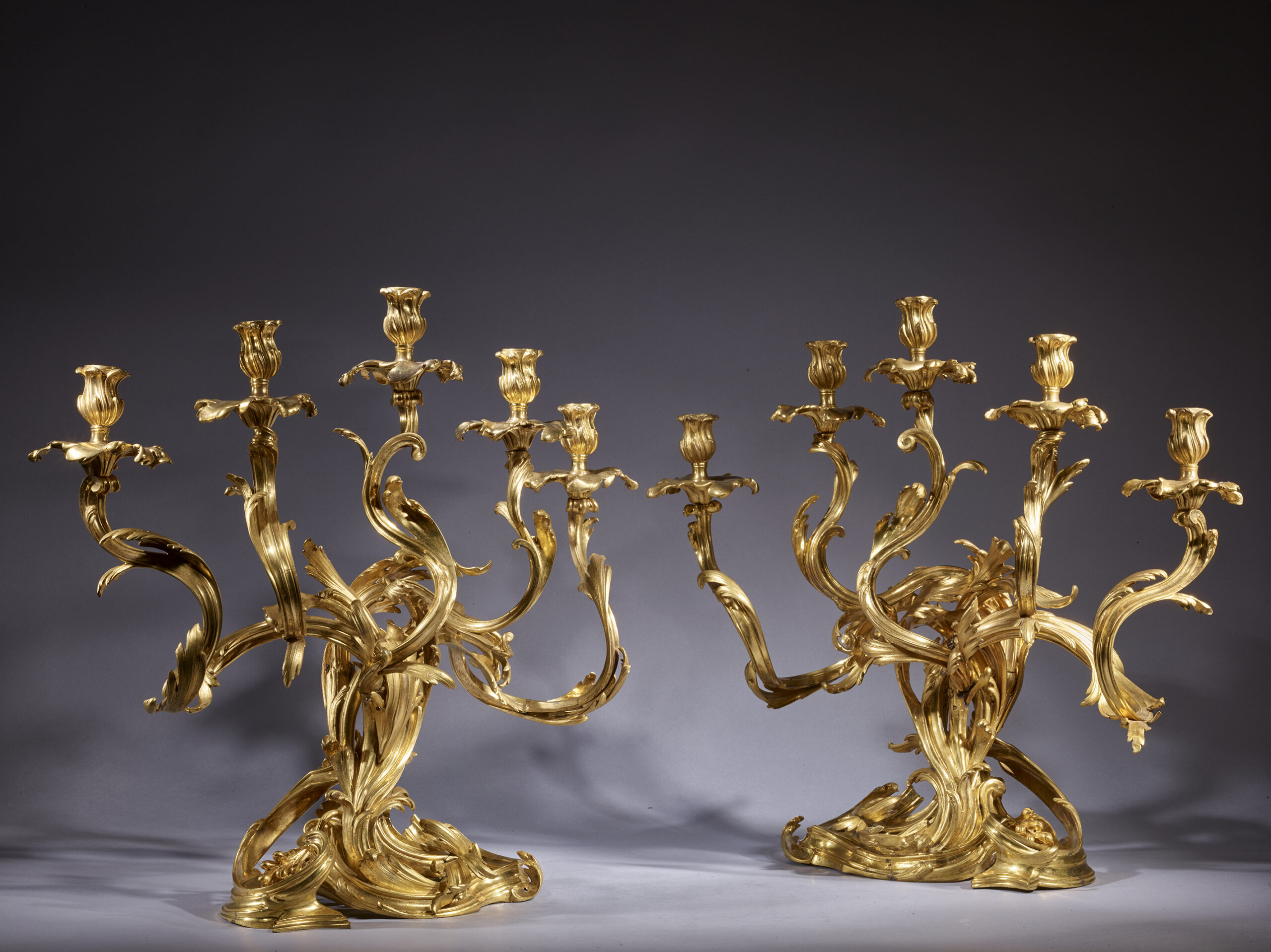
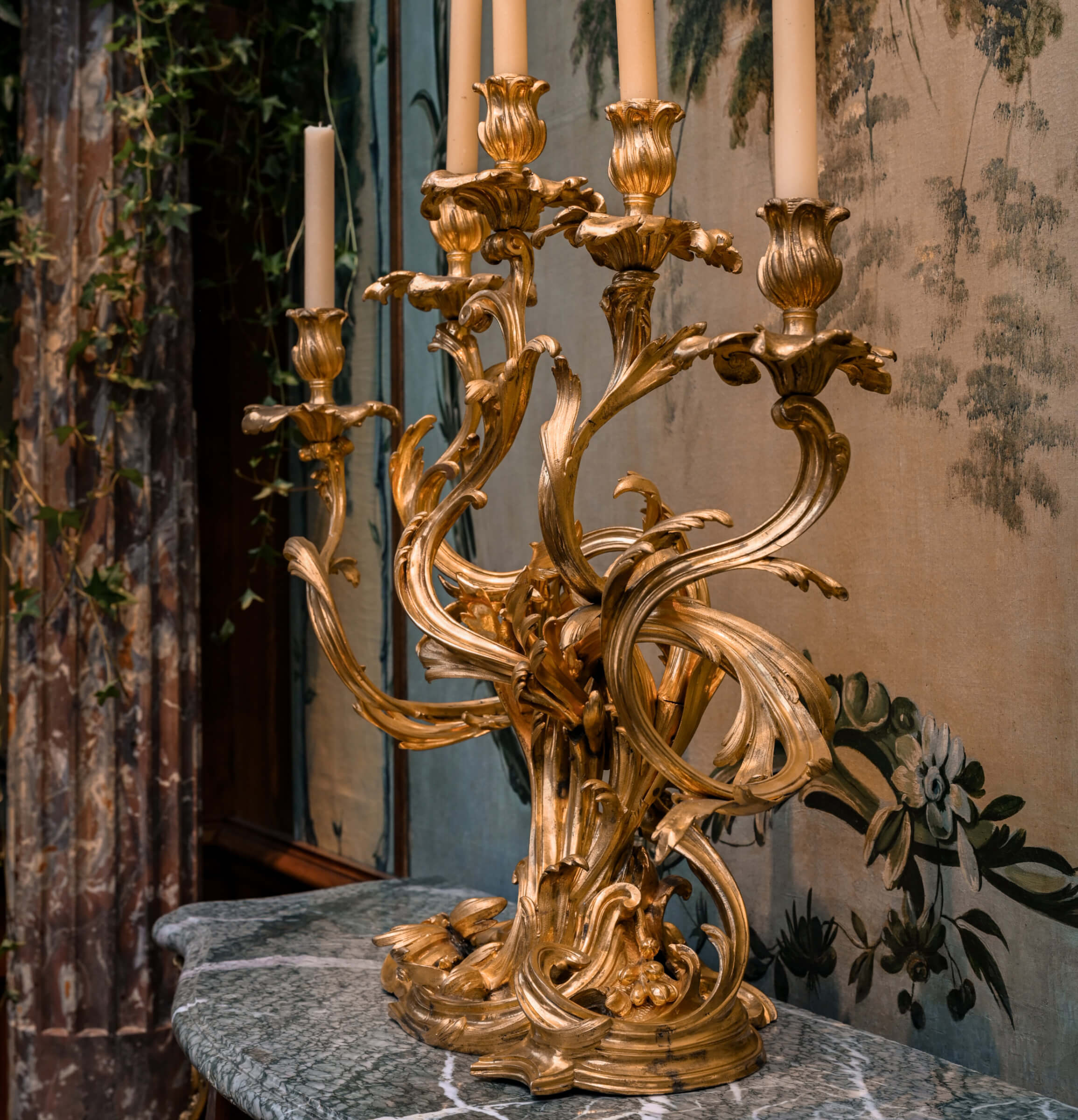
H. 60 cm (23 ¾ in.); W. 66 et 72 cm (26 et 28 ½ in.); D. 25 cm. (10 in.).
A ‘C’ couronné (crowned C) mark visible on each candelabrum, indicating a tax on metals decreed by the parliament of Paris in February 1745, which, being very unpopular, was finally abolished in February 1749.
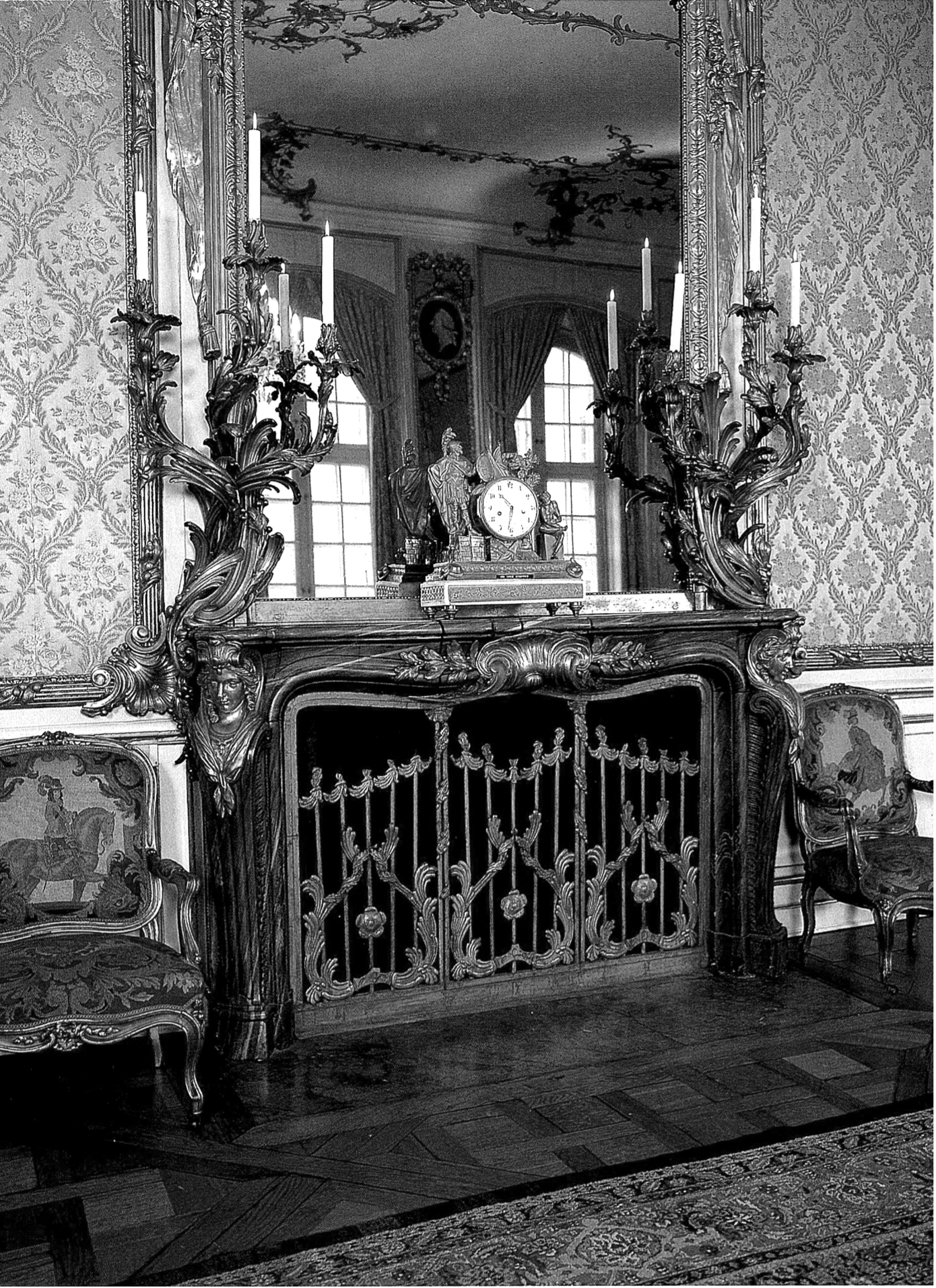
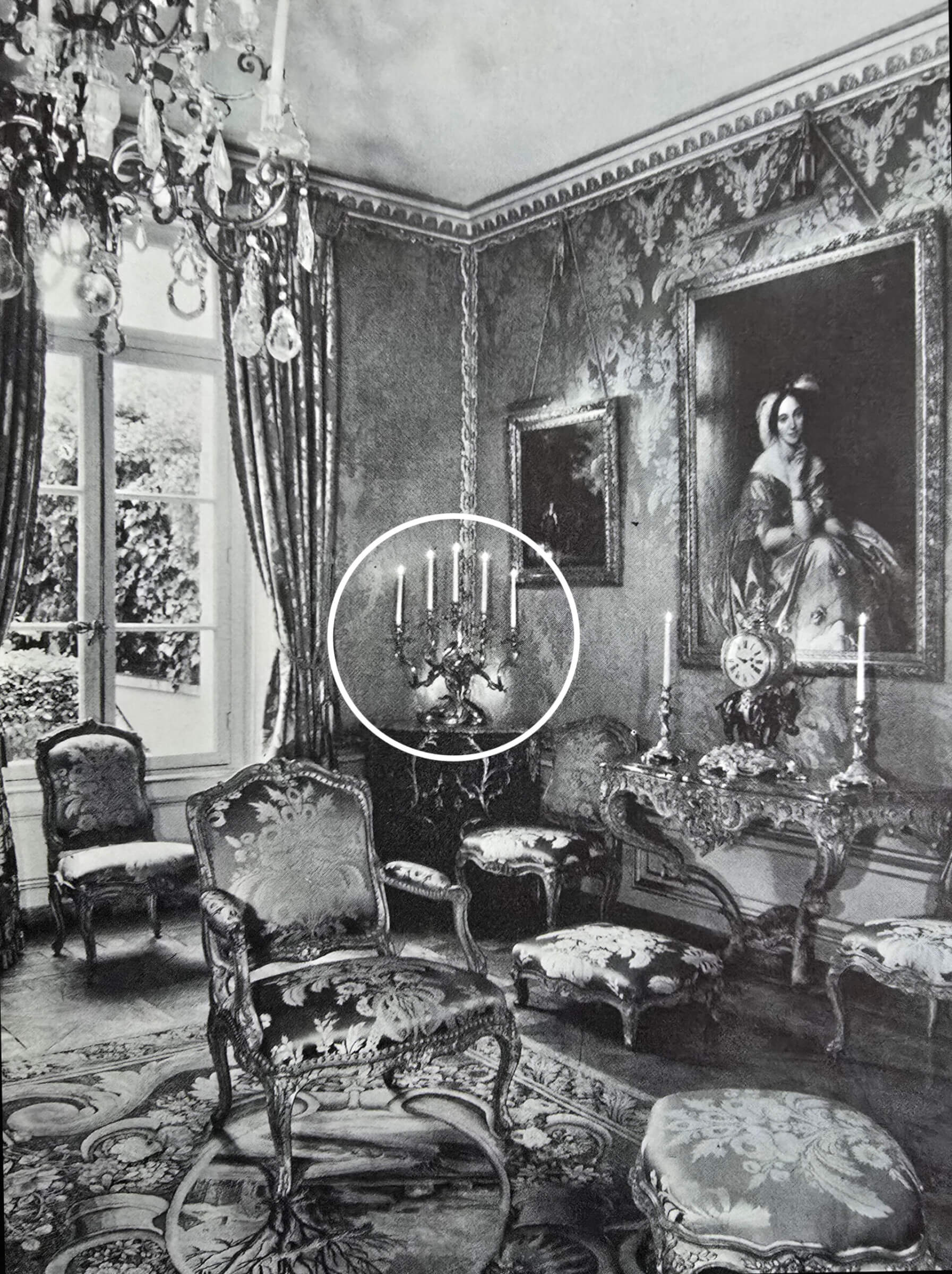
PROVENANCE: collection of Baron Guy de Rothschild (1909-2007) and of his wife, Marie-Hélène (1927-1996), née Van Zuylen Van Nyevelt Van de Haar, at the Hôtel Lambert in Paris; after by descendance until today.
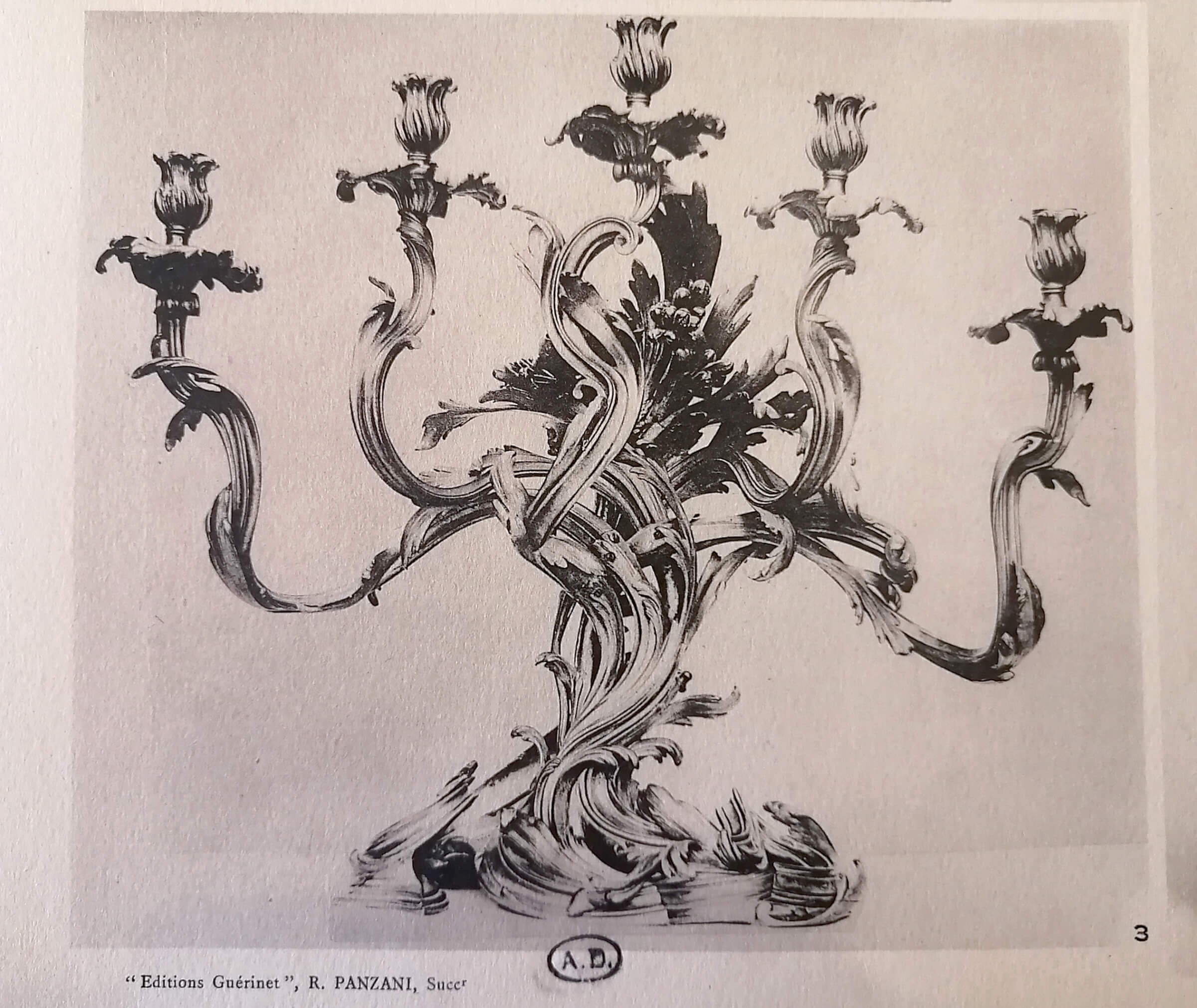
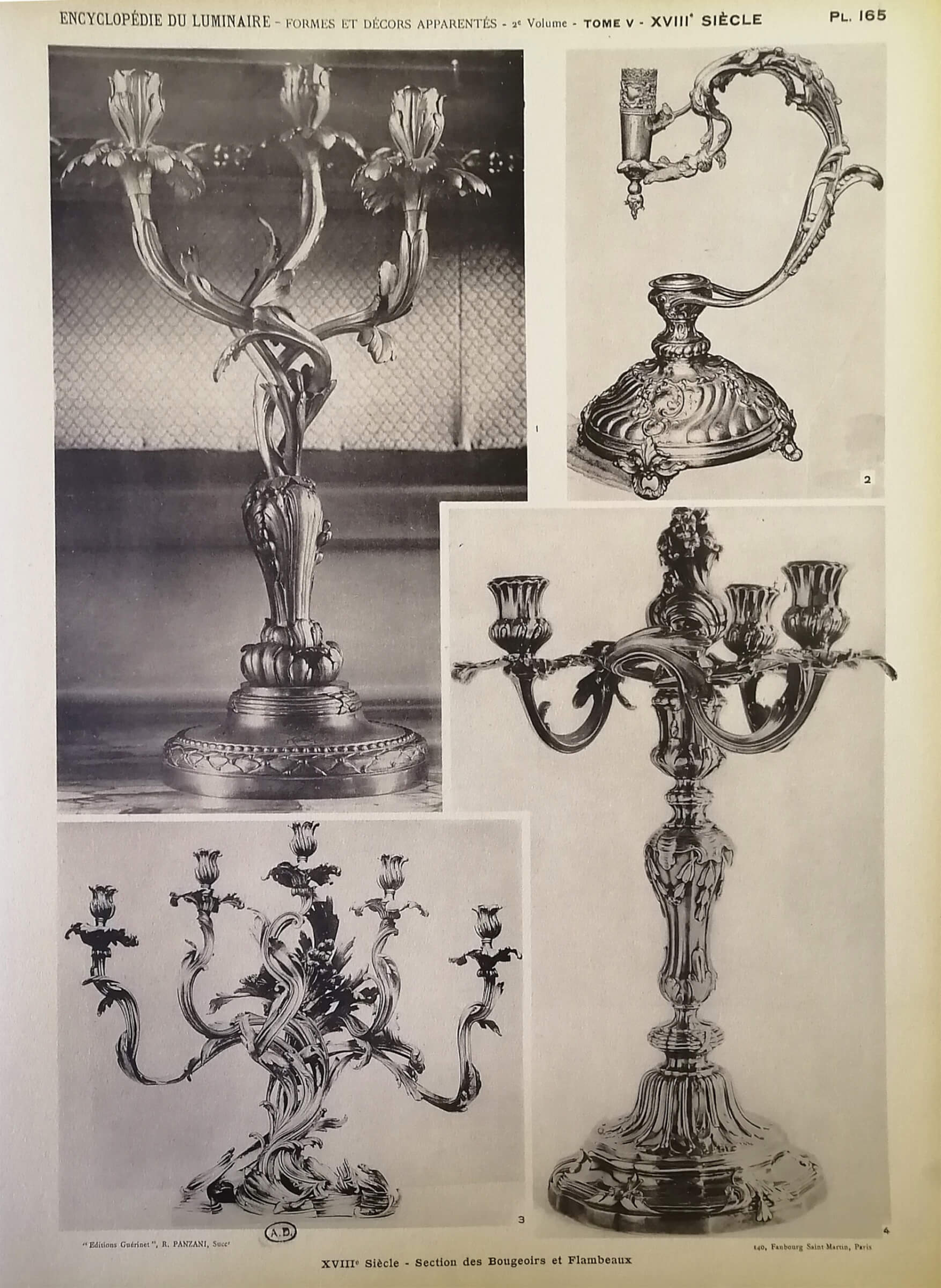
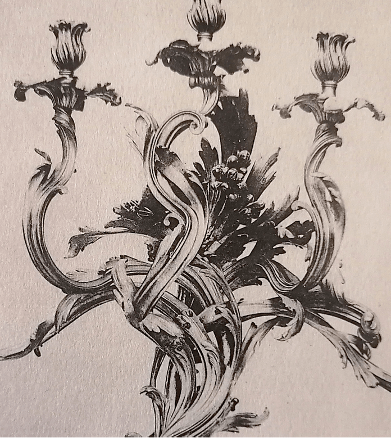
LITERATURE : Gabriel Henriot, Encyclopédie du luminaire, formes et décors apparentés depuis l’Antiquité jusqu’à 1870, Tome V, XVIIIe siècle, Paris, Les éditions Guérinet, 1934, pl. 165, fig. n° 3; Claude Frégnac, Belles Demeures de Paris, 16e-19e siècle, Paris, Hachette Réalités, 1977, p. 75 et 254.
François Thomas Germain was the most prolific goldsmith of the Louvre in the production of gilded bronzes, of which, unfortunately, very few examples have survived to this day.
This activity was by no means occasional for him, as is revealed in Mémoire à consulter et consultation pour le Sieur François-Thomas Germain, Écuyer, sculpteur-Orfèvre du Roi, published in Paris in 1766: “The Sieur Germain does not limit himself to works of goldsmithing: the interior decorations of apartments fall within his art, and he has proven himself in this brilliant domain. The magnificent bronzes admired at the Palais-Royal and the Hôtel de Soubise, these are works he modeled. Everything modern and luxurious in this domain in various courts of Europe, and in Paris, has been executed according to his ideas, plans, and designs.” At the time of his bankruptcy in 1765, an inventory of the goldsmith’s workshop estimated the total contents at 130,016 livres, of which 28,933 livres accounted for bronzes in progress, approximately a quarter of his production. Far from being a mere executor, he personally designed and modeled his works.
He was occupied with three major projects in the 1750s in the delivery of gilded bronzes, all carried out under the direction of the architect Pierre Contant d’Ivry (1698–1777): the Hôtel de Soubise, the Palais-Royal, and the Bernstorff Palace in Copenhagen, the latter two being handled simultaneously by the goldsmith.
According to Jacques-François Blondel, the work carried out for Prince Charles de Rohan-Soubise (1715–1787) at his hôtel was completed in 1752. The involvement of François-Thomas Germain, about whose deliveries on this occasion almost nothing is known, must certainly have been considerable, given that, in the accounting of his “recoverable debts” for the union of his creditors established on 20 July 1765, it is recorded that the prince still owed him 600 livres, to which was added a gratuity of 6,000 livres “which he hoped to receive for the works.” This substantial sum, initiated in 1757 and which must have concerned late deliveries, finds no equivalent in his papers except in connection with the Duke of Orléans and the Palais-Royal project.

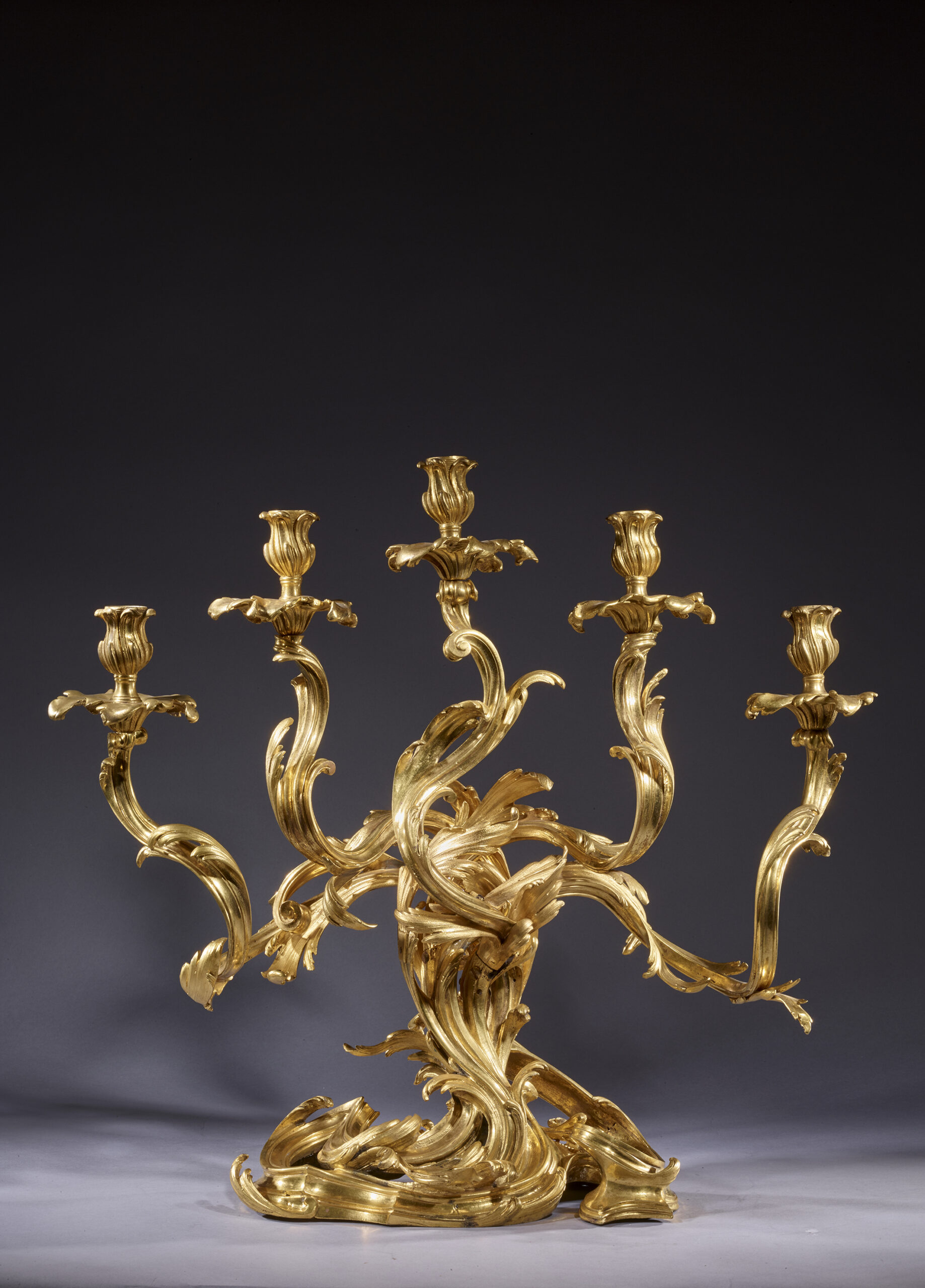
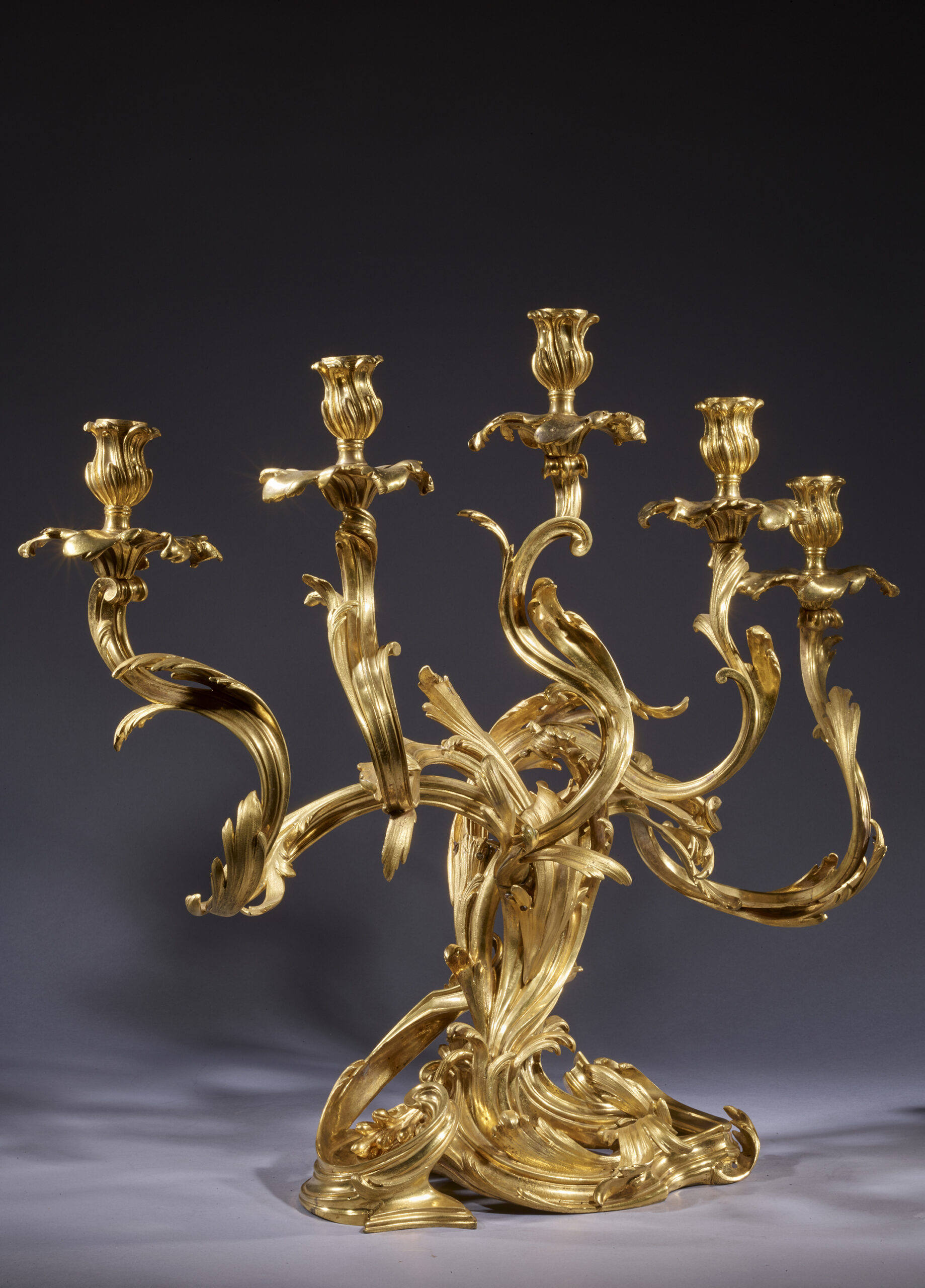
This project concerned the first floor of the right wing of the palace, opening onto the cour d’honneur, where the new state apartment of Louise-Henriette de Bourbon-Conti (1726–1759), called Mademoiselle de Conti, spouse of Duke Louis-Philippe d’Orléans (1725–1785), was installed. The goldsmith worked on it from 1755 to 1758. The decoration was fully completed at the time of the duchess’s premature death on 9 February 1759.
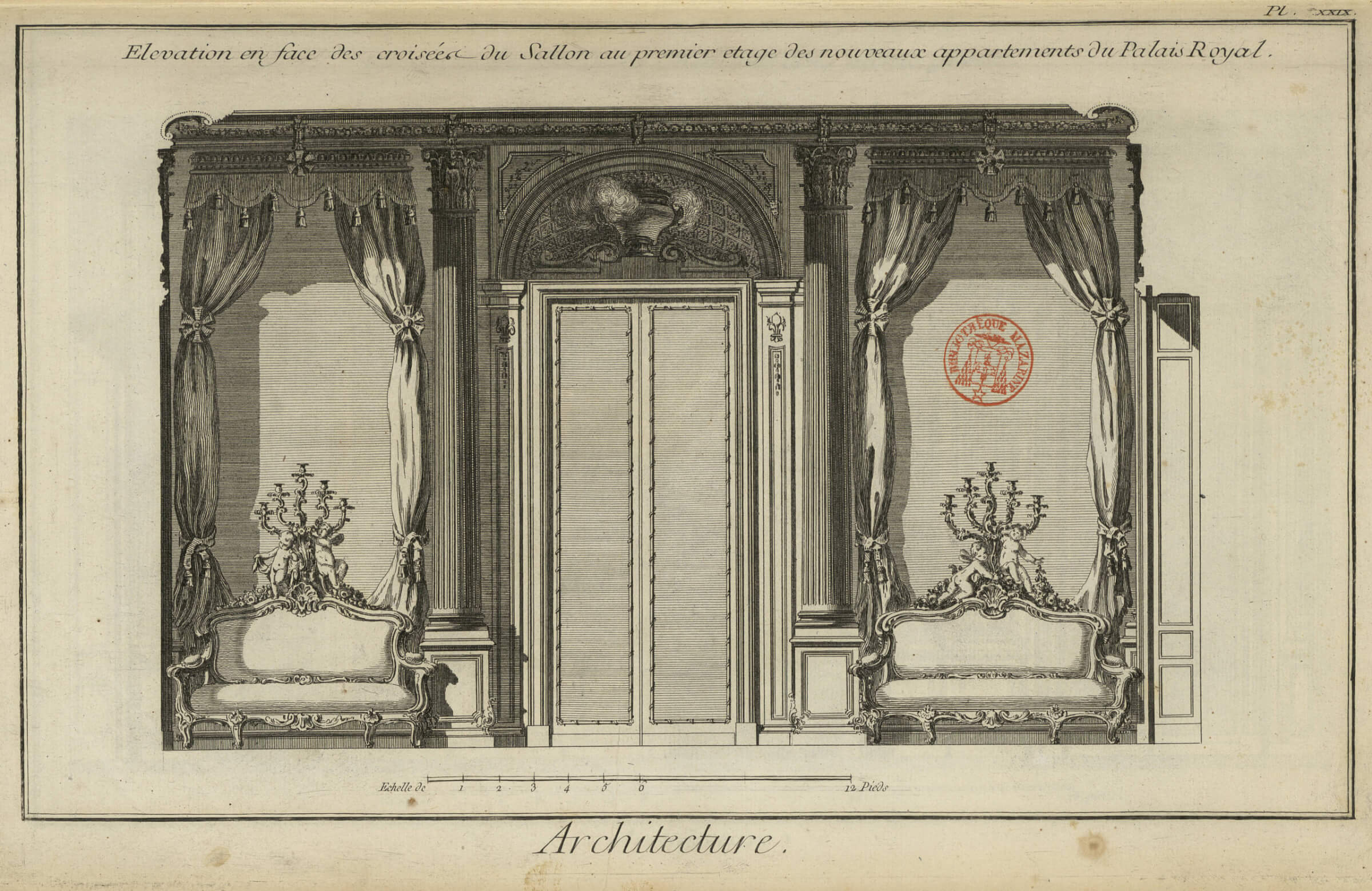
François-Thomas Germain received the considerable sum of 72,000 livres for the year 1755 alone, even though he had delivered nothing at that date, and approximately 131,000 livres for the entirety of his intervention. In 1762, Denis Diderot and d’Alembert published in their Recueil de planches sur les sciences, les arts libéraux et les arts mécaniques, avec leur explication, Volume 1, Architecture et parties qui en dépendent, the elevation plates of the three main rooms of the duchess of Orléans’ apartment: the games room, the grand salon, and the state bedchamber. These precious iconographic documents, coupled with the descriptions of the works mentioned in the duchess’s posthumous inventory, allow us to form a relatively precise idea of the works by Germain that were present there.
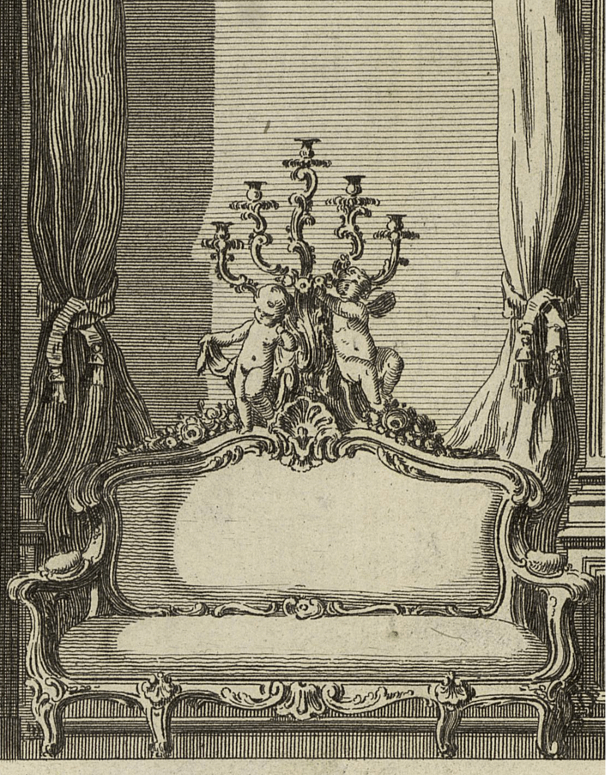
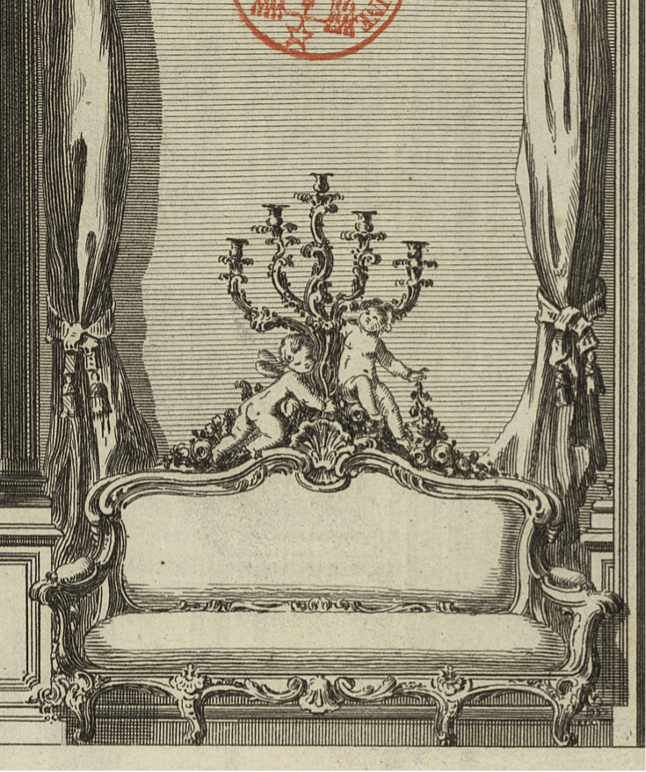
Among these works, in particular, in the grand salon, were two large five-light girandoles of a model very close to ours, clearly visible above the sofas placed in niches opposite the windows on plate XXIX of the Encyclopédie, entitled Elevation en face des croisées du Salon au premier étage des nouveaux appartements du Palais-Royal. Each of these girandoles was flanked by two putti executed, according to the inventory, “en quartons peints en bronze” (in quartered sections painted in bronze). They were paired with two other sets of five-branch girandoles in gilt bronze, themselves flanked by patinated bronze putti: the first, with a single putto per fixture, positioned on either side of the mantel shelf; the second, with two putti each, placed on a marble console opposite the same fireplace.
Of these bronze works by François-Thomas Germain for the Palais-Royal, only a few survive today: four large three-light arms “with palm leaf motifs” (later regilded), dated 1756, of differing sizes, originating, according to the inventory and the Encyclopédie elevations, from either the games room, the dining room, or the state bedchamber; a pair of large rocaille chenets with cassolettes, dated 1757, executed for the grand salon, very likely the ones now conserved at the Louvre; and the fireplace of the Tapestry Salon of the Palais Bernstorff in Copenhagen, which Germain executed in 1756 based on the models he designed during the same period for the duchess of Orléans’ apartment at the Palais-Royal.
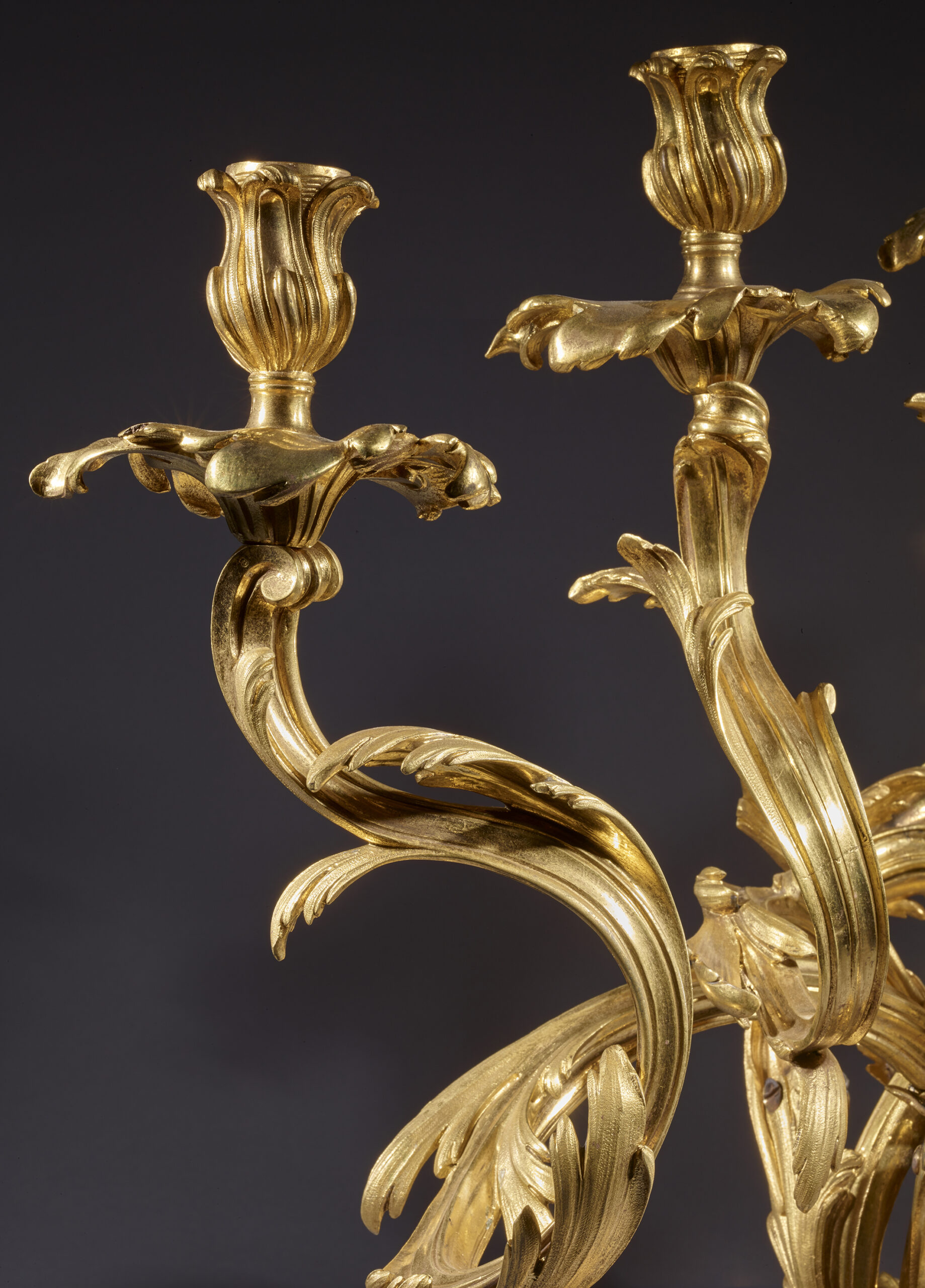
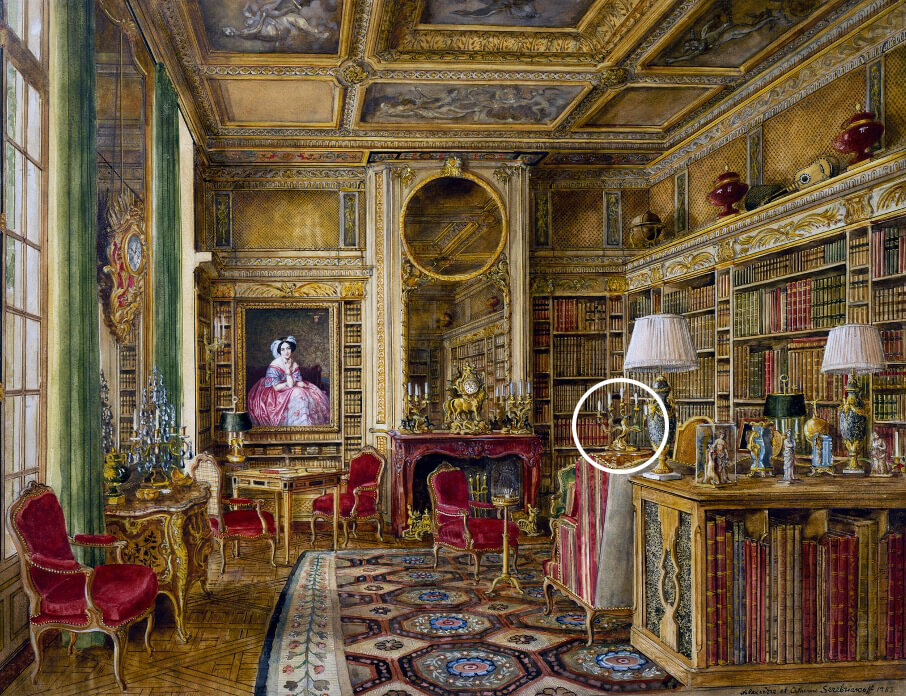
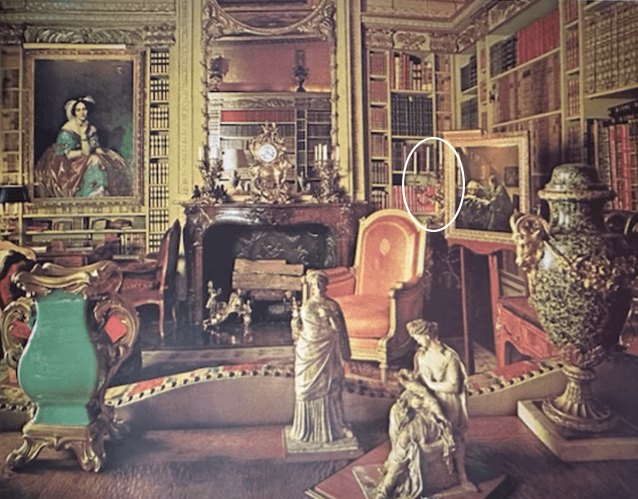
Although executed nearly eight years after our girandoles (1745–1749), the surviving works show many similarities with our girandoles, both in the virtuosity of their design, “with palm-leaf motifs” that are highly dynamic and adorned with characteristic berries, all rising from bases still strongly Rocaille, and in the very high quality of their chasing, burnishing, and gilding.
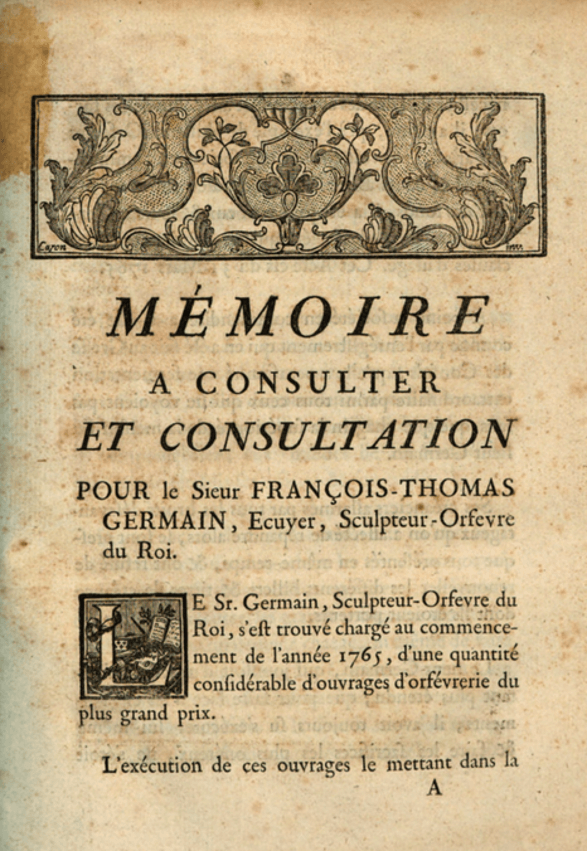
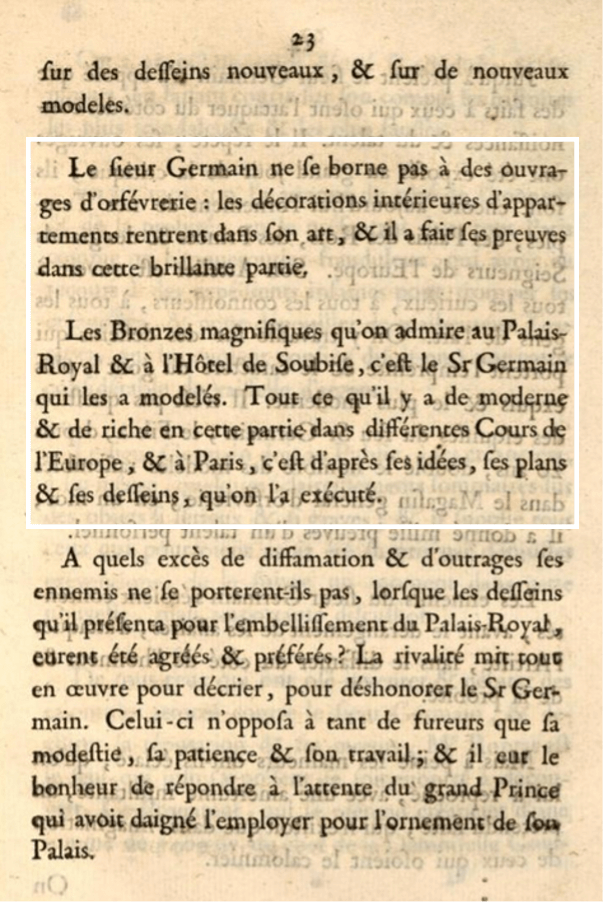
Memorandum for review and consultation for Mr. François-Thomas Germain, squire, sculptor-orfèvre to the King, published in Paris in 1766.
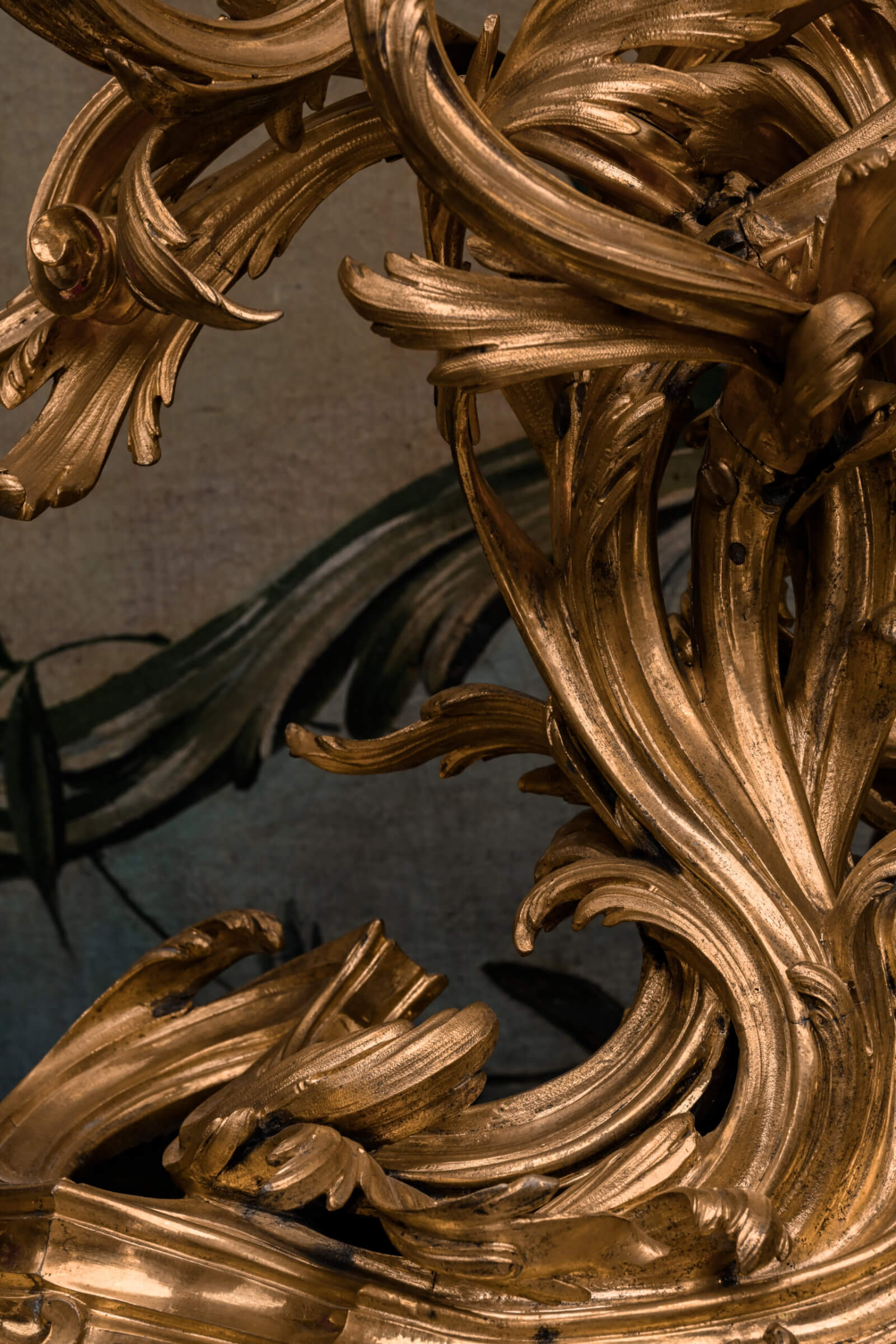
This extraordinary bronze decoration of the state apartment of the Duchess of Orléans at the Palais-Royal, described by Dezallier d’Argenville in 1778, was still in place when the posthumous inventory of Duke Louis-Philippe d’Orléans was drawn up on 9 January 1786. But the Revolution was likely fatal to it, for when the future King Louis-Philippe (1773–1850), then Duke of Chartres, took possession of the palace in 1816, nothing remained of this décor. The large groups and their girandoles had almost certainly all been melted down. In addition to the andirons now at the Louvre, only four pairs of three-light arms survived, having been purchased before the Revolution by the bronzier Feuchère in the context of a public or private sale organized by the future Philippe-Égalité (1747–1793).
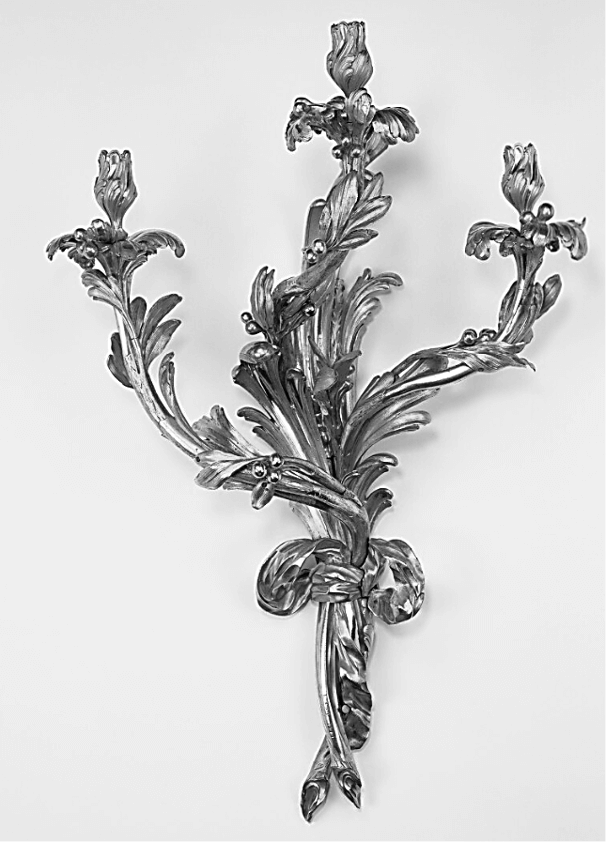
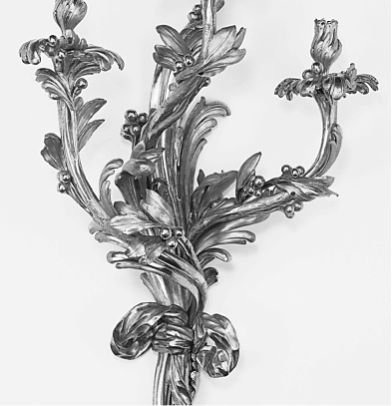
Feuchère resold them to the Crown in 1786. Two of these pairs, now at the Getty, were restored, regilded, and installed in the Queen’s Salon des Nobles at Compiègne; they were later acquired during the 19th century by Baron Mayer Amschel de Rothschild (1818–1874) and placed in his residence at Mentmore Towers. The other two, intended for the École Militaire, have never been found.