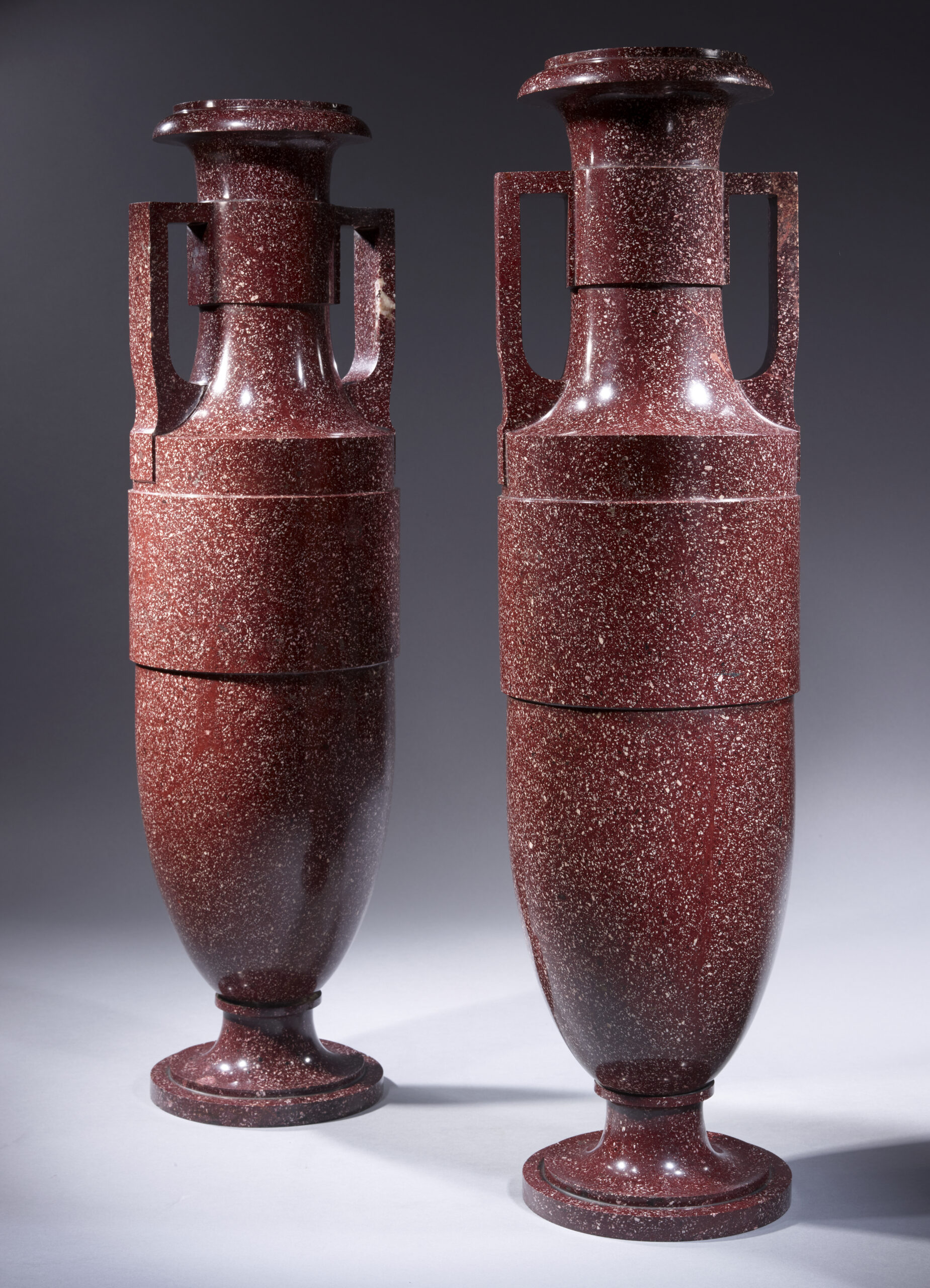
Porfido rosso antico.
H. 71 cm. (28 in.) ; D. 18 cm. (7 in.); D. de la base : 16.5 cm. (6 ½ in.).
PROVENANCE: offered in 1813 by King Charles XIII of Sweden (1748-1818), along with four other vases—a red porphyry tazza, a monumental vase also in porphyry, and a pair of Swedish brown porphyry vases—to Lieutenant General the Honourable Sir Alexander Hope (1769-1837); placed by the latter in his London residence at 14 Curzon Street, Mayfair; then by descent, the collection of his son, George William Hope (1808-1863), Under-Secretary of State for War and the Colonies under Robert Peel from 1841 to 1846; collection of the latter’s son, the general’s grandson, Henry Walter Hope (1839-1913), who in 1888 transferred the vases from the Mayfair residence to Luffness House, the Hope family’s Scottish castle near the village of Aberlady in East Lothian; then by descent, the Hope family collection at Luffness House until 1923, when the vases were sold by order of the Trustees; anonymous auction in London, by Phillips, 7th June 1989, lot n°. 145; acquired by the gallery Didier Aaron Ltd., 21 Ryder Street, London; collection of Peter and Leonora Petrou; collection of Philip Hewat-Jaboor (1953-2022).
SOURCES: Edimbourg, Scottish National Record Office, Hope Papers: G. D. 364, 1021, B 155, B 188, B 761 and B 1249; London, The British Library: BL Add. Mss. 20111f. 15 and 200191ff. 210.
LITERATURE : Kondad O. Bernheimer, Kunst & Tradition, Meisterwerke bedeutender Provenienzen, Munich, 1989, p. 154-155, cat. 43, repr. ; Dario Del Bufalo, Porphyry, Red Imperial Porphyry Power and Religion, Turin, 2012, p. 159, cat. V. 148, repr.
EXHIBITION: Grosvenor House Fine Art and Antiques Fair, London, 1989.
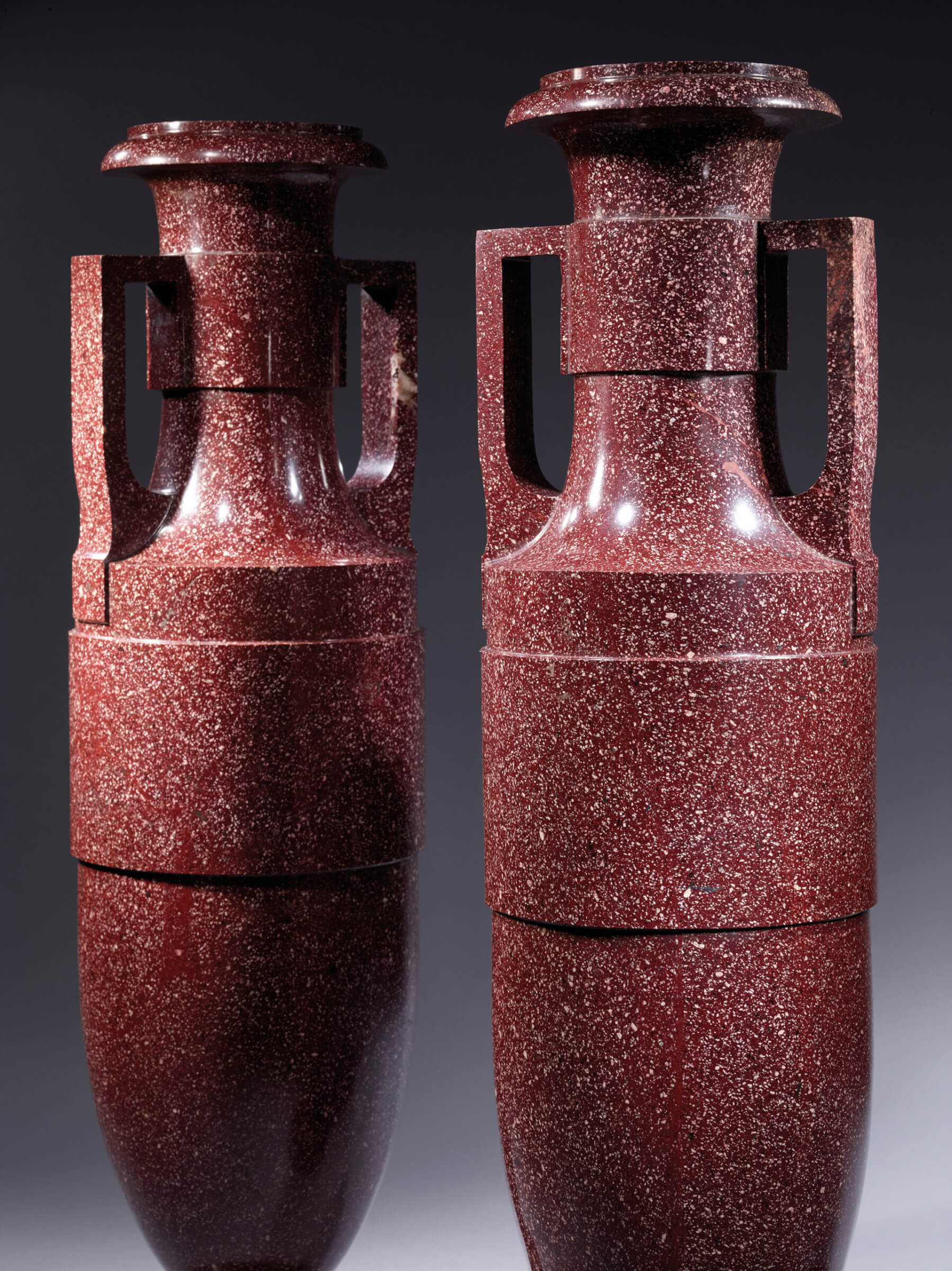
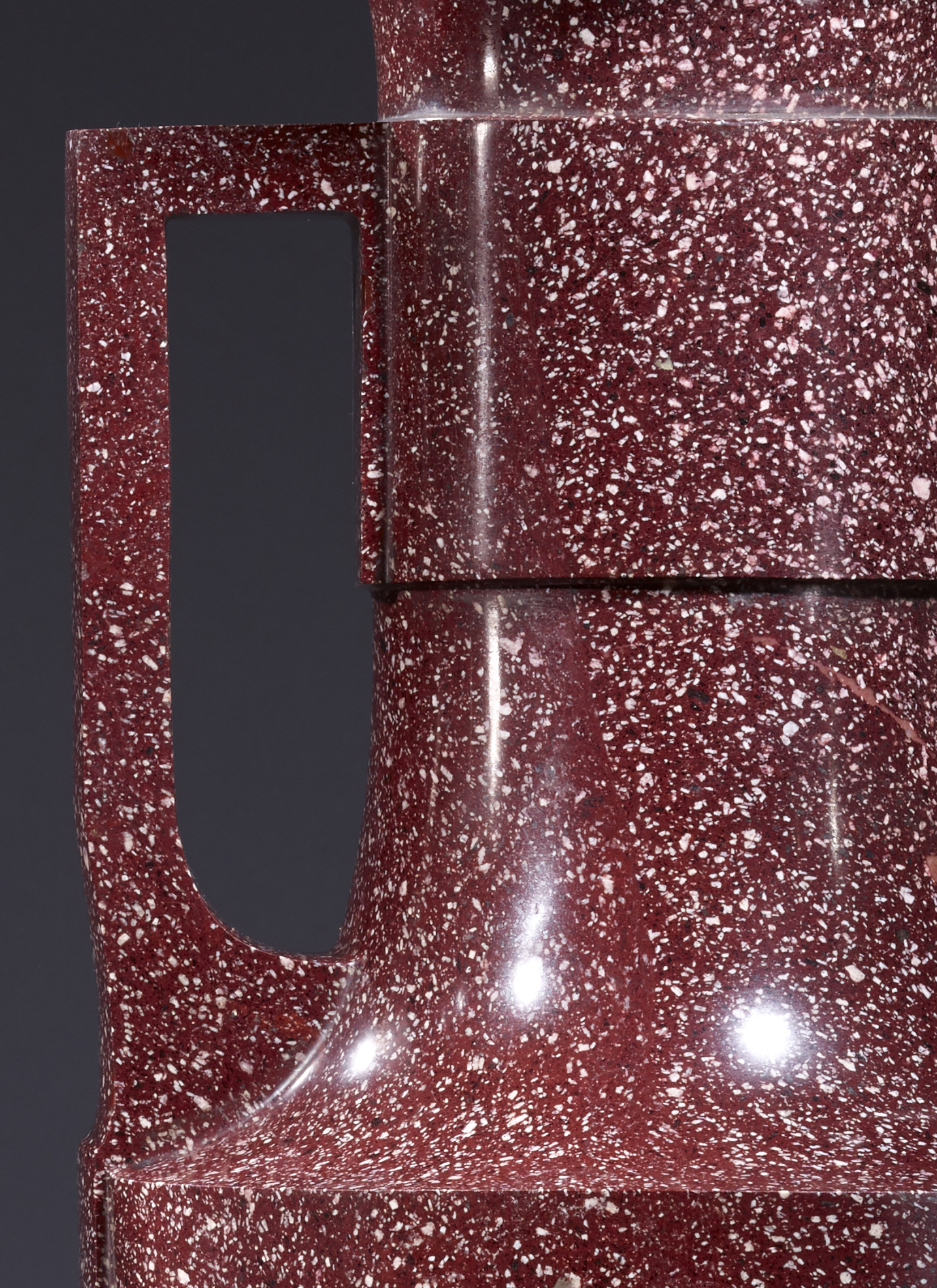
Sculpted in Italy, almost certainly in Rome, in the course of the 18th century, this imposing pair of ‘loutrophoros’-shaped vases in porfido rosso antico was presented as a diplomatic gift in 1813 by King Charles XIII of Sweden (1748-1818), along with four other vases—a red porphyry tazza, a monumental vase also in porphyry, and a pair of Swedish brown porphyry vases—to Lieutenant General the Honourable Sir Alexander Hope (1769-1837). This gesture on the part of the Sovereign marked the culmination of Hope’s diplomatic mission, which would result in the signing on 3rd March 1813 of the Treaty of Stockholm, a ‘treaty of concert and subsidy’ between Sweden and England. Signed by Hope and Sir Edward Thornton (1766-1852) for Great Britain and by Lars Von Engeström (1751-1826) and Gustaf af Wetterstedt (1776-1837) for Sweden, it secured Swedish military cooperation against Napoleon I in exchange for substantial subsidies, the cession of Guadeloupe that England had just taken from France, and the latter’s support for Swedish claims over Norway. Sweden, for her part, undertook to put an end to the slave trade, and also granted commercial rights in Gothenburg, Karlshamn and Strålsund to British merchants.
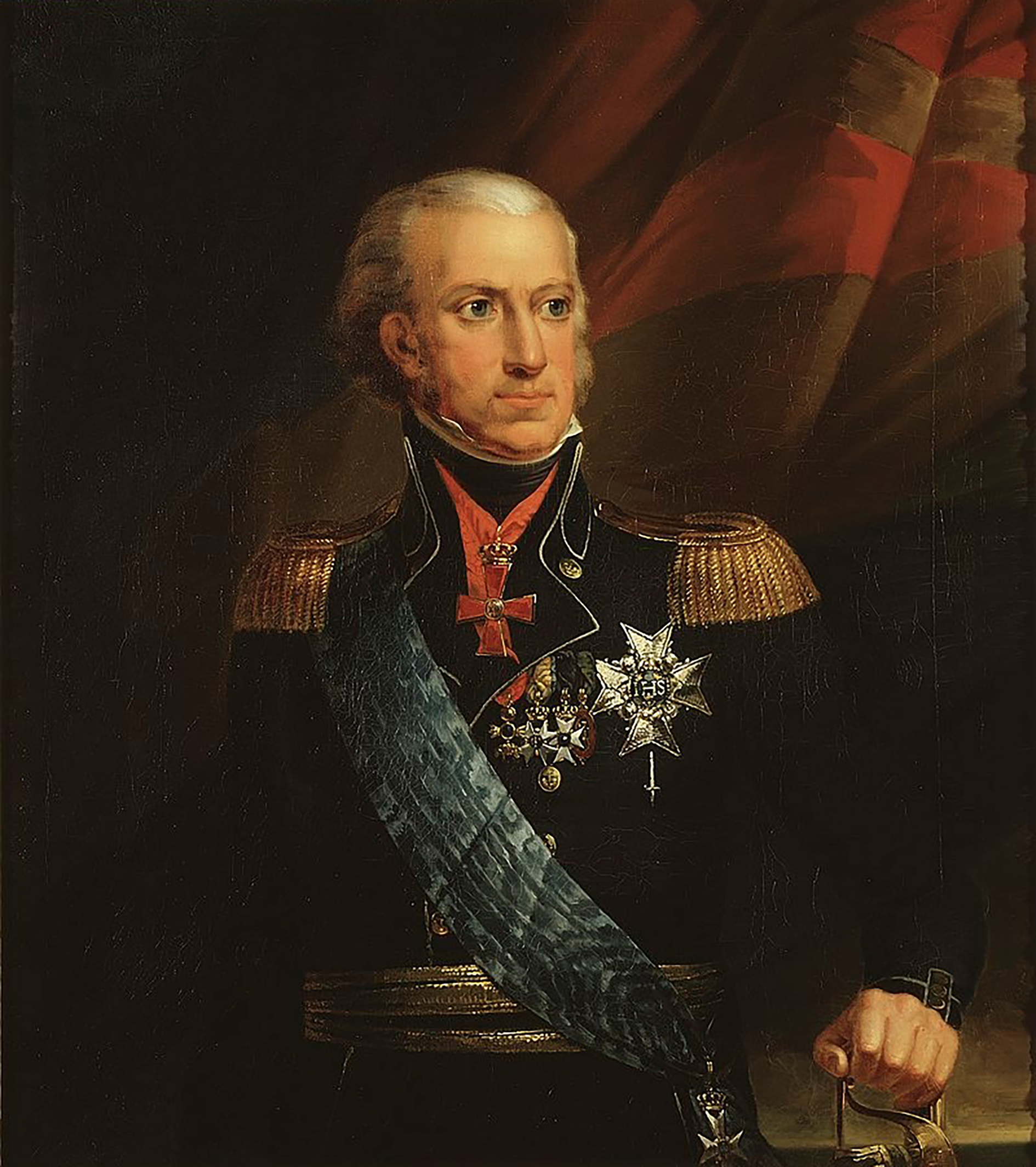
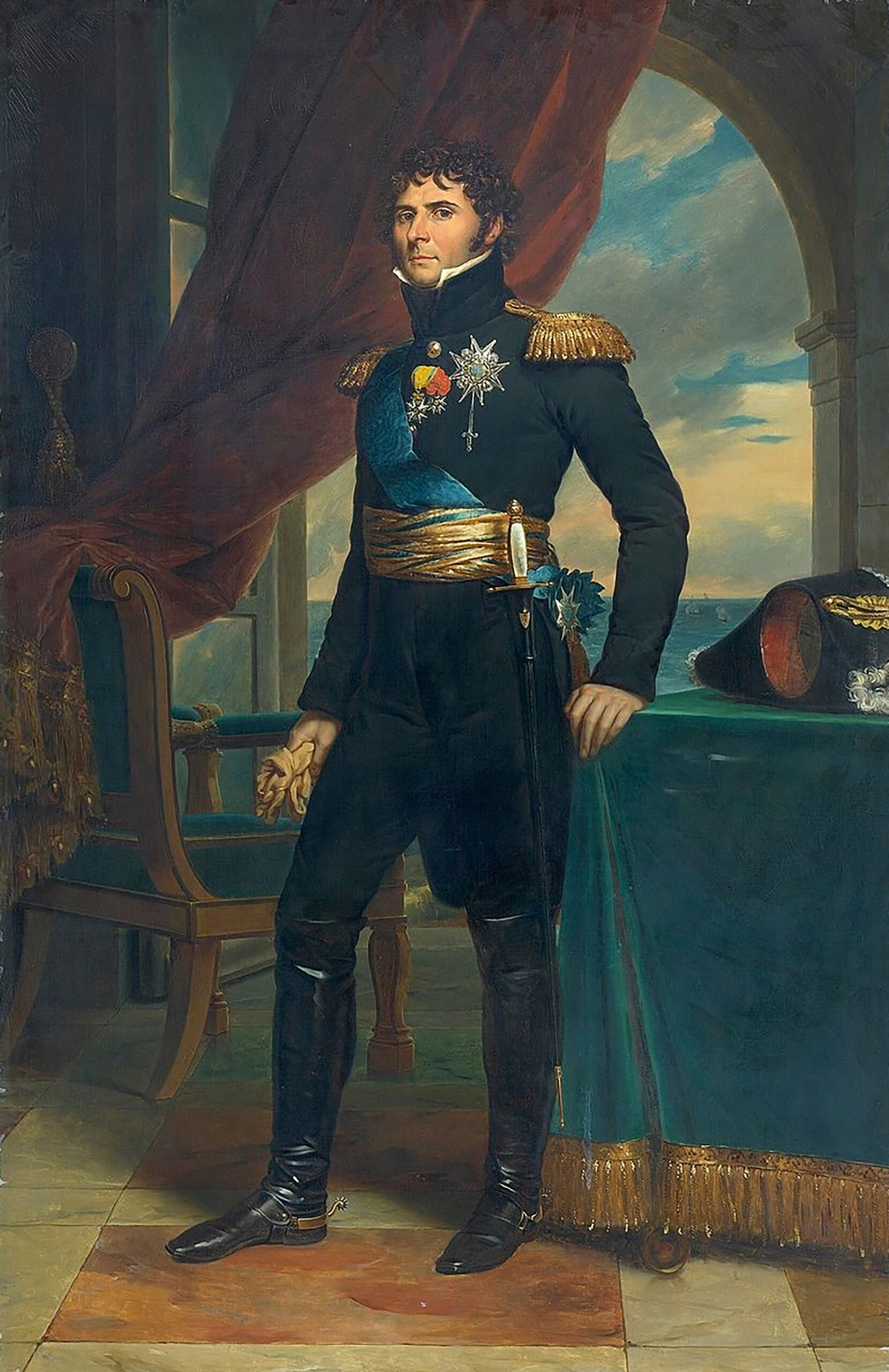
The success of Hope’s mission was also attributable to the close friendship he developed with the Crown Prince, Marshal Jean-Baptiste Bernadotte (1763-1844), whom he managed to persuade to join the Allies and take a stand against France. Appointed Marshal of the Empire by Napoleon in 1804, Bernadotte had been chosen in 1810 by the Swedish Parliament to become the heir to Charles XIII, who was old, ill and childless.
He took the name of Charles John and the title of Regent of the Kingdom. In 1818, he became King of Sweden under the name of Charles XIV John and King of Norway under the name of Charles III John, and remained on the throne until his death in Stockholm on 8th March 1844.
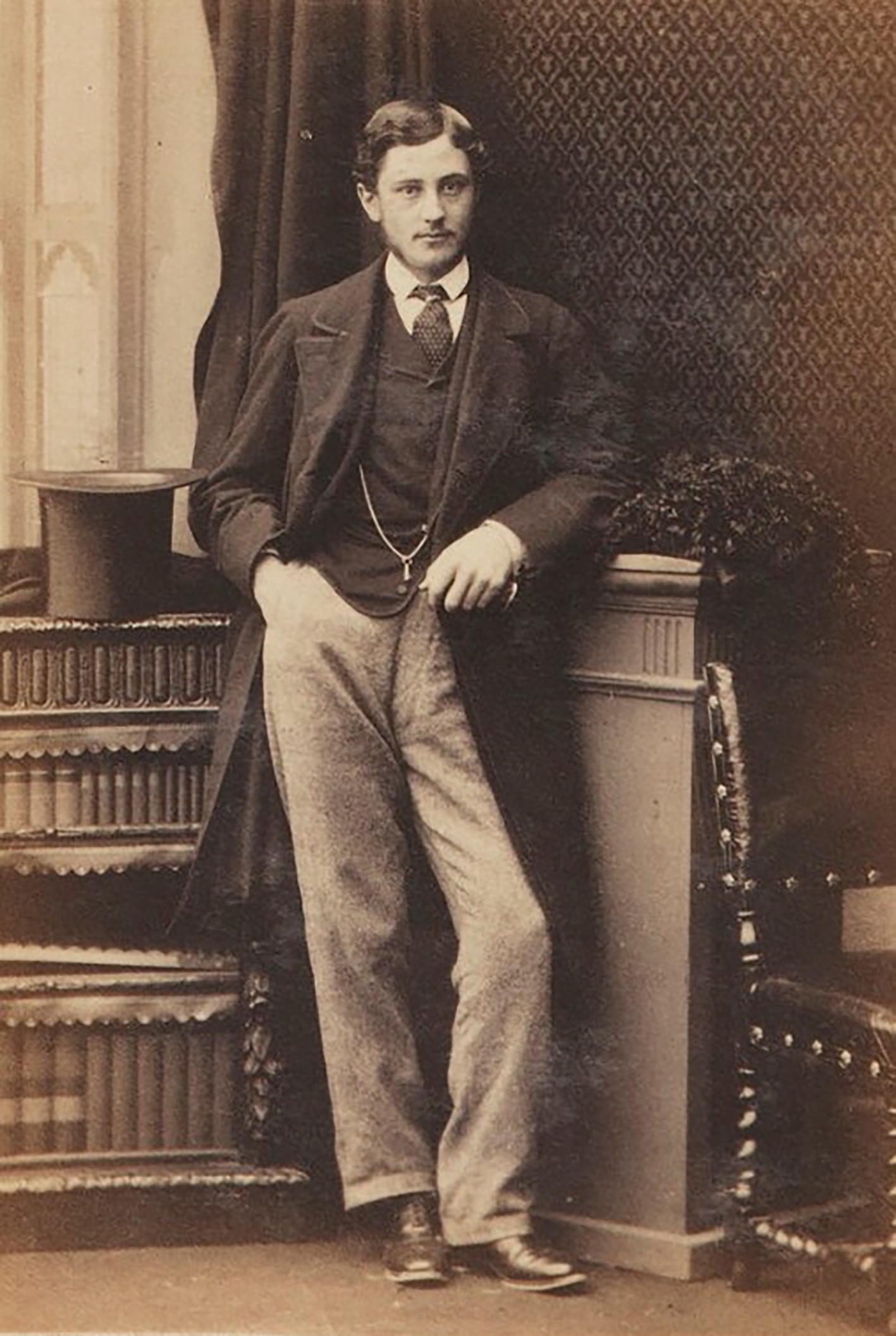
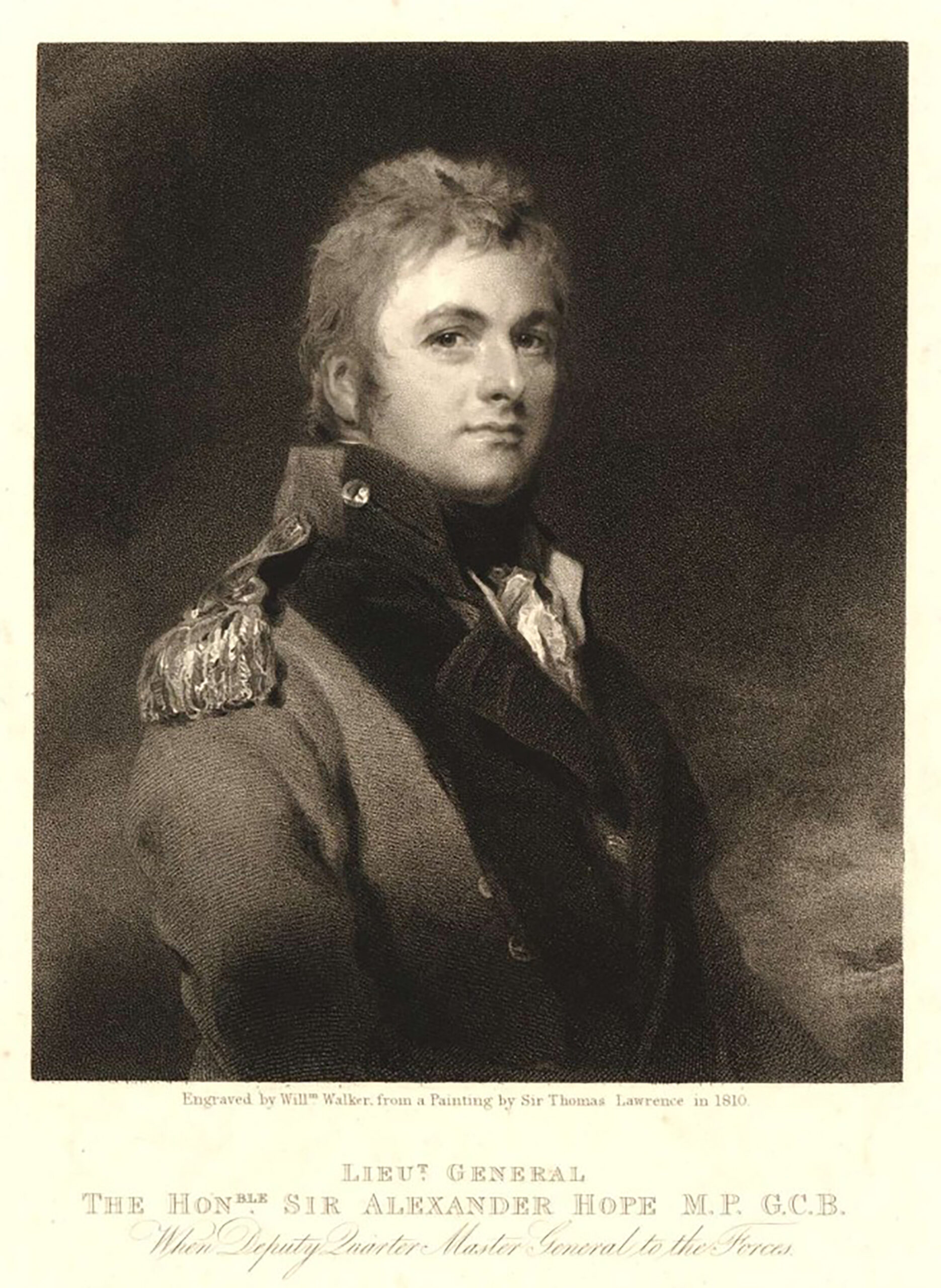
Born in 1769, Sir Alexander Hope was the second son of John Hope (1704-1781), 2nd Earl of Hopetoun and member of the House of Lords. He embarked on his career in 1786 as an ensign in the 63rd Regiment of Foot and went on to command the 14th Regiment of Foot at the skirmish at Geldermalsen in the Netherlands in 1795 during the Flanders Campaign. He was severely wounded there, losing an arm and remaining permanently lame. Appointed Lieutenant-Governor of Tynemouth and Cliff Fort in 1797, then Lieutenant-Governor of Edinburgh Castle in 1798, he became Deputy Assistant Adjutant General of the forces in Holland in 1799, and shortly afterwards Deputy Quartermaster General.
He was twice Governor of the Royal Military College in 1812 and 1824, before becoming Lieutenant-Governor of the Royal Hospital Chelsea in 1826. He was promoted to full general in 1830, served as Member of Parliament for Dumfries Burgh from 1796 to 1800 and was also elected Member of Parliament for Linlithgowshire from 1800 to 1834.
Hope married Georgina Alicia Brown (1781-1875) in 1805, with whom he had four children: John Thomas Hope (1807-1856); Louisa Dorothea Kerr (1811-1884); George William Hope of Luffness (1808-1863), who, as already mentioned, inherited our pair of vases, and James Robert Hope-Scott of Abbotsford (1812-1873).
Philip Hewat-Jaboor
Born in 1953, Philip Hewat-Jaboor developed a very special passion and an extremely wide-ranging expertise, unanimously recognised internationally, for Egyptian red porphyry—the imperial purple emblematic of the Romans—whose exceptional hardness, a symbol of excellence, made it all the more precious. Over a period of some thirty years, he assembled a rare collection of these porphyries, as well as marbles and other hard stones, which he displayed in his home on the Channel Island of Jersey, in an extraordinary library endowed with zenithal lighting, among his vast collection of books on all aspects of the decorative arts.
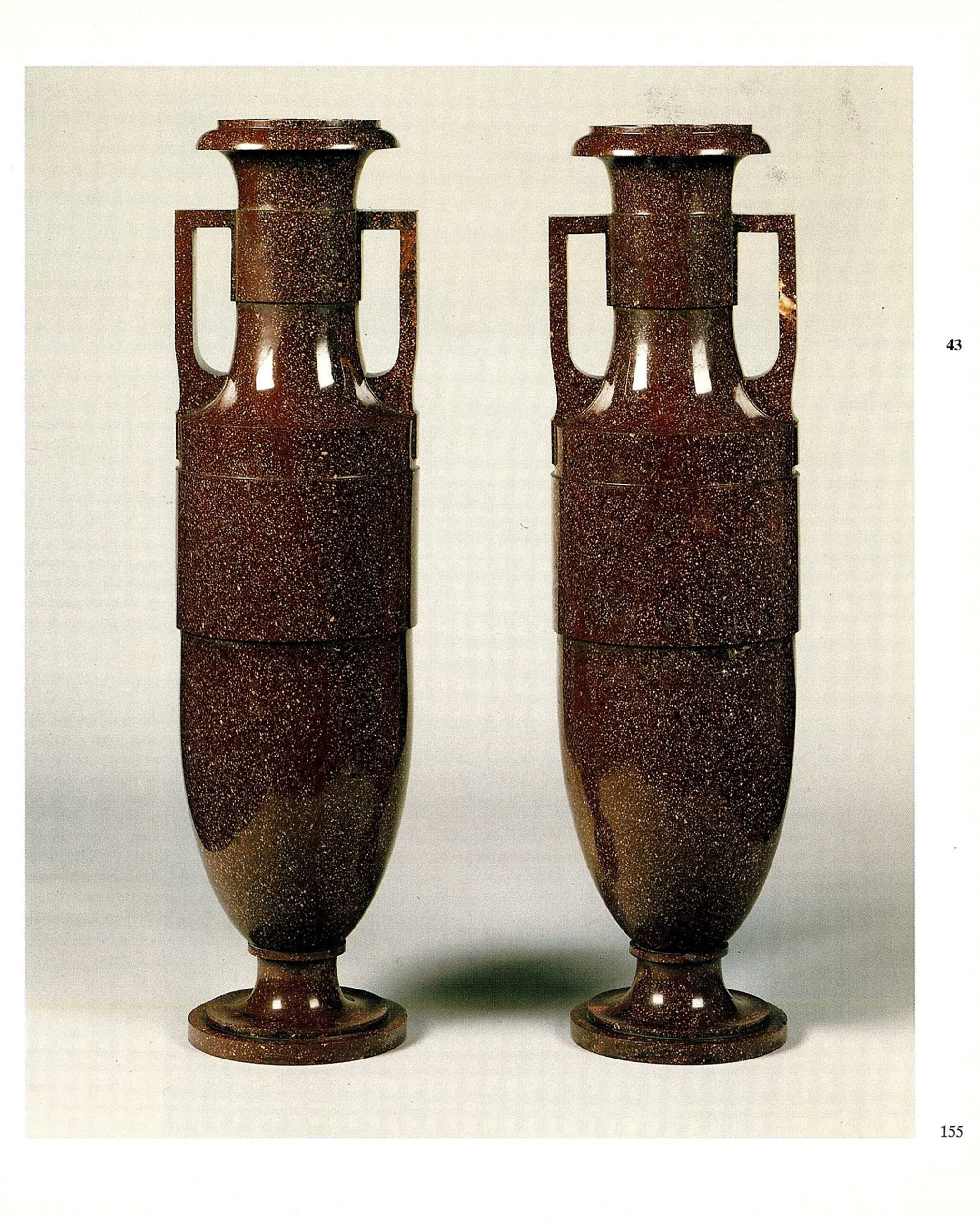
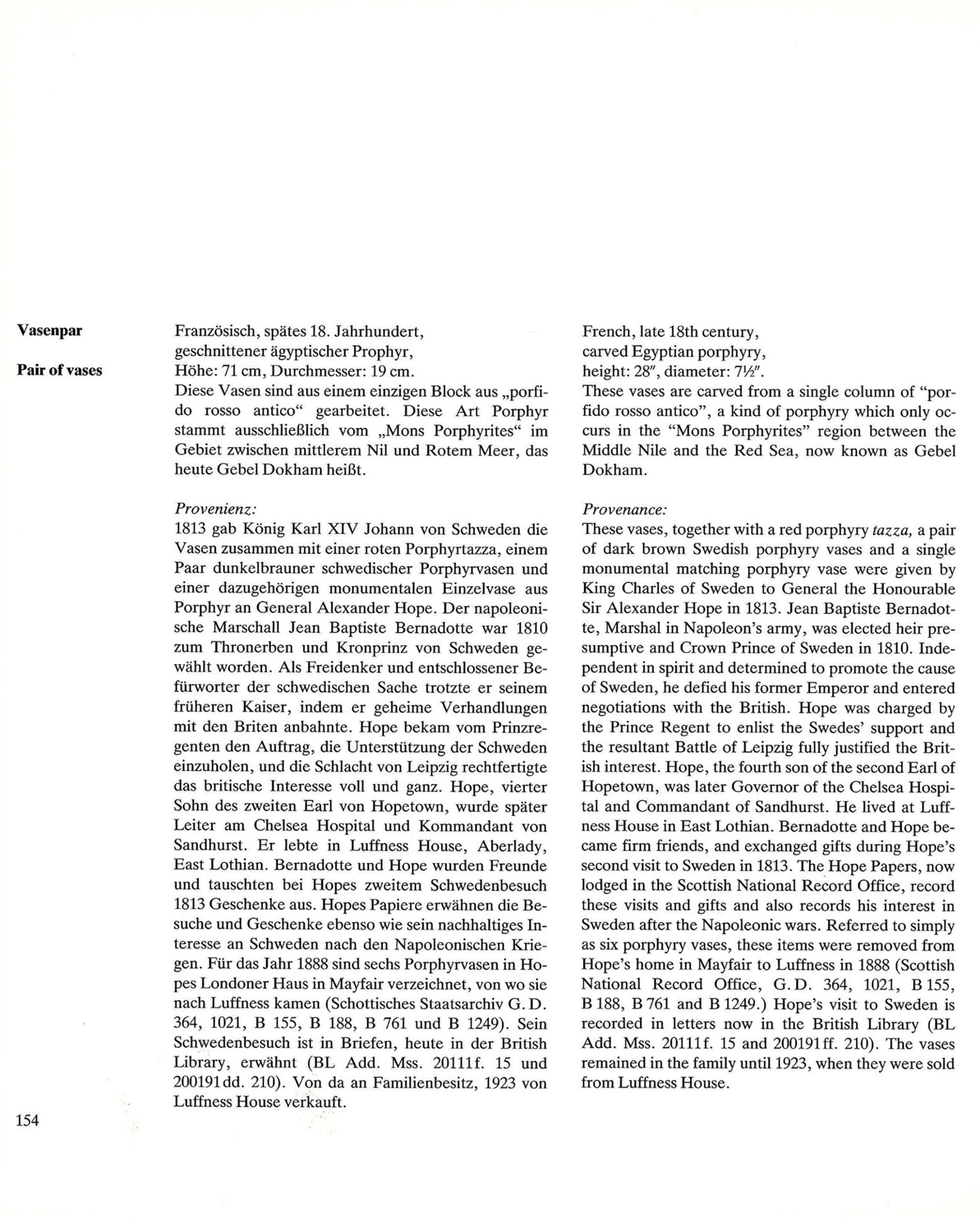
Kondad O. Bernheimer, Kunst & Tradition, Meisterwerke bedeutender Provenienzen, Munich, 1989, p. 154-155, cat. 43.
An inveterate collector, he was also wont to amass antique furniture, sculptures, antique Egyptian objects, porcelains and old photographs. He was fascinated by the collections of William Beckford (1760-1844) and Thomas Hope (1769-1831), which were of particular academic interest to him, leading him to co-organise two major exhibitions, the catalogues of which are considered authoritative: William Beckford: An Eye for the Magnificent, in 2001, and Thomas Hope: Regency Designer in 2008, both presented in New York at the Bard Graduate Center for Studies in the Decoarative Arts, Design, and Culture, of which he was a trustee alongside the Sir John Soane’s Museum Foundation.
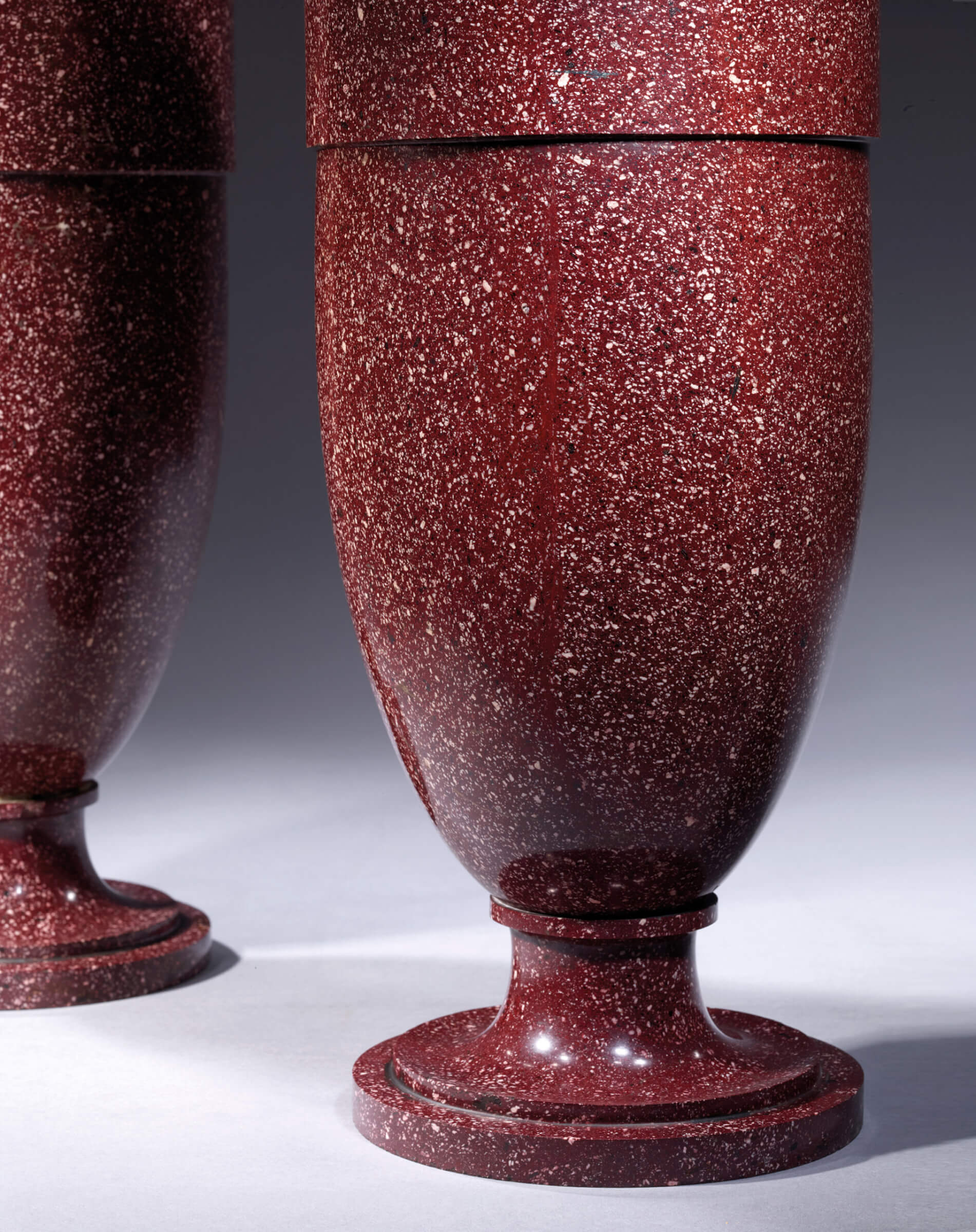
A strong supporter of the Bard Graduate Center, Art House Jersey, the Furniture History Society as well as many other organizations, he cultivated professional and friendly relationships with many curators and historians of the decorative arts. Artistic advisor and chairman of Masterpiece Art Fair in London, he began his career in the furniture department of Sotheby’s Belgravia, where his keen eye and talent were quickly detected by Peter Wilson, then chairman of the auction house. In 1979, he took over Hatfields Restoration, where he was joined a year later by his former colleague and close friend at Sotheby’s, Philip Astley-Jones (1946-2021).
Together, they supervised in particular the conservation of the Badminton Cabinet, a monumental cabinet that became famous for twice breaking the record as the most expensive piece of furniture ever sold at an auction. Renowned for his discretion, Philip Hewat-Jaboor advised many art collectors, particularly in the field of porphyry. He died on 31st March 2022 at his home in Jersey.
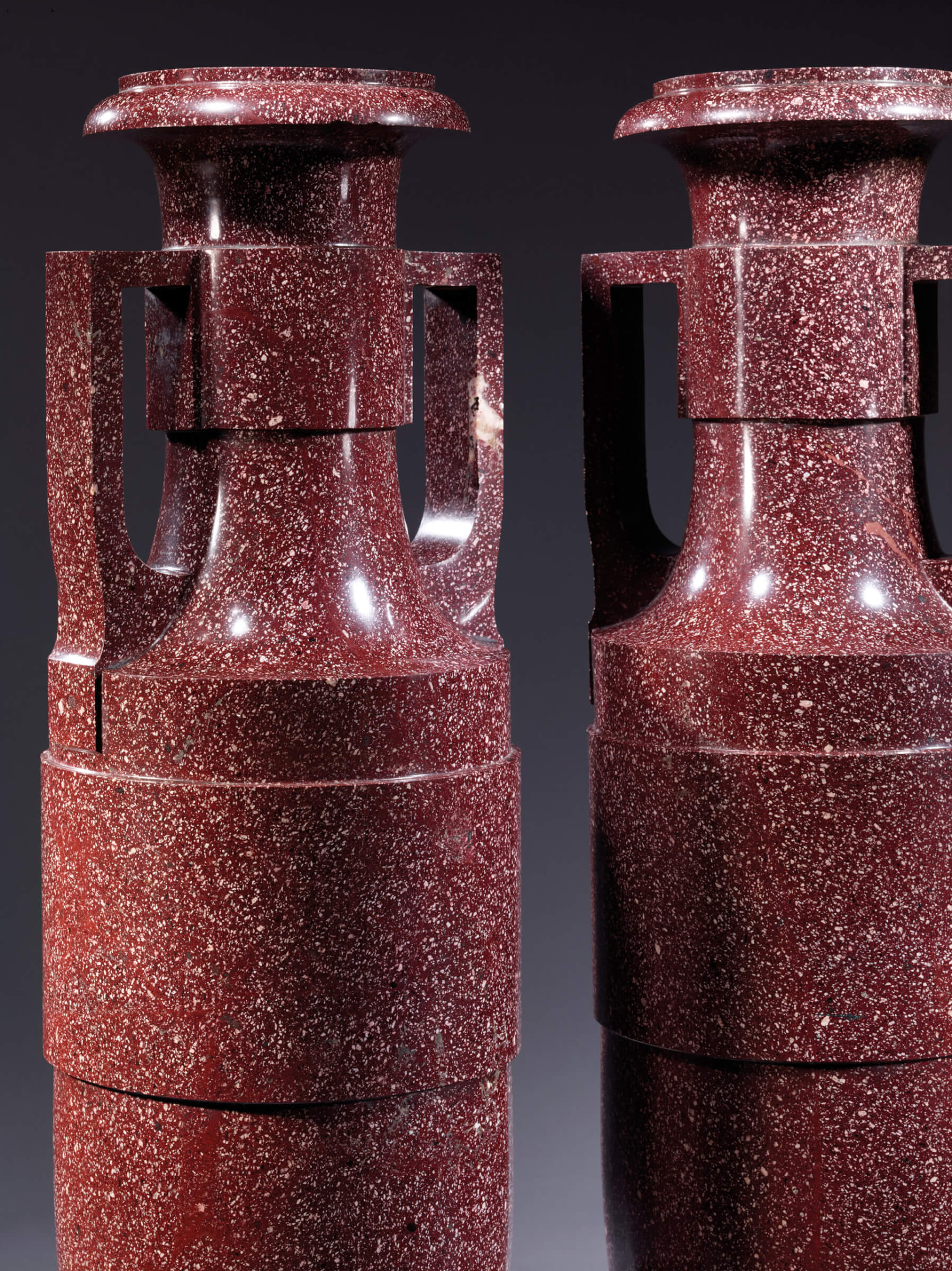
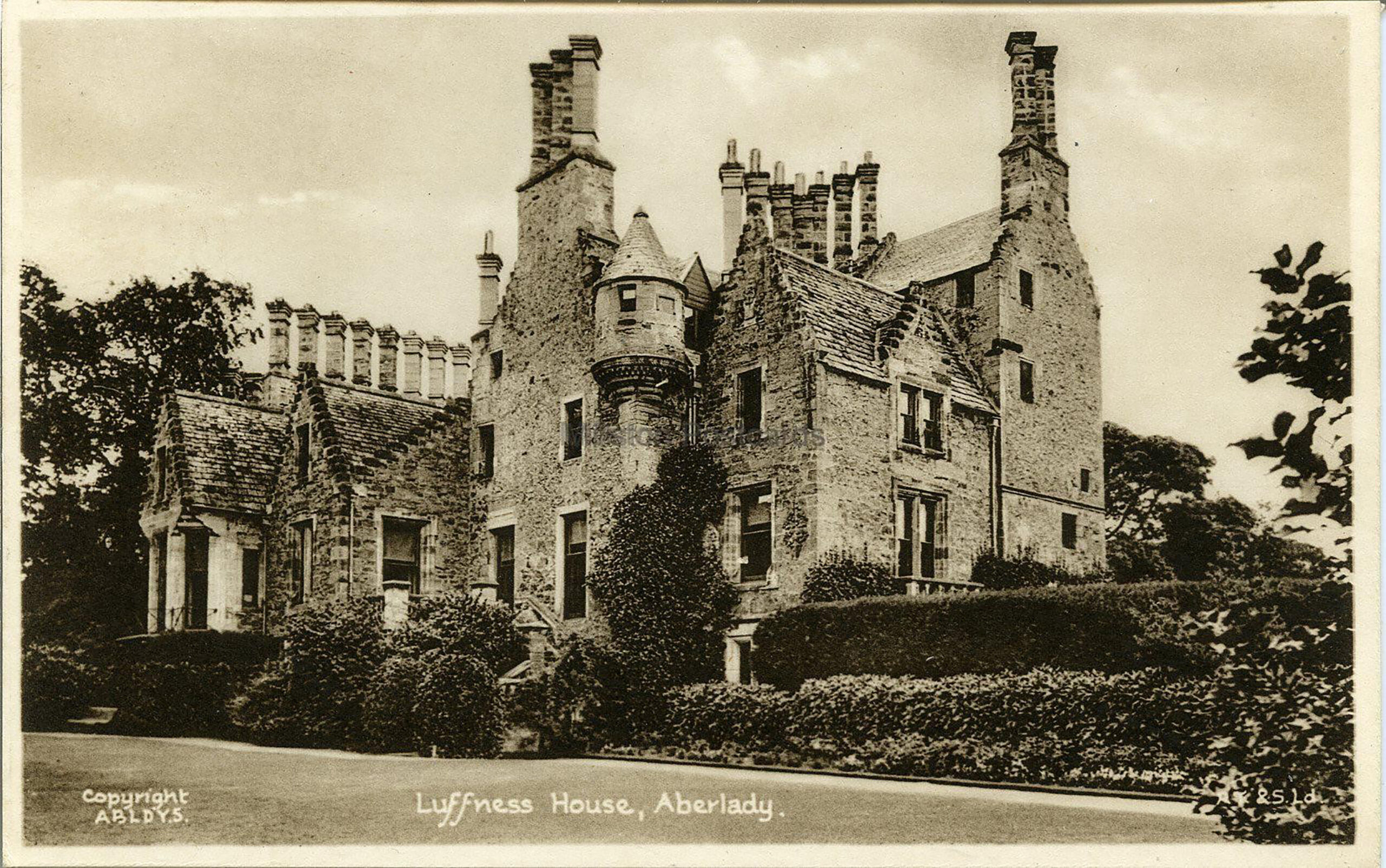
Luffness House
Luffness Castle, also known as Luffness House, is a mansion built on an ancient fortification dating from the 12th and 13th centuries, near the village of Aberlady in East Lothian, Scotland. It was sold in 1739 for £8,350 to Charles Hope (1681-1742), 1st Earl of Hopetoun, who held the office of Lord High Commissioner to the General Assembly of the Church of Scotland in 1723, and then that of Governor of the Bank of Scotland from 1740 until his death. Altered and extended from the 17th century onwards, and again during the 18th century, Luffness House also underwent considerable works in the 19th century, first carried out under the direction of William Burn in 1822 and then of David Bryce in 1846 and 1874. The house is still owned by the descendants of Sir Alexander Hope.