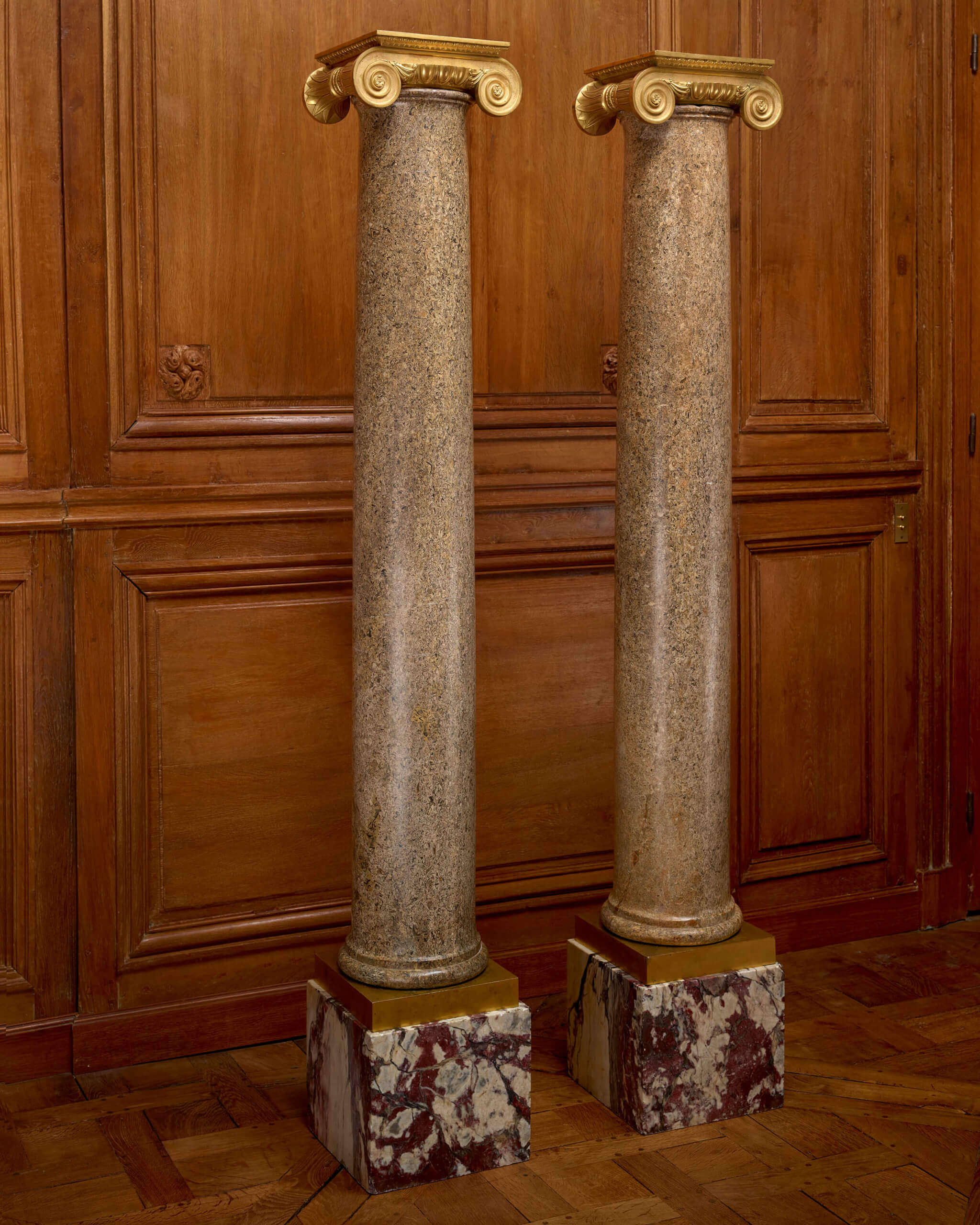
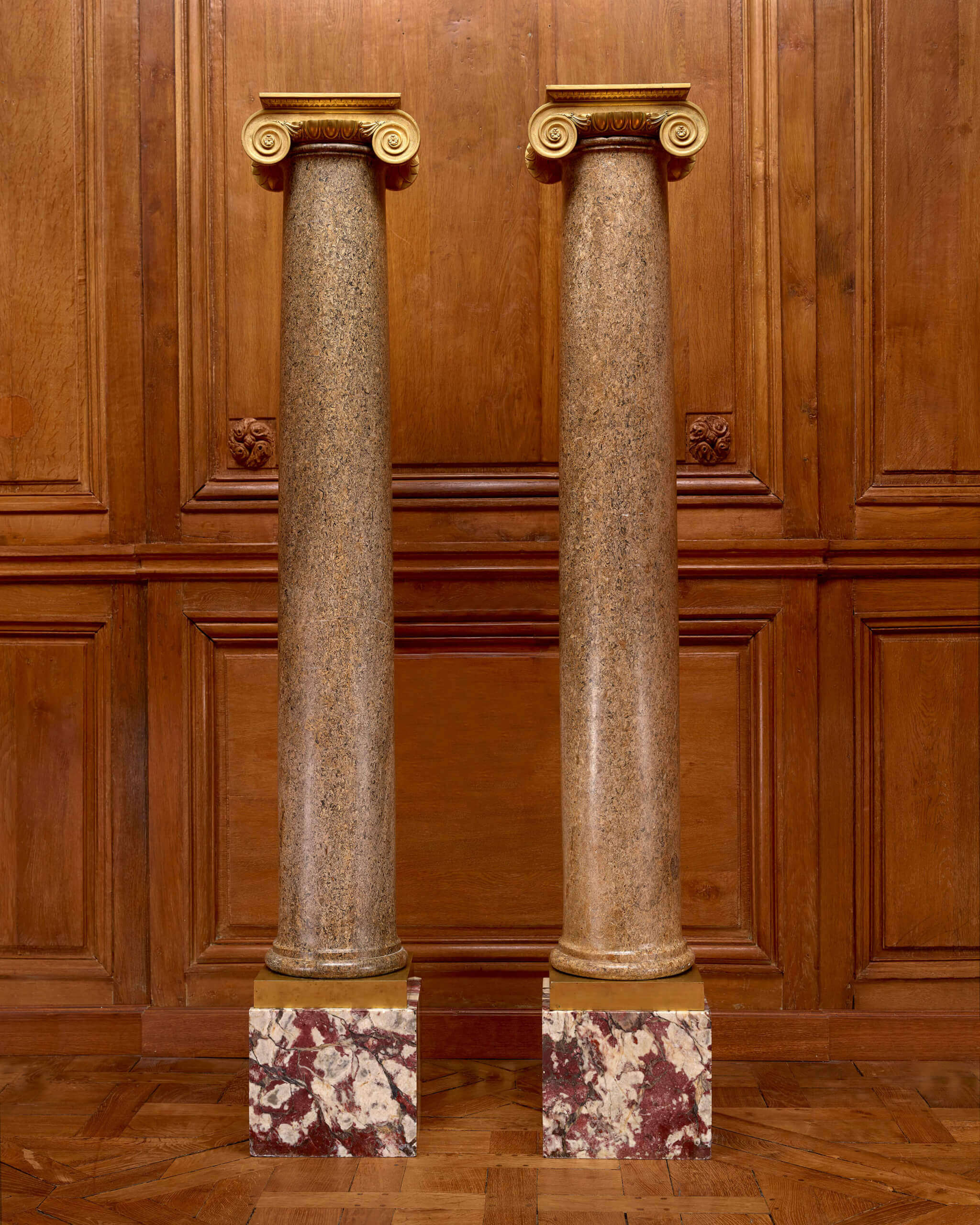
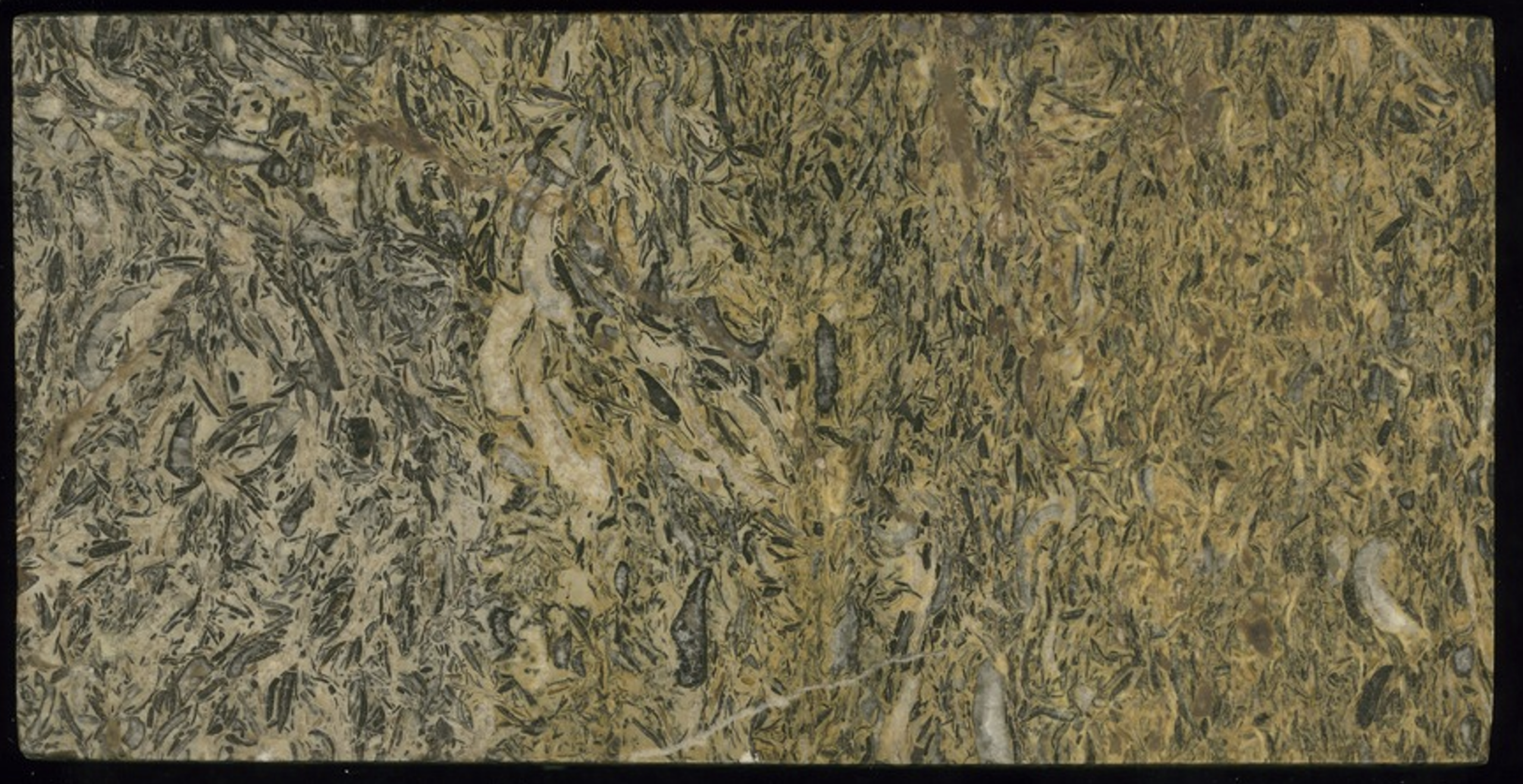
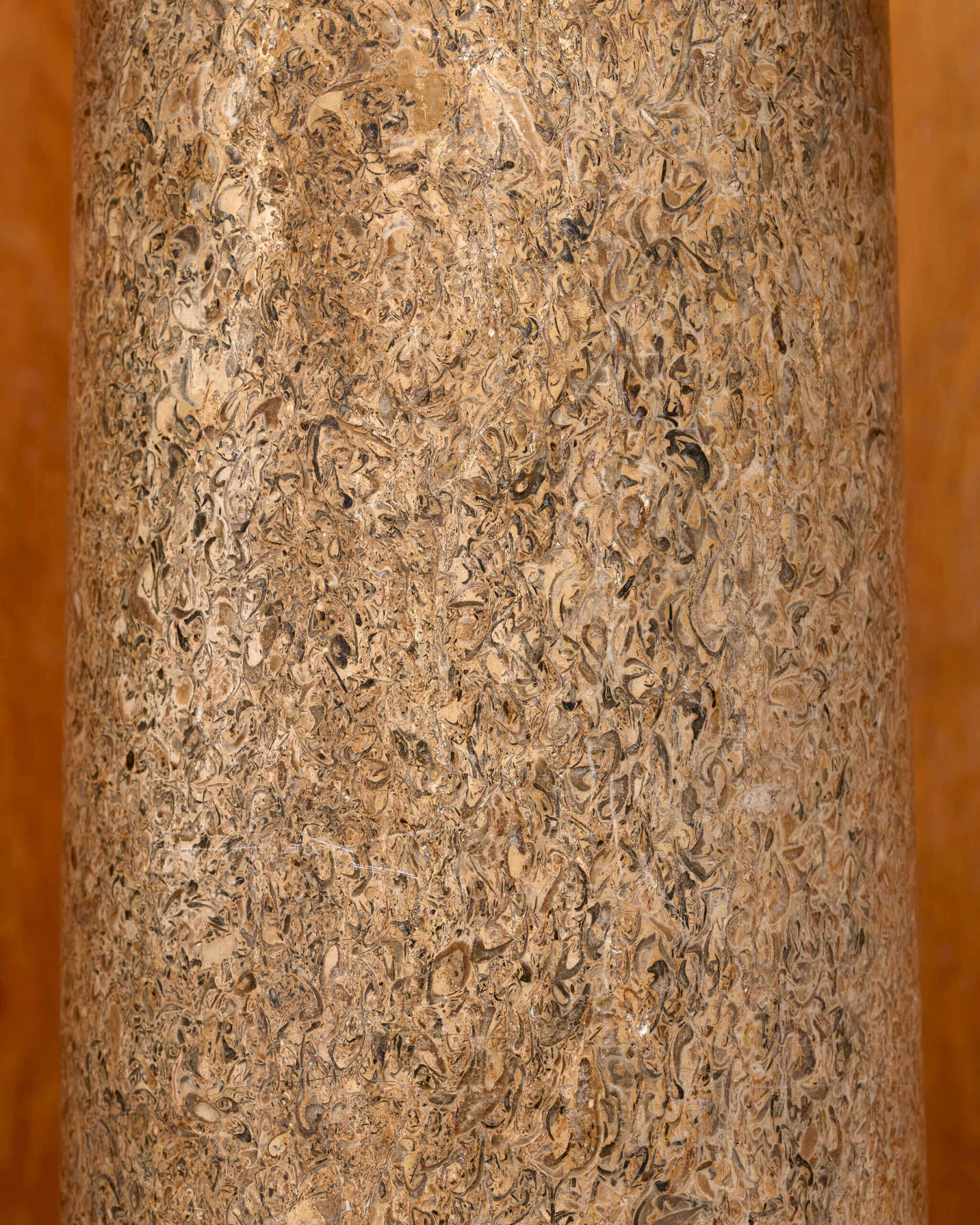
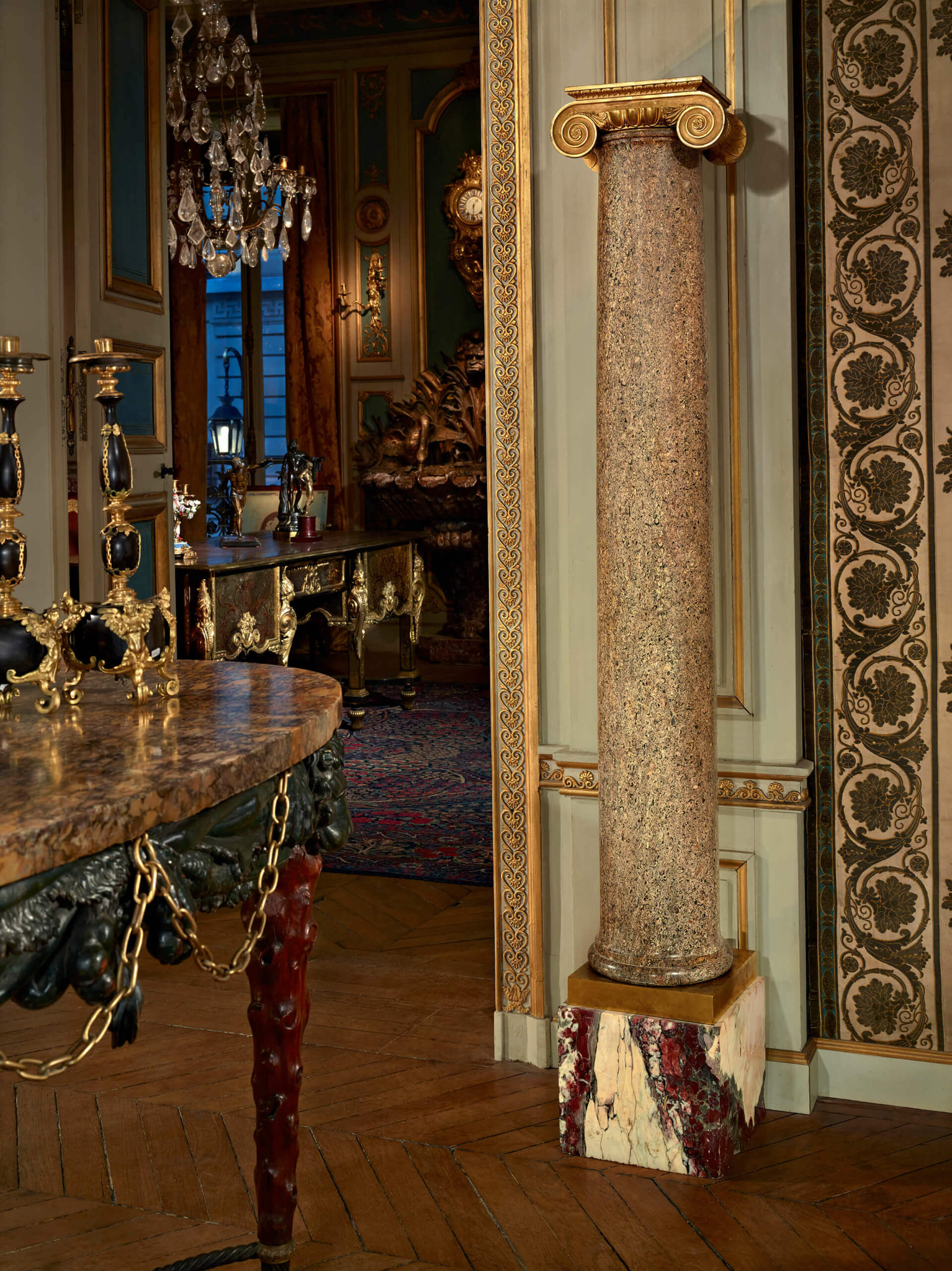
Columns: Lumachella orientale, also called lumachella antica or lumachella minuta d’Egitto, from the Henchir Kasbat quarry (ancient Thuburbo Maius), Tunisia. This Mesozoic limestone, extremely rare, was especially prized by Roman scalpellini (stone carvers), Rome, Roman Antiquity period (very likely repolished during the Renaissance).
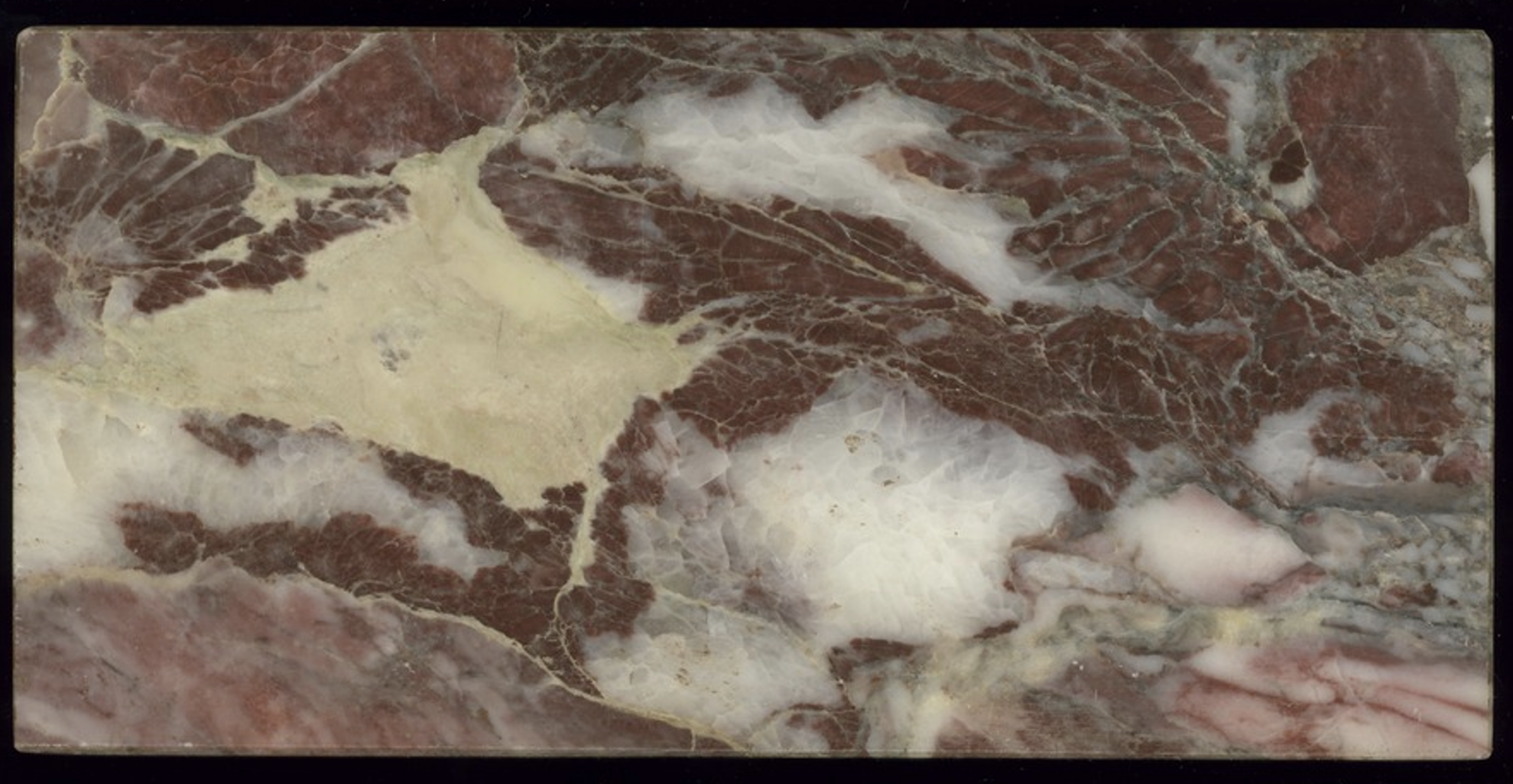
Gilded bronze base, plinth in Fior di Pesco Apuano marble from the quarries of Tuscany, and gilded bronze capitals: France, Neoclassical period.
H. of the antique lumachella columns: 142.5 cm. (56 1/8 in.).
Total H. with capitals: 155 cm. (61 in.).
Top surface of the gilded bronze capitals: 23.7 x 23.7 cm. (9 3/8 x 9 3/8 in.).
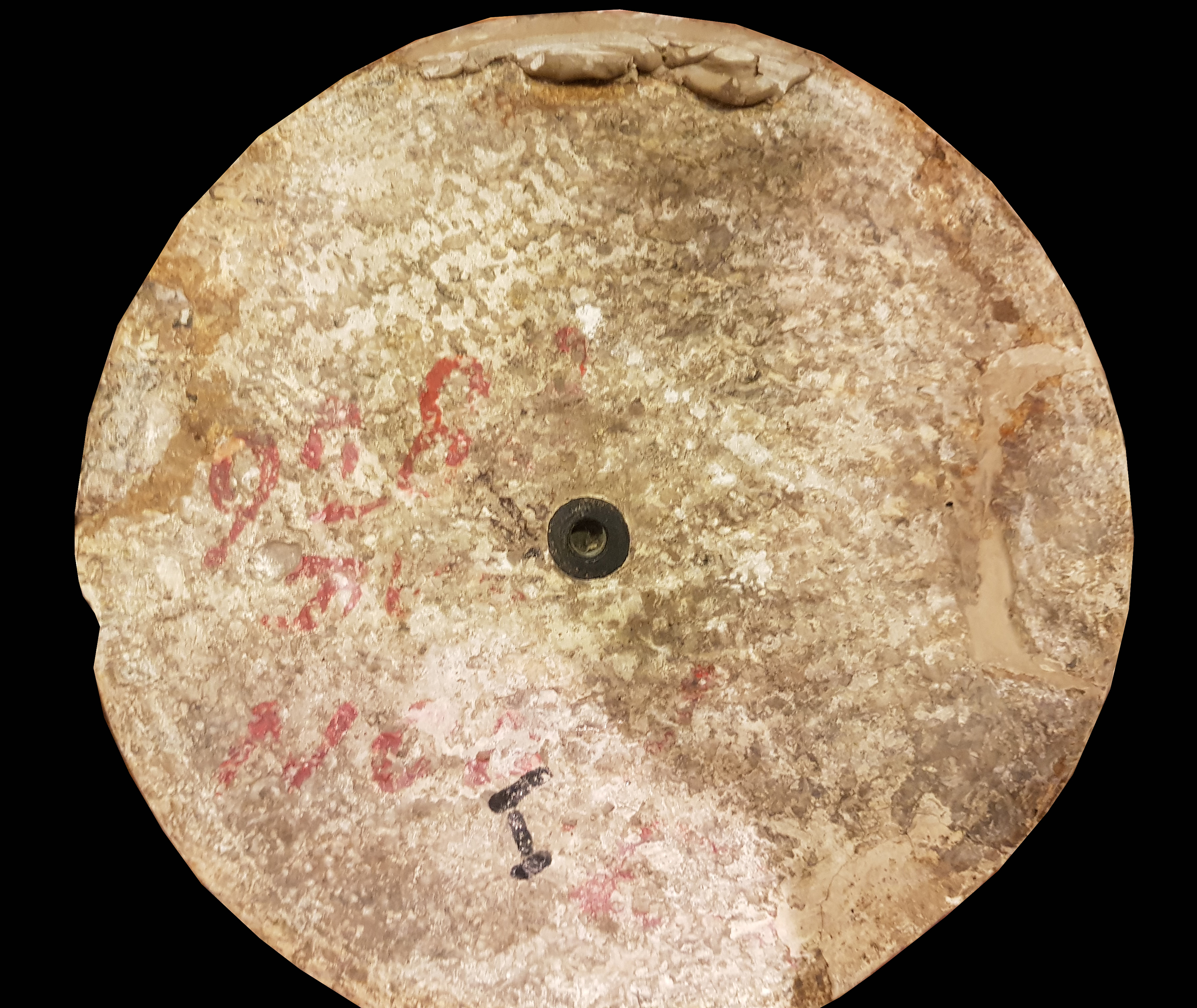
MARKS AND INSCRIPTIONS: 928(?) / DE(?) / N(?), inventory marks painted in red beneath the shaft of one of the two columns; I painted in black beside the previous mark.
PROVENANCE: private collection.
“If lumachella marble were rarer, it would undoubtedly be one of the most extraordinary curiosities in the world. Imagine a marble paste mixed with broken shells and all sorts of marine animal debris from the ancient world: the base of the paste is black, reddish, or dark in color; on this background stand out in white the countless fragments of these primitive beings, cut in every direction by the saw, presenting themselves bizarrely from every angle […] Hence the name lumachella, from the Italian lumaca, meaning snail. The animals whose remains are seen here are, however, not snails, but marine animals of very varied species, no longer living in the present world, of which only analogues remain […] There exists a great number of lumachella marble varieties, differing from one another either in the number and density of shells, or in their shapes. Antique lumachella marble, whose quarries are unfortunately lost, is the most beautiful.” — Le Magasin pittoresque, vol. 6, 1838, p. 226.
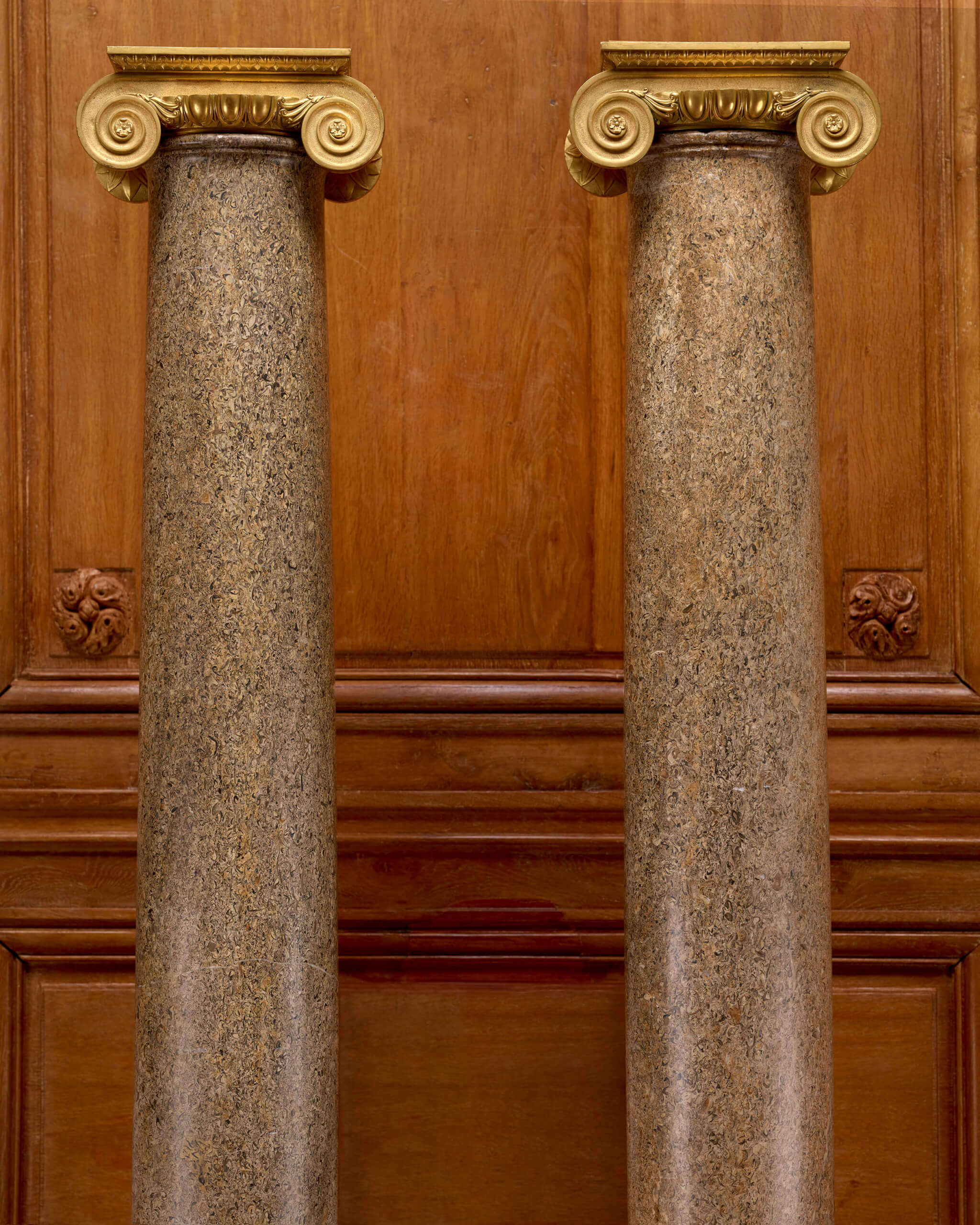
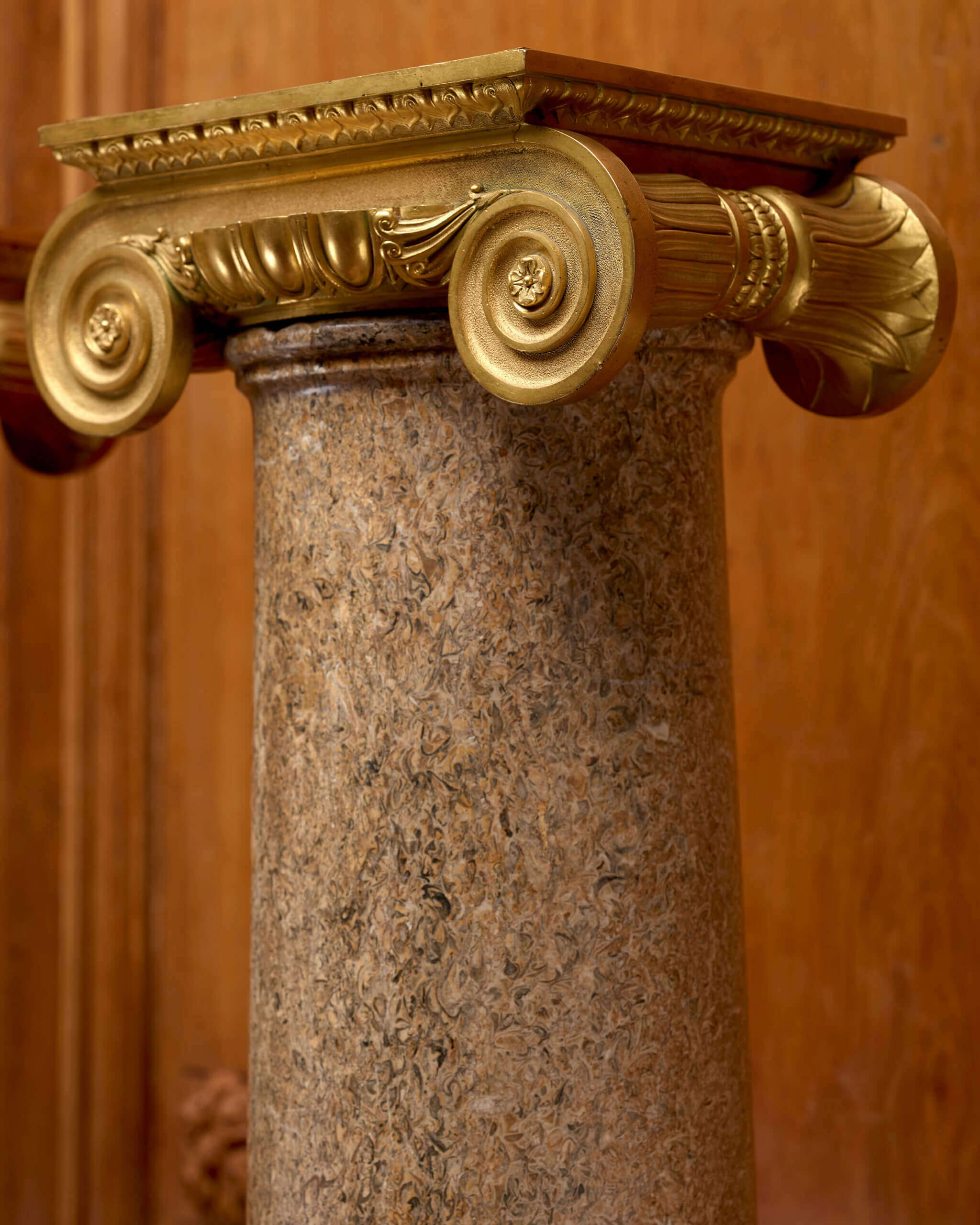
Each of the columns presented here is composed of a precious, slightly tapered shaft 142.5 cm in height, with molded terminations sculpted in the mass, made of lumachella orientale, also called lumachella antica or lumachella minuta d’Egitto, a Mesozoic limestone, extremely rare and highly prized by Roman scalpellini (stone carvers). Its quarries, located at the famous site of Henchir Kasbat, ancient Thuburbo Maius, in Tunisia, now closed, were exploited during Roman Antiquity.
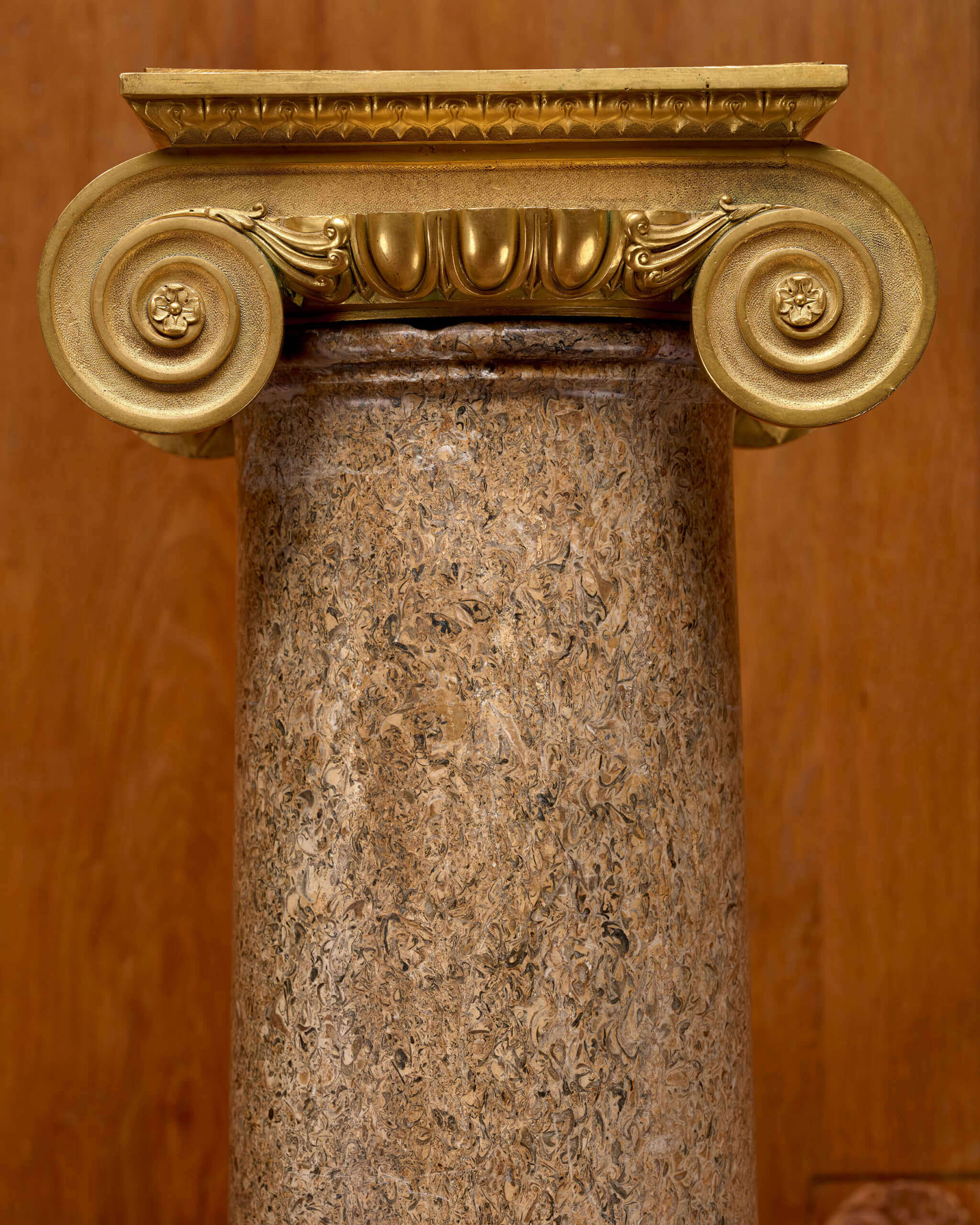
These antique columns were assembled in Italy during the Neoclassical period. They rest on a plain square gilded bronze base, itself supported by a 25 cm-high square plinth of Fior di Pesco Apuano marble from the quarries of Tuscany. Each is crowned by an imposing gilded bronze Ionic capital. The complete height measures 180 cm.
Very rare examples of columns similar to ours appeared in the Borghese collections in Rome. One pair of these columns was included in Napoleon’s famous Borghese acquisitions in 1807: “Two lumachella orientale columns, 9 palmi high = 6½ feet, with bases and Ionic capitals, 3,000.” A second, taller pair (14 palmi), although described, was ultimately not acquired.
The archives of this famous acquisition, published in volume 1 of Les antiques Borghèse au musée Napoléon by Madame Marie-Louise Fabréga-Dubert, indeed show that:
-In the portico on the ground floor of the casino at the Villa Borghèse, there were two pairs of lumachella columns of different sizes.
-Visconti, who had been tasked by Dominique-Vivant Denon with appraising the collection for acquisition by the Emperor, set their prices at 3,000 and 6,000 F, respectively.
The location of these columns, slightly taller than ours (about 2 meters, the large Roman palm measuring 22.5 cm), is unknown today.
When the acquired objects were packed in Rome, the architect Pierre-Adrien Pâris (1745–1819), appointed French commissioner by Emmanuel Crétet (1747–1809), Minister of the Interior responsible for the Fine Arts, drew up a record called the “État des caisses” to document the packing and shipment of each item. Thanks to this record, which lists every antique actually acquired, it is now possible to confirm that the objects were indeed shipped. Cross-referencing it with the multiple reception records at the Louvre allows the precise tracking of these precious antiques until their arrival. However, most of the crates were stored unopened until the museum rooms were cleared following the restitutions of 1815 (except for the finest antiques, of course). This “État des caisses” therefore served as the basis for the 1815 inventory, which did not truly reflect the antiques physically present, and consequently led to a number of confusions.

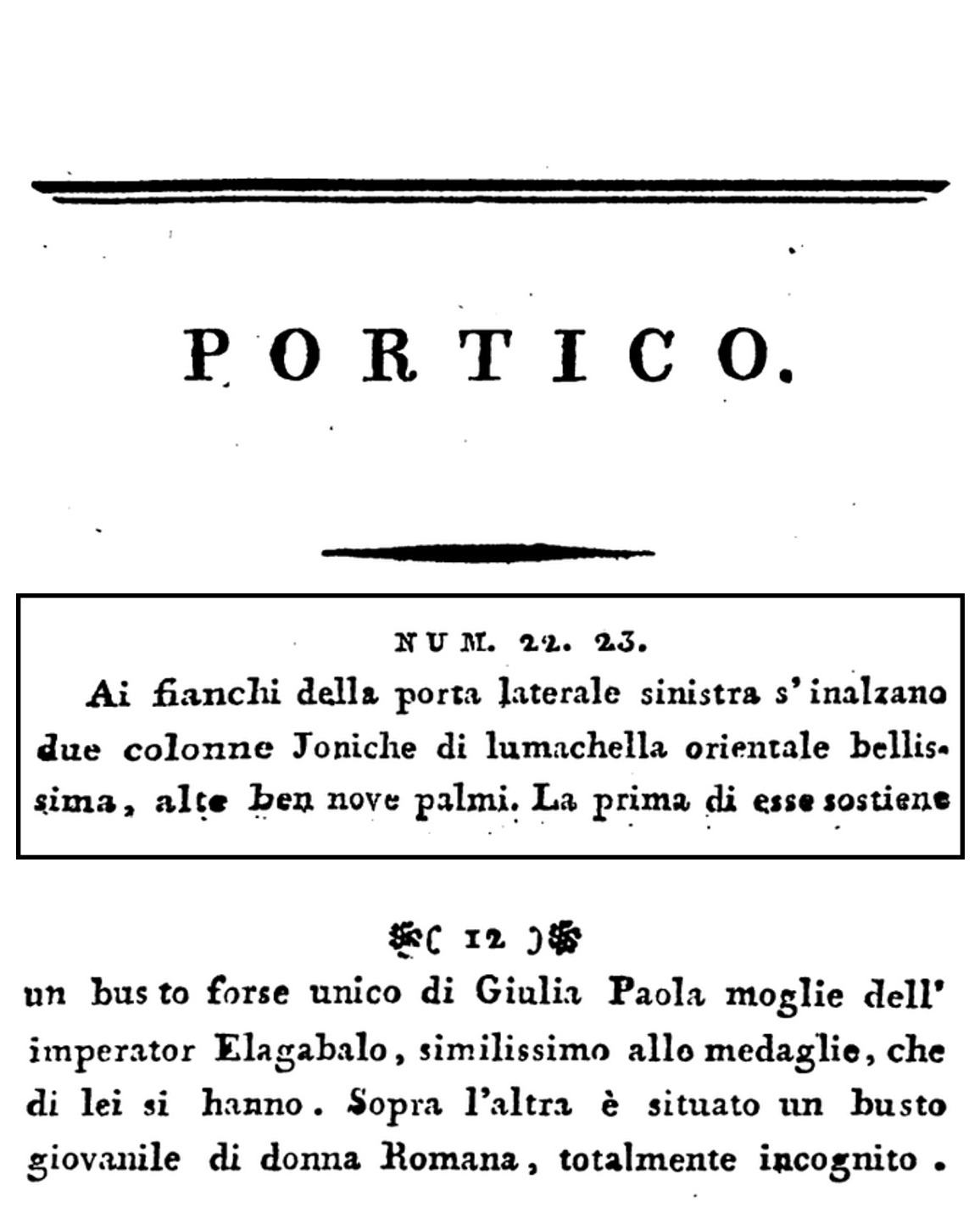
In this same packing record, which Madame Marie-Louise Fabréga-Dubert used to compile the catalog of acquired objects (see volume 2 of her work Les antiques Borghèse au musée Napoléon, comprising 695 entries), no lumachella columns appear. It is easy to imagine the confusion in Rome, where crates were being prepared for objects likely stored haphazardly. In all likelihood, the two 9-palm-high columns were considered to remain on site, raising the question of what ultimately became of them.
After the sale to Napoleon, Prince Camillo Borghese, in memory of his father, restored the villa and reassembled a new collection, reinstalling it in the rooms following a course very similar to that of the Neoclassical decoration. This new collection consisted of items not acquired by the French (notably elements from the façades and gardens), antiques recovered from family properties or recently unearthed in excavations, as well as new acquisitions. However, it appears that the lumachella columns were not reinstalled in the casino portico.
The Italian history of the late 19th century ultimately ruined the country’s great aristocratic families, and the Borghèse were unfortunately no exception: the park was cleared of everything it still contained by an antiquarian, and a major sale was organized in 1893 at the Pavillon de l’Horloge (the former small museum devoted to the antiquities of Gabii located in the villa’s park), where from 13 to 24 March everything still owned by the family was auctioned off, with the exception of the items forming the villa’s interior decoration, which had fortunately been legally protected.
This auction catalogue lists a single lot that could correspond to the two lumachella columns mentioned above:

We can note that the description bigio lumachellato does not appear incompatible with the color of our columns, but what about their dimensions? …Given the extreme rarity of lumachella columns, the question is still worth asking: might there nevertheless be a connection between our two columns and those of the Borghèse…