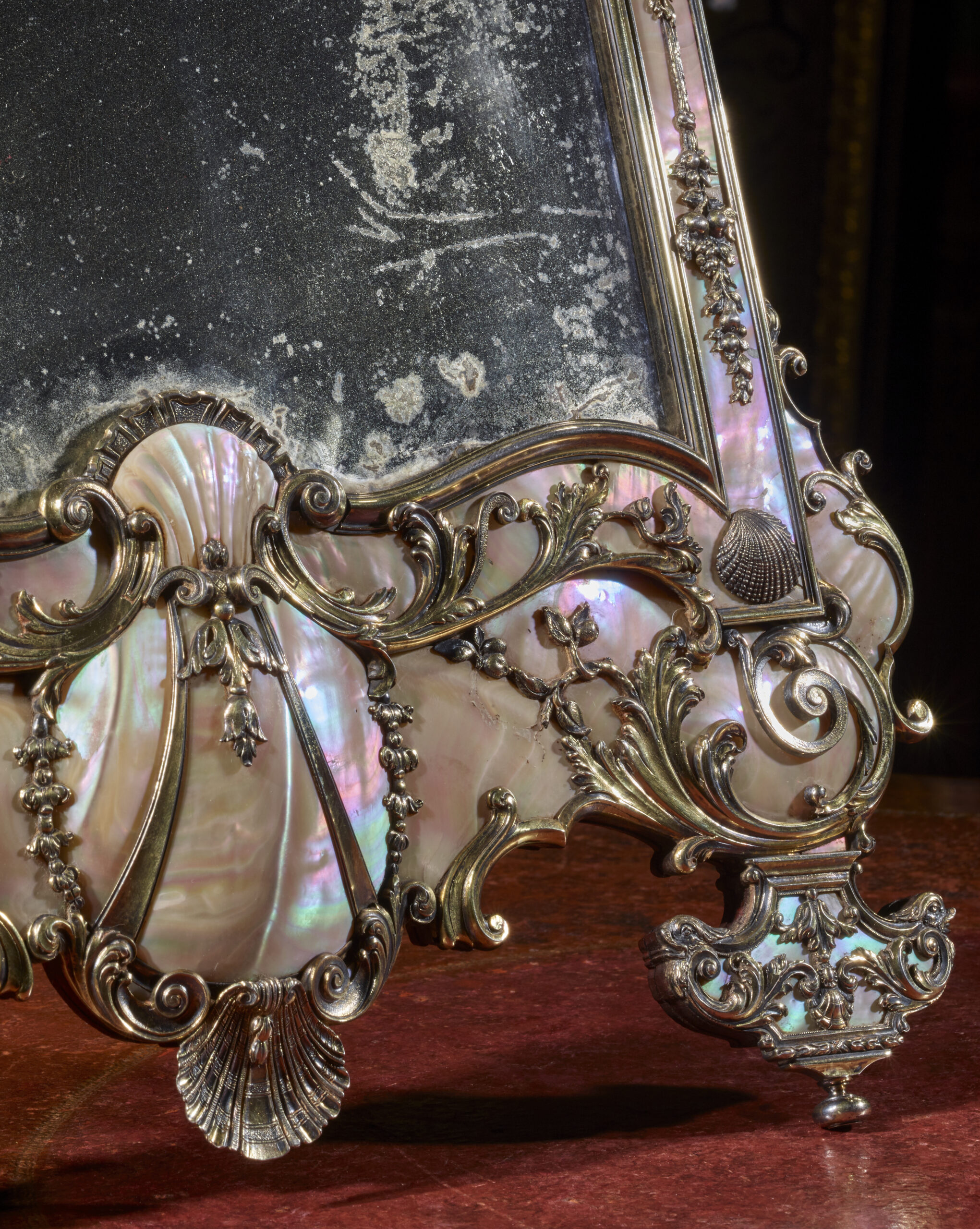
Gilt silver ; mother-of-pearl; wood ; and original glass.
SIGNATURE: Ed. AMORY Fecit, signature of silversmith Edward Amory engraved on the reverse of the gilt silver base of the rear foot of the mirror.
H. 74 cm (29 ¼ in.); W. 42.2 cm. (16 5/8 in.); D. when open: 35.5 cm (14 in.).
PROVENANCE: acquired in 1857 from the jeweler Rouzé, located at n°. 14 of boulevard des Italiens in Paris, by Baron Jacob Mayer de Rothschild (1792-1868), known as James de Rothschild, the emblematic founder of the French branch of the Rothschild family; collection of Baron James de Rothschild and the Baroness Betty de Rothschild (1805-1886), in the Grand Hall of the Château de Ferrières, in Seine-et-Marne; afterwards by direct descent, successive collections of Baron Alphonse de Rothschild (1827-1905), Baron Édouard de Rothschild (1868-1949) and Baron Guy de Rothschild (1909-2007) and of his wife, Marie-Hélène (1927-1996), née Van Zuylen Van Nyevelt Van de Haar; then by descent to the present day.
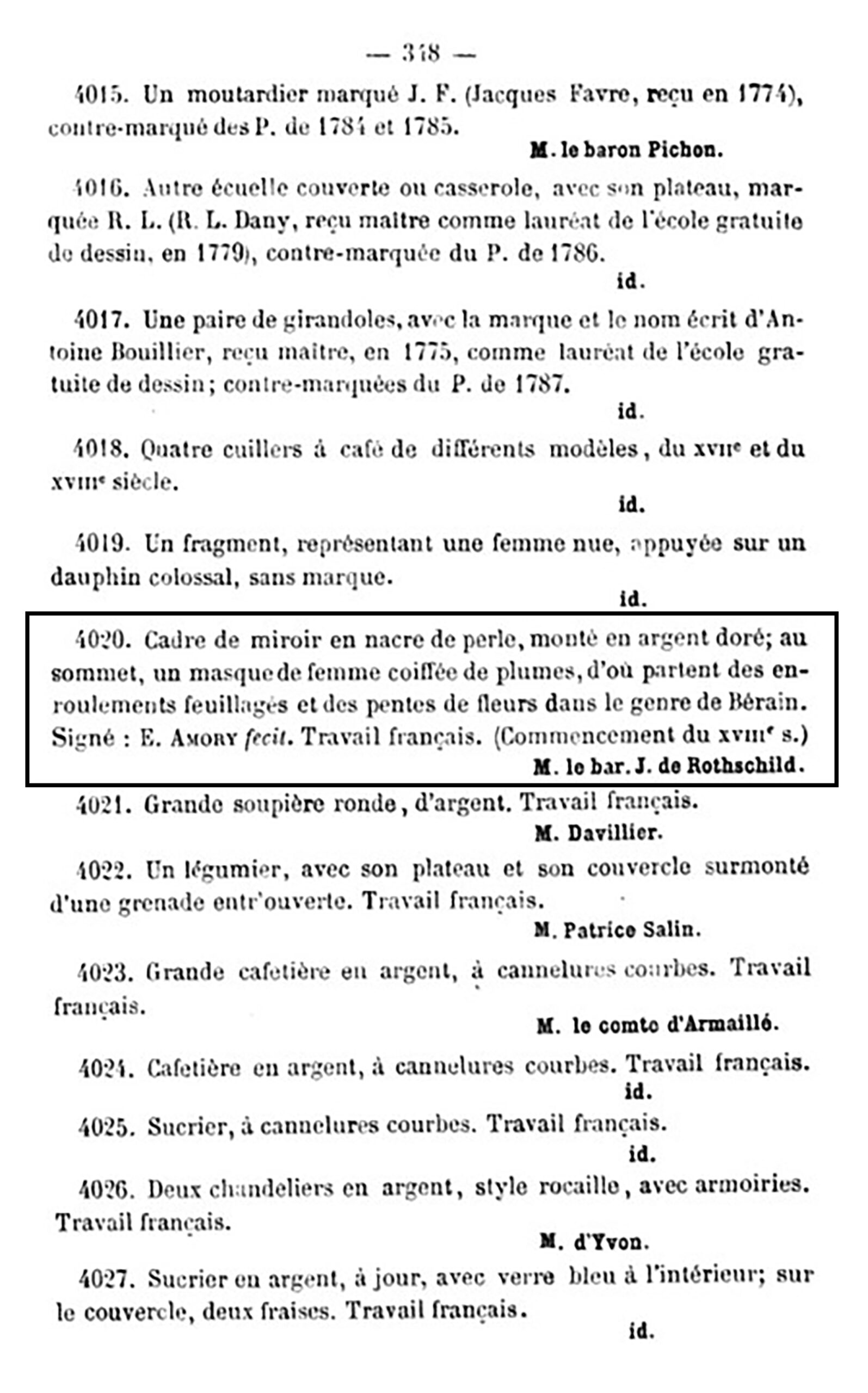
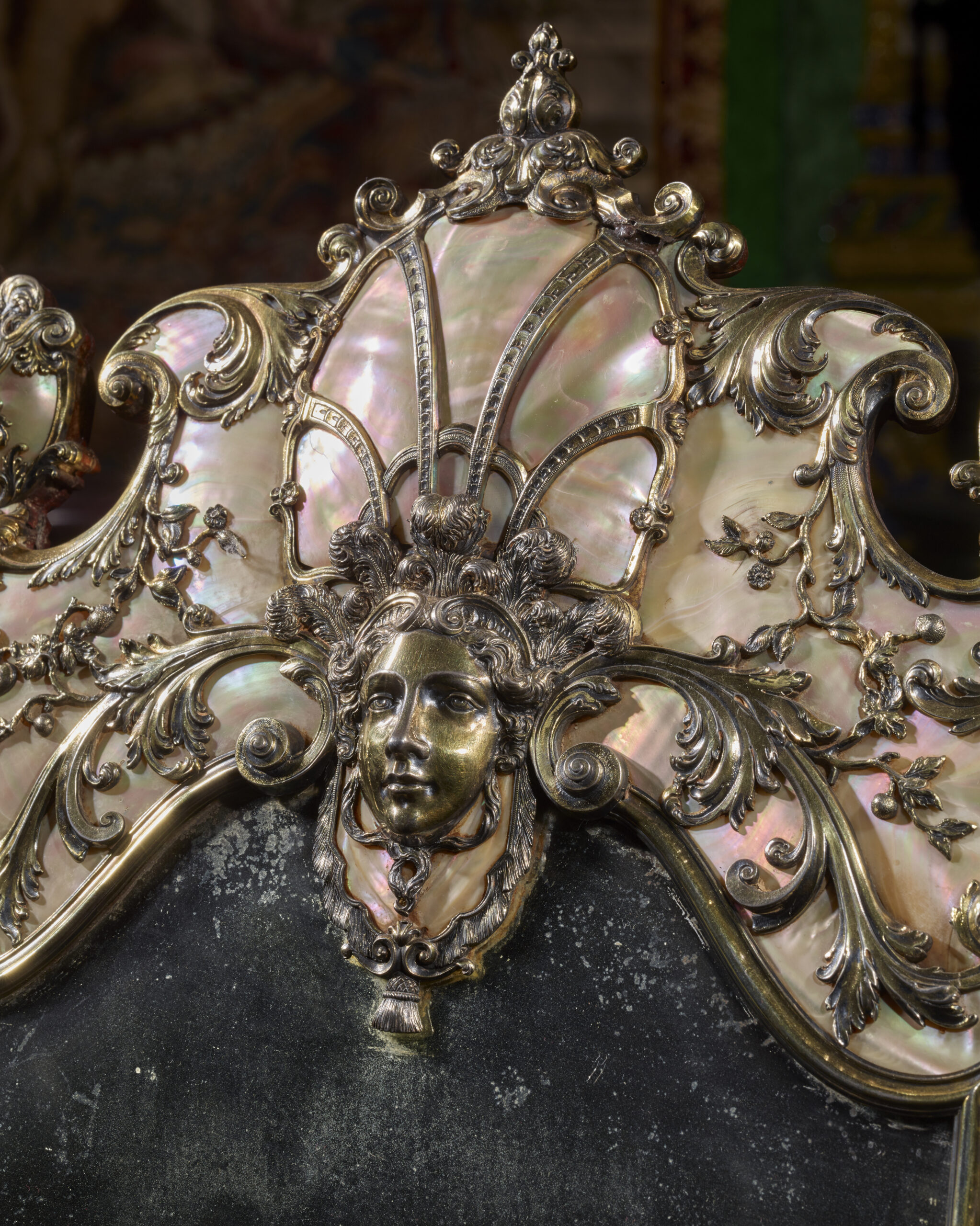
EXHIBITION: Musée rétrospectif, exhibition of the Union Centrale des Beaux-Arts appliqués à l’Industrie, presented in 1865 at the Palais de l’Industrie in Paris, Goldsmithing/17th-century section, n°. 4020 (M. le bar. J. de Rothschild): “4020. Mirror frame in mother-of-pearl, mounted in gilt silver; at the top, a female mask adorned with feathers, from which leafy scrolls and floral garlands in the style of Bérain are seen to emerge. Signed: E. Amory fecit. French work. (Early 18th century) M. le bar. J. de Rothschild”.
LITERATURE: Musée rétrospectif, exhibition catalogue of the Union Centrale des Beaux-Arts appliqués à l’Industrie, presented in 1865 at the Palais de l’Industrie in Paris, Paris, Librairie centrale, 1867, p. 348, cat. n°. 4020 (M. le bar. J. de Rothschild).
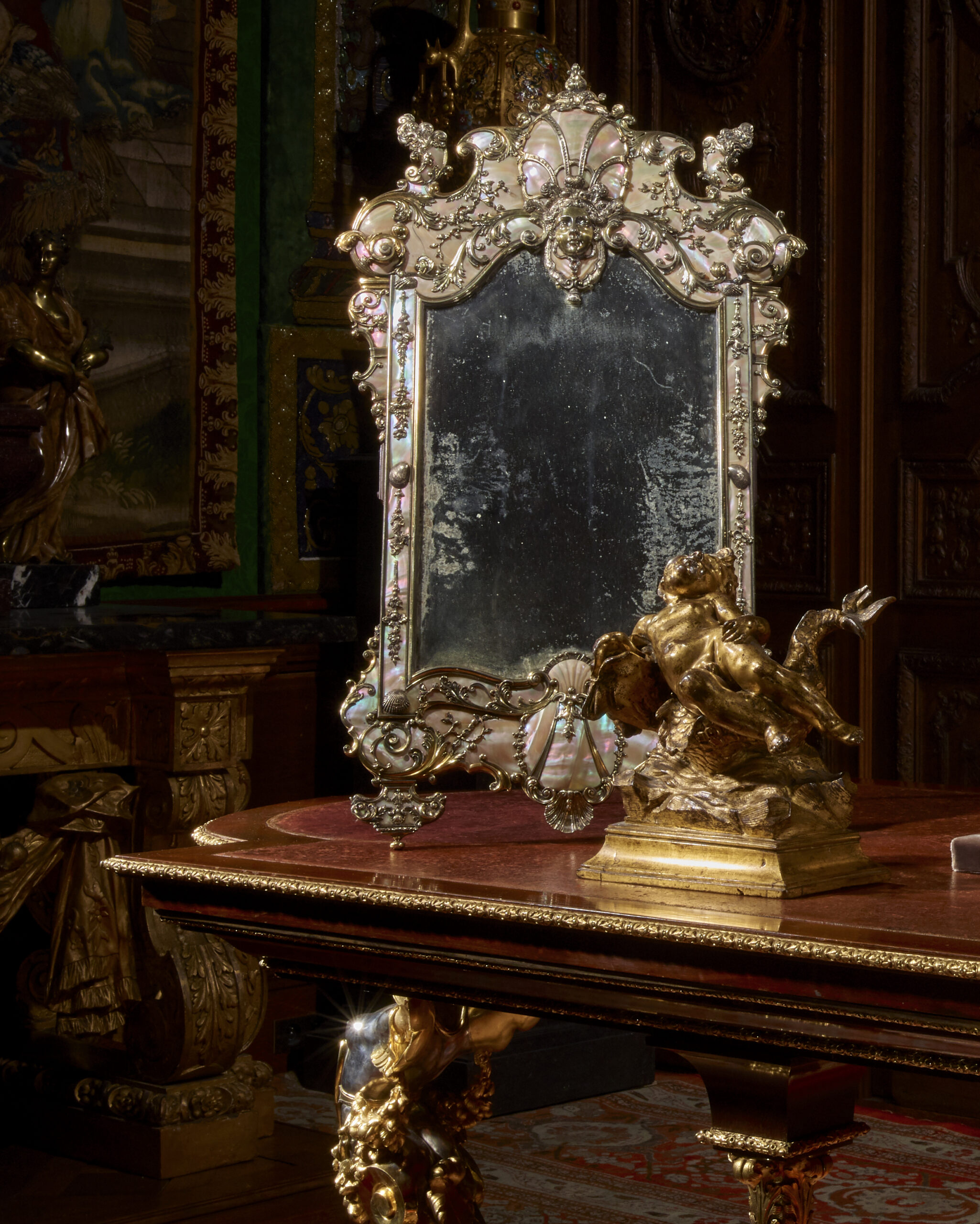
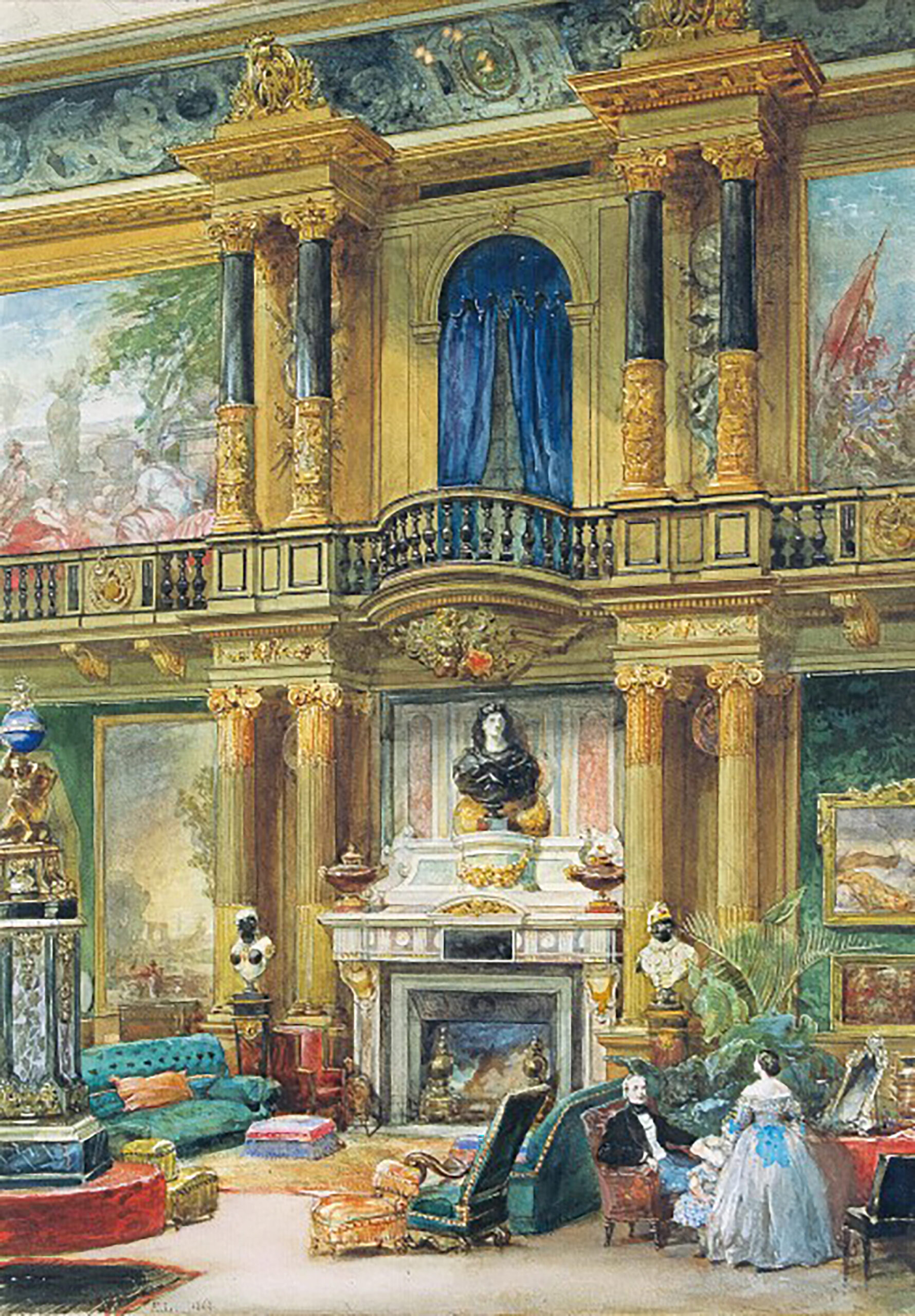
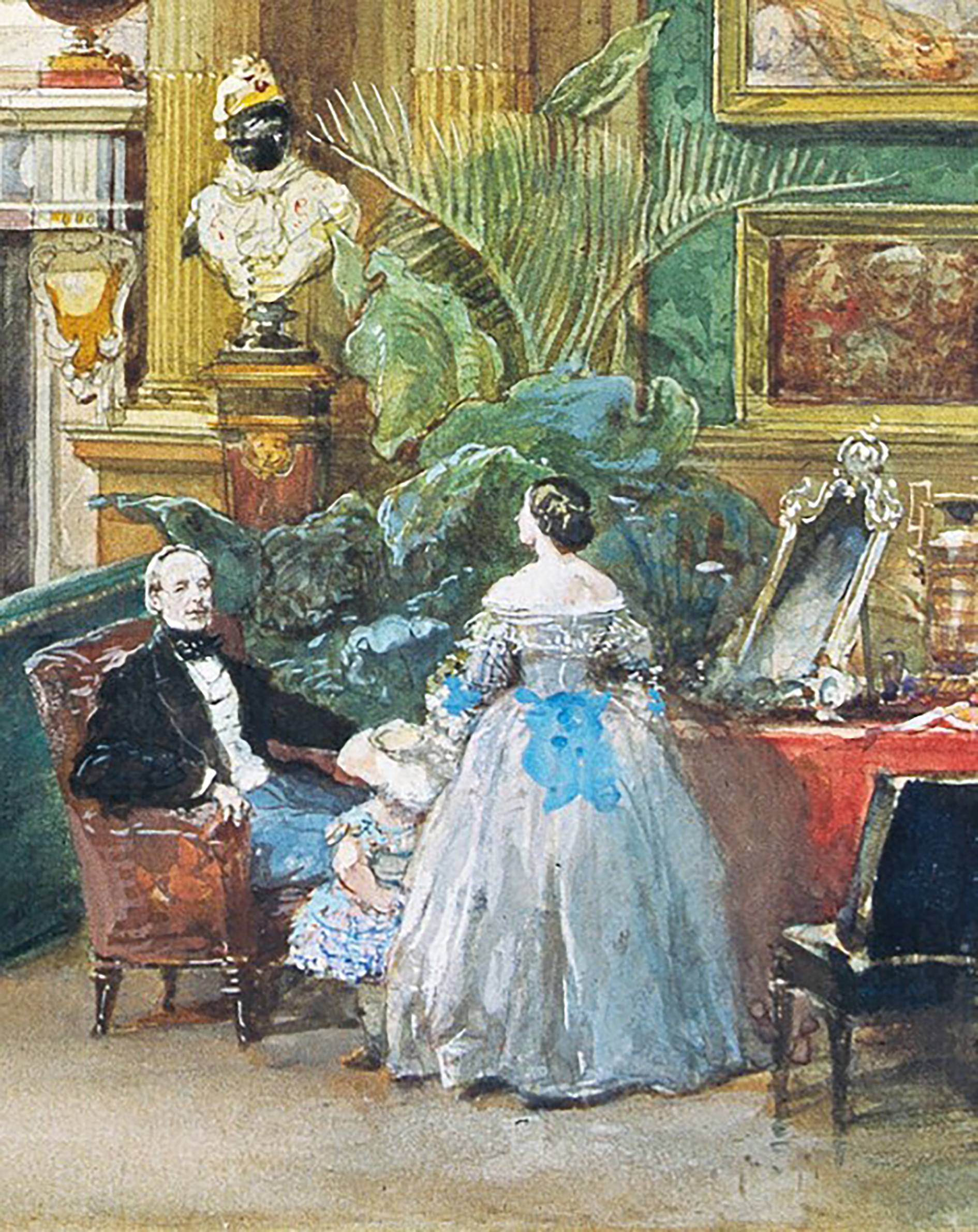
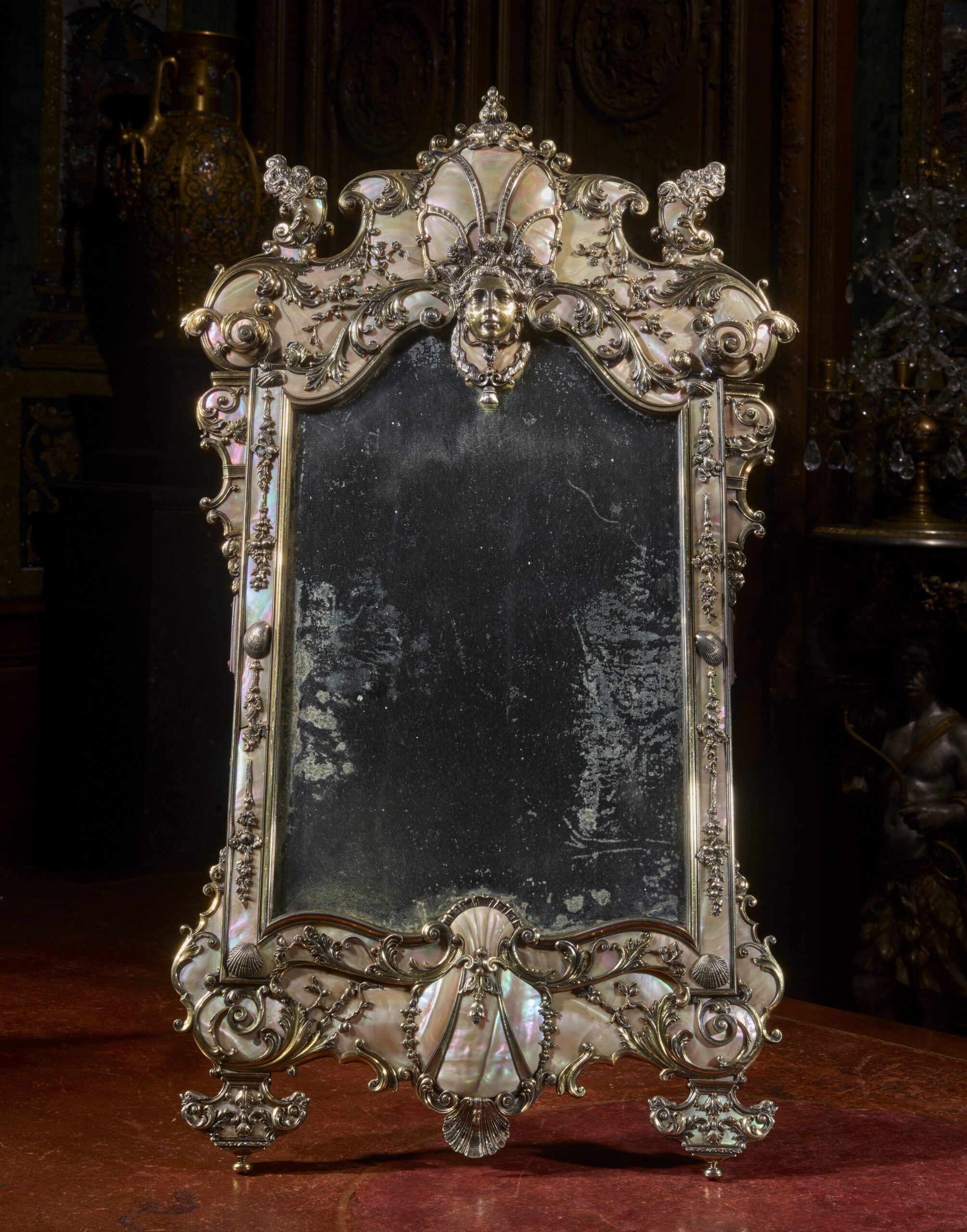
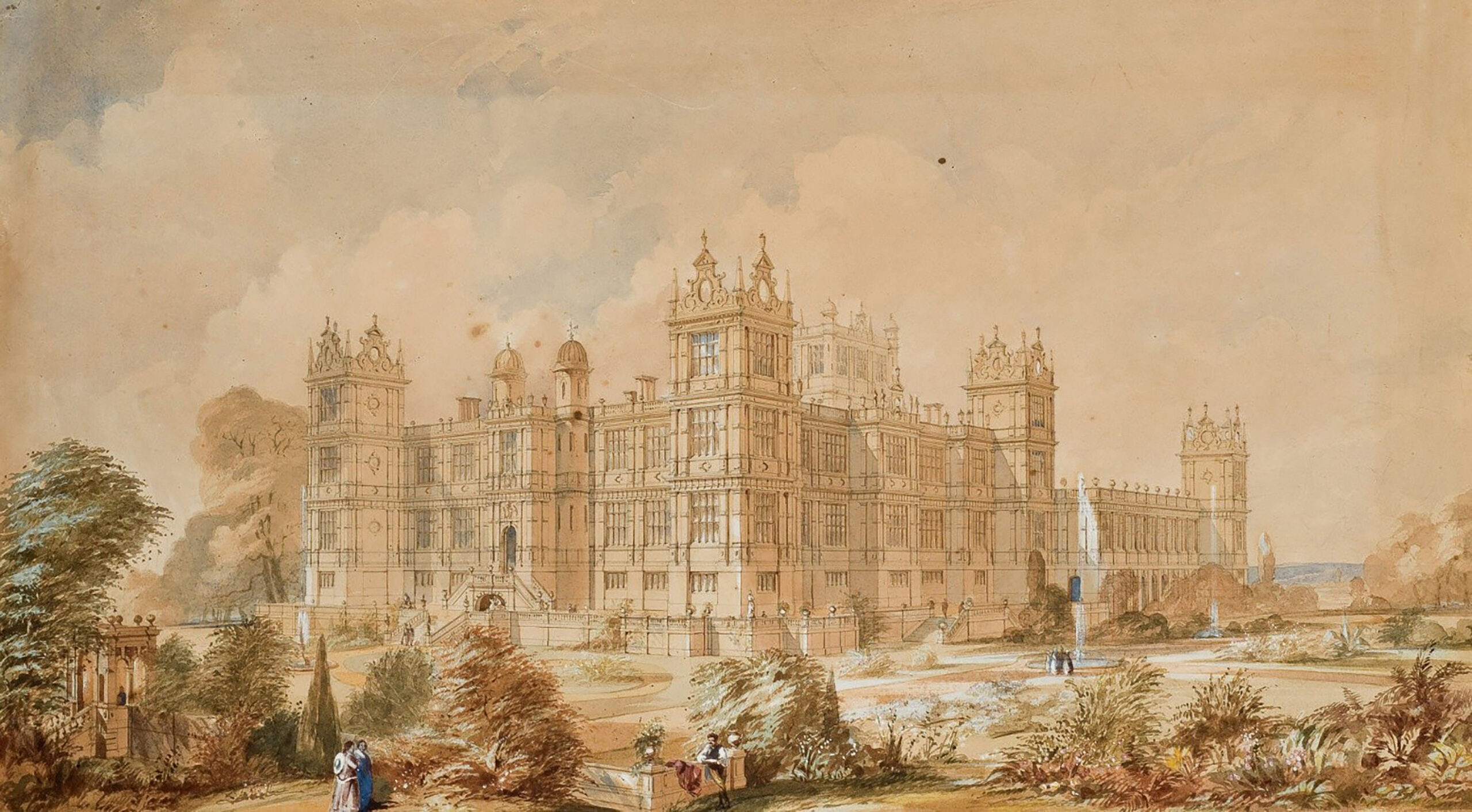
A masterpiece of English goldsmithing in the period of the successive reigns of George I (1714-1727) and of his son, George II (1727-1760), this particularly rare and precious table or dressing mirror, in gilt silver and mother-of-pearl was acquired in 1857 from the jeweller Rouzé, located at n°. 14 of boulevard des Italiens in Paris, by the Baron Jacob Mayer de Rothschild (1792-1868), known as James de Rothschild. It adorned a table in the Grand Hall of the Château de Ferrières, a residence in Seine-et-Marne that was built from 1855 to 1859 by the architect Joseph Paxton (1803-1865) for Baron James and his wife, Baroness Betty de Rothschild (1805-1886), who was immortalized by Jean-Auguste-Dominique Ingres (1780-1867) in 1848 (ill. 10). The mirror also appears in this location on a watercolor painting by Eugène Lami (1800-1890), signed and dated 1863. It is also visible in a photograph taken during the same period, between 1863 and 1868, belonging to an album titled Château de Ferrières, consisting of 16 photographs on albumen paper made from collodion glass negatives, now kept at the Bibliothèque Nationale de France (ill. 11).
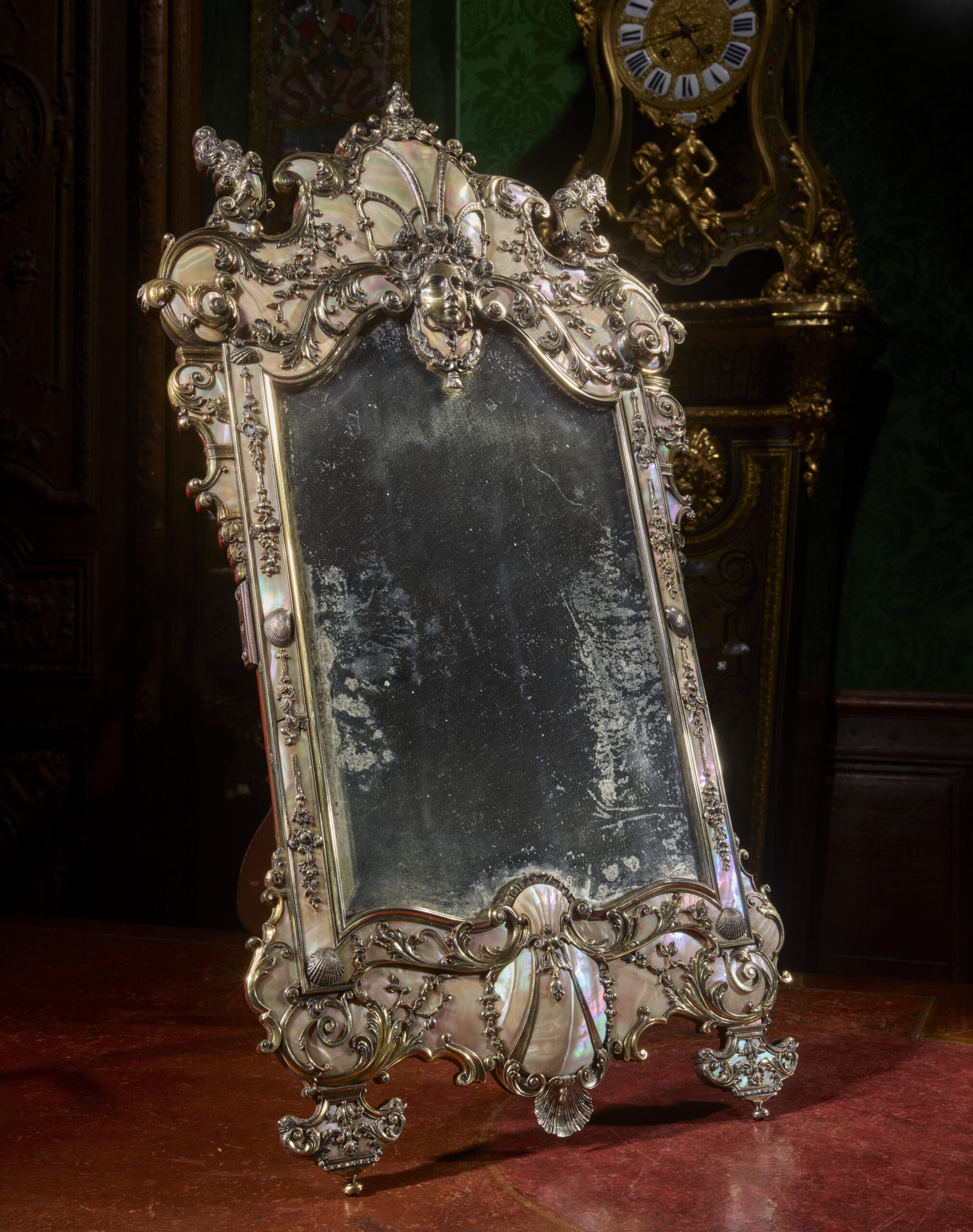
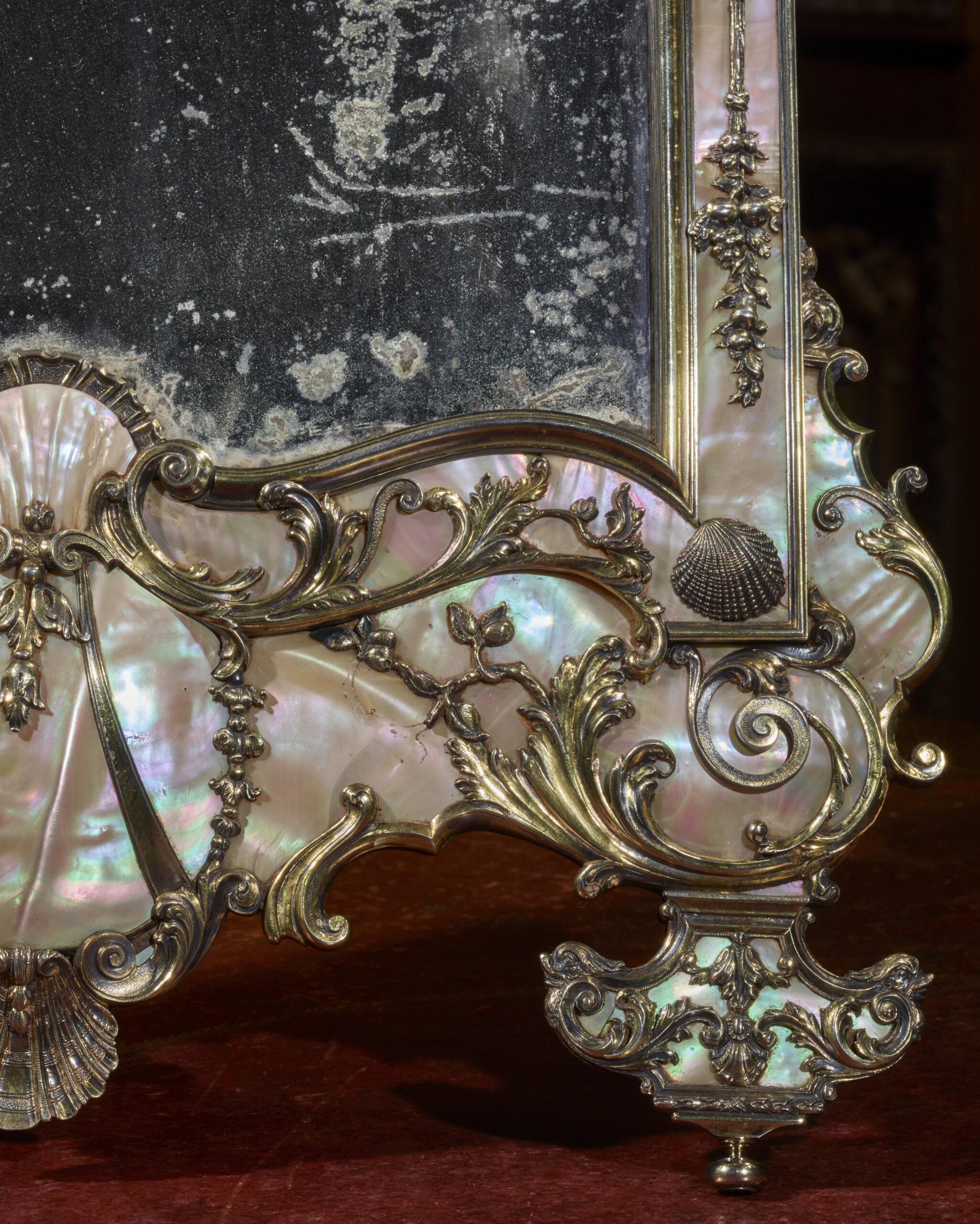
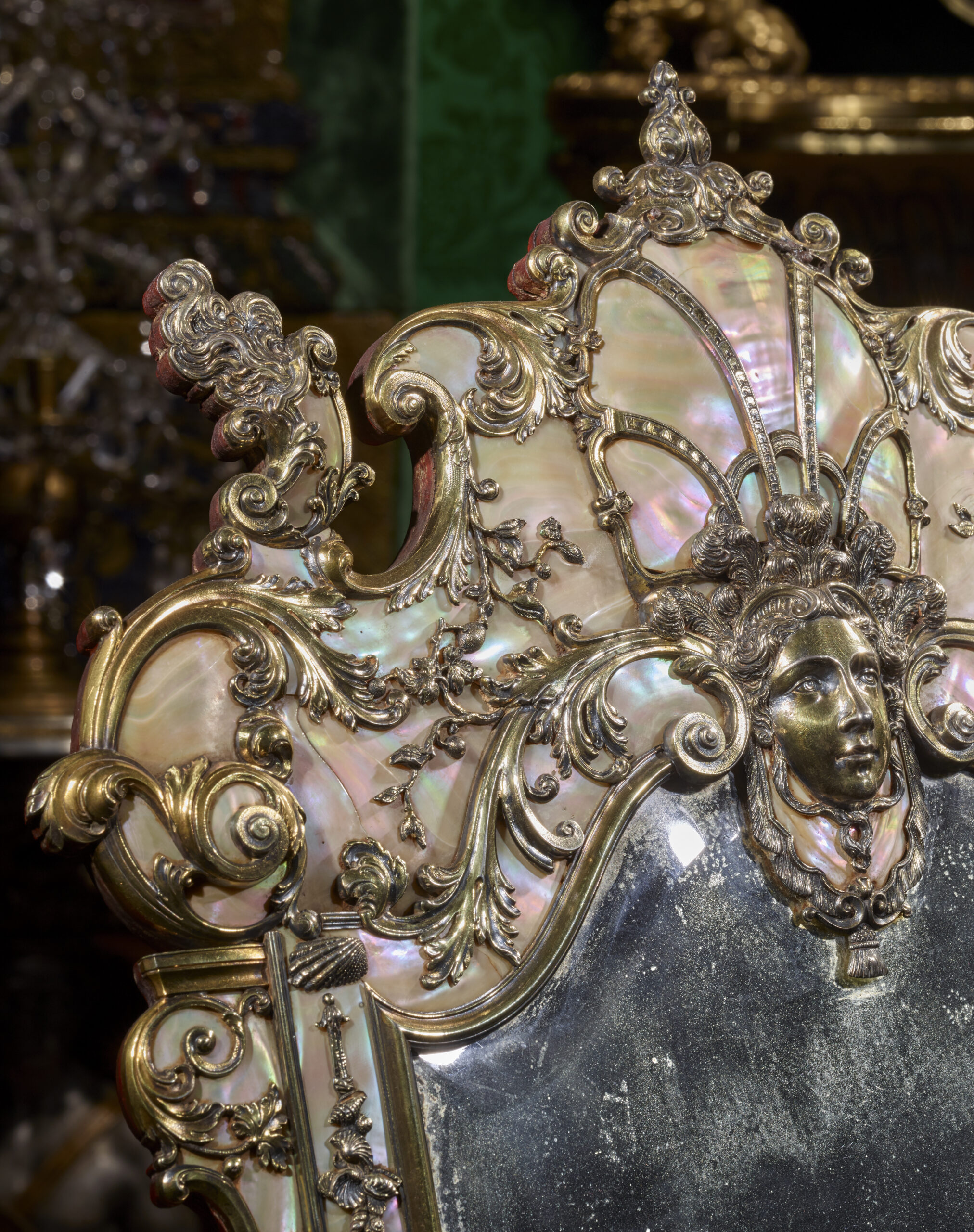
The baron loaned it in 1865, at the request of the Union Centrale des Beaux-Arts appliqués à l’Industrie (Central Union of Fine Arts Applied to Industry), as part of the Musée rétrospectif exhibition, which took place at the Palais de l’Industrie on the Champs-Elysées in Paris. The mirror was presented to the public as a ‘French work’ in the Goldsmithing/17th-century section, under n°. 4020, with the following commentary in the exhibition catalogue that was published two years later, in 1867: “4020. Mirror frame in mother-of-pearl, mounted in gilt silver; at the top, a female mask adorned with feathers, from which leafy scrolls and floral garlands in the style of Bérain are seen to emerge. Signed: E. Amory fecit. French work. (Early 18th century) M. le bar. J. de Rothschild”(ill. 3, 4 & 5).
It later remained the property of the direct descendants of Baron James at the Château de Ferrières, belonging successively to Baron Alphonse de Rothschild (1827–1905), Baron Édouard de Rothschild (1868–1949) and Baron Guy de Rothschild (1909–2007) and his wife, Marie-Hélène (1927-1996), née Van Zuylen Van Nyevelt Van de Haar.
In 1975, the latter bequeathed Ferrières to the Chancellerie des Universités de Paris and, in the same year, acquired the townhouse Hôtel Lambert from the descendants of the Princes Czartoryski, while retaining its lavish tenant, Baron Alexis de Redé (1922-2004), who had been living there since 1947-1949.
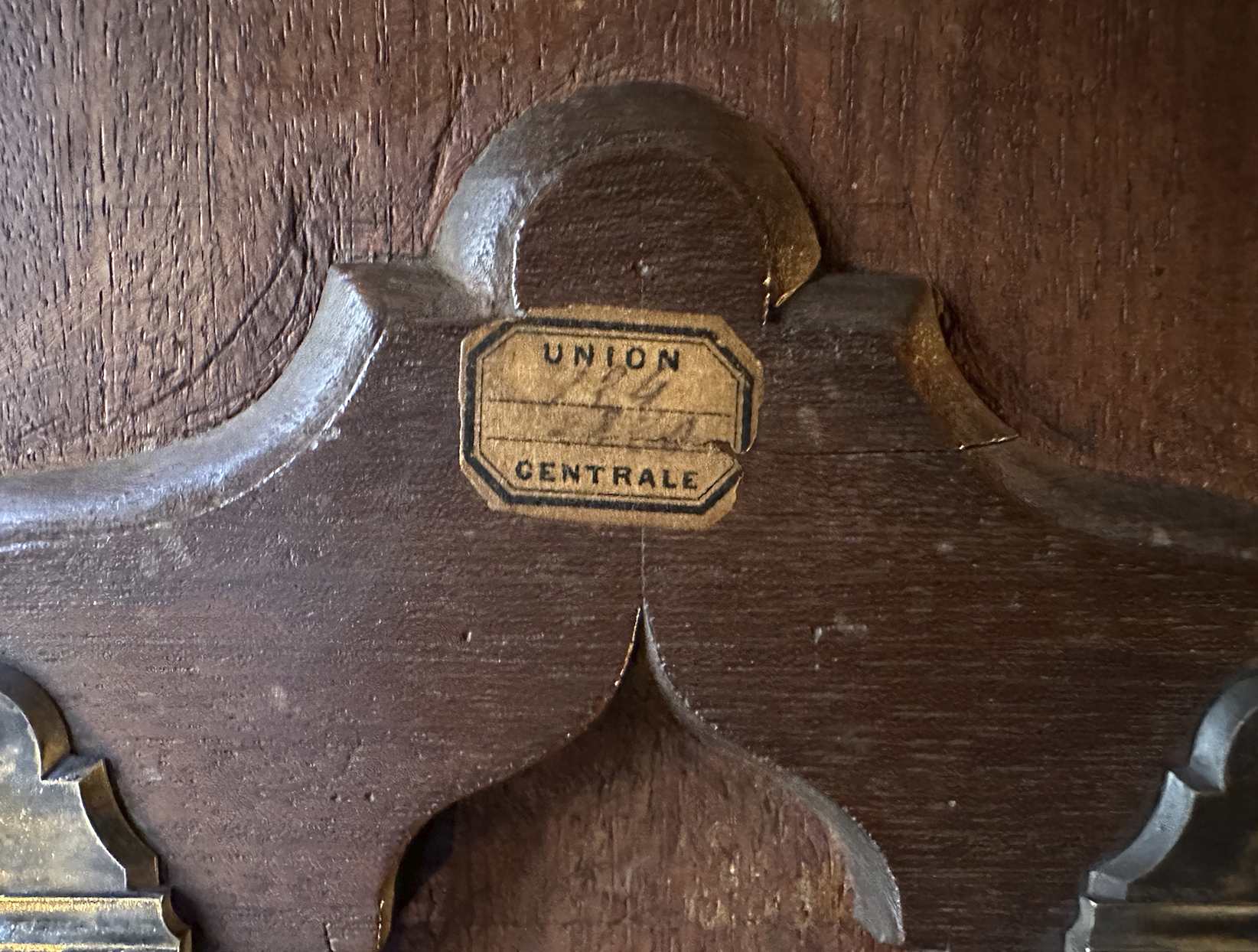
It was also during 1975 that Baron Guy de Rothschild and Baron de Redé organised, at the Sporting d’Hiver in Monte Carlo, under the supervision of Sotheby Parke Bernet Monaco S.A., the auction of Meubles et Objets d’art provenant de l’Hôtel Lambert et du Château de Ferrières appartenant au Baron de Redé et au Baron Guy de Rothschild (Furniture and objets d’art from the Hôtel Lambert and Château de Ferrières belonging to Baron de Redé and Baron Guy de Rothschild), which took place on 25th and 26th May and literally grabbed the headlines at the time. The mirror, however, was not sold on that occasion. It was kept by Baron Guy and has remained in his family to this day.
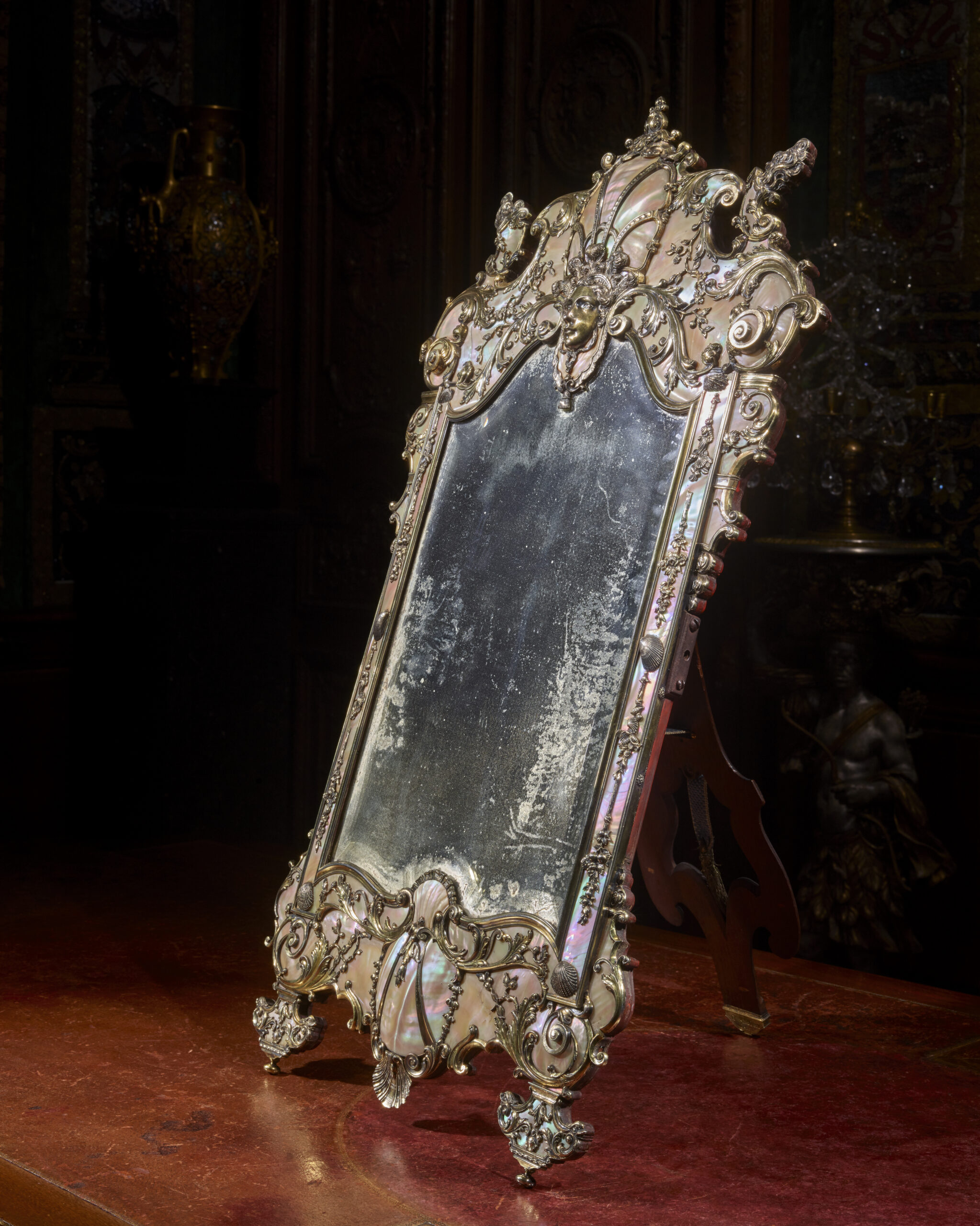
This mirror clearly bears witness to the influence in England, during the first third of the 18th century, of the models engraved by Jean I Bérain (1640-1711), “Draughtsman to the Chamber and Cabinet of the King” under Louis XIV. Featuring a front panel made of a wooden core entirely covered with pieces of mother-of-pearl set in gilded silver frames adorned with large acanthus scrolls, delicate leafy branches, shells, ribbons of shells and moulded rods, it has two narrow uprights flanked by consoles at their upper part, the whole supporting a lavish ‘crossbow’-shaped pediment with serpentine scrolls, adorned in the centre with a female mask wearing feathers, and enhanced by a fringed lambrequin finished with a tieback. An ogival cartouche, with mother-of-pearl compartments with finely chiselled borders with piaster motifs, fluted friezes and dotted lines, the whole punctuated by a leafy button chiselled in gilded silver, surmounts this mask, flanked by two singular and imposing flamed brackets.
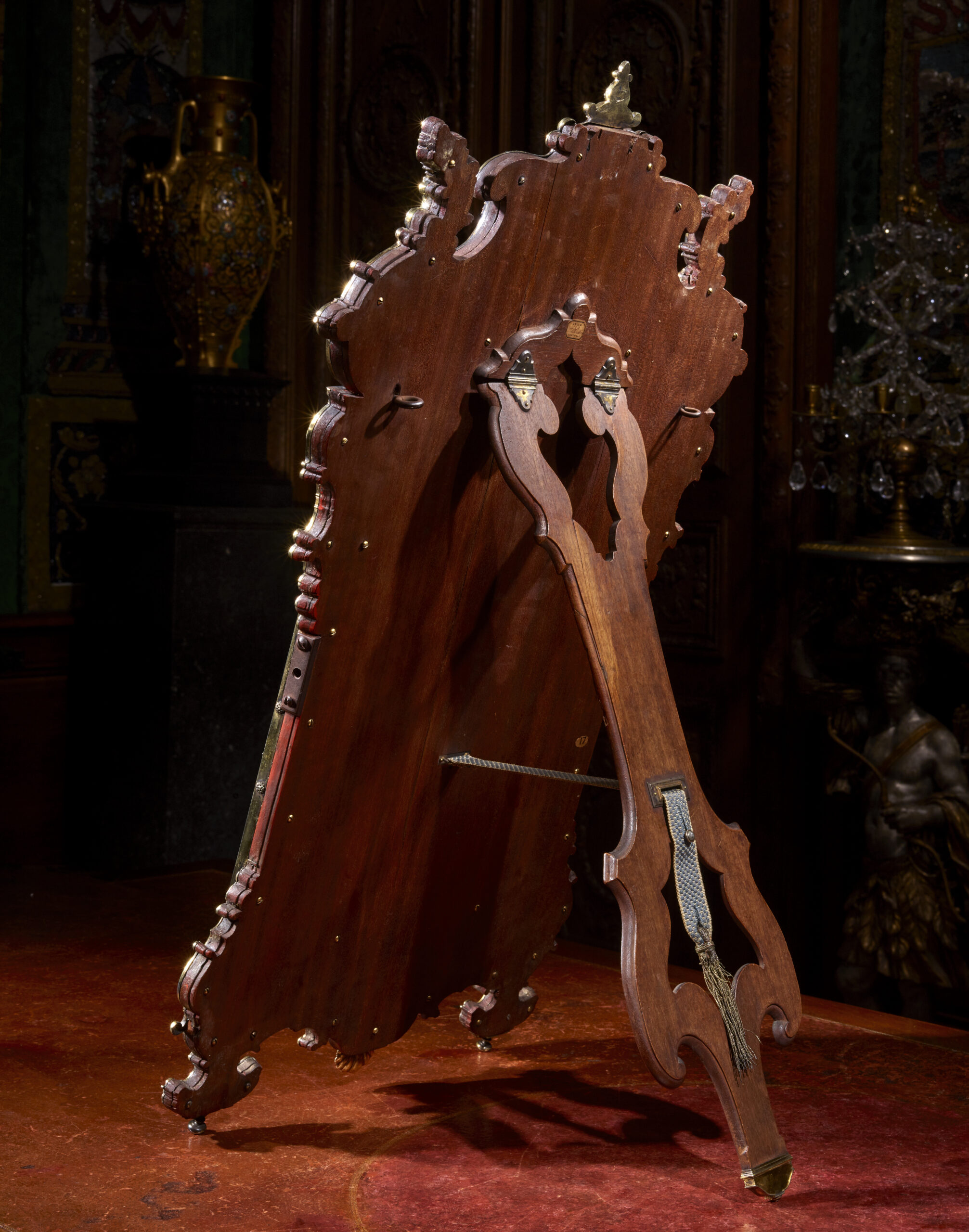
A similar central cartouche, terminating in a scallop shell, occupies the centre of the imposing lower crossbar of the mirror, forming an overhang with a serpentine edge, supported on either side by two small feet adorned with silver and mother-of-pearl in the shape of a “pelta”. The silvered bronze hoof ending the openwork wooden foot mounted on hinges supporting the mirror on the reverse side bears the signature: Ed. AMORY Fecit.
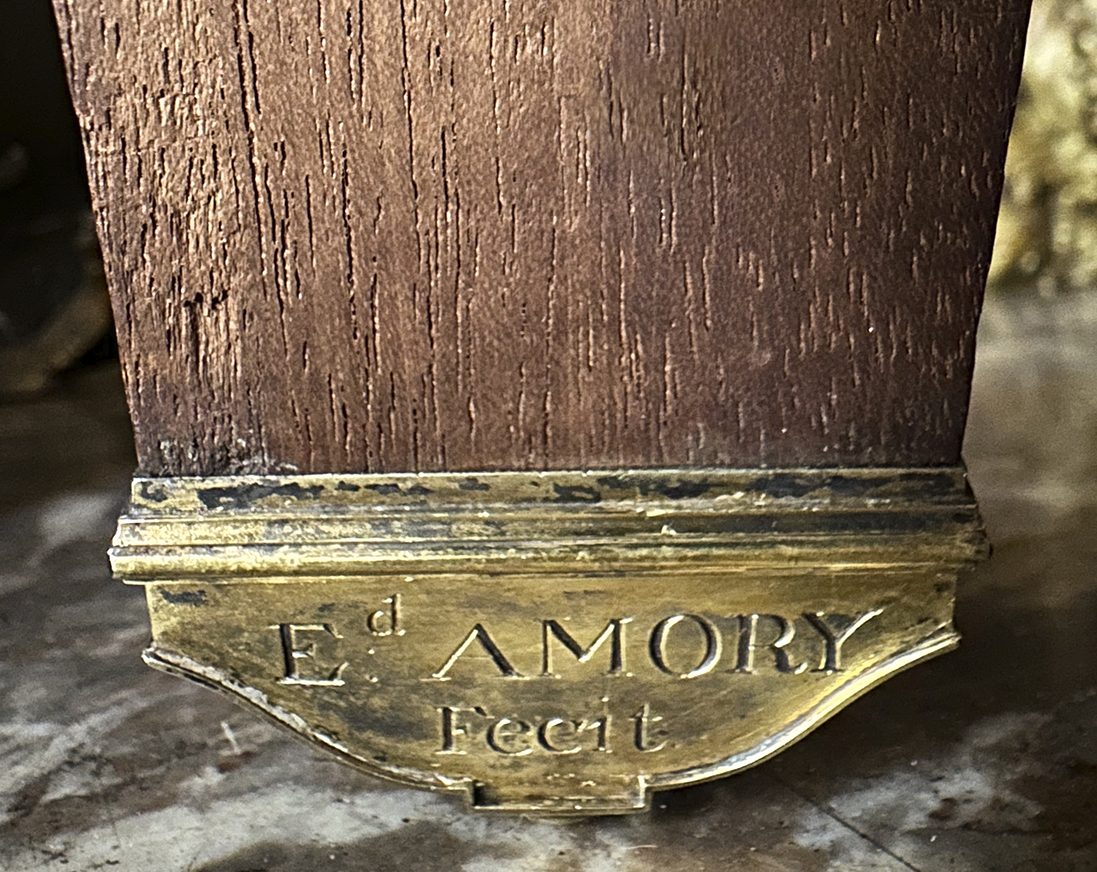
Although poorly documented, Edward Amory was a renowned goldsmith in London in the 1720s and 1740s. Although he trained as a goldsmith, he does not appear to have been registered with the Worshipful Company of Goldsmiths, so that today only a few of his works are known, each signed as shown here: Ed. Amory Fecit, or Ed. Amory Londini Fecit.
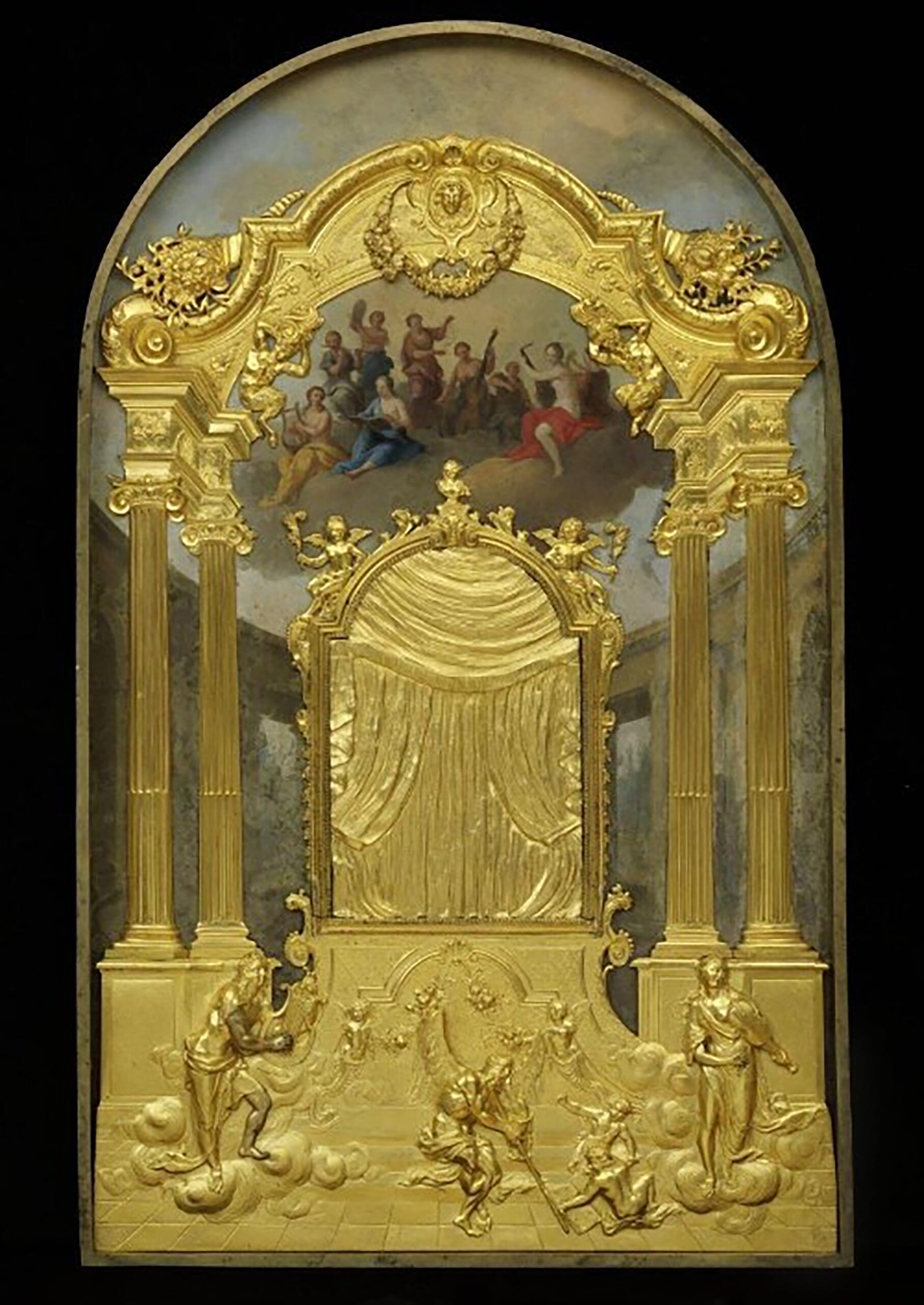
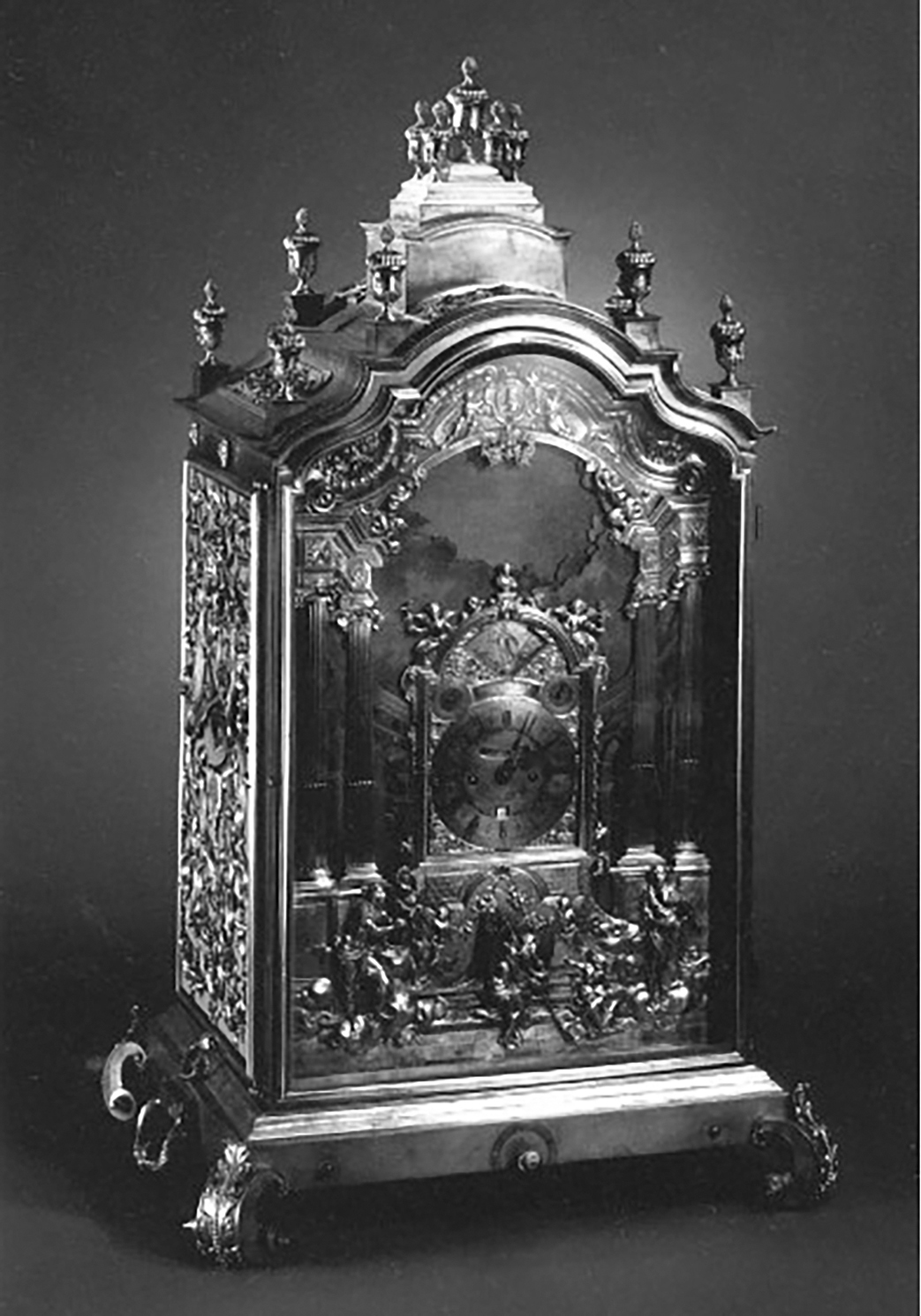
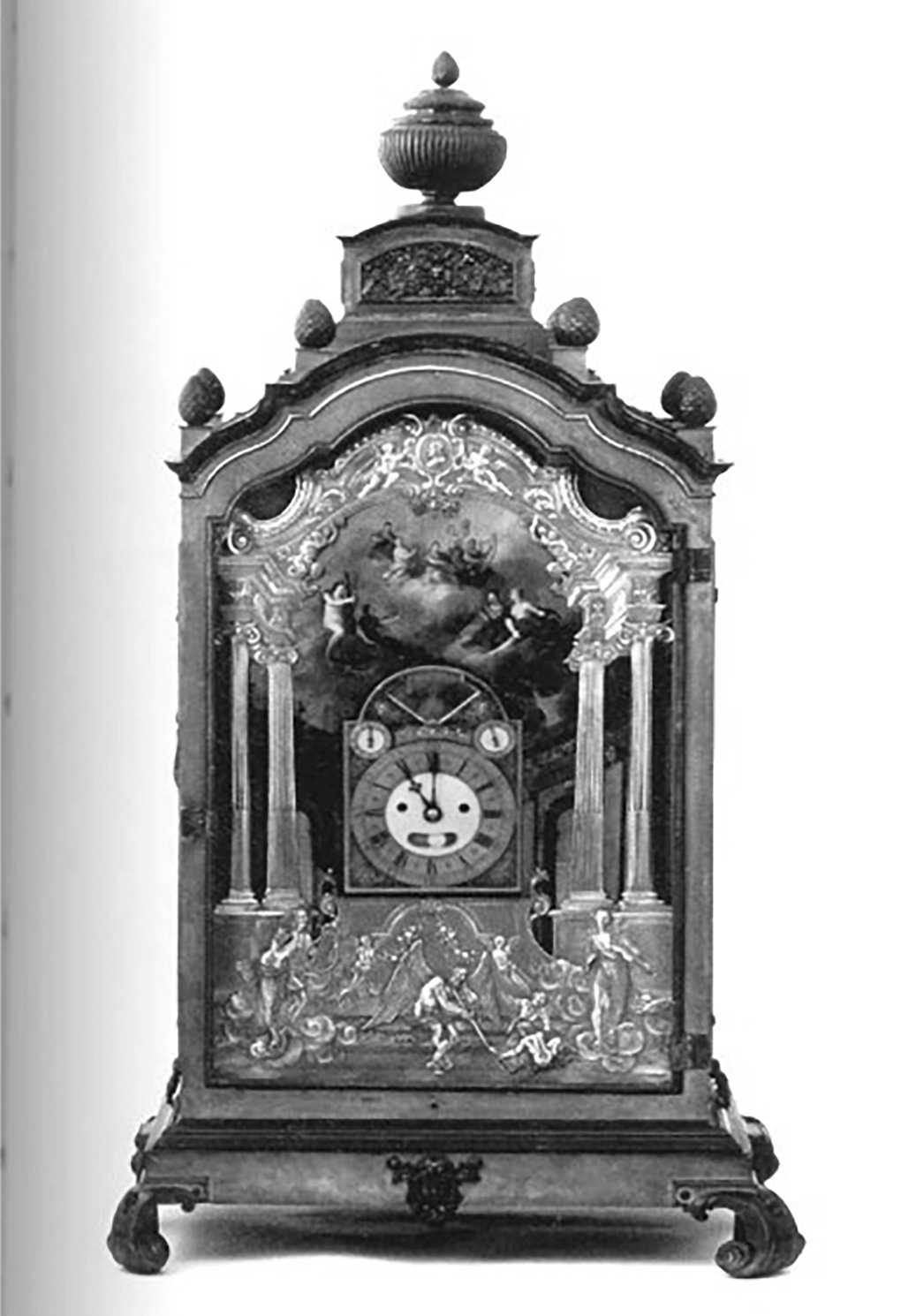
He is known to have worked simultaneously with silver and gilded bronze(ill. 6), and collaborated on several occasions with the famous London clockmaker Charles Clay († 1740). Together with the latter, he contributed to the execution of an extraordinary ‘organ mechanism’ clock, now part of the imperial clock collection at the Palace Museum in Beijing. Bearing the signature Ed. Amory Londini Fecit and precisely dated to 1730, this clock features a lavishly decorated front depicting the Temple of Apollo, executed in silver by Edward Amory after a model by the sculptor John Rysbrack (1694-1770), the whole enhanced with allegorical paintings on copper signed by Jacopo Amigoni (c. 1685-1752).(ill. 7).
Another ‘organ’ clock of this model is kept at the Royal Palace in Naples (ill. 8). A native of Yorkshire, Charles Clay moved to London in 1717 or 1718. From 1721 onwards, he mainly worked for the Office of Works in London for the execution of several royal commissions and in 1723 was appointed clockmaker to His Majesty’s Board of Works, a position he held until 1737. Clay seems to have started making clocks with organ mechanisms from 1728 or 1729 onwards.
Nine of these clocks are listed to date, all illustrating the aforementioned close collaboration between the sculptor John-Michael Rysbrack, the painter Jacopo Amigoni (1685-1752), composer George Frideric Handel (1685-1759) for the music boxes, and goldsmith Edward Amory, the creator of our exceptional mirror.
The hall of the château of Ferrières, a domestic museum
(Excerpt from Pauline Prevost-Marcilhacy, Les Rothschild, bâtisseurs et mécènes, Flammarion, Paris, 1995 )
“The Hall plays a predominant role at Ferrières. Unlike most aristocratic châteaux, the residence is not a summer house where one will just sojourn for a few weeks. Family members are pleased to spend several months there, and the furnishings are more reminiscent of a townhouse than a château in the countryside. Though imbued with the splendour of Italian palaces, the Hall also evokes the intimate atmosphere of an art lover’s cabinet. Contemporaries regarded it as the Baron’s personal museum.
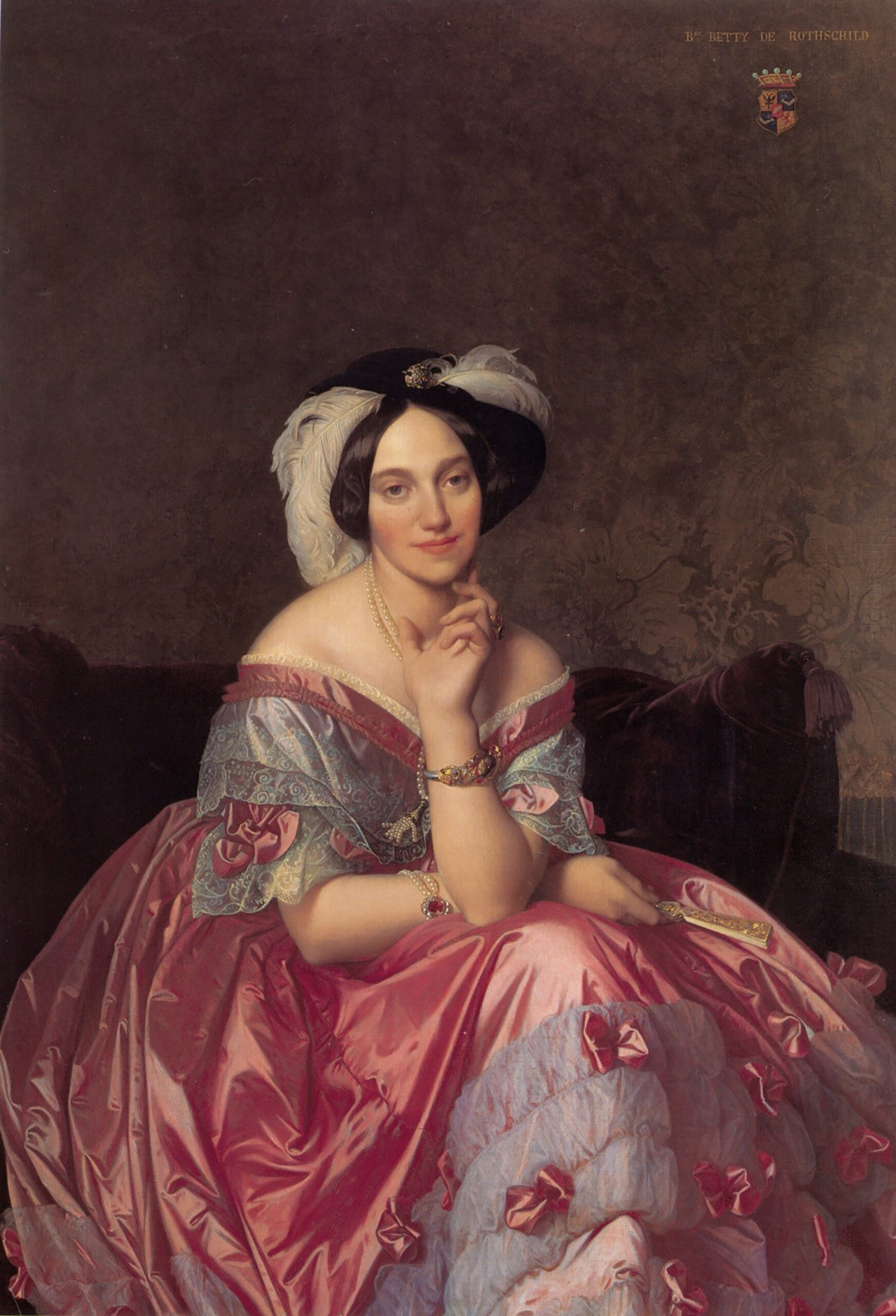
James assembled his master paintings, books, medal cabinets and precious stones there. The Baroness showed me the entire house. I had already visited it, but it contains too many treasures worth seeing more than once with pleasure and profit—it alone amounts to half a dozen museums altogether, Charlotte wrote to Lionel. Period photographs allow one to identify Ingres’ portrait of Betyy (ill. 10), Flandrin’s of James (ill. 13), several English school paintings—by Gainsborough, Reynolds (Portrait of Lady Spencer), Romney—as well as works by French portraitists of Louis XIV’s era, two Velázquez paintings (The Countess della Rocca and Don Luis de Haro), and several canvases by Dutch painters (Diogenes Seeking a Man by Van Mol, The Happy Child by Nicolas Maes, Rubens’s Diana the Huntress, and Van Dyck’s Portrait of Princess Doria).
Two Italian paintings—David and Goliath by the Guide and the Messenger by Paris Bordone—complete this prodigious ensemble. Each work was probably purchased with its destination in mind, and here again Eugène Lami likely played a decisive role. In a letter of 18th March 1856, he wrote to Betty: I saw the busts sent from Holland yesterday. They are very fine pieces dating from the 15th century in Italy.
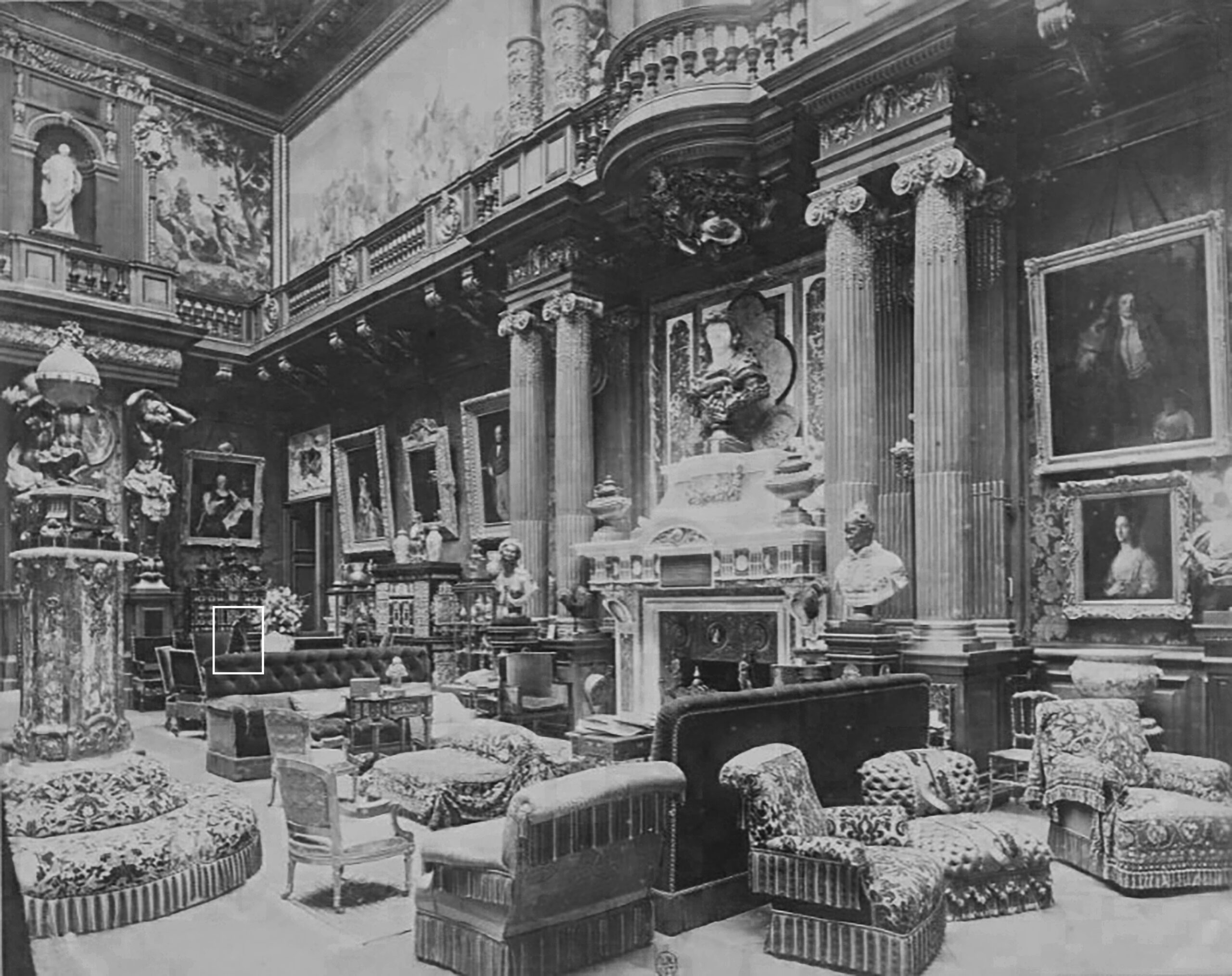
I do hope the deal comes to fruition: these colossal busts seem to have been especially created for the large proportions of the Hall at Ferrières. The centre of the salon is occupied by an imposing Silair clock, presented to James by one of his brothers and standing 27 feet tall. This tower must be placed in the centre [of the hall]. It is incredibly beautiful, reads a letter from Evelina 204. Overall, the collection of paintings, in which nearly all schools are represented, is as eclectic as the architecture of the exterior.
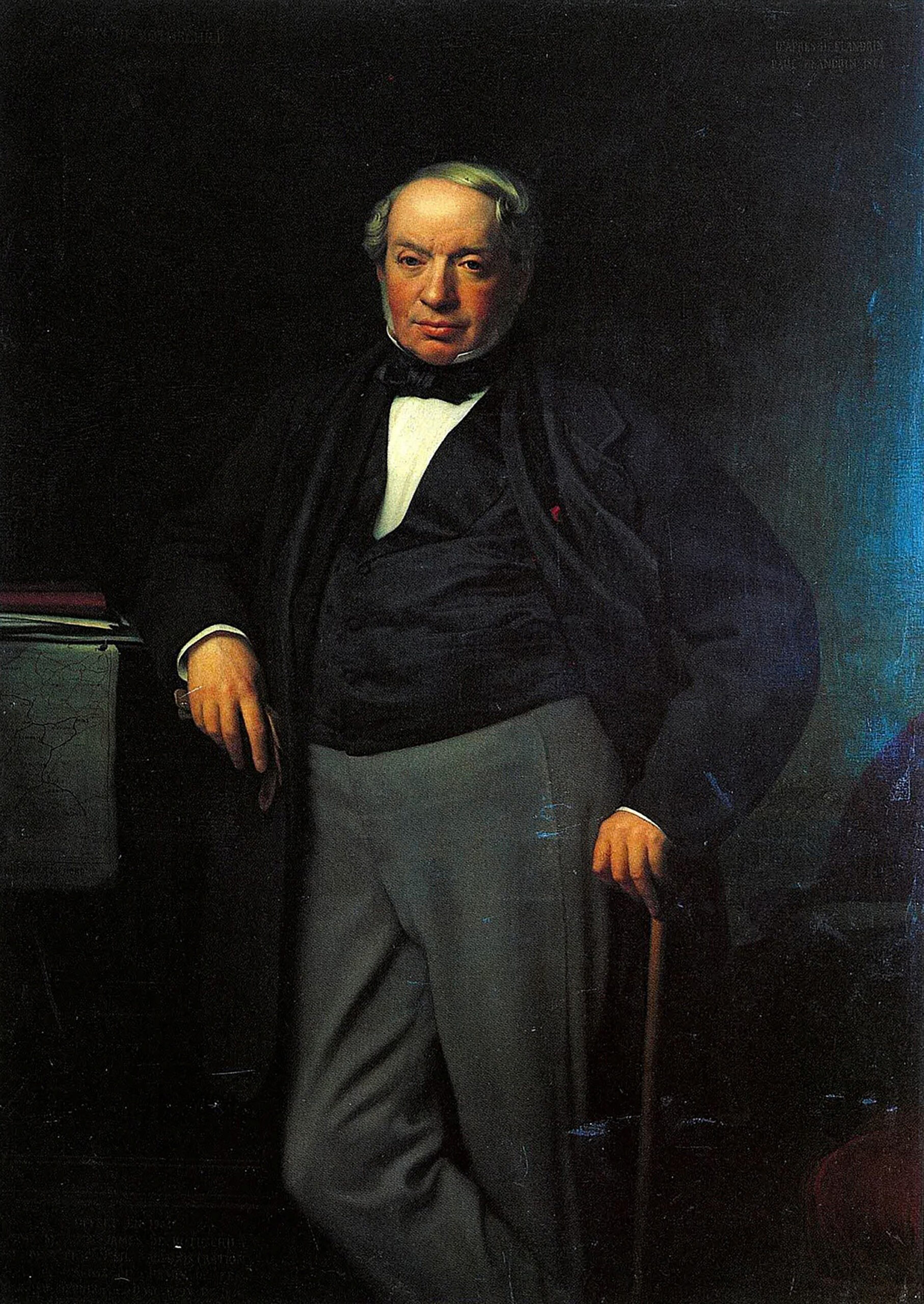
However, one notes the total absence of contemporary paintings and the predominance of portraits—the only two 19th-century paintings depict James and Betty—a choice that reveals the Baron’s desire to forge a past for himself by emulating noble families’ portrait galleries. In the Hall as it was completed, Lami separated the two levels, in accordance with the principle of large Italian-style salons, by means of a gallery encircling the room. The upper part is hung with Gobelins tapestries symbolising a variety of triumphs: those of Neptune, Alexander, Peace and, more surprisingly, Christianity at Tolbiac! The gallery is lined with black marble balustrades forming tribunes midway along the longitudinal walls. Here again, the model was undoubtedly the central pavilion of the Louvre’s Galerie du Bord de l’Eau, where, if the middle floor be removed, one finds the idea of paired columns supporting a tribune-shaped, curved balcony; the resemblance is all the more striking as there is a high, round-arched bay beneath the tribune, which was treated as an external door. The upper section reprises elements from Versailles’s débord: shell-adorned niches and faux marble. Below, the door connects the hall to the ‘salon des familles.’
Below, the door connects the hall to the ‘salon des familles.’ The Château de Ferrières is perhaps the first residence where collections received deliberate mise-en-scène. The final décor, as previously noted, proves less Italianate and less pictorial than Lami’s initial projects. Painted decorations gave way to sculpture and, more broadly, to the interplay of volumes, which, while forming a highly rhythmic ensemble, allow the eye to rest awhile. What remains are the borrowings from theater, Versailles, and Bérain, also echoed in all ground-floor reception rooms, and notably the salon des cuirs.”
In Pauline Prevost-Marcilhacy, Les Rothschild, bâtisseurs et mécènes, Flammarion, Paris, 1995.