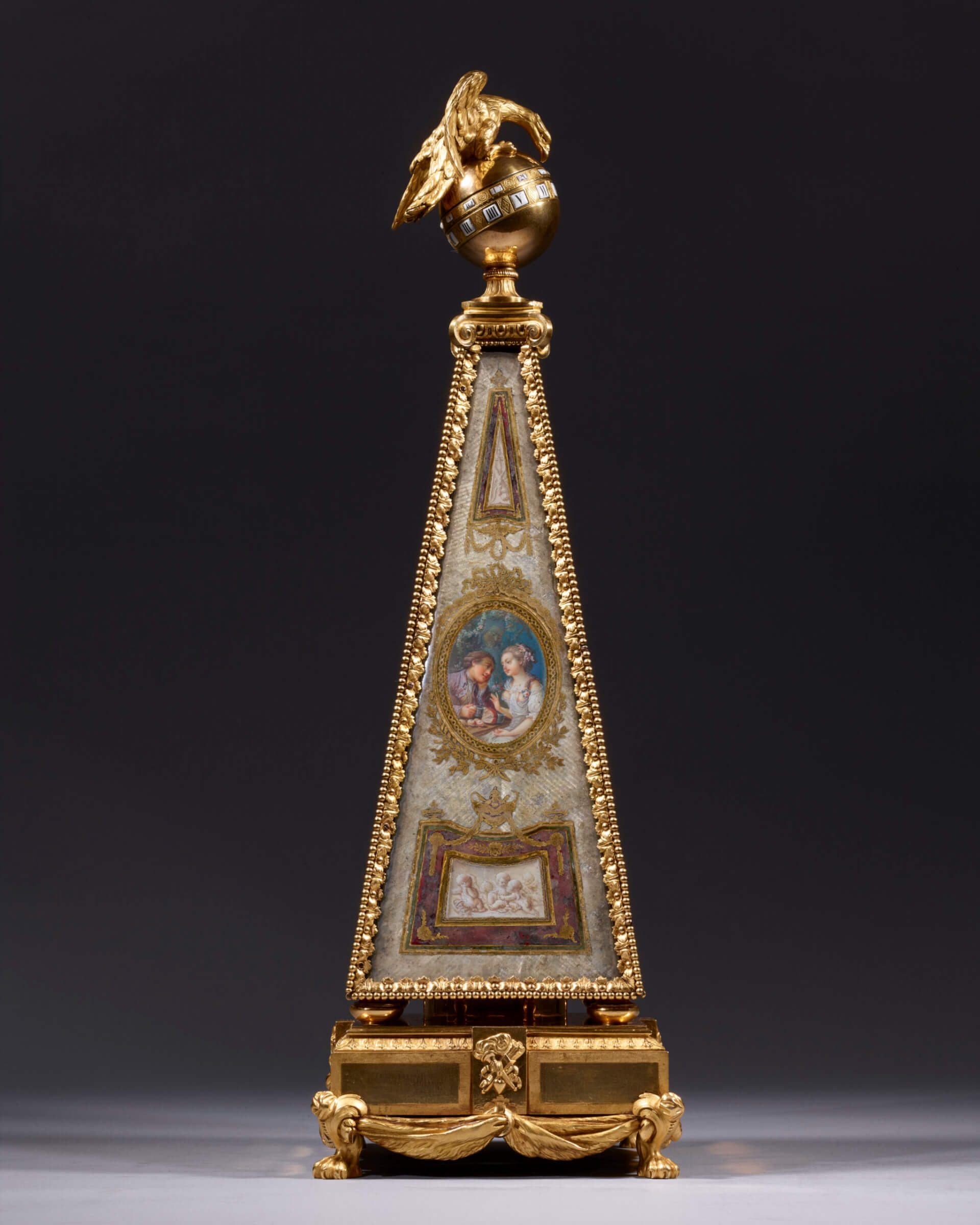
Paris, Louis XVI period, circa 1775. Gilt bronze; églomisé and painted glass panels backed with engine-turned silver leaf; metal; enamels; red fabric. Two-leaf natural varnished wood case with gilt bronze and brass mounts, lined internally with red velvet. H. 62.5 cm (25 ¼ in.); L. 21 cm (8 ¼ in.); D. 21 cm (8 ¼… Continue reading CLOCK OF THE PRINCES OF CARIGNAN
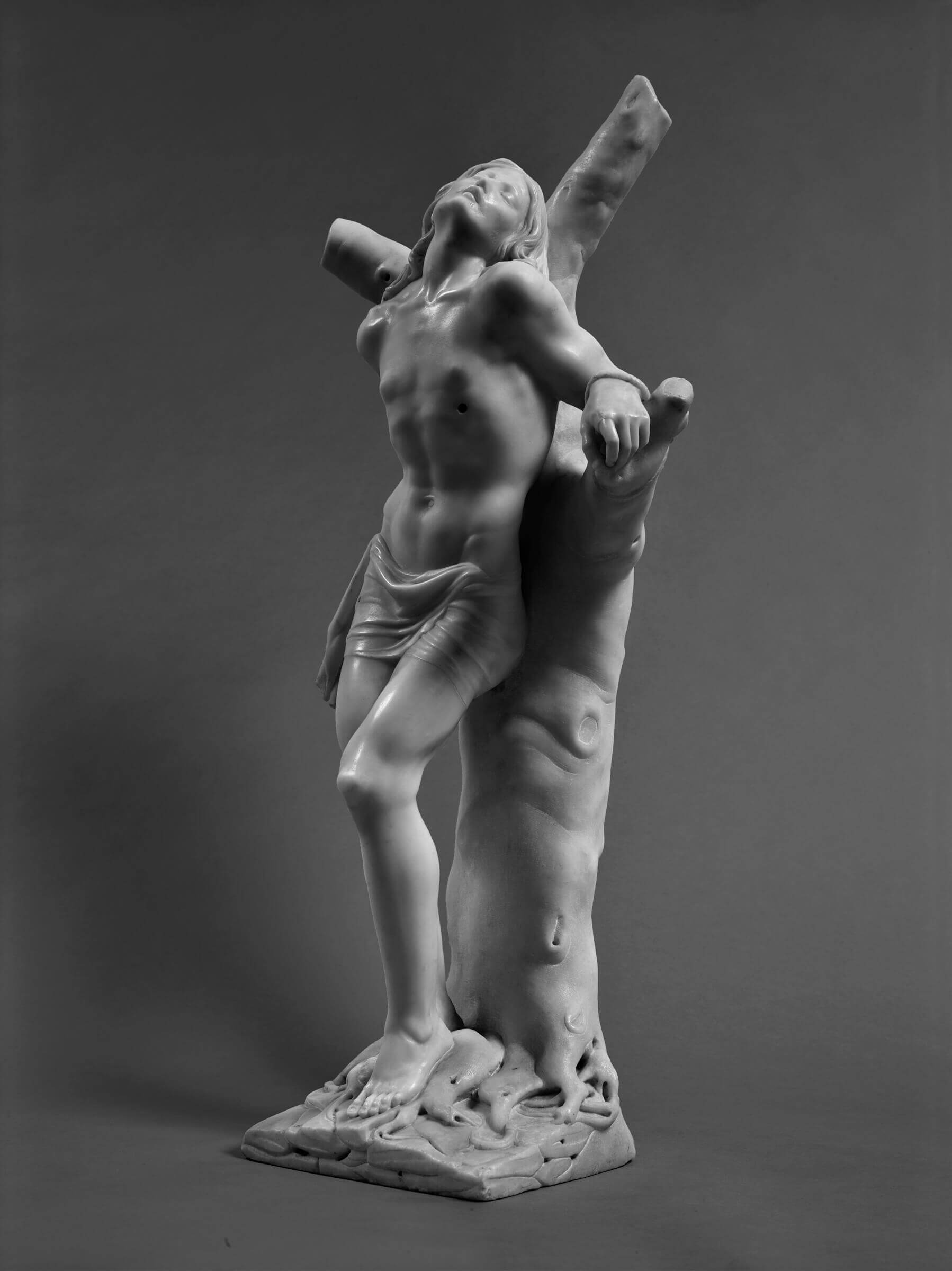
Circa 1520–1525. White Carrara marble. H. 68 cm (26 ¾ in.); W. 30 cm (12 in.); D. 24 cm (9 ½ in.).Base: 22.5 cm x 20 cm (9 x 8 in.). PROVENANCE: France. LITERATURE: Prof. Riccardo Naldi, Bartolomé Ordóñez and Diego de Diloe, Two Spanish Sculptors in Naples at the Beginning of the Sixteenth Century,… Continue reading DIEGO DE SILO SAINT SEBASTIAN
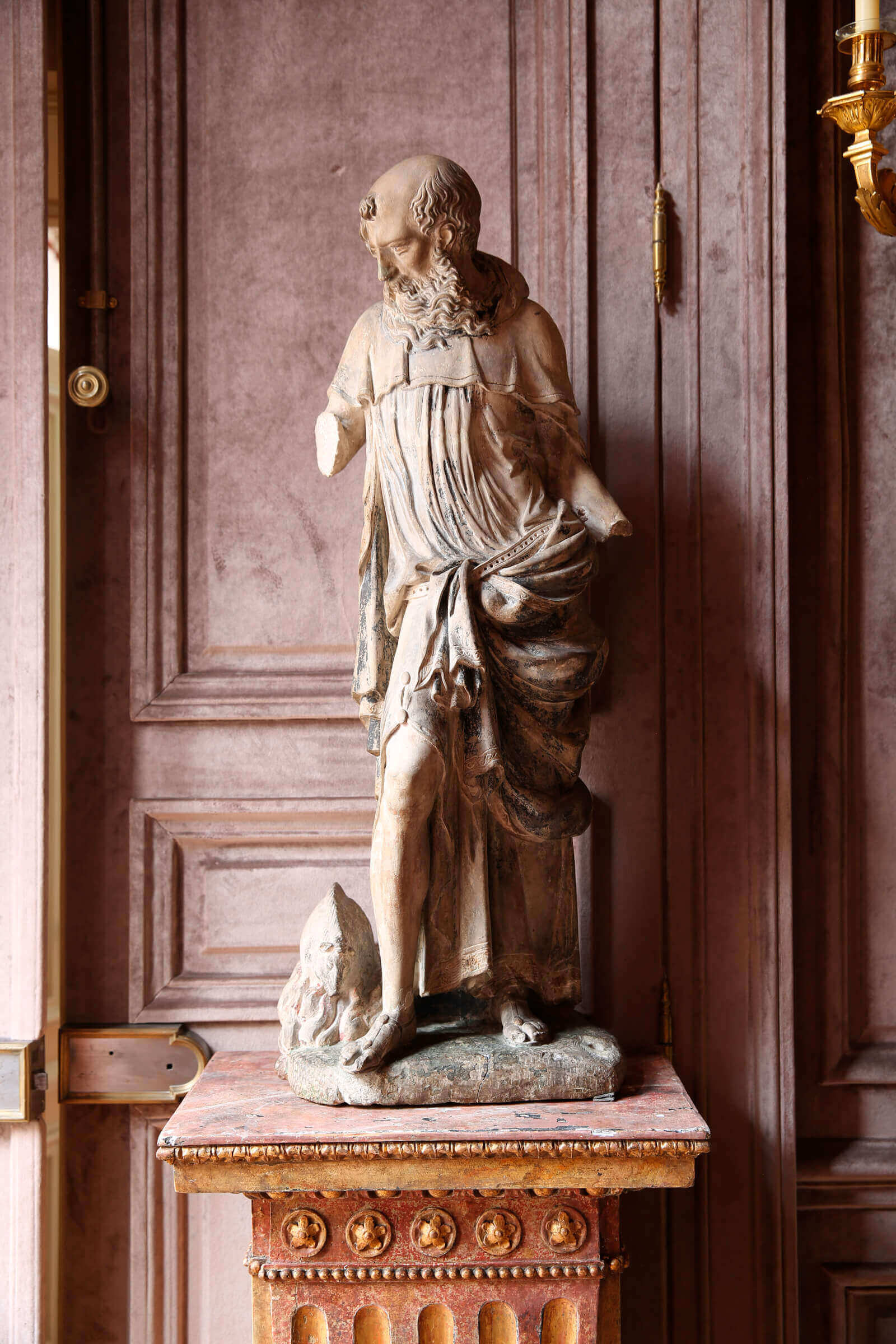
Work by a sculptor familiar with the major achievements present in eastern Normandy around 1550. Limestone, traces of polychromy. H. 92 cm (36 ¼ in.). PROVENANCE: Family of a collector who had assembled an “Haute Époque” collection.
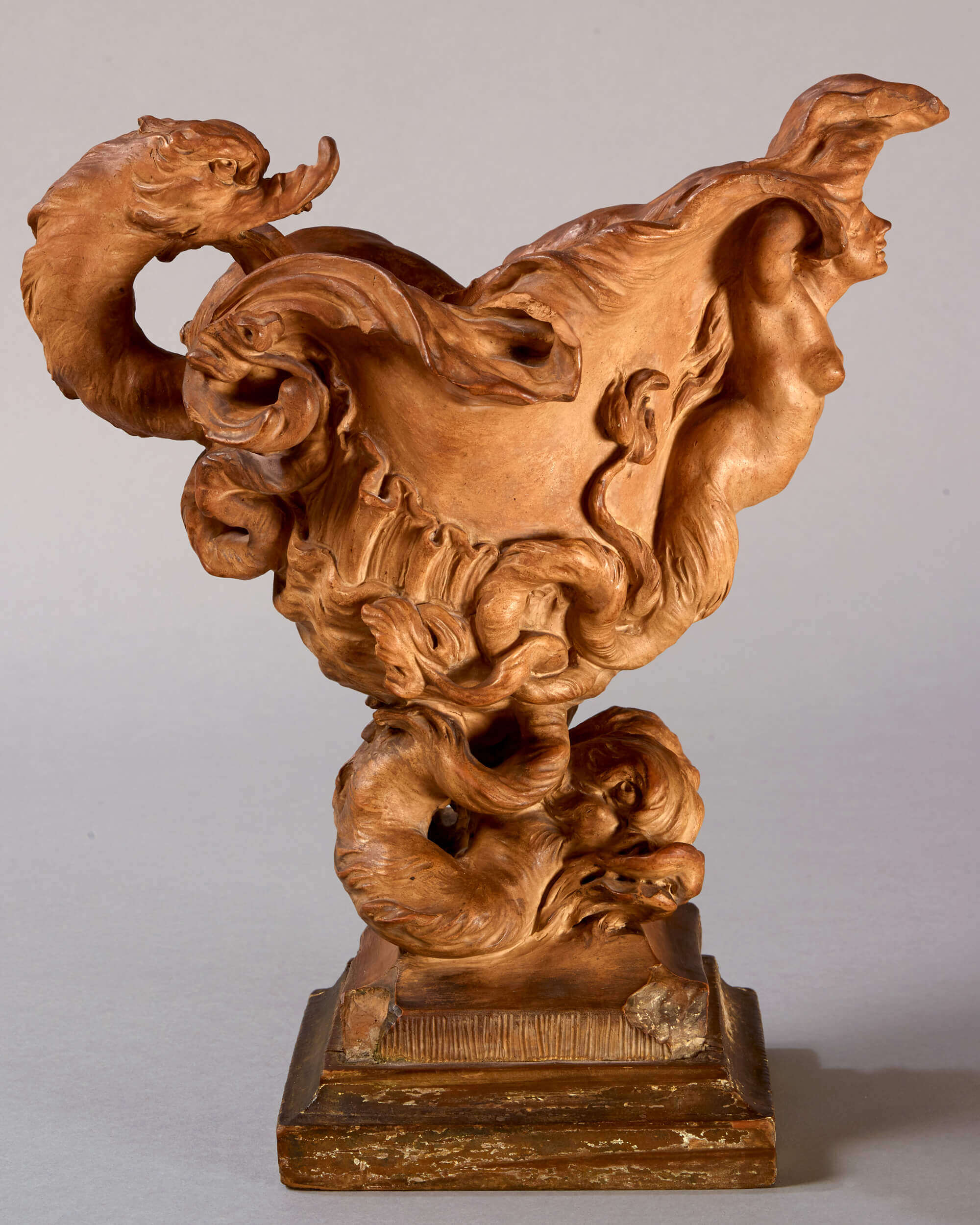
Florence, 17th century, circa 1695–1700. Terracotta.H. 29 cm (11 ½ in.); W. 25 cm (10 in.). MARKS AND INSCRIPTIONS: Arms of Count Maurice de Wendel (1879–1961) and his wife, Countess Andrée des Monstiers-Mérinville (1886–1980), printed on a label visible under the wooden base of the ewer; 1096, inventory number inscribed in ink on the same… Continue reading TERRACOTTA EWER
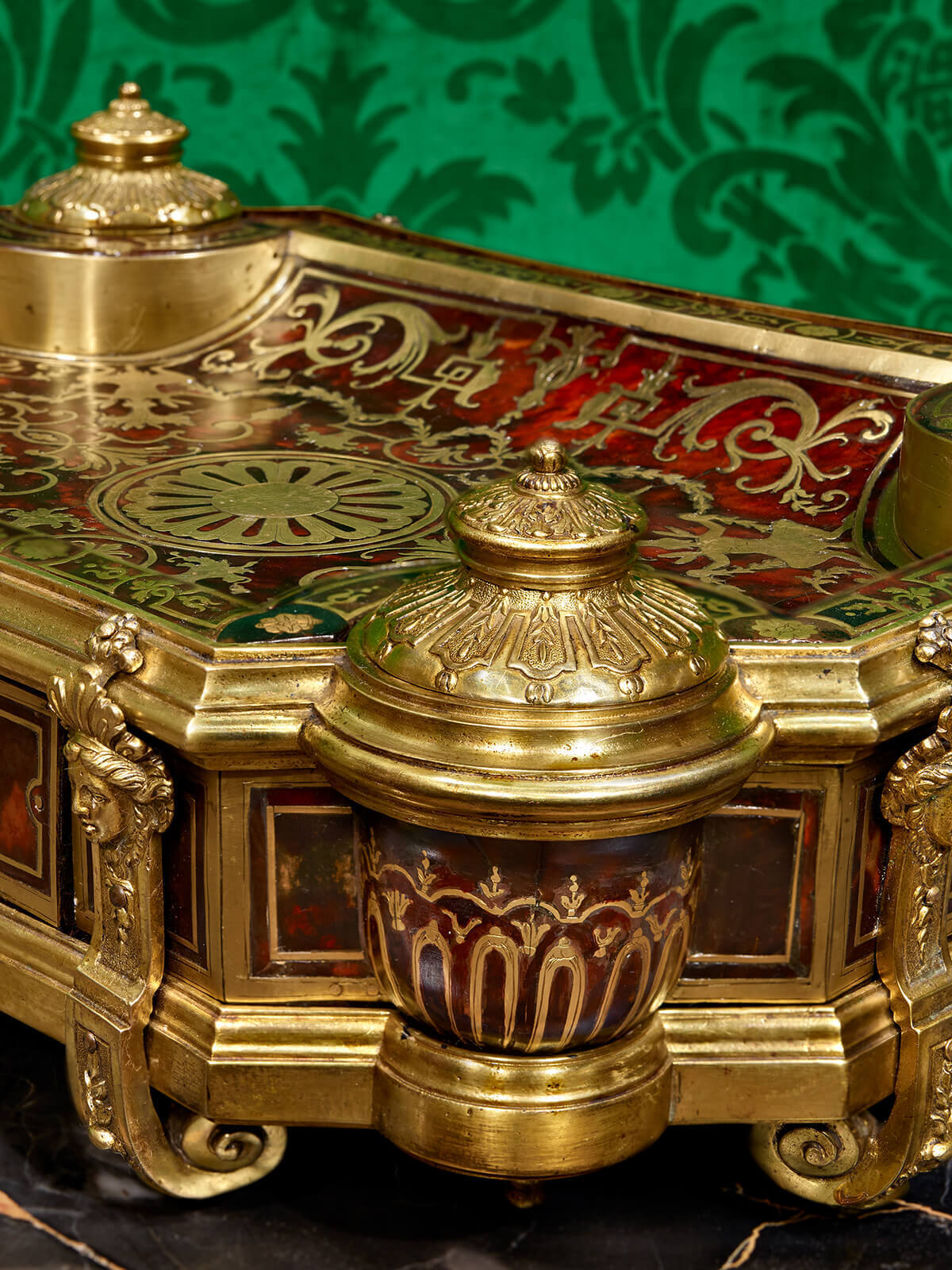
Paris, Louis XIV period, circa 1700. Oak and walnut structure; Brazilian rosewood; marquetry of first-quality brass on red and brown tortoiseshell; gilt bronze. H. 12.5 cm (5 in.); L. 37 cm (14 ½ in.); D. 28 cm (11 in.). PROVENANCE: Private collection.
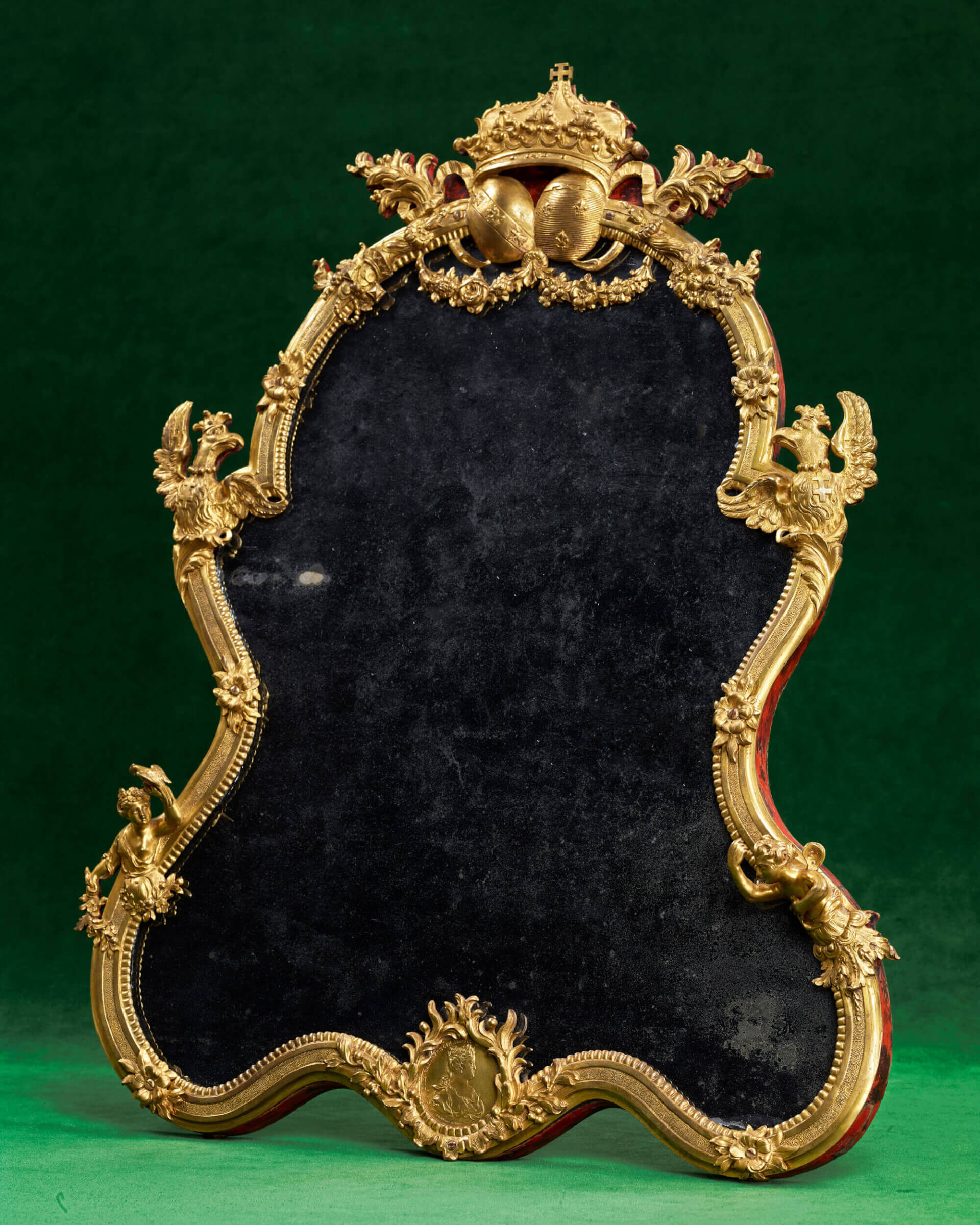
Paris, early 18th century, circa 1720. Gilt bronze, mercury mirror, painted wood imitating red tortoiseshell. H. 70.5 cm (27 ¾ in.); W. 53.7 cm (21 ¼ in.); D. 7 cm (2 ¾ in.). PROVENANCE: Collection of Élisabeth Charlotte d’Orléans (1676–1744), Duchess of Lorraine and Bar, at the Château de Lunéville (inventoried in April 1732).
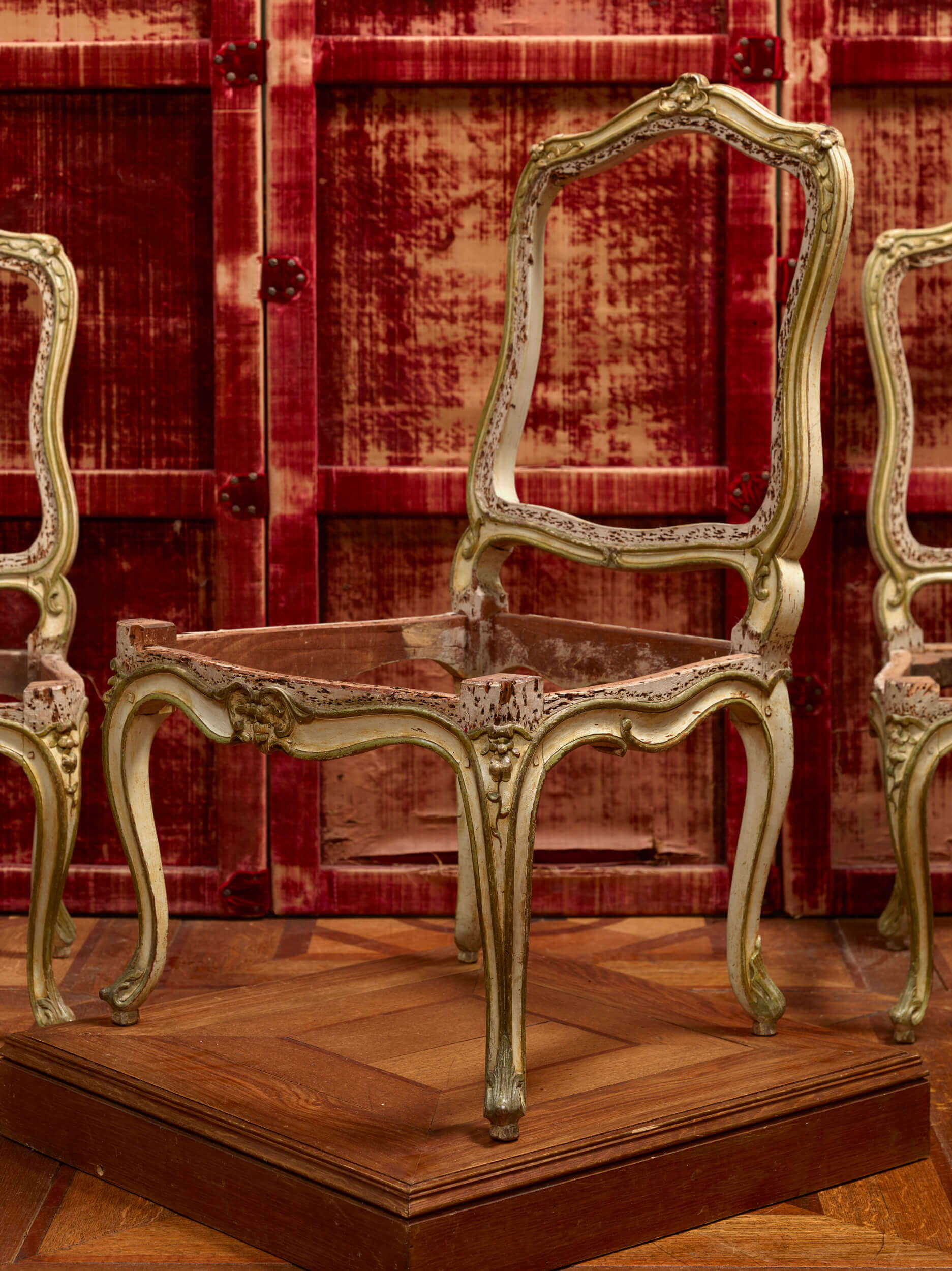
Paris, Louis XV period, circa 1750. STAMPED BY MICHEL CRESSON Moulded, carved, and painted wood. STAMP: M. CRESSON, visible on the back of the rear rail of the seat of each chair. PROVENANCE: Collection of Louis II du Bouchet (1711–1786), 3rd Marquis de Sourches, at the Château d’Abondant where the chairs were inventoried from 1751;… Continue reading SUITE OF SIX CHAIRS
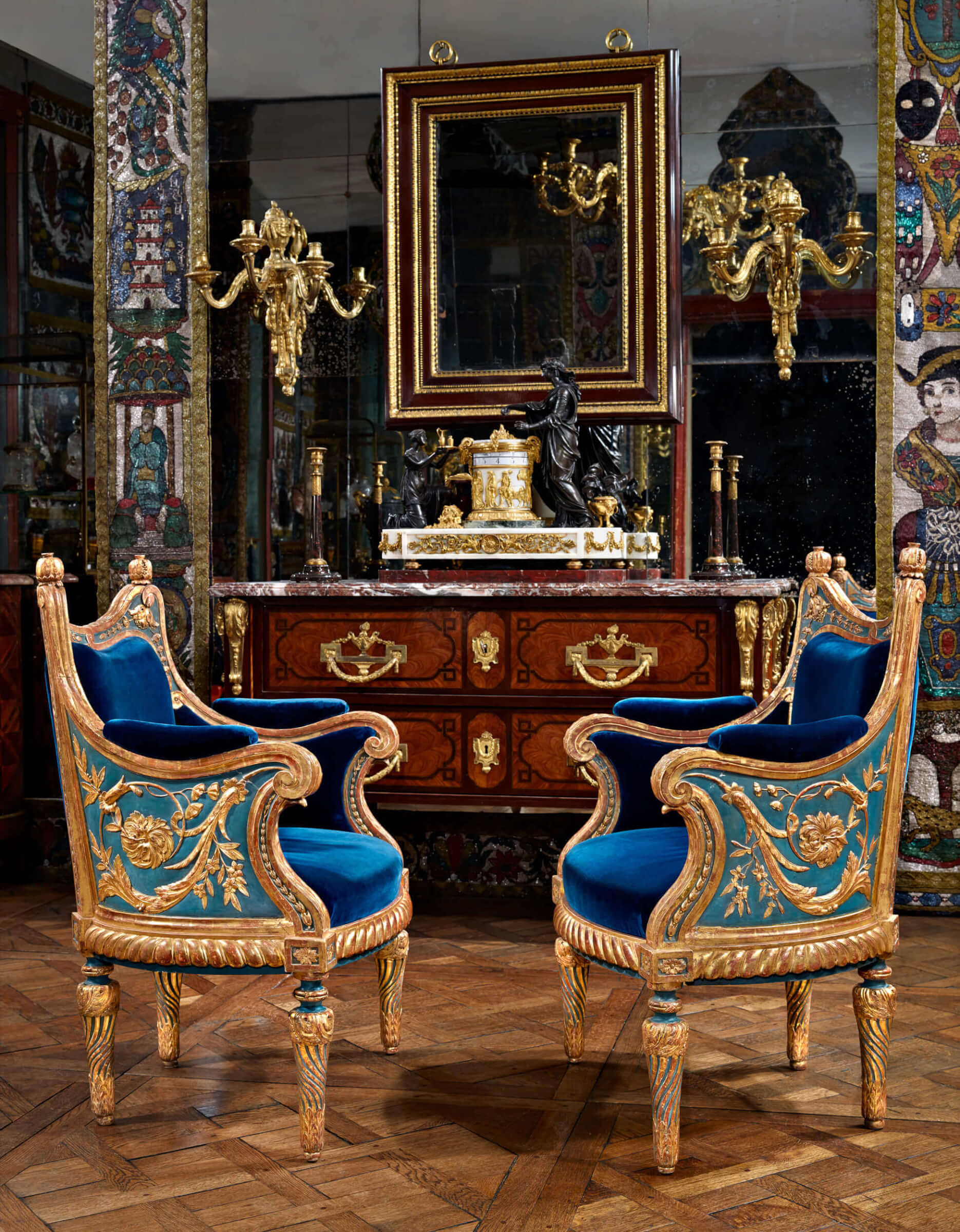
Paris, circa 1766–1768. Carved, painted, and gilded beech. H. 96 cm (37 ¾ in.); W. 64 cm (25 ¼ in.); D. 65 cm (25 ½ in.). STAMP: BAUVE, visible under the front rail of the seat. PROVENANCE: Private collection. BIBLIOGRAPHY: Christian Baulez, “Mathieu Debauve, menuisier en siège des Voyer d’Argenson, La famille Voyer d’Argenson et… Continue reading TWO OF THE ARMCHAIRS EXECUTED BY MATHIEU BAUVE
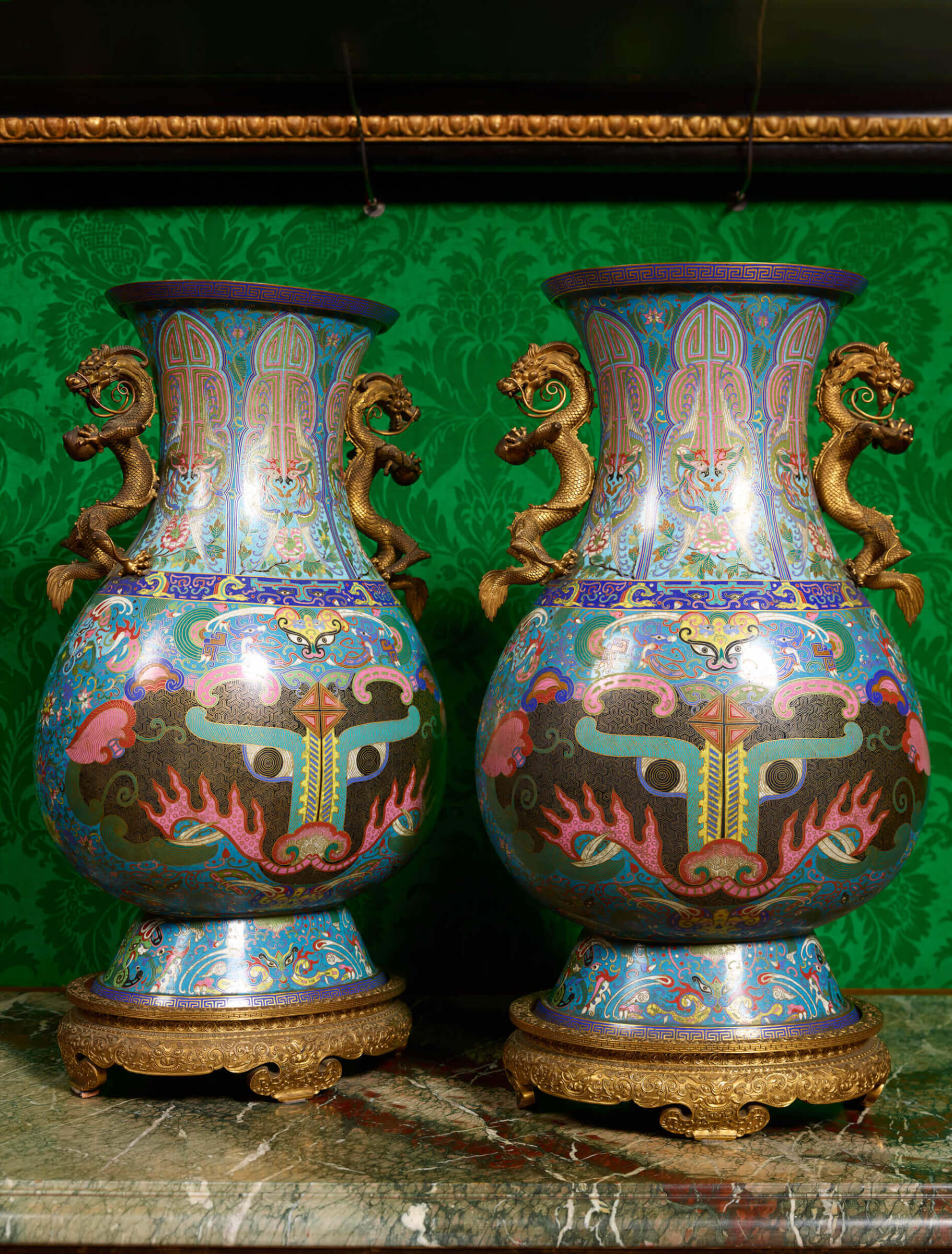
China, Beijing, De Cheng manufactory, second half of the 19th century. Cloisonné enamels and chased and gilt bronze. H. 64 cm (25 ¼ in.). On the reverse of the base: seal of the De Cheng manufactory, Beijing. PROVENANCE: Collection of Count Robert de Semallé (1849–1936), grandson of Count Jean-René-Pierre de Semallé (1772–1863), page to Louis… Continue reading PAIR OF LARGE CLOISONNÉ VASES
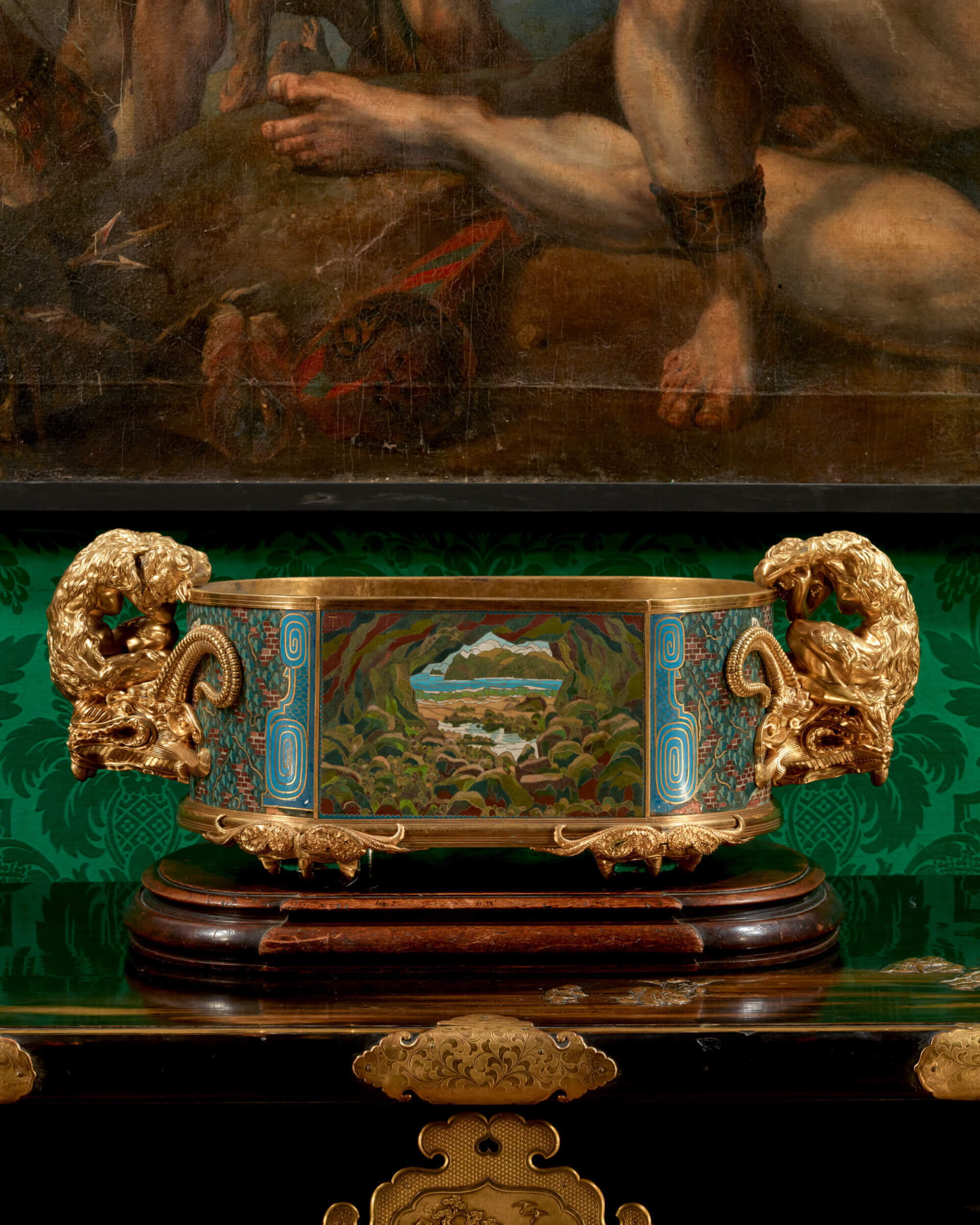
Paris, circa 1882. Cloisonné enamels and gilt bronze. H. 28 cm (11 in.); L. 74 cm (29 ¼ in.); D. 31 cm (12 ¼ in.). MONOGRAMMED: J.J.T. in a cartouche of the decoration, visible on both main sides. PROVENANCE: Direct gift from the artist to Maurice de Brunhoff, publisher in 1904 of La Sainte Bible.… Continue reading JARDINIÈRE
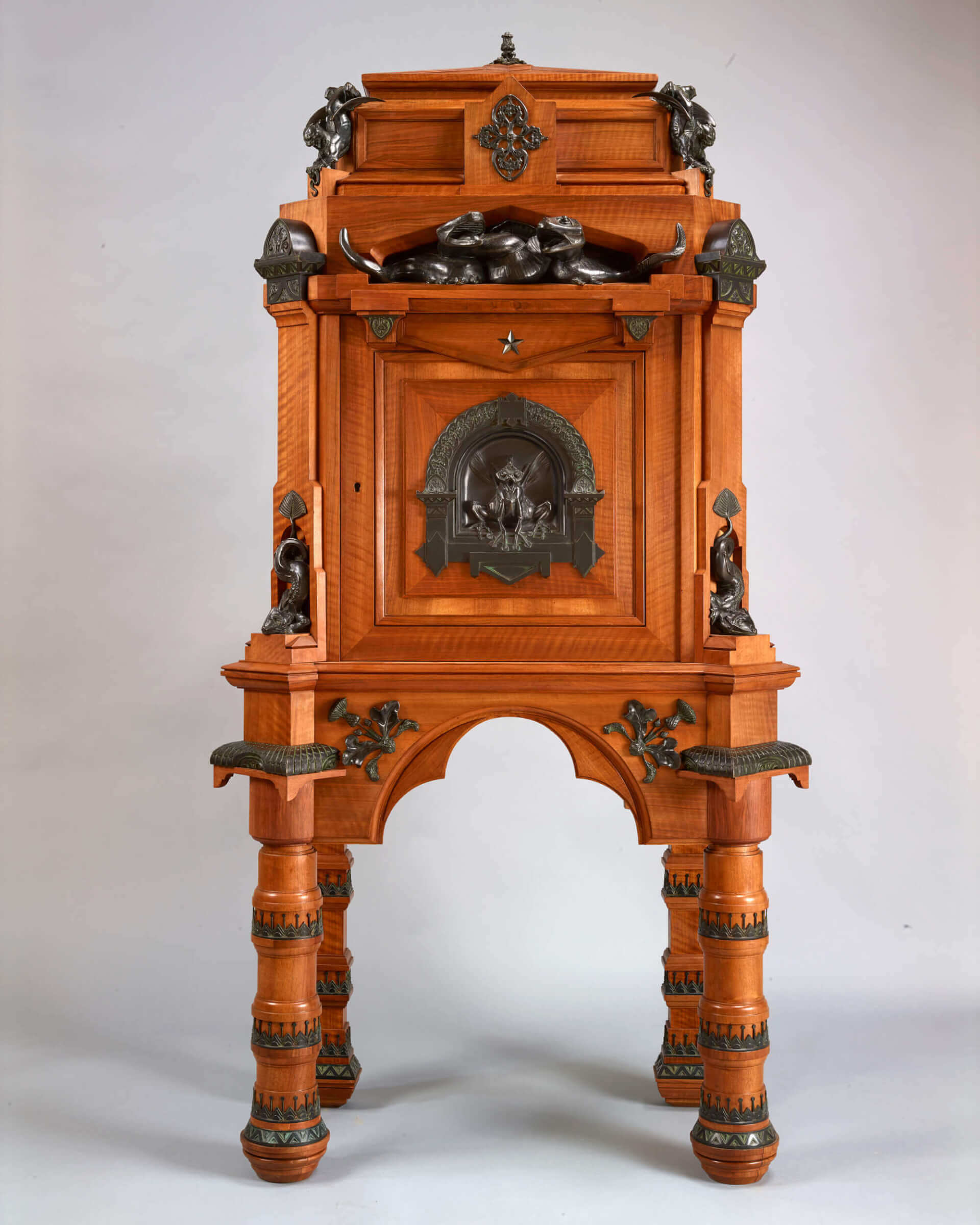
Paris, Second Empire period, circa 1867. Charles-Guillaume Diehl (Steinbach, Hesse, 1811 – Chessy, Seine-et-Marne, 1885) Designed by Jean-Eugène Brandely (Paris, active between 1867 and 1873) Bronzes executed by Emmanuel Frémiet (Paris, 1824–1910) Oak structure, cedar and walnut veneer, patinated bronze, drawers with cane bottoms. H. 170 cm (67 in.); W. 95 cm (37 ½ in.);… Continue reading MEDAL CABINET WITH LIZARDS