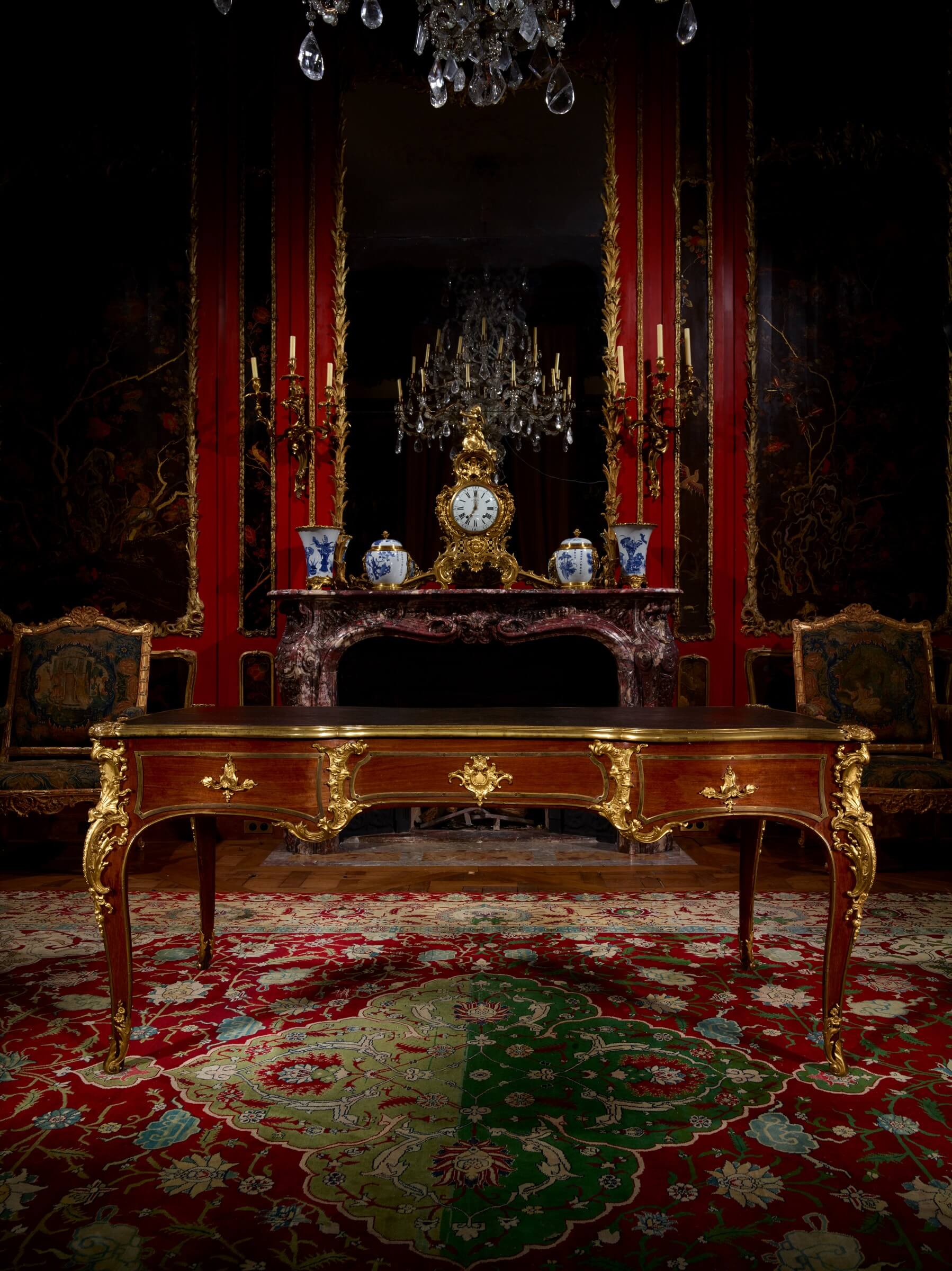
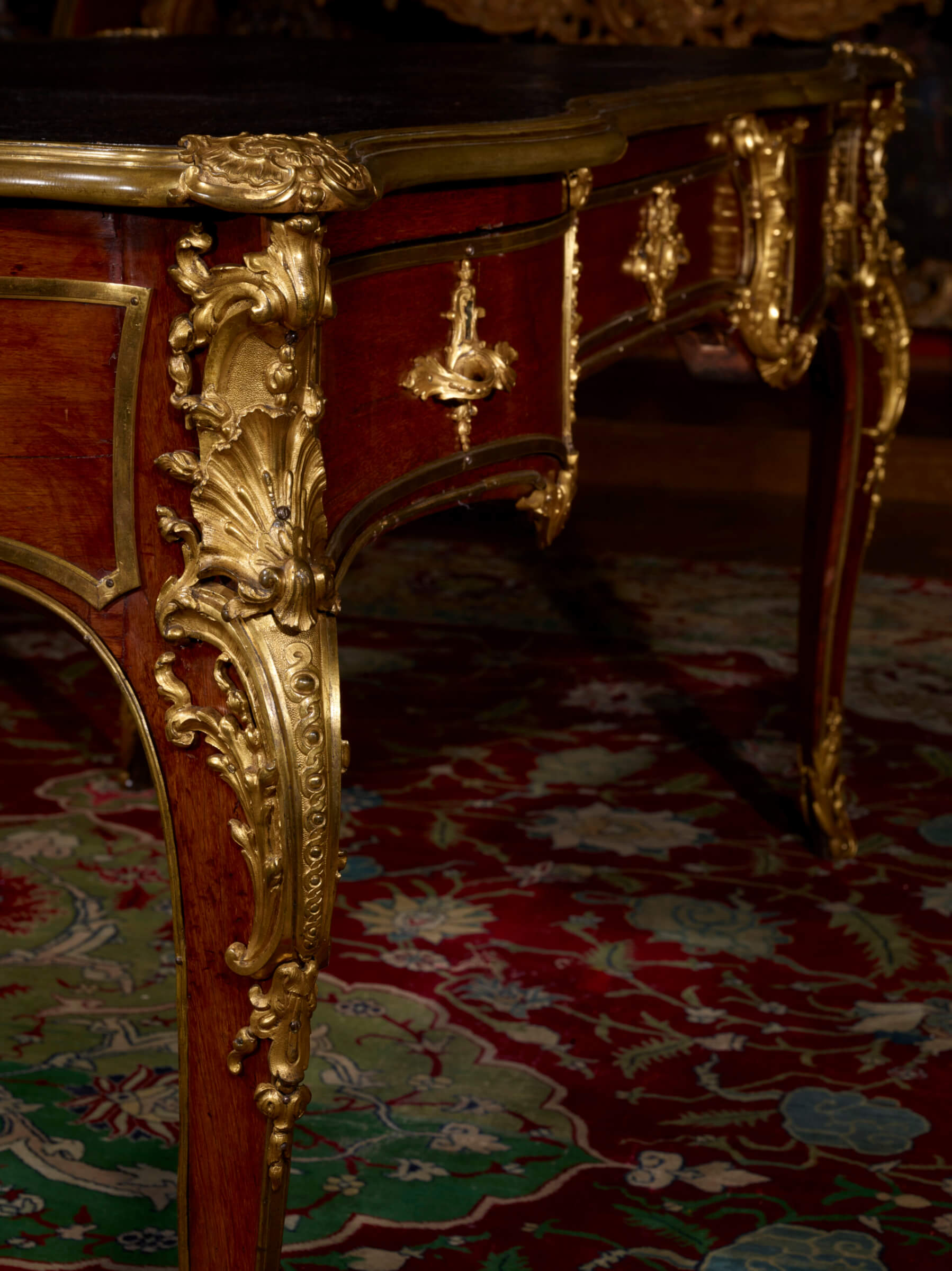
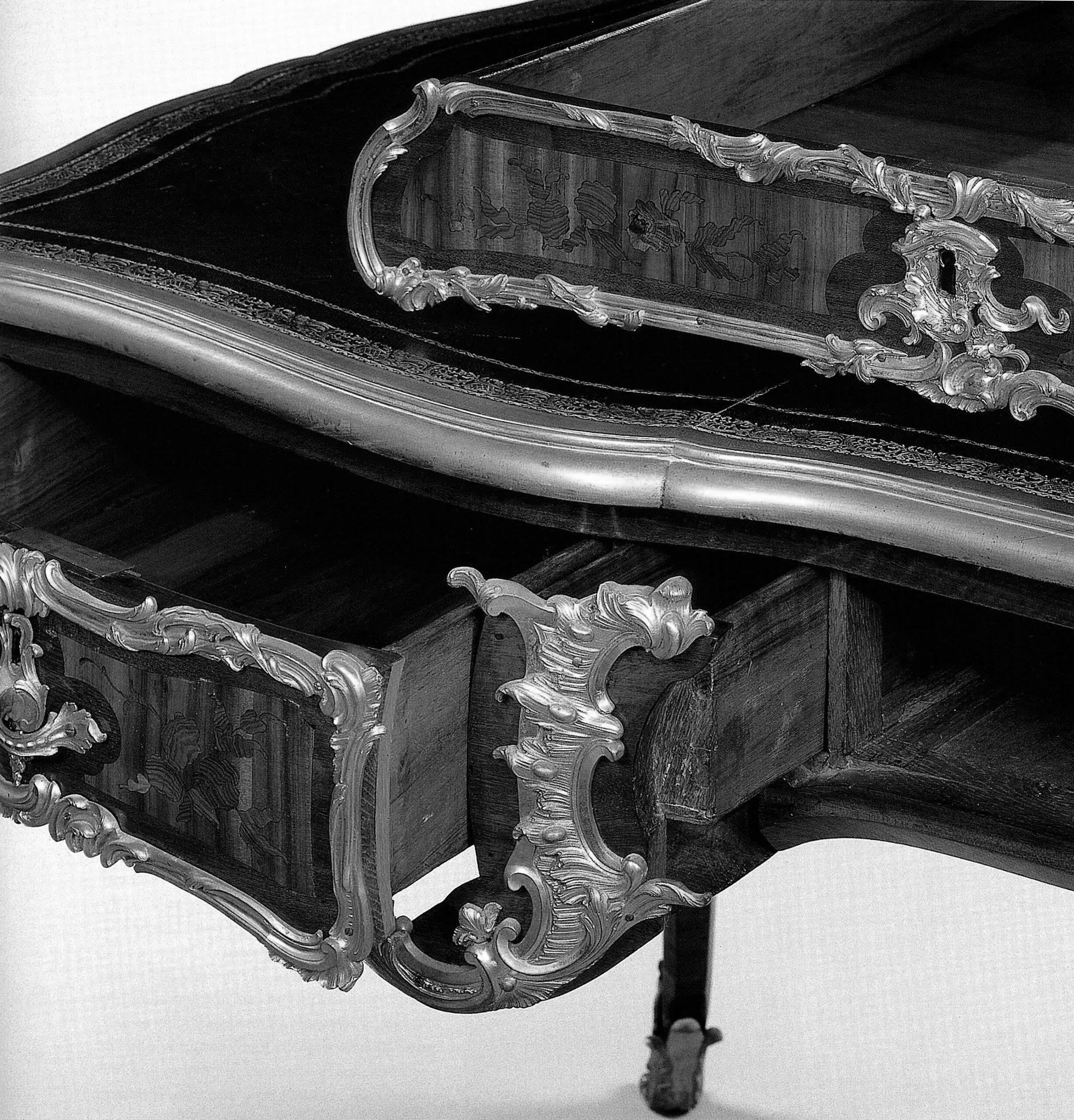
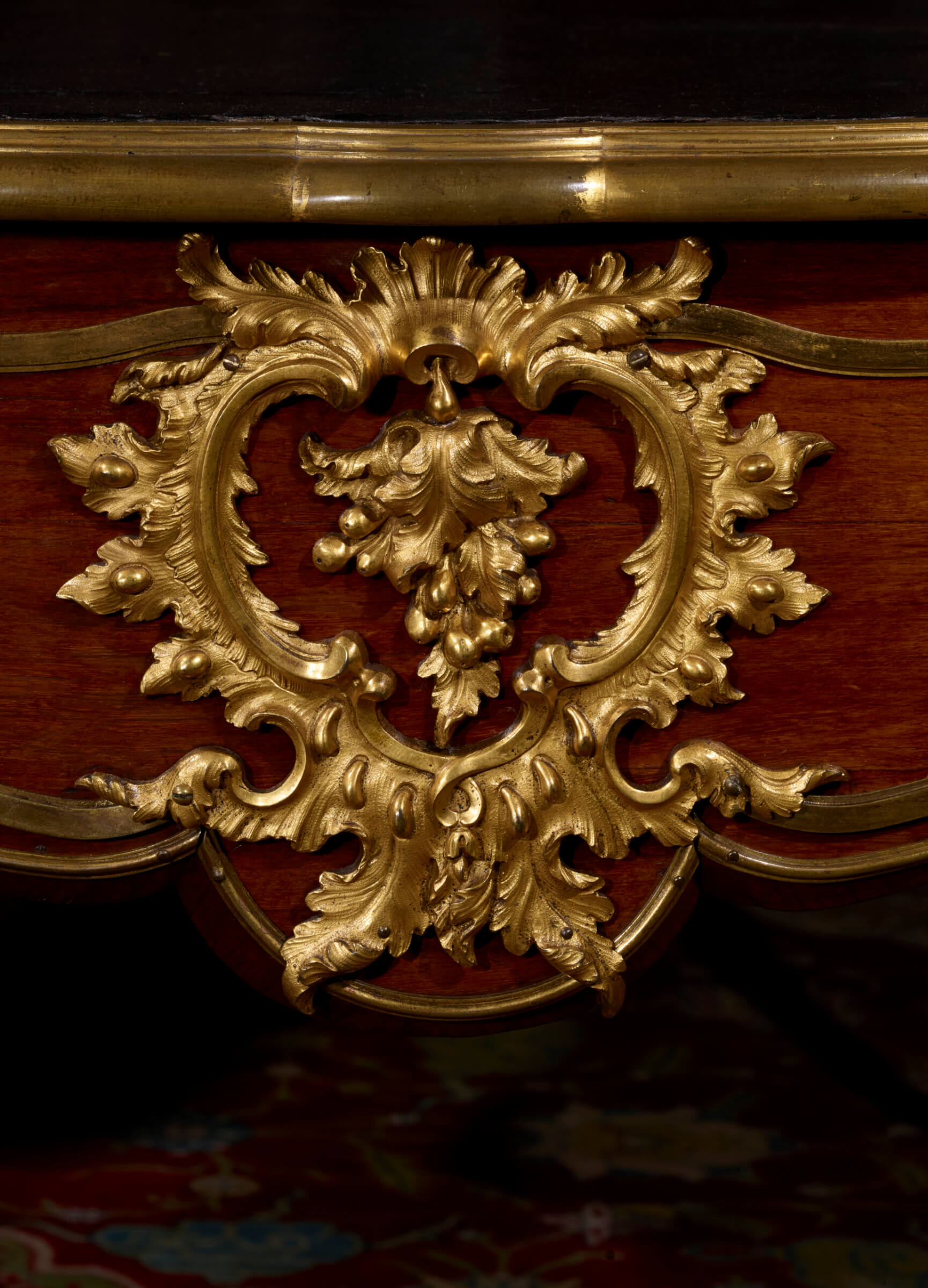
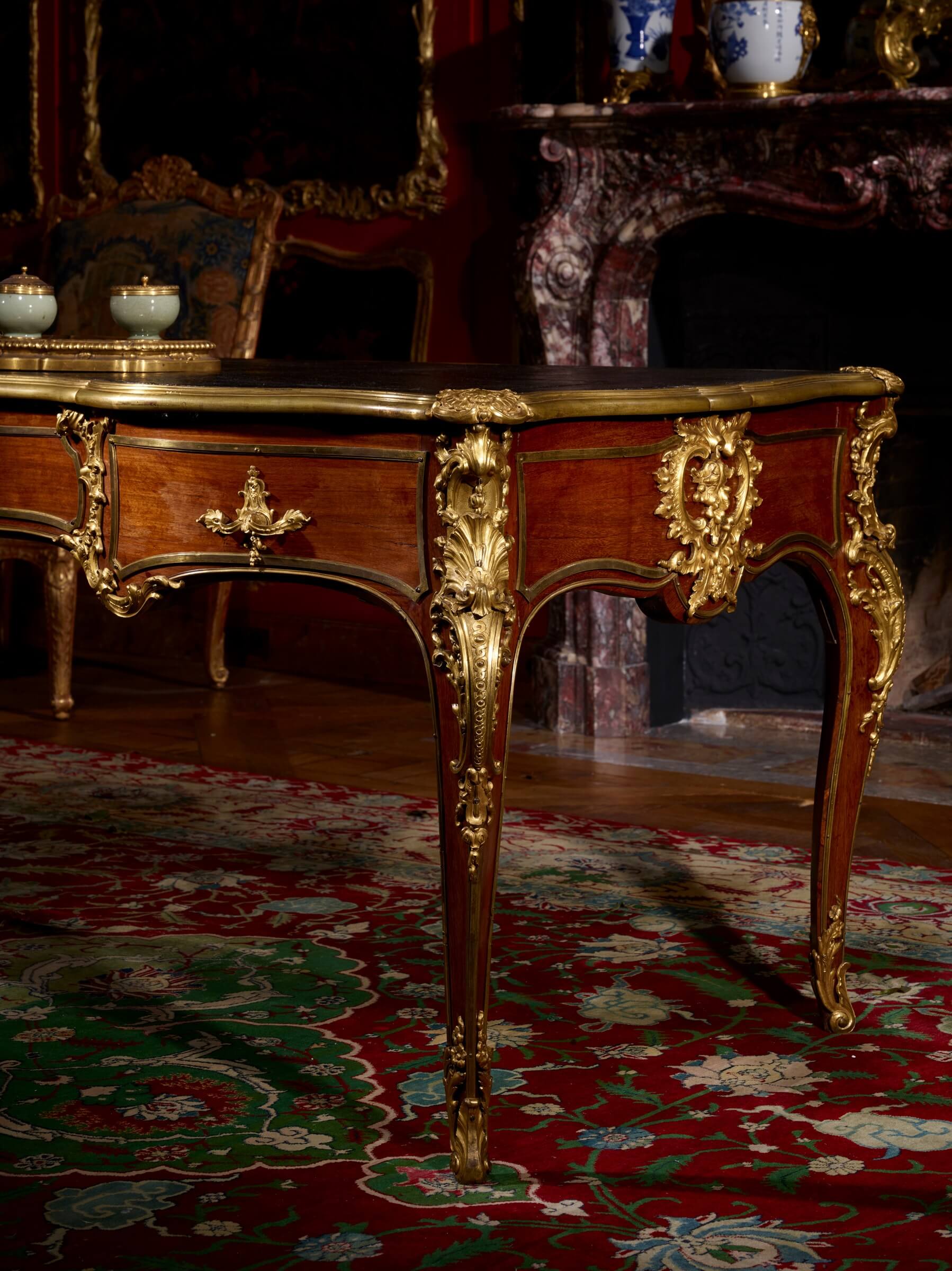
Carcass of Hungarian oak; veneered with amaranth; gilt bronze; metal; black leather with gilded edging.
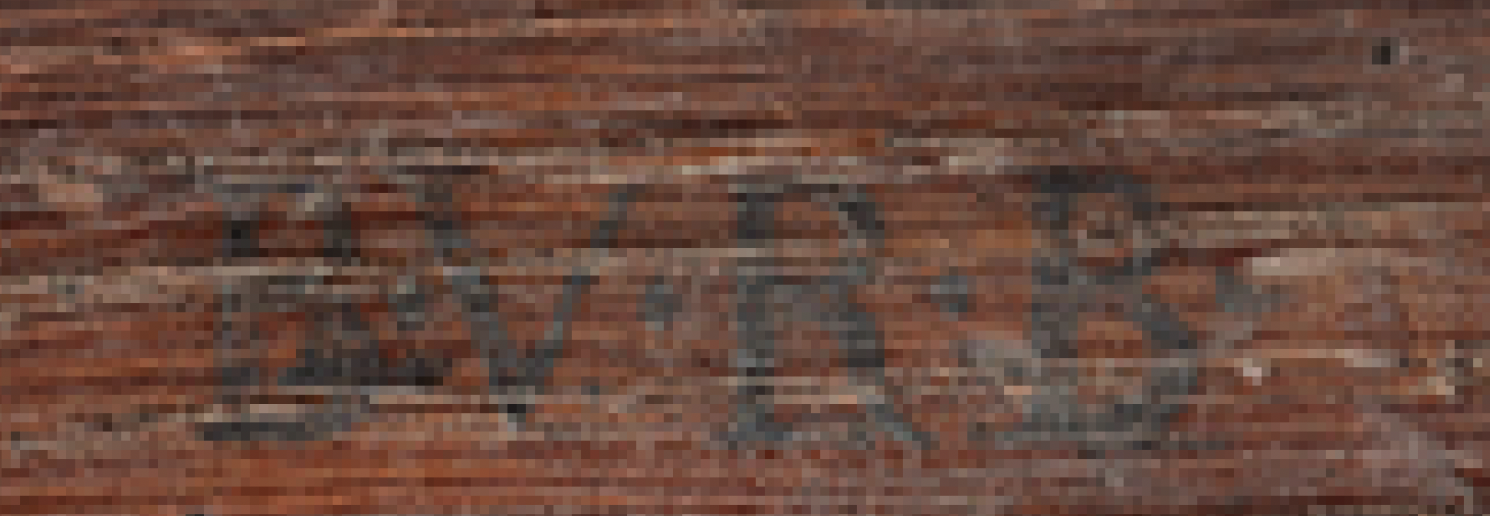
STAMPS: B.V.R.B.
MARKS AND INSCRIPTIONS: LG, mark in white paint visible on the reverse of the right rear leg of the desk.du bureau.
H. 76 cm. (29 ¾ in.); W. 172 cm. (67 ½ in.); D. 84 cm. (33 in.).
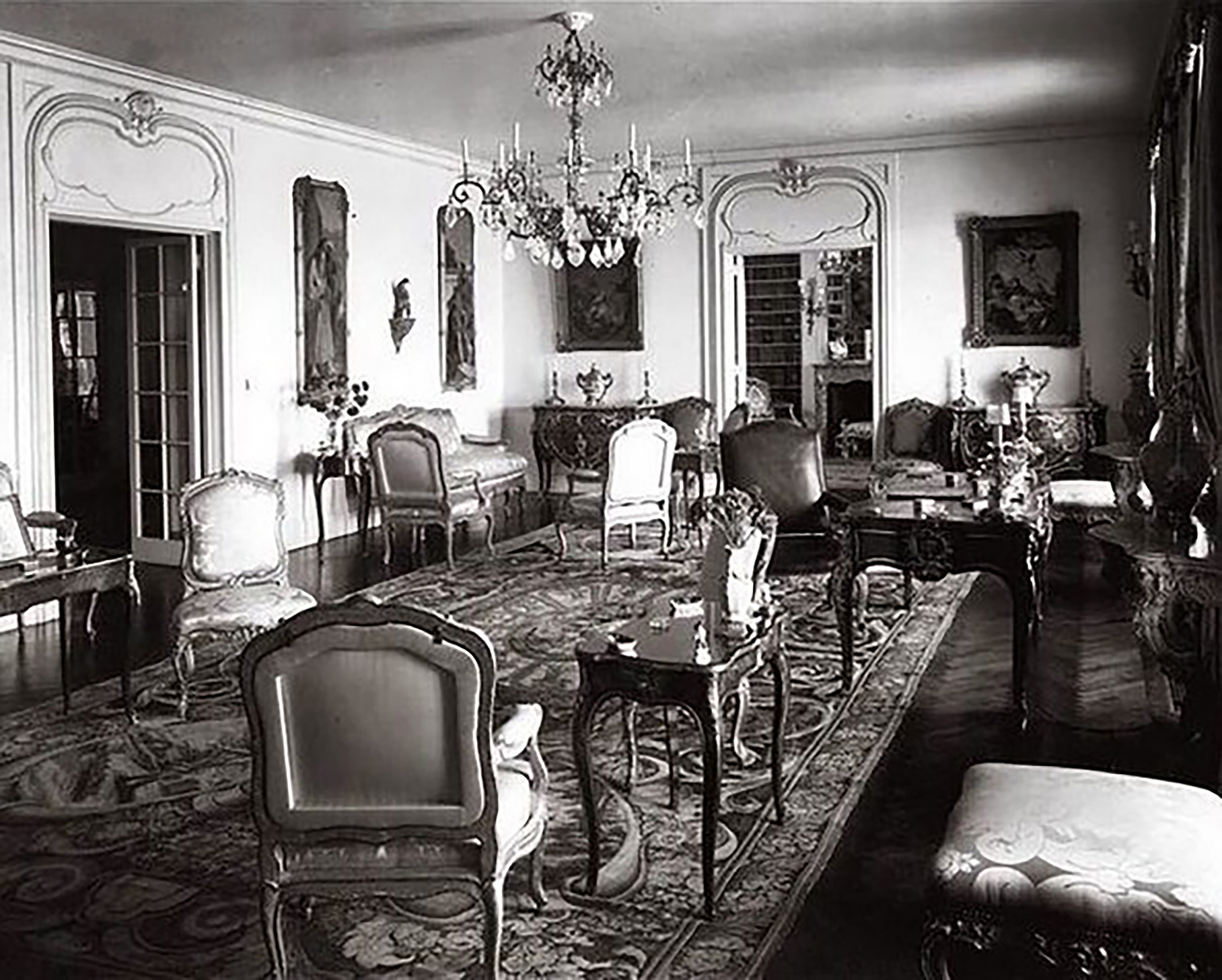
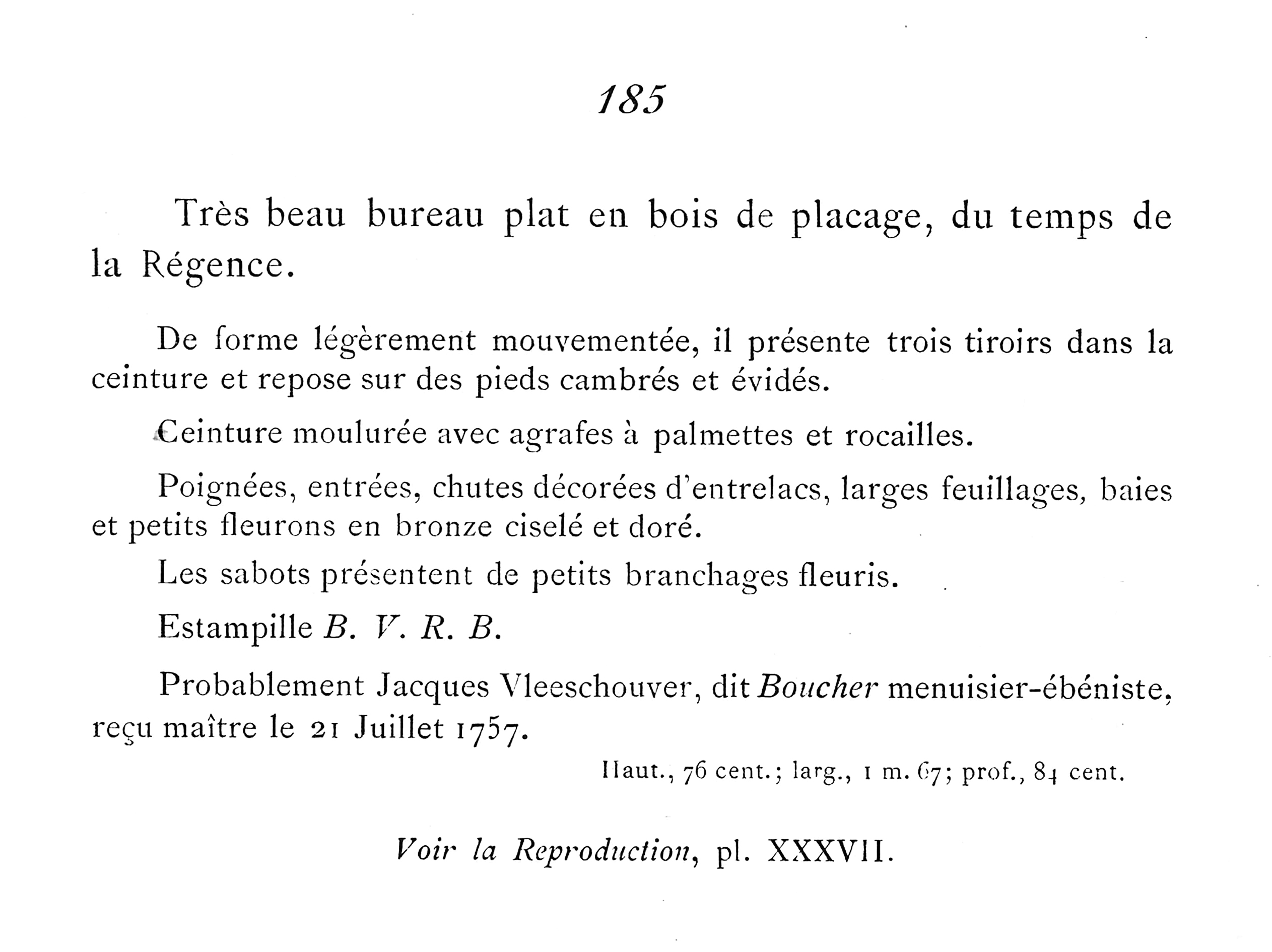
PROVENANCE: collection of André Saint (1871-1933), in his private mansion known as hôtel de Breteuil, 12, avenue Foch, Paris; collection of Madame André Saint, née Madeleine Bariquand (1879-1955), auction in Paris, galerie Jean Charpentier, auctioneer Etienne Ader, 20th and 21st May 1935, lot n°. 185, repr. pl. XXXVII (sold for 107,500 francs on 21st May 1935); acquired at the auction by the German art dealer Hans Stiebel († in 1964), established at 43, avenue Montaigne, Paris; collection of Baroness Renée Eléonore Juliette de Becker Remy (1903-1987), daughter of Baron Léon Lambert (1851-1919) and Zoé Lucie de Rothschild (1863-1916), granddaughter of Baron Gustave de Rothschild (1829-1911), in her New York apartment at 820 5th Avenue, Manhattan; collection of the Rosenberg & Stiebel gallery in New York; sold by the latter to Baron Guy de Rothschild (1919-2007); collection of Baron Guy de Rothschild and Baroness Marie-Hélène de Rothschild (1927-1996), at the hôtel Lambert, nᵒ. 2 rue Saint-Louis-en-l’Île, Paris; by descent, Rothschild collection to the present day.
LITERATURE: Jean Nicolay, L’Art et la Manière des Maîtres Ebénistes français au XVIIIe Siècle, vol. I, Paris, 1956, p. 65, fig. C; Jean-Pierre Baroli, “Le mystérieux B.V.R.B enfin identifié”, Connaissance des Arts, n°. 61, March 1957, p. 58, repr.; Penelope Hunter-Stiebel, Elements of Style: The Art of the Bronze Mount in 18th and 19th Century France, catalogue of the exhibition organised in New York by the Rosenberg & Stiebel gallery, from 13th April to 15th June 1984, p. 12-14, cat. 1; Christiane de Nicolay-Mazery, Visites privées, hôtels particuliers de Paris, Paris, 1999, p. 13.
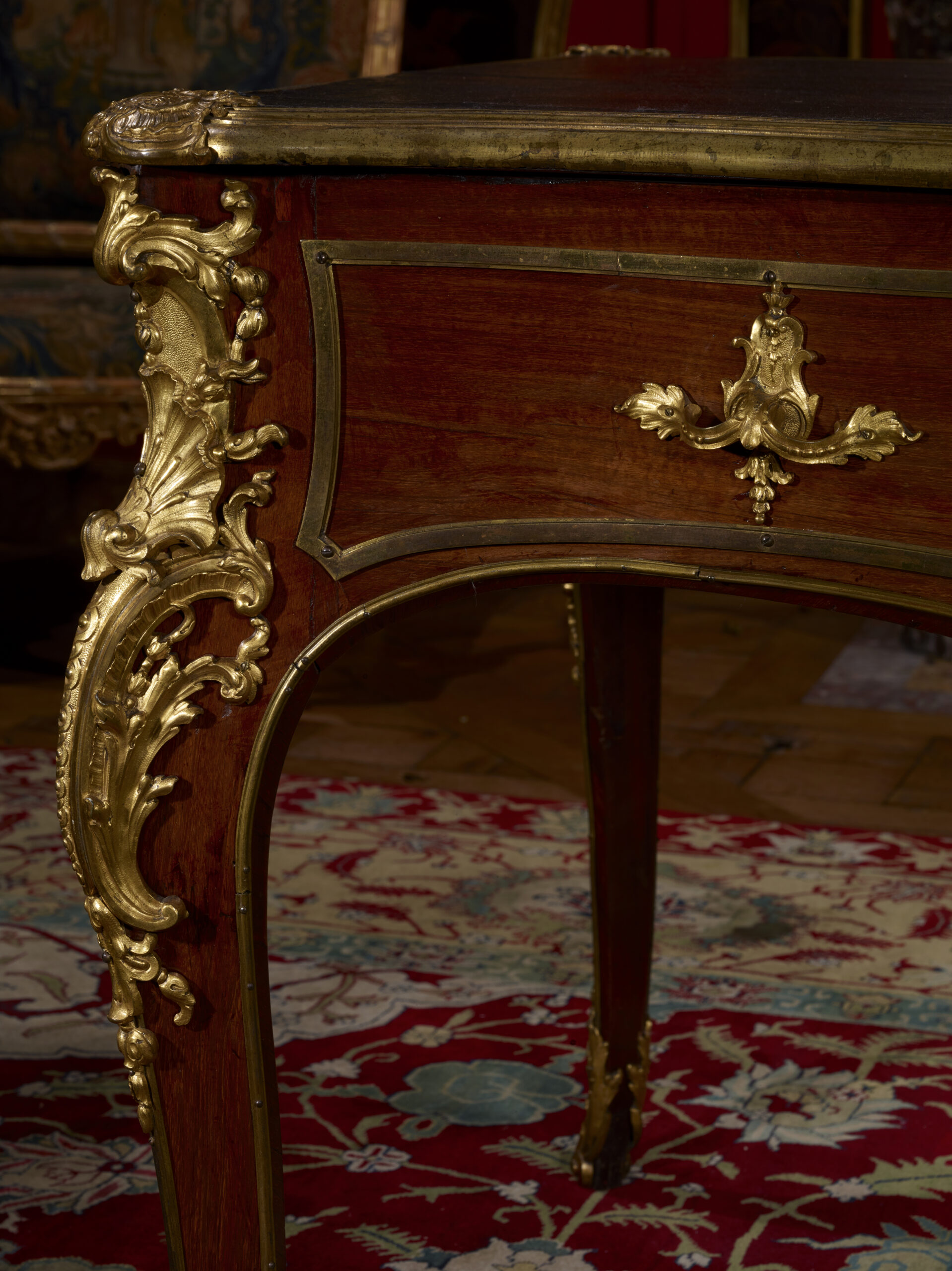
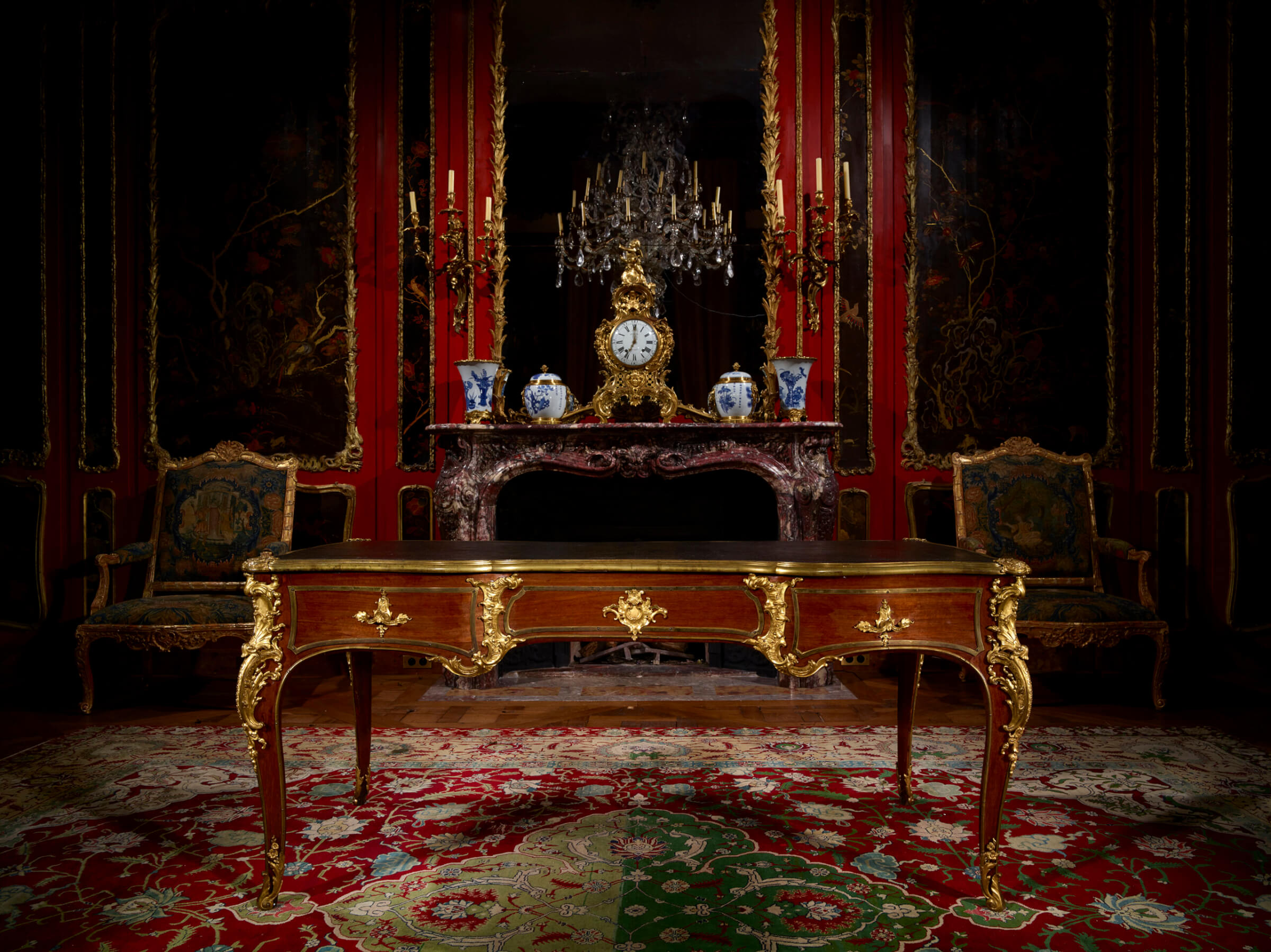
A masterpiece by Bernard II Vanrisamburgh, this large bureau plat, dated circa 1737, with its Hungarian oak carcass entirely veneered in amaranth and lavishly adorned with gilded bronzes, was part of the collection of André Saint (1871-1933), who together with his brother Maurice (1863-1936) ran the famous Saint Frères family company in the early 20th century, which was specialised in jute weaving. The desk furnished his mansion known as the hôtel de Breteuil, 12 avenue Foch, Paris. It was sold on 21st May 1935 by his widow, Madeleine Saint (1879-1955), née Bariquand, at a major auction of the Saint collection held at the Galerie Jean Charpentier in Paris under the supervision of Mr. Etienne Ader. Sold for 107,500 francs, it was acquired by the German art dealer Hans Stiebel († in 1964), who had settled in Paris at 43 avenue Montaigne in the wake of the First World War. He was almost certainly the one who sold it to Baroness Renée Eléonore Juliette de Becker Remy (1903-1987), daughter of Baron Léon Lambert (1851-1919) and Zoé Lucie de Rothschild (1863-1916), granddaughter of Baron Gustave de Rothschild (1829-1911), and one of the greatest art collectors of the mid-twentieth century. The desk adorned the splendid New York apartment at 820 5th Avenue in Manhattan, which was bought from her by Charles and Jayne Wrightsman in the late 1950s.
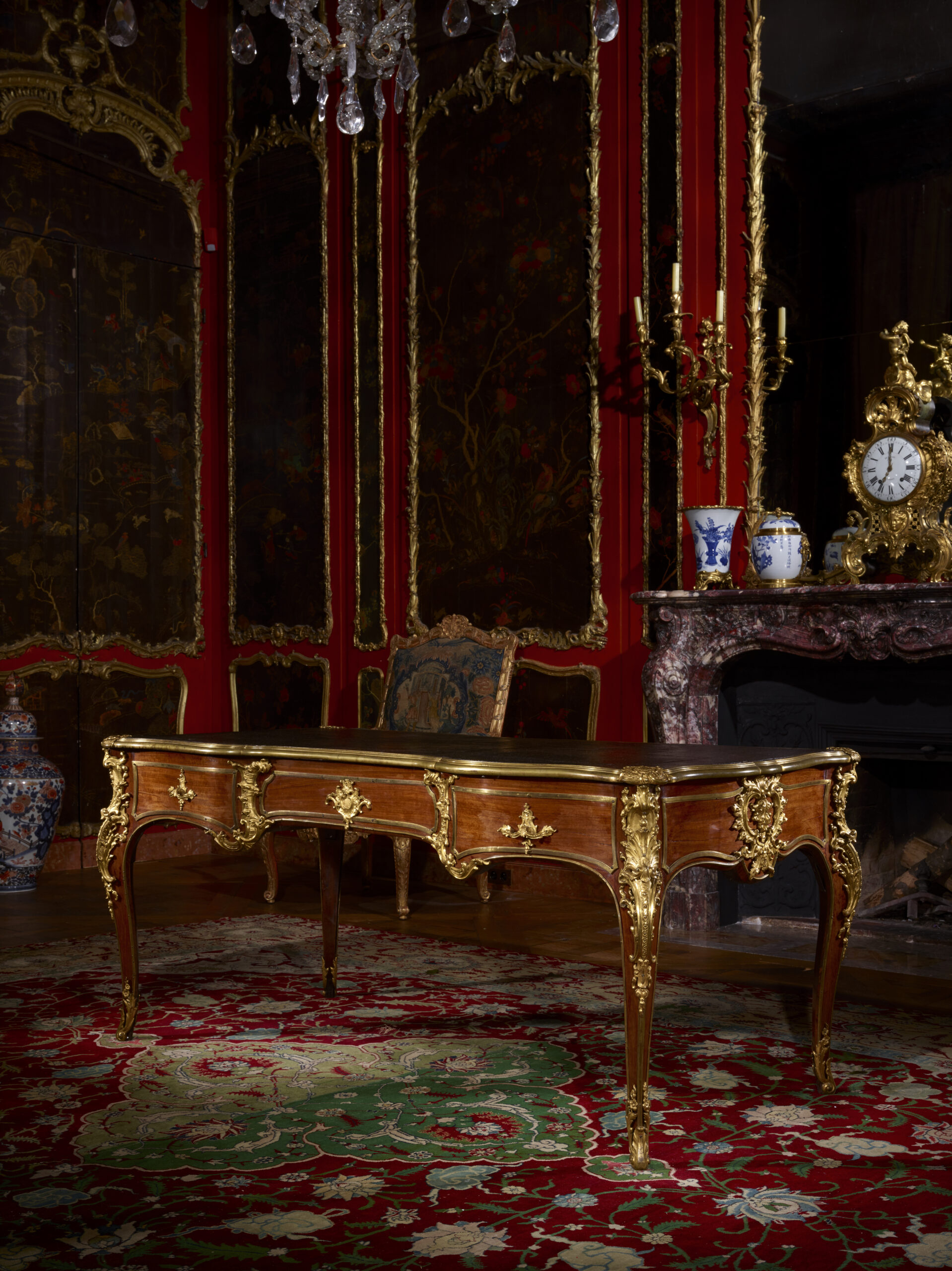
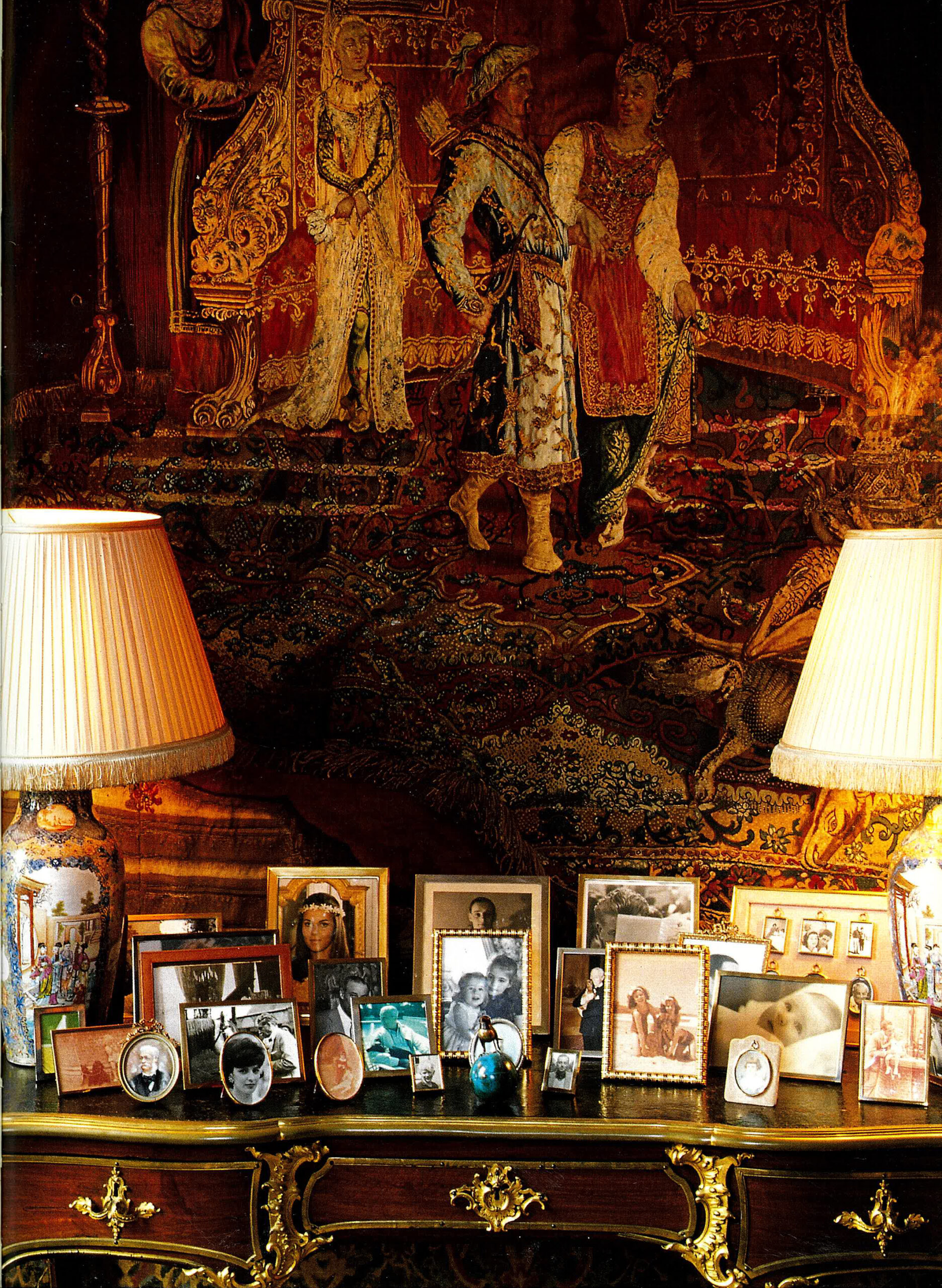
During the same period, the Baroness entrusted the furniture to the Rosenberg & Stiebel gallery in New York, which sold it to Baron Guy de Rothschild (1919-2007). The latter brought it back to France and, from 1975 onwards, placed it in one of the salons of the hôtel Lambert, which he had just acquired with his wife, Baroness Marie-Hélène de Rothschild (1927-1996).
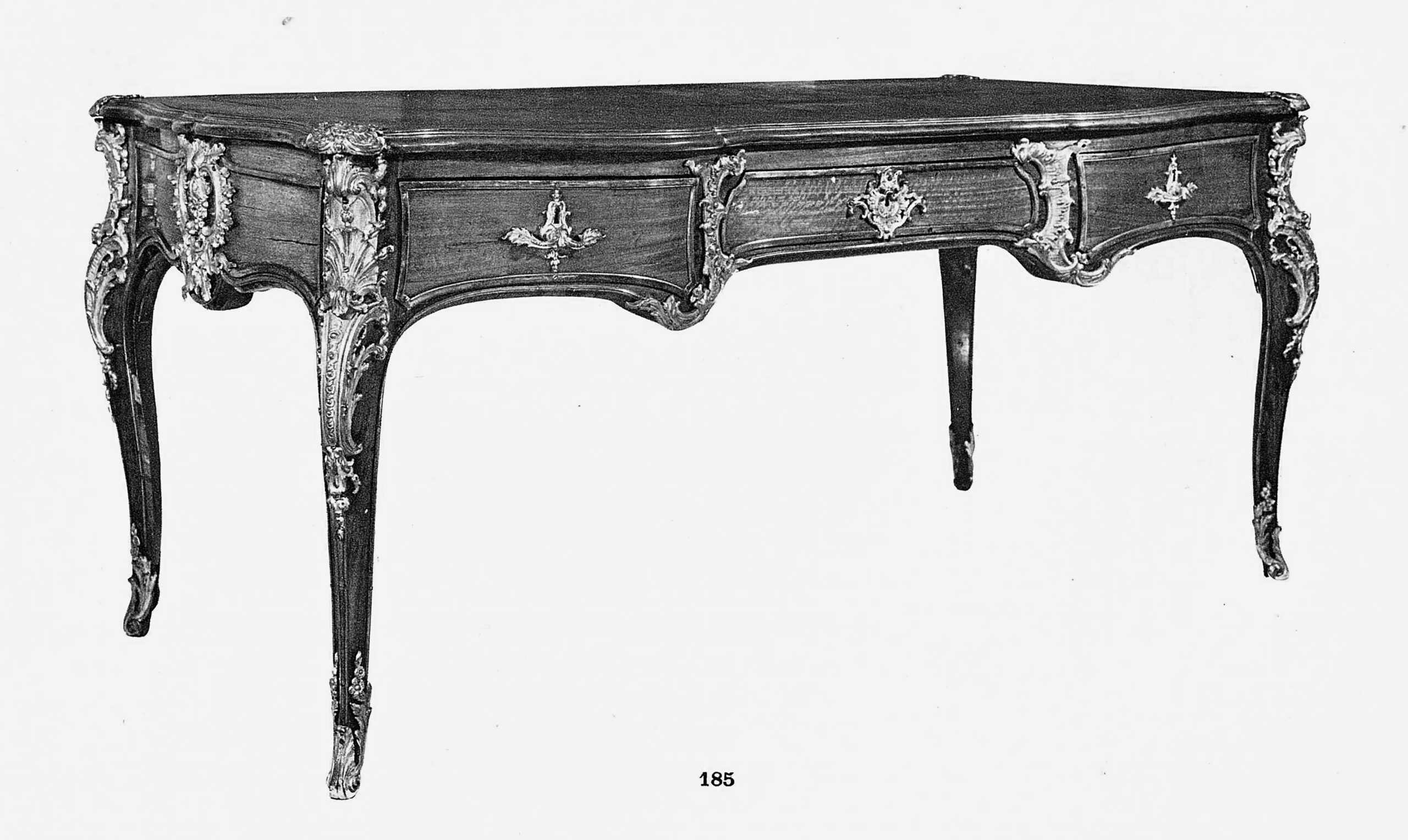
The bureau plat has remained in the Rothschild family estate to this day. It was reproduced in March 1957 in a referring article by Jean-Pierre Baroli, published in Connaissance des Arts, identifying for the first time the author of the mysterious B.V.R.B. stamp. It was also published by Jean Nicolay in 1956, in his dictionary Maîtres Ebénistes français au XVIIIe siècle. It is one of a very small corpus of flat desks of the same model by Bernard II Vanrisamburgh. Only two other examples have so far been listed.
The first, veneered in amaranth and satinwood, was part of the collection of Rodolphe Kann (1845-1905) in Paris, which was bought in its entirety in July 1907 by the London art dealers of the Duveen Brothers company, including Joseph Duveen, for the staggering sum of £1 million.
This desk is published in Volume II of the Catalogue of the Rodolphe Kann Collection, written by Jules Mannheim and Edouard Rahir and published in Paris the year of the auction. It became the property of the Marquise de Portago, then of Yale University, and was sold by Parke Bernet Galleries in New York on 13th and 14th November 1959, lot n°. 307. It was acquired by the Rosenberg & Stiebel gallery, which sold it to the famous Anglo-American polo champion Winston Guest (1906-1982), whose collection, including the desk, was also sold on 2nd December 1967 by Parke-Bernet Galleries, lot n°. 139. It later became the property of Akram Ojjeh and formed lot n°. 46 of the auction of this important collection by Sotheby Parke Bernet in Monaco on 25th and 26th June 1979.
The second desk, entirely veneered in ebony, was part of the eighteenth-century collection of Louis-François Armand de Vignerot du Plessis (1696-1788), 3rd Duke of Richelieu. It remained in his family and was also acquired by Rosenberg & Stiebel circa 1952, which sold it to Charles and Jayne Wrightsman. By an ironic twist of fate, the latter placed it in the Drawing Room of Baroness Renée de Becker’s former Manhattan apartment, where the desk presented here had previously been.
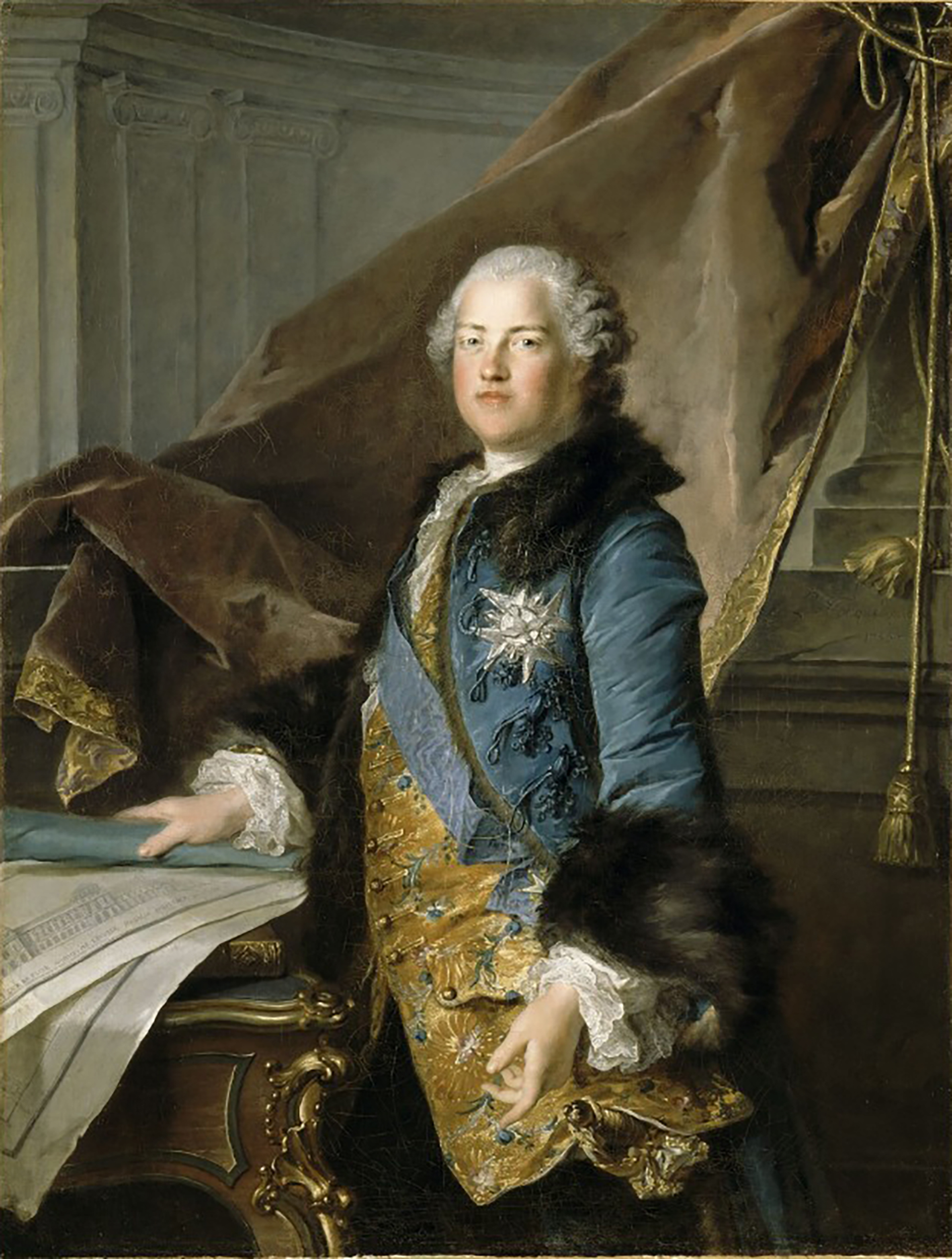
It is almost certainly this one or the example by Rodolphe Kann – immortalised by the painter Louis Tocqué (1696-1772), a pupil of Nicolas Bertin (1667-1736) and most importantly of Jean-Marc Nattier (1685-1766), who was one of the most renowned portraitists of his time.
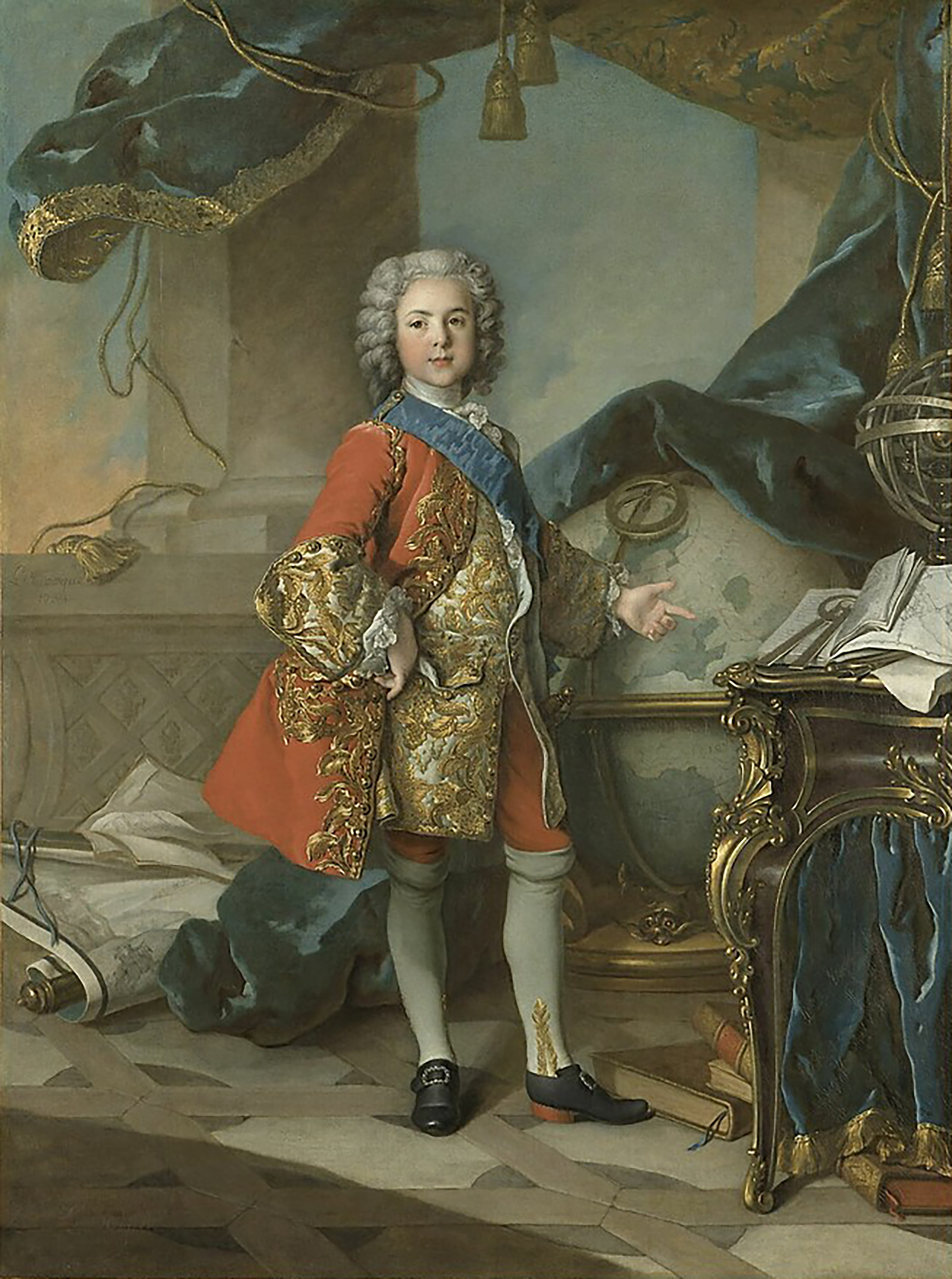
He was accredited at the Académie in 1731, and admitted on the same day as François Boucher (1703-1770), on 30th January 1734; from then onwards, he was to receive important commissions from the royal family and Parisian high society, including the Portrait of the Dauphin, which was ordered by the Bâtiments du Roi in 1738, and which he exhibited at the Salon of 1739. In that painting from the collections of Louis XV, now to be seen in the Musée du Louvre, the ten-year-old Dauphin Louis de France (1729-1765), eldest son of Louis XV and Marie Leszczynska, is depicted standing in his study studio, pointing with his left hand to plans and measuring instruments placed on a large bureau plat of our model, of which only the right front leg and the lateral half of the rail are visible. While the painter allowed himself some latitude in the treatment of the central openwork cartouche on the short side of the desk, it is notwithstanding easy to recognise the shell-motif pendant on one of its legs, the impressive serpentine lingotière on its top and the plain bronze bands demarcating the compartments of its rail.
The Dauphin seems to have been particularly fond of the model. In point of fact, six years later, on 18th February 1745, the marchand mercier Thomas-Joachim Hébert delivered a bureauplat of the same design to Versailles for the Grand Cabinet of the Prince’s new apartment on the first floor of the Midi wing. Stamped B.V.R.B., this desk in amaranth and satinwood marquetry is embellished with the same agrafes framing its central drawer, the same large cartouches with openwork fleurons adorning the centre of its short sides, and the same handles distinguishing its side drawers, with the whole complemented by more ostentatious bronze pendants and frames. Louis Tocqué had the model of the desk in his workshop at his disposal.
During the posing sessions which took place at Versailles, he only executed the head of the Dauphin, but not his body, which he probably only contented himself with sketching, nor the environment of his study studio, as is specified in a letter dated 21st July 1738 from the Duke of Châtillon, the Prince’s Preceptor, to Philibert Orry, Director of the Bâtiments du Roi: “Tocquet finished the portrait of Monseigneur le Dauphin a few days ago, I think he did very well, he will go on with dressing him, he will be painted full-length, with his hand on a terrestrial globe, with a desk next to him, on which will be placed plans of fortifications and mathematical instruments, spread out across the desk […]”. Tocqué used the model of this desk for almost twenty years, regularly featuring it in his paintings. In 1737, i.e. a year before the portrait of the Dauphin was commissioned, he executed the presumed portrait of the poet and playwright Alexis Piron (1689-1773), seated and leaning on the desk, of which one of the pendants and the small left side are easily recognisable; the portrait, which formed part of the collection of Baron Maurice de Rothschild (1881-1957), is now kept at the Norton Simon Museum, in Pasadena, California. In the portrait of Louis III Phélypeaux (1705-1777), Count of Saint-Florentin, Marquis (1725) then Duke (1770) of La Vrillière, Minister of State under Louis XV in 1749, which he painted more than ten years later, he depicted the Count sitting cross-legged in front of the desk, one of the agrafes of which, framing the central drawer, as well as the right-hand side drawer, are also perfectly identifiable; the painting, which was begun in 1748 and completed the following year, was commissioned for the town hall of Marseille and is now part of the collections of the city’s Musée des Beaux-Arts. In an even later example, in 1755 he painted a portrait of Abel-François Poisson (1727-1781), Marquis of Marigny, brother of Madame de Pompadour, and Director of the Bâtiments du Roi since 1751, standing half-legged in front of the same desk, the front left corner of which can be recognised. The Marquis is showing an elevation, placed on the desk, of the façade of the Ecole Royale Militaire, founded by Louis XV in the same year as his appointment as Director of the Bâtiments. This painting, which was part of Marigny’s collection, is kept at the Château de Versailles, where it was transferred under the reign of Louis-Philippe in January 1835.
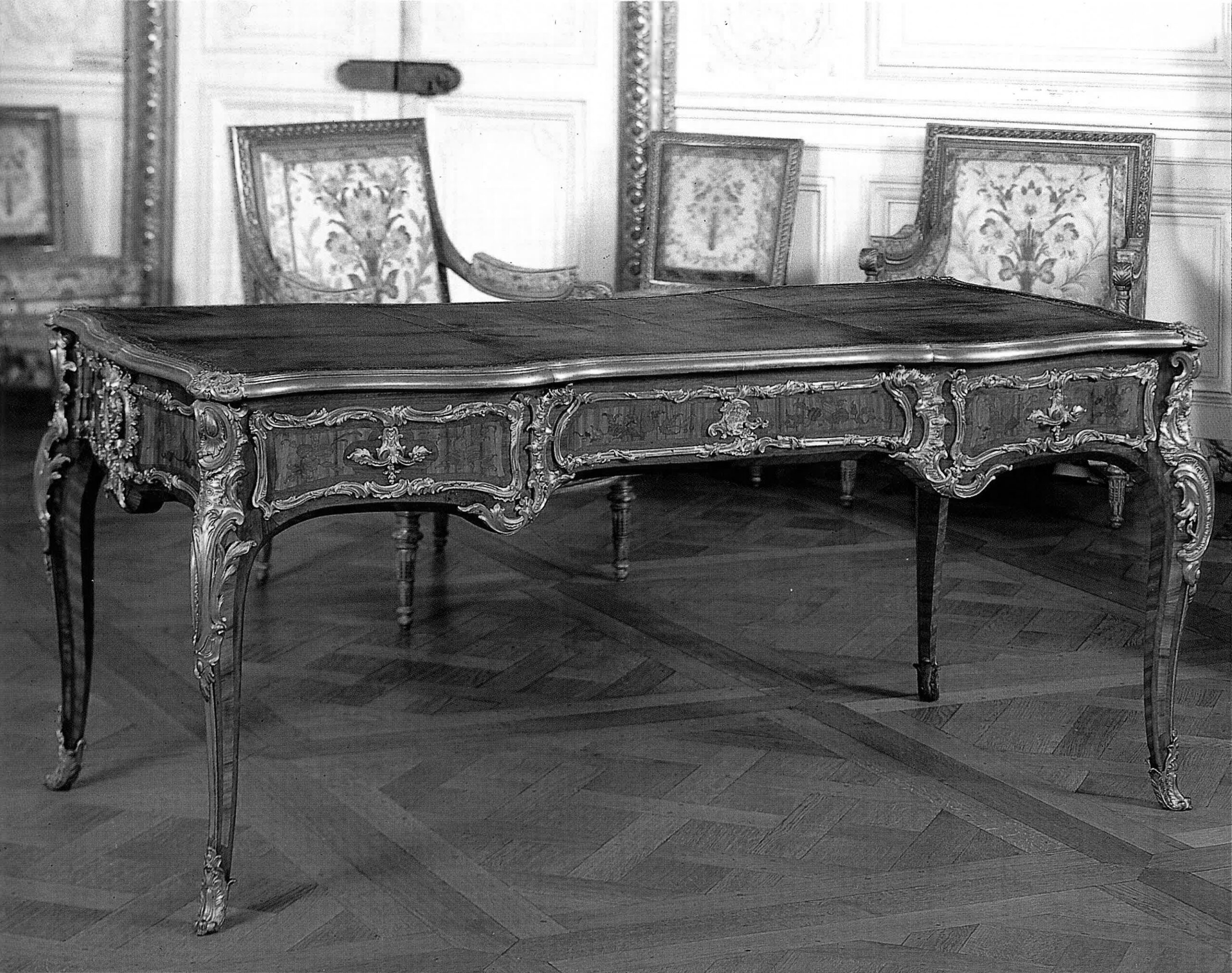
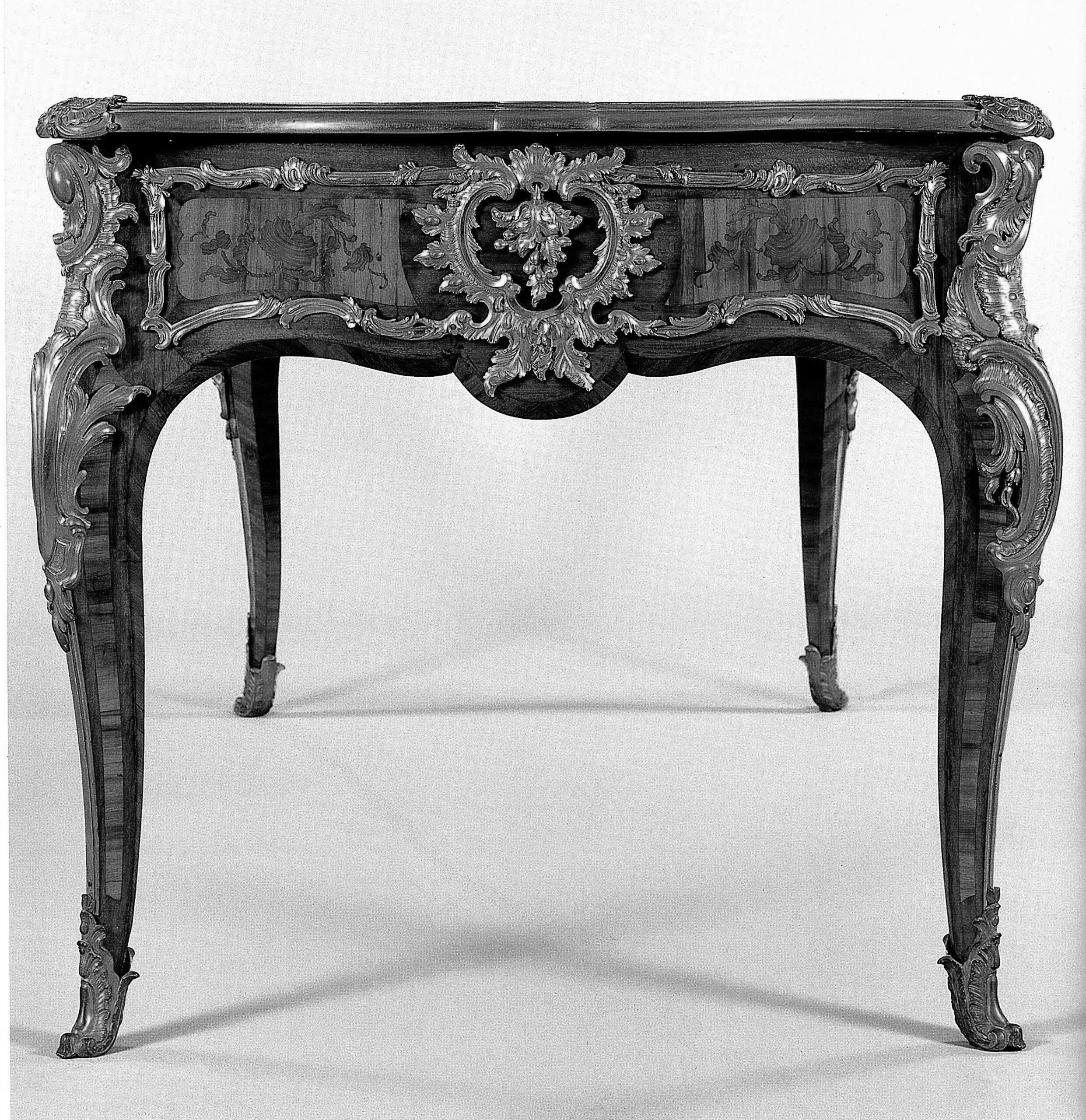
Bureau plat stamped B.V.R.B., delivered on 18th February 1745 by the marchand mercier Thomas-Joachim Hébert for the large study in the Dauphin’s new apartment in Versailles, installed on the first floor of the Midi wing.
Versailles, musée national des châteaux de Versailles et de Trianon (inv. V 3528).
In 1984, Penelope Hunter-Stiebel, in her study of a copy of the portrait of the Dauphin from the Bamberger collection exhibited at the Rosenberg & Stiebel gallery in New York, advanced the hypothesis that the desk, which Tocqué reproduced several times in his portraits between 1737 and 1755, must have belonged to him. This hypothesis, although an attractive one, cannot be retained. At the time, a desk of this kind was, as it is today, a very luxurious piece of furniture and therefore an extremely onerous purchase, easily approaching or exceeding a thousand Livres from a renowned marchand mercier such as Hébert or Lazare Duvaux. A price of this magnitude was out of reach for an artist, however brilliant his renown and success might have been. Tocqué was undoubtedly a well-off painter; he was also a collector. In 1759, when he returned to Paris after several years in Russia and Denmark, he was given accommodation in the galleries of the Louvre, occupying the apartment left vacant by the enamel painter Jean-André Rouquet (1701-1758). He died there on 10th February 1772.
No bureau plat of the model he so often reproduced in his portraits was listed in his post-mortem inventory, which was drawn up at his wife’s request on 17th February 1772. Tocqué certainly only possessed sketches and drawings of it from various angles, which he may have executed directly in B.V.R.B.’s workshop, circa 1737, when the piece in question was completed, unless he did it in the shop, which we can easily surmise to be one of those established in the rue Saint-Honoré or rue de la Monnaie, of the marchand mercier who subsequently sold it.
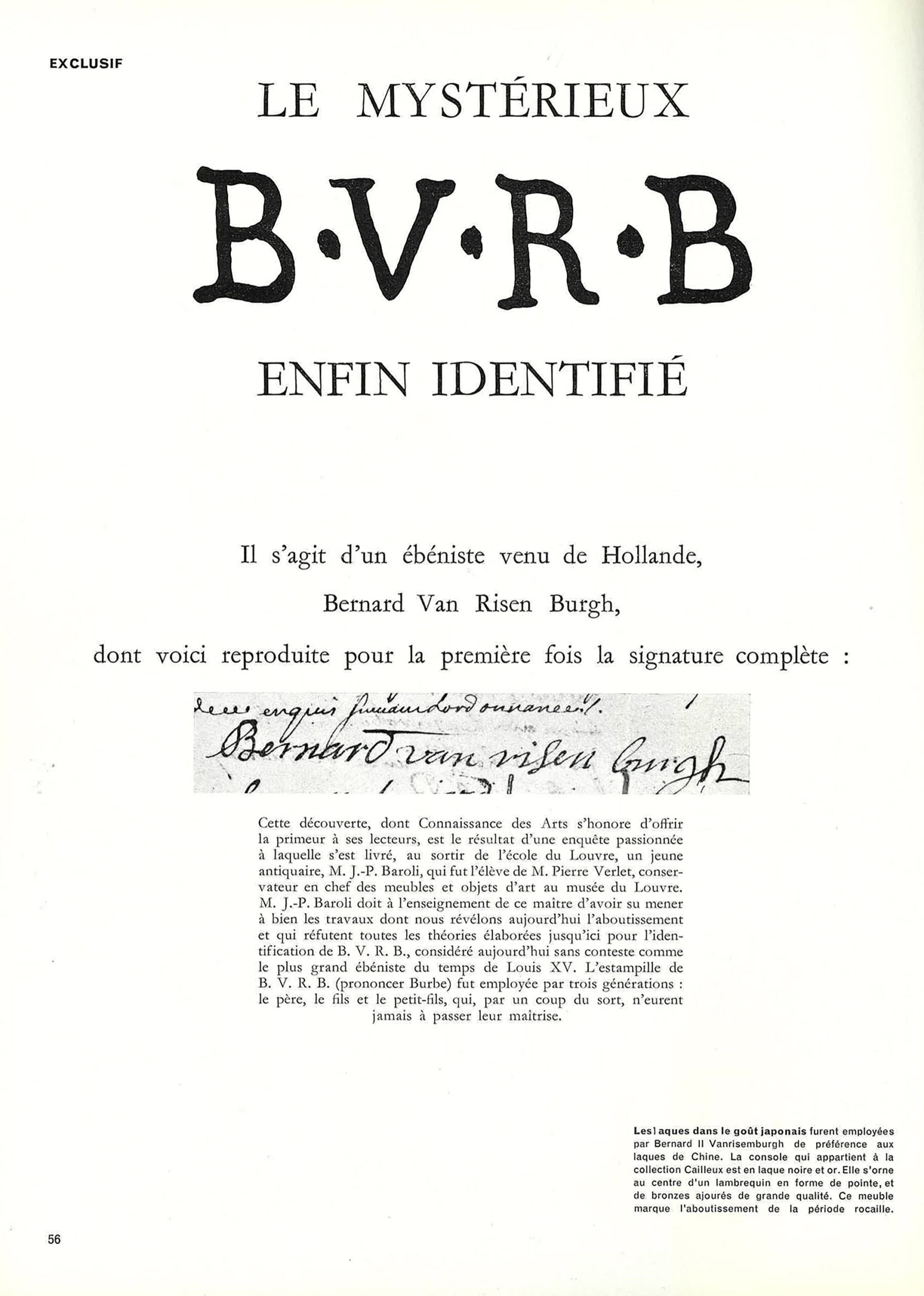
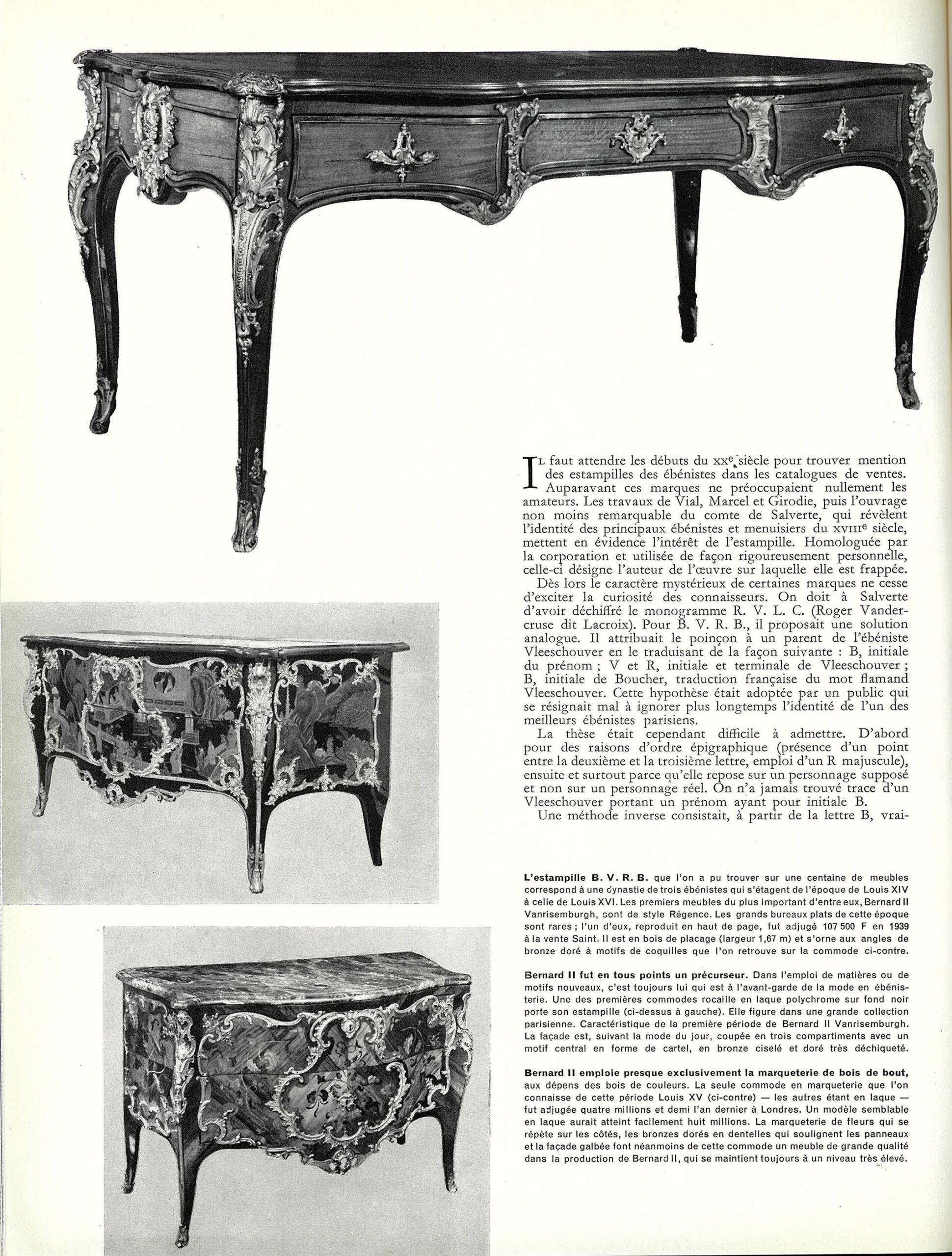
Jean-Pierre Baroli, « Le mystérieux B.V.R.B enfin identifié », Connaissance des Arts, n° 61, March 1957, p. 58.
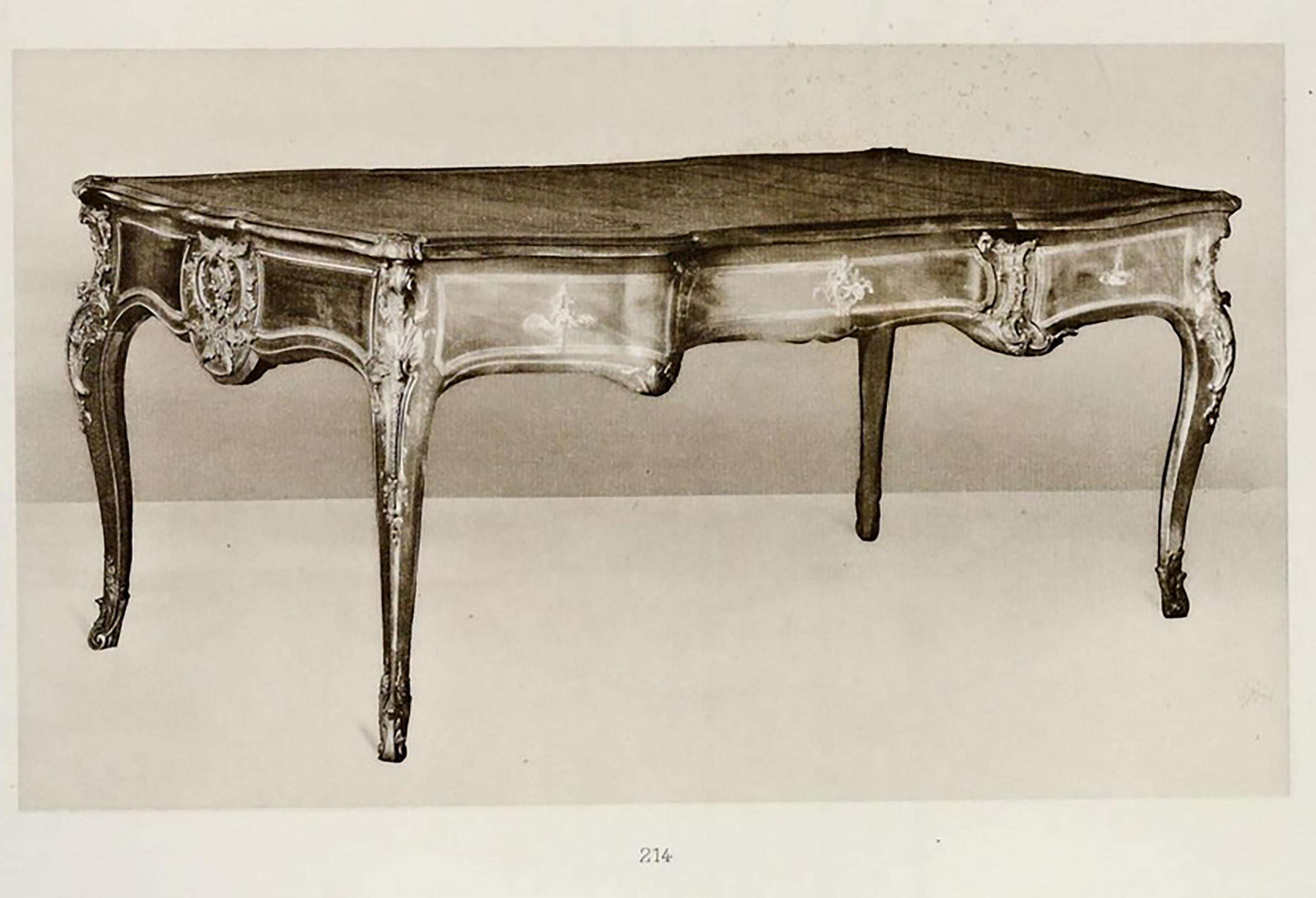
Jules Mannheim and Edouard Rahir, Catalogue of the Rodolphe Kann Collection, Vol. II, Eighteenth Century, Paris, 1907, p. 87, cat. n°. 214.
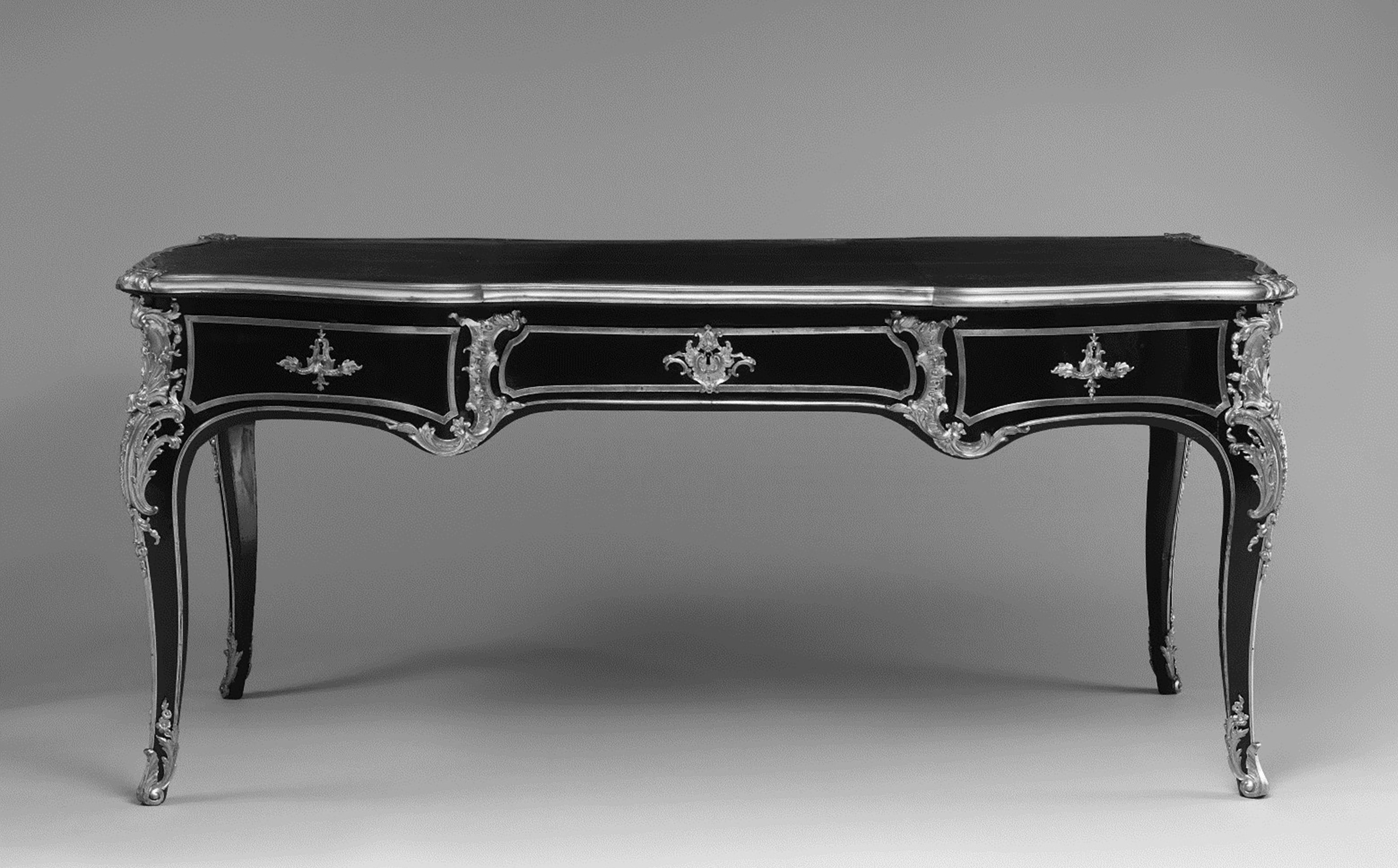
Bernard II Vanrisamburgh
Born before 1705 in Paris, where he died in 1766, Bernard II Vanrisamburgh was the son of Bernard I, a renowned cabinetmaker from Groningen in Holland, several of whose masterpieces in copper and tortoiseshell marquetry have been catalogued to date. Shortly before 1737, he adopted the abbreviated stamp B.V.R.B. for Van Risen Burgh, curiously his father’s signature and not his own, which he spelled ‘Vanrisamburgh’.
He was made a Master before 22nd October 1730, the date of his marriage contract with Geneviève Lavoye, the daughter of a hosiery manufacturer, At least seven children were born of this union, among them Bernard III, who was to become a cabinetmaker like his father. Bernard II was active all his life in the Faubourg Saint-Antoine, working for the great Parisian marchand merciers, initially established at Grande Rue du Faubourg Saint- Antoine (1730), then at rue de Reuilly (1738), rue de Saint-Nicolas (1756), and fi nally at rue de Charenton (1764). At the end of his life, as he had been little or not at all infl uenced by the new style ‘à la grecque’ that was all the rage in Paris in the 1760’s, he went on producing furniture in the ‘rocaille’ style, and in 1764 he eventually handed over his workshops and business to his son, Bernard III Vanrisamburgh.