Carved and gilded wood; wrought and gilded iron; Bohemian crystal and blown glass.
H. 170 cm. (67 in.); W. 130 cm. (52 in.).
PROVENANCE: private collection.
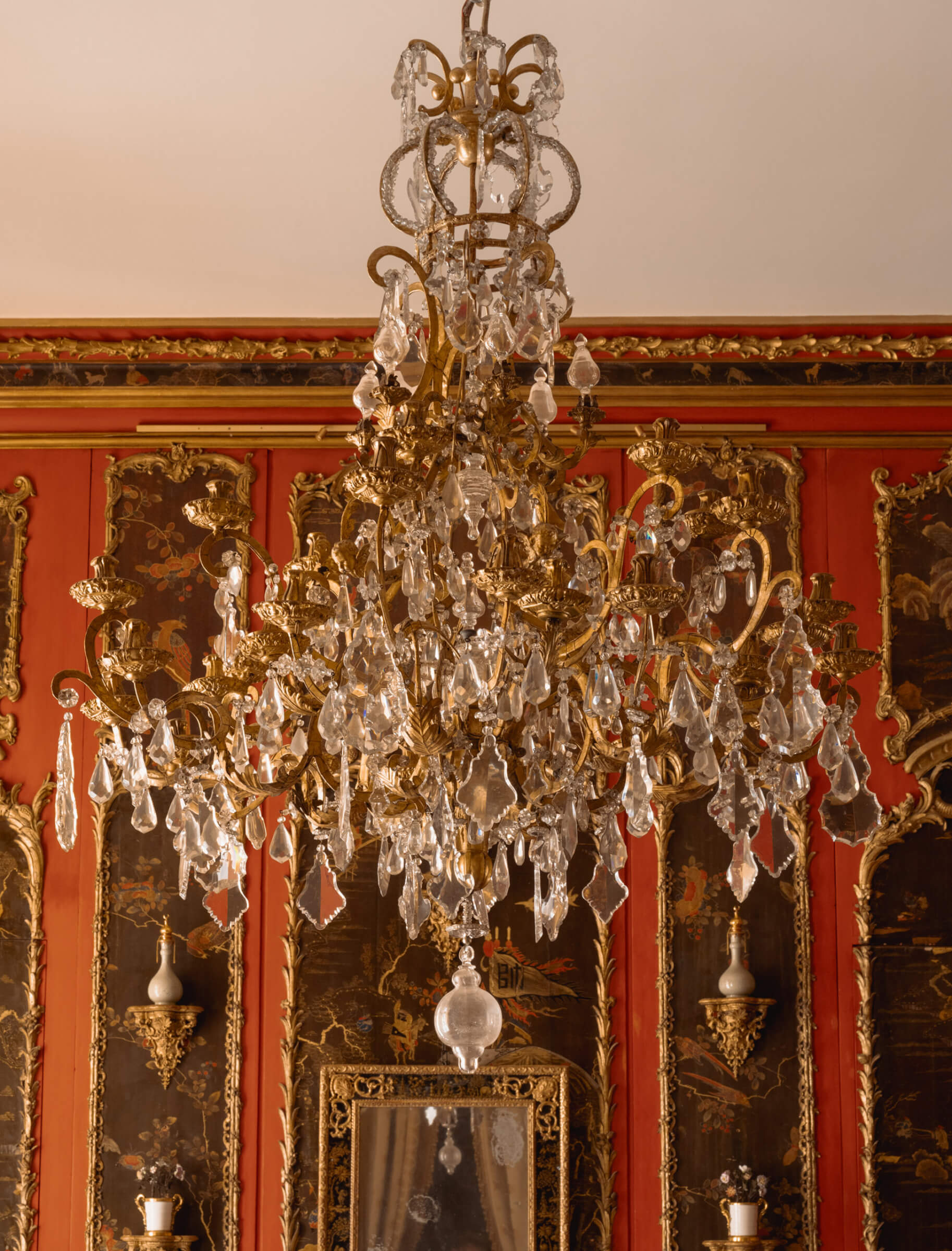
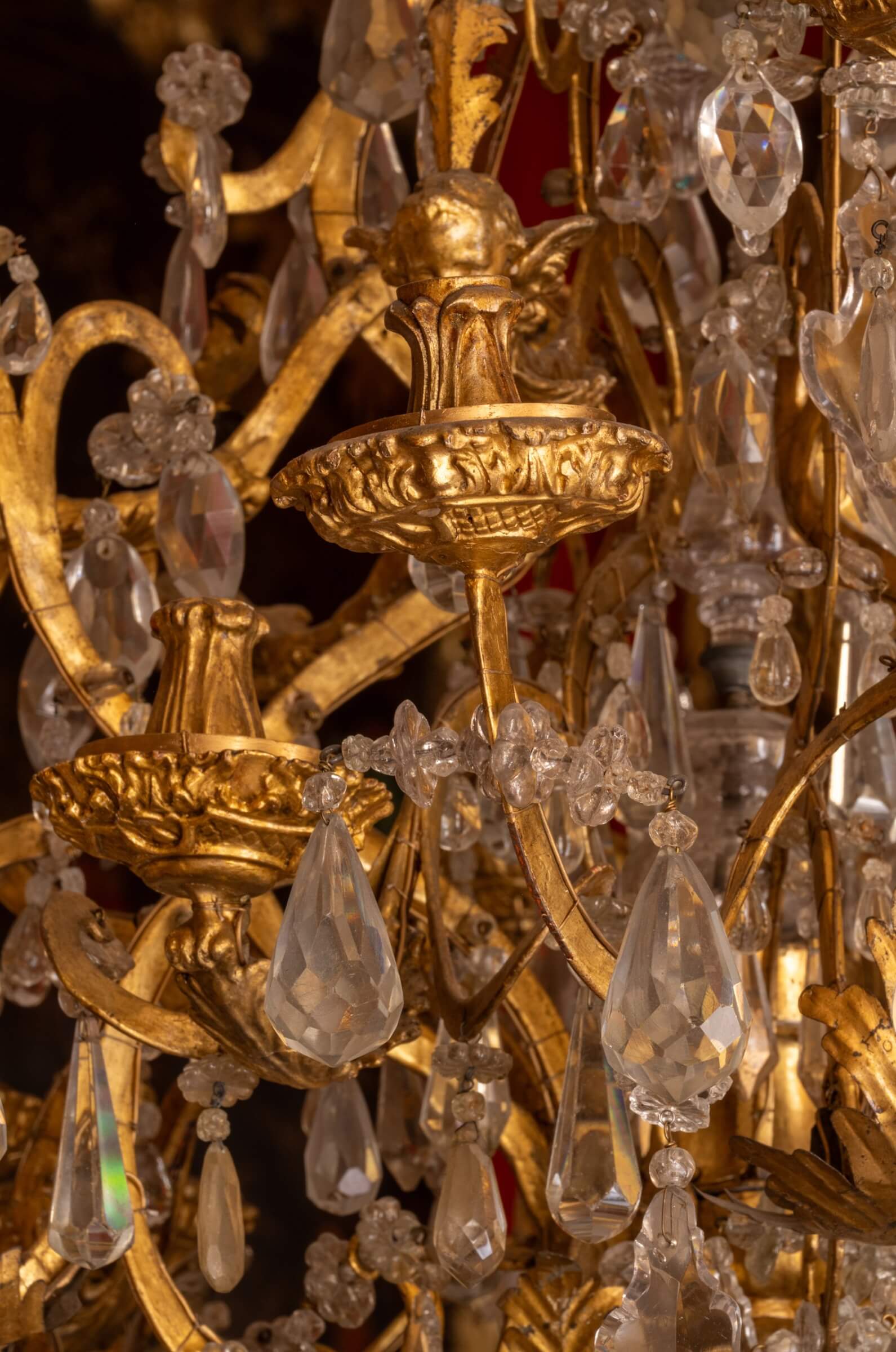
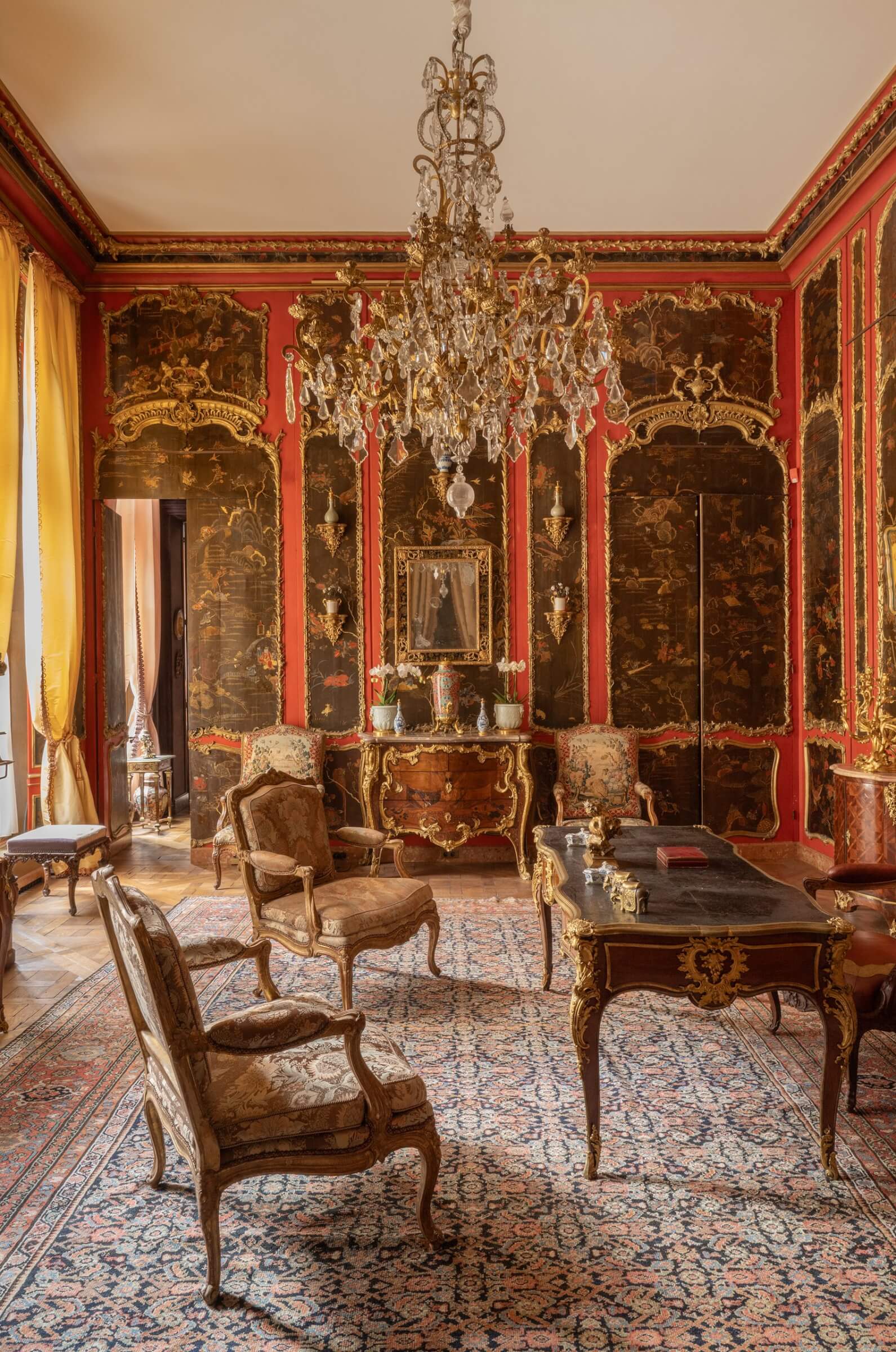
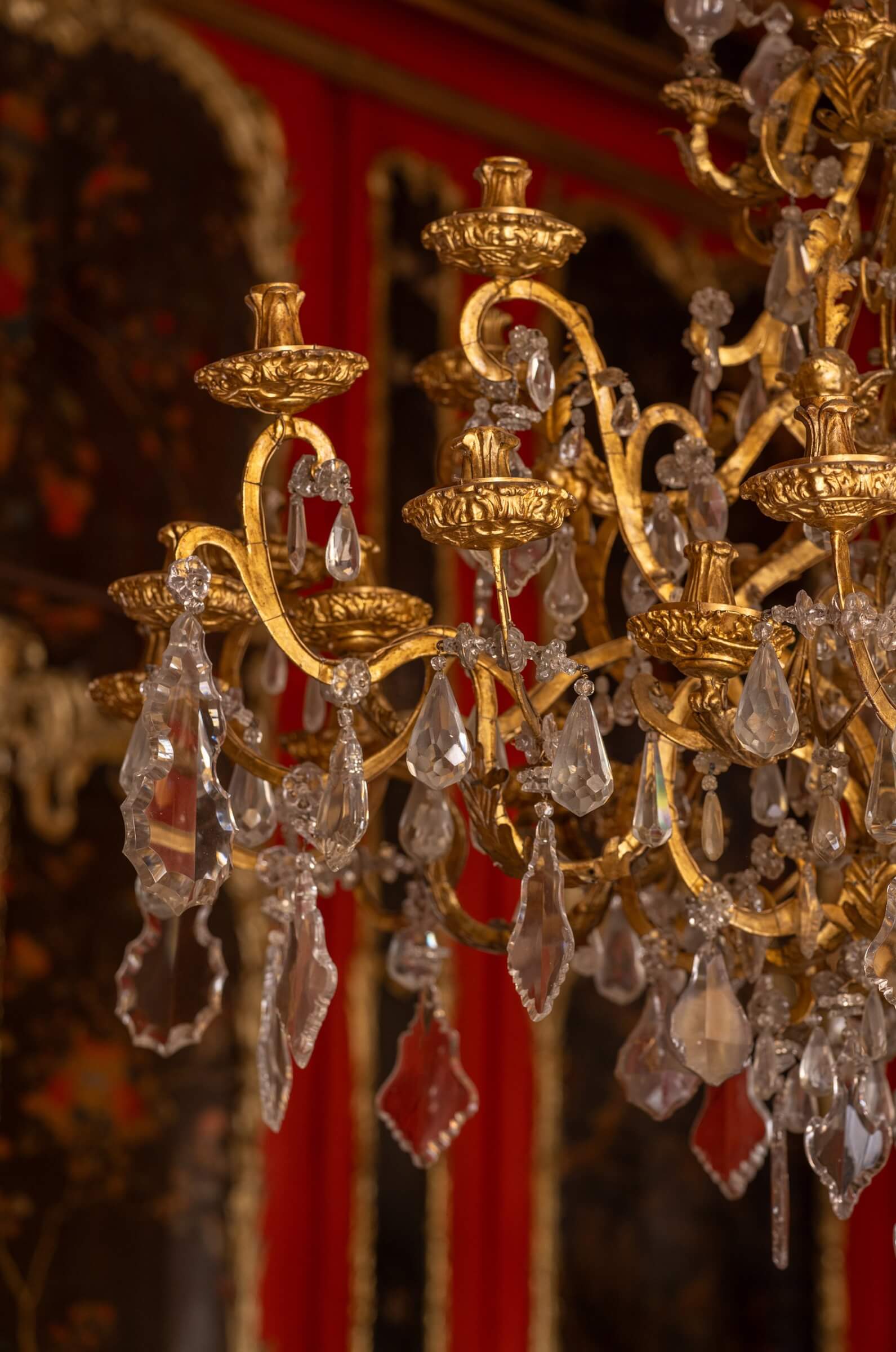
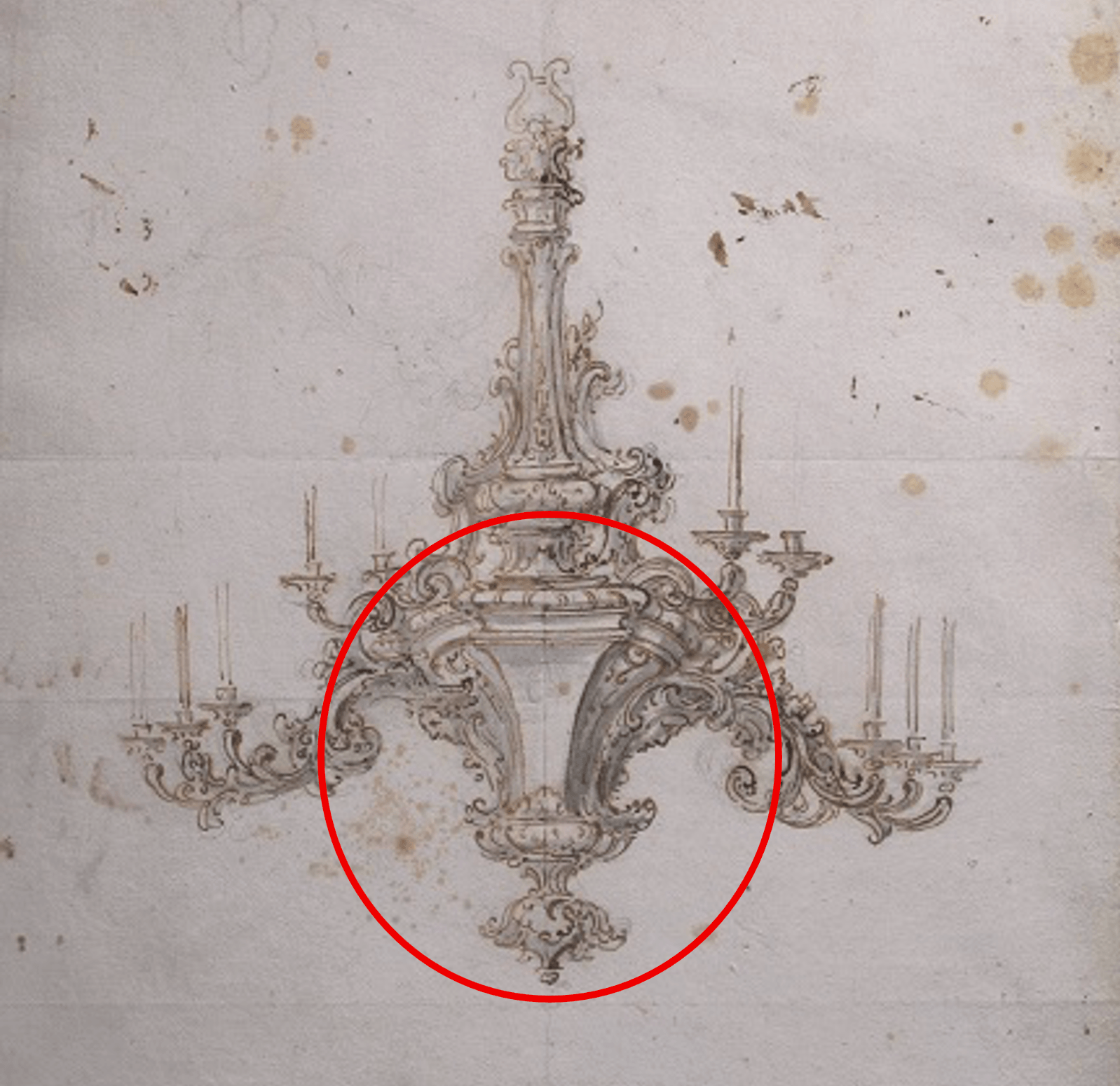
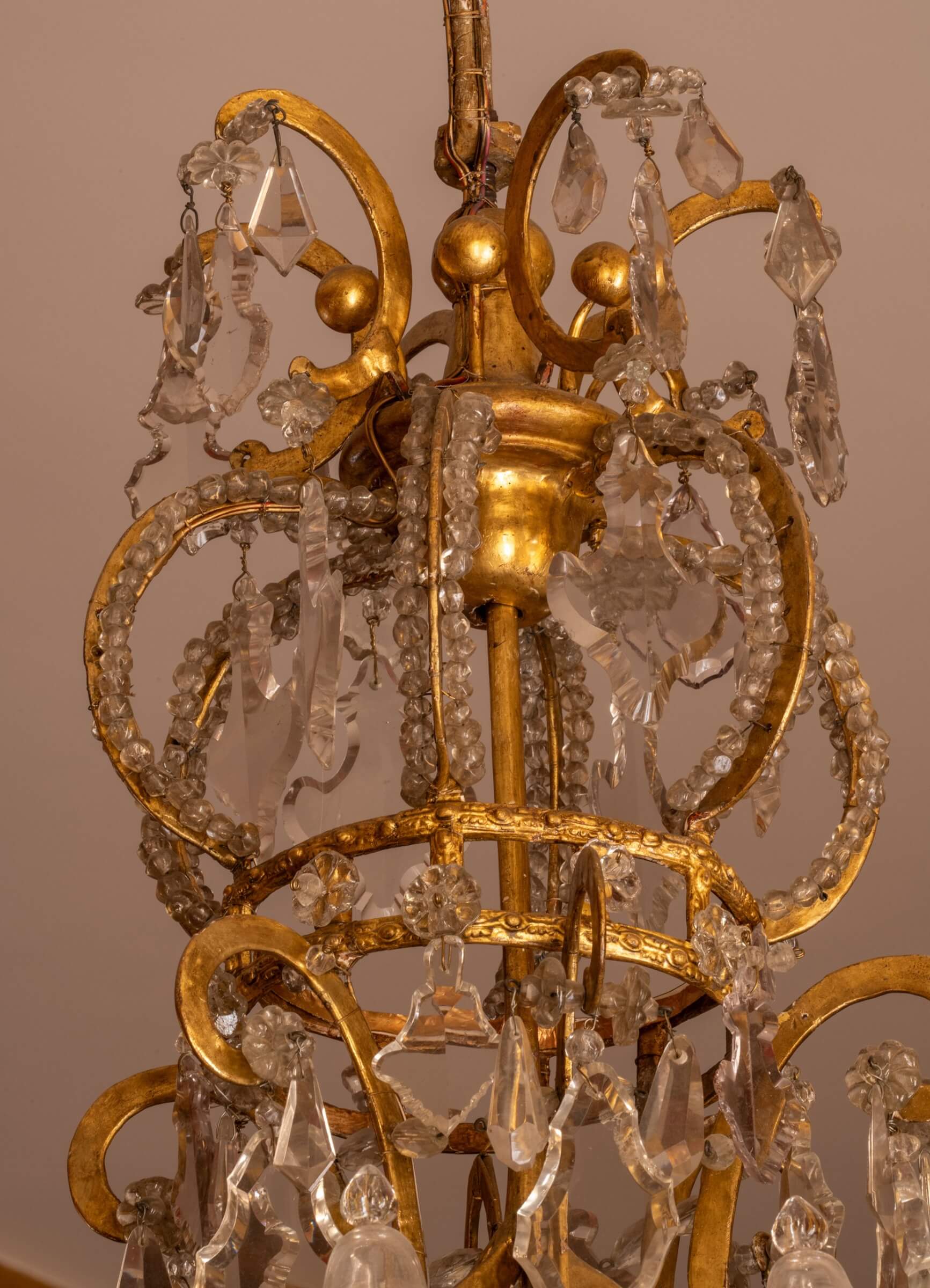
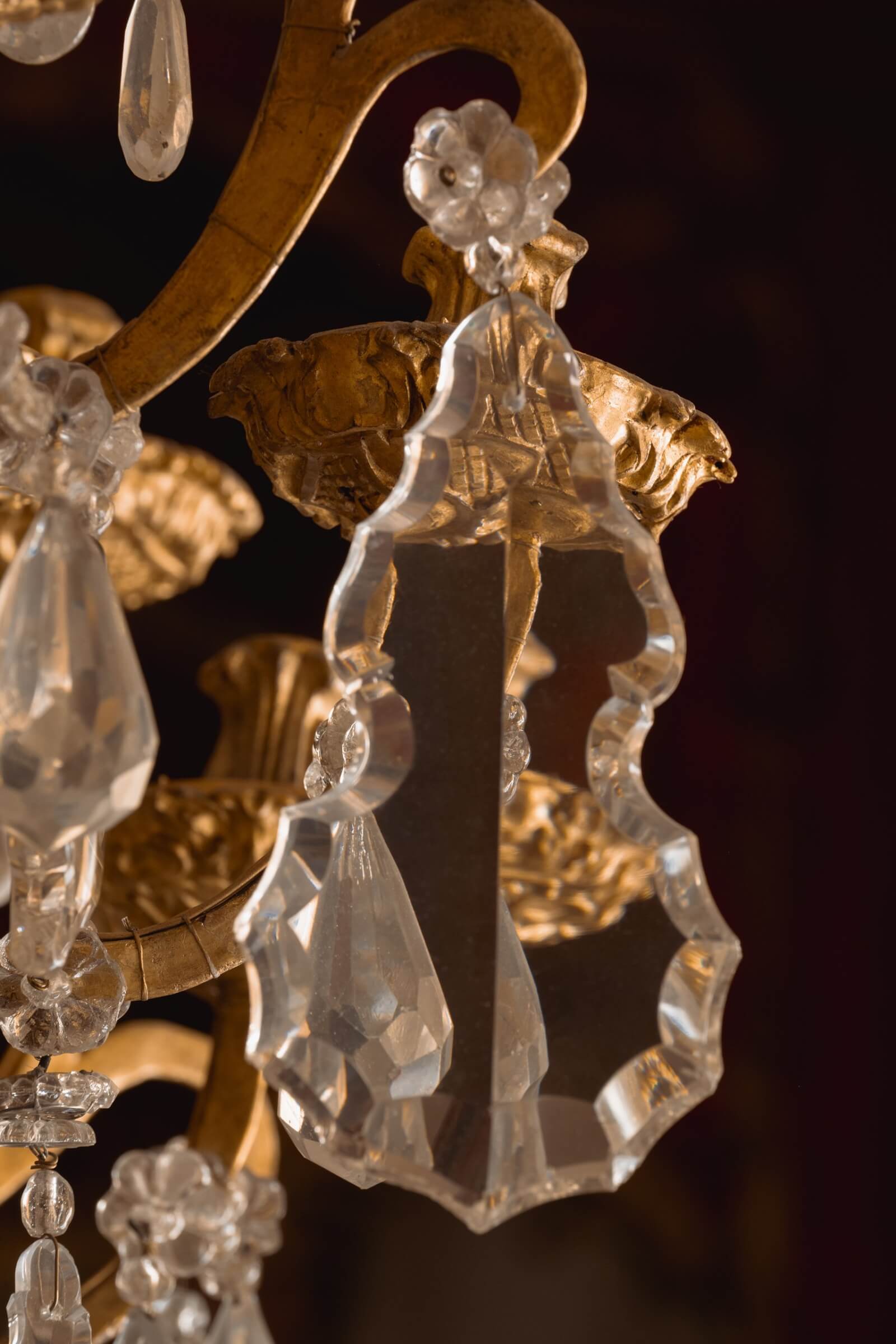
Dated circa 1740, this large thirty-six-light chandelier in Bohemian crystal, wrought iron and carved and gilded wood is an exceptionally rare example of the finest lighting produced by Genoese workshops. Beginning with a flared, bulbous wooden finial, its concave faces adorned with carved and gilded sprays of flowerheads, reminiscent of that of a chandelier designed by Francesco Maria Costa (Genoa, 1672–1726), the body of the chandelier proper is formed by six bouquets, each comprising six lights, arranged on two tiers. These consist of multiply scrolled gilt-metal branches, worked in flat relief and accentuated with cut-metal acanthus leaves, and embellished with crystal rosettes from which hang faceted or smooth pear-shaped drops, pear-shaped plaques with multilobed cutwork, and Bohemian crystal pendants. The narrower upper section forms a kind of ‘cage’, articulated by a double arch supporting a beaded ‘crown’ with lacé ornament, surmounted by six small branches attached to a small gilt-metal canopy terminating in a suspension ring.
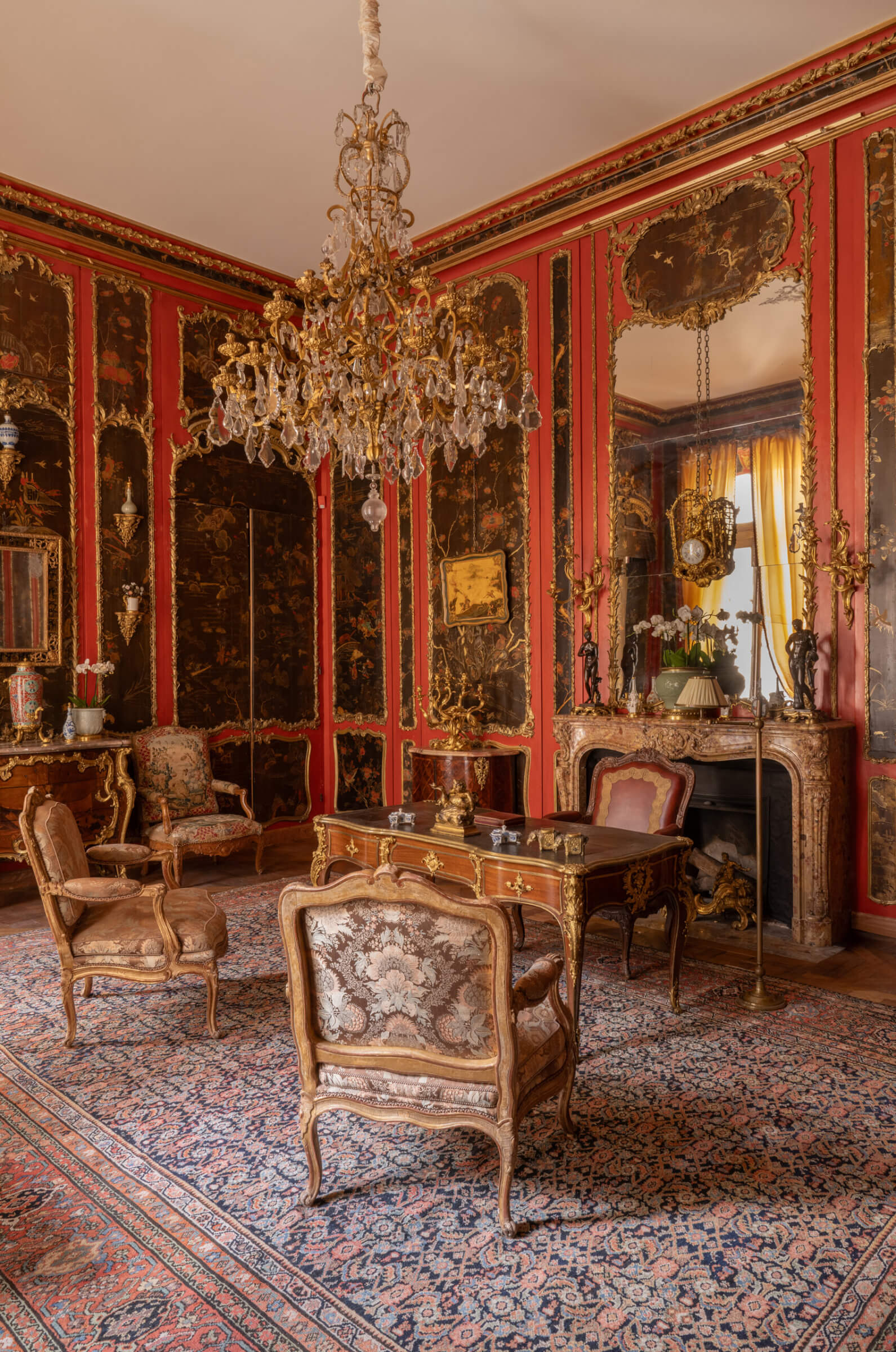
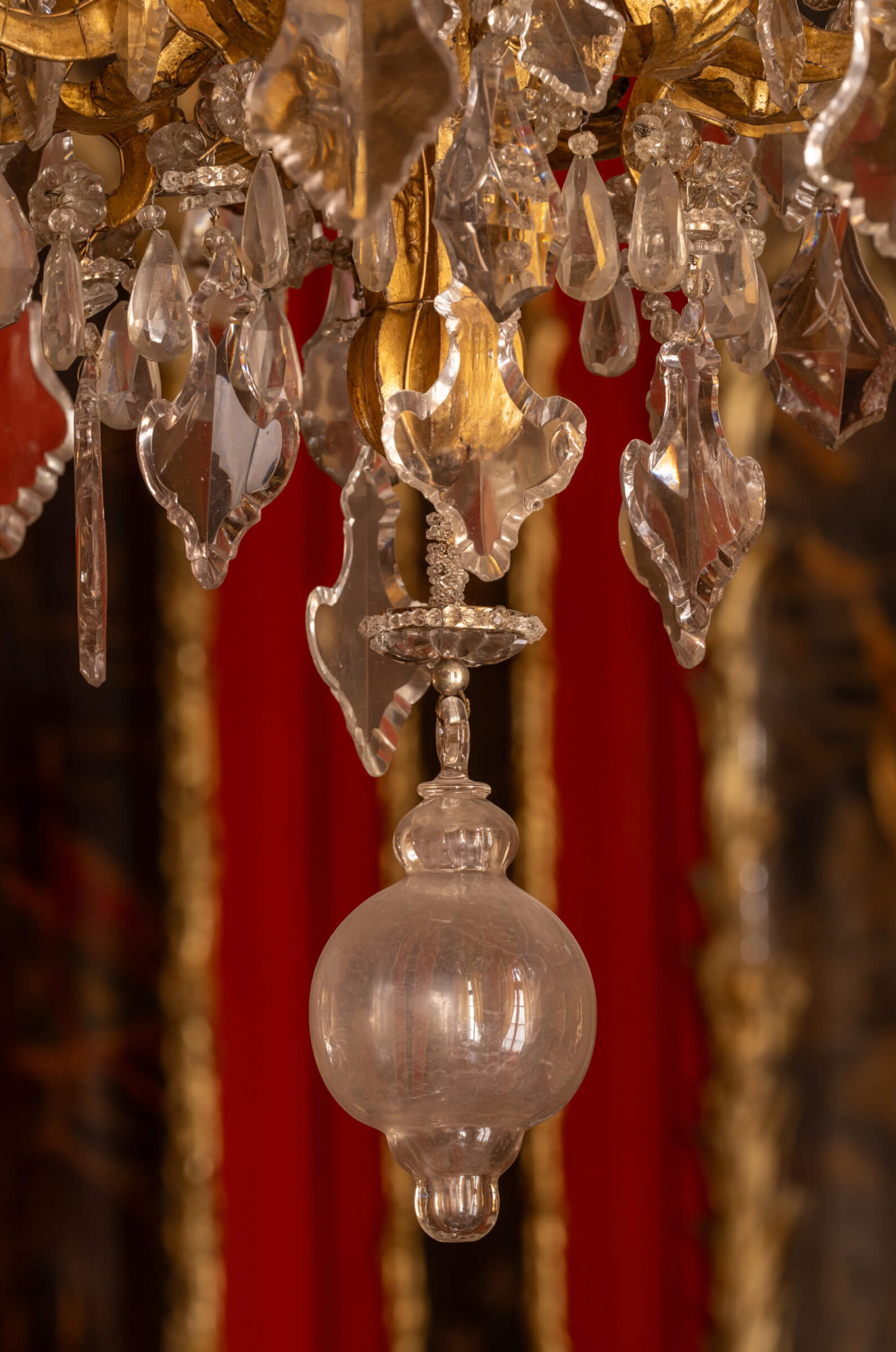
This upper section is likewise entirely adorned with crystals, complemented by pear-shaped ornaments in blown glass and finely worked crystal ‘daggers’, the latter visible around the central section of the chandelier.
Small winged cherub heads carved in giltwood distinguish the central section of the chandelier, while the drip pans and candle nozzles, also in giltwood, display a rich repertoire of carved ornament featuring small ‘mosaic’ cartouches and bouquets of short acanthus leaves. An imposing bulbous finial in blown glass completes the lower part of the chandelier.
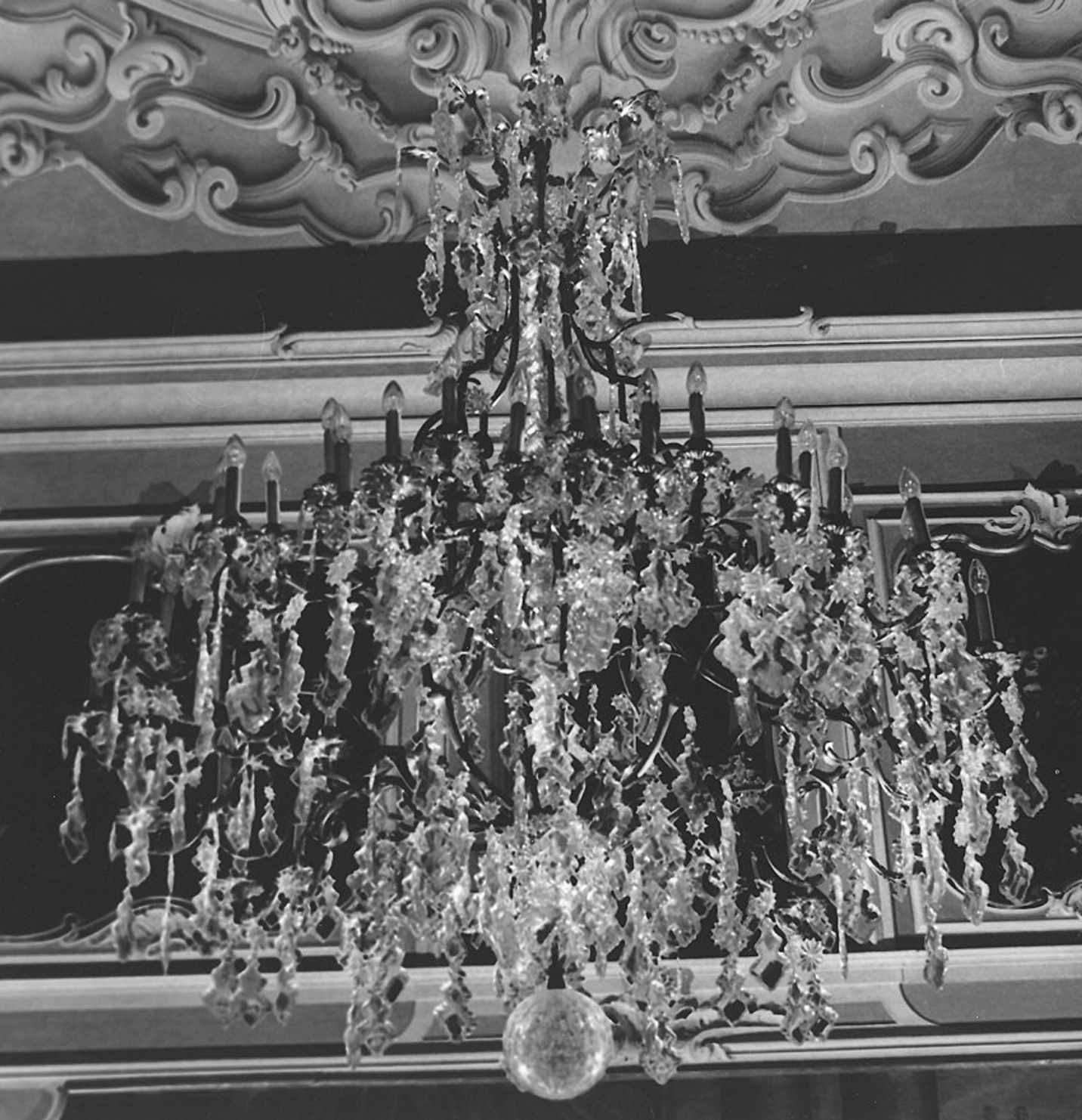
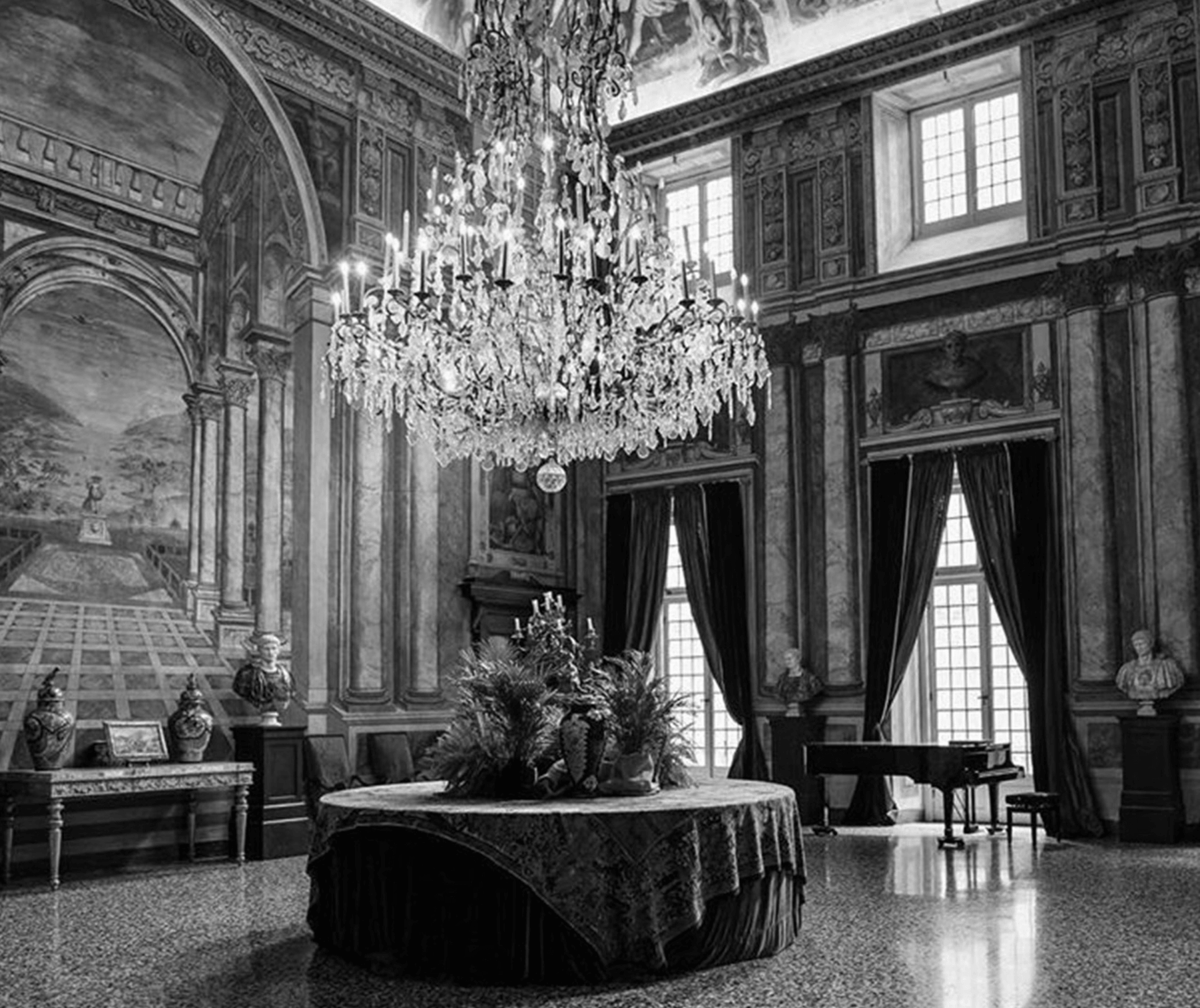
Large Genoese chandeliers in Bohemian crystal now adorn the reception rooms of Palazzo Angelo Giovanni Spinola, at Via Garibaldi 5 in Genoa. Built between 1558 and 1564, the palazzo was designed by Giovanni Ponzello at the behest of Angelo Giovanni Spinola, a banker to Charles V and ambassador of the Republic. Another chandelier very similar to our model formerly belonged to the collections of Castello Bruzzo in Genoa (see illustration above).
As serene as Venice since 1339, the Republic of Genoa was one of the great Italian maritime republics. Its reign lasted for over eight hundred years, from the middle of the 11th century to 1797, the year of the abdication of the last Doge of Genoa, Giacomo Maria Brignole (Genoa, 1724 – Florence, 1801). The Genoese employed the expression “Superba Repubblica” to distinguish themselves from their Venetian rivals, echoing the nickname given to the city by Petrarch in 1358: “the Superb Genoa” – meaning “the Proud”.
In the 18th century, the city was characterised by a particularly active artistic climate. Thanks to their wealth, the middle classes endeavoured to conquer the choice posts in the high offices of the magistracy, and competed with the nobility in elegance and refinement, responding to change in every artistic and cultural movement of the time. Between 1650 and 1790, a large number of fine villas and palaces sprang up on the shores of the sea, built by great Genoese families like the Dorias, the Brignoles and the Sales. The ducal palace was also refurbished during the same period. This flourishing activity led to the development in Genoa of factories producing exquisite chandeliers in rock crystal and Bohemian crystal, which were highly sought after during the 18th century.