

White Carrara marble.
H. 60 cm. (23 ½ in.); W. 56 cm. (22 in.).
Provenance: private collection.

This white Carrara marble medallion, depicting in relief the right profile of Queen Cleopatra, shown in bust-length and wearing a draped gown with a square neckline outlined by a corded border, flanked by bands decorated with lambrequins from which a serpent emerges, is attributed to the Florentine sculptor Giovanni Bandini (1540–1599), known as Giovanni dell’Opera.
The noble and commanding bearing of the Queen of Egypt is conveyed here by a smooth-featured face with a frank, direct gaze, the eyelids, iris and pupil carefully delineated, distinguished by a long, straight nose directly inspired by Antiquity, above a narrow philtrum and a small mouth with closed, finely defined lips. The whole clearly contrasts with the particularly elaborate treatment of the hair, composed of tight, energetic curls drawn back by means of a brooch and, above all, a ribboned and moulded tiara articulated with small vertical channels. A low chignon at the nape allows a few loose curls to fall freely, like the one in front of the ear.
This manner of execution is characteristic of Bandini’s work. A similar treatment can indeed be found in the Allegory of Architecture, which he sculpted in marble circa 1564–1568 for Michelangelo’s tomb in the Church of Santa Croce in Florence.
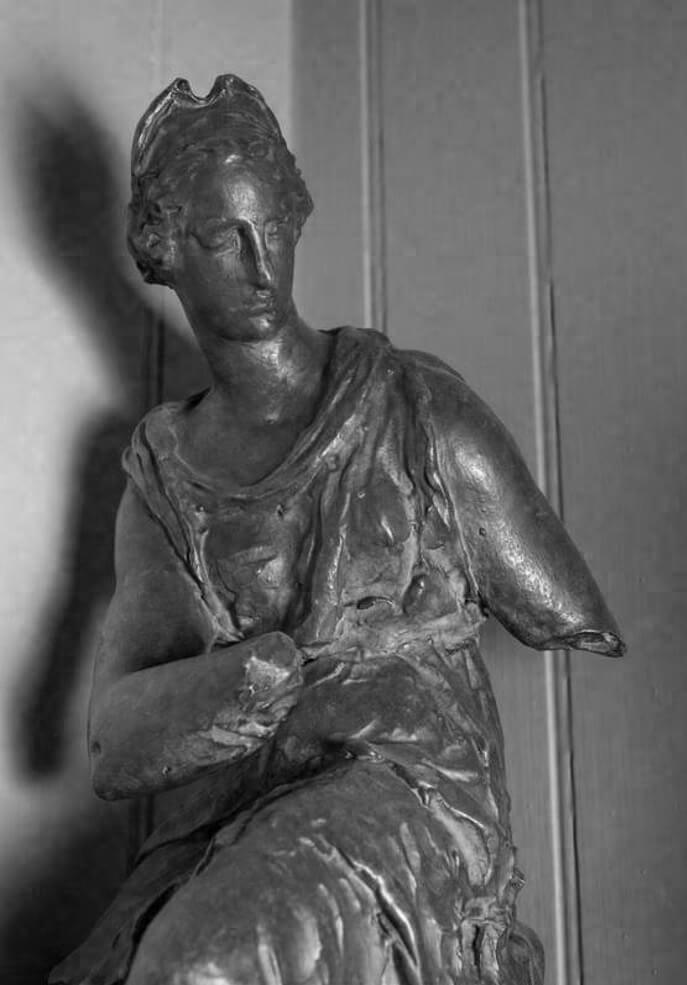
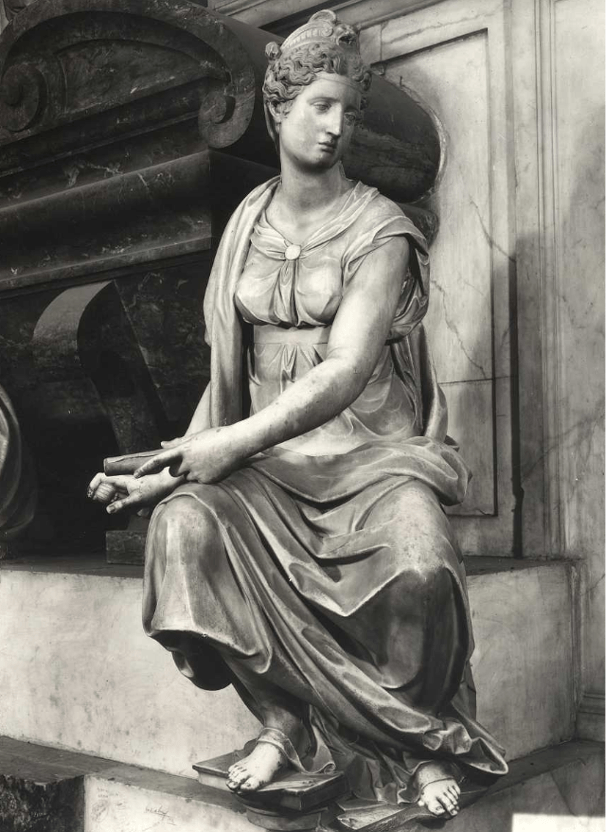

The comparison is striking, to say the least: the same highly noble face, with carefully delineated eyelids, pupil and iris, and, above all, the same long, straight nose and narrow mouth. The hair is composed of tight curls treated with the same energetic quality, all crowned by a similar tiara with small vertical channels. The Sir John Soane’s Museum in London preserves a small preparatory terracotta – bozzetto –for this Allegory, retaining its original polychromy, which Sir John Soane had acquired before 1837 (inv. A58). The design for the tomb had been conceived by Vincenzo Borghini and drawn by Giorgio Vasari in 1564. The Allegory of Architecture frames the tomb on the right, alongside another figure on the left symbolising Sculpture. Bandini received payment for it in 1568.

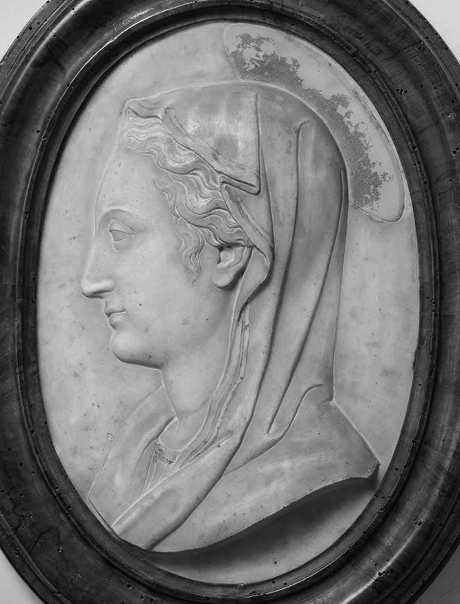
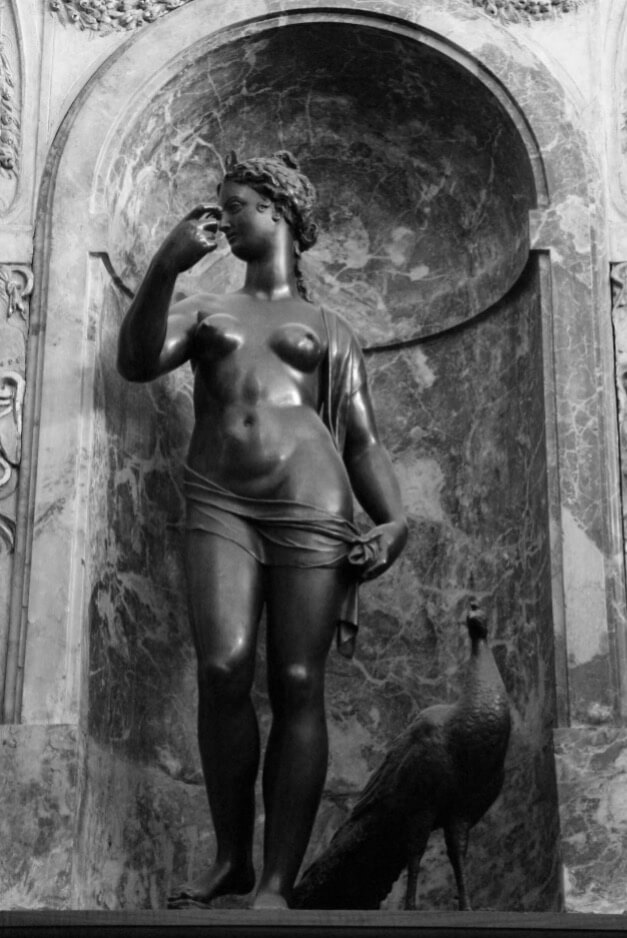
A similar comparison can be drawn with the bronze figure of Juno, which Bandini executed in 1572–1573 for the studiolo of Francesco I de’ Medici (1541–1587), Grand Duke of Tuscany, in the Palazzo Vecchio in Florence. The first bronze commission received by the sculptor, this major work, bearing the crescent moon, symbol of chastity, and accompanied by a peacock, the goddess’s attribute, which was apparently not sculpted by Bandini, was considered a tribute to the Grand Duke’s mother, Eleanor of Toledo (1522–1562), who was often compared to the chaste Juno. As another point of comparison, we may cite the relief of bust of a Saint in a medallion, shown in left profile, executed in marble by Bandini around 1580 and now preserved in Empoli, in the collections of the Museo della Collegiata di Sant’Andrea.
Bandini trained in the Florentine workshop of Baccio Bandinelli (1493–1560). He probably began his career circa 1555. Following the death of his master, he was entrusted with completing the choir enclosure of Florence Cathedral, begun by Bandinelli in 1547. For this project, he executed the bas-reliefs on the western face, completed in 1572 and still visible today.

That same year, he sculpted a portrait bust of Grand Duke Cosimo I de’ Medici (1519–1574), which was placed above the entrance to the Opera del Duomo, the administration responsible for the cathedral, and began two statues of apostles intended for the columns of the building: Saint James the Less (1576) and Saint Philip (1577), both of which remain in situ. It was on account of his many years of service to the Opera del Duomo that Bandini became known as Giovanni dell’Opera. He achieved recognition early in his career. In 1563, he became a member of the Accademia del Disegno, recently founded in Florence, and the following year was commissioned to create the allegories of Architecture and the Tiber for Michelangelo’s catafalque. Cosimo I was so impressed by these figures that he commissioned Bandini to execute the marble Allegory of Architecture for Michelangelo’s tomb, mentioned above. Although completed in 1568, the statue was not installed until 1574.
From the late 1560s until his departure for Pesaro in 1582, Bandini was the leading portrait sculptor in Florence, producing around twenty busts of antique subjects, all now lost, as well as ten busts of the Grand Dukes of Tuscany. During the 1570s, he worked for Grand Duke Francesco I and his circle. His most important work of this period was his first commission in bronze, the figure of Juno, also mentioned above and still preserved in the Palazzo Vecchio. While completing this figure, Bandini received a commission from Giovanni Niccolini (1544–1611), a diplomat in the service of the Grand Duke, for a marble group, Hercules and the Hydra. Completed in 1578, the statue was installed circa 1595 in the loggia of the garden of the Niccolini Palace, where it can still be seen today. In 1582, Bandini was summoned to Pesaro by Francesco Maria II della Rovere (1549–1631), Duke of Urbino, who appointed him First Sculptor to the Court.
A development in his style is evident in the marble Pietà that he executed between 1583 and 1585 for the Oratory of the Grotta within the Duomo of Urbino, generally considered his masterpiece. This Pietà was probably influenced by the one executed circa 1513 by Sebastiano del Piombo after a drawing by Michelangelo, now preserved in the Museo Civico in Viterbo, as well as by the ancient group of Niobe belonging to the Uffizi Gallery in Florence, which was discovered in the very year Bandini began work on this sculpture. He continued to work for the Duke of Urbino until 1595, when he was called to Pisa to work on the bronze door of the Duomo. At the same time, he also received a commission for a monumental statue of Grand Duke Ferdinand I, intended to adorn the Piazza Micheli in Livorno. Giovanni Bandini died in Florence in 1599.

