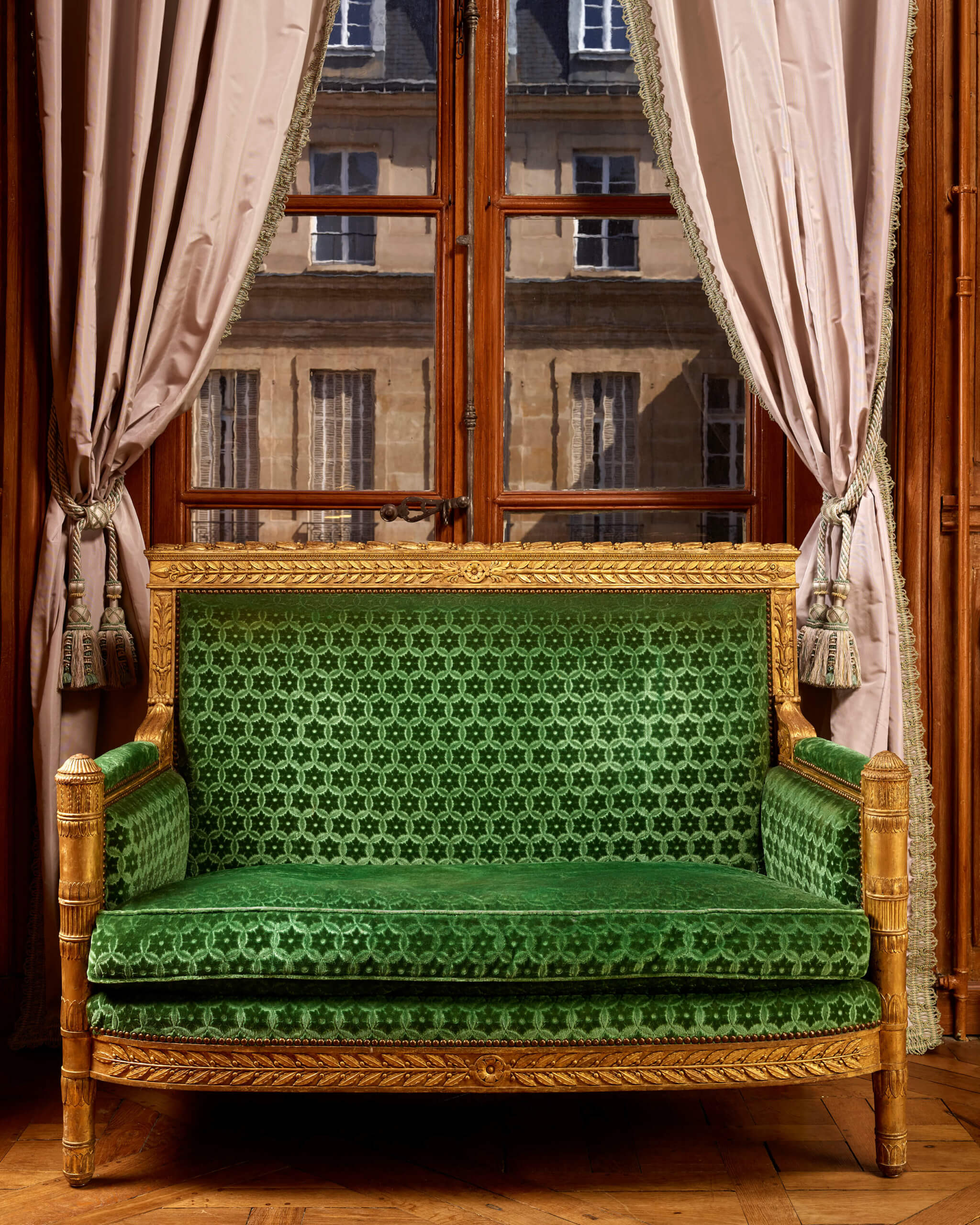
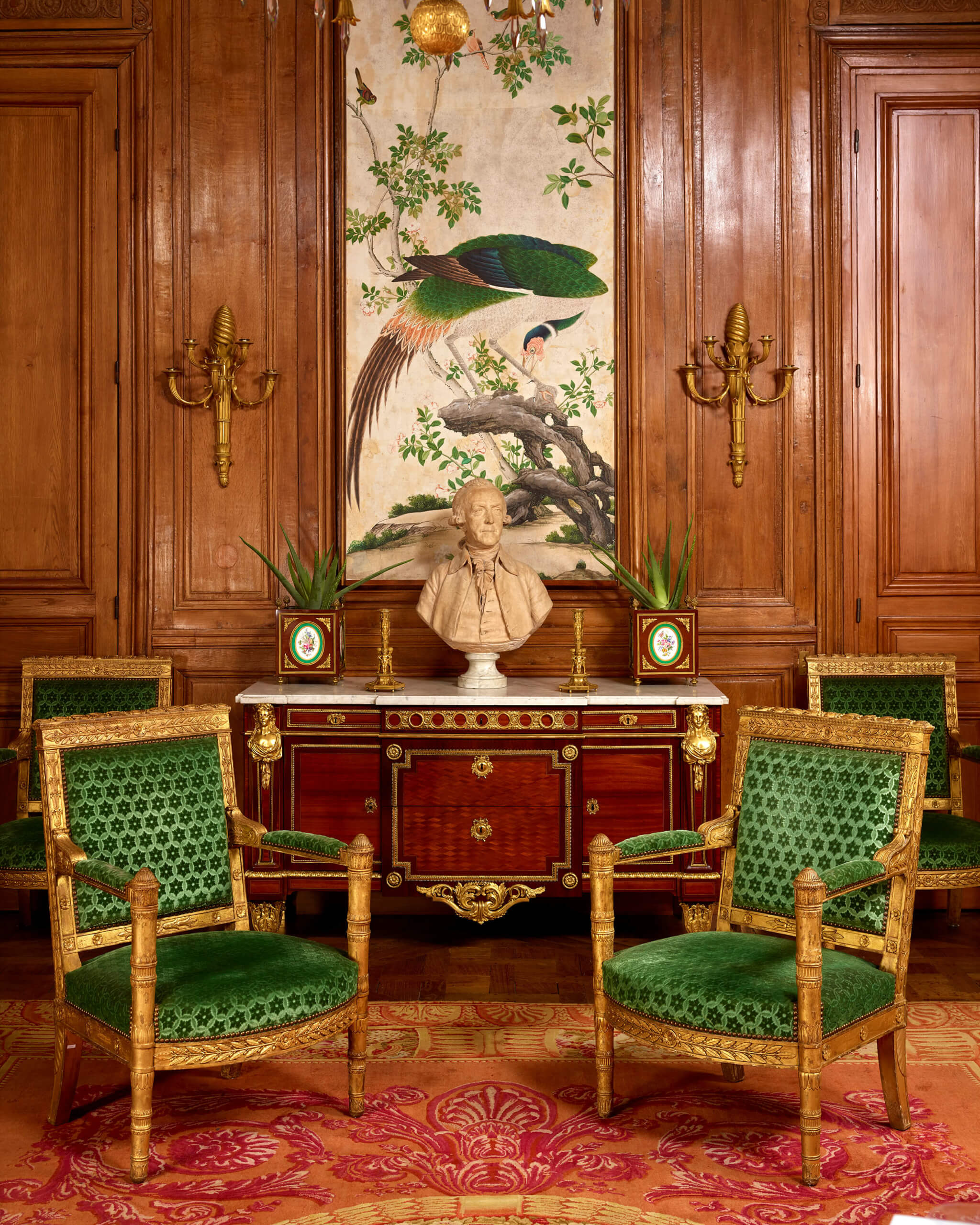
Carved and gilded wood.
Tête-à-tête: H. 98 cm. (38 ½ in.); W. 125 cm. (49 ¼ in.); D. 66 cm. (26 in.).
Armchair: H. 98 cm. (38 ½ in.); W. 67 cm. (26 ½ in.); D. 55 cm. (21 ¾ in.).
STAMP: « Jacob-Desmalter, rue Meslée »
Ink Mark: « Werner »
LABEL: « Maréchal Davout, rez-de-chaussée, nouvelle chambre à coucher ».
PROVENANCE: Delivered circa 1810–1811 for the state bedroom of Marshal Davout, Princess of Eckmühl and Duchess of Auerstaedt, in the Hôtel d’Eckmühl, also known as the Hôtel de Monaco, 121 rue Saint-Dominique, Paris (current no. 57).
On 8 March 1826, twelve years after the fall of the First Empire, Count Rodolphe Apponyi, cousin of the new Austrian ambassador to Paris and attached to his entourage, wrote in his Journal: “Today at noon it will be decided whether we will have the Palais of the Duchess Davout; it is the most beautiful palace one can imagine, grand, superb, convenient, and with a vast English garden. The main apartment is decorated in the richest manner imaginable. She began by asking 70,000 francs [annual rent]; the cousin wants to give only 50,000. The sum is enormous, unheard of, and yet he will still make a good bargain if he acquires this house.’ On 21 March, he recorded with satisfaction: ‘Decidedly the cousin is taking the Hôtel Davout, which is the most beautiful in all Paris; one cannot imagine at home such magnificence combined with such care in luxury and comforts.”
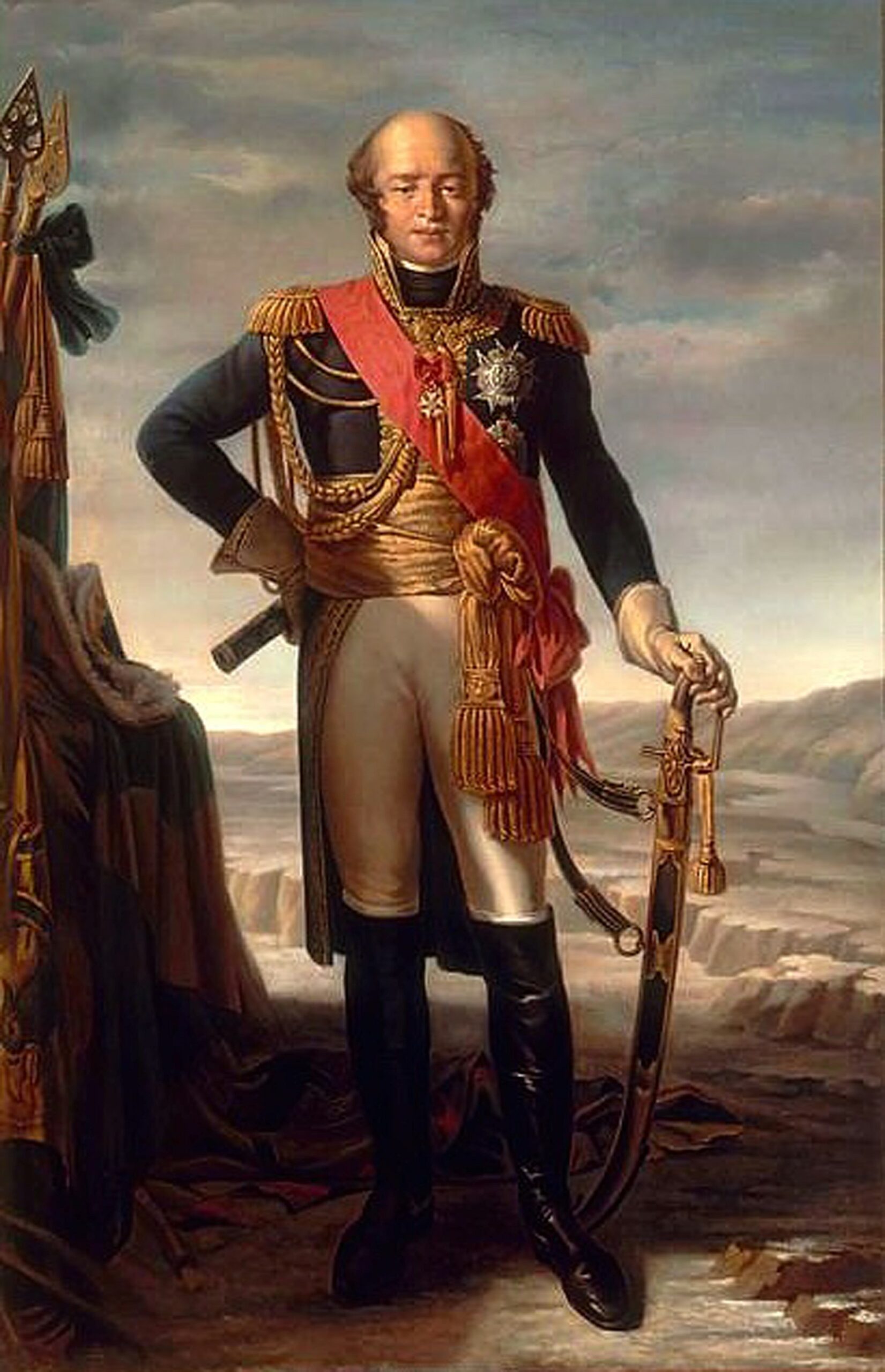
The ‘Duchess’ Davout was the widow of Louis-Nicolas Davout (1770–1823), Marshal of the Empire, Prince of Eckmühl, and Duke of Auerstaedt. Particularly petty, Francis I of Austria had forbidden his diplomats to recognize the Napoleonic marshals, their widows, or their children with the noble titles they had received, most of which reminded him of deeply humiliating defeats.
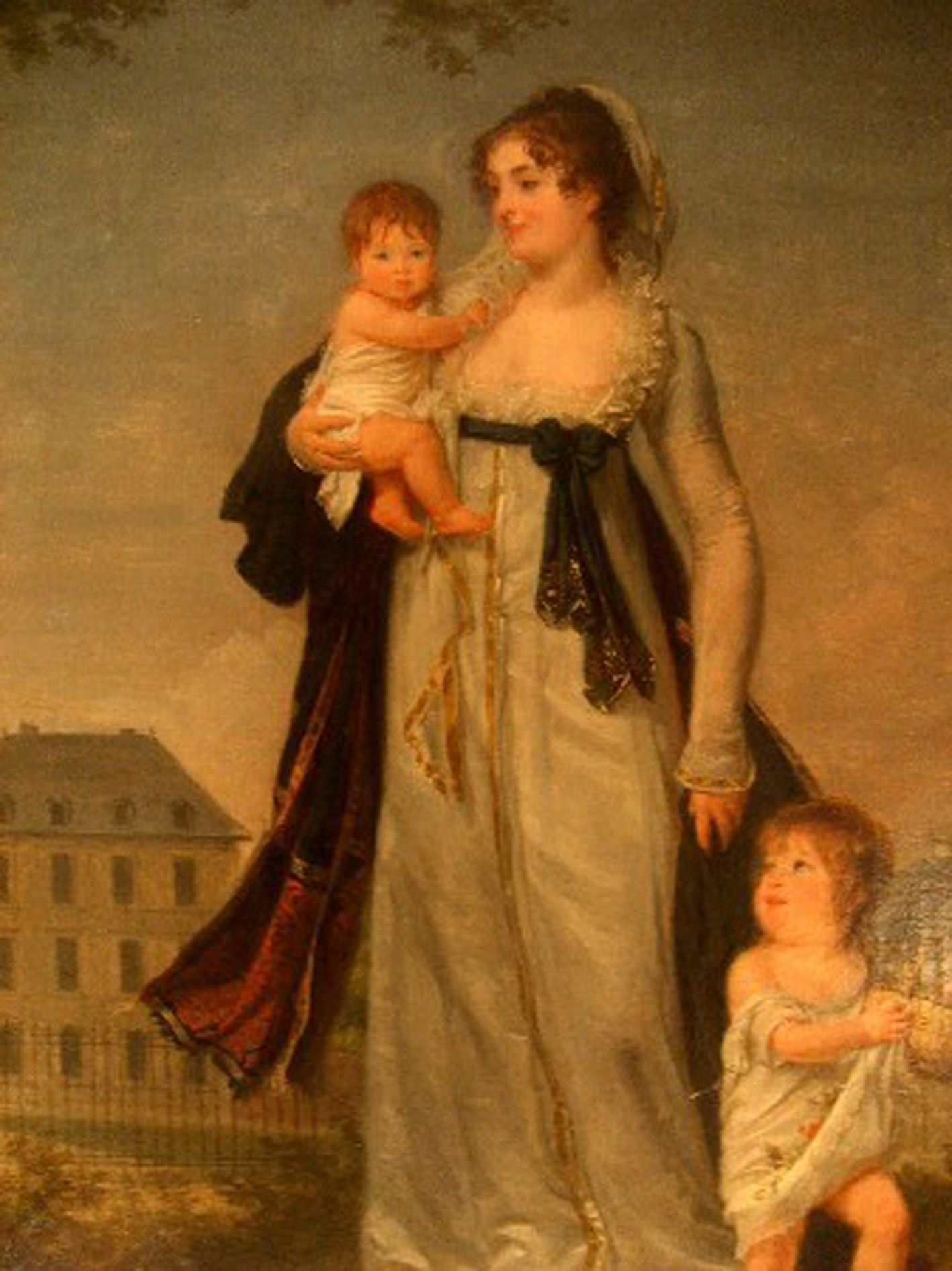
Napoleon I had brought Davout into his family circle by marrying him, on 9 November 1801, to Aimée Leclerc (1782–1868), sister of General Charles Leclerc (1772–1802), the first husband of Pauline Bonaparte. The Leclerc family earned substantial income from their grain mills in Pontoise. A brilliant military officer, endowed with large estates in Germany and Poland, Davout became the youngest and third wealthiest of Napoleon’s marshals.
The hôtel d’Eckmühl
On 16 January 1808, he used part of the 600,000 francs received from the Emperor four months earlier to acquire the grand Hôtel de Monaco. This residence had been built by Alexandre-Théodore Brongniart between 1774 and 1777 for Marie-Catherine de Brignole-Sale, successively wife of Honoré III of Monaco and then of the Prince of Condé. Brongniart had isolated the main building, giving it the appearance of a casino. Between it and the walls of the neighboring properties stretched parterres, with the service buildings erected along rue Saint-Dominique.
The Marshal entrusted its redecoration to Alexandre Dufour (1760–1835), close collaborator of Percier and Fontaine. Perpetually away from Paris, he delegated supervision of the work to his wife, which she executed brilliantly, assisted by their steward, M. Laforest. The remnants of his correspondence show that this trust was well placed.
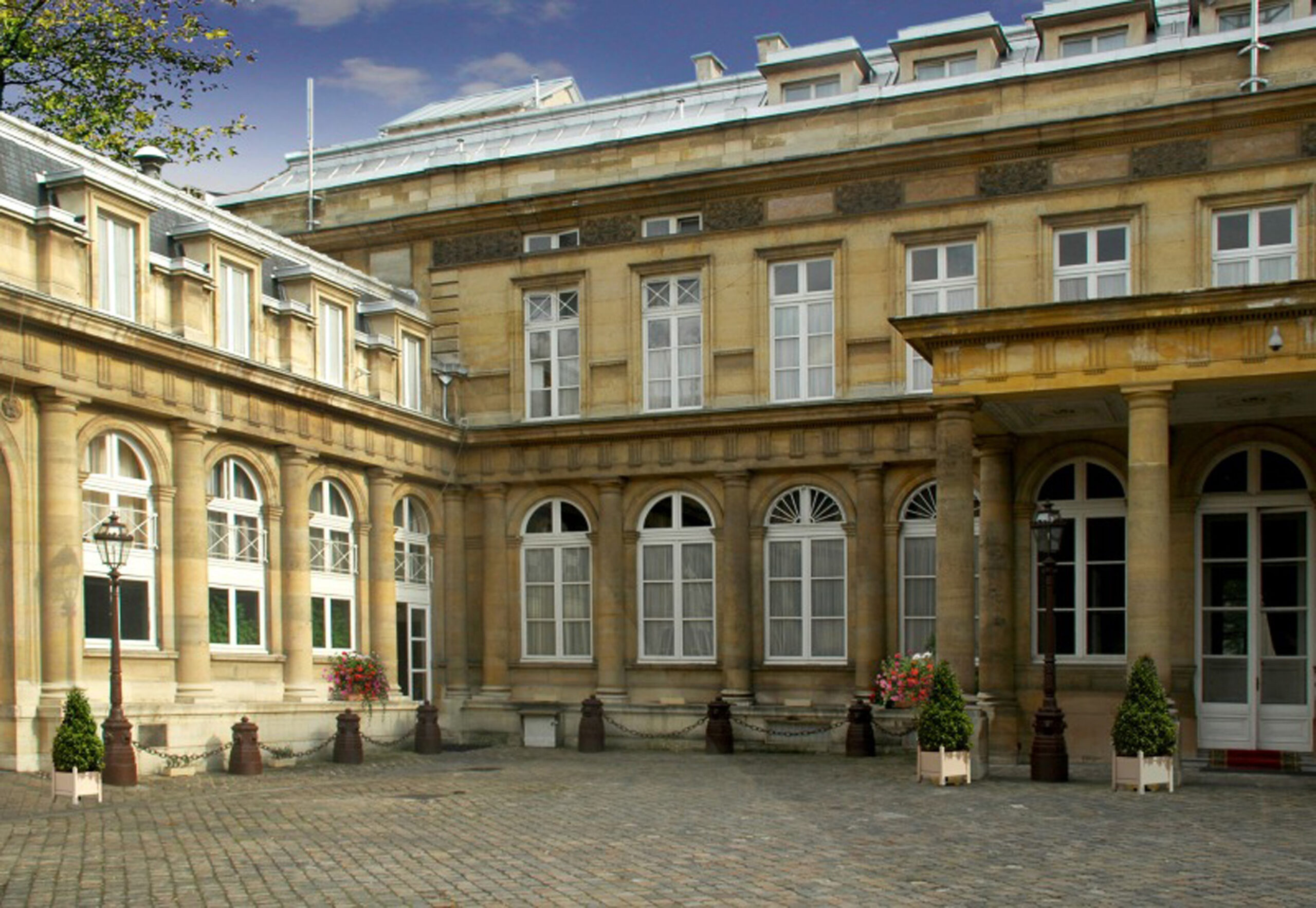
Davout had the hôtel redecorated with grandeur. Its sumptuousness compared favorably with the residences of members of the imperial family. By 1814, it was considered one of the most beautiful hôtels in Paris. The Marshal, however, scarcely enjoyed it, holding only a single event in 1811. An inventory of June 1817, on the occasion of renting the residence to Prince Paul of Württemberg, notes regarding the grand Salon: ‘all the furniture and objects furnishing this salon are of the greatest richness, without any damage, and have never been used.’
Dufour built two small projecting wings toward the street and partially redesigned the interior, whose arrangement, meticulously supervised in its time by the Princess of Monaco, included several rooms with angled or semicircular plans. He displayed creativity without altering the original character of the residence and, as far as possible, favored painted decoration over textiles.
He called on the upholsterers Jean-Claude Poussin and Jean-Jacques Werner (1786–1849). The furniture was mainly supplied by Jacob-Desmalter, the decorative bronzes principally by Delafontaine Père & Fils, and most of the chandeliers by Jean-François Chaumont. The painters Jean-Jacques Bidault (1756–1848), Étienne Dubois (1766–1839), Jean-Thomas Thibault (1757–1826), Simon-Frédéric Mœnch (1746–1837), and Louis Hersent (1777–1860) worked on the decorations. Upon completion, the interior bore no resemblance to what had been created by and for Madame de Monaco.
On the ground floor, the five south-facing rooms had been transformed into a suite of reception salons forming the grand apartment. From right to left were the Salon de Musique, the Salon de l’Empereur, the Grand Salon, the Salon de Famille, and the Salon des Saisons.
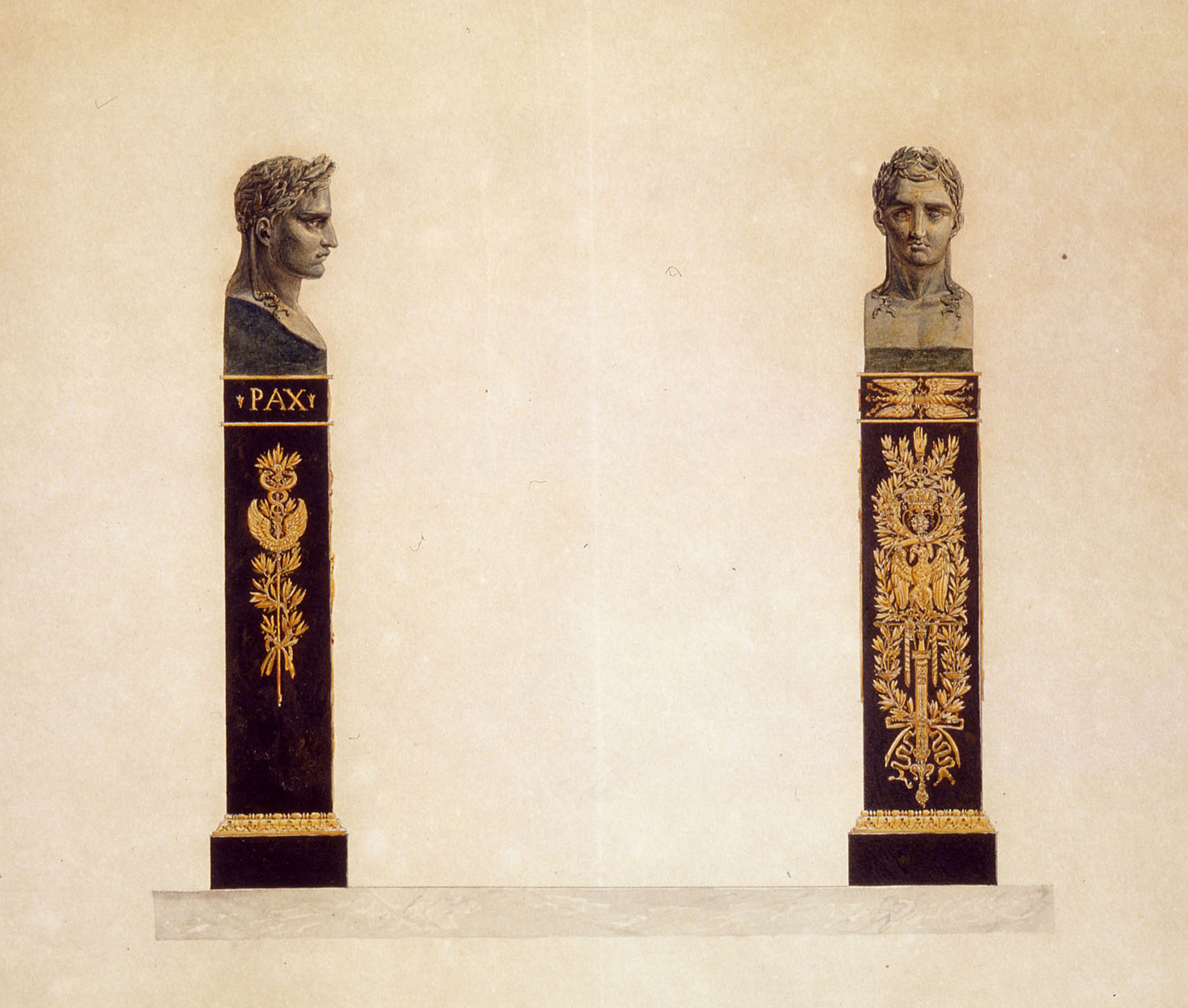
The décor of the Salon de l’Empereur celebrated him. Twelve medals, imitating bronze, were painted after originals struck on various occasions during his reign, and his herm bust in white marble was placed on a pedestal, designed by Percier and executed by Jacob-Desmalter, ‘in blue turquin marble decorated with a gilt bronze trophy composed of Charlemagne’s sword surmounted by a crowned imperial eagle, with the Legion of Honour cross, hand of justice, thunderbolt, and caduceus’ set before a hazelnut satin panel ‘framed by gold embroidery scattered with finely embroidered gold bees.’
The room in suite with the Salon de Famille, formerly the Princess of Monaco’s library, became the state bedroom of the Marshal’s widow.
The state bedroom of the Princess of Eckmühl
The work on this room spanned two years: 1810 and 1811. Laforest wrote to the Princess in July 1811: “I have seen at Mr. Delafontaine’s the candelabra for your state bedroom; they are ready to be gilded and are very beautiful. He told me that the figure of the woman for the clock turned out perfectly and that the chandelier will meet your wishes, both in the fine quality of the crystals and in the care that has been taken.” The chandelier was installed on 6 August 1811. The bedroom was, or nearly was, finished.
It was a sumptuous masterpiece of the upholsterer’s art, executed by a young man of twenty-four, Jean-Jacques Werner, destined for a brilliant career.
The single window was dressed with embroidered muslin curtains and 15/16 white window draperies with borders brocaded in fine gold, with a “draped” arrangement, two swags lined with white satin, in silk fabric with a fleur-de-pensée pattern sprinkled with golden rosettes, brocaded borders in fine gold, with tassels, cords, and fringes in semi-fine gold. The gilt-bronze tiebacks bore the crowned cipher of the Princess.
The walls were hung with the same fleur-de-pensée silk sprinkled with gold rosettes, curved at top and bottom in a ducal mantle style, with outer lining of white satin, a medium gold border, and a cord in violet and semi-fine gold around the perimeter.
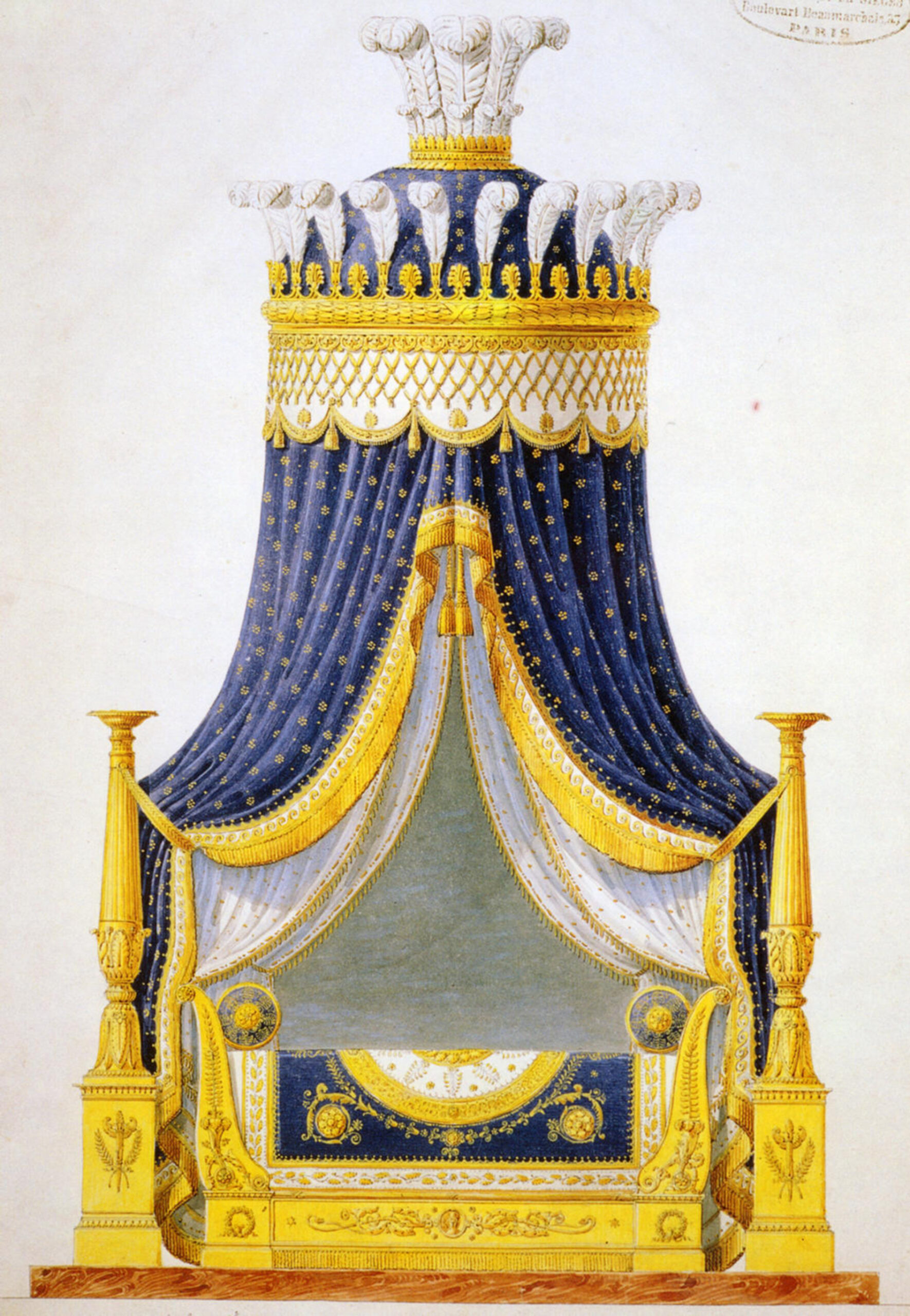
The focal point of the room was the bed in gilded and carved wood, a work by Jacob-Desmalter. Set on a dais covered with green cloth and gold accents, it featured flanking panels, the front rail adorned with a cameo of Apollo’s head and gilded bronze palmettes. The gilded wooden crown was carved with fourteen palmettes and fourteen brackets, ten of which supported three ostrich plumes, and draped with a six-part silk fleur-de-pensée fabric hanging over a gold cord. The curtains, in the same fabric, were lined, like the pleated interior of the canopy, in white satin sprinkled with gold stars with fleur-de-pensée and gold embellishments. They were held back by four gilt and patinated bronze serpents.
The bolsters were covered in fleur-de-pensée taffeta, like the embroidered pillows bearing the Princess’s cipher. The entire ensemble was lavishly decorated with embroidery, borders, braids, cords, pleats, stars in cartisane stitch, friezes, large and small rosettes, and fringes in gold and semi-fine gold. The arrangement of this sumptuous upholstery closely resembles several designs by Charles Percier, lending credence to the hypothesis of his discreet involvement in this project.
The pair of two-door commodes, made of yew root, adorned with gilt bronze featuring bas-reliefs of L’Amour navigant amid a rich frame of palmette scrolls, flanked by two large palms, created by Jacob-Desmalter, later belonged to the collections of Sir Richard Wallace and Sir John Murray Scott, before entering, after World War I, the holdings of the Banque de France.
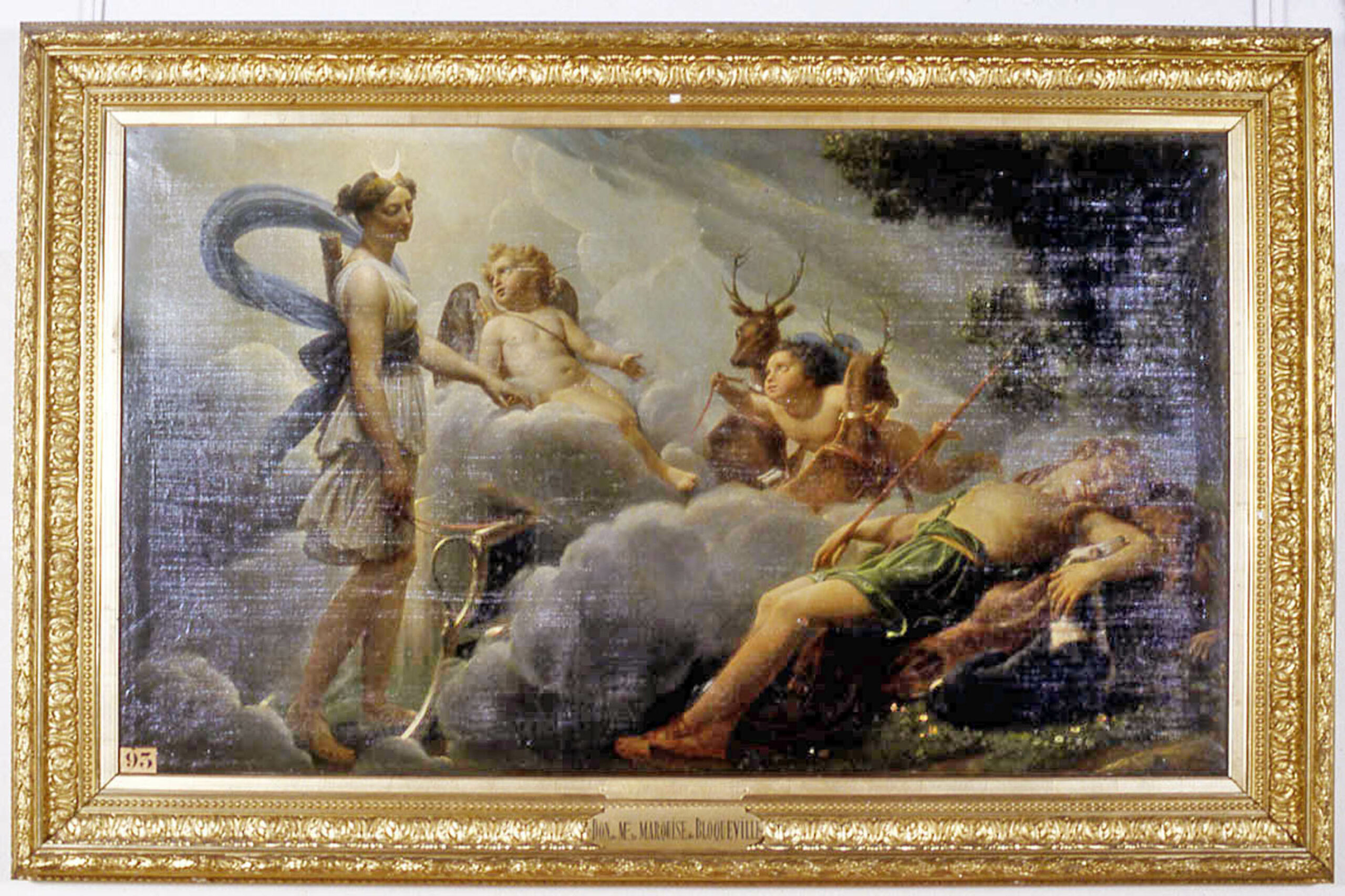
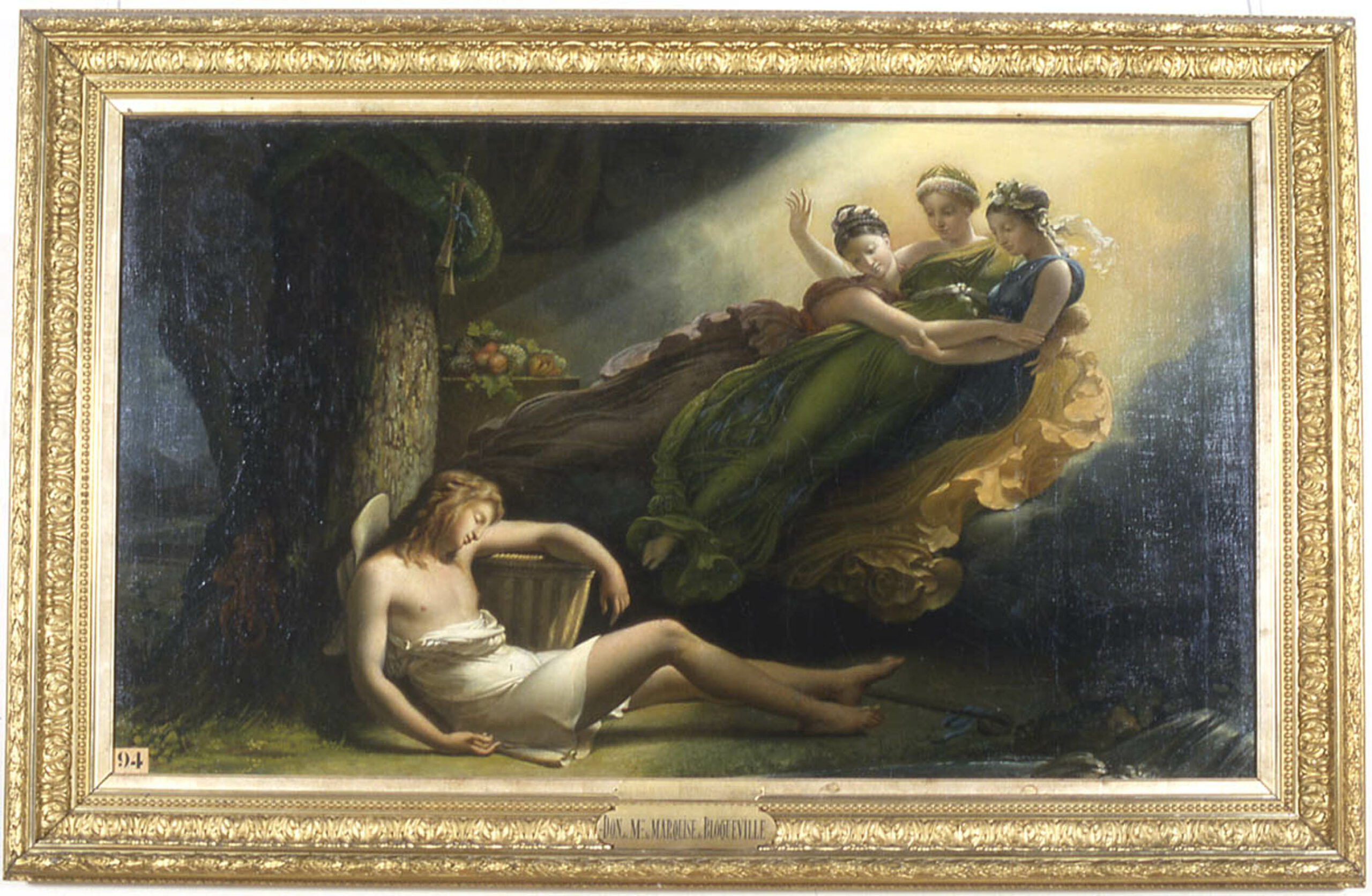
Above them were placed two works by Louis Hersent, commissioned for the room, depicting Diane et Endymion on one, and Les grâces visitant Daphnis pendant son sommeil on the other; these canvases were donated by the Marquise de Blocqueville, daughter of the princess, to the Musée des Beaux-Arts de Sens.
Pierre-Maximilien Delafontaine (1777-1860) supplied all the bronze art objects. He had seen at his colleague Lucien-François Feuchère (1766-1841) the fire with winged figures holding a garland, which he reproduced for King Louis-Philippe. He designed the seven-light candelabra-balusters and the mantel clock. Unique in design, the clock depicted the Retour du guerrier. The movement by Basile-Charles Leroy was set on a trophy of arms, a woman offered a baby to a warrior who caressed it, while an older child approached him.
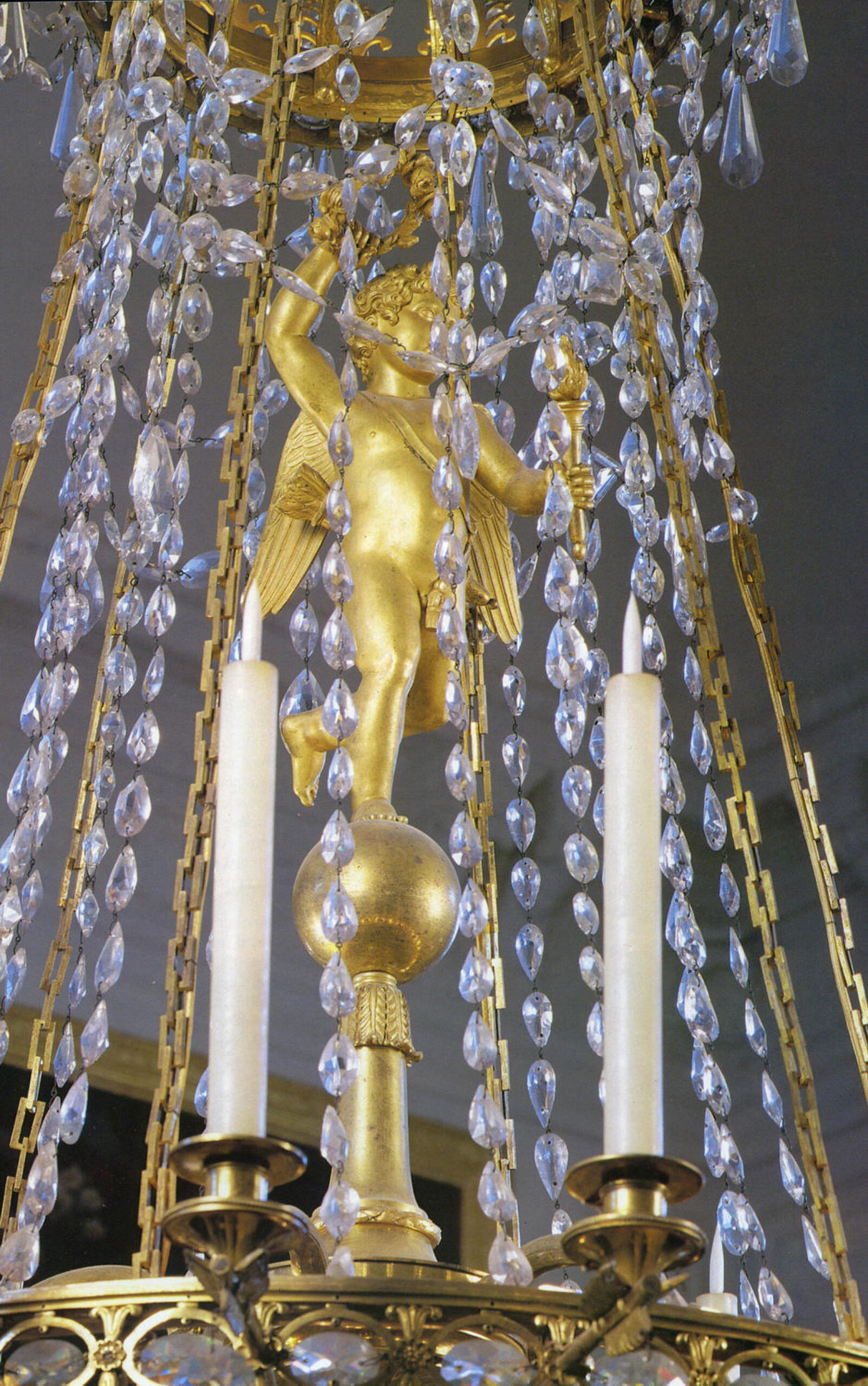
The gilt bronze and crystal Mont Cenis chandelier had twenty lights. Each leaf-shaped basin was mounted on a thyrsus fixed to an openwork band of oval myrtle leaf crowns, with the plume adorned with crystals arranged in drapery. Inside, a figure of Love was placed on a ball supported by a baluster. It is likely that it was a variant of the eighteen-light chandelier delivered by Jean-François Chaumont on 29 May 1811 to the Imperial Furniture Repository, originally intended for the lord’s salon at the Hamlet of Trianon, and then placed directly in the second salon of the Empress at the Grand Trianon.
The seating in the State Bedroom
The June 1817 inventory of the Hôtel d’Eckmühl describes in detail the carpentry furniture of the state bedroom, delivered in 1811 by Jacob-Desmalter and upholstered by Werner:
“The furniture consists of
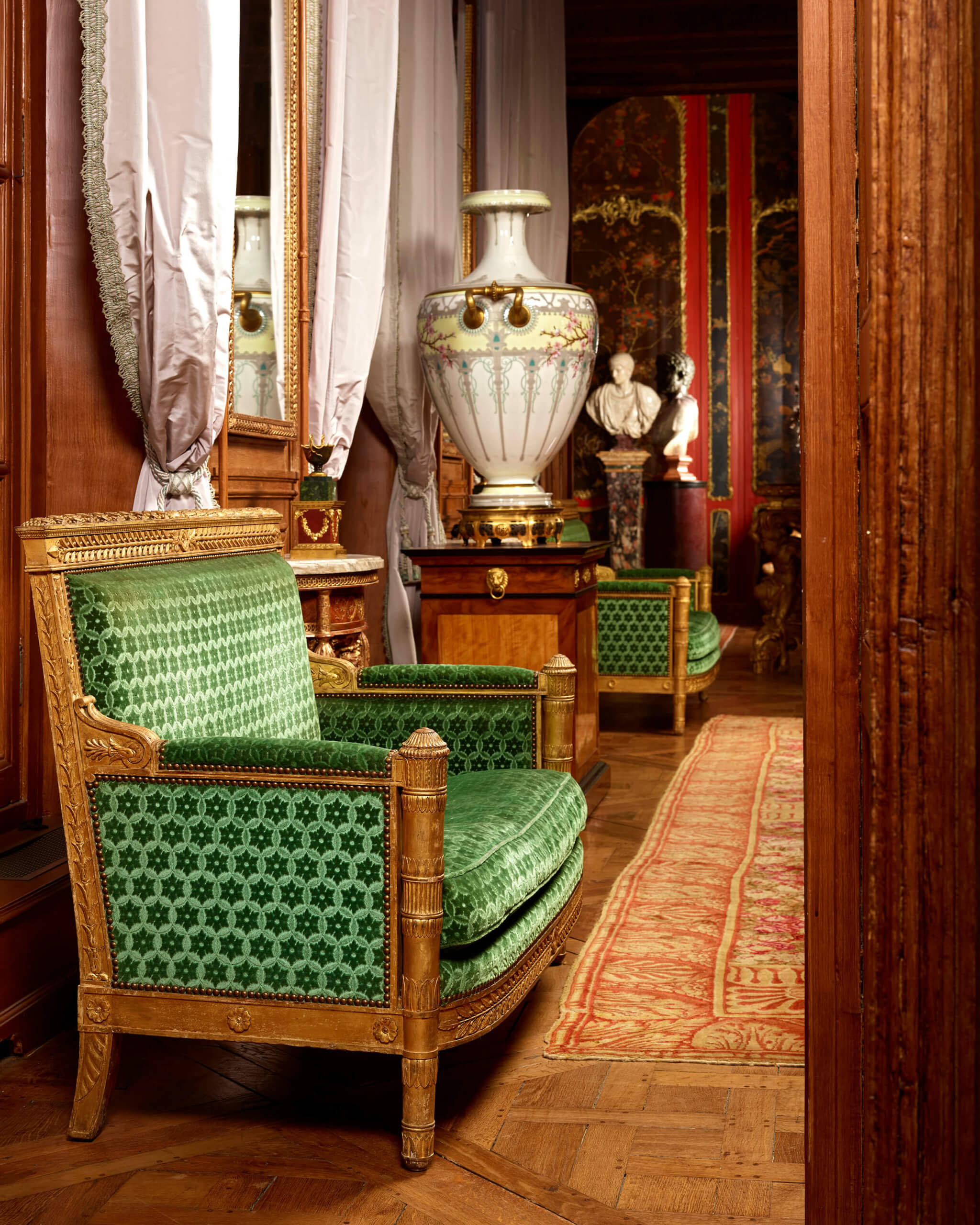
Two tête-à-têtes, each with 4 legs, upholstered in separate panels of horsehair and feathers, with thick backs and arm cuffs,
4 armchairs upholstered in the same manner,
Two chairs, seats and backs thickly upholstered,
Two stools with matching legs,
One screen panel with lead.
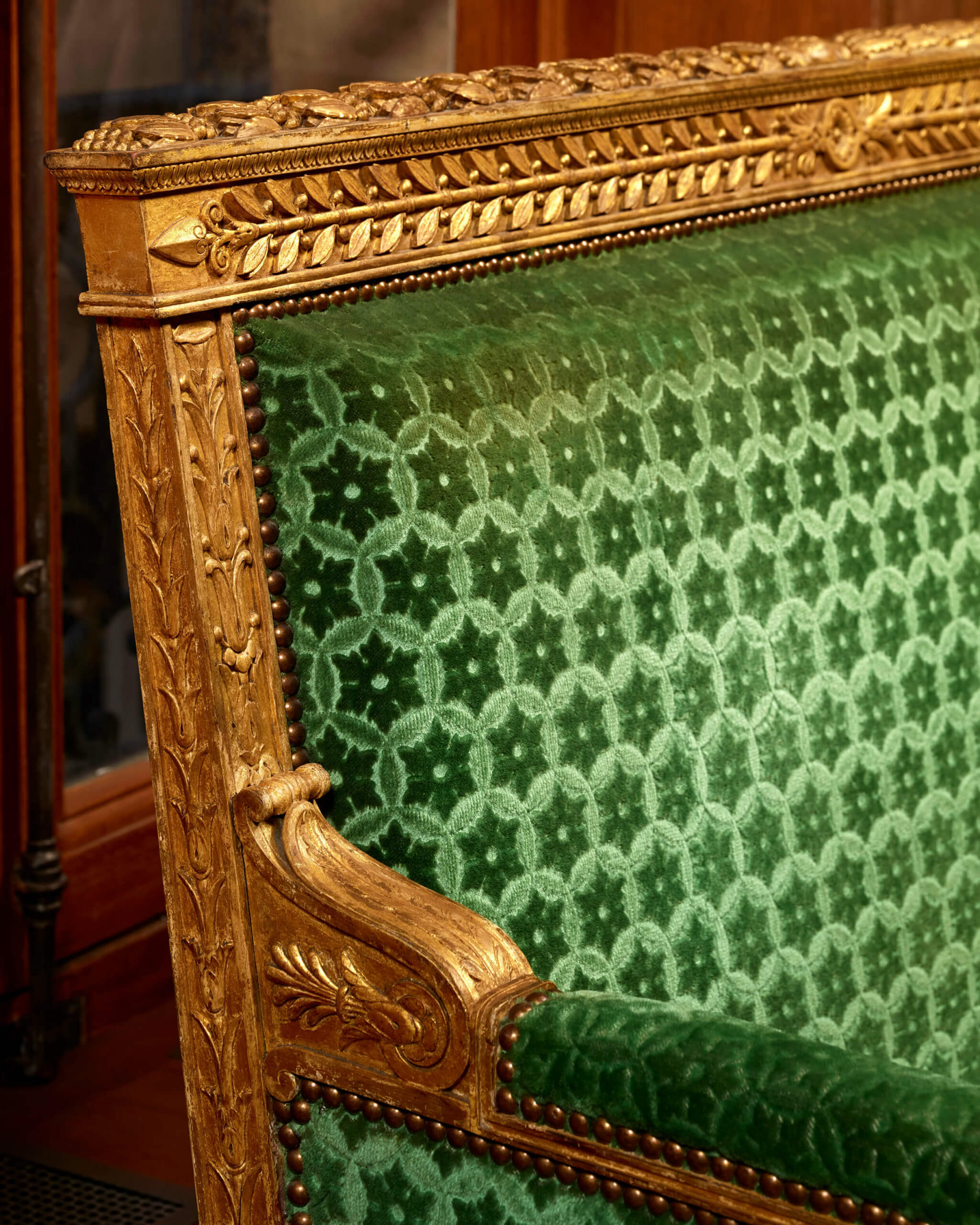
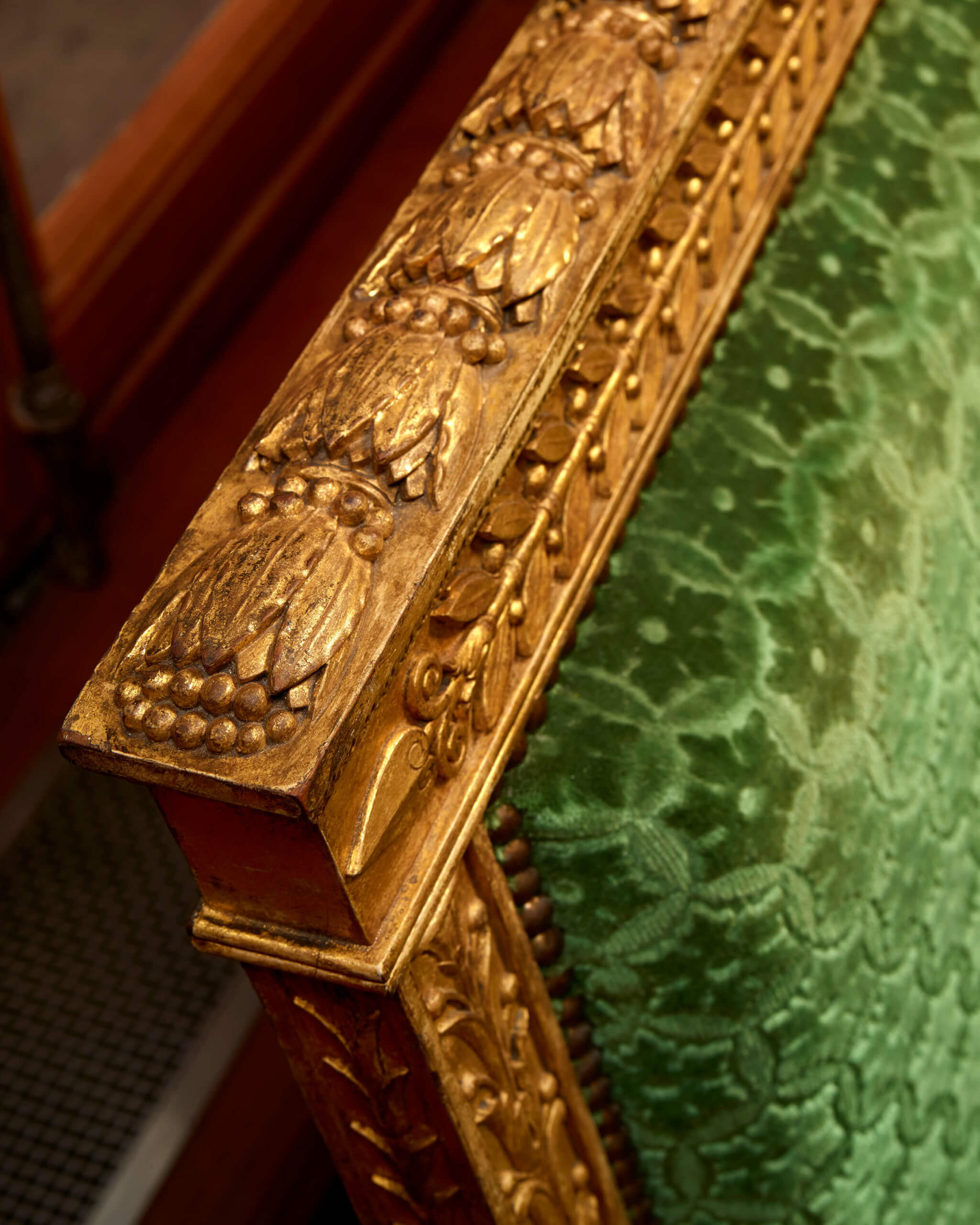
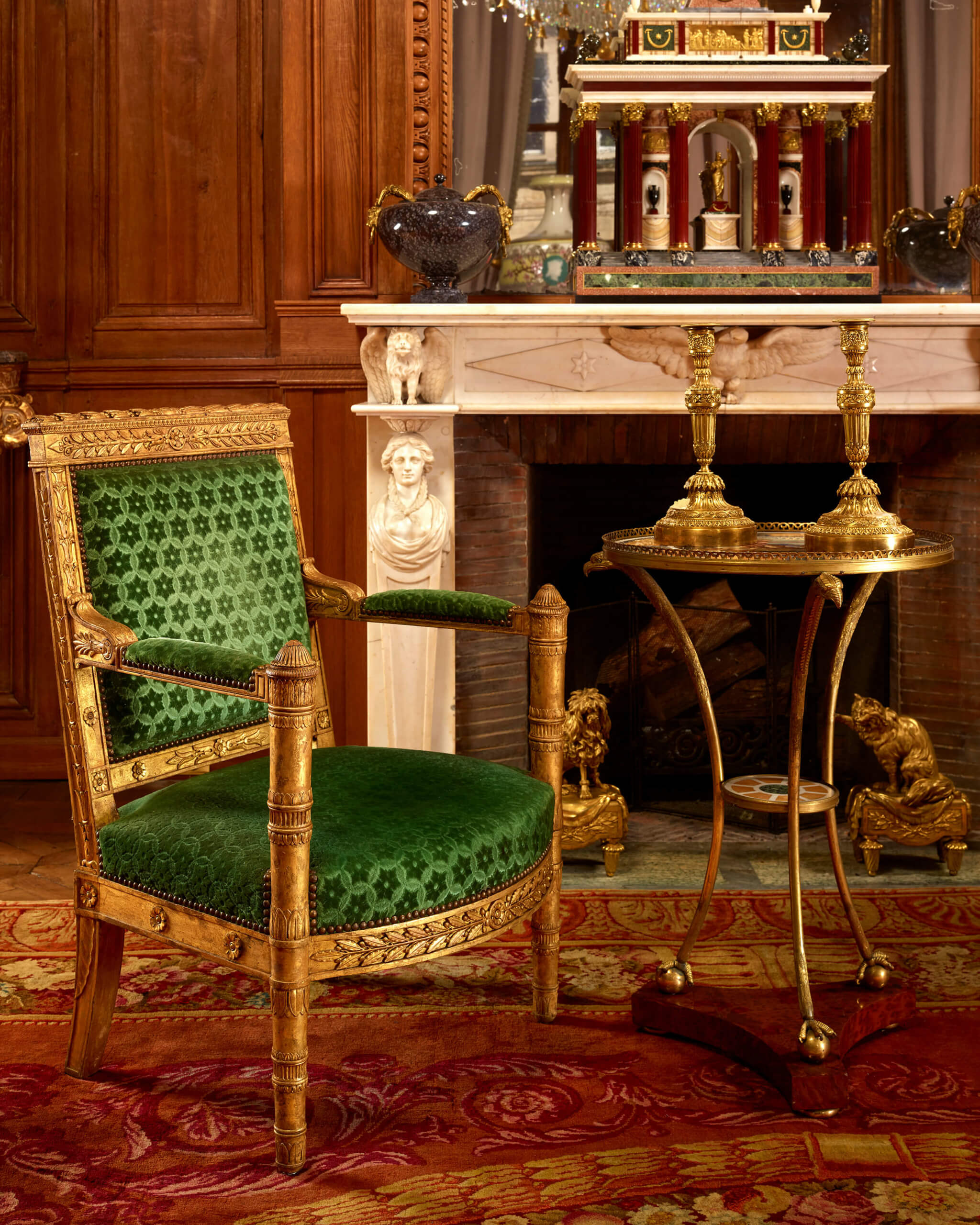
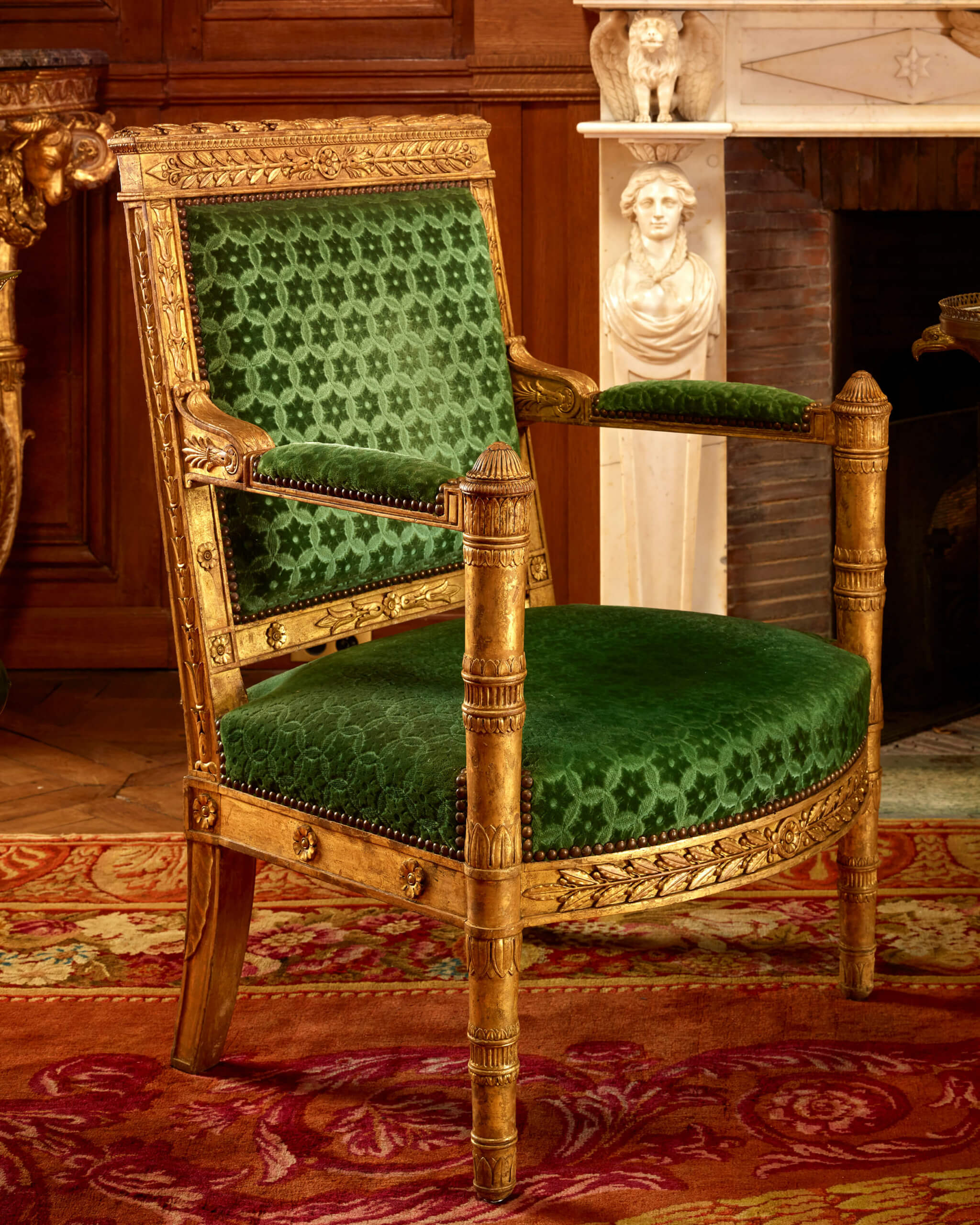
All made of richly carved wood, gilded with oil, square-backed, the frieze decorated in the center with a rosette with small culots on each side and laurel leaves ending in a small rosette and pointed finial. The top of the pediment adorned with laurel bundles, the front legs shaped like quivers, the apron decorated with laurel leaves and covered in silk fabric patterned with pansies, sprinkled with gold rosettes and framed with small and medium gold borders, and covered with Laval cloth.”
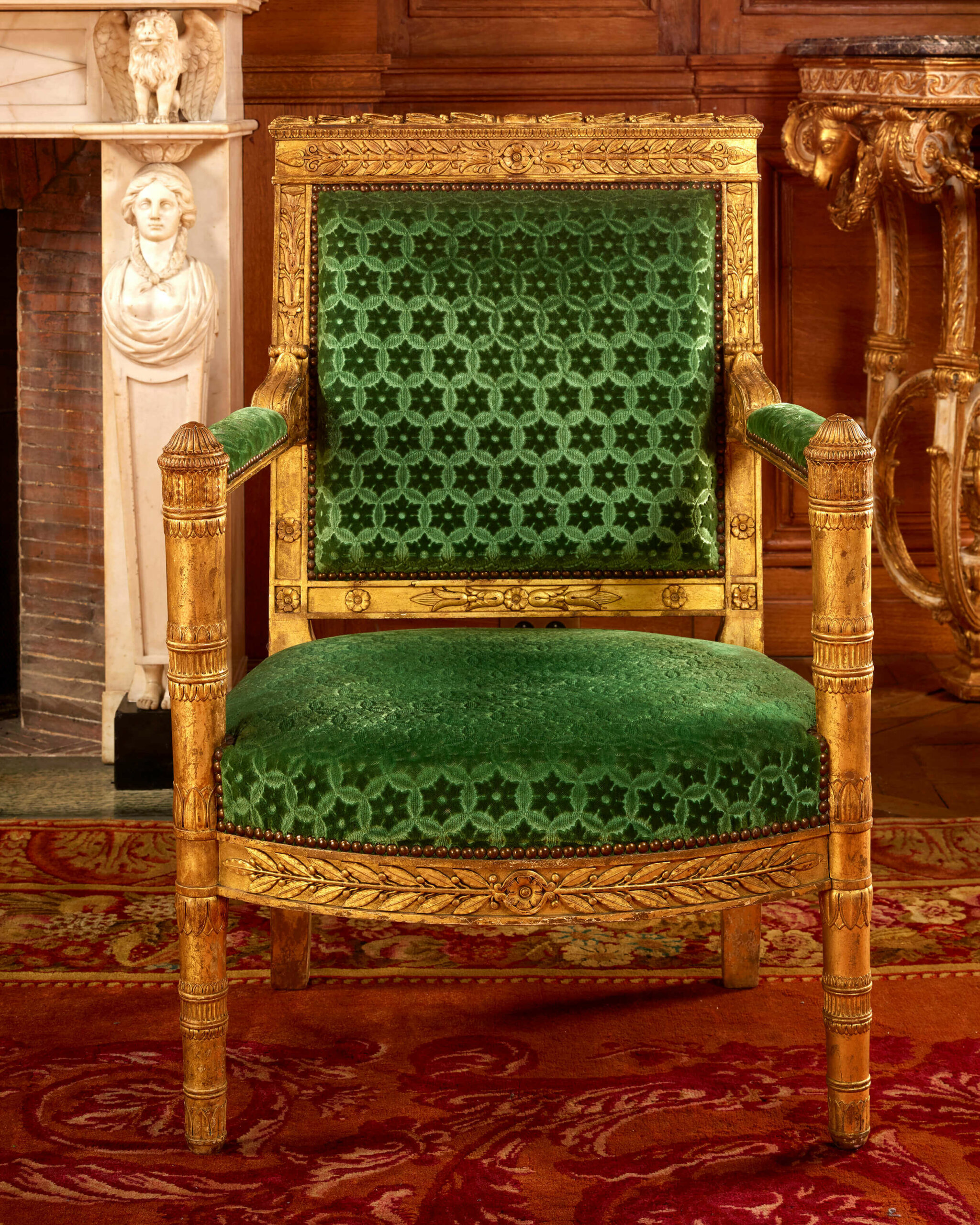
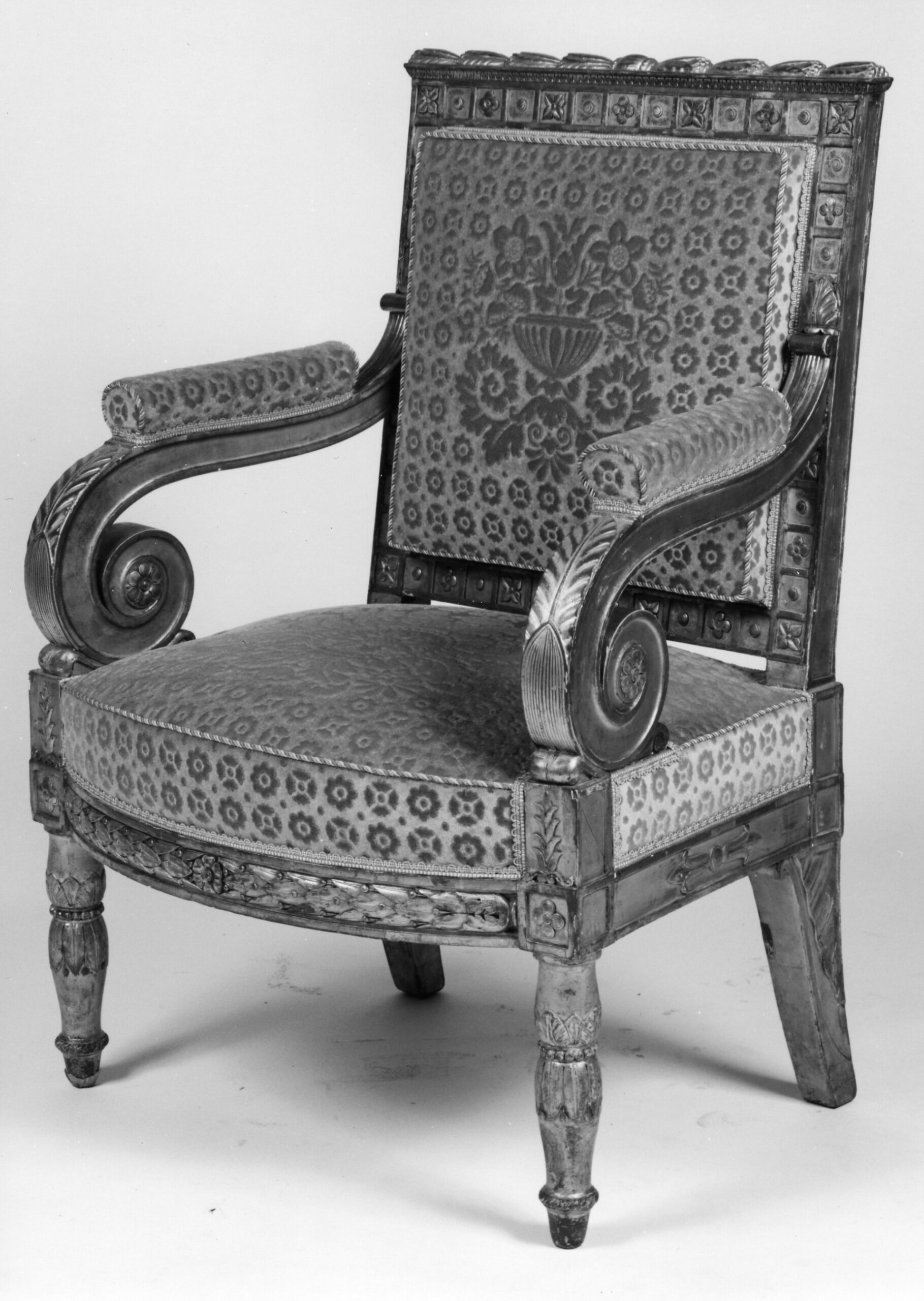
These seats were the finest in the residence, surpassing in splendor even those with large volute armrests in the Grand Salon. They are also superior to many sets delivered for the state and private apartments of Napoleon and the Empresses, whether at the Tuileries, Fontainebleau, Saint-Cloud, or Compiègne.
The laurel bundles carved in the mass at the tops of the backrests display remarkable inventiveness. They stand out against the classic flat surfaces of this period and reconnect with the sculptural richness of the great eighteenth-century chairs.
Of unprecedented luxury, yet of very refined taste, Marshal Davout’s widow’s state bedroom was conceived and executed at the euphoric moment when the French Empire had reached its maximal territorial expansion, a time when Amsterdam, Hamburg, and Rome, now French, had been reduced to mere prefectures. A period when the war in Spain caused little concern and the Austrian marriage appeared as a guarantee of longevity for this shimmering state of affairs.
Supported by a team bringing together some of the most brilliant specialists of his time, Alexandre Dufour, a worthy pupil of Percier and Fontaine, succeeded in making the Hôtel d’Eckmühl a Gesamtkunstwerk that delighted his contemporaries. Everything there was perfect, refined, magnificent, without the slightest discord.
The seats in Marshal Davout’s widow’s state bedroom stand as witnesses to this achievement, as well as epitomes of the art of Jacob-Desmalter chairs, brought to their highest level under the Empire.
Jean-Dominique Augarde
Historien et expert d’art